Search History
Popular Searches
English
Dealer Login / Sign Up
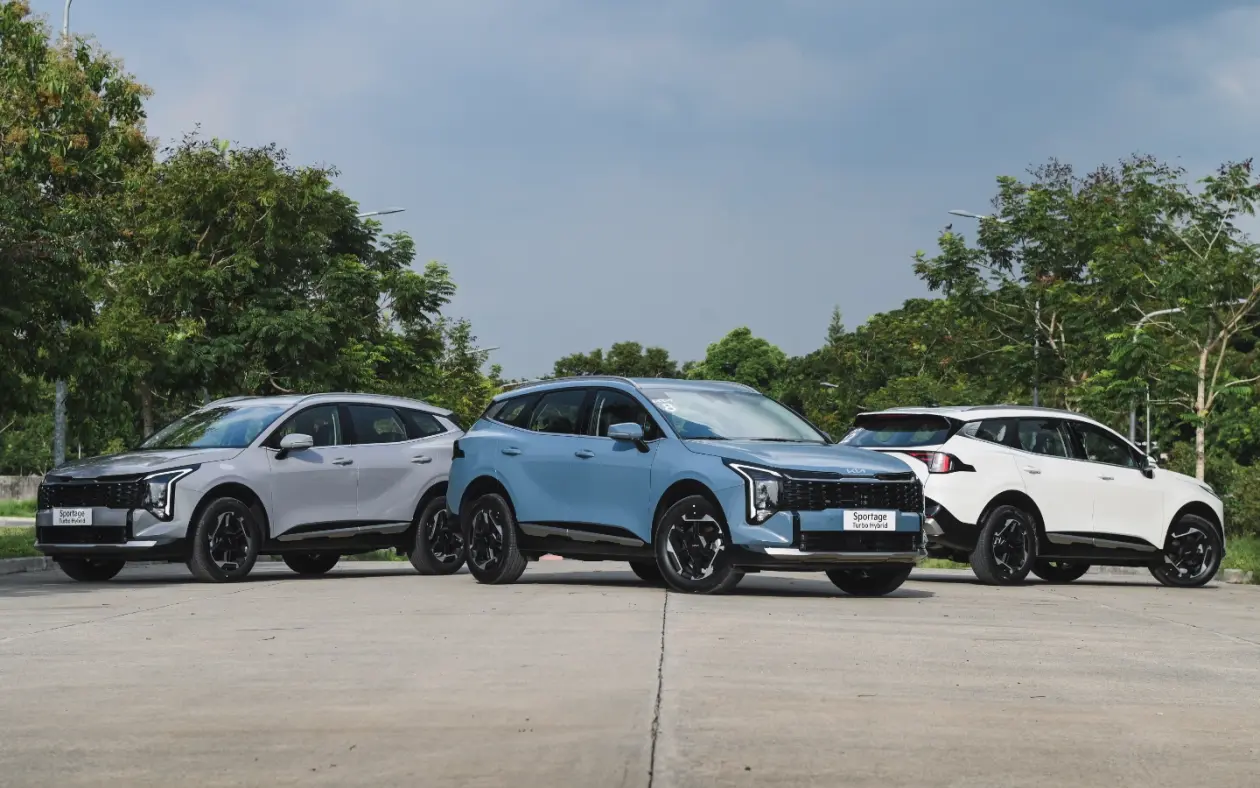
The traffic light turns green, but the car ahead barely moves. You ease forward, stop, then creep another few metres. Somewhere behind you, a child has finally fallen asleep. There is a speed bump before the next junction.
On a drive like this, horsepower is probably the last thing on your mind. You want the car to move gently, the cabin to stay comfortable and the petrol you bought yesterday to last a little longer.
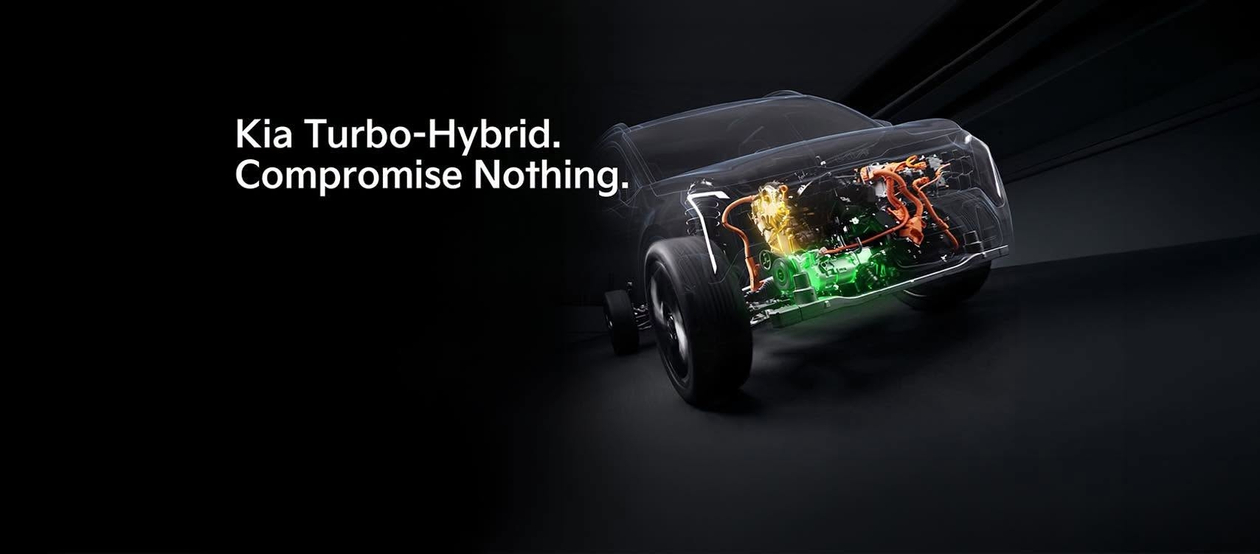
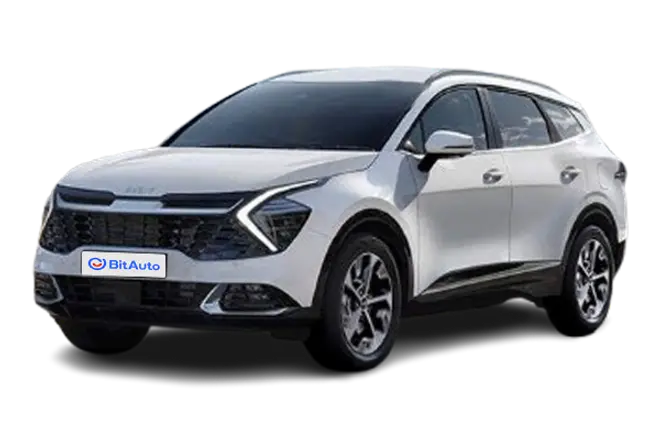
Yet these ordinary moments help explain what Kia is trying to achieve with its new-to-Malaysia turbo hybrid. Ahead of the Sportage Turbo-Hybrid’s Malaysian launch on 26 November 2026, the company has been talking about the machinery beneath the bonnet. Some of the more interesting details concern what happens to the people sitting behind it.
Fuel savings are part of the story. So are the small movements that make a journey feel relaxed or tiring: the hesitation before acceleration, the rocking over a bump, the way passengers brace themselves when the driver turns into a corner.
Kia wants its electric motor to have a hand in all of them.
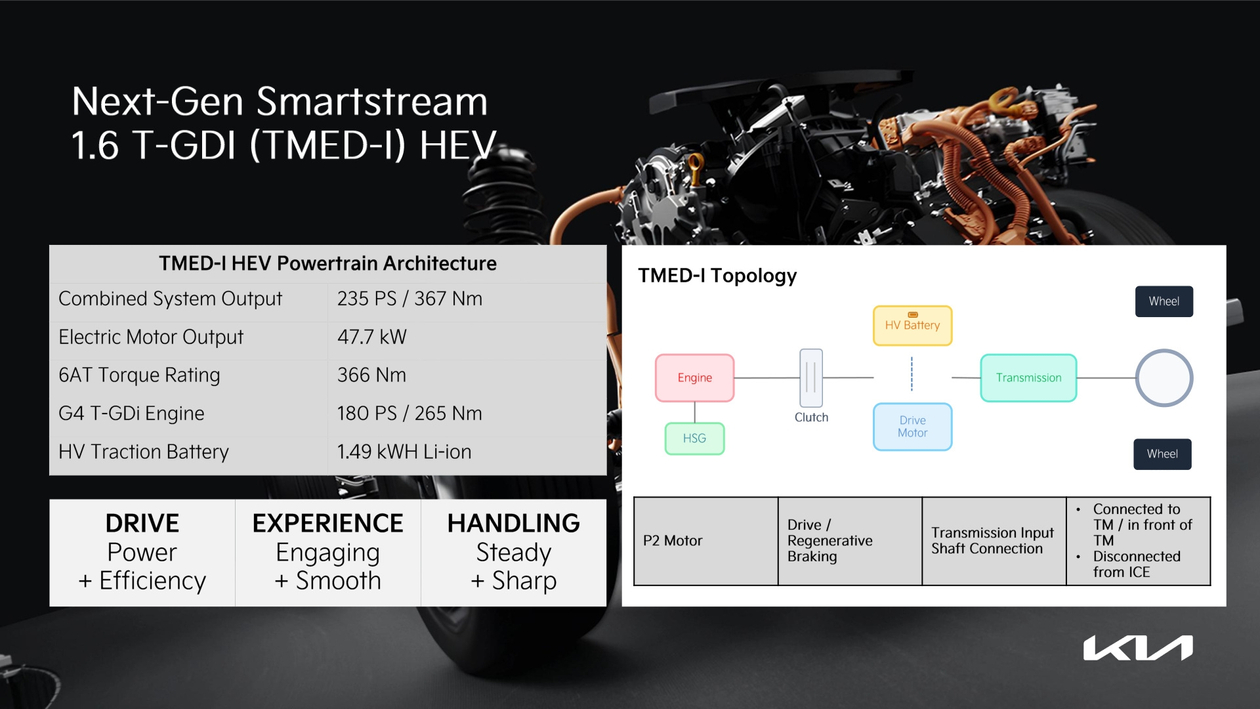
The basic recipe is familiar enough. A petrol engine and an electric motor share the work of moving the car, with a battery storing energy for the motor. In the setup presented during Kia’s technical briefing, a 1.6-litre turbocharged engine works with a 47.7 kW motor, a six-speed automatic gearbox and a 1.49 kWh lithium-ion battery. Quoted combined output is 235 PS and 367 Nm.
Those are useful numbers for a family SUV, particularly when there are passengers and luggage aboard. But the way the power arrives deserves as much attention.
An electric motor responds quickly. It can help get the car moving and provide assistance when the driver asks for more acceleration. The turbocharged engine supplies sustained power as the workload builds, whether that means climbing a long hill or completing an overtake.
Getting those two sources to cooperate is where much of the engineering lies. A driver should be able to press the accelerator and receive a natural, predictable response, without having to think about which part of the powertrain is doing the work.
The engine has its own means of adapting. Kia’s Continuously Variable Valve Duration technology changes how long the intake valves remain open, helping it balance economy and performance according to demand. It is a complicated mechanism with a straightforward purpose: use fuel more effectively across different driving conditions.
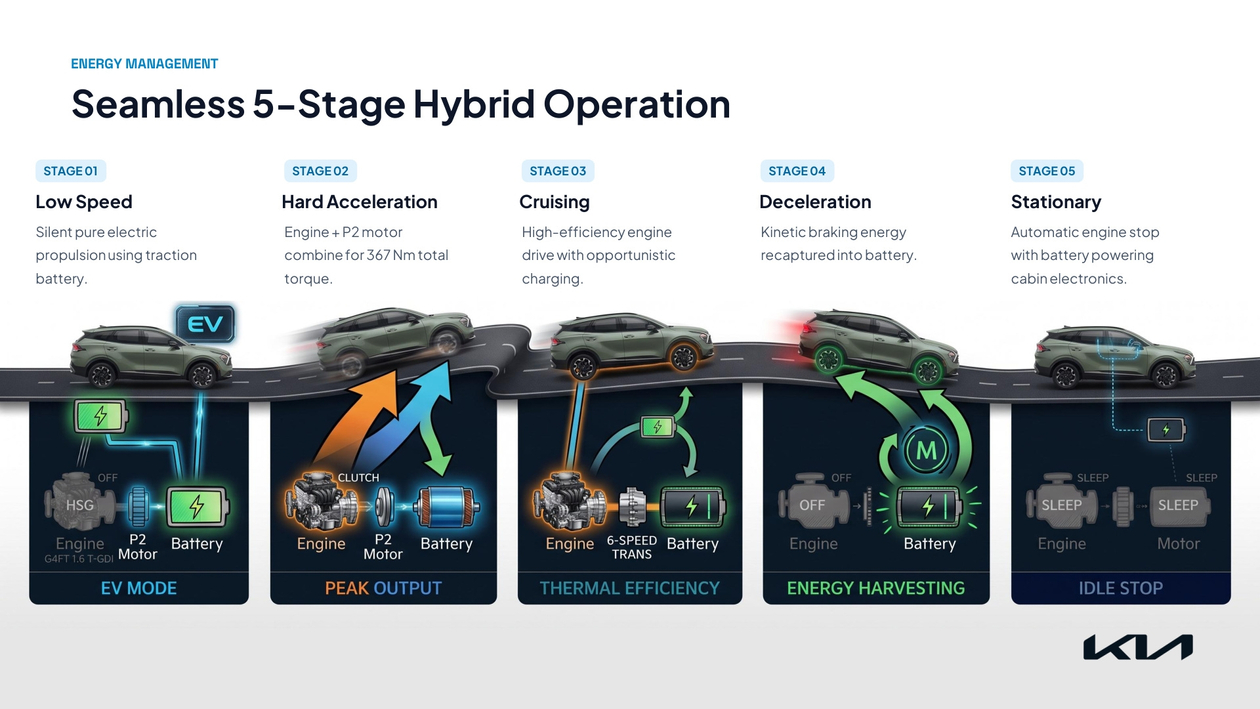
Back in slow traffic, the engine can switch off and let the motor move the car when battery charge and operating conditions permit. Under stronger acceleration, both can contribute. When the car slows down, the motor can recover some of its moving energy and return it to the battery.
There is no plug to connect when you get home. This is a full hybrid, with the car managing charging through energy recovery and the engine.
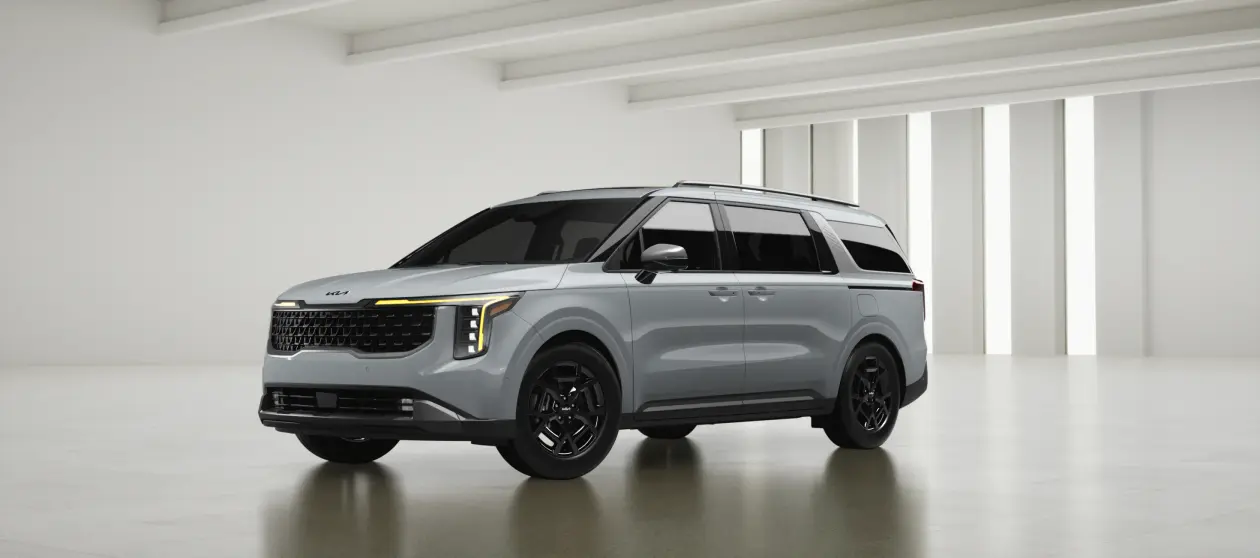
Not just the Sportage, a Carnival Turbo Hybrid may also be on the cards..
The battery is small because its job involves frequent, short exchanges of energy. It takes in what the car can recover, then gives some back when assistance is useful. Electric-only running is brief; the petrol engine remains an essential part of the journey.
Kia quotes 4.9 litres per 100 km for a front-wheel-drive application, equivalent to roughly 20.4 km/l, which is not bad for a large SUV with loads of power.
As for its gearing, the electric motor sits between the engine and transmission, integrated with the gearbox assembly. A clutch allows the engine to disconnect when appropriate, while the motor can deliver power through the transmission.
Kia is clearly interested in keeping the driver involved. Whether the shifts and changes between power sources feel polished will be a question for the road test.
Then comes that speed bump.
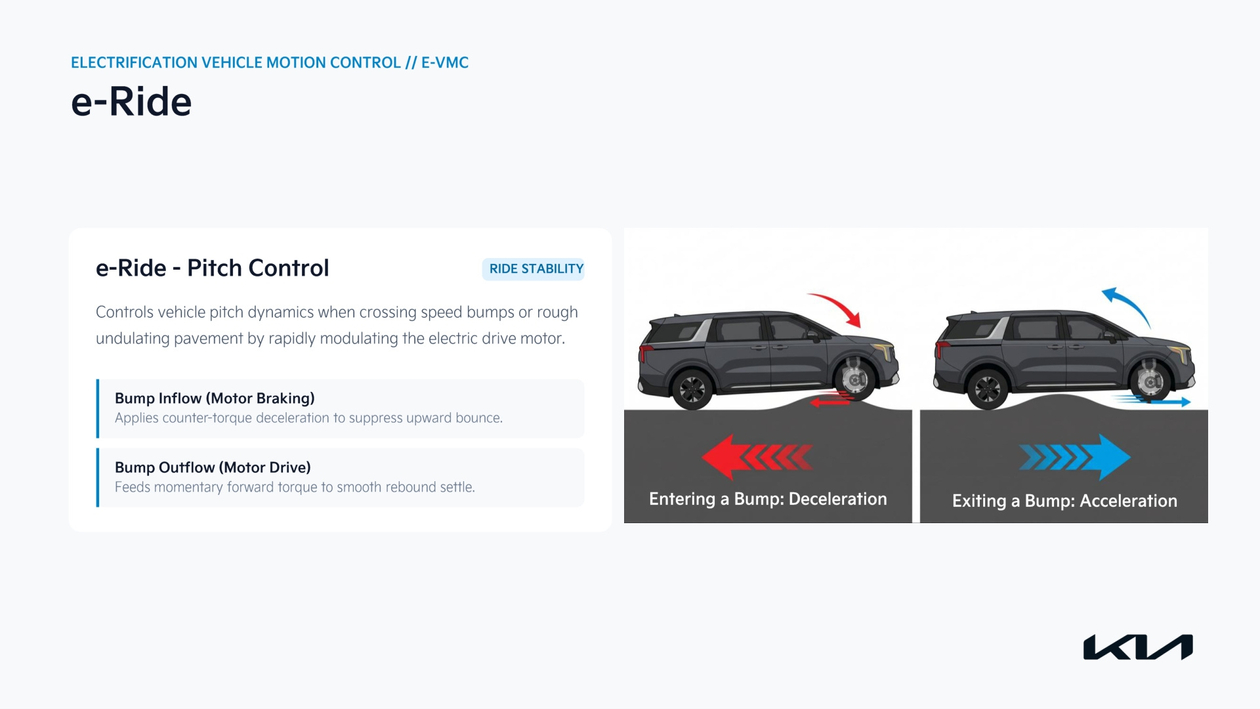
Most drivers know the little sequence of movements: the front rises, the body tips, the rear follows, and everyone inside settles again. Take it awkwardly and passengers get an unnecessary shake.
Kia’s e-Ride system uses adjustments in motor torque to help counter the fore-and-aft rocking. By carefully timing small amounts of acceleration or deceleration, it aims to keep the body more settled as the car crosses bumps and undulating roads.
The principle becomes easier to understand when you think about how a car leans forward under braking and shifts its load rearwards under acceleration. The motor gives Kia a way to make small, rapid adjustments to those forces.
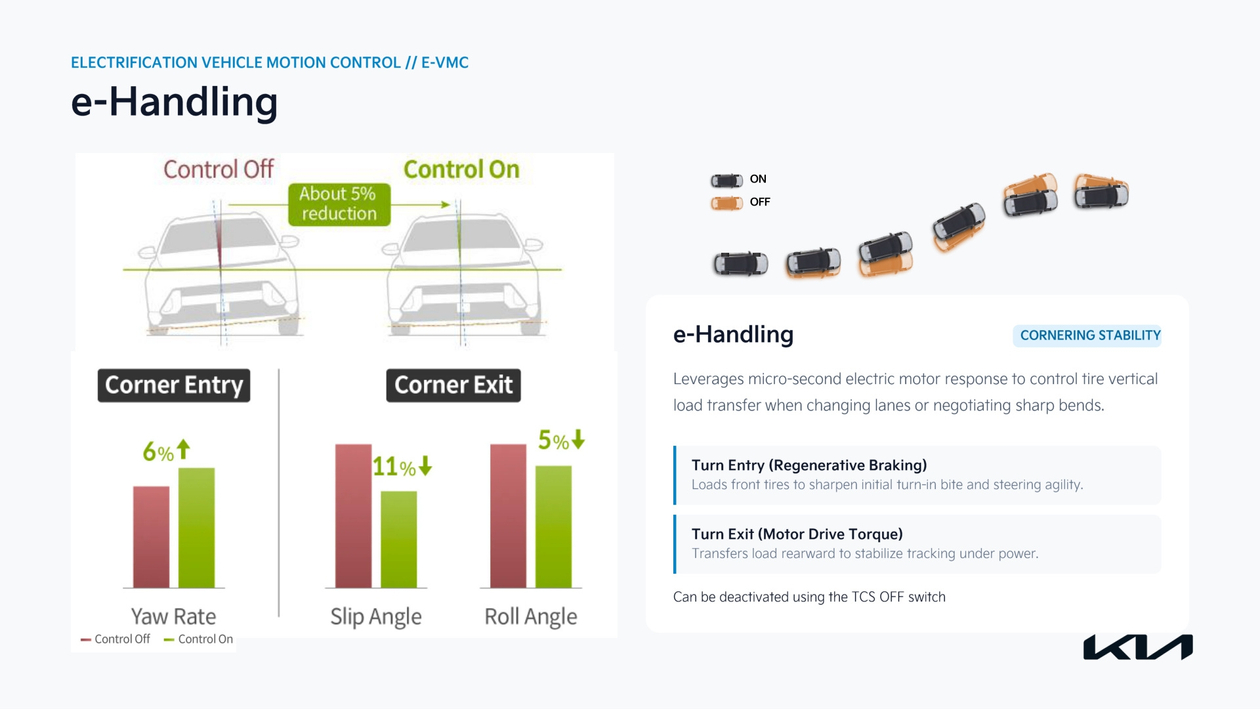
A related function, e-Handling, uses that ability through corners. Controlled deceleration helps load the front tyres on the way into a bend, supporting steering response. Motor assistance then helps manage the car’s balance as it accelerates out.
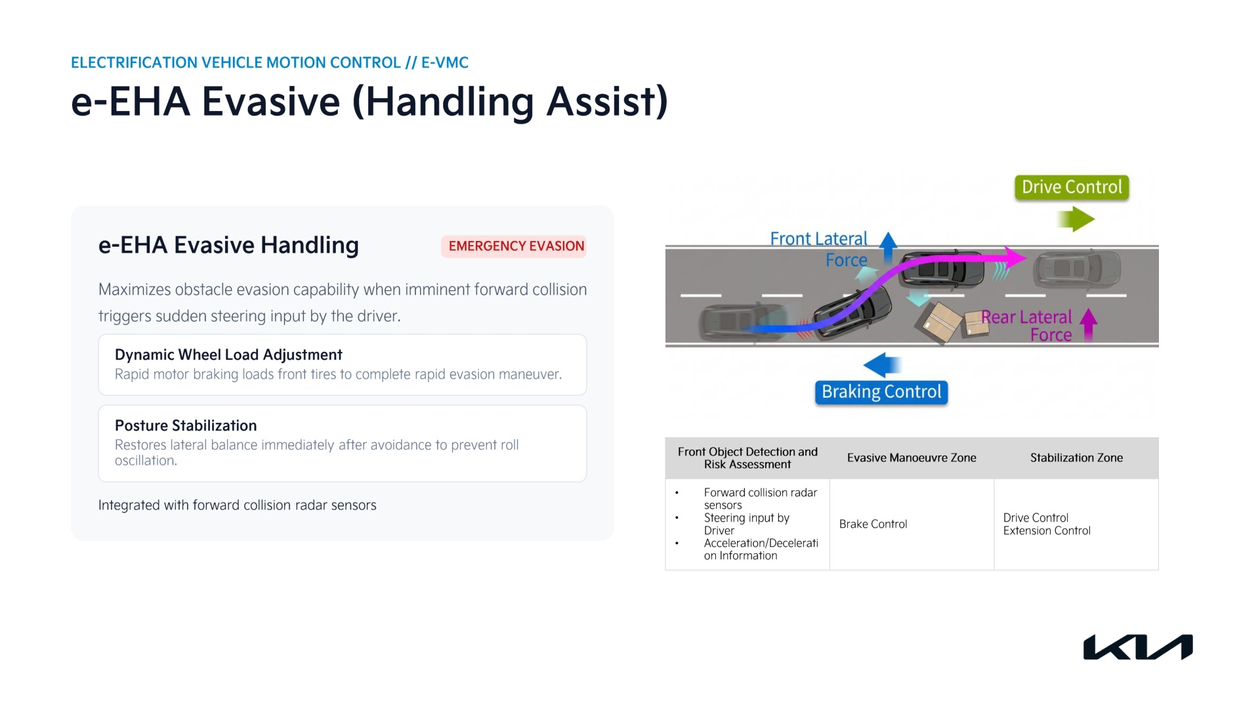
There is an emergency application, too. Evasive Handling Assist, or e-EHA, is designed to help the vehicle respond during a sudden avoidance manoeuvre and settle afterwards. Available grip still sets the limits, but the motor gives the control systems another means of managing the car’s movements.
These are subtle interventions. Ideally, passengers would simply notice that they were being jostled less.
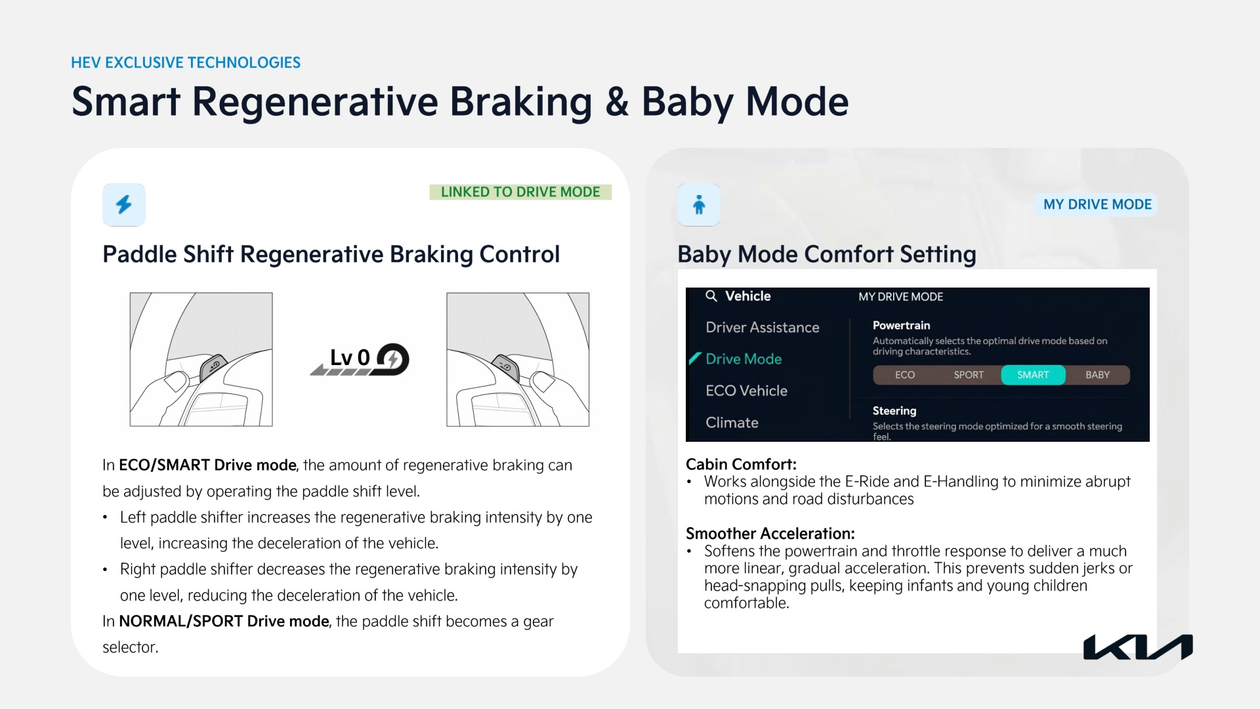
That same thinking runs through Baby Mode, which softens powertrain and accelerator responses to make acceleration more gradual. Its name may sound like a small marketing flourish. Its purpose will make sense to anyone who has tried to drive smoothly with a sleeping child in the back.
Kia also describes steering-wheel paddles that adjust regenerative braking in suitable drive modes, allowing drivers to change how strongly the car slows when they lift off the accelerator.
For now, Kia has given us something worth looking for when the Sportage reaches the road.
Leave your number, an advisor will contact you


Your go-to source for all things automotive in Malaysia. 🚗 Latest reviews, breaking news, launches & industry trends.
+ Follow 10,000 cars assembled. First export shipment: gone. Jetour's Johor plant is no longer just feeding Malaysian showrooms. 1 minute ago
 Square headlights or round headlights?
The baby Land Cruiser FJ just hit Indonesia from ~RM 189k—packing a 2.7L petrol engine, proper ladder-frame 4x4 hardware, and official ARB accessories. 1 minute ago
 Did you spot a JAECOO J5 EV cruising down the highway with a giant DC charging plug strapped to its roof?
#jaecoo #jaecoomalaysia #jaecooj5ev #omodajaecoo #evmalaysia 1 minute ago
Get the latest car news first!
Your go-to source for all things automotive in Malaysia. 🚗 Latest reviews, breaking news, launches & industry trends.
10,000 cars assembled. First export shipment: gone. Jetour's Johor plant is no longer just feeding Malaysian showrooms. 1 minute ago Square headlights or round headlights?
The baby Land Cruiser FJ just hit Indonesia from ~RM 189k—packing a 2.7L petrol engine, proper ladder-frame 4x4 hardware, and official ARB accessories. 1 minute ago Did you spot a JAECOO J5 EV cruising down the highway with a giant DC charging plug strapped to its roof?
#jaecoo #jaecoomalaysia #jaecooj5ev #omodajaecoo #evmalaysia 1 minute ago © 2024 Bitauto.com. All Rights Reserved.
Bitauto (www.yiche.com and www.bitauto.com) is one of the most visited automotive websites in China. We provide detailed info on Chinese car brands available in your area. Please note that the information provided on this website is based on publicly available data and is for reference only. It may not be fully updated or accurate at all times.

Help us improve our website