
Search History
Popular Searches
Dealer Login / Sign Up


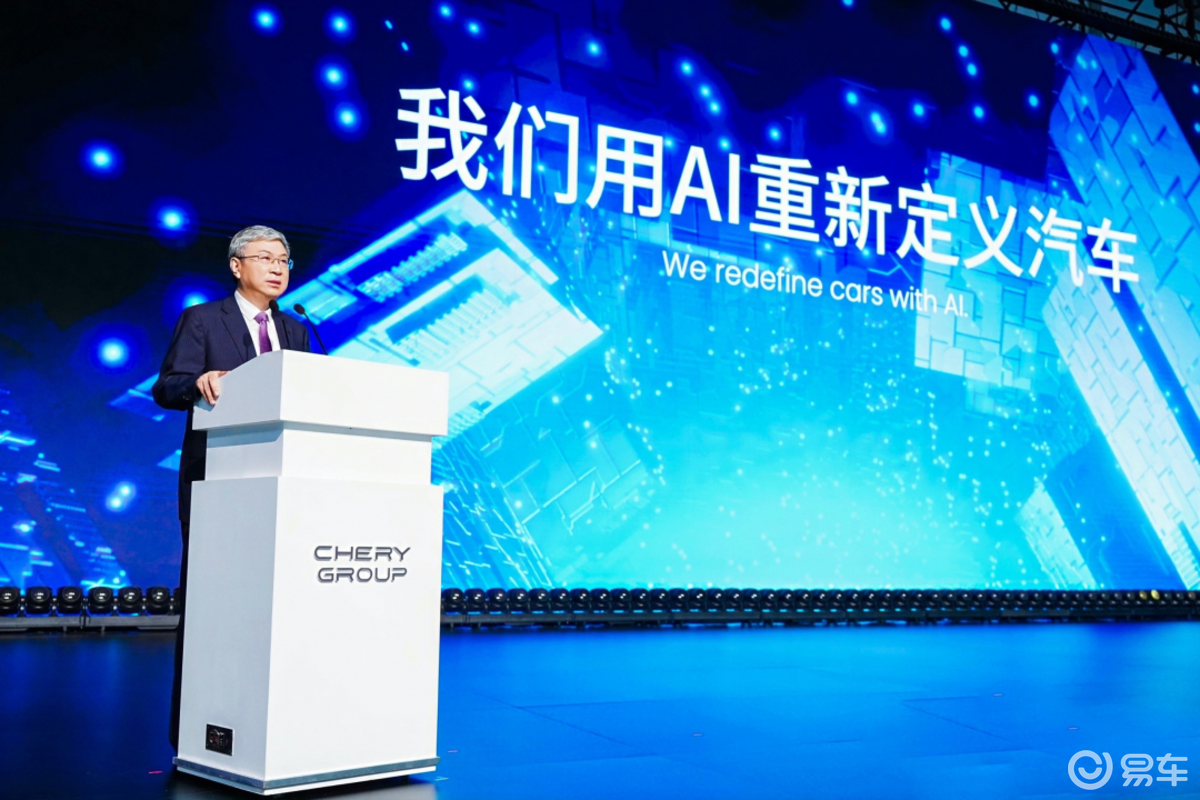
On October 20, Chery held the 2026 Global Innovation Conference in Wuhu, with the theme being "Change · Transformation". If one only looks at the vertical domain large models, automotive-grade chips, native pre-installed Robotaxi, eVTOL, V2G, humanoid robots "Mobao", and smart agricultural machinery released on-site, it is easy to misunderstand this conference as a technology showcase. However, from the perspective of industry observation, the signal Chery really wants to convey is not "How many new things can I still build", but "In what capacity am I ready to participate in global competition".

In the past few years, the globalization of Chinese automakers mostly started with products going global: selling cars overseas, then gradually establishing channels, after-sales services, and brand awareness. Chery has already accumulated a fairly significant first-mover advantage at this stage, with overseas user scale, export volume, and overseas factory layout all leading the industry. But this time, Chery invited more than 3,000 domestic and overseas guests to Wuhu, including not only media and users, but also overseas suppliers, overseas partners, and representatives from global dealers, indicating that it is attempting to enter the next stage of globalization.
The keyword for this stage is "ecosystem going global".
The "Yaoguang 2035 Plan" launched by Chery attempts to redefine the corporate identity from an automobile manufacturer to an AI-driven global intelligent technology company. It chose to start with vertical domain large models and automotive-grade chips. The logic is not complex: intelligent automobile competition can no longer rely solely on piling up configurations and competing on functions. What truly determines long-term capability is whether the underlying computing power, algorithms, data, and engineering systems can form a closed loop. Whether Chery can truly integrate this foundation depends on the subsequent vehicle integration rhythm and mass production verification, but it at least indicates that Chery does not want to stay only at the application layer innovation.
More worthy of attention is that Chery is extending AI capabilities from automobiles to broader intelligent terminals. The simultaneous appearance of native pre-installed Robotaxi, Lingxiao eVTOL, V2G vehicle-grid interaction, consumer-level humanoid robots, and smart agricultural machinery means Chery attempts to make automobiles no longer just a single travel tool, but become a connection node between intelligent mobility, energy networks, and embodied intelligence. This layout has imagination, but it also places higher requirements on commercialization capabilities. A technology launch event can clarify the vision all at once, but what truly determines success or failure is whether each business can find stable user scenarios, cost models, and profit paths.

The participation of overseas partners is the key variable for Chery to land its vision. Chinese automakers entering markets such as Europe, Southeast Asia, the Middle East, and Africa are no longer simply copying domestic products over there. Regulatory standards, data security, charging networks, after-sales services, and local manufacturing capabilities in different regions will directly affect whether the product can stand long-term. Chery's cooperation with international suppliers such as Bosch and Oumowei on ADAS and safety components in Europe, discussions with Nissan on contract manufacturing, joint operation of factories with Spanish EV MOTORS, and promotion of localization layout in South Africa, Thailand, and other places all indicate that its overseas strategy is shifting from "selling cars" to "building systems".
This shift also has a demonstrative significance for the Chinese automotive industry. In the past, we often said that Chinese brands going global must rely on product power; in the future, enterprises that can truly go far must also possess localization engineering capabilities, supply chain collaboration capabilities, and global compliance capabilities. Chery places overseas media, overseas suppliers, and overseas partners in important positions at the conference, essentially telling the market: its globalization is not a one-way output, but to let global partners jointly participate in product definition, technical adaptation, and ecosystem construction.

Of course, the more grand the transformation, the more it requires a calm perspective. Moving from an automobile manufacturer to a global intelligent technology company means Chery must face competition in multiple tracks such as automobiles, energy, robotics, and low-altitude mobility at the same time. Each track has its own technical threshold, policy environment, and commercial cycle. Chery's advantage lies in its manufacturing system, overseas channels, and relatively complete business layout, but the challenges are also obvious: large models and chips require continuous investment, Robotaxi and eVTOL need commercialization validation, V2G needs grid collaboration, and humanoid robots need to start from real household needs, not just stay in demonstration scenarios.

So, what is most worth remembering from this conference is not just specific products like "Mobao" robots, flying cars, or V2G, but Chery's attempt to complete an identity upgrade: from selling cars to the global market to bringing technology, supply chains, and ecosystems to the global market; from responding to market changes to actively participating in global intelligent technology competition.

The two words "Change" are not new at automaker launch events. But the change Chery gave this time is no longer just iteration at the product level, but a reconstruction of corporate boundaries, technical foundations, and globalization paths. Next, the outside world will continue to question the mass production schedule, cost competitiveness, and overseas landing results. These questions have no shortcuts, but they precisely determine whether a Chinese automaker can truly transform from "going out" to "going in, going up".
© 2024 Bitauto.com. All Rights Reserved.
Bitauto (www.yiche.com and www.bitauto.com) is one of the most visited automotive websites in China. We provide detailed info on Chinese car brands available in your area. Please note that the information provided on this website is based on publicly available data and is for reference only. It may not be fully updated or accurate at all times.

Help us improve our website


