
Search History
Popular Searches
Dealer Login / Sign Up


How long does it take to go from the 1st unit to the 1 millionth unit?
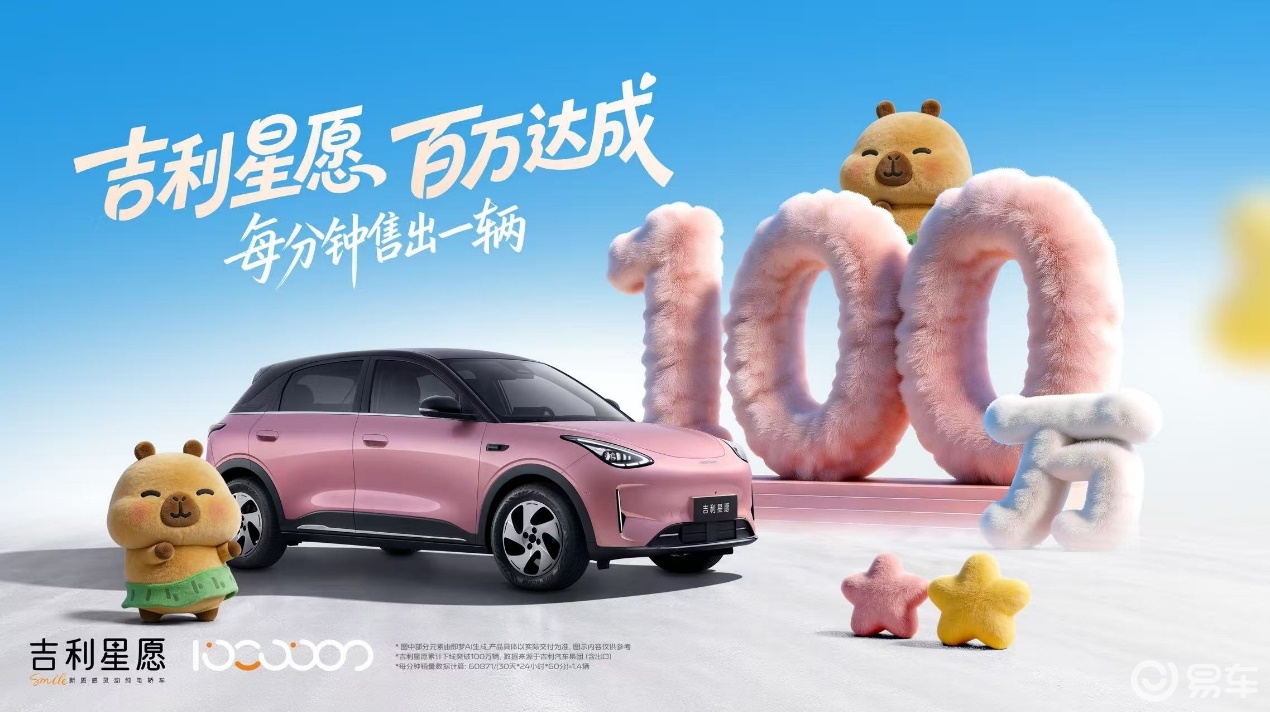
In the fuel vehicle era, the fastest-selling Golf took over 2 years to cross the 1 million unit threshold. In the new energy era, the globally hot-selling Model 3 took about 4 years from the first delivery in July 2017 to break through 1 million units in global sales. Even the BYD Seagull took 27 months, while Geely Star Wish took only 24 months.
On October 20, 2026, the 1 millionth mass-produced whole vehicle of Geely Star Wish went off the line at the Geely Automobile Xiangtan Manufacturing Base. 24 months, 1 million units of a single model, Geely Star Wish wrote a brand-new coordinate for Chinese brands in the history of the global automotive industry.
But behind this record of the fastest million-unit production speed in the global automotive market, what is the 'code' of a small car like Geely Star Wish? When '1 million units' changes from a scale number to a system test, what does Geely Star Wish rely on to support it?

From 'Good Enough' to 'High Quality and Good Value', Star Wish Redefines A0-Class Small Car Value Standards
The predecessors of A0-class pure electric small cars largely came from low-speed electric vehicles, commonly known as 'elderly scooters'. In 2020, the appearance of the Wuling Hongguang MINIEV brought this kind of demand into the framework of the formal automotive industry for the first time. In 2021, retail sales of A00-class cars reached about 898,500 units, accounting for more than 30% of new energy passenger car sales that year.
But while scale expanded, structural problems were also accumulating. The first problem was that safety standards were in a gray zone for a long time. It was not until 2026 that battery safety and whole vehicle safety standards tightened further, 'reducing specs to cut prices' was truly blocked. The second problem, and the most fundamental one: user needs migrated upwards, but product definitions did not follow, entering a downward channel after the peak in 2023.
At the same time, the A0-class small car market began to prosper. Consumers discovered that adding one or two ten-thousand yuan could buy a proper five-seat, fast-charging and smart cockpit A0-class small car. Prosperity and competition are always twin brothers. At that time, the competition logic of A0-class small cars was to stuff range and space into a lower price band, which also belonged to the tactic of 'exchange price for volume'. Although there seemed to be a 'arms race' in configuration, it could not hide the disparity in value delivery in real scenarios.
So the problem facing A0-class pure electric small cars is 'given that cost is still sensitive, can the value that users truly care about be created?'.
When Geely Star Wish launched in 2024, it did not limit its gaze to competitors, but redefined the configuration baseline of this category. It did 'five disruptive innovations' around space, intelligence, range, handling, and safety, turning things that needed to be chosen with extra money or simply not provided in A0-class in the past into standard equipment across the line.
The most direct entry point is the three-electric system and chassis. Geely Star Wish comes standard with CATL battery cells, 11-in-1 intelligent electric drive, rear-wheel drive and multi-link independent suspension. Looking at the A0-class market, rear-wheel drive independent suspension was almost 'small cars are not qualified to talk about' in the past. The all-line standard of CATL battery cells directly responded to the trust deficit in battery quality of early micro electric vehicles. The 70L front trunk is also standard across the line, solving the daily pain point of 'small cars can't fit' with structural design rather than configuration grades.
Space utilization rate is another dimension that has been redefined. Geely Star Wish is not simply making the body larger, but doing 'room utilization rate' within A0-class dimensions: 85% utilization rate, flat rear floor, 36 storage spaces, targeting the real needs of family users after migrating from 'two-person commuting' to 'multi-person sharing' scenarios. When A00-class users upgrade to A0-class, what they perceive first is 'can adults sit properly in the back row', 'is there a place to put things', and Star Wish's product definition fits exactly at this migration node.
The down-filling method of intelligent configuration is also different. Flyme Auto intelligent cockpit and highway NOA are put into the 70,000 yuan price range, but Star Wish emphasizes 'usable' rather than 'having' in communication and product definition. Flyme Auto has already accumulated over 2.8 million users and over 20 OTA iterations, which means its fluency and ecosystem maturity have been verified on a large scale. In the A0-class market, the trap that intelligent down-filling easily falls into is 'there is parameter on paper, but no experience in reality'. Star Wish's relative advantage lies in building intelligent configuration on a verified vehicle system, rather than treating intelligent driving and cockpit as decoration items on a configuration sheet.
Geely Star Wish has achieved the shift of A0-class small cars from 'Good Enough' to 'High Quality and Good Value', and the competition dimension has also shifted from price to value.
Star Wish's Sales and Map, But Rather Continuous Volume Expansion
Before the 1 millionth unit went off the line, Geely Star Wish had already completed continuous verification on the sales side.
As the best-selling full-category car in 2025, Geely Star Wish achieved cumulative sales of over 249,000 units in the first half of 2026, a year-on-year increase of 21%, firmly ranking first in sales among all full-market models in the first half of the year. Entering the second half of the year, Star Wish sold over 60,000 units in August and September for two consecutive months, making it the only model on the market with sales exceeding 60,000 units for two consecutive months. It can be seen that Star Wish's market performance is not a short-term pulse, but a continuous volume expansion supported by demand, production capacity and delivery.
In the domestic market, the street visibility of Geely Star Wish continues to rise. The label of 'National Car God' comes from the actual choice of 1 million users. For A0-class small cars, being able to enter the best-selling list of the full category itself shows that it has jumped out of the niche market and entered more widespread mass travel scenarios.
Overseas markets are advancing simultaneously. Geely Star Wish is sold under the name Geely EX2. In the first half of 2026, 87,000 units were exported, entering over 30 countries, ranking TOP 2 among China New Energy Hatchback Models exported in the first half of 2026, and successively winning Thailand EV Sales Champion, Jordan Pure Electric No. 1, and Mexico Pure Electric No. 2. In August 2026, Star Wish launched in Australia, the UK, and France, winning the Australian Pure Electric Market Sales Champion in the first month of launch.
At the same time, Geely Star Wish entered Brazil in November 2025, local mass production at the Renault-Geely joint venture factory in June 2026, and local mass production in Indonesia in January 2026, shifting from whole vehicle export to local assembly in less than a year.
From China sales champion to over 30 countries globally, Geely Star Wish's expansion map shows that the competitiveness of China's new energy small cars is moving from 'product export' to 'market adaptation'.
Behind this is the support of Geely Group's overseas strategy: In 2026, Geely's export target is 640,000 units, overseas sales in the first quarter were 203,000 units, a year-on-year increase of 126%, and Star Wish is the main grip.
Of course, regulations, road conditions, charging conditions, and user habits vary greatly in different markets. Overseas sales rankings can show that product power has received initial recognition, but true globalization still requires local service networks, supply chain response, and long-term brand accumulation. Star Wish's globalization story has just entered the stage of requiring deep ploughing.
1 Million Units Down, Behind 55 Seconds Per Car, Is Geely's Globalization System Capability
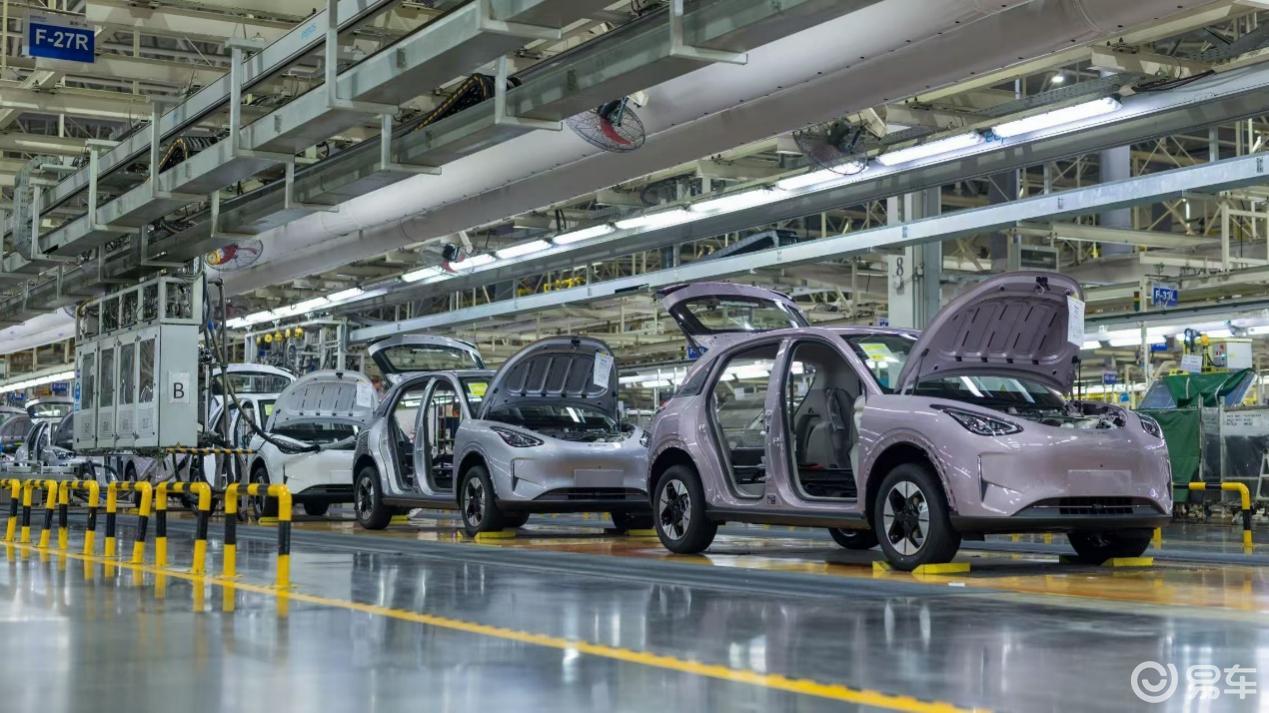
24 months 1 million units down, on the surface it is production line speed, but essentially it is a concentrated realization of system capability.
Relying on Geely Group's 40 years of underlying technology accumulation and global system capability, Geely Galaxy brand has won the favor of over 2.7 million users globally. From global new energy native architecture at the R&D end, to multi-base collaboration and rapid capacity climbing at the manufacturing end; from stable guarantee of core components at the supply chain end, to domestic service network and overseas 30+ countries local layout at the market end. Geely Star Wish's million-unit level scale delivery is essentially Geely Galaxy's set of system capability accumulation and sudden launch.
As the core manufacturing carrier, Geely Automobile Xiangtan Manufacturing Base, which has been cultivated in Hunan for 20 years, has nurtured multiple million-unit models successively. It has been upgraded to a global manufacturing base with equal emphasis on new energy vehicles and export vehicles. In double-shift production mode, the factory produces one whole vehicle on average every 55 seconds. Intelligent manufacturing system and full-process quality control provide guarantees for the quality consistency of Geely Star Wish 1 million units. For users, 1 million units is not just a production number, it also means that every vehicle off the line must stand up to the same quality standards.

Quality consistency has real data support. Geely Star Wish, in conjunction with China Automotive Technology and Research Center, used a user vehicle with a driving mileage of 200,000 km for rigorous actual testing. This first-generation Star Wish 310km Dream Edition, after driving on 60% urban and 40% expressway elevated road sections, the actual measured range is 309 km, range achievement rate 99.7%; Thanks to rear-wheel drive, multi-link independent suspension and Lotus tuning technology, this 200,000 km in-service vehicle's elk test result reached 78.1 km/h, which is very little different from the 80.7 km/h result at the new car stage. Perhaps data cannot represent all user scenarios, but it provides an observation window. Geely Star Wish's long-term quality has not shown an obvious decline with mileage growth.
This is also the key to '1 million unit gold content'. Speed can be achieved through capacity climbing, but quality consistency requires the support of R&D, supply chain, manufacturing, quality inspection and after-sales full-link.
Geely Star Wish 24 months 1 million units, it is certainly not easy to build cars, but at the same time of rapid volume increase, quality absolutely did not give way to speed.
Written at the end:
From the 1st unit to the 1 millionth unit, a 24-month leap, witnessing the rise of a phenomenal model, and more a legend written by a Chinese brand with system strength, product strength and user sincerity.
Geely Star Wish proved that A0-class small cars can gain scale through value rather than low prices. What China's intelligent manufacturing needs to drive onto the world stage is exactly this long-term capability from product to system, from speed to quality. After 1 million units, Geely Star Wish's new story has just begun.
© 2024 Bitauto.com. All Rights Reserved.
Bitauto (www.yiche.com and www.bitauto.com) is one of the most visited automotive websites in China. We provide detailed info on Chinese car brands available in your area. Please note that the information provided on this website is based on publicly available data and is for reference only. It may not be fully updated or accurate at all times.

Help us improve our website


