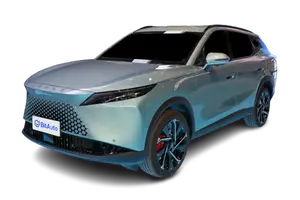
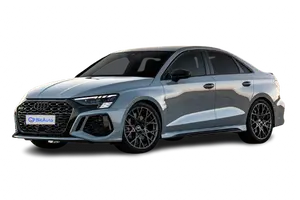
Long-distance drivers: C7 PHEV — refuels anywhere with no charging stops
Performance seekers: RS 3 — 400 hp and a 3.8 s sprint beats the C7 PHEV's 156 hp
Price & Ownership Costs
ParameterOMODA JAECOO C7 PHEVAudi RS 3
PriceTBCRM 673,600
Body Type / Seats5 door SUV · 5 seats4 door Sedan · 5 seats
Assembly-CBU
Annual Road TaxRM 120 ✓RM 880
Engine, Fuel Economy & Refuelling
ParameterOMODA JAECOO C7 PHEVAudi RS 3
Engine Capacity1,500 cc2,500 cc ✓
Fuel Tank-55 L
Both run conventional petrol engines. The C7 PHEV uses a 1.5-litre turbocharged engine; the RS 3 a 2.5-litre turbocharged engine.
Power & Performance
ParameterOMODA JAECOO C7 PHEVAudi RS 3
MotorFront-
Max Power156 Ps400 Ps ✓
Max Torque220 N·m500 N·m ✓
DrivetrainFWD4WD
TransmissionDHTDCT
Dimensions
ParameterOMODA JAECOO C7 PHEVAudi RS 3
Length4,621 mm-
Width1,872 mm-
Height1,673 mm-
Wheelbase2,700 mm-
Boot Capacity614-1371 L-
Comfort & Technology
C7 PHEV
15.6" central touchscreen + 8.88" digital cluster
Ventilated front seats
50W wireless phone charging
Power tailgate
Heated and power-folding door mirrors
RS 3
Sales Comparison
Monthly new car sales in Malaysia, with data for the past 6 or 12 months, or the full sales history since launch.
Monthly Sales Trend (Malaysia)
Loading sales data…
Monthly Registrations
Monthly Registrations
Data is based on vehicle registration and transaction records from Road Transport Department (JPJ), updated on the 10th of each month. It covers car sales by brand and model, as well as EV sales across Malaysia.
Key Specs Compared
ParameterOMODA JAECOO C7 PHEVAudi RS 3
Overview
PriceTBCRM 673,600
Body Type5 door SUV4 door Sedan
Seats5 seats5 seats
Assembly-CBU
Launch Year2026-
Performance
MotorFront-
Max Power156 Ps400 Ps ✓
Max Power114.7 kW294 kW ✓
Max Torque220 N·m500 N·m ✓
0–100 km/h8.5 s3.8 s ✓
Top Speed-250 km/h
DrivetrainFWD4WD
TransmissionDHTDCT
Battery & Charging
Battery TypeLFP battery-
Battery Capacity18.3 kWh-
Dimensions
Length4,621 mm-
Width1,872 mm-
Height1,673 mm-
Wheelbase2,700 mm-
Boot Capacity614-1371 L-
FAQs
Which one is more powerful?
The RS 3 is more powerful — 400 hp against 156 hp.