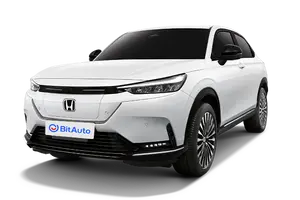
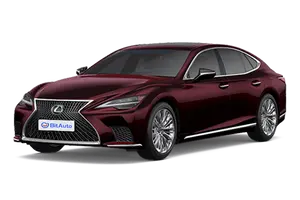
One is electric and one runs on petrol — the split comes down to how you charge and how far you drive. The e:N1 is the cheaper way in at RM 150,060, undercutting the LS by RM 1,099,940. The LS earns its premium on boot space and size.
Body Type / Seats5 door SUV · 5 seats4 door Sedan · 5 seats
AssemblyCKDCBU
Annual Road TaxRM 160 ✓RM 4,132.50
Over five years the e:N1's RM 1,099,940 head start is unlikely to be erased by running costs — five-year ownership still lands about RM 1,114,721 in the e:N1's favour. The deciding factor is your annual mileage and whether you can charge at home.
Energy & Consumption
ParameterHonda e:N1Lexus LS
Fuel TypeBEVPetrol
Consumption-10.5 L/100km
Max Range (Full Tank/Charge)500 km · NEDC-
The e:N1 runs on electricity alone; the LS burns petrol. Home-charged electricity costs roughly 71% less per kilometre than petrol. Refuelling the LS takes minutes and covers about 781 km per fill, against 500 km per charge for the e:N1.
Power & Performance
ParameterHonda e:N1Lexus LS
MotorFront-
Max Power-421 Ps
Max Torque-600 N·m
DrivetrainFWDRWD
TransmissionFixed Gear RatioAT
Dimensions
ParameterHonda e:N1Lexus LS
Length4,380 mm5,235 mm ✓
Width1,790 mm1,900 mm ✓
Height1,592 mm ✓1,450 mm
Wheelbase2,610 mm3,125 mm ✓
Boot Capacity344 L480 L ✓
The LS is the longer car — 855 mm up at 5235 mm versus 4380 mm. The LS has the noticeably larger boot, 480 L against 344 L. The LS also leads on wheelbase, 3125 mm versus 2610 mm.
Comfort & Technology
e:N1
15.1" central touchscreen + 10.25" digital cluster
Dual-zone automatic climate control
15W wireless phone charging
Heated and power-folding door mirrors
Remote climate pre-conditioning
LS
12.3" touchscreen with Apple CarPlay / Android Auto
Dual-zone automatic climate control
Ventilated front seats
12-speaker sound system
Power tailgate
Sales Comparison
Monthly new car sales in Malaysia, with data for the past 6 or 12 months, or the full sales history since launch.
Monthly Sales Trend (Malaysia)
Loading sales data…
Monthly Registrations
Monthly Registrations
Data is based on vehicle registration and transaction records from Road Transport Department (JPJ), updated on the 10th of each month. It covers car sales by brand and model, as well as EV sales across Malaysia.
Key Specs Compared
ParameterHonda e:N1Lexus LS
Overview
PriceRM 150,060 ✓RM 1,250,000
Body Type5 door SUV4 door Sedan
Seats5 seats5 seats
AssemblyCKDCBU
Performance
MotorFront-
Max Power-421 Ps
Max Power-309 kW
Max Torque-600 N·m
0–100 km/h-5 s
Top Speed160 km/h250 km/h ✓
DrivetrainFWDRWD
TransmissionFixed Gear RatioAT
Battery & Charging
Battery TypeLi-ion battery-
Battery Capacity68.8 kWh-
Electric Range500 km · NEDC-
Dimensions
Length4,380 mm5,235 mm ✓
Width1,790 mm1,900 mm ✓
Height1,592 mm ✓1,450 mm
Wheelbase2,610 mm3,125 mm ✓
Kerb Weight1,662 kg2,235 kg
Boot Capacity344 L480 L ✓
FAQs
Is the e:N1 or LS better?
The e:N1 is the cheaper of the two at RM 150,060, but the LS answers back with more equipment for the money.
What is the price difference between the e:N1 and LS?
The e:N1 starts at RM 150,060, the LS at RM 1,250,000 — about RM 1,099,940 in favour of the e:N1.
Which has more boot space?
The LS has the larger boot at 480 L against 344 L.
Which is bigger?
The LS is longer, at 5235 mm against 4380 mm.
Do both cars come with advanced driver assistance?
Both list autonomous emergency braking, lane-keeping assist and adaptive cruise control; the LS adds a 360-degree camera.




 OMODA JAECOO J7 PHEV
 BYD Atto 3
 Jetour T2 i-DM
 Porsche Panamera

