One is a plug-in hybrid, the other a pure electric — both can be charged, but only the hybrid carries a petrol engine for long runs. The e:N1 is the cheaper way in at RM 150,060, undercutting the T9 Electric by RM 5,918. With no clear hardware advantage to justify the difference, the T9 Electric is harder to recommend.
Key Differences
Price:e:N1 RM 150,060; T9 Electric RM 155,978
Engine + battery:e:N1 68.8 kWh, 500 km; T9 Electric 2L, 31.2 kWh, 100 km
Length:e:N1 4380 mm; T9 Electric 5330 mm
Pros & Cons
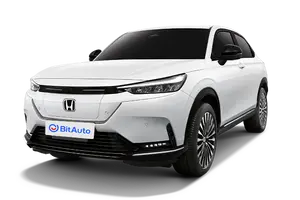
Honda e:N1 500km Standard (2025)
Pros
Lower price at RM 150,060
Longer 500 km range
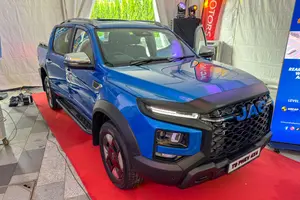
JAC T9 Electric PHEV 2.0T 100km Standard (2027)
Pros
Competitive on price for what it offers
Cons
Higher entry price
Shorter range
Find the Right Car
Choose the e:N1 if you want...
the lowest purchase price (RM 150,060)
a compact body that's easy to park and thread through traffic
near-zero fuel cost on home charging
Choose the T9 Electric if you want...
a 360-degree camera as standard
a 2-litre engine
up to 100 km of range
Which car suits your lifestyle best?
Daily commuters: e:N1 — the lower price and compact dimensions that are easy to park make it an easy city EV
Long-distance drivers: T9 Electric — refuels anywhere with no charging stops
Body Type / Seats5 door SUV · 5 seats4 door Pickup · 5 seats
AssemblyCKDCBU
Annual Road TaxRM 160 ✓RM 440
Over five years the e:N1's RM 5,918 head start is unlikely to be erased by running costs — five-year ownership still lands about RM 8,327 in the e:N1's favour. The deciding factor is your annual mileage and whether you can charge at home.
Energy & Consumption
ParameterHonda e:N1JAC T9 Electric
Fuel TypeBEVPHEV
Consumption-1.6 L/100km
Max Range (Full Tank/Charge)500 km · NEDC100 km · NEDC
The e:N1 is pure electric; the T9 Electric adds a petrol engine for distance. That engine is a 2-litre turbocharged engine. On battery alone the T9 Electric manages 100 km against 500 km for the e:N1. Battery capacity is 31.2 kWh versus 68.8 kWh.
Power & Performance
ParameterHonda e:N1JAC T9 Electric
MotorFrontFront+Rear
Max Power-211 Ps
Max Torque-370 N·m
DrivetrainFWD4WD
TransmissionFixed Gear RatioDHT
Dimensions
ParameterHonda e:N1JAC T9 Electric
Length4,380 mm5,330 mm ✓
Width1,790 mm1,965 mm ✓
Height1,592 mm1,920 mm ✓
Wheelbase2,610 mm3,110 mm ✓
Boot Capacity344 L-
The T9 Electric is the longer car — 950 mm up at 5330 mm versus 4380 mm. The T9 Electric also leads on wheelbase, 3110 mm versus 2610 mm.
Comfort & Technology
e:N1
15.1" central touchscreen + 10.25" digital cluster
Dual-zone automatic climate control
15W wireless phone charging
Heated and power-folding door mirrors
Remote climate pre-conditioning
T9 Electric
Automatic climate control
Sunroof
50W wireless phone charging
Heated and power-folding door mirrors
360-degree surround-view camera
Sales Comparison
Monthly new car sales in Malaysia, with data for the past 6 or 12 months, or the full sales history since launch.
Monthly Sales Trend (Malaysia)
Loading sales data…
Monthly Registrations
Monthly Registrations
Data is based on vehicle registration and transaction records from Road Transport Department (JPJ), updated on the 10th of each month. It covers car sales by brand and model, as well as EV sales across Malaysia.








 OMODA JAECOO J7 PHEV
 BYD Atto 3
 Jetour T2 i-DM

