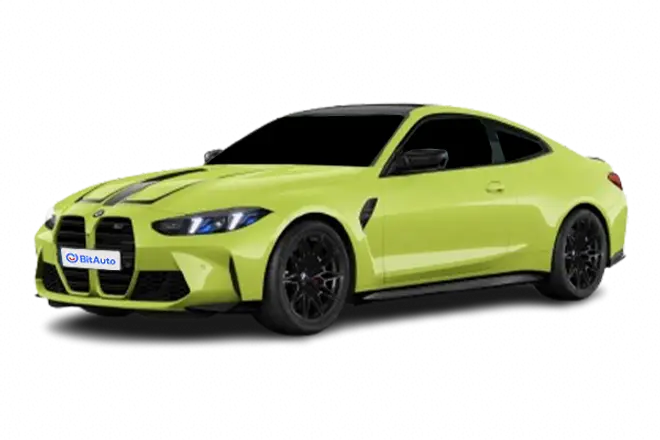
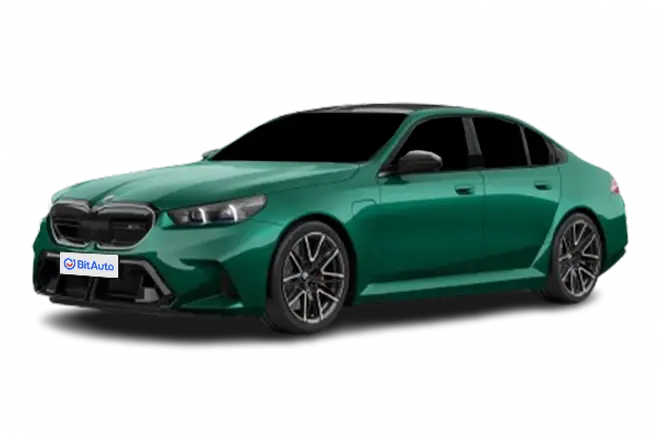
Inside the BMW M Power showroom, you are presented with two choices: on the left sits the two-door M4 priced at RM878, 800. On the right is the M5, a four-door sedan tagged at RM1,200,800.
The M4 packs a 530 hp combustion engine, while the M5 boasts a staggering 727 hp from its PHEV setup. That creates a price gap of RM322,000.
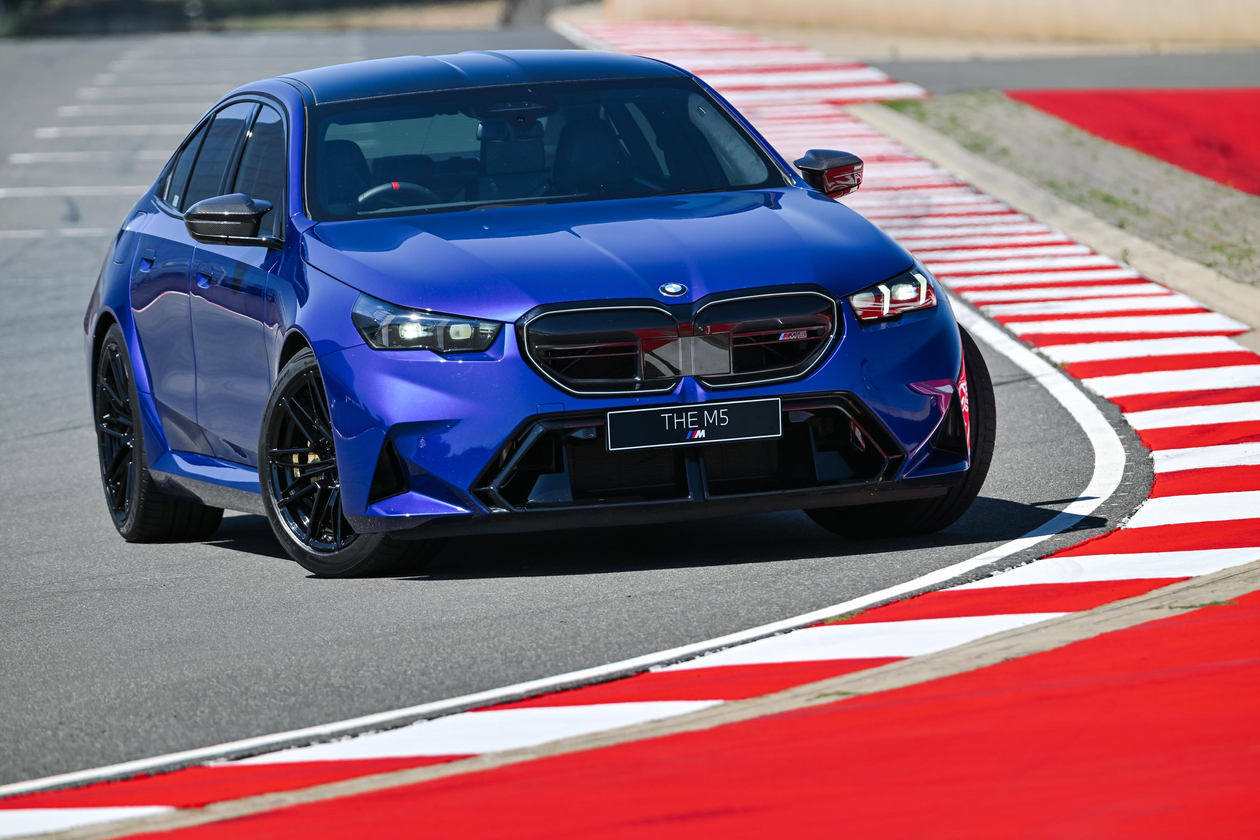
The M5 recently saw a price adjustment from RM1,188,800 to RM 1,200,800—a RM12,000 hike.
Taking centre stage, the M5 is marketed by sales staff as the “most powerful M5 ever” and the first factory-built M5 to smash the 700 hp barrier. And it also marks the debut of the PHEV powertrain in an M5.
With such prestigious titles, the M4 parked alongside might seem a little underwhelming. But is this most powerful car as impressive as it sounds?
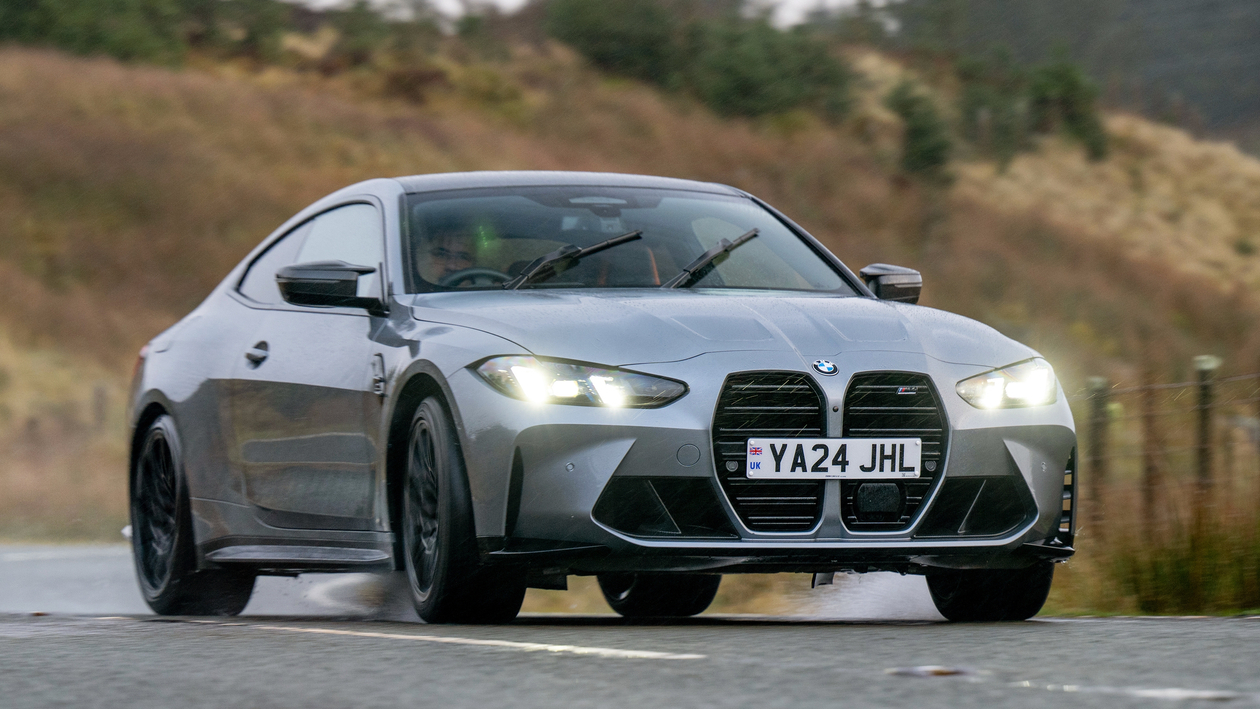
Let’s look at the specs: the M4 features a 2,993 cc S58 twin-turbo straight-six engine delivering 530 hp and 650 Nm of torque. The M5 uses a 4,395 cc twin-turbo V8 paired with an electric motor integrated into the transmission, outputting a combined 727 hp and 1,000 Nm.
Both models come with an eight-speed M Steptronic transmission and M xDrive all-wheel drive. They share an electronically limited top speed of 250 km/h and identical 0-100 km/h times of 3.5 seconds. Both are CBU units imported from Germany.
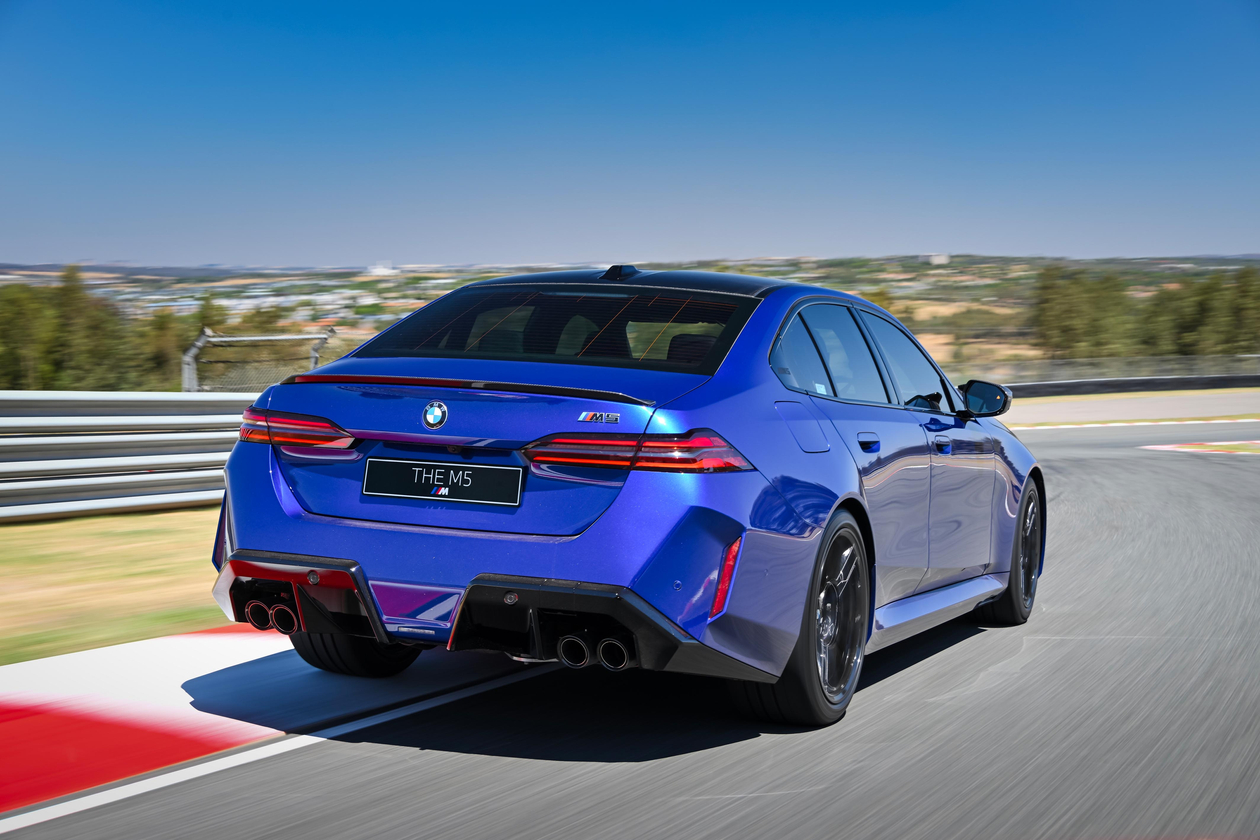
On paper, the M5 is a powerhouse, but we must respect the laws of physics. The weight disparity is significant: the M4 weighs 1,800 kg, while the M5 tips the scales at 2, 510 kg—a difference of 710 kg.
When you calculate the power-to-weight ratio, the M4 carries approximately 3.40 kg per horsepower, while the M5 carries roughly 3.45 kg per horsepower. The 197 hp is offset by that 710 kg of added weight, leaving the M5 at a slight disadvantage.
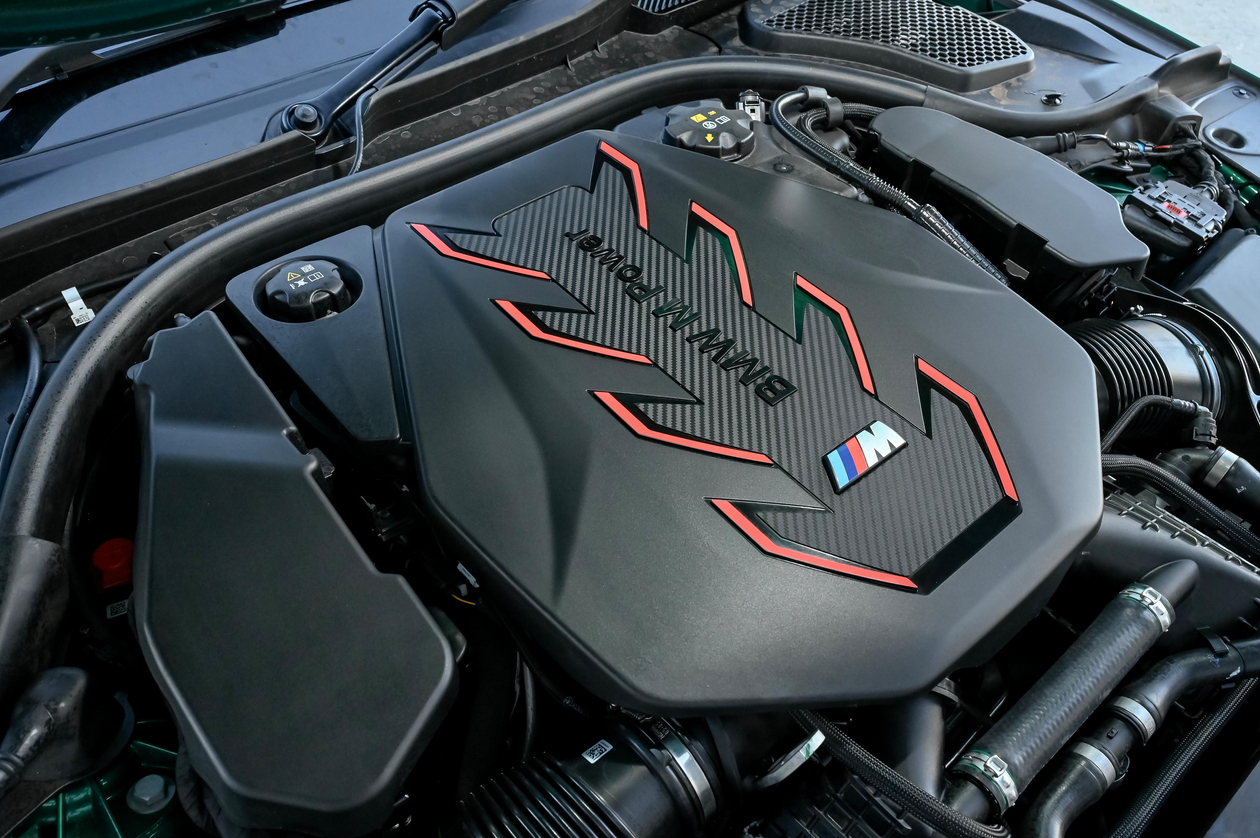
While the M5 boasts the most powerful output in the nameplate's history, it is probably the heaviest, too. A kerb weight of 2.5 tonnes puts it in the same territory as many full-electric vehicles, which has become the most contentious point among performance enthusiasts: it is too heavy.
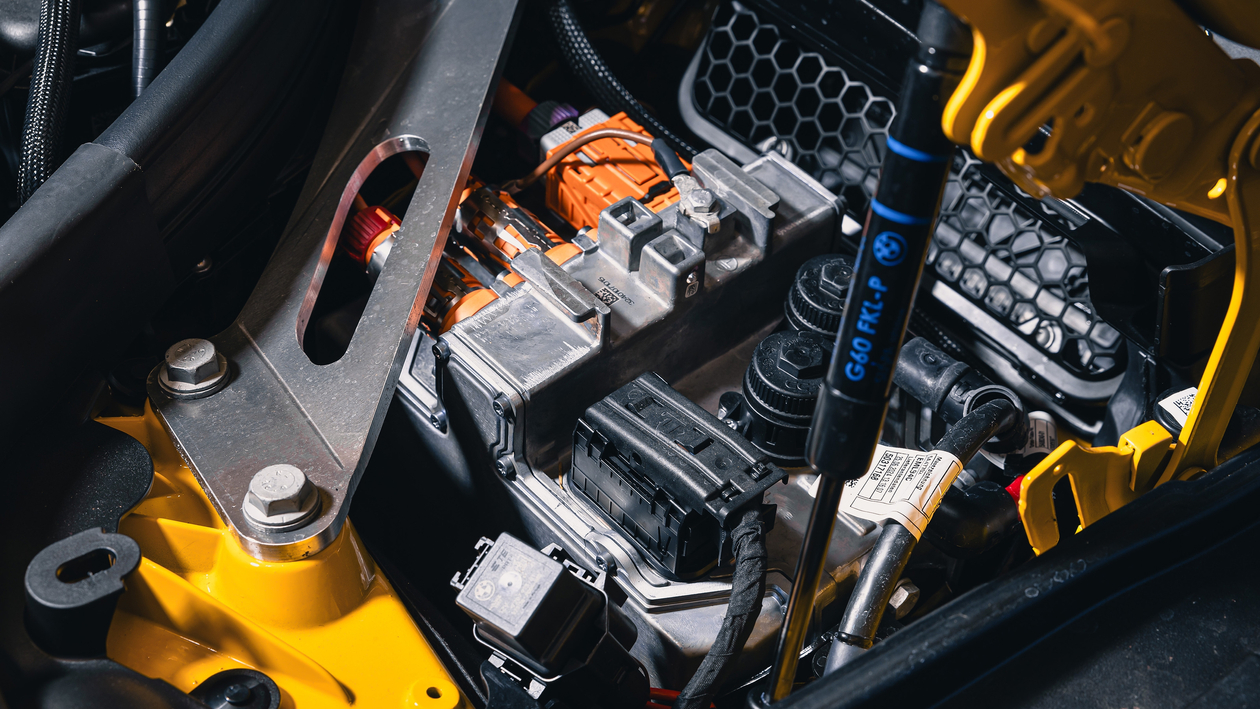
Where exactly is that extra mass? Firstly, the powertrain is bulkier; the V8 engine, along with the electric motor, battery pack, and the larger four-door chassis, all contribute to substantial weight.
The M5 is also dimensionally larger, with a wheelbase of 3,006 mm—149 mm longer than the M4. It is 1,970 mm wide, 83 mm wider than the M4, and offers 466 L of boot space compared to the M4's 440 L.
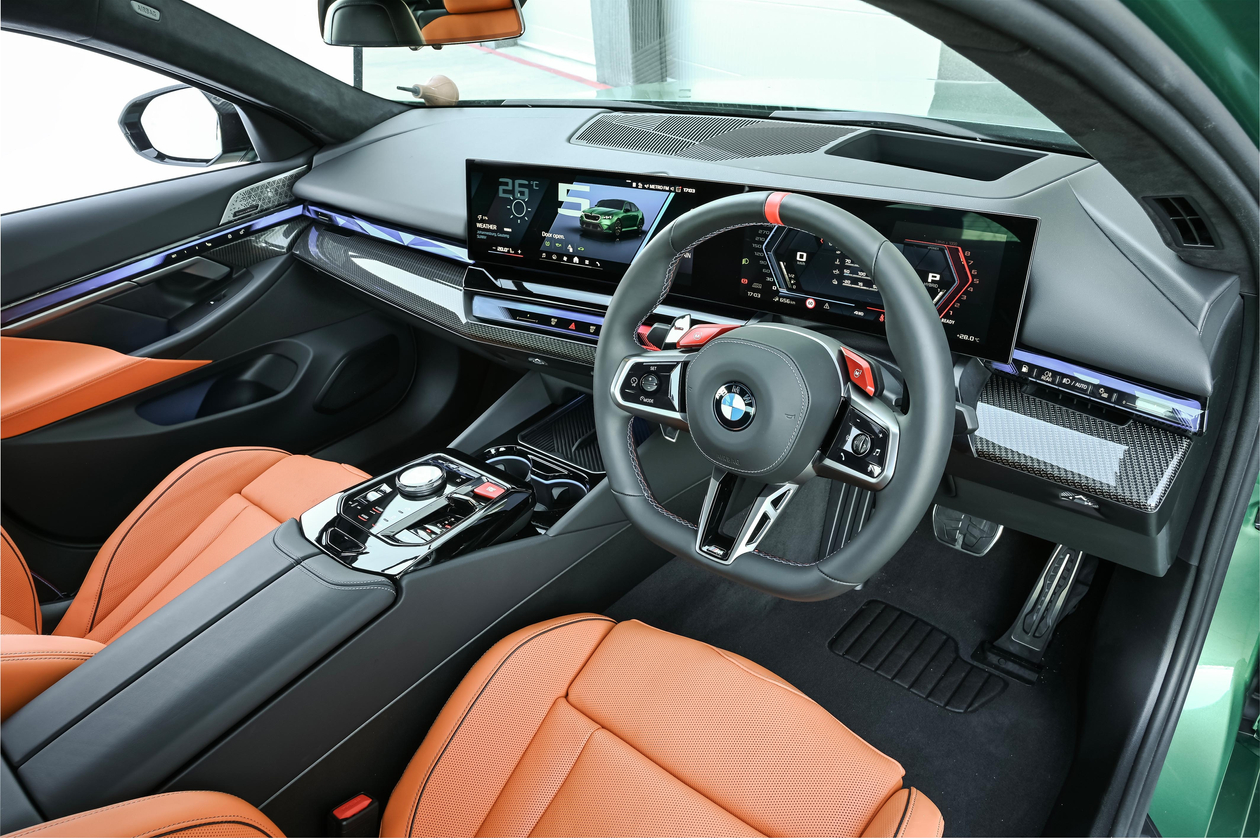
However, this weight brings two advantages over the M4.
First, it is much quieter; with an official WLTP electric range of 67–69 km, you can leave your neighbourhood or enter your office carpark in complete silence.
Second, it offers superior composure; as an executive sedan, the longer wheelbase and rear-wheel steering provide a level of stability and refinement during long-distance drives that the M4 lacks.
Furthermore, thanks to the rear-wheel steering, the 5,096 mm long, 2.5-tonne M5 is actually easier to maneuver in tight spaces than the M4.
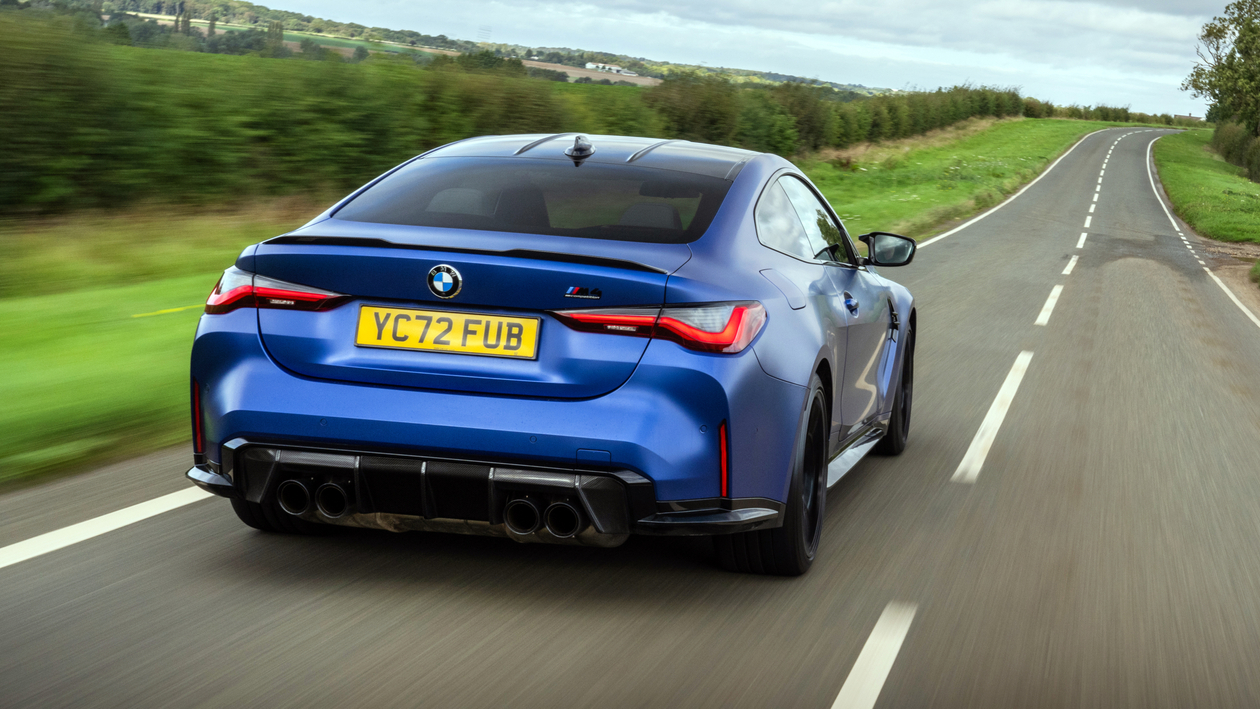
In Malaysia, PHEV road tax is calculated based on the internal combustion engine's capacity, just like a standard petrol vehicle. The M4's 2,993 cc engine sits within the 3,000 cc bracket, incurring an annual road tax of RM2,112.50 in Peninsular Malaysia.
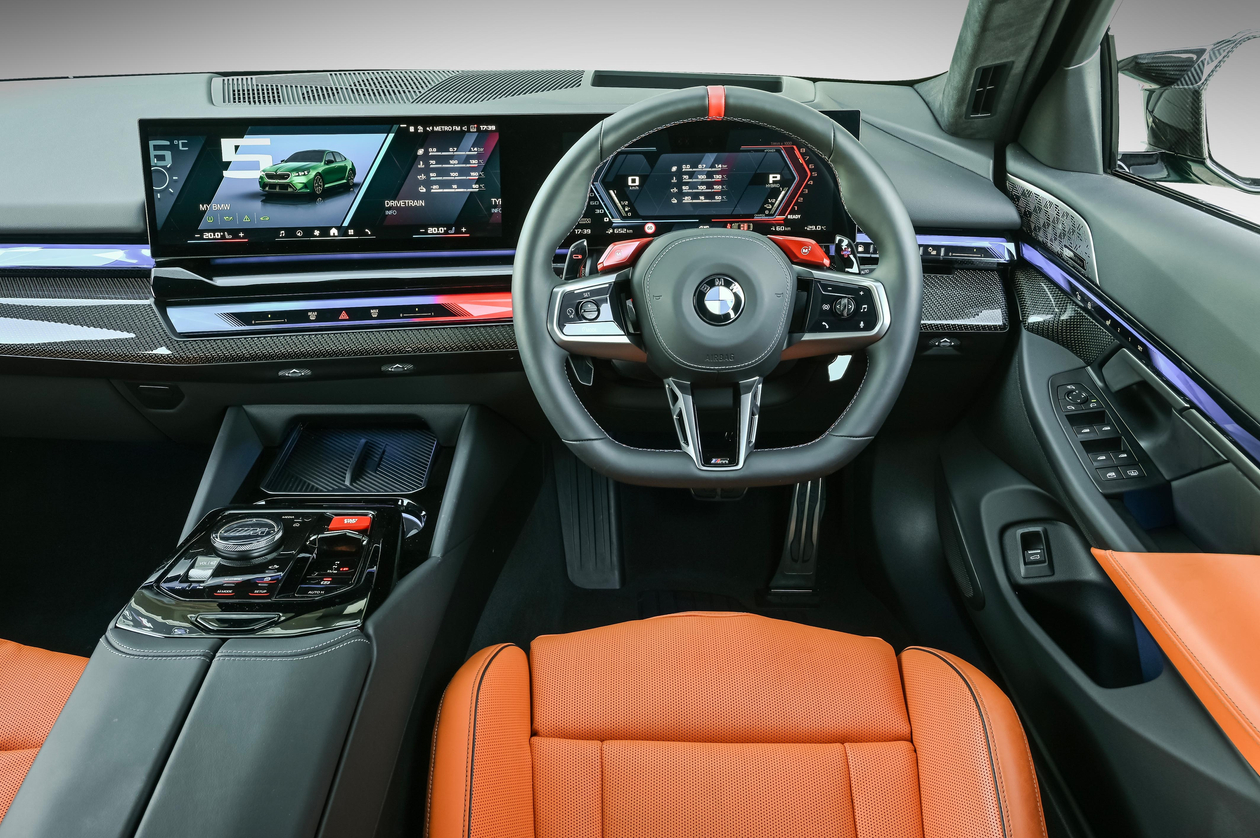
The M5’s 4,395 cc engine falls into a much higher category, resulting in an annual road tax of approximately RM8,407.50, which is significantly steeper than the M4.
Regarding coverage, both vehicles come with a 2-year manufacturer warranty, with options for extended service packages available separately.
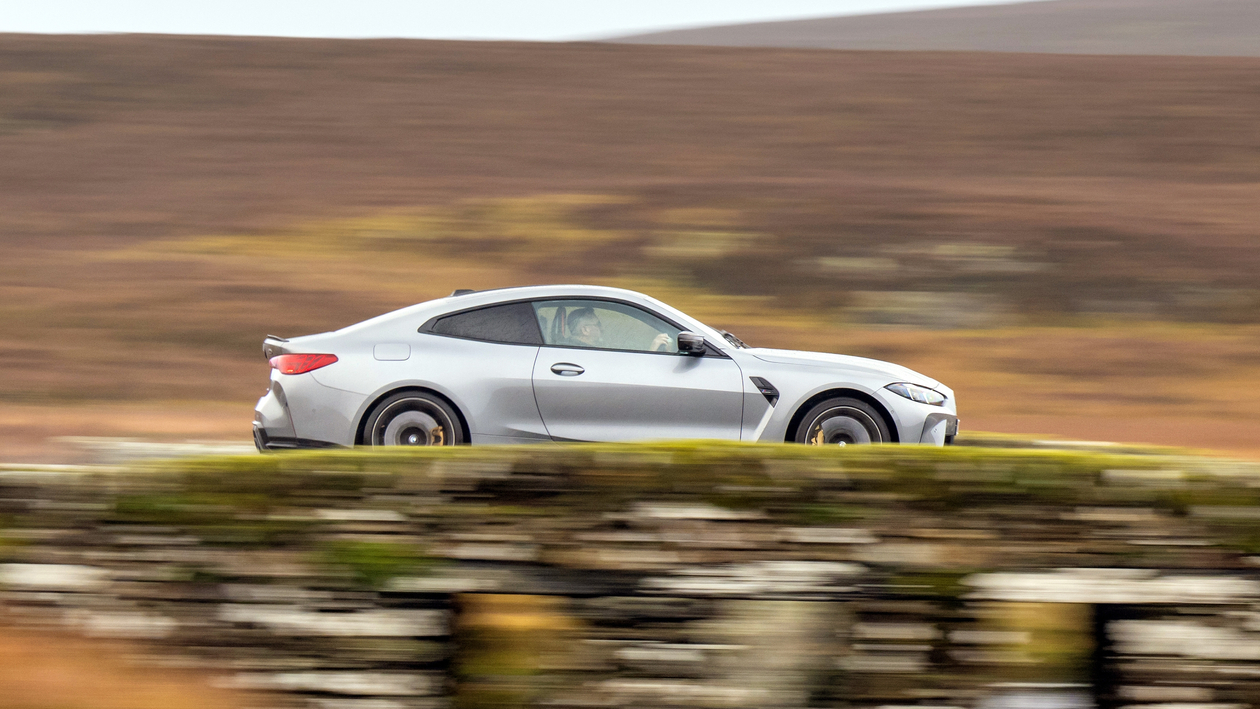
If I had to choose, I would pick the M4.
Yes, the M5 is the most powerful, featuring hybrid efficiency and the convenience of silent electric driving. Even if you don't use it as a sports car, it remains an excellent executive saloon. But its 2.5-tonne mass, the eye-watering road tax, and the fuel consumption of a large V8 engine make it a more demanding machine to own compared to the six-cylinder M4.
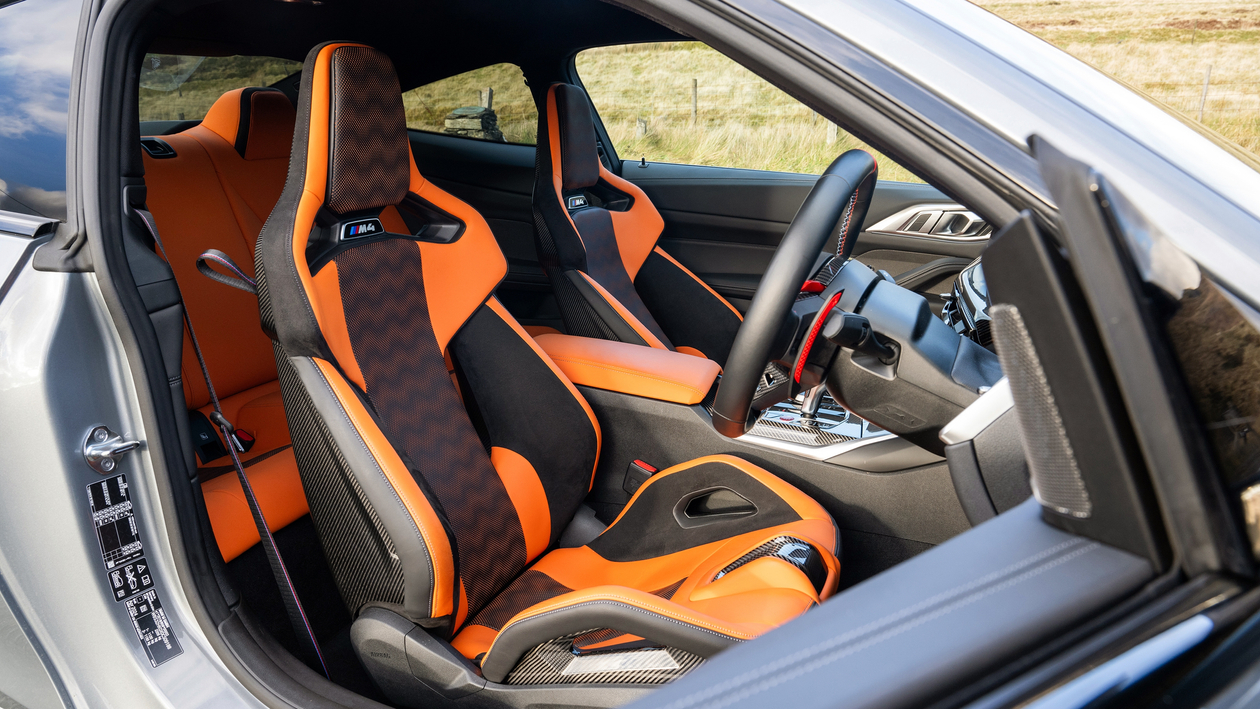
Between the two, the M4 is the one to have, even if the rear seats are barely fit for adults.
Leave your number, an advisor will contact you


Your go-to source for all things automotive in Malaysia. 🚗 Latest reviews, breaking news, launches & industry trends.
+ Follow 0–100 km/h in 2.98s and 10–80% charge in 10.5 mins? ⚡ Meet the upgraded 2027 Zeekr 7X on a 900V platform, spotted ahead of Auto Guangzhou 2026. Tap to see full specs & pricing! 👇
#Zeekr7X #EV #ElectricSUV #AutoGuangzhou2026 #CarNews 1 minute ago
 Forget flashiness, this 247 PS hybrid luxury saloon brings serious comfort and ~4.4L/100km efficiency at RM 366,888. Worth it over continental rivals? 👇
#LexusES #LexusES350h #HybridLuxury #ExecutiveSedan #CarReview #MalaysiaCars 1 minute ago
 Is this Proton’s next flagship SUV? 👀 Spotted ahead of Auto Guangzhou 2026, the massive 5.2-metre Geely Galaxy M8 packs 870 PS, 1,560 km range, and 4-minute ultra-fast charging. Full details inside 👇
#Proton #GeelyGalaxyM8 #AutoGuangzhou2026 #PHEV #MalaysiaCars #CarNews 1 minute ago
Get the latest car news first!
Your go-to source for all things automotive in Malaysia. 🚗 Latest reviews, breaking news, launches & industry trends.
0–100 km/h in 2.98s and 10–80% charge in 10.5 mins? ⚡ Meet the upgraded 2027 Zeekr 7X on a 900V platform, spotted ahead of Auto Guangzhou 2026. Tap to see full specs & pricing! 👇
#Zeekr7X #EV #ElectricSUV #AutoGuangzhou2026 #CarNews 1 minute ago Forget flashiness, this 247 PS hybrid luxury saloon brings serious comfort and ~4.4L/100km efficiency at RM 366,888. Worth it over continental rivals? 👇
#LexusES #LexusES350h #HybridLuxury #ExecutiveSedan #CarReview #MalaysiaCars 1 minute ago Is this Proton’s next flagship SUV? 👀 Spotted ahead of Auto Guangzhou 2026, the massive 5.2-metre Geely Galaxy M8 packs 870 PS, 1,560 km range, and 4-minute ultra-fast charging. Full details inside 👇
#Proton #GeelyGalaxyM8 #AutoGuangzhou2026 #PHEV #MalaysiaCars #CarNews 1 minute ago 
© 2024 Bitauto.com. All Rights Reserved.
Bitauto (www.yiche.com and www.bitauto.com) is one of the most visited automotive websites in China. We provide detailed info on Chinese car brands available in your area. Please note that the information provided on this website is based on publicly available data and is for reference only. It may not be fully updated or accurate at all times.

Help us improve our website