A sudden afternoon thunderstorm in Malaysia can turn a clear road into a flooded stretch in just 30 minutes. Flash floods are a common sight on low-lying roads across the country, leaving drivers to decide whether it is safe to drive through the water.
How deep is too deep? Can your car make it across? Driving through floodwater without checking the depth could lead to serious engine damage, but taking a long detour every time is not always practical either.
Knowing how to assess the water level and drive through safely can help protect both your car and everyone inside during the rainy season.
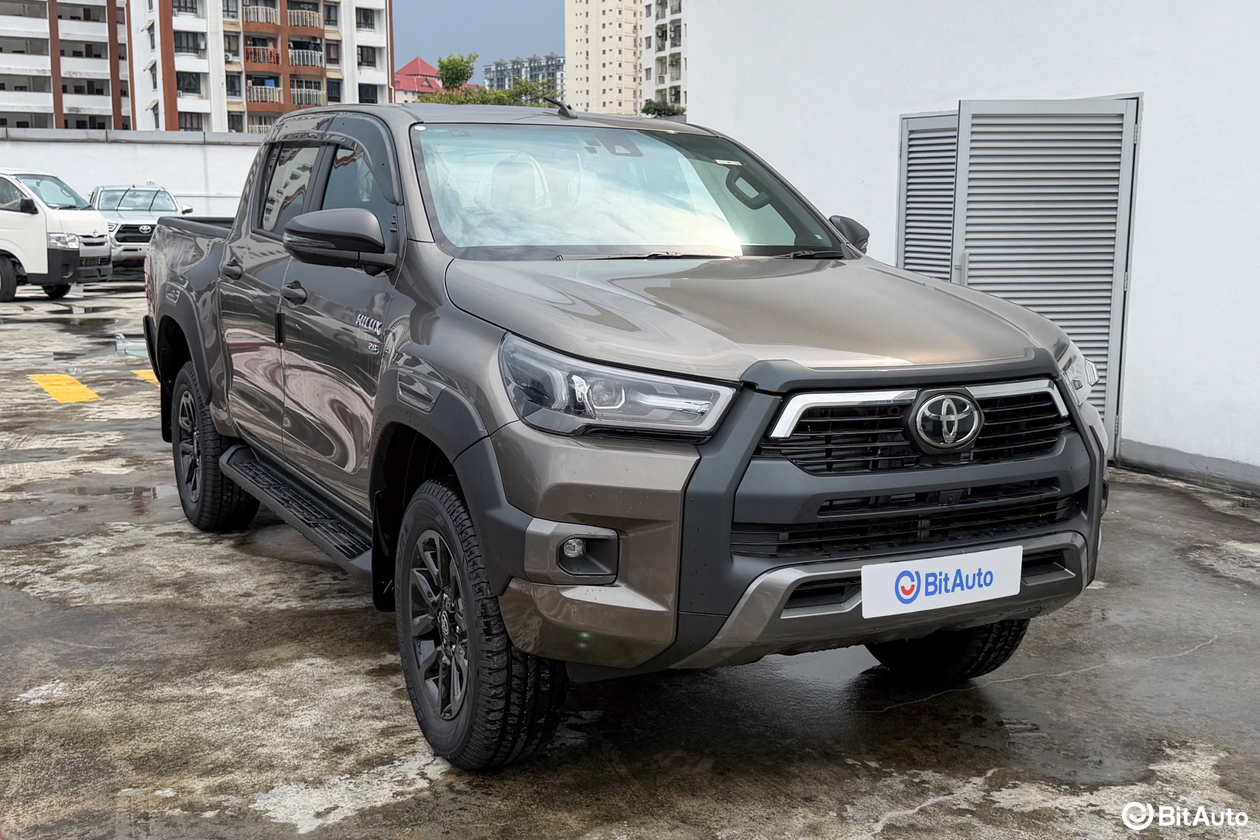
From a mechanical standpoint, the height of the engine air intake is the critical limit. If water enters the intake and reaches the engine, it can cause catastrophic damage.
The problem is that most drivers do not know exactly where their car's air intake is located under the bonnet. Water pushed up by the front of a moving car can also be much higher than the actual water level.
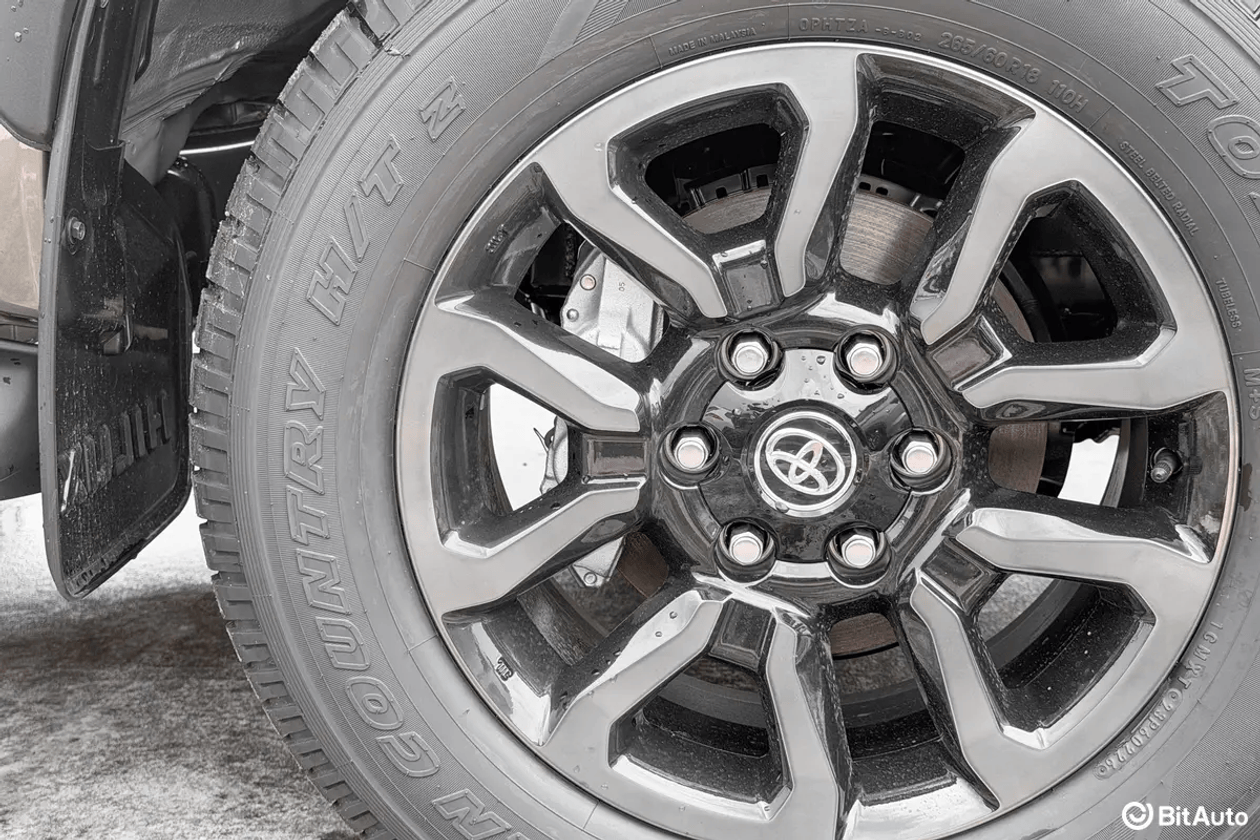
A more practical way to assess the depth is to use the tyres of your own car, or those of a vehicle parked nearby, as a reference.
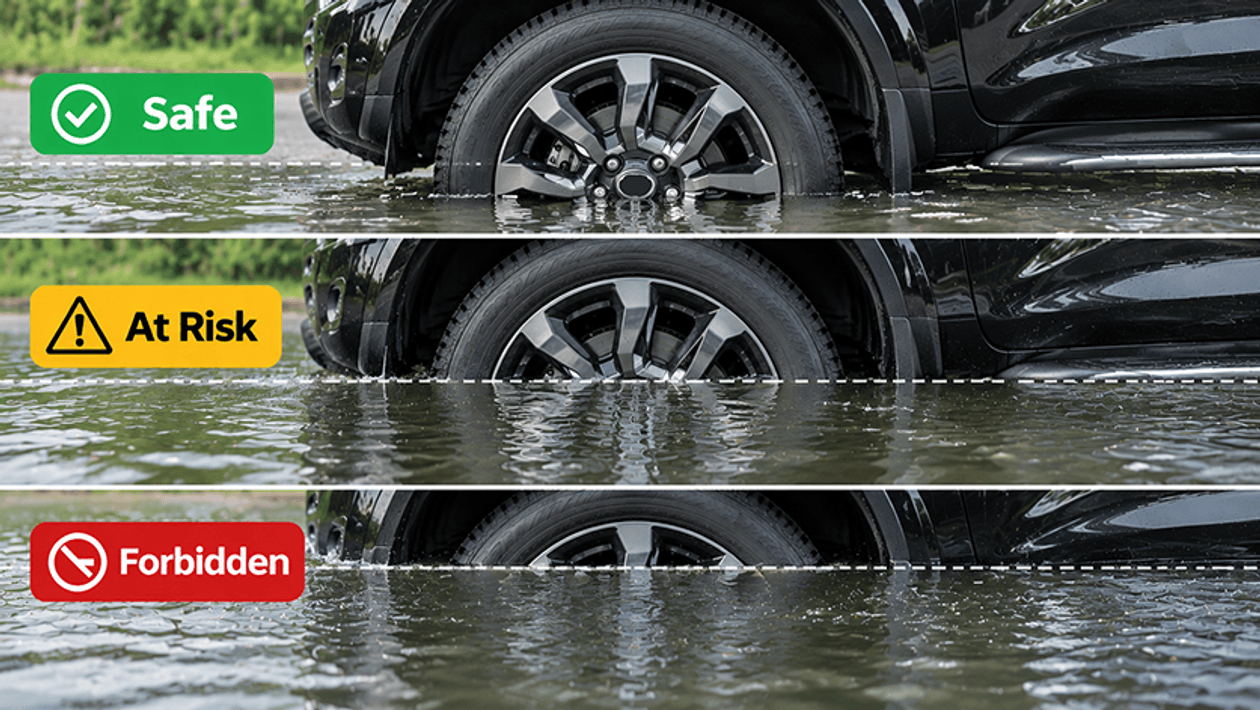
Generally safer: water below half the tyre height
For most passenger cars and MPVs, water that stays below half the tyre height (roughly the centre of the wheel or lower) is usually within a safer range.
At this level, there should still be some clearance from the air intake and lower door edges. If the road is clear and you drive through slowly without creating large waves, the car should generally be able to make it across.
High-risk zone: between half and two-thirds of the tyre height
At this level, water may reach the underbody and come close to the air intake of some low-slung cars. Splashing could send water into the intake, while underbody sensors, gearbox breather vents and the cabin carpets are also at risk.
Unless it is an emergency and you know the road is level, it is best to turn back or find another route.
Do not attempt: water above two-thirds of the tyre height
If the water reaches more than two-thirds of the tyre height or covers much of the vehicle's lower body, it could be at or above the air intake. Do not take the risk. Water entering the engine can cause hydrolock, potentially destroying it. Strong currents can also reduce tyre grip and push the vehicle off course.
Other things to look out for:
Watch the vehicle ahead: If another car is driving through the water, pay attention to how high the water splashes and whether the vehicle starts to sway. If it creates large waves or stalls, do not follow.
Check the water flow and road surface: Murky water can hide open drains, potholes and sudden drops at the road edge. Fast-moving water is particularly dangerous, even if it does not look deep.
If you have checked the water depth and decided it is safe to proceed, the key is to keep the car moving slowly and steadily. Do not rush.
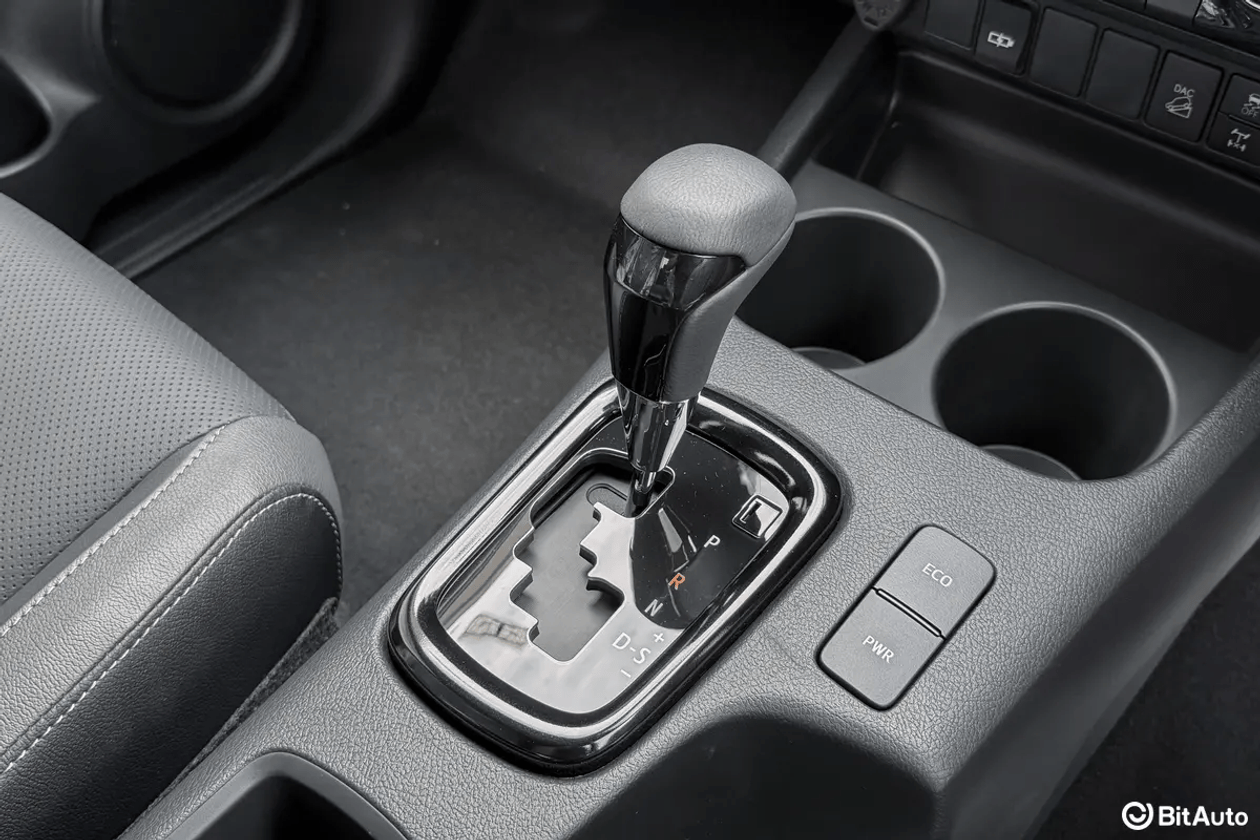
Select a low gear before entering the water (1st gear, L, S or manual mode)
A lower gear helps keep engine revs and torque up, reducing the need for gear changes in the water and the risk of losing momentum halfway through.
Maintain a steady speed and throttle
Aim for around 10–20 km/h, depending on the conditions. Accelerating too hard can create a large wave in front of the car, sending water towards the engine bay and air intake. Avoid suddenly lifting off the accelerator as well. A sudden change in exhaust pressure may allow water to enter through the tailpipe.
Leave plenty of room and watch for oncoming traffic
Keep a safe distance from the vehicle ahead. If it slows down or stops, you do not want to be forced into sudden braking in the middle of the flooded section. If an oncoming vehicle approaches too quickly and sends water towards you, slow down and avoid its wake where possible.
Getting through the flooded section does not mean the danger is over. The first few hundred metres afterwards also require care.
Water can coat the brake discs and pads, reducing friction between the two surfaces. This can increase stopping distances and reduce braking performance. Uneven braking may also cause the car to pull to one side.
What should you do?
Once you have cleared the water and it is safe to do so, gently apply the brake pedal a few times. Avoid braking sharply, and check your mirrors to make sure vehicles behind you have enough room.
The friction generates heat, helping to dry the brake discs and pads and restore normal braking performance. Continue driving normally only once the brakes feel consistent again.
Use Auto Hold and start-stop functions with care: On flooded or slippery roads, smooth throttle control is preferable to sudden changes in power. Consider switching these functions off when conditions make them unsuitable.
Check your insurance policy: Engine damage caused by water ingress is generally not covered by a standard motor insurance policy. If you regularly drive through flood-prone areas, consider adding Special Perils or Flood Coverage for extra protection.

Your go-to source for all things automotive in Malaysia. 🚗 Latest reviews, breaking news, launches & industry trends.
+ Follow Zeekr Lounge X Park Sunway Serene is now live, and owners can enjoy lounge access 24/7!
There'll even be sales advisors on standby if you're looking to update ;)
#zeekr 1 day ago
 70,000 wire harness types and China breathing down their neck 😅🇯🇵
Japanese brands are finally teaming up on basic parts to save cash for next-gen cars.
Tap in 👇 1 day ago
 Yangwang U8 and U9 otw to Malaysia? 👀🔥 BYD Malaysia posted dancing cars on track—not local footage, so is a launch imminent?
Tap in 👇 1 day ago
Get the latest car news first!
Your go-to source for all things automotive in Malaysia. 🚗 Latest reviews, breaking news, launches & industry trends.
Zeekr Lounge X Park Sunway Serene is now live, and owners can enjoy lounge access 24/7!
There'll even be sales advisors on standby if you're looking to update ;)
#zeekr 1 day ago 70,000 wire harness types and China breathing down their neck 😅🇯🇵
Japanese brands are finally teaming up on basic parts to save cash for next-gen cars.
Tap in 👇 1 day ago Yangwang U8 and U9 otw to Malaysia? 👀🔥 BYD Malaysia posted dancing cars on track—not local footage, so is a launch imminent?
Tap in 👇 1 day ago 
© 2024 Bitauto.com. All Rights Reserved.
Bitauto (www.yiche.com and www.bitauto.com) is one of the most visited automotive websites in China. We provide detailed info on Chinese car brands available in your area. Please note that the information provided on this website is based on publicly available data and is for reference only. It may not be fully updated or accurate at all times.

Help us improve our website


