Volkswagen has unveiled its new Mission Efficiency concept, a car designed with one goal in mind: to see just how far EV efficiency can be pushed.
The concept was officially revealed on 14 September, and the first physical prototype has already been assembled.
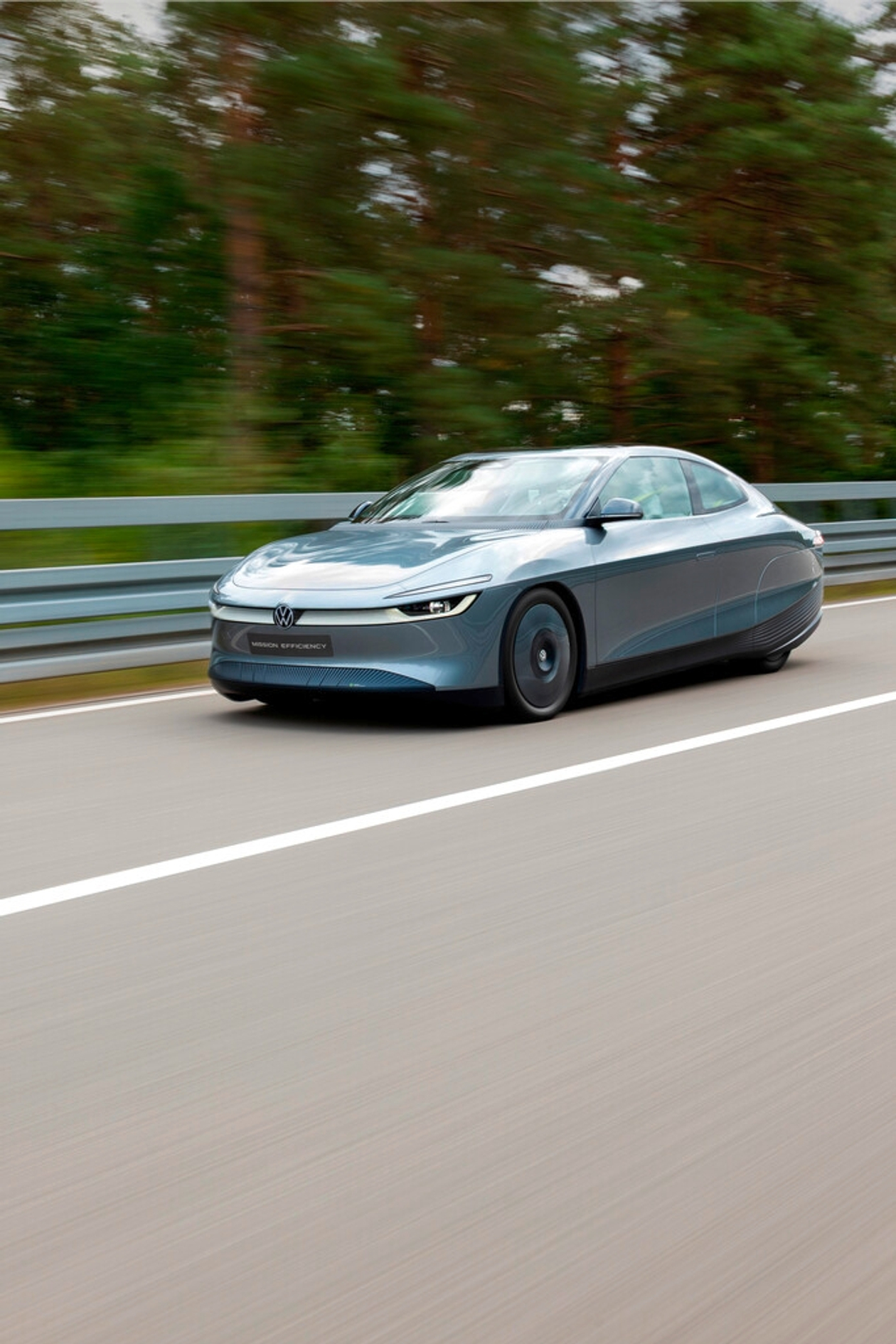
Based on Volkswagen's MEB+ platform, the Mission Efficiency uses front-wheel drive, with development focused on reducing aerodynamic drag, cutting weight and limiting energy losses.
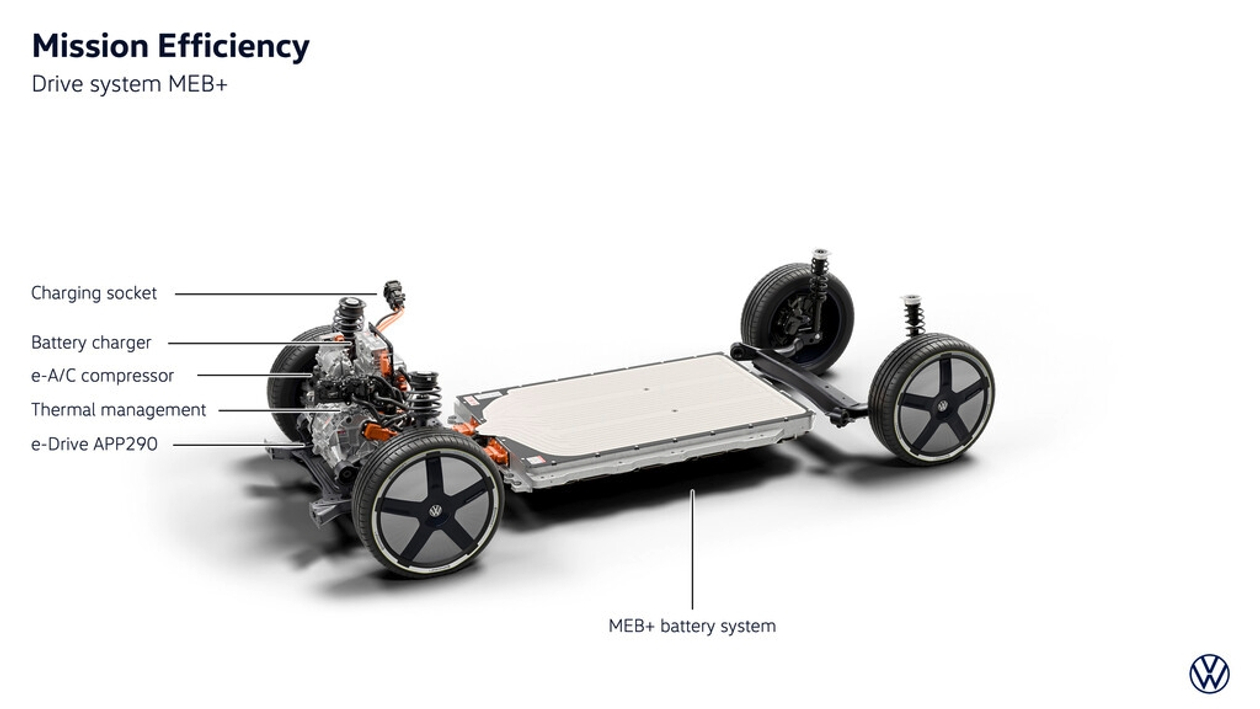
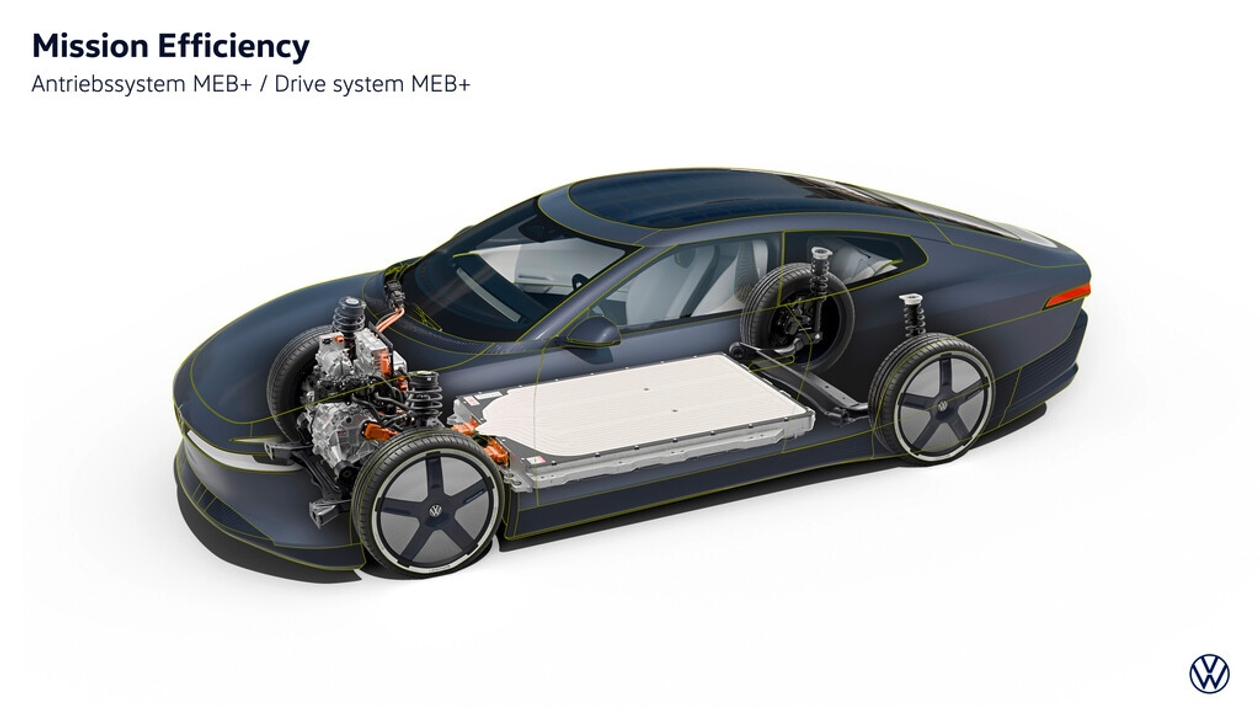
When Volkswagen started pushing the limits of fuel efficiency, one of its most memorable projects was the XL1, along with the earlier 1-litre and L1 concepts.
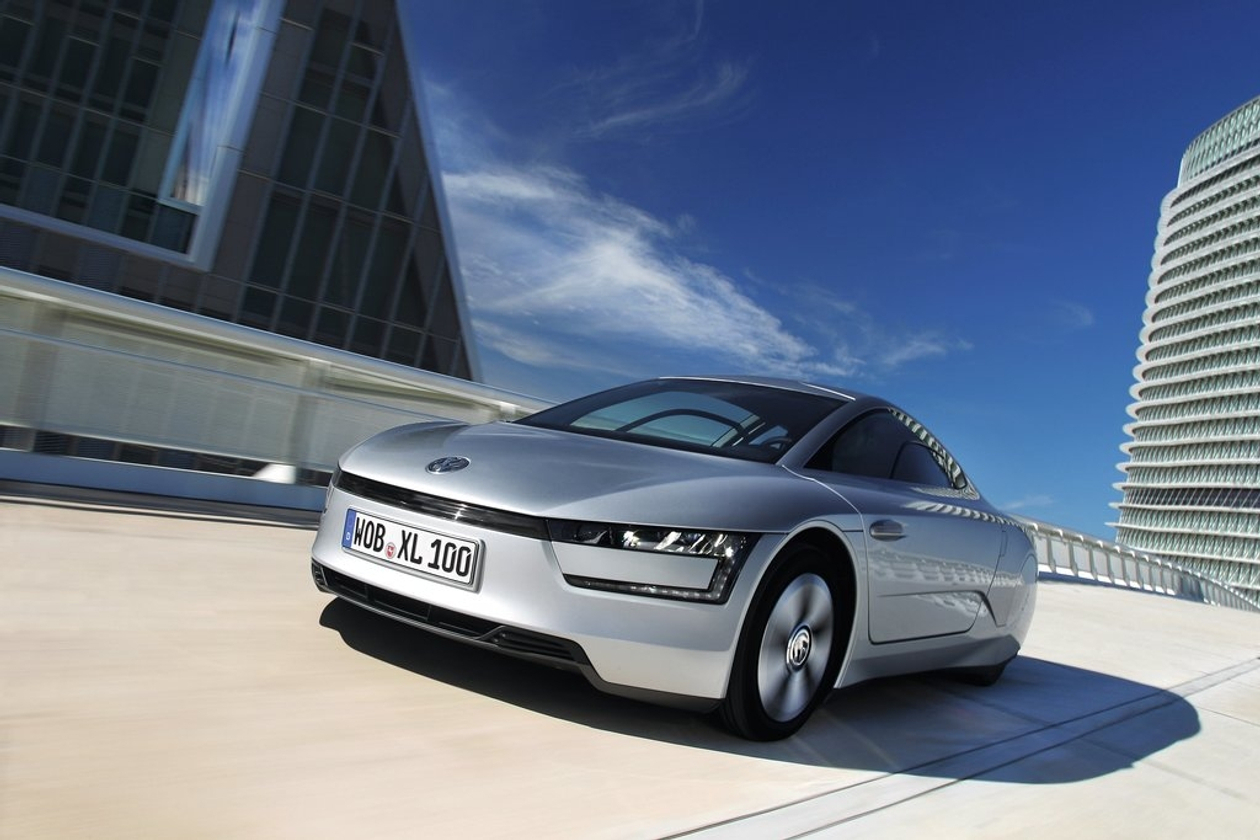
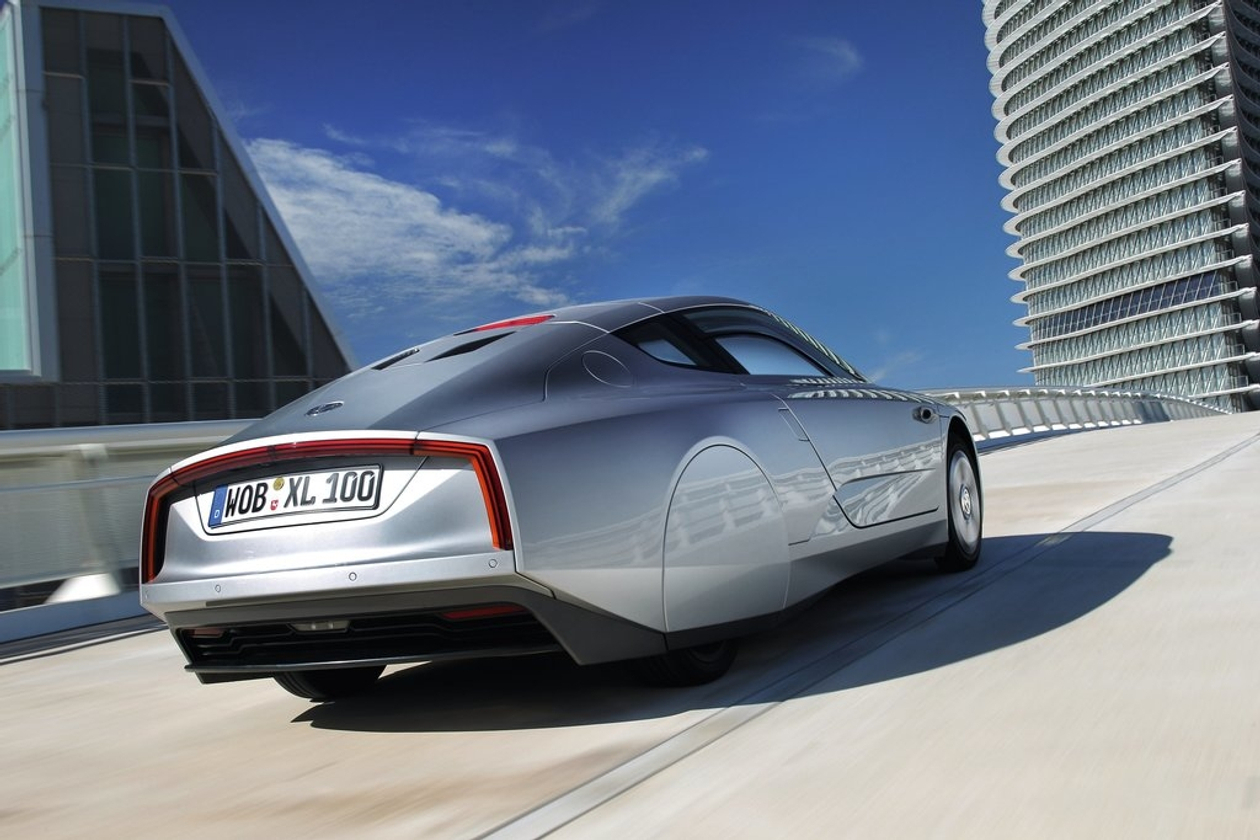
The XL1
Limited to just 250 units, the diesel plug-in hybrid XL1 became known for its claimed fuel consumption of just 0.9 litres/100km, lightweight carbon-fibre construction and highly aerodynamic body.
It used a 5.5 kWh battery and could travel for around 50 km on electric power, making it an impressive engineering exercise at the time. But its complex diesel-hybrid powertrain and starting price of €111,000 meant it was never going to be an everyday car for most buyers.
Mission Efficiency
The new Mission Efficiency takes a similar approach to efficiency, but with an electric powertrain. Like the XL1, it puts a strong emphasis on aerodynamics and lightweight construction, but this time it is based on Volkswagen's MEB+ platform.
Volkswagen describes it as a near-production four-seat electric car, bringing some of the efficiency technology developed for its earlier projects into a form that is much closer to a practical everyday EV.
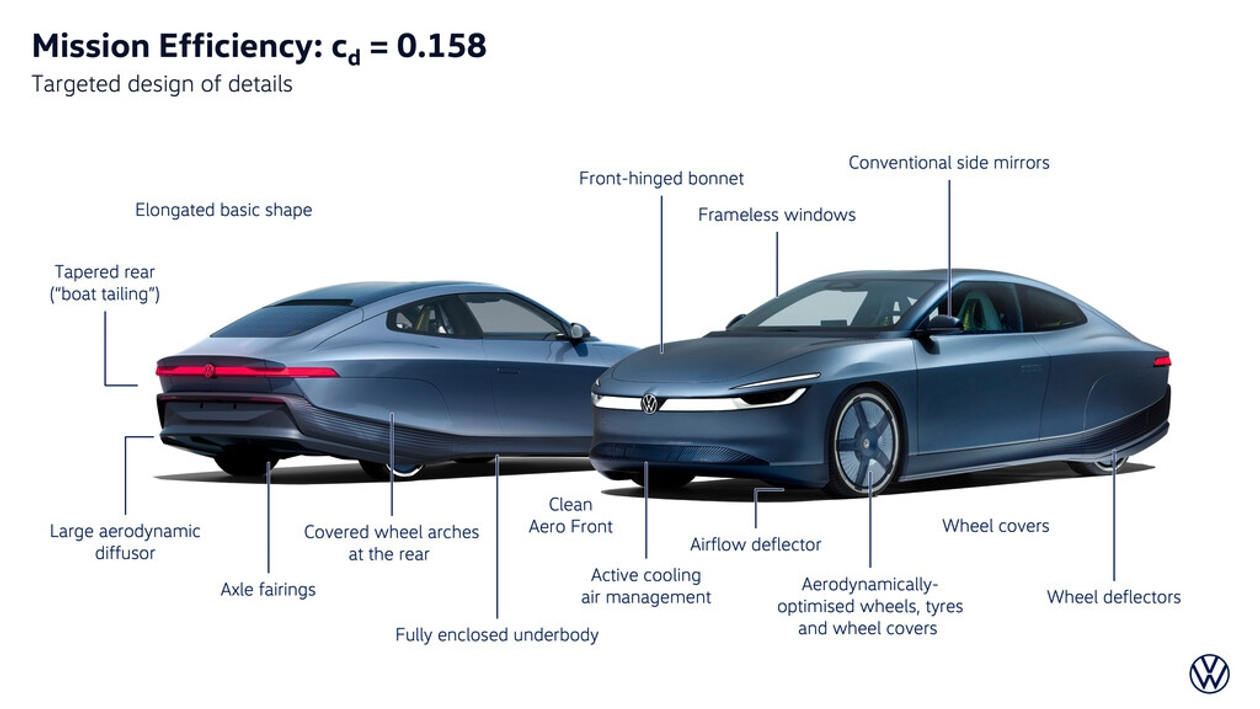
The exterior takes inspiration from Volkswagen's XL1 concept, with a distinctive teardrop-shaped body, a tapered rear resembling a boat tail and fully enclosed rear wheels.
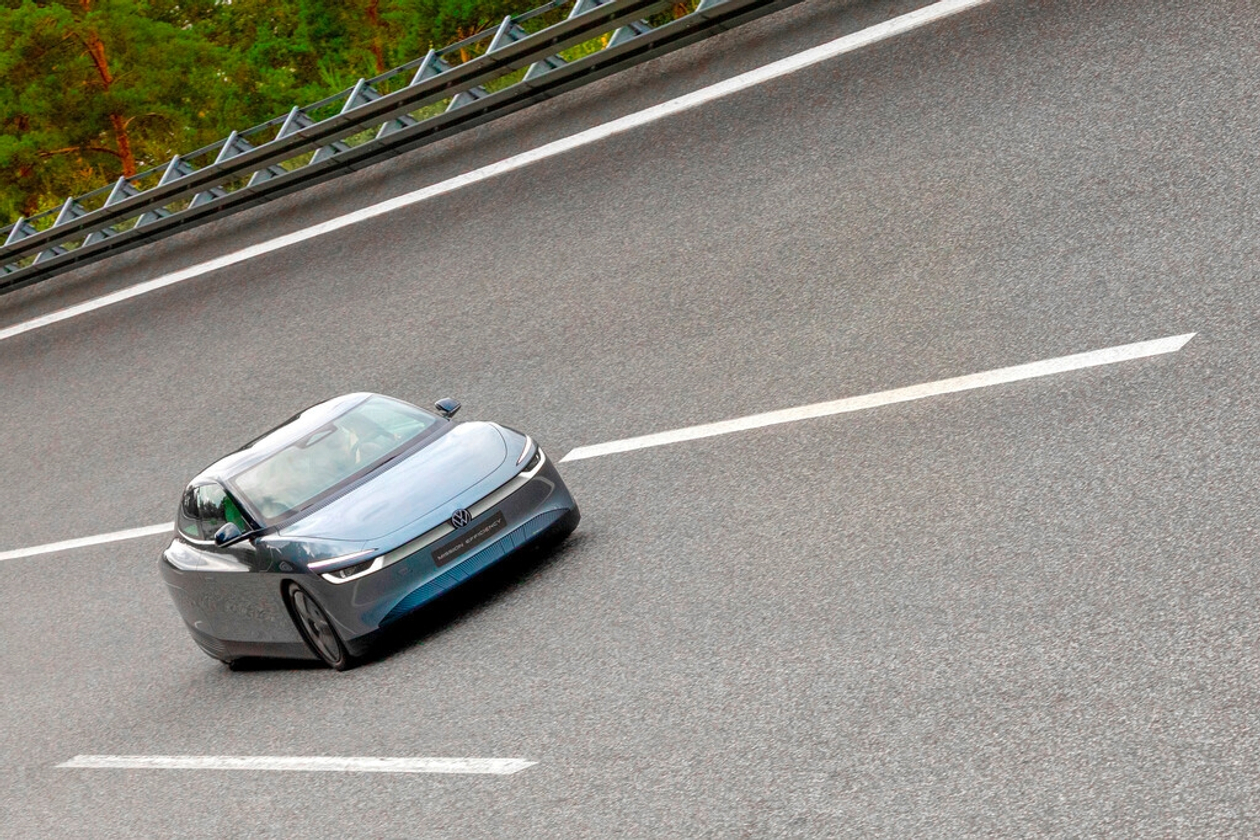
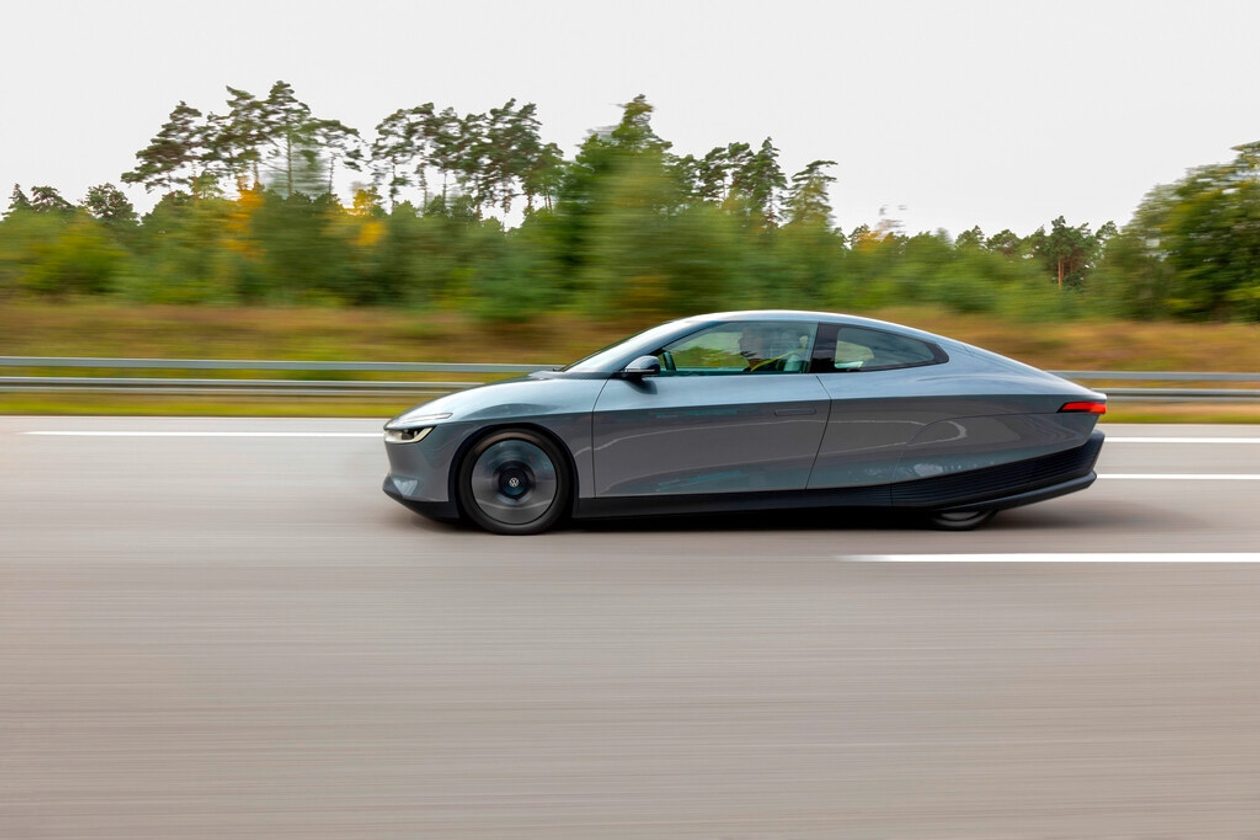
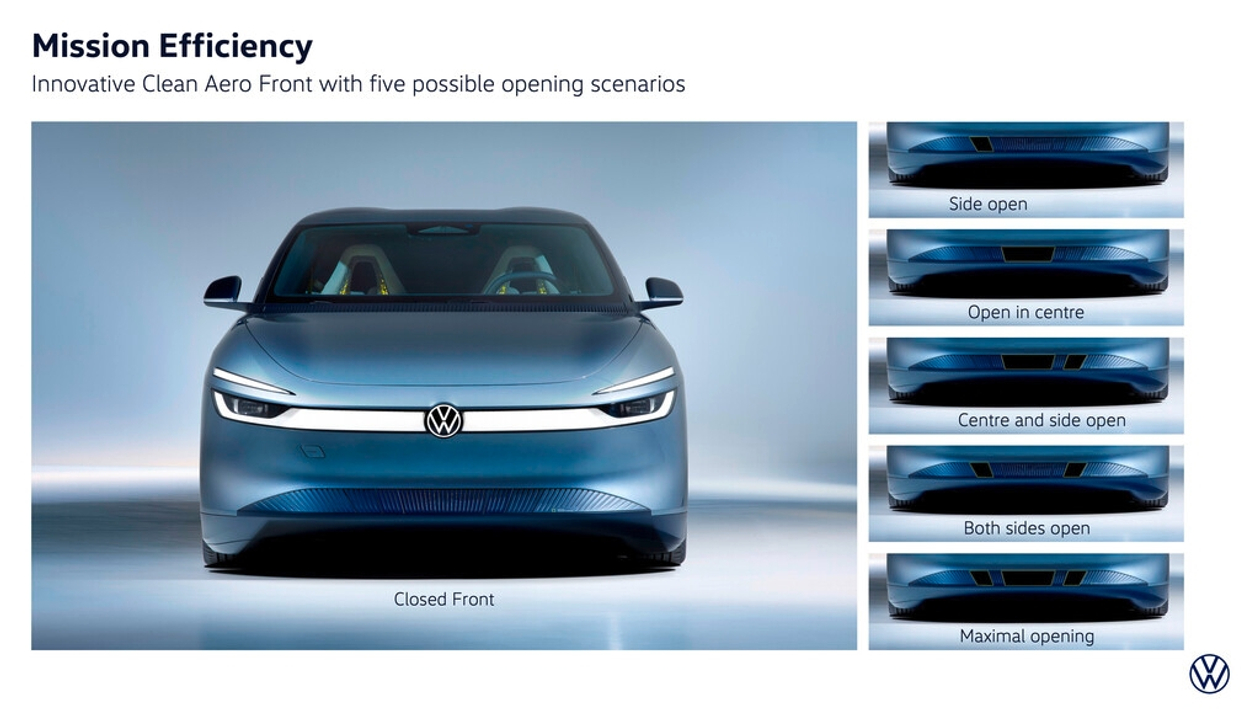
At the front, three separate active cooling flaps can be opened in five modes. With all three closed, the car achieves a remarkably low drag coefficient of 0.158.
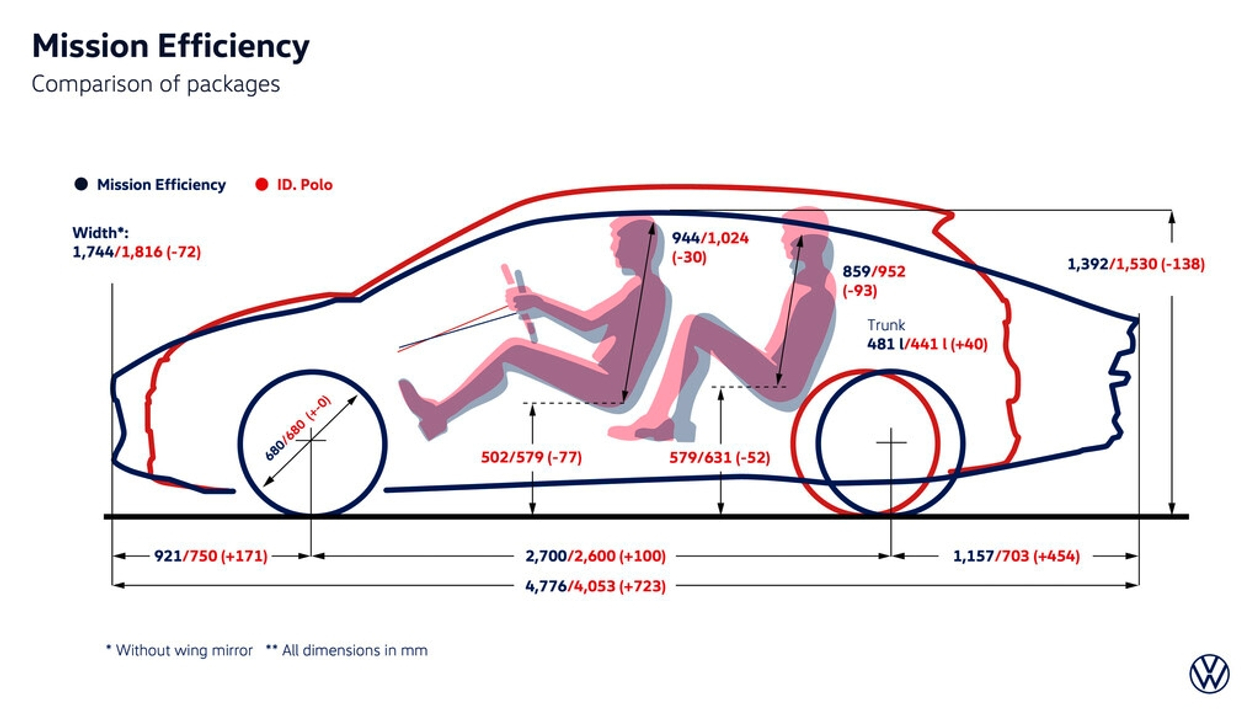
The Mission Efficiency measures 4,775 mm long, 1,744 mm wide and 1,392 mm tall, with a 2,700 mm wheelbase.
Volkswagen has also paid close attention to airflow around the wheels, adding dedicated air deflectors, closely shaped front wheel arches and almost fully enclosed rear wheels.
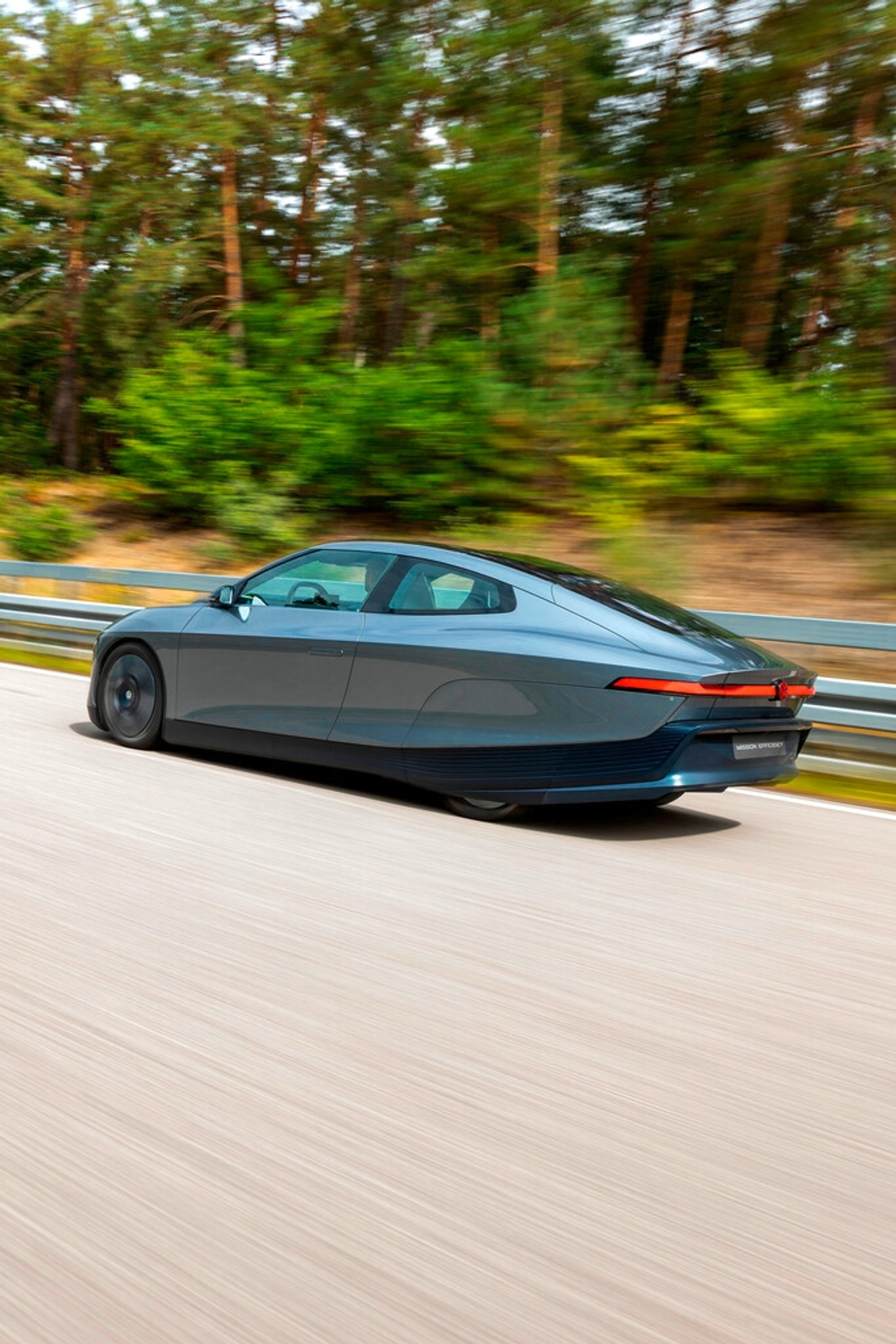
The car rides on bespoke low-rolling-resistance tyres developed from Continental's EcoContact 7, while the underbody is almost completely covered by a smooth floor panel. Traditional exterior mirrors are still fitted.
The same approach continues inside, where Volkswagen has cut back on equipment wherever possible to save weight.
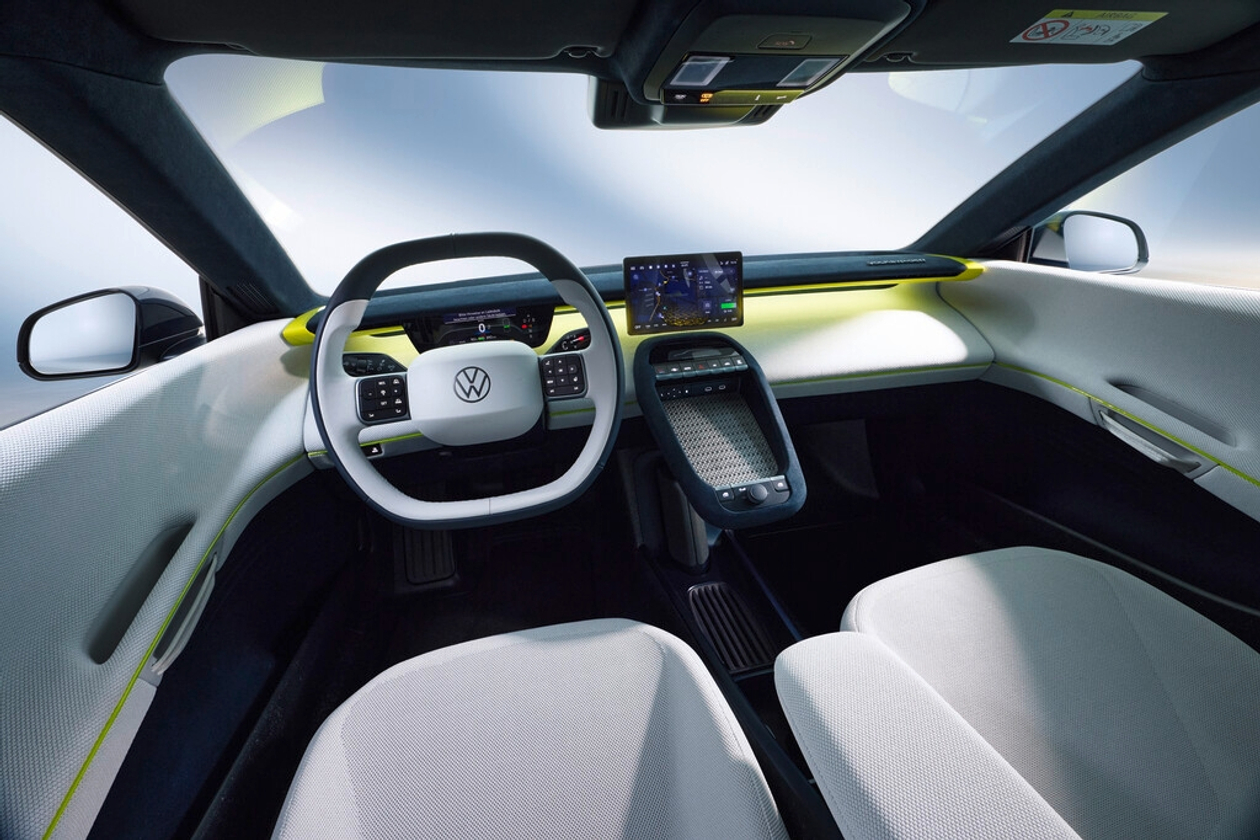
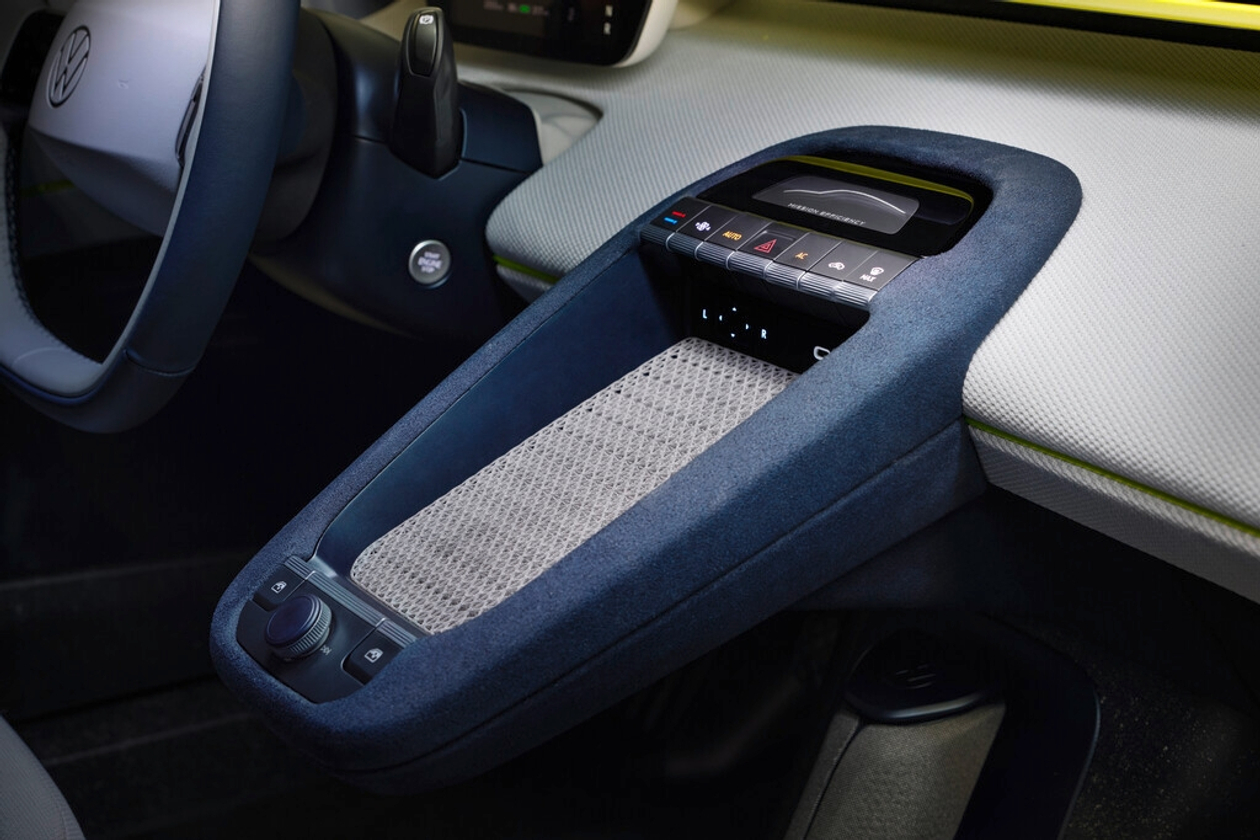
Rather than fitting a conventional fixed infotainment screen, the cabin uses rails to hold smartphones and tablets. These personal devices handle the car's multimedia functions.
The fixed in-car speaker system has also been removed and replaced with a portable Bluetooth speaker.
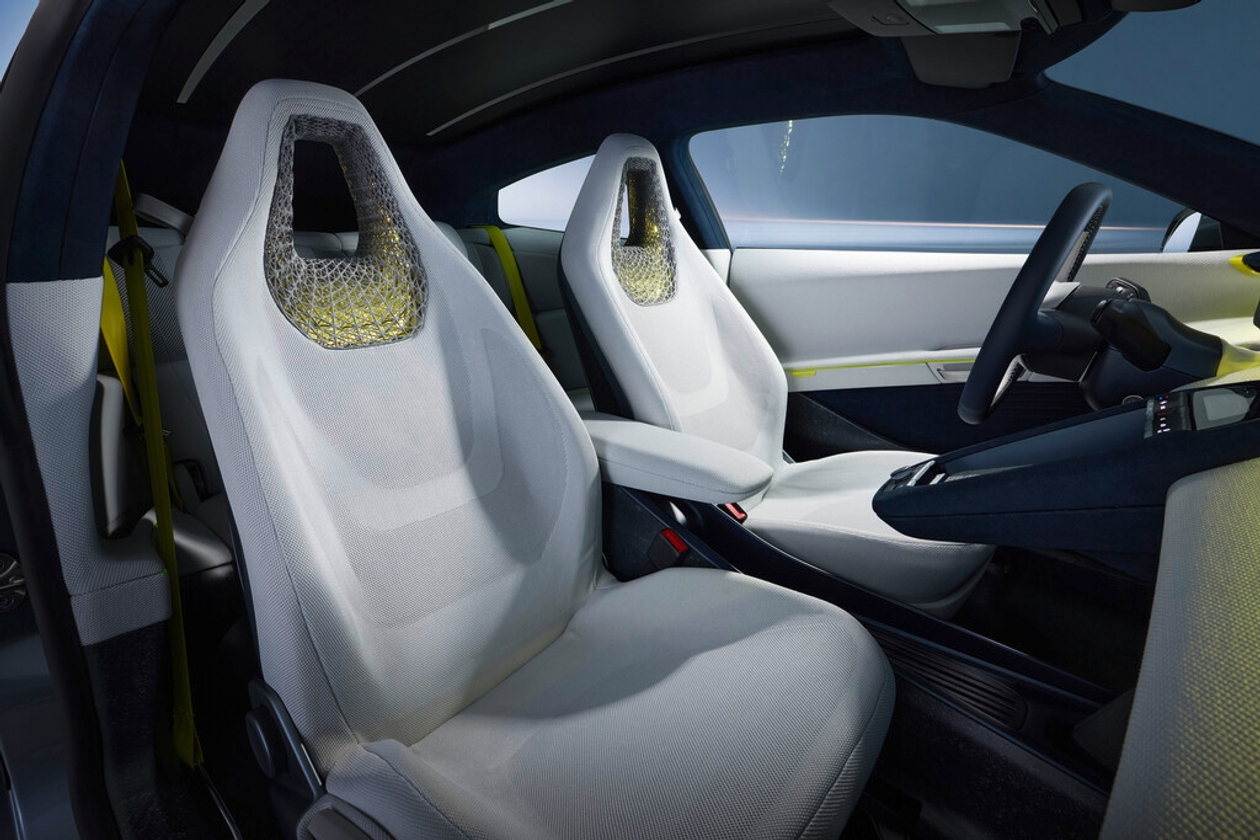
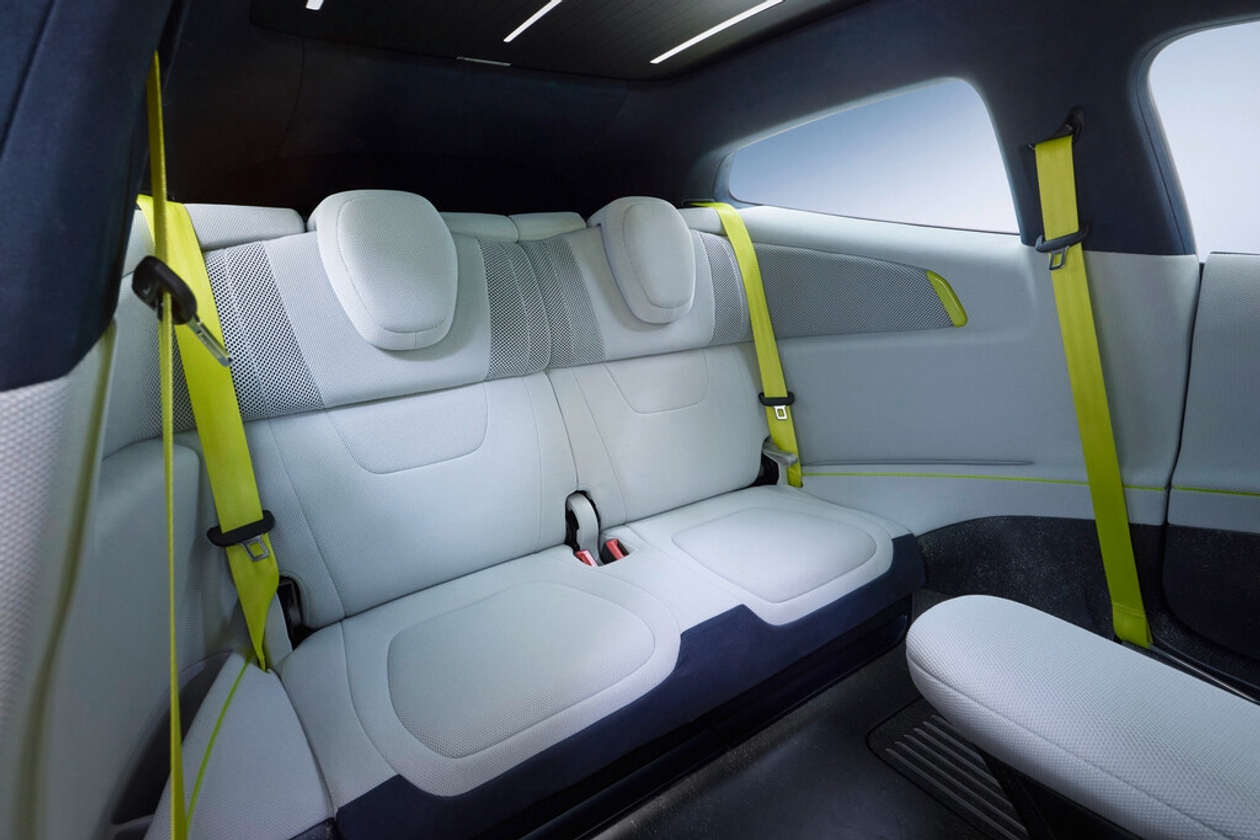
Lightweight seats and door panels use a large amount of recyclable material. The floor uses a lightweight composite material with an integrated anti-slip rubber surface, so there are no separate floor mats.
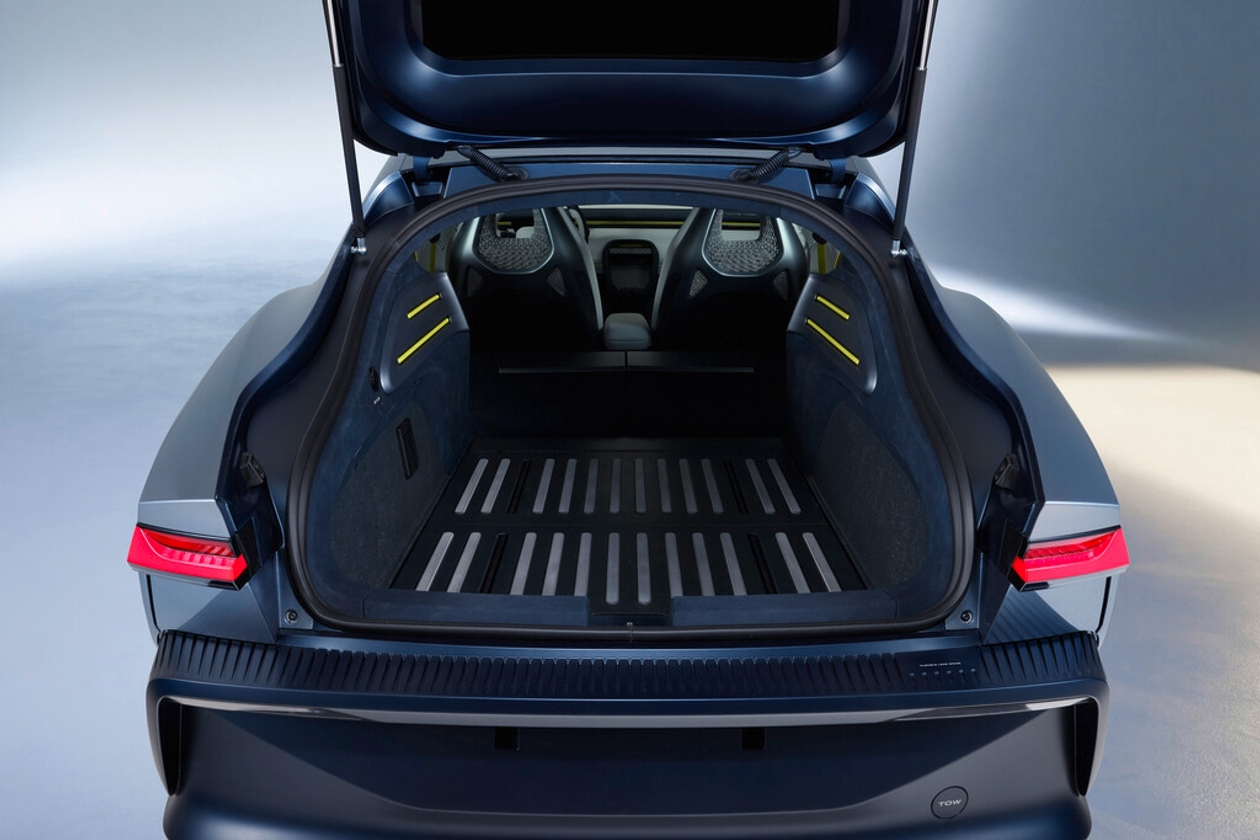
Volkswagen says the Mission Efficiency is the most aerodynamically efficient road-legal car it has ever built. Its frontal area is just 2.08 square metres, helping to reduce the amount of air resistance the car has to overcome.
Under ideal test conditions, the car consumed just 6.48 kWh/100km while travelling at a steady 68 km/h on a flat road, with the air conditioning and other auxiliary electrical systems switched off.
The concept has also completed a long-distance test run from Wolfsburg in Germany to Vienna in Austria, covering 1,278.36 km.
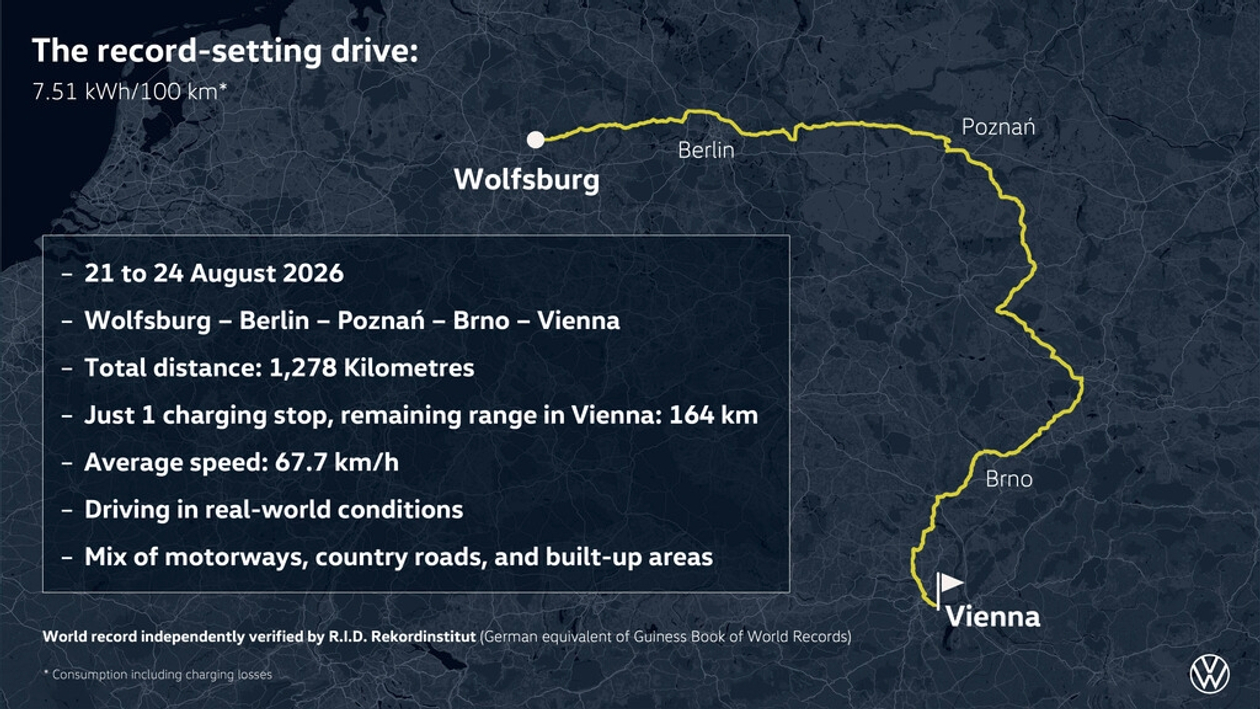
The car uses a battery with 54.9 kWh of usable capacity and needed just one charging stop during the journey. It still had 164 km of remaining range when it reached Vienna.
Based on the figures recorded during the test, the Mission Efficiency's theoretical range could exceed 1,400 km.
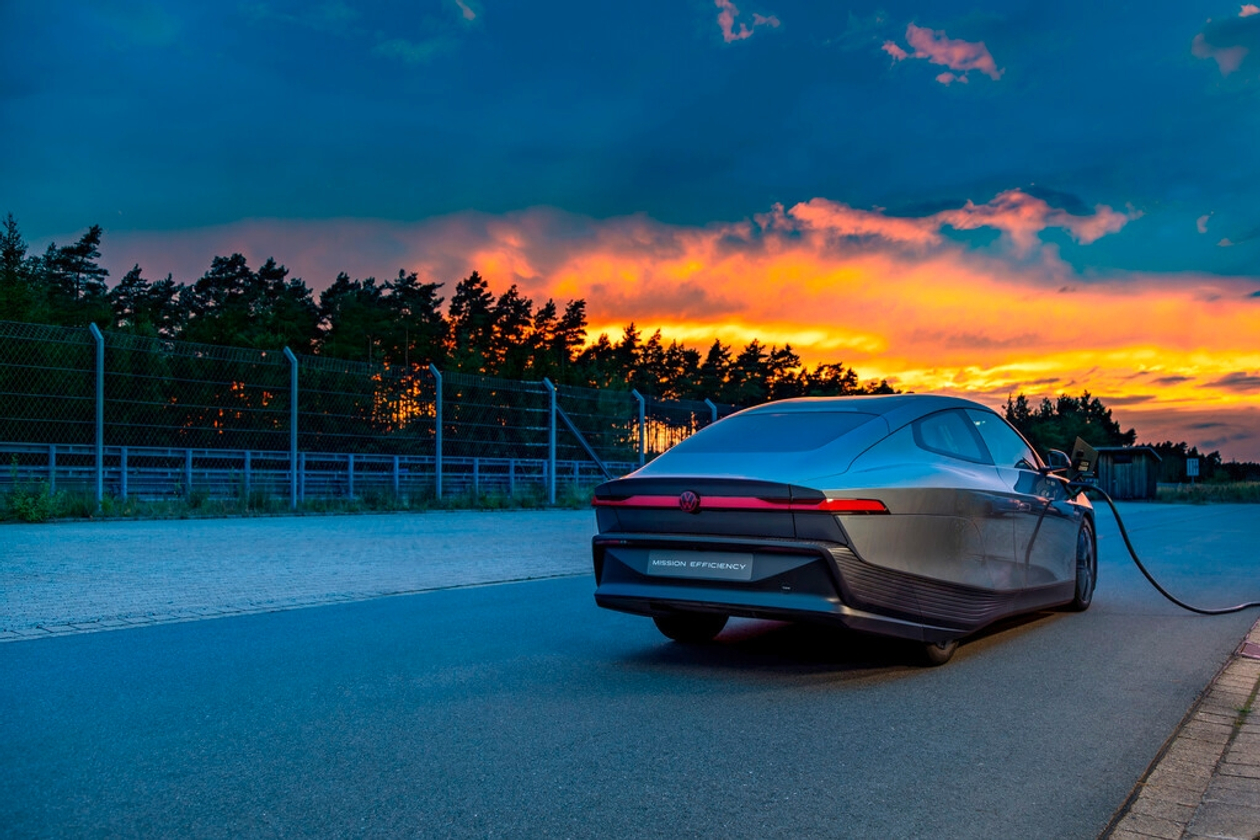
Volkswagen has also applied to the Record Institute for Germany (RID) for certification as a near-production four-seater electric vehicle for everyday use.
Rather than simply fitting a huge battery pack, Volkswagen has taken a different route with the Mission Efficiency, focusing on aerodynamics and weight reduction to cut energy consumption.
The result is a concept that shows how future EVs could achieve much longer range without relying solely on ever-larger batteries.
Would you accept such a stripped-back cabin if it meant a much more efficient EV? Let us know in the comments.

Your go-to source for all things automotive in Malaysia. 🚗 Latest reviews, breaking news, launches & industry trends.
+ Follow GWM Malaysia is giving away a brand-new Ora 5 Hi2 HEV! 🎁🚗
Celebrate GWM’s 4th anniversary with Good Cat deals from RM 94k, RM 17,000 H6 HEV perks, and 5 years free maintenance until 31 Dec.
Full details here 👇 1 minute ago
 Toyota Corolla Deck finally revealed!
Revealed hours ago, this Corolla Cross-based pickup truck is South America-bound and definitely reminds us of the Proton Arena.
Do you want one here?
#toyota #ToyotaCorollaDeck 1 minute ago
 Bookings for the 2027 Proton S70 RS are officially open but official prices under wraps for now. How much do you think Proton will price it at?
#proton #protons70 #protons70rs #carnewsmalaysia #sedan 4 hours ago
Get the latest car news first!
Your go-to source for all things automotive in Malaysia. 🚗 Latest reviews, breaking news, launches & industry trends.
GWM Malaysia is giving away a brand-new Ora 5 Hi2 HEV! 🎁🚗
Celebrate GWM’s 4th anniversary with Good Cat deals from RM 94k, RM 17,000 H6 HEV perks, and 5 years free maintenance until 31 Dec.
Full details here 👇 1 minute ago Toyota Corolla Deck finally revealed!
Revealed hours ago, this Corolla Cross-based pickup truck is South America-bound and definitely reminds us of the Proton Arena.
Do you want one here?
#toyota #ToyotaCorollaDeck 1 minute ago Bookings for the 2027 Proton S70 RS are officially open but official prices under wraps for now. How much do you think Proton will price it at?
#proton #protons70 #protons70rs #carnewsmalaysia #sedan 4 hours ago 
© 2024 Bitauto.com. All Rights Reserved.
Bitauto (www.yiche.com and www.bitauto.com) is one of the most visited automotive websites in China. We provide detailed info on Chinese car brands available in your area. Please note that the information provided on this website is based on publicly available data and is for reference only. It may not be fully updated or accurate at all times.

Help us improve our website


