

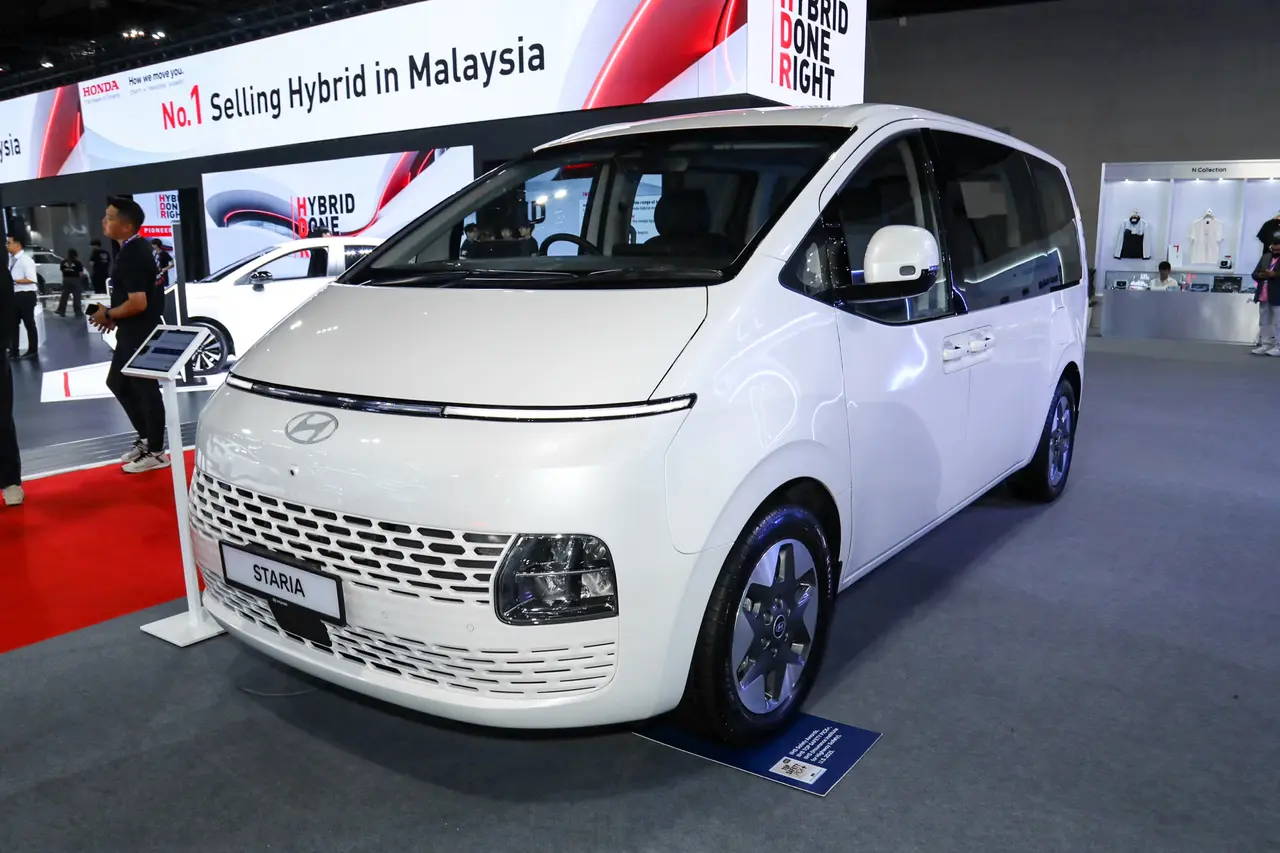
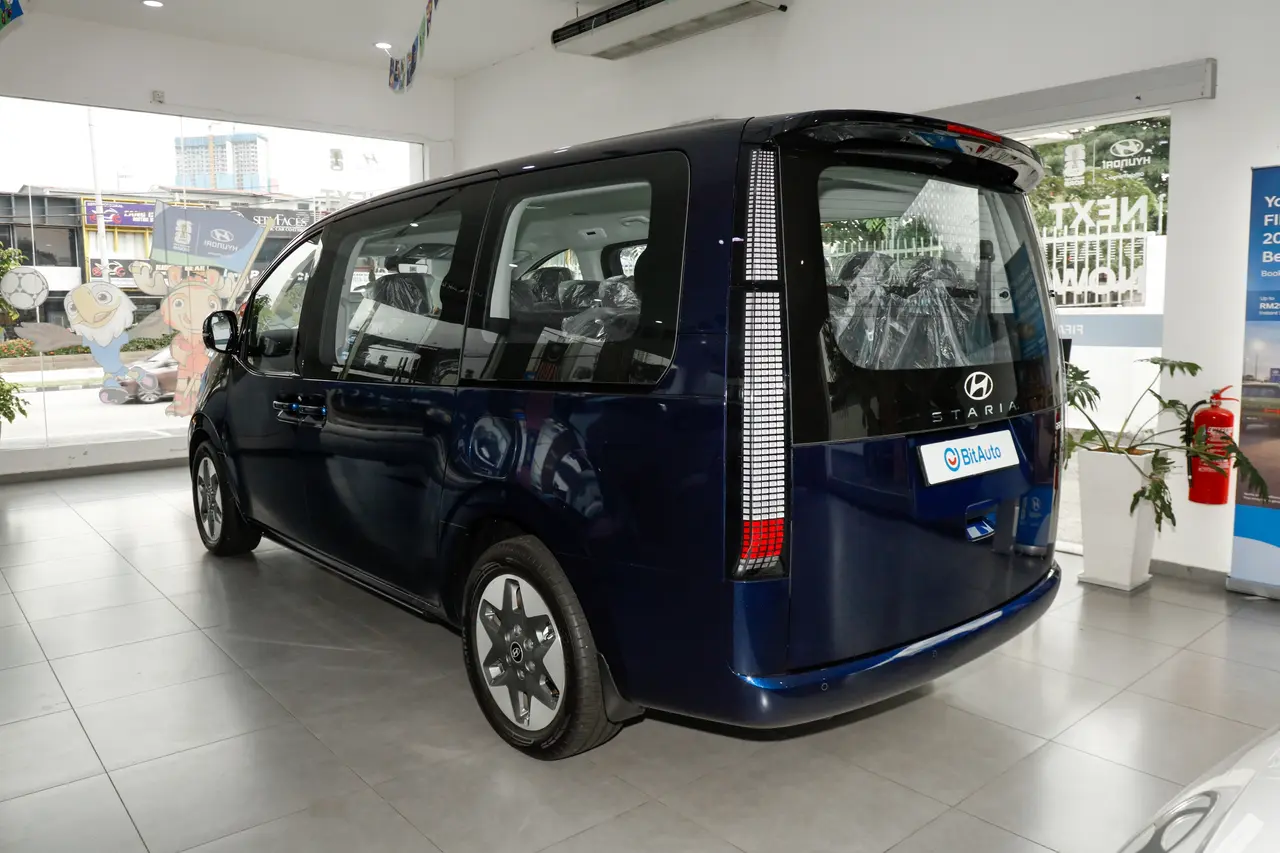
The Hyundai Staria presents a substantial MPV profile, with a long body, broad stance and tall roof that give it a confident road presence. Its extended proportions are clearly shaped around passenger and cabin practicality.

 Exterior & Design
 Interior & Features
 Performance & Handling
 Space & Comfort
 Safety & Reliability
 Efficiency & Resale Value
The Hyundai Staria presents a substantial MPV profile, with a long body, broad stance and tall roof that give it a confident road presence. Its extended proportions are clearly shaped around passenger and cabin practicality.
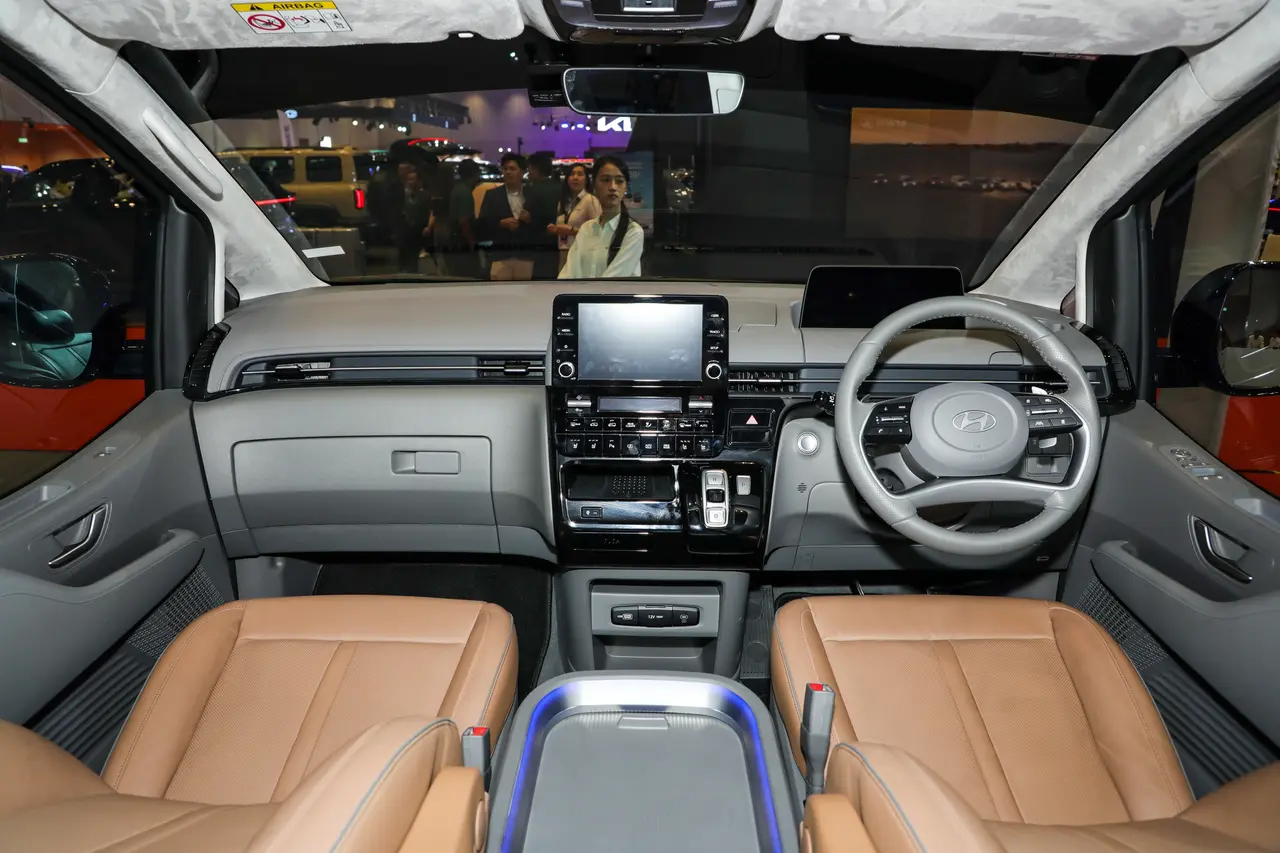
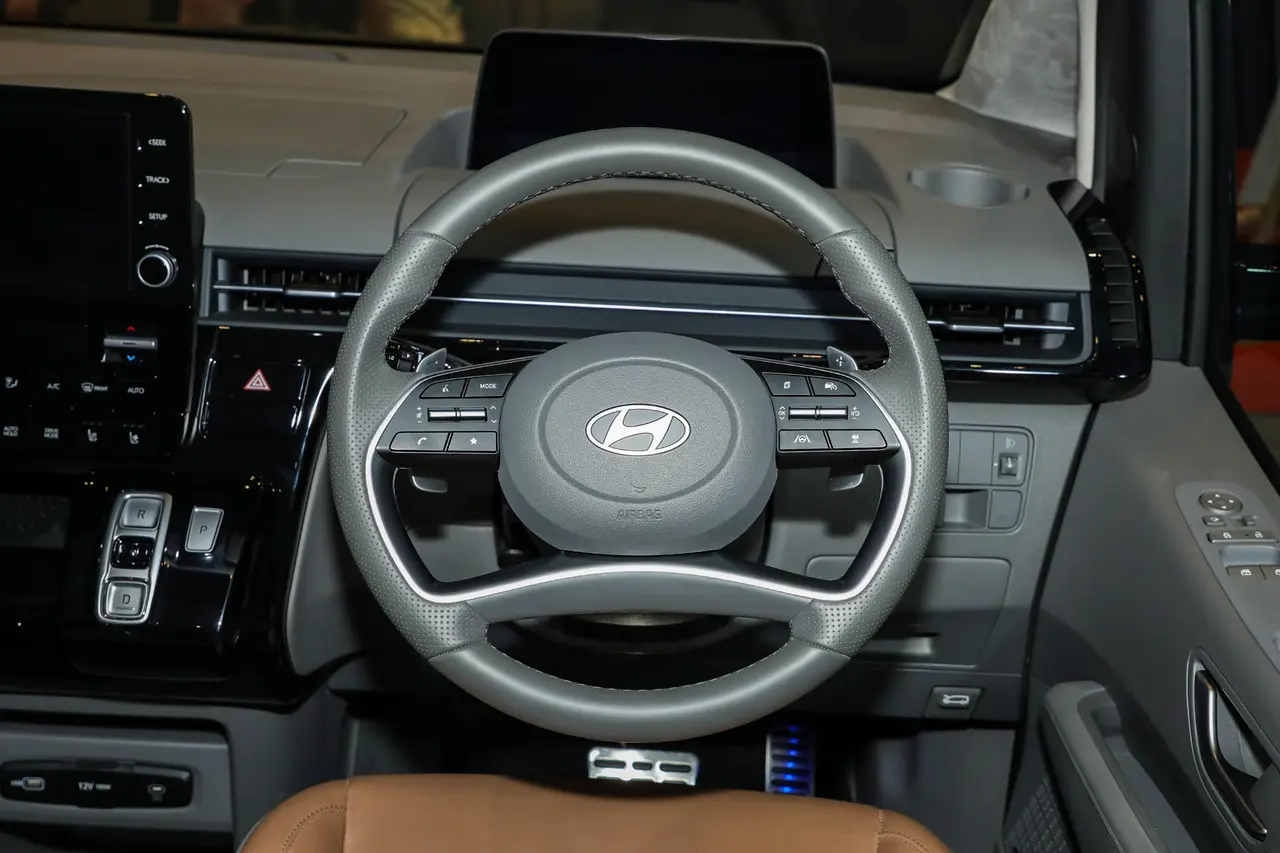
The cabin is equipped for long-distance family use, with powered front and second-row seats, heated and ventilated seating for the first two rows, adjustable second-row leg rests and separate automatic air-conditioning zones for the first and second rows. A digital instrument cluster, phone projection, wireless charging and Bose audio add everyday convenience.
The turbocharged 2.2-litre diesel produces its strongest response through a broad low-to-mid-range torque band, making the Staria well suited to carrying a full passenger load. Its eight-speed automatic transmission and front-wheel-drive layout support relaxed everyday driving, while powered seating and a powered tailgate reinforce its family-oriented character.
The 7-seat layout, 3,273mm wheelbase and large overall body create a family-oriented cabin with room for three seating rows. Electric second-row adjustment, sliding movement, height adjustment and leg-rest control make it easier to balance passenger space with access to the rear area, while the powered tailgate supports practical loading.
The Staria combines core stability and braking systems with front, side and curtain airbags, child-seat mounting points, lane departure warning, lane keeping assistance, forward collision warning and autonomous emergency braking. Full-speed adaptive cruise control, a 360-degree surround-view camera and rear cross-traffic alert add useful support in traffic and tight parking areas.
The diesel powertrain and 75-litre fuel tank suit extended journeys and regular passenger-duty use, with the tank capacity allowing useful distance between fuel stops. Running-cost expectations should be matched to driving conditions and usage patterns.

© 2024 Bitauto.com. All Rights Reserved.
Bitauto (www.yiche.com and www.bitauto.com) is one of the most visited automotive websites in China. We provide detailed info on Chinese car brands available in your area. Please note that the information provided on this website is based on publicly available data and is for reference only. It may not be fully updated or accurate at all times.

Help us improve our website


