

Home靈異故事

Search History
Popular Searches
Dealer Login / Sign Up

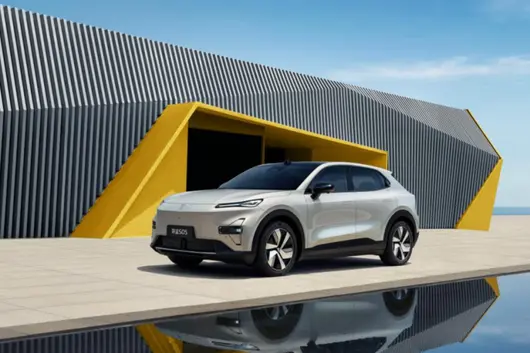
On June 10, 2026, in the May domestic compact SUV sales ranking, Deepal S05 firmly topped the list, successfully achieving three consecutive months of sales from March to May, continuously leading the new energy SUV sub-market under 150,000 RMB. Since its launch, Deepal S05 has maintained a strong momentum of over 10,000 units per month on average. May global sales reached 18,866 units, a year-on-year increase of 102.71%. By the end of May, global cumulative sales had exceeded 220,000 units, becoming an indisputable phenomenon-level "global blockbuster product" in the Chinese new energy vehicle market.
In the domestic market, Deepal S05 established an absolute leading position in the highly competitive sub-segment of compact pure electric SUVs under 150,000 RMB by leading sales for three consecutive months; in the global market, it has successfully entered over 70 countries and regions, and will further expand to 150+ countries in the future, becoming a benchmark for the overseas expansion of Chinese new energy vehicles. This dual-line sales trend of "leading domestically, blooming globally" stands out in the 150,000 RMB pure electric SUV market. Distinguishing from the industry's conventional overseas path, Deepal S05 adheres to global unified standards and unified quality, gaining high recognition from consumers in multiple markets including Europe, Southeast Asia, and Central and South America.
From "Price War" to "Value War": Deepal S05's Way to Break Through
Over the past year, the new energy SUV market under 150,000 RMB fell into fierce price gaming. Facing the prevalent industry involution, Deepal S05 chose a more resilient development path: not participating in simple low-price competition, but relying on technological innovation and product evolution to provide users with an "exceeding expectation class-leading experience", winning broad market recognition.

The success of Deepal S05 lies in accurately grasping the real needs of mainstream family users. For most family users, the core demand for pure electric cars is far from "low price", but rather "whether the range is solid, whether energy replenishment is efficient, whether it is reliable in low temperatures, and whether safety is hardcore". Deepal S05 built comprehensive product power with no weaknesses around these essentials.
In terms of range and energy replenishment, Deepal S05 is equipped with CATL cells + Golden Bell Battery across the range, with CLTC pure electric range up to 620 km, fully meeting daily commute and long-distance travel needs. At the same time, 3C super charging technology is standard across the range, with SOC 30%-80% charging time taking only 15 minutes, truly achieving "charge for 15 minutes, drive 100 km", fundamentally solving the range anxiety of pure electric owners.

Aiming at the low-temperature range issue most concerned by northern users, Deepal S05 adopted the world's first Micro-Core High-Frequency Pulse Heating Technology, which received China Patent Gold Award and recognition by the World Intellectual Property Organization. This technology can increase battery temperature by 20°C in extreme low-temperature environments of -30°C, improve power performance by 50%, and shorten charging time by 15%. Paired with the standard heat pump air conditioning system, efficiency is improved by 1.8 to 2.4 times compared to traditional heating methods, with energy saving up to 38%, effectively guaranteeing the authenticity and stability of winter range.
In terms of safety and body structure, Deepal S05's power battery was the first to pass the 2025 New National Standard safety inspection and obtained CATARC NESTA 6D Electric Safety Certification. At the same time, the high-strength steel and aluminum content of the whole vehicle reaches 78%, with maximum steel strength 1700 MPa. Paired with 7700T large die-casting integrated aluminum technology, body torsional stiffness reaches 35,000 N·m/deg, guarding travel safety comprehensively.
From "Product Overseas" to "Brand Overseas": China's Automotive Globalization New Journey
Deepal S05's global journey is not simple product export, but a comprehensive output of technical standards and brand value. In Europe, the birthplace of the global automotive industry, Deepal S05 demonstrated strong competitiveness, winning first place in Spanish compact pure electric SUV registration continuously in February and March; in the Southeast Asian market, Deepal S05 was a hit immediately upon launch in Pakistan, receiving 2,000+ initial large orders in the first month, with subsequent monthly orders stabilizing at 500+; in May, Deepal S05 officially landed in the Polish market, further perfecting its strategic layout in Europe.

Market recognition and professional awards formed a two-way verification. Domestically, Deepal S05 won first place in compact pure electric SUV in the J.D. Power 2026 China New Energy Vehicle New Car Quality Study, which is the industry's most authoritative endorsement of its product quality; Overseas, it successively won Thailand Annual Best Rear-Wheel Drive Compact Electric SUV, Chile Autocosmos 2026 Best Recommended Model, and FIPA Americas Automotive Journalists Association Annual Hybrid Model Award, proving its product power can adapt to vehicle usage needs and consumer preferences in different countries. At the same time, the awards such as German iF Design Award, Turin Auto Design Award Best Smart Human-Machine Fusion Award, and World Green Design Organization Green Design International Award, further from dimensions such as design aesthetics, smart interaction, and sustainable development, verify that Deepal S05 has reached international first-class product standards, enhancing the global market's perception of Chinese cars.

It is worth mentioning that Deepal Auto recently became the Portuguese National Team's Global Official Partner, leveraging the influence of sports IP to further enhance the brand's global influence. Previously, Deepal S05 was officially delivered to the Portuguese National Team and will join hands with world-class stars such as Cristiano Ronaldo to jointly convey the competitive spirit of "Full Charge On, Global Home Court". This cross-industry collaboration is not only a resonance between top manufacturing intelligence and champion spirit, but also shows the confidence and strength of Chinese car brands to the world.
Conclusion
From continuously leading the domestic market to selling hot in over 70 countries and regions globally, to winning multiple international authoritative awards, Deepal S05 proved with solid results that: Chinese car brands have the capability to create global blockbusters. Its success not only set a value benchmark for China's new energy vehicle industry but also provided a learnable development sample for Chinese brands' high-quality overseas expansion.
Three consecutive titles are not the end, but the starting point of Deepal S05's new journey. In the future, with the continuous deepening of Deepal Auto's global layout, we have reason to believe that Deepal S05 will continue to lead the compact SUV market and write a new chapter for Chinese car brands.

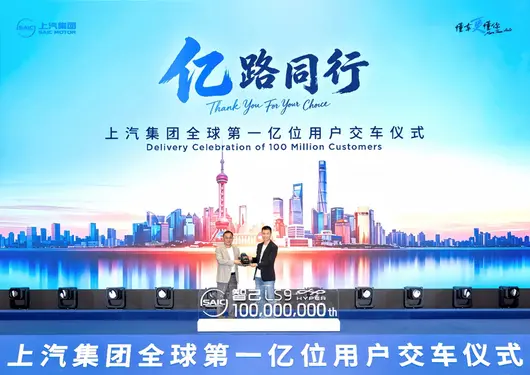
2026 年 5 月 26 日,國家知識產權局公布了一項發明專利——「一種發動機診斷方法、裝置及控制器」,申請人上汽集團,公開號 CN122082896A。兩天後,5 月 28 日,上海北外灘世界會客廳,上汽將第一億輛整車(智己 LS9 Hyper)交付給了 Momenta CEO 曹旭東,上汽也由此成為了中國首家累計產銷量突破一億輛的汽車集團。
值得一提的是,在億輛里程碑達成之前,上汽集團第 99999999 輛整車為上汽大眾 ID. ERA 9X,該車型上市僅一個月交付就破了 7000 輛,4 月更是躋身 30 萬以上增程式大型高端 SUV 前三,是上汽大眾「在中國,為中國」戰略與「全球智慧 + 中國速度」融合的亮眼成果。
專利公布與億輛交付發生在同一周,不完全是巧合。

一億輛意味著什麼?七十餘年,平均每天造出近四千輛車。但更值得關注的,是其中的結構變化:最近幾年新增的數千萬輛,大多搭載了自主電控系統,具備數據采集和上傳能力。它們散落在全球 170 多個國家和地區,在高原、極寒、擁堵、高速等各種真實工況中行駛。每一輛車的發動機運行數據,都是上汽研發體系中的訓練樣本,這是任何實驗室都无法複製的。
而那項發動機診斷專利,恰好提供了一個觀察的窗口,它指向一個正在發生轉變的邏輯:當車企的累計保有量達到億級,規模化就不再只是製造成本的攤薄工具,更會開始反哺技術研發。
01 一億輛的底氣
要理解一億輛的技術含義,得先看這一億輛是怎么積累起來的。
1958 年,上海工人用榔頭敲出第一輛「鳳凰牌」轎車,實現了上海轎車製造零的突破。1983 年,第一輛桑塔納手工組裝下線,開啟了合資合作,也帶動建立了現代化零部件體系。此後幾十年,上汽先後與大眾、通用等深度綁定,在「市場換技術」的浪潮中完成了製造體系、供應鏈管理和人才資源的原始積累。
真正的轉折發生在自主品牌崛起之後,2006 年榮威品牌誕生,2016 年全球首款互聯網汽車榮威 RX5 問世,2020 年高端智能電動品牌智己汽車成立。到 2026 年 1 至 4 月,上汽已累計銷售 130.2 萬輛,連續四個月位居中國車企銷量第一,自主品牌銷量占比已接近 70%,扭轉了過去長期依賴合資的格局。

與此同時,上汽產品和服務已經進入了 170 多個國家和地區,海外累計交付超過了 700 萬輛。從英國到印尼,從泰國到巴基斯坦,上汽建有 4 個海外生產製造中心和 3 個研發創新中心。安吉物流擁有 42 艘滾裝船,8 條國際航線覆蓋了東南亞、歐洲和美洲。
實際上,比這一億輛的數字本身更有說服力的,是其結構變化。2015 年時,上汽自主品牌占比僅約 38%,新能源占比幾乎可以忽略不計,海外銷量占比約 10%。而到了 2026 年前四個月,這三個數字分別躍升至近 70%、31.7% 和 35.3%。這意味著,一億輛中近年來新增的數千萬輛,是真正搭載了上汽自主的電控系統、自主的數據采集架構、自主的雲端平台的車。

過去十年,上汽累計投入研發資金超過了 1500 億元,持有近兩萬六千項有效專利。僅 2026 年以來,就新獲得了專利授權近百項。而這些數字背後,是一套正在成型的「數據驅動研發」模式。
可以說,上汽的一億輛車,就是全球規模最大的「流動實驗室」,也是「數據定義技術」的起點。今後,不再是工程師猜測用戶會遇到什麼問題,而是用戶用車的運行數據直接告訴工程師,問題在哪裡、優先級如何、最優解是什麼。
02 發動機診斷專利裡的「數據金礦」
再回到那項專利本身,它的技術方案聽起來並不花哨:在一個預先確定的時間段內,當第一診斷策略和第二診斷策略的條件同時被滿足時,只發送一次斷油請求,在發動機被斷油的同一連續時間段內同時執行兩個診斷策略。

這樣的效果有兩層:一是可以降低發動機被斷油的總次數和總時長,從而節省油耗,二是可以同時將診斷執行過程限制在最短的時間段內,降低單次的斷油時長,避免因斷油過長而可能引發的安全風險。
傳統發動機診斷採用的「分時診斷」邏輯,簡單來說就是一項一項排查。每查一項,就得短暫斷一次油,次數多、且時間長。以前燃油車可能不明顯,但現在混動車頻繁啟停,每次斷油都會感覺車身一頓,動力也會慢半拍。上汽的專利方案,本質上就是把多次檢查合併到一次斷油裡完成。

這套方案之所以能夠成立,需要具備兩個能力:第一,知道哪些診斷項可以安全地並行執行,也就是知道哪些檢查能一起做,並且不會出問題;第二,能為每一種發動機型號、每一種使用場景設定出每次斷油最短、最合適的時間。而這兩個能力都需要依賴足夠廣泛的實際運行數據。實驗室可能模擬不出所有的路況,但一億輛車跑出來的真實數據可以。
這就是所謂的「規模反哺技術」。一億輛車每時每刻都在產生數據,這些數據讓算法工程師不斷地優化診斷策略,而優化後的策略又通過 OTA 推送到車輛上,帶來更低的油耗、更平順的駕駛體驗、以及更精準的故障判斷。用戶幾乎察覺不到診斷的存在,卻也實實在在地享受著診斷優化帶來的便利。
03 混動時代為什麼更需要「懂發動機」
在純電動車型滲透率持續攀升的背景下,一個自然而然的問題是:一家積極轉型電動化的車企,為什麼還要投入資源深耕發動機診斷技術?
2025 年,上汽發布海外「Glocal 戰略」,搭載全新 HEV 混合動力系統的車型將覆蓋全球主流細分市場。今年三月,MG 在德國法蘭克福舉辦技術日,全球首發 SolidCore 半固態電池及 Hybrid+ 混動兩大核心技術。兼顧低油耗和高性能的 MG Hybrid+ 混動技術,海外單月銷量已突破了 2 萬輛。與此同時,上汽 DMH 超級混動系統也已應用於榮威、MG 等多款車型,其混動專用發動機熱效率更是突破了 46.3%。
同樣的,包括增程式車型,上汽大眾 ID. ERA 9X 搭載的 EA211 黃金增程器,本質上就是一套高效的發動機發電系統,它的診斷策略同樣需要精細控制斷油時機和時長。ID. ERA 9X 上市一個月交付超 7000 輛,說明用戶對這套增程方案的接受度並不低,也意味著背後的發動機診斷邏輯正在被大規模地驗證。

而混動車型的核心技術難點之一,正是發動機與電機之間的啟停協調,每一次的啟停都涉及診斷策略的觸發和執行。如果採用傳統的「分時診斷」邏輯,頻繁的斷油診斷會嚴重影響混動駕駛的平順性,用戶會感覺到莫名的頓挫或延遲。同時,每次斷油也意味著那一瞬間發動機不再輸出功率,燃油的經濟性也會打折扣。
上汽專利中「降低斷油次數」「縮短單次斷油時長」的特點,正是為了解決這一大問題。這套邏輯放在增程車型上也同樣成立,當增程器啟動時,診斷效率也直接關係到了發電的平順性。

從更宏觀的視角來看,內燃機並不會因為電動化而徹底退出歷史舞台。無論是歐洲市場對混動車型的需求,還是中國消費者對插混車型的青睞,都指向了同一個結論:發動機不會消失,但會變得更「智能」。而讓發動機變智能的,正是這些數據和診斷。
這也解釋了為什麼上汽的 DMH 混動專用發動機能夠突破 46.3% 的熱效率,單純靠機械層面的優化實際上已經逼近了物理極限,想要進一步突破,就必須依靠精準的診斷和調節,每一項都離不開海量的真實運行的數據支撐。

站在一億輛的新起點上,上汽面臨的問題很直接:這些海量數據資產,能不能轉化成可感知的用戶體驗和技術壁壘?發動機診斷專利只是一個切面,它小,但也足夠深。當技術競爭從硬件實力轉向算法和數據,決定勝負的就可能不再是哪家企業在實驗室裡做出了更好的樣機,而是哪家企業的算法在實際使用過程中更靠譜。
一億輛車更不是終點,它是一億個數據來源,是一億份用戶信任,也是上汽進入新階段的新起點。從 1955 到 2026,上汽能走七十多年,靠的不是某款爆款車型或某項明星技術,而是懂技術、更懂用戶的能力。

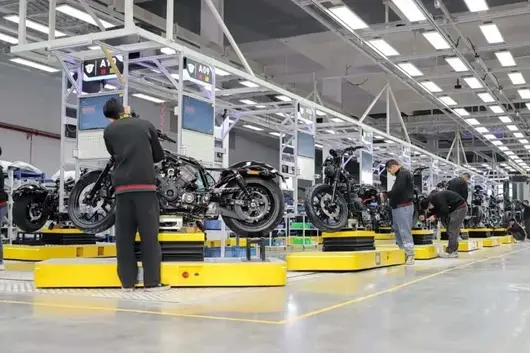
Global motorcycle sales volume in 2025 is approximately 65.2 million units, and the market size is expected to approach 180 billion USD by 2030.

Sales VolumeThe largest regions are India (approx. 20.5 million to 20.7 million units), ASEAN Five Countries (Indonesia, Vietnam, Thailand, Philippines, Malaysia, totaling approx. 13.16 million units), China domestic sales (8.602 million units), and Latin America (approx. 5.86 million units).
India and Southeast Asia focus mainly on 100~150cc small-displacement commuter bikes, while Europe and America prefer medium-to-large displacement naked bikes, touring bikes, and cruisers.

Global StockOver 60% of the global stock is concentrated in four countries: India, Indonesia, China, and Vietnam. India's stock is approx. 221 million vehicles, Indonesia approx. 125 million to 130 million vehicles, China registered approx. 100 million vehicles, Vietnam approx. 72 million to 77 million vehicles.
Brand landscape shows "Asia leads sales, Europe & US dominate high-end".

The four Japanese giants (Honda, Yamaha, Suzuki, Kawasaki) account for nearly half of the global share, dominating the commuter bike market in Southeast Asia and Latin America; Indian brands (Hero, Bajaj, TVS) rule the low-end mobility market in South Asia and Africa; European brands (BMW, Ducati, KTM) and American Harley dominate the high-net-worth leisure market.
Characteristics of the Chinese Market and Electrification Impact
China's domestic sales account for 13%~14% globally; accounting for exports, production accounts for approx. 30%, making it the world's largest manufacturing and export country.
Suppressed by motorcycle restrictions in nearly 200 cities, urban commuting is largely replaced by electric two-wheelers (electric two-wheeler penetration rate exceeds 75% in tier-1 and tier-2 cities, national comprehensive electrification rate exceeds 70%), putting pressure on domestic sales of fuel commuter bikes. In 2025, domestic sales of fuel motorcycles were approx. 5.1449 million units, a year-on-year decrease of 6.18%. However, leisure models over 250cc grew against the trend: 2025 sales were 952,300 units, a year-on-year increase of 25.87%, with a 3-year CAGR (Compound Annual Growth Rate) over 20%. Sport replicas, retro, and ADV models are popular; consumption attributes shift towards leisure and socializing.
The markets most significantly impacted by electrification of fuel motorcycles are China and Vietnam. China's urban areas have basically completed the "switch from oil to electric"; Vietnam's proportion of new electric motorcycle registrations has quickly risen to 13%~22%, making it the market with the fastest replacement of fuel motorcycles in Southeast Asia.
Assessment of the True Global Status and Competitiveness of Chinese Enterprises
No Need to Underestimate Themselves
China possesses the most complete motorcycle industry chain globally. In 2025, whole vehicle exports reached 13.3657 million units, export value 8.85 billion USD. Export volume accounts for an important share of global trade, making it the core supplier for small-displacement commuter bikes in Asia, Africa, and Latin America.
Haojue, Loncin, and Zonsen have built a solid foundation in Latin America and Africa with cost-performance and reliability; CFMOTO, QJ Motor (QJMOTO), and Voge continue to catch up in the medium-to-large displacement field. Exports of models over 250cc increased year-on-year by over 50%. Voge's European sales broke through 80,000 units (year-on-year +89.35%). CFMOTO holds a leading position in the European ATV market, and its motorcycle business has also achieved a 5%~10% market share in some European countries. Domestic market share of domestic brands in the medium-to-large displacement market exceeds 80%, significantly squeezing the share of imported large-displacement bikes. In the racing field (WSBK, Dakar), Chinese teams are also starting to appear. Kove team ranked 15th in Dakar 2025, and Zhang Xue Motorcycle achieved five consecutive championships in WSBK.
Average export price continues to rise. Industry estimates suggest the share of independent brands going global is approaching 50%. The industry is transitioning from "OEM for volume" to "Technology + Brand going global".
Nor Should They Be Arrogant
The sum of net profits of the top ten enterprises in China's motorcycle industry still falls short of the profit from just Honda's motorcycle business, and is still in the stage of "large but not strong".
There are three core weaknesses.
First, huge disparity in R&D investment.
Honda's R&D expenses for its motorcycle business in a single year exceed the total R&D investment of China's entire motorcycle industry, resulting in a generational gap in underlying technologies such as engine thermal efficiency, durability, and NVH. The rate of fully independent R&D for large-displacement engines over 250cc is less than 30% (in recent years, new brands like Zhang Xue Motorcycle have achieved 100% independent R&D of core components, but this has not yet changed the overall industry landscape).
Second, core electronic control relies on foreign suppliers
High-end electronic controls such as EFI systems, ABS, TC, IMU still heavily rely on foreign suppliers like Bosch, Denso, etc. The bargaining power over core components is weak.
Third, shallow brand accumulation, imperfect overseas network
Brand premium is far lower than Japanese and European brands. Early low-price vicious competition once caused China's motorcycle market share in Southeast Asia to drop from 90% to approx. 1% (has recovered in recent years, but rebuilding trust still takes time). In Japanese home markets (Japan itself, Thailand) and North American cruiser markets, Chinese brands have almost no presence.
Chinese enterprises are an irreplaceable manufacturing cornerstone and main force for commuter bike exports globally. Medium-to-large displacement is becoming a second growth curve, showing promise in Europe and America. The electric motorcycle industry chain also possesses first-mover advantages. However, compared to Japanese giants, there is still a 5~10 year gap in core technology control, global brand premium, and full-cycle profitability. Whether future breakthroughs in electronic control and large-displacement engine independent R&D, and establishing overseas after-sales service systems, will decide if Chinese motorcycles will be upgraded from "World Factory" to "Global Brands", or remain in a low-margin OEM role for the long term.
When electrification of commuter bikes, large-displacementization of leisure bikes, and intelligent connectivity of products become trends in the motorcycle industry, Chinese motorcycle companies improving R&D capability, leveraging ecosystem advantages, and integrating into the global market is the right path.
© 2024 Bitauto.com. All Rights Reserved.
Bitauto (www.yiche.com and www.bitauto.com) is one of the most visited automotive websites in China. We provide detailed info on Chinese car brands available in your area. Please note that the information provided on this website is based on publicly available data and is for reference only. It may not be fully updated or accurate at all times.

Help us improve our website


