

Home301

Search History
Popular Searches
Dealer Login / Sign Up

Baru-baru ini, Pejabat Wakil Dagang Amerika Syarikat mengumumkan tarif Seksyen 301 baharu, mengelaskan 60 negara dan wilayah ke dalam pelbagai kadar tarif. Tarif ini bukan sahaja dikenakan secara bertindih dengan tarif lama Seksyen 301, malah produk tayar tersenarai jelas dengan tiada ruang untuk pengecualian. Penyesuaian dasar ini menandakan pembinaan semula peraturan perdagangan global, dan juga menjadikan industri tayar China yang sangat bergantung pada pasaran luar menghadapi perubahan asas dalam lingkungan eksport.

Laluan Eksport Terhalang: Eksport Langsung dan Transit Asia Tenggara Terhad Dua Kali
Ruang eksport langsung dan perdagangan transshipment tayar China sedang menghadapi mampatan teruk. Pada 15 Julai, Kumpulan Perdagangan Amerika Syarikat memutuskan semakan tamat hayat tayar kereta penumpang dan trak ringan ke atas China, meningkatkan kadar tarif kepada paras tinggi sejarah 190%, yang secara efektif mematikan laluan eksport langsung ke Amerika Utara. Pada masa yang sama, sebelum ini, Uni Eropah mengumumkan mengenakan cukai anti-dumping 24.4%-45.3% ke atas tayar berkaitan China, melemahkan daya saing harga produk China di Eropah.
Lebih parah lagi ialah keseragaman dasar tarif antara Amerika dan Eropah. Dalam senarai tarif Seksyen 301 baharu AS, negara Asia Tenggara seperti Vietnam dan Thailand berada dalam kadar tarif 12.5% yang sama dengan China, yang bersesuaian dengan penyiasatan mengelak yang baru-baru ini dilancarkan oleh EU ke atas Asia Tenggara. Apabila syarikat China cuba mengelakkan tarif melalui kapasiti transit di Asia Tenggara, AS dan EU telah menetapkan "perangkap asal". Ditambah dengan penyiasatan anti-dumping di Brazil dan Peru serta halangan persekitaran Gabungan Ekonomi Eurasia, barangan perdagangan global yang ditargetkan ke atas tayar China terus dibina tinggi.

Model Keuntungan Tertekan: "Globalisasi Palsu" Menghadapi Cabaran Mematuhi Peraturan
Sebagai negara pengeluar tayar terbesar di dunia, 80% kapasiti domestik tertumpu pada produk paras rendah, dan model jangka panjang "menukar harga dengan kuantiti" menjadi fokus penyiasatan anti-dumping di pelbagai negara. Data menunjukkan, pada 2025 jumlah eksport tayar China amat besar, namun keuntungan hanya sebanyak 8%. Di hadapan barangan tarif melebihi 100%, ruang keuntungan yang nipis ini serta merta termampakan habis.
Di bawah tekanan tarif, syarikat tayar domestik telah membina gelora membina kilang di luar negara. Pada paruh pertama 2026, lebih 10 projek pengumuman pengeluasan kapasiti luar negara, jumlah pelaburan melebihi 20 bilion yuan. Walau bagaimanapun, pemindahan kapasiti semata-mata sedang menghadapi cabaran pematuhan. Sebuah kilang Asia Tenggara syarikat tertentu menghadapi penghentian operasi EU sebaik sahaja pengeluaran bermula; syarikat lain kerana tidak mencapai piawaian "kandungan asal" AS masih dikenakan tarif tinggi. Berbanding model pelokalan laluan penuh oleh rakan kongsi asing besar seperti Michelin dan Bridgestone, "globalisasi palsu" yang berada pada tahap "pejabat pemasangan" dan rangkaian bekalan masih terikat domestik, kelihatan lemah di hadapan barangan tarif.

Transformasi Industri Dipercepat: Pelokalan Dalam Menjadi Konsensus Memecah Kendala
Apabila kelebihan harga rendah terhad, industri tayar China dipaksa menghadapi pembinaan semula logik asas industri. Kilang tayar Linglong di Serbia telah meneroka pelokalan dalam "Penyelidikan + Pengeluaran + Penyediaan" tiga serangkai dengan mencapai pembelian tempatan Eropah, membentuk pasukan penyelidikan dan pembangunan terhadap peraturan EU serta memasuki pasaran asal kilang. Pada masa yang sama, Zhongce Karet, tayar Double Coin dan lain-lain menambah pelokalan rantaian industri, manakala kumpulan Sailun memperkenalkan piawaian Perindustrian 4.0 di kilang Kemboja.
Pemertalan tarif Seksyen 301 baharu dan halangan perdagangan global secara objektif mempercepatkan penyusunan semula dan transformasi industri. Apabila laluan transit Asia Tenggara terhalang dan model harga rendah sukar diteruskan, penyesuaian industri yang dicetuskan oleh tarif ini sedang menggalakkan tayar China bergerak dari "Kilang Global" ke "Merek Global". Pada masa hadapan, persaingan pasaran akan beralih secara beransur-ansur daripada pertandingan skala kapasiti, kepada persaingan komprehensif inovasi teknologi, nilai jenama dan kemampuan operasi global.
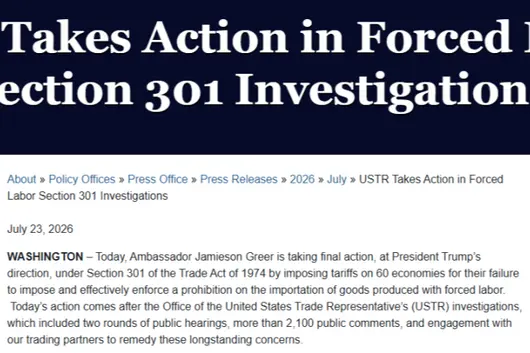

Recently, the U.S. Trade Representative Office issued a new Section 301 tariff announcement, categorizing 60 countries and regions into different tax brackets. This tariff package is not only levied in addition to the old Section 301 tariffs, but tire products are prominently included with no room for exemption. This policy adjustment marks a reconstruction of global trade rules and also forces China's tire industry, which relies heavily on external markets, to face a fundamental shift in its export environment.
Export Paths Blocked: Direct Export and Southeast Asia Transit Double-Pronged Restrictions
China's tire direct export and transshipment trade space is facing severe squeezing. On July 15, the U.S. Department of Commerce concluded the sunset review of Chinese passenger car and light truck tires, pushing the combined tax rate to a historical high of 190%, basically blocking the direct export path to North America. Meanwhile, the EU previously announced anti-dumping duties of 24.4%-45.3% on relevant Chinese tires, weakening the price competitiveness of Chinese products in Europe.
More severe is the synergy of U.S. and EU tariff policies. In the U.S. new Section 301 tariff list, Southeast Asian countries such as Vietnam and Thailand are in the same 12.5% tax bracket as China, which echoes the EU's recent anti-circumvention investigations initiated against Southeast Asia. When Chinese enterprises attempt to avoid tariffs by transiting through Southeast Asian capacity, the U.S. and Europe have set up an "Origin Trap." Combined with anti-dumping investigations by Brazil and Peru and environmental barriers of the Eurasian Economic Union, trade barriers globally targeting Chinese tires are continuously rising.
Profit Model Under Pressure: "False Globalization" Faces Compliance Challenges
As the world's largest tire producer, 80% of domestic capacity is concentrated in low-end products, and the long-term "trading price for volume" model has become a key focus of anti-dumping investigations by various countries. Data shows that in 2025, China's tire export volume was huge, but profit accounted for only 8%. In the face of tariff barriers exceeding 100%, this meager profit space is instantly squeezed away.
Under tariff pressure, domestic tire companies have sparked a boom in overseas factory construction. In the first half of 2026, more than a dozen projects announcing overseas expansion were declared, with total investment exceeding 20 billion yuan. However, simple capacity transfer is facing compliance challenges. A certain enterprise's Southeast Asia factory faced suspension due to EU anti-circumvention investigations immediately after production start; another enterprise was still levied high tariffs due to not meeting U.S. "content of origin" standards. Compared to the full-chain localization models of foreign giants like Michelin and Bridgestone, "False Globalization" staying at the "assembly workshop" stage with supply chains still bound to China appears weak in the face of tariff barriers.
Industry Accelerates Transformation: Deep Localization Becomes Consensus for Breaking the Deadlock
When low-price advantages are limited, China's tire industry is forced to face the reconstruction of the industry's underlying logic. Linglong Tire, in its Serbia factory, explored a "R&D + Production + Supply" three-in-one deep localization model by achieving European local procurement, forming an R&D team targeting EU regulations, and entering the OEM market. At the same time, Zhongce Rubber, Double Coin Tire, etc., are doubling down on local supply chains, and Sailun Group introduced Industry 4.0 standards at its Cambodia factory.
The tightening of new Section 301 tariffs and global trade barriers objectively accelerates industry reshuffling and transformation. When Southeast Asia transit paths are blocked and low-price models are unsustainable, this industry adjustment triggered by tariffs is pushing Chinese tires to move from "Global Factory" to "Global Brand". Future market competition will gradually shift from capacity scale contests to a comprehensive battle of technological innovation, brand value, and global operational capabilities.

近日,美國貿易代表辦公室發布新 301 關稅公告,將 60 個國家和地區劃分至不同檔位稅率。這套關稅不僅與舊 301 關稅疊加徵收,且輪胎產品赫然在列,無任何豁免餘地。此一政策調整標誌著全球貿易規則的重構,亦令高度依賴外部市場之中國輪胎產業面臨出口環境之根本性轉變。
出口路線受阻:直接出口與東南亞中轉雙重受限
中國輪胎之直接出口及轉口貿易空間正遭遇嚴重擠壓。7 月 15 日,美國商務部對華乘用車及輕卡輪胎日落復審終裁落槌,疊加稅率推至 190% 之歷史高位,導致直接出口北美之路線基本封死。同時,歐盟此前宣佈對華相關輪胎徵收 24.4%-45.3% 之反傾銷稅,削弱中國產品在歐洲之價格競爭力。
更為嚴峻的是歐美關稅政策之協同性。在美國新 301 關稅清單中,越南、泰國等東南亞國家與中國同處 12.5% 稅率檔位,這與歐盟近期對東南亞發起之反規避調查形成呼應。當中國企業試圖通過東南亞產能中轉規避關稅時,歐美已布下「原產地陷阱」。疊加巴西、秘魯之反傾銷調查及歐亞經濟聯盟之環保壁壘,全球針對中國輪胎之貿易壁壘正持續高築。
盈利模式受壓:「假全球化」遭遇合規挑戰
作為全球最大輪胎生產國,國內 80% 產能集中於低端產品,長期之「以價換量」模式成為各國反傾銷調查重點。數據顯示,2025 年中國輪胎出口量巨大,但利潤額僅佔 8%。在超 100% 之關稅壁壘面前,此種微薄利潤空間瞬間被擠壓殆盡。
關稅壓力下,國內輪胎企業掀起海外建廠熱潮。2026 年上半年,宣佈海外擴產項目超十多個,總投資額超 200 億元。然而,單純產能轉移正面臨合規挑戰。某企業東南亞工廠投產即遭遇歐盟反規避調查停產;另有企業因未達美國「原產地含量」標準仍被徵收高額關稅。對比米其林、普利司通等外資巨頭全鏈路本地化模式,停留在「組裝車間」階段、供應鏈仍綁定國內之「假全球化」,在關稅壁壘前顯得不堪一擊。
產業加速轉型:深度本地化成破局共識
當低價優勢受限,中國輪胎業被迫直面產業底層邏輯之重構。玲瓏輪胎在塞爾維亞工廠通過實現歐洲本地採購、組建針對歐盟法規之研發團隊及進入主機廠原配市場,探索出「研發 + 生產 + 配套」三位一體之深度本地化模式。同時,中策橡膠、雙錢輪胎等加碼本地化產業鏈,賽輪集團在柬埔寨工廠引入工業 4.0 標準。
新 301 關稅及全球貿易壁壘之收緊,客觀上加速了行業之洗牌與蛻變。當東南亞中轉路線受阻、低價模式難以為繼,這場由關稅引發之產業調整,正促使中國輪胎從「全球工廠」向「全球品牌」邁進。未來之市場競爭,將逐漸從產能規模之較量,轉向技術創新、品牌價值與全球運營能力之綜合比拼。

近日,美国贸易代表办公室发布新301关税公告,将60个国家和地区划分至不同档位税率。这套关税不仅与旧301关税叠加征收,且轮胎产品赫然在列,无任何豁免余地。这一政策调整标志着全球贸易规则的重构,也使得高度依赖外部市场的中国轮胎产业面临出口环境的根本性转变。
出口路径受阻:直接出口与东南亚中转双重受限
中国轮胎的直接出口与转口贸易空间正遭遇严重挤压。7月15日,美国商务部对华乘用车及轻卡轮胎日落复审终裁落槌,叠加税率推至190%的历史高位,导致直接出口北美的路径基本封死。同时,欧盟此前宣布对华相关轮胎征收24.4%-45.3%的反倾销税,削弱了中国产品在欧洲的价格竞争力。
更为严峻的是欧美关税政策的协同性。在美国新301关税清单中,越南、泰国等东南亚国家与中国同处12.5%税率档位,这与欧盟近期对东南亚发起的反规避调查形成呼应。当中国企业试图通过东南亚产能中转规避关税时,欧美已布下“原产地陷阱”。叠加巴西、秘鲁的反倾销调查及欧亚经济联盟的环保壁垒,全球针对中国轮胎的贸易壁垒正持续高筑。
盈利模式承压:“假全球化”遭遇合规挑战
作为全球最大轮胎生产国,国内80%的产能集中于低端产品,长期的“以价换量”模式成为各国反倾销调查的重点。数据显示,2025年中国轮胎出口量巨大,但利润额仅占8%。在超100%的关税壁垒面前,这种微薄的利润空间瞬间被挤压殆尽。
关税压力下,国内轮胎企业掀起了海外建厂热潮。2026年上半年,宣布海外扩产的项目超十几个,总投资额超200亿元。然而,单纯的产能转移正面临合规挑战。某企业东南亚工厂投产即遭遇欧盟反规避调查停产;另有企业因未达美国“原产地含量”标准仍被征收高额关税。对比米其林、普利司通等外资巨头全链路本地化的模式,停留在“组装车间”阶段、供应链仍绑定国内的“假全球化”,在关税壁垒前显得不堪一击。
产业加速转型:深度本地化成破局共识
当低价优势受限,中国轮胎业被迫直面产业底层逻辑的重构。玲珑轮胎在塞尔维亚工厂通过实现欧洲本地采购、组建针对欧盟法规的研发团队及进入主机厂原配市场,探索出“研发+生产+配套”三位一体的深度本地化模式。同时,中策橡胶、双钱轮胎等加码本地化产业链,赛轮集团在柬埔寨工厂引入工业4.0标准。
新301关税及全球贸易壁垒的收紧,客观上加速了行业的洗牌与蜕变。当东南亚中转路径受阻、低价模式难以为继,这场由关税引发的产业调整,正促使中国轮胎从“全球工厂”向“全球品牌”迈进。未来的市场竞争,将逐渐从产能规模的较量,转向技术创新、品牌价值与全球运营能力的综合比拼。
© 2024 Bitauto.com. All Rights Reserved.
Bitauto (www.yiche.com and www.bitauto.com) is one of the most visited automotive websites in China. We provide detailed info on Chinese car brands available in your area. Please note that the information provided on this website is based on publicly available data and is for reference only. It may not be fully updated or accurate at all times.

Help us improve our website


