

HomeAPP

Search History
Popular Searches
Dealer Login / Sign Up

Author | Janson
Editor | Zhi Hao

Car News reported on October 28, that previously, ThunderSoft officially launched AquaDrive AIOS (AquaDrive AIOS) 3.0, further extending AI from in-vehicle voice interaction to task execution, interface generation, and system control.
It is understood that AquaDrive AIOS 3.0 possesses three core capabilities: autonomous generation, autonomous fusion, and autonomous control. It can dynamically generate interaction interfaces based on user intent, integrate functions such as navigation, panoramic view, and automatic parking, and execute travel-related tasks via natural language.
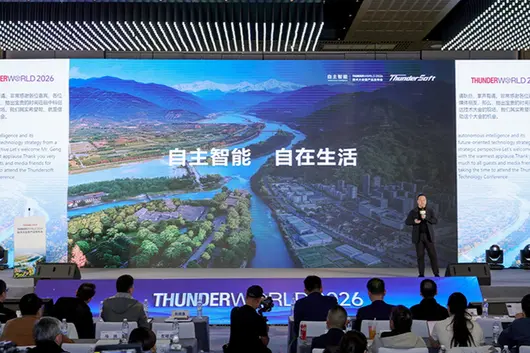
At the press conference venue, ThunderSoft also displayed a demonstration platform modified based on mass-production vehicle models, presenting the application effects of the next-generation AIOS in automobiles.
Besides automotive business, ThunderSoft also launched multiple achievements including TurboX Autonomous Intelligent IoT Platform, Robotics and Embodied AI Solutions, Veda AI Glasses Solutions, and many other results.
At the subsequent media briefing session, ThunderSoft management further responded to industry concerns such as Agent integration in vehicles, OEMs developing AIOS in-house, cockpit-driving integration, whole-vehicle AI control, and automotive business expansion overseas.
This released AquaDrive AIOS 3.0 is a next-generation AI operating system launched by ThunderSoft for smart vehicles, with key upgrades to autonomous generation, autonomous fusion, and autonomous control capabilities.
First is autonomous generation, traditional smart cockpits mainly rely on pre-designed menus and application interfaces for operation, while AquaDrive AIOS 3.0 can dynamically generate corresponding interaction interfaces based on user intent, vehicle status, and real-time scenarios.
For example, after the user states a travel requirement, the system can organize relevant information, call corresponding services, without requiring the user to open different apps one by one.
Second is autonomous fusion, the new system attempts to further connect information related to the cockpit and driving, integrating lane-level navigation, vehicle surrounding environment, 360-degree panoramic view, and automatic parking functions, so that information from different systems can be presented in a more coherent manner.
Third is autonomous control, by introducing agent architecture, AquaDrive AIOS 3.0 can understand natural language commands, perform task planning, and call relevant in-vehicle functions to complete operations.

▲ AquaDrive AIOS 3.0
Compared to traditional voice assistants executing fixed commands, the new system focuses more on the planning, execution, and result feedback of complex tasks.
In the on-site demonstration, ThunderSoft built a demonstration platform based on the Chery Tiggo 8 (Parameters | Images) mass-production vehicle model, demonstrating the technical capabilities of the above applications.
It is worth noting that ThunderSoft's exploration of automotive AI is not limited to smart cockpits.
At the media briefing session, ThunderSoft disclosed that the company has participated in projects of some automakers linking chassis, suspension and other systems with AI, and is exploring the application of AI in areas such as extended-range system energy management and air conditioning energy saving.
Its technical approach is to combine information such as vehicle location, navigation route, road gradient, ambient temperature, and user habits, and optimize the operating status of different vehicle systems with AI assistance.
From a product positioning perspective, ThunderSoft hopes to use the AIOS platform to connect different chips, models, and in-vehicle systems, and co-develop smart automotive products for different brands with automakers.
At the end of the event, ThunderSoft Co-founder & Executive President Geng Zengqiang and Song Yang, General Manager of Smart Auto Product Center of ThunderSoft, accepted group interviews from media including Car News.
Below is the interview transcript, which was excerpted by Car News without changing the original meaning.

▲ Media Briefing Session Site
Q1: Currently, many automakers and tech companies are developing Edge AI and AI operating systems. What differentiated advantages does ThunderSoft have?
Song Yang: Our first advantage is platform neutrality. We can provide full-stack AIOS products and solutions based on customer data, ecosystem, and product concepts.
Cooperation mainly has two models: one is to directly provide Agents, AIOS products, etc. to automakers; the other is to help automakers build their own AIOS platforms.
For example, we established a joint venture with Geely, and also cooperated with other automakers to develop related products.
We hope to gradually transform from a service-oriented company to a product-oriented company, providing complete technical solutions for automakers. The final products may be launched under the automakers' own brands, but the underlying layer uses our technology and solutions.
Q2: After AquaDrive AIOS enters the 3.0 stage, what are ThunderSoft's plans for expanding automotive business overseas?
Song Yang: We laid out overseas very early, especially in automotive business. Currently, the overseas automotive-related team exceeds 1,000 people, covering multiple major automotive markets in Europe and Asia.
In Europe, we acquired two companies engaged in automotive HMI and 3D vision related businesses, accumulating technical capabilities such as automotive interaction, panoramic view, DMS, and OMS.
In markets such as Vietnam, Japan, South Korea, India, and Malaysia, we also have local teams.
A major challenge for automotive AI going overseas is localization. For example, a Southeast Asia project we recently contacted needs to support eight languages, and each language requires native speakers to participate in testing, development, and verification.
Not only language, but living habits, driving habits, and interaction needs of users in different countries are also different, requiring local teams to participate in development.
We believe that Chinese automotive overseas expansion is shifting from pure vehicle sales to a new stage of building local R&D and service capabilities.
Currently, we have also participated in overseas AI projects of multiple Chinese automakers. With Chinese automakers establishing larger R&D teams overseas, the overseas market will become an important development direction for ThunderSoft's automotive business in the next stage.
Q3: Currently, Agent integration in vehicles has not formed a clear application direction. What problems does ThunderSoft believe Agent integration in vehicles actually needs to solve?
Song Yang: Last year, everyone was still discussing what is the most important application of automotive AI, whether it is ordering food, navigation, or other functions.
But this year the direction has changed.
With the development of Master Agent and other technologies, we no longer need to select one most important application. Instead, we hope to connect the original Agents and Apps through a more intelligent system.
In the past, users needed to open different apps to complete navigation, food ordering, etc. operations. Now AI can autonomously plan tasks, call APIs, and generate corresponding interaction interfaces based on user requirements.
In other words, automotive AI is shifting from function calls under fixed scenarios to a system capable of autonomous thinking, orchestration, and task execution.
We believe that an important direction for the next-generation automotive AIOS is to enable AI to not only communicate with users but also truly complete tasks.
Q4: From early AquaClaw related solutions to AquaDrive AIOS 3.0, what changes have occurred in ThunderSoft's automotive agent architecture?
Song Yang: The products we displayed before the Beijing Auto Show were mainly about remotely controlling the car via mobile phone. For example, users say a sentence, and the vehicle can be prepared in advance and the car door opened.
In the second stage, we started to attempt deploying AquaClaw and other agent architectures inside the vehicle system, allowing AI to execute tasks directly.
But during application, we found two problems: one is that models may produce hallucinations, and the other is that response speed is not fast enough.
For example, if the user requests to open a car window, and the command needs multiple processing through the cloud and edge side, it may cause hundreds of milliseconds or even one or two seconds of latency, affecting the experience.
Therefore, in the third stage, we still retain Harness and other agent architectures, but re-split the different service call methods.
For commands like opening a car window that require fast response, it can be completed via more direct service calls without going through a complete complex task planning process.
At the same time, we are also deploying more models and agent capabilities to the edge side to reduce response latency, Token usage costs, and improve system controllability.

▲ ThunderSoft Co-founder & Executive President Geng Zengqiang
Geng Zengqiang: We adopt a model-neutral approach and are not bound to a single model vendor.
For example, the voice model can choose Doubao, and the reasoning model can choose Qwen, DeepSeek, or other solutions according to needs.
The system will also assign tasks based on the vehicle-side computing power situation. If vehicle-side computing power is sufficient, more computation is placed locally; if insufficient, it relies more on the cloud.
The cloud can also choose different models based on task complexity. Simple tasks use lightweight solutions, and complex tasks call stronger models to balance experience and Token costs.
Q5: More and more automakers emphasize full-stack self-research. What customers is ThunderSoft's AIOS mainly targeting? How does it cooperate with automakers?
Geng Zengqiang: Automakers can roughly be divided into two categories.
The first category is new force automakers. They themselves have strong software capabilities and emphasize full-stack self-research, with core technologies usually controlled by themselves. We also cooperate with these enterprises, but primarily participate in some technologies and product development.
The second category is traditional automakers and international automakers.
These enterprises previously relied heavily on suppliers to provide software and hardware. Now they hope to gradually build their own software R&D capabilities, but it is not easy to fully achieve autonomous development in a short period.
Therefore, they usually adopt a walking on two legs approach: on the one hand, building their own R&D teams, and on the other hand, cooperating with technology suppliers to accelerate product development and iteration.
This is also our currently larger customer base.
For example, the joint ventures established with Geely and Volkswagen embody this cooperation model.
Our positioning is not to let all automakers use the same set of ThunderSoft brand AIOS, but to help automakers build their own platforms.
Automakers need to master core parts with differentiated competitiveness, while differentiated basic platform capabilities can be reused more mature solutions, co-developed through product plus service methods.
This year the growth of automotive business was better than our previous expectations, mainly for two reasons.
One is that automotive software is becoming increasingly complex. Suppliers not only need to possess traditional cockpit development capabilities but also AI cockpit development capabilities, and integrate the two.
The second is that automakers' development demand for next-generation AIOS has increased significantly, and everyone wants to apply new technologies to products as soon as possible.
Additionally, new opportunities have emerged in overseas business.
Some international automakers are beginning to reconsider supply chain strategies, expanding the use scope of Chinese supply chains in regions outside the US market to reduce costs and improve development efficiency.
This year we also obtained software and hardware projects from international automakers such as Mazda.
Q6: Currently, AquaDrive AIOS 3.0 mainly showcases cockpit capabilities. In the future, can it further control other systems such as powertrain, chassis, and body?
Song Yang: We are already exploring these directions with automakers.
For example, Chery previously displayed a Daddy Cockpit Concept Demo Vehicle. In addition to controlling functions such as air conditioning and car windows via natural language, it can also make systems such as chassis suspension participate in in-vehicle interaction.
One scenario is that when the vehicle plays a movie, let suspension movement, body posture, and air conditioning vents coordinate with the screen, forming an experience similar to a 4D cinema.
But this also involves an important issue, which is how to ensure safety.
From a technology development perspective, with cockpit-driving integration and computing chip capability improvement, the functions that AIOS can call in the future will increase more and more.
We are currently still discussing extended-range vehicle energy management solutions with one automaker.
For example, for a car adopting a 1.6T extended-range engine equipped with 20 to 30 kWh batteries, how to let the engine always work in a more economical range according to different road conditions?
We hope to introduce information such as navigation route, road gradient, temperature, traffic conditions, and user habits into the AI model to assist in optimizing engine operation strategies and vehicle energy management.
Similar directions also include air conditioning energy saving. We have already developed related AI solutions for automakers, hoping to comprehensively adjust the air conditioning according to environmental conditions inside and outside the car and user needs, rather than relying solely on fixed temperature thresholds.
Additionally, we are also exploring connecting different systems such as air suspension and smart chassis through unified protocols.
Long-term, we hope automobiles can form a unified intelligent computing platform. Under the premise of meeting safety requirements, one intelligent system coordinates more whole-vehicle functions.
With the progress of electrical/electronic architecture and chip technology, AIOS has the opportunity to further evolve from a cockpit operating system to an intelligent system for the whole vehicle.
With the acceleration of large models and agent technologies into vehicles, smart cockpits are evolving from traditional human-machine interaction systems to AI operating systems capable of understanding user intent and autonomously executing tasks.
The release of this AquaDrive AIOS 3.0 reflects ThunderSoft's further layout in the field of automotive AI. From agent interaction to cockpit-driving integration, and then to whole-vehicle energy management, ThunderSoft is attempting to expand AI capabilities to more vehicle systems.
However, whether relevant technologies can truly achieve scaled mass production still needs to address issues such as response speed, system safety, and engineering adaptation. For ThunderSoft, how to transform its own technical accumulation into products that are mass-producible and continuously iteratable by automakers will be the key to the next stage.

作者 | Janson
编辑 | 志豪
车东西10月28日消息,日前,中科创达正式推出AquaDrive AIOS(滴水AIOS)3.0,进一步将AI从车内语音交互延伸至任务执行、界面生成和系统控制。
据了解,滴水AIOS 3.0具备自主生成、自主融合、自主控制三大核心能力,能够根据用户意图动态生成交互界面,整合导航、环视和自动泊车等功能,并通过自然语言执行出行相关任务。
发布会现场,中科创达还展示了基于量产车型改装的演示平台,呈现新一代AIOS在汽车上的应用效果。
除汽车业务外,中科创达还发布了TurboX自主智能物联网平台、机器人及具身智能解决方案、Veda AI眼镜解决方案等多项成果。
在随后的媒体沟通会上,中科创达管理层进一步回应了智能体上车、车企自研AIOS、舱驾融合、整车AI控制以及汽车业务出海等行业关注的问题。
此次发布的AquaDrive AIOS 3.0,是中科创达面向智能汽车推出的新一代AI操作系统,重点升级了自主生成、自主融合和自主控制三项能力。
首先是自主生成,传统智能座舱主要依靠预先设计的菜单和应用界面进行操作,而滴水AIOS 3.0能够根据用户意图、车辆状态和实时场景,动态生成相应的交互界面。
例如,用户提出出行需求后,系统可以组织相关信息、调用对应服务,而不必要求用户逐一打开不同应用。
其次是自主融合,新系统尝试进一步打通座舱与驾驶相关的信息,整合车道级导航、车辆周围环境、360度环视以及自动泊车等功能,让不同系统的信息能够以更连贯的方式呈现。
第三是自主控制,通过引入智能体架构,滴水AIOS 3.0能够理解自然语言指令,进行任务规划,并调用相关车载功能完成操作。
▲滴水AIOS 3.0
相比传统语音助手执行固定指令,新系统更加注重复杂任务的规划、执行和结果反馈。
在现场展示中,中科创达以奇瑞瑞虎8(参数丨图片)量产车型为基础搭建了演示平台,展示上述技术的应用能力。
值得注意的是,中科创达对汽车AI的探索并不局限于智能座舱。
在媒体沟通会上,中科创达方面透露,公司已经参与部分车企的底盘、悬架等系统与AI联动的项目,并正在探索将AI应用于增程系统能量管理、空调节能等领域。
其技术思路是将车辆位置、导航路线、道路坡度、环境温度以及用户习惯等信息结合起来,通过AI辅助优化车辆不同系统的工作状态。
从产品定位来看,中科创达希望通过AIOS平台,连接不同芯片、模型和车载系统,并与车企共同开发面向不同品牌的智能汽车产品。
活动最后,中科创达联创、执行总裁耿增强和中科创达智能汽车产品中心总经理宋洋等人接受了包括车东西在内的媒体群访
以下为采访实录,车东西在不改变原意的基础上进行了摘编。
▲媒体沟通会现场
Q1:目前很多车企和科技公司都在开发端侧AI及AI操作系统,中科创达有什么差异化优势?
宋洋:我们的第一个优势是平台中立性,可以根据客户的数据、生态和产品理念,提供全栈的AIOS产品和解决方案。
合作主要有两种模式:一种是直接为车企提供Agent、AIOS等产品;另一种是帮助车企建设自己的AIOS平台。
例如,我们与吉利成立了合资公司,也与其他车企合作开发相关产品。
我们希望从服务型公司逐步向产品型公司转变,为车企提供完整的技术方案。最终产品可能以车企自己的品牌推出,但底层使用了我们的技术和解决方案。
Q2:滴水AIOS进入3.0阶段后,中科创达在汽车业务出海方面有什么规划?
宋洋:我们在海外布局很早,尤其是汽车业务。目前海外汽车相关团队超过1000人,覆盖欧洲和亚洲多个主要汽车市场。
在欧洲,我们收购了两家从事汽车HMI和3D视觉相关业务的公司,积累了汽车交互、环视、DMS和OMS等技术能力。
在越南、日本、韩国、印度和马来西亚等市场,我们也有本地团队。
汽车AI出海面临的一个重要挑战是本地化。比如,我们最近接触的一个东南亚项目,需要支持八种语言,每一种语言都需要母语使用者参与测试、开发和验证。
不仅是语言,不同国家用户的生活习惯、用车习惯和交互需求也不一样,需要本地团队参与开发。
我们认为中国汽车出海正在从单纯销售车辆,转向建立本地研发和服务能力的新阶段。
目前我们也参与了多家中国车企的海外AI项目。随着中国车企在海外建立更大规模的研发团队,海外市场将成为中科创达汽车业务下一阶段的重要发展方向。
Q3:目前智能体上车还没有形成明确的应用方向,中科创达认为智能体上车究竟要解决什么问题?
宋洋:去年大家还在讨论,汽车AI最重要的应用究竟是什么,是点餐、导航,还是其他功能。
但今年的方向发生了变化。
随着Master Agent等技术发展,我们不再需要选出某一个最重要的应用,而是希望通过一个更智能的系统,把原来的Agent和App连接起来。
过去用户需要打开不同应用才能完成导航、订餐等操作,现在AI可以根据用户提出的需求,自主规划任务、调用API,并生成相应的交互界面。
也就是说,汽车AI正在从固定场景下的功能调用,转向能够自主思考、编排和执行任务的系统。
我们认为,下一代汽车AIOS的重要方向,就是让AI不仅能够与用户交流,还能够真正完成任务。
Q4:从早期AquaClaw相关方案到滴水AIOS 3.0,中科创达的汽车智能体架构发生了哪些变化?
宋洋:最早我们在北京车展前展示的产品,主要是通过手机远程控制汽车。比如用户说一句话,就可以提前准备车辆、打开车门。
第二阶段,我们开始尝试将AquaClaw等智能体架构部署到车机内部,让AI能够直接执行任务。
但在应用过程中,我们发现两个问题:一个是模型可能产生幻觉,另一个是响应速度不够快。
例如,用户要求打开车窗,如果指令需要经过云端和端侧的多次处理,可能产生数百毫秒甚至一两秒的延迟,影响体验。
因此,到了第三阶段,我们仍然保留Harness等智能体架构,但重新拆分了不同的服务调用方式。
对于打开车窗这类需要快速响应的指令,可以通过更直接的服务调用完成,不必经过完整的复杂任务规划流程。
与此同时,我们也在把更多模型和智能体能力部署到端侧,以降低响应延迟、Token使用成本,并提高系统可控性。
▲中科创达联创、执行总裁耿增强
耿增强:我们采用的是模型中立的思路,并不绑定某一家模型厂商。
例如,语音模型可以选择豆包,推理模型可以根据需求选择千问、DeepSeek等不同方案。
系统也会根据车端算力情况分配任务。车端算力充足,就将更多计算放在本地;算力不足,就更多依赖云端。
云端还可以根据任务复杂程度选择不同模型,简单任务使用轻量化方案,复杂任务再调用更强的模型,以兼顾体验和Token成本。
Q5:越来越多车企强调全栈自研,中科创达的AIOS主要面向哪些客户?如何与车企合作?
耿增强:车企大致可以分为两类。
第一类是新势力车企,他们本身的软件能力较强,非常强调全栈自研,核心技术通常由自己掌握。我们也会与这些企业合作,但参与的主要是部分技术和产品开发。
第二类是传统车企和国际车企。
这些企业过去大量依靠供应商提供软硬件,现在希望逐步建立自己的软件研发能力,但要在短时间内完全实现自主开发并不容易。
因此,他们通常采取两条腿走路的方式,一方面建立自己的研发团队,另一方面与技术供应商合作,加快产品开发和迭代。
这也是我们目前更主要的客户群体。
例如,吉利、大众与我们成立合资公司,就是这种合作模式的体现。
我们的定位不是让所有车企使用同一套中科创达品牌的AIOS,而是帮助车企建设自己的平台。
车企需要掌握具有差异化竞争力的核心部分,而非差异化的基础平台能力可以更多复用成熟方案,通过产品加服务的方式共同开发。
今年汽车业务的增长好于我们此前预期,主要有两个原因。
一是汽车软件越来越复杂,供应商不仅要具备传统座舱开发能力,还要具备AI座舱开发能力,并将两者融合。
二是车企对新一代AIOS的开发需求明显增加,都希望尽快将新技术应用到产品上。
此外,海外业务也出现了新的机会。
部分国际车企开始重新考虑供应链策略,在美国市场之外的其他地区扩大中国供应链的使用范围,以降低成本、提高开发效率。
今年我们也获得了马自达等国际车企的软硬件项目。
Q6:滴水AIOS 3.0目前主要展示座舱能力,未来能否进一步控制动力、底盘和车身等其他系统?
宋洋:我们已经在与车企探索这些方向。
例如,奇瑞此前展示过一款Daddy座舱概念演示车辆,除了通过自然语言控制空调、车窗等功能,还可以让底盘悬架等系统参与车内交互。
其中一种场景是车辆播放电影时,让悬架动作、车身姿态和空调出风配合画面,形成类似4D影院的体验。
但这也涉及一个重要问题,就是如何保证安全。
从技术发展来看,随着舱驾融合和计算芯片能力提升,AIOS未来可以调用的功能会越来越多。
我们现在还在与一家车企讨论增程车型的能量管理方案。
例如,一辆采用1.6T增程发动机、配备20至30度电池的汽车,如何根据不同路况,让发动机始终工作在更经济的区间?
我们希望将导航路线、道路坡度、温度、交通状况、用户习惯等信息引入AI模型,辅助优化发动机运行策略和车辆能量管理。
类似的方向还包括空调节能。我们已经为车企开发相关AI方案,希望根据车内外环境和用户需求综合调节空调,而不是仅依靠固定温度阈值。
此外,我们也在探索通过统一的协议连接空气悬架、智能底盘等不同系统。
长期来看,我们希望汽车能够形成一个统一的智能计算平台,在满足安全要求的前提下,由一个智能系统协调更多整车功能。
随着电子电气架构和芯片技术进步,AIOS有机会从座舱操作系统进一步演进为面向整车的智能系统。
随着大模型和智能体技术加速上车,智能座舱正从传统的人机交互系统,向能够理解用户意图、自主执行任务的AI操作系统演进。
此次滴水AIOS 3.0的发布,体现了中科创达在汽车AI领域的进一步布局。从智能体交互到舱驾融合,再到整车能量管理,中科创达正在尝试将AI能力拓展至更多车辆系统。
不过,相关技术能否真正实现规模化量产,还需要解决响应速度、系统安全及工程适配等问题。对于中科创达而言,如何将自身技术积累转化为车企可量产、可持续迭代的产品,将是下一阶段的关键。
© 2024 Bitauto.com. All Rights Reserved.
Bitauto (www.yiche.com and www.bitauto.com) is one of the most visited automotive websites in China. We provide detailed info on Chinese car brands available in your area. Please note that the information provided on this website is based on publicly available data and is for reference only. It may not be fully updated or accurate at all times.

Help us improve our website


