

HomeAnimal

Search History
Popular Searches
Dealer Login / Sign Up

In the Malaysian SUV market, many buyers compare Proton X70 and Kia Sportage when selecting a car. These two cars are quite close in price and positioning. Today we will make a detailed comparison from multiple aspects to help you save time on research.
The Proton X70 OTR price in Malaysia is RM 106,800 - 122,300, with 3 versions in total, including 1.5L Standard 2WD (RM 106,800), 1.5L Executive 2WD (RM 115,800), 1.5L Premium 2WD (RM 122,300), etc.
The Kia Sportage OTR price in Malaysia is RM 129,639 - 179,320, with 4 versions in total, including 2025 1.6T DCT 4WD High (RM 179,320), 2025 1.6T DCT 2WD High (RM 159,320), 2025 2.0L AT 2WD High (RM 139,639), etc.
From a price perspective, the Proton X70's starting price is indeed RM 22,839 cheaper than the Kia Sportage. If your budget is limited, Proton's entry-level version can already meet daily needs. But keep in mind that the cheaper price of a few thousand may involve trade-offs in features, depending on your specific requirements.

Proton X70 vehicle length is 4400 mm, trunk 400 L.
Kia Sportage vehicle length is 4400 mm, trunk 400 L.
The dimensions of both cars are almost the same, with insignificant difference in interior space. For this class of cars, it is fully sufficient for daily use.

Proton X70 uses FWD drive mode.
Kia Sportage uses FWD drive mode.
Both cars have the same drive mode, both are FWD, there won't be much difference in daily driving experience.

Both the Proton X70 and Kia Sportage are mainstream choices in the Malaysian market, suitable for family use and daily commuting. If you value brand reputation and resale price more, you can prioritize the one with a better reputation; if you care more about value for money and specifications, then choose the one with richer features. Ultimately, it is recommended to test drive both, as personal experience is the most important.
Overall, both the Proton X70 and Kia Sportage are very good car models in the Malaysian market. Which one to choose mainly depends on your personal needs and budget. We suggest you do your homework, compare quotes from several dealerships, and then test drive to make the final decision. Buying a car is a big matter, spending time doing homework will definitely not be wrong.


Initially, the matter of "joint venture" was due to the serious ideological differences between China and the United States, making the initial proposal of the "joint venture" model, General Motors Chairman Thomas Murphy, who came to China to negotiate cooperation in 1978, return in defeat. But unexpectedly, 48 years later, history came full circle.
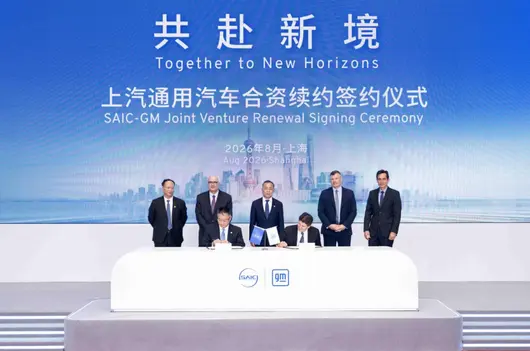
On August 5, SAIC Group and General Motors announced in Shanghai that their joint venture relationship would be renewed for another 20 years, extending to 2047. If the first joint venture in 1997 was the trend of the times, the announcement by both parties this time to extend the joint venture term to 2047 seems somewhat special. The reason is that the United States and we are entangled due to various industrial competitions. General Motors and SAIC, as the largest automotive companies of their respective sides, what does their cooperation at this time mean?

Let's first see what the official statement said: Both sides stated that this cooperation renewal is based on nearly 30 years of successful cooperation. Against the backdrop of profound changes in the global automotive industry, SAIC Group and General Motors have cast a vote of confidence in the long-term value of the Chinese automotive market and the transformation capabilities and development prospects of SAIC-GM. Both shareholders will further collaborate on technical research and development, supply chains, and global market resources to provide continuous support for the smart electric transformation, local innovation, global layout, and long-term healthy development of SAIC-GM.
Deconstructing this passage, it mainly contains two meanings: First, to convey confidence; Second, both parties will collaborate on technical research and development, emphasizing the smart electric transformation, and paying close attention to the global market.
First point, the confidence aspect is obviously very important. Just on August 3, the United States even included our Qiaqia Melon Seeds, Sinian Dumplings, Septwolves, etc., in the import restriction list, not to mention new energy vehicles.
Second point, regarding the technical collaboration between the two parties, SAIC-GM's smart electric transformation, in just two short lines, the word "Global" is mentioned twice: Global market resources, Global layout; Recalling Tesla from the United States as well, "Become a benchmark factory and major export center for Tesla globally", this may imply that SAIC-GM intends to leverage China's supply chain advantages to bypass various restrictions in the United States and increase the "export" role of SAIC-GM.
"Exports" or a Key Development Strategy
Public data shows that as of September 2024, the Tesla Shanghai Factory had cumulatively exported 1 million Teslas in less than 4 years; in 2025, the Tesla Shanghai Factory delivered 851,000 new cars globally, accounting for half of its global sales. Domestic retail was 626,000 units, meaning exports were approximately 220,000 units.
Due to the localization rate of Tesla being above 95%, this means that while Tesla is earning substantial profits for its shareholders, it is also earning large amounts of foreign exchange for China. The initial core demand set by the Chinese automotive industry for the purpose of "joint venture" was to earn foreign exchange. Not to mention the contribution of Tesla to building a complete new energy vehicle industry chain in China after its growth. Therefore, even a wholly foreign-owned project like Tesla is of no small importance to the Chinese automotive industry.
We return to SAIC-GM. From the first batch of 50 Buick GL10 exported to the Philippines in 2001 to July 2022, SAIC-GM's cumulative exports surpassed 1 million units. As of the end of November 2025, this figure has exceeded 1.3 million units. Besides complete vehicle exports, the contribution of SAIC-GM to the Chinese automotive industry chain is even greater than Tesla.

From a global market perspective, General Motors began to gradually shrink since 2015, withdrawing successively from the passenger car markets in Western Europe and India, selling Opel's German headquarters, all passenger car factories in Western Europe; Thailand local complete vehicle manufacturing business, two complete vehicle factories in India, retaining only the US, China, South Korea, Canada, Mexico, Brazil and other major core profitable markets.
On the Chinese side, on the one hand, SAIC and Great Wall and other enterprises have successively taken over some of General Motors' overseas assets, allowing General Motors to avoid greater losses; at the same time, Chinese-made cars have seen continuous growth in exports for many years, achieving technical leaps and becoming objects of cooperation and joint ventures for overseas brands such as Audi, Volkswagen, and Stellantis. As an old partner of the Chinese automotive industry, retaining "SAIC-GM" as this high-quality asset is clearly a wise move for General Motors.
Looking at the "SAIC-GM" joint venture project, if the past China and SAIC needed to borrow General Motors' technology and products to develop themselves, and General Motors also needed to borrow China's market demand and scale to develop itself; the current China and SAIC are no longer as dependent on General Motors as they were back then, while General Motors, besides still needing China's market demand and scale, also needs to leverage SAIC Group's smart electric technology and China's automotive supply chain advantages, to retain SAIC-GM as a key bridgehead for General Motors to continue to profit and expand in the global market. This change in strength and status between the two has also given today's "SAIC-GM" a completely different meaning.
"Zhijing Model": Exports or the Short-term Optimal Solution
At the press conference for the renewal of SAIC-GM joint venture for another 20 years today, SAIC-GM clearly stated that in the future, both parties will rely on the local research and development system accumulated in the R&D center established jointly in China by the two parties — Pan Asia — and the mature domestic supply chain, as well as the empowerment of SAIC Group's leading smart electric technology capabilities in recent years. At the same time, inheriting General Motors' century-old technical heritage and global rigorous standards, they will continue to provide high-standard products and services to the market.

SAIC-GM also gave an example: the Zhijing model. As the new sub-brand of SAIC-GM "Zhijing", its core is SAIC Group's smart electric technology, combined with Pan Asia's R&D advantages and mature domestic supply chain, plus General Motors' global product standards, a new species combining multiple advantages.
SAIC-GM specifically mentioned that according to the plan, Buick Zhijing E7 will be officially exported to overseas markets in October this year, becoming the first high-end new energy vehicle of the Buick brand and SAIC-GM Motors to go overseas, marking the opening of a new chapter in enterprise transformation and globalization strategy.
Buick Zhijing will not only become a benchmark for joint ventures developed locally and exported in reverse to overseas markets, but also provide a new model of "local innovation, global sharing" for joint venture exports for multinational automotive companies. With the support of both shareholders, SAIC-GM Motors will continue to expand into international markets in the Middle East, Africa, South America, Mexico and Asia-Pacific in the future, further enhancing the influence of China's local innovation results in the global market.

From these descriptions, it seems that the future market focus of SAIC-GM may rely more on overseas markets. Public information shows that since the Zhijing brand was launched in April 2025, a total of three models have been launched: Zhijing Shijia, Zhijing L7, and Zhijing E7. All three cars are new energy vehicles. As a new brand, the Zhijing brand had to face the vast ocean of China's new energy competition as soon as it was born, with fierce competition far stronger than the era when Buick's early star models Buick Century and Buick Sail were located. It is unrealistic to want Zhijing's new cars to sell well like Buick Century and Sail back then. Therefore, whether it is SAIC or General Motors, they need to find a completely different business path for Zhijing. "Overseas markets" are probably the most realistic answer at this time.
According to consultancy firm AlixPartners forecasts, Chinese car exports in 2026 will reach 10 million units, an increase of 41% year-on-year, 2.5 times the annual export volume of Japanese cars. Looking at brands, taking Chery Group as an example, the cumulative sales from January to July this year were 1.6343 million units, of which exports were as high as 70%.
In the international market, precisely out of continued看好 of Chinese new energy vehicles, the third-ranked Stellantis Group in the world signed a cooperation agreement with Leapmotor, not only directly investing in Leapmotor Automobile but also establishing a Leapmotor International joint venture company to exclusively be responsible for the sales and production business of Leapmotor Automobile products in markets outside Greater China.
In addition, including the cooperation between Volkswagen and Xpeng, the new cooperation between Audi and SAIC, all have similarities with this time SAIC-GM's "new joint venture". In other words, no matter what barriers exist between nations, the global automotive industry that was originally entangled is now carrying out cooperation with a more profound impact in a posture where they cannot live without each other.
Perhaps, for industry and capital, politicians and national industrial policies may produce major changes every four years, but joint venture cooperation for the purpose of win-win is the true market main melody. Looking at the current development situation of Chinese new energy vehicles, the "joint venture enterprises" widely existing in China's market may be making the global automotive industry look anew. For those enterprises that have boarded China's train, they are all secretly grateful in their hearts, such as General Motors, Audi, etc. And for those enterprises that previously completely did not看好 "joint ventures", they probably regret it now. From this perspective, this new cooperation between SAIC and General Motors undoubtedly represents the most mainstream industrial trend at the moment, and also reveals the high ability and vision of the joint venture parties to adapt to the times.

Di pasaran SUV Malaysia, banyak pembeli membandingkan Proton X70 dan MG MG HS ketika memilih kereta. Kedua-dua kereta ini hampir sama dari segi harga dan posisi, hari ini kita akan buat perbandingan terperinci dari pelbagai aspek untuk membantu anda menjimatkan masa melakukan penyelidikan.
Proton X70 dijual secara OTR di Malaysia pada harga RM 106,800 - 122,300, terdapat 3 varian termasuk 1.5L Standard 2WD (RM 106,800), 1.5L Executive 2WD (RM 115,800), 1.5L Premium 2WD (RM 122,300) dan lain-lain.
MG MG HS dijual secara OTR di Malaysia pada harga RM 130,450 - 146,450, terdapat 2 varian termasuk 1.5L Standard (RM 105,000), 1.5L Executive (RM 115,000) dan lain-lain.
Dari segi harga, harga permulaan Proton X70 memang lebih murah RM 23,650 berbanding MG MG HS. Jika bajet anda terhad, versi permulaan Proton sudah boleh memenuhi keperluan harian. Namun, perlu diingat, perbezaan harga beberapa ribu itu mungkin melibatkan kompromi pada kelengkapan, bergantung pada keperluan anda.
Proton X70 dilengkapi enjin 1.5L Turbo, kuasa 140 hp. Penggunaan bahan api rasmi 7.0 L/100km.
MG MG HS dilengkapi enjin 1.5L Turbo, kuasa 140 hp. Penggunaan bahan api rasmi 7.0 L/100km.
Kedua-dua kereta menggunakan sistem kuasa yang sama, pengalaman memandu harian pada dasarnya tidak ada perbezaan. Dari segi penggunaan bahan api juga serupa, tidak perlu terlalu bimbang mengenai hal ini.
Penilaian keselamatan Proton X70 adalah 5★ (ASEAN NCAP), sistem keselamatan aktif termasuk ADAS (ACC, AEB, LKA, LDA, BSM, RCTA).
Penilaian keselamatan MG MG HS adalah TBD, sistem keselamatan aktif termasuk Basic.
Dari segi kelengkapan keselamatan, kedua-dua kereta mendapat penilaian yang baik. Namun, ADAS Proton X70 (ACC, AEB, LKA, LDA, BSM, RCTA) dan Basic MG MG HS mempunyai beberapa perbezaan dari segi fungsi, jika anda lebih mementingkan keselamatan aktif, anda boleh membandingkan senarai fungsi kedua-duanya dengan teliti.
Panjang badan Proton X70 4400 mm, bonet 400 L.
Panjang badan MG MG HS 4400 mm, bonet 400 L.
Saiz kedua-dua kereta hampir sama, ruang dalaman tidak banyak berbeza. Kereta pada paras ini, penggunaan harian sudah cukup.
Proton X70 dan MG MG HS adalah pilihan utama di pasaran Malaysia, sesuai untuk kegunaan keluarga, perjalanan harian. Jika anda lebih mementingkan reputasi jenama dan harga jual balik, anda boleh memilih yang mempunyai reputasi lebih baik terlebih dahulu; jika anda lebih prihatin mengenai nilai wang dan kelengkapan, maka pilih yang mempunyai konfigurasi lebih kaya. Pada akhirnya disarankan untuk uji drive kedua-dua model, pengalaman peribadi adalah yang paling penting.
Secara keseluruhannya, Proton X70 dan MG MG HS adalah model kereta yang sangat baik di pasaran Malaysia. Memilih mana satu, utama adalah melihat keperluan dan bajet anda sendiri. Disarankan agar anda membuat penyelidikan terlebih dahulu, bandingkan harga di beberapa dealer, kemudian buat uji drive untuk membuat keputusan akhir. Membeli kereta adalah perkara besar, menghabiskan masa untuk penyelidikan adalah pasti tidak salah.

在马来西亚的皮卡市场,很多买家在选车的时候都会拿 Mitsubishi Triton 和 Ford Ranger 来做比较。这两款车在价位和定位上都蛮接近的,今天我们就从多个方面做一个详细的对比,帮你省下做功课的时间。
Mitsubishi Triton 在马来西亚的 OTR 售价是 RM 101,930 - 169,930,一共有 7 个版本,包括 2026 Double Cab 2.4T AT Athlete Championship(RM 169,930)、2026 Double Cab 2.4T AT Premium Championship(RM 155,930)、2025 Double Cab 2.4T AT Athlete(RM 159,930) 等。
Ford Ranger 在马来西亚的 OTR 售价是 RM 116,838 - 273,838,一共有 13 个版本,包括 2026 3.0T AT Raptor Sport Petrol(RM 273,838)、2025 3.0T AT Raptor Petrol(RM 263,888)、2025 3.0T AT WildTrak Diesel(RM 192,838) 等。
从价钱来看,Mitsubishi Triton 的起步价确实比 Ford Ranger 便宜了 RM 14,908。如果你预算有限,Mitsubishi 的入门版已经可以满足日常需求。但也要注意,便宜的那几千块,可能在配备上会有取舍,具体要看你的需求。

Mitsubishi Triton 搭载 2.5L Diesel,马力 187 hp。官方油耗 8.5 L/100km。
Ford Ranger 搭载 2.5L Diesel,马力 187 hp。官方油耗 8.5 L/100km。
两款车用的是同一套动力系统,日常开起来的感受基本没有差别。油耗方面也差不多,不用太纠结这一点。

Mitsubishi Triton 车身长 4400 mm,后备箱 400 L。
Ford Ranger 车身长 5300 mm,后备箱 0 L。
空间方面,Ford Ranger 的车身比 Mitsubishi Triton 长了 900 mm,乘坐空间更有优势。不过 Mitsubishi Triton 在城市里停车会灵活一点,各有取舍。

Mitsubishi Triton 采用 FWD 驱动方式。
Ford Ranger 采用 FWD 驱动方式。
两款车的驱动方式一样,都是 FWD,日常驾驶感受不会有太大区别。

Mitsubishi Triton 和 Ford Ranger 都是马来西亚市场的主流选择,适合家庭使用、日常通勤。如果你更看重品牌口碑和二手价,可以优先考虑口碑更好的那一款;如果你更在意性价比和配备,那就选配置更丰富的那款。最终还是建议两款都去试驾,亲身体验才是最重要的。

总的来说,Mitsubishi Triton 和 Ford Ranger 都是马来西亚市场很不错的车型。选择哪一辆,关键还是要看你的个人需求和预算。建议大家做好功课,多比较几间车行的报价,再去试驾做最终决定。买车是件大事,花点时间做功课绝对不会错。

© 2024 Bitauto.com. All Rights Reserved.
Bitauto (www.yiche.com and www.bitauto.com) is one of the most visited automotive websites in China. We provide detailed info on Chinese car brands available in your area. Please note that the information provided on this website is based on publicly available data and is for reference only. It may not be fully updated or accurate at all times.

Help us improve our website


