

HomeAuto Export

Search History
Popular Searches
Dealer Login / Sign Up

Zhiliao Auto/Fed

September 2026, US Transportation Secretary Sean Duffy sent a letter to Ford Motor CEO Jim Farley, requesting Ford abandon its strategic partnership with Chinese companies. The letter directly targets Ford's use of CATL-licensed lithium iron phosphate battery technology at its Marshall plant in Michigan.

In past years, restrictions by Europe and US on China's auto industry focused mainly on complete vehicles. In October 2024, the EU added countervailing duties on EVs produced in China on top of 10% import tariffs, with comprehensive rates reaching up to 45.3%.
However, the US approach follows FEOC rules under the Inflation Reduction Act. Starting from 2026, over 60% of cell material costs must come from eligible companies to qualify for tax credits, rising to 75% by 2030.

These barriers previously only focused on "where the car comes from", now they also manage "where the technology comes from".
Ford employs about 1700 American workers at its Michigan plant, the plant is fully owned and operated by Ford, but solely because battery technology comes from CATL via licensing agreement, it was deemed "deeply concerning" by the US Department of Transportation.

EU countervailing duties also brought high costs for Chinese car makers. BYD was levied 17.0% countervailing duties, Geely 18.8%, SAIC Motor reached 35.3%. A Chinese EV priced at 38,000 euros, just tariff cost exceeds 10,000 euros.
But the price commitment mechanism agreed between China and EU in January 2026 provided a buffer channel. Chinese car makers can replace high countervailing duties by committing to minimum import prices and annual export quotas.

This practice of sacrificing some pricing freedom to exchange for qualification to stay in the European market is essentially a strategy of exchanging space for time, but indicators do not treat the root cause.
Take the cooperation between Ford and CATL for example. Ford stated this is not a joint venture, nor foreign manufacturing business, CATL only provides technology licensing and training services, Ford owns the plant and controls operations. But even so, the US government does not allow it.

Of course, from the US government perspective, this concern has its logic. After all, CATL was listed on the so-called "Chinese Military Enterprise List" by the US Department of Defense as early as 2025. Such policy environment, even just technology licensing, faces various uncertainties.
Despite such harsh environment, Chinese auto export data remains strong. First 8 months of 2026, passenger car cumulative exports 6.098 million units, YoY growth 75.7%, annual export volume expected to reach 11.5 to 12 million units.

But export volume is one thing, global capability is another.
Report by global consultancy AlixPartners shows Chinese car makers plan to layout production bases in at least 16 overseas countries. By 2030, overseas production expected to rise from about 1.2 million units in 2025 to 3.4 million. BYD has layouted factories in Thailand, Brazil, Hungary, etc., where Hungary factory expected to produce in 2026, annual capacity 150,000 units. SAIC Thailand factory local content rate has broken 80%.

Actually not only Chinese enterprises, this practice of localizing core supply chain links as much as possible is a general strategy for many multinational car makers to cope with policy risks.
To put it plainly, Chinese car makers doing this is forced by EU/US restrictions on Chinese auto supply chains. Tariffs are one aspect, various technology source reviews, localization rate requirements, and supply chain security rules are deeper constraints.
Chinese car makers' advantages in battery technology, manufacturing costs, and product iteration speed still exist, but now looking, to convert these advantages into global market share, it's not just about selling cars, must build manufacturing, supply chain, and service systems into target markets.

So, this new round of competition triggered by Chinese NEV industry going overseas, is shifting from the product itself to who can build a complete operational system in more markets.
Zhiliao Auto original article, please contact us if reprinting.
*Pictures from internet, please contact author to delete if infringing*
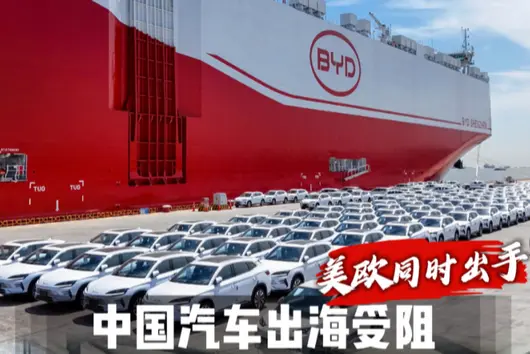

[Intro: Chinese auto market shows divergent trends, domestic sales hit by a cold wave, exports are booming. In the domestic sales trough of June and July, auto exports have exceeded one million vehicles for two consecutive months. Based on this trend, can China's auto exports break 10 million vehicles for the first time in 2026?]
Li Suwan
In 2026, can China's auto exports break 10 million for the first time? The answer will be revealed in a few months.
In the past, China's annual auto export volume hovered around one million vehicles for many years; now, China's single-month auto export volume can exceed one million vehicles, entering an "explosion period". Behind this is the transformation from auto exports to systematic global expansion.

Following the first single-month break of one million in June, China's auto exports continued a strong growth trend in July. According to the latest data from the China Association of Automobile Manufacturers, in July this year, auto exports reached 1.043 million vehicles, up 0.6% month-on-month and 81.3% year-on-year; from January to July this year, auto exports totaled 6.14 million vehicles, up 66.8% year-on-year. In stark contrast, statistics from the China Association of Automobile Traders show that in July 2026, national passenger car market retail sales were 1.461 million vehicles, down 20.9% year-on-year and 8.8% month-on-month; cumulative retail sales from January to July this year were 10.173 million vehicles, down 20.3% year-on-year.
One rise and one fall reflect the intensifying changes in the structure of China's auto industry. The domestic car market has become increasingly crowded, exports continue to play a bottoming-out role, effectively stabilizing auto company wholesale and capacity, alleviating pressure from weak domestic retail, and China's automotive position in the global market is on an upward trend.
Can exports break 10 million vehicles for the first time this year?
In early July this year, a brand new AION V sped along the coastal road in Swansea, Wales, UK. The owners were Mr. and Mrs. Kim, purchasing a Chinese car brand for the first time. In a market like the UK where the auto industry is mature and brand competition is fierce, it is not easy for a new car brand from China to win local consumers' favor. Mr. and Mrs. Kim finally chose the AION V, due to product appearance design, specifications, as well as an 8-year warranty and after-sales service factors.

Stories of overseas owners of Chinese brands are becoming more common. The UK, Belgium, Brazil, Germany, Australia, Thailand, South Korea, etc., are gradually becoming major export markets for China's new energy vehicles. In the first half of this year, thanks to the doubling of exports by independent brands like Aion, GAC Group achieved a year-on-year growth of 2.35% despite weak sales of joint ventures. It's not just GAC Group; even BYD, which ranks first in China's auto sales, relies on export growth to alleviate the pressure of declining domestic sales. BYD RACCO Otter and other models are entering the K-Car light automatic vehicle market which accounts for 1/3 of the Japanese auto market. In July this year, BYD new energy vehicle exports were about 180,000 vehicles, creating a new single-month historical high, and its export scale approaches that of China's auto export champion brand, Chery.

In July 2026, Chery Group's export volume was 202,500 vehicles, up 70.1% year-on-year, also setting a new single-month export historical high, and becoming the first domestic car enterprise to break 200,000 vehicles in a single month; cumulative exports for the first 7 months of this year were 1.1464 million vehicles.
Unlike BYD's AII IN new energy vehicles, Chery adopts a dual-track strategy of fuel + new energy, its export volume has led for a long time, deepening into markets such as Southeast Asia, South America, Russia, with extensive overseas KD factory layouts. BYD is catching up, adopting a dual track of complete vehicle exports + overseas factory building, laying out factories in Thailand, Brazil, Hungary, Turkey, covering developed countries and emerging markets. Under the SAIC Group, the MG brand has long been the highest-selling Chinese brand in Europe; its subsidiaries SAIC-GM-Wuling and SAIC Passenger Cars are also accelerating the increase in CKD export proportions. Chery, BYD, and SAIC Group form the first echelon of going global, staging a race of chasing and being chased.
Independent brands such as Geely, Changan, and Great Wall are also accelerating overseas expansion; Geely relies on Lynk & Co and Polestar to challenge the European high-end market; Great Wall uses Thailand and Brazil factories as pivot points, focusing on Southeast Asia and Latin America; Changan focuses on the ASEAN new energy market. At the same time, new forces such as Xpeng, NIO, and Li Auto are accelerating their internationalization pace, successively landing in European, Southeast Asian and other overseas markets. Xpeng MONA L03 was officially launched globally in Munich, Germany on July 16 this year. This is Xpeng Auto's first time placing a new product global premiere overseas, marking an important step in its globalization strategy.

Under the joint efforts of multiple auto companies, China's auto exports have entered a fast lane. According to China Passenger Car Association data, passenger car exports (including complete vehicles and CKD) accounted for 41% of passenger car manufacturer sales in July this year (37% in June, 21% in the same period of 2025). The surge in exports is inseparable from new energy vehicles. From January to July this year, new energy passenger car manufacturer exports reached 2.771 million vehicles, up 128.5% year-on-year; among them, July new energy passenger car manufacturer exports were 540,000 vehicles, up 147.8% year-on-year and 8.1% month-on-month, accounting for 58.8% of passenger car exports.
Following the first surpassing of fuel vehicle exports in June, new energy vehicle exports continued to improve in July.
With the shrinking domestic car market, numerous auto companies will inevitably increase the bottoming-out role of exports in the coming months, not only independent brands but also joint ventures. Based on the current trend, if no unexpected issues arise, the cumulative auto exports in China from August to December are expected to exceed 4 million vehicles. A full-year export volume breaking 10 million for the first time is highly likely to happen.
The transformation from auto exports to systematic global expansion
In 2012, China's auto exports crossed the one-million vehicle threshold for the first time, followed by nearly a decade where export volume fluctuated around one million vehicles. Until 2021, China's auto exports broke through 2 million vehicles for the first time, reaching 2.015 million vehicles, officially saying goodbye to the one-million level fluctuation area and achieving leapfrog growth; in 2022, surpassing Germany with 3.111 million vehicles, it became the world's second-largest auto exporting country; in 2023, surpassing Japan with 4.91 million vehicles, China topped the list of the world's largest auto exporting country; continuing to rise, in 2025 export scale broke through the 8 million vehicle milestone.

By this year, China's auto exports are even expected to reach the 10 million level. This is not just a superficial data change, but a profound reform of the export system. Over these years, China's auto industry has moved from the pure fuel vehicle complete vehicle export of the Export 1.0 stage into the Export 2.0 stage and even towards the 3.0 stage. Besides setting up KD assembly factories overseas, driven by the industrial dividend of electrification and intelligence, while iterating export models, not only using three-electric technology, smart cockpits, and smart driving capabilities to build product power advantages to replace the original low-price competition model, but also accelerating the integration of R&D, supply chain, energy replenishment, after-sales, and brand ecosystems in overseas markets. Head auto companies are setting up R&D centers, battery supporting factories, charging/swapping networks, etc. overseas, accelerating the "paving of the road" for Chinese smart electric vehicles to drive global.
Cui Dongshu, Secretary-General of the China Passenger Car Association, stated in an interview with the media that these four core advantages—significant scale advantages, overseas demand dividends, vast incremental space, and a complete supporting system—complement each other, bringing explosive growth to China's auto exports. China's annual auto production and sales have exceeded 30 million vehicles. The huge industrial volume dilutes R&D and production costs, achieving economies of scale to reduce costs and increase efficiency. Plus, China possesses the most complete industrial chain globally, forming extremely strong cost-performance ratios and supply stability. At the same time, high international oil prices drive up fuel vehicle usage costs, providing an opportunity for Chinese new energy vehicles to explode globally. Additionally, global emerging markets also provide space for China's auto export growth.

Although China's auto exports welcome a golden age, while rapid growth continues, one must also be vigilant about risks ahead. Currently, in the global auto market with annual sales nearing 100 million vehicles, China's autos account for 1/3 of the market share. Especially, China's new energy vehicles account for over 60% of the global new energy market, and in niche segments such as plug-in hybrids, it even exceeds 70%. In this situation, the space for China's auto exports will gradually become limited, and future uncertainties will continue to increase. International trade protection barriers will continue to be built higher. For example, after the EU levied countervailing duties on China's pure electric vehicles, it is also moving to swing the trade baton against China's plug-in hybrids. In addition, countries may continue to raise local parts procurement rates and localization production thresholds in the future, increasing the difficulty for Chinese cars going global.
At the same time, constructing new systems overseas for China's autos, building well-known international brands, and laying overseas service networks still require a certain time and process. Also, emission standards, charging standards, autonomous driving regulations, etc. vary by country, and geopolitical and public opinion risks persist. To some extent, the future difficulty in the international market will not decrease but increase. Chinese auto companies both at home and abroad will have to enter a new stage of "value-driven, structure optimization".
Commentary
In 2026, the probability of China's auto exports breaking 10 million for the first time is very high. However, the true test of globalization has just begun. How to strengthen the going-global system, how to establish a complete value chain overseas, how to enhance brand value, how to convert current scale into sustainable global operation capability, and how to fully clash with top multinational auto companies like Toyota, Volkswagen in the international market, these are all internationalization challenges that urgently need further answers.
(This article is an original work of Heyan Yueche. Unauthorized reproduction is prohibited.)
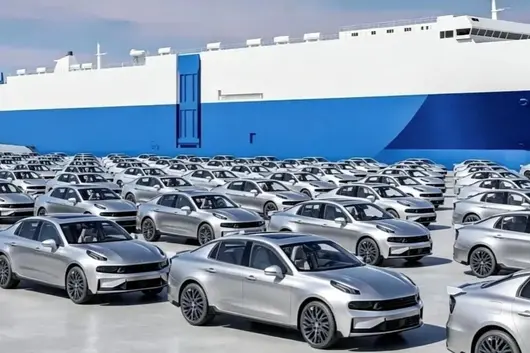

This year's Chinese auto market is quite divided, with one side freezing cold while the other is scorching hot.
CPCA data shows that from January to May this year, the national passenger car market cumulative retail sales totaled 7.099 million units, down 19.5% year-on-year, with the domestic market continuing to face pressure. Meanwhile, the export scene is quite different. From January to May this year, complete vehicle exports totaled 4.25 million units, with a year-on-year growth rate of 49%, export value reaching $73.6 billion, up 50% year-on-year, and export sales climbing steadily.

Clearly, the entire Chinese auto market now presents a "cold inside, hot outside" scenario, and auto export sales are unbelievably impressive. But selling more does not mean selling steadily; shipping cars away to sell is one thing, taking root locally is another. Great Wall Motor Chairman Wei Jianjun once scored the current state of Chinese auto exports out of 10 points, giving only 3 points, and this score still provokes deep thought today.
Chinese auto exports are far from the time to pop the champagne. Current achievements are more about the success of "Going Out" — shipping complete vehicles by ship and selling them abroad. But true globalization and long-term sustainability go far beyond this. It requires us to shift from "Going Out" to "Going In", taking root locally. This is the key to whether Chinese auto exports can truly bear fruit in foreign soil.
Over the past few years, the growth curve of Chinese auto exports has been quite steep. From 3.33 million units in 2022 to 8.32 million units in 2025, growth of about 2.5 times in four years. The trend continued in the first five months of this year, with single-month export sales hitting new highs. May complete vehicle exports reached 988,000 units, very close to one million units in a single month.

More worth noting is that from the sales volume of top independent brands, the overseas market is becoming the core engine pulling their sales growth. Under the pattern of cold domestic and hot overseas, surging exports not only made up for weak domestic demand but also reshaped the sales structure of major car companies. Export giants such as Chery, BYD, SAIC, Geely, and Great Wall have all stabilized the overall market by the rapid surge in overseas markets.
Chery's cumulative exports from January to May this year reached 753,000 units, up 69.5% year-on-year, creating a new record for Chinese autos of "over 700,000 units in five months". It is worth knowing that in 2025, Chery's overseas revenue was 157.4 billion yuan, surpassing the domestic market for the first time, accounting for 52.4% of total revenue. This means exports are no longer a supplementary item for them, but a key support for the profit structure.

There is also BYD, with exports of 617,000 units in the first five months of this year, ranking second. Over the past five years, its overseas sales grew from 50,000 units to 1.0496 million units, an increase of nearly 21 times. In May this year, BYD sold 383,453 vehicles, up slightly 0.3% year-on-year, of which overseas sales were as high as 160,177 units, up 80.7% year-on-year, with export share exceeding four-tenths.

Geely, SAIC, and Changan follow closely, and even Tesla, relying on Chinese manufacturing and East China port advantages, turned its Chinese factory into a gateway for global exports. However, behind the impressive export figures, the real challenges are just emerging. Growth rate does not represent everything; while export scale expands, resistance also accumulates simultaneously.

First is tariffs and trade barriers. EU anti-subsidy tariffs increased to a maximum of 45.3%, directly impacting pure electric vehicle exports to Europe. In January 2026, China and Europe reached a consensus on the "price commitment" mechanism, temporarily easing friction, but policy uncertainty was not eliminated. Meanwhile, Turkey proposed local production ratio requirements, Brazil raised import tariffs, and Indonesia set battery localization thresholds. Such requirements will only become more common.

Second is compliance costs. Currently, 144 countries have formulated data privacy related laws, and GDPR cumulative penalty amounts exceeded 7.1 billion euros. Smart cars involve massive data collection, transmission, and storage. Once entering strict regulatory markets, compliance costs cannot be underestimated.
Furthermore, there are brand and product adaptation issues. Chinese cars in overseas markets are currently selling products more than building brands. Cost-performance is the main advantage, but premium ability is limited. Brand awareness and user loyalty are still in the early accumulation stage. Product ideas familiar in the domestic market — stacking configurations, driving competition with parameters — may not hold true overseas.
Finally is cultural integration. This is different from product adaptation and involves management methods and daily operations. Differences in religious habits, work rhythms, communication logic, and holiday systems in different markets are far greater than imagined.

Regarding going overseas, there is a relatively clear stage classification in the industry.
Initially, it was the trade export stage, simply selling complete vehicles to achieve from 0 to 1. The second stage is brand export, gradually building marketing and service systems overseas, promoting own brands through a combination of general agents and independent dealers. The third stage is capacity and industry export, building KD factories locally, laying out supply chains, developing exclusive models for overseas markets based on regional R&D centers, and achieving localization of services simultaneously. The fourth stage is ecological export, where supporting services such as finance, insurance, and used cars follow in, and begin to participate in the formulation of technical standards in safety, intelligence, energy, etc. locally.

Currently, most Chinese car companies are in the second stage, with top few attempting to transition to the third stage. True "Going In" corresponds to the third stage and beyond. So how to go in?
First, adapt to local conditions. This is not just a slogan; Chery Tiggo 7 is a typical case. Although this car was born in China, it underwent deep R&D targeting usage scenarios, road conditions, regulations, and standards in over 100 countries worldwide. The highlands of South America in Brazil with altitudes of 300-1,500 meters on steep slopes, humidity up to 75% in Indonesia, desert highways averaging 46.9°C in the Middle East, and unlimited speed highways in Germany. Every extreme condition is within design considerations. It is not satisfied with "meeting Chinese standards for export", but rather "meeting global standards from birth". This thinking is exactly the leap from Going Out to Going In.

Secondly, localizing capacity and ecology is deeper rooting. BYD, SAIC, Chery and other top car companies are no longer satisfied with complete vehicle exports. Great Wall Motor's CKD export share reached 43.3%, SAIC-GM-Wuling 40.9%, SAIC Passenger Cars 10.5%. Knock-down exports and local assembly can both avoid tariff barriers and drive local employment, obtaining policy support.
Furthermore, building factories overseas. Chinese auto brands are accelerating "Going In" through overseas factory construction, where SAIC, BYD, and Chery strategies have different focuses.
BYD roots in multiple points globally. Its factory in Camaçari, Bahia, Brazil went into production in July 2025, with an annual capacity of 150,000 units; Szeged factory in Hungary is expected to start assembly in Q4 2026, also planning 150,000 units annual capacity; Thailand factory has gone into production, Indonesia factory plans to produce in 2026. In addition, factory building plans in Spain and Mexico are also being planned.

SAIC Group chose to build its first production base in the EU in the port of Ferrol, Galicia, Spain, with an initial investment of about 200 million euros, planning annual capacity of 120,000 units, planned to produce by the end of 2028. Chery prefers a "light asset" model. In Barcelona, Spain, it formed a joint venture with Ebro Group, utilizing the former Nissan factory. Meanwhile, Chery also signed a memorandum of cooperation for contract manufacturing with Nissan Sunderland Plant in the UK, planning to produce as early as the 2027 fiscal year.

As an automotive enterprise, to step out of the country is not just simple product output, but rooting locally, outputting technology and systems, obeying local regulations, understanding consumer needs, listening to their voices, striving to provide products most suitable for local consumers, thereby achieving the transition from "Going Out" to "Going In".
The stage achievements of Chinese auto exports are worthy of pride, but absolutely cannot be overly optimistic. Returning to Wei Jianjun's 3-point evaluation, he was not denying China's export achievements, but reminding everyone: selling cars is just the first step; true globalization is a long war. For Chinese auto exports to develop in the long run, they must have the ability to root and adapt, and truly "go in".

© 2024 Bitauto.com. All Rights Reserved.
Bitauto (www.yiche.com and www.bitauto.com) is one of the most visited automotive websites in China. We provide detailed info on Chinese car brands available in your area. Please note that the information provided on this website is based on publicly available data and is for reference only. It may not be fully updated or accurate at all times.

Help us improve our website


