

HomeAutomotive Brand

Search History
Popular Searches
Dealer Login / Sign Up

In the Brazilian car market, BYD leaving everyone else in the dust is a well-worn topic, but what truly deserves close examination is Geely's skyrocketing speed.
July just delivered a sales report of 7,458 units, stubbornly competing with Chery until there was only a 105-unit gap, maximally heightening the suspense of who is the third Chinese brand; the single EX2 model sold nearly 4,000 units, firmly ranking in the top 10 for EV sales in Brazil, with the full month brand sales likely to stay steadily above 7,000 units.

It is worth noting that Geely's official announcement of entering Brazil was just one year ago. In one year, going from zero to selling over 7,000 units a month and breaking into the top 11 of the brand rankings, this speed counts as first-tier level across the entire history of Chinese automakers going global.
Many people only focus on that exaggerated 26,535.7% year-on-year growth, joke about it being a "low base number game", and move on from this. But few dig deep into why it was precisely Geely that was able to solidify sales in such a short time? The answer, bluntly put, is not complex – this "asset-light joint venture global expansion" strategy of theirs is too mature and too practical.
Don't be deceived by the percentage, over 7,000 units is a solid foothold
The 26,535.7% year-on-year growth rate is essentially because in July 2025, Geely had not officially started sales, there were only dozens of exhibition cars and test drive cars registered that month, the denominator was extremely small, so the calculated percentage naturally exploded. But setting aside this statistical number, looking at absolute sales: July 7,458 units, exceeding old-brand joint venture players like Jeep and Nissan, and only 105 units away from Chery which has cultivated the Brazilian market for years, this is no longer a number game.

As of early August 2026, Geely has just completed one year in Brazil, cumulative sales have already broken through 25,000 units. For a brand new brand, this achievement is highly valuable. It is worth knowing that for many Chinese brands entering emerging markets, stable monthly sales of 3,000 units in the first two years is considered passing. Geely directly touched the threshold of 7,000 units in just one year, and is still climbing upwards.
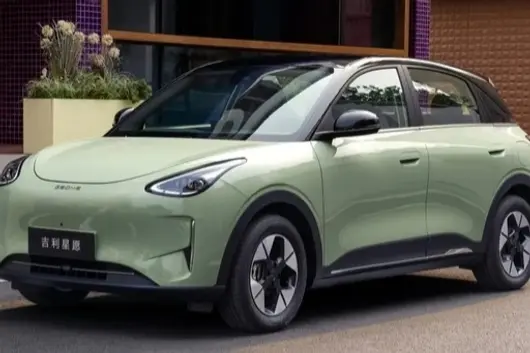
The core supporting this sales volume is the EX2 car, which is the Xingyuan in China. Compact pure electric, rear-drive layout, sufficient range and space, plus precise pricing, just hit the market gap for entry-level EVs in Brazil. But product strength is just the foundation, what truly allowed it to quickly stock and deliver was the path Geely chose that was completely different from BYD and Great Wall.
Core Password: Don't forcefully invest in heavy assets, enter directly by borrowing Renault's express lane
BYD bought Ford's old factory to renovate it themselves, Great Wall took over Mercedes' old factory and then expanded capacity, both walking the heavy asset route of "building factories themselves, building channels themselves" – the benefit is having full control, the downside is high costs and long cycles, volume doesn't start without three to five years.
Geely chose the completely opposite path: in 2025 established a joint venture with Renault, acquired 26.4% of shares of Renault Brazil, directly letting Renault serve as their General Distributor in Brazil.

How ruthless is this move? It is equivalent to directly grabbing all of Renault's assets accumulated over decades of operation in Brazil:
Ready-made distribution system: Renault Brazil originally had 263 dealership outlets, covering major cities nationwide, familiar with local dealer rules and consumer habits. Geely didn't need to recruit from scratch, directly relied on this system to expand authorized stores, opening 43 standard 4S stores and 13 mall experience points in one year, covering 24 states and over 50 cities. If another brand did it themselves, this coverage would take at least 3 years.
Ready-made after-sales and parts system: Brazil has vast territory, parts warehousing and after-sales repair are the fatal weaknesses of new brands. Renault has mature nationwide parts warehouses and after-sales standards, Geely directly accessed them, consumers buying cars don't worry about not being able to repair or waiting for parts for half a year, naturally adding a layer of trust.
Ready-made factory capacity: No need to buy land and build factories, directly started production of EX2 at Renault's Ayrton Senna Industrial Park, achieved local mass production in June 2026, just avoided Brazil's gradually rising import tariffs, costs directly dropped a notch, supply volume no longer restricted by sea transport.
Put simply, others going global is "starting from scratch", Geely directly brought product technology, "moving in ready-furnished" to others' mature industrial systems. Less money spent, fewer pitfalls stepped into, volume growth speed naturally became faster.
This is not a last-minute rush, it is Geely's mature strategy played over nearly 10 years
Many people think this is the first time Geely is doing this, actually quite the opposite, this "equity investment in local automakers, outputting technology products, reusing partner channel capacity" model, Geely had already worked it out in Malaysia long ago.
In 2017, Geely acquired 49.9% shares of the Malaysian national brand Proton. At that time Proton had been losing money for consecutive years, annual sales dropped from a peak of over 200,000 units to 70,000 units, market share left only 15%, even Volkswagen and Peugeot were unwilling to take over. Geely didn't grab controlling equity, only took operation management rights, exported their car models, technology, management system into it, the first car was the Proton X70 built based on Boyue.

How was the result? Proton sales volume increased by 50% year-on-year in the second year, directly turned from loss to profit in 2019, by 2024 annual sales had rushed to 152,000 units, sitting second in the Malaysian market steadily for 6 consecutive years, market share close to 19%. Geely not only revitalized a local brand, but also by using Proton's identity, smoothly obtained the entry ticket to the entire ASEAN market, avoiding high regional trade barriers.
The Brazil model is essentially an upgraded version of the Proton model. The subsequent Korean Renault cooperation, Spanish Ford joint venture, all follow the same train of thought: do not pursue wholly-owned control, do not directly confront the local market, but find a partner with capacity, channels, and understanding of local rules, I provide technology and products, you provide sites and networks, we share the money together, make the market bigger together.
Why say this model is worth most Chinese automakers learning
Now talking about Chinese automakers going global, many people open with "build factories themselves, cultivate locally", as if without spending billions to build a factory, it's not considered truly going global. But the reality is, not all automakers have the volume and cash flow of BYD, capable of withstanding the pressure of investment without output in the first few years.

The value of Geely's asset-light model lies in that it offers another feasibility:
First, fast results, low trial and error costs. No need to wait two or three years for factory construction and channel expansion, cooperation landing can stock goods, if selling well add more, if selling poorly won't cause major damage.
Second, low local resistance, easier to land. Compared to the impression of "Chinese automakers coming to snatch the market", this "cooperating with local enterprises, revitalizing idle capacity, creating jobs" model, whether government or consumers, acceptance is much higher, and not easy to become a target of local industry associations.
Third, extremely high replicability. From Southeast Asia to South America, then to Europe, as long as a local partner with capacity and channels can be found, this model can be quickly reused, no need to explore from zero for every market.
Conclusion: Of course it doesn't mean the heavy asset model is bad. BYD and Great Wall's route, although can firmly hold the brand and profit in their own hands, but the initial investment is undoubtedly higher. For more Chinese brands wanting to go global and also quickly open the market, Geely's "taking advantage of the trend" strategy is clearly more pragmatic and more universal.

The Brazilian market is just a microcosm. In the next few years, Chinese automakers going global will shift from "swarming in" to "competing in refined operations", by that time, whoever can find a landing method more suitable for themselves will truly survive and thrive. And the asset-light joint venture idea Geely has verified over nearly 10 years and multiple markets is obviously an assignment worth serious reference.


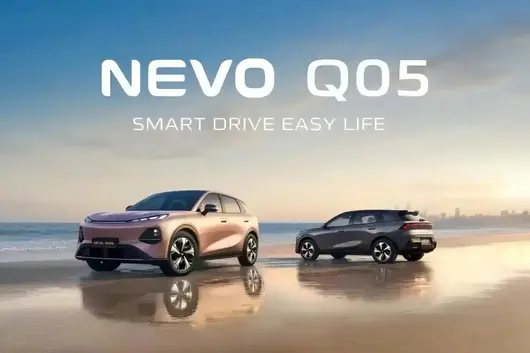
On June 9, 2026, Changan Automobile's Thailand Rayong Factory reached a key milestone: the 20,000th complete vehicle officially went off the line, with Qiyuan Q05 (Overseas Version NEVO Q05) becoming the current production capacity mainstay. This Changan's first overseas new energy vehicle base, commissioned in May 2025, completed the transition from production ramp-up to full-load operation in just 13 months, shortening the cycle by 6 months compared to the average for similar new energy vehicle factories in Southeast Asia. From Deepal S05 topping the Thailand pure electric SUV sales chart immediately after launch to Qiyuan Q05 receiving 3,000 orders in 3 days, Changan, centered on localized manufacturing, is gradually building a competitive advantage in the new energy vehicle era in the Thai market where Japanese brands have dominated for nearly 60 years.

Rayong Factory: The Core Carrier of Changan's Global Right-Hand Drive Strategy
Changan's decision to locate in Rayong, Thailand, was a comprehensive strategic decision based on industrial foundation, location advantages, and policy environment. Rayong Province, as the core area of Thailand's Eastern Economic Corridor, is known as the "Oriental Detroit". Toyota, Honda, Nissan, and other Japanese automakers have cultivated this area for decades, forming a complete automotive parts supply chain and a mature industrial worker system.
At the same time, relying on the ASEAN Free Trade Area Agreement, complete vehicles manufactured in Thailand can be exported tax-free to 9 ASEAN countries, covering a right-hand drive vehicle market of 600 million people, and can radiate to other global right-hand drive regions such as Australia, New Zealand, and South Africa, making it an ideal hub for Chinese automakers to layout the global right-hand drive market.
On the policy level, Thailand government's "30·30" Policy launched in 2021 clearly stated that by 2030, new energy vehicles will account for no less than 30% of total domestic vehicle production, and provide investment subsidies of up to 30% and up to 8 years of corporate income tax exemption for qualifying automakers, while giving consumers up to 100,000 Baht vehicle purchase subsidies. Superimposed on the benefits of China-Thailand "Belt and Road" capacity cooperation, Rayong Factory has become a benchmark project of Chongqing's "Chongqing Cars Going Global" Action Plan.

The factory was laid on November 2023, with a total investment of about 2.2 billion yuan, covering an area of 588 mu, and was built and put into production in just 18 months. The factory is built according to "Green, Intelligent" standards, setting up five intelligent workshops: welding, painting, assembly, engine, and battery assembly. The automation rate of key quality control stations reaches 90%, completely replicating the manufacturing system and quality standards of Changan Chongqing Headquarters.
Currently, Rayong Factory has been upgraded to Changan Southeast Asia Manufacturing Headquarters, Global Right-Hand Drive Vehicle Supply Center, and Overseas Spare Parts Center. It can produce multiple right-hand drive models of three major brands Deepal, Qiyuan, and Avatr on mixed lines. Phase 1 annual capacity is 100,000 units, with a long-term planned capacity of 200,000 units.
Deepal S05: Strategic Breakthrough Model, Reshaping Market Competition Logic
As the first model put into production at Rayong Factory, the Deepal S05 right-hand drive version undertakes the core task of Changan opening the Thailand market. After launching in May 2025, the car quickly topped the Thailand pure electric SUV monthly sales chart, accumulated 6,589 orders at the Bangkok Motor Show that year, and annual sales exceeded 12,000 units, helping Changan rank in the top 5 of Thailand's new energy vehicle brands. The core support for its market performance lies in its precise match of Thai consumer needs, forming obvious product power and price advantages against Japanese competitors.

Regarding the pricing system, the Thailand market has long formed a pattern of "fuel vehicles are accessible, electric vehicles are premium": mainstream compact fuel SUV starting prices are concentrated in the 750,000-950,000 Baht range, while imported pure electric models, due to high tariffs of 80%, have starting prices generally exceeding 1.2 million Baht. Thanks to local production, Deepal S05's starting price after deducting government subsidies is 799,000 Baht, flat with the Honda HR-V 1.5L Gas Version, and only 40,000 Baht higher than the Toyota Corolla Cross 1.8L Gas Version.
Regarding usage costs, Deepal S05's cost per kilometer driven is about 0.15 Baht, only 1/10 of same-class Japanese fuel cars. For Thai household users with annual mileage over 20,000 km, this has significant full lifecycle cost advantages. In contrast, Japanese pure electric models, with Toyota bZ4X starting price at 1.299 million Baht and Nissan Ariya starting price at 1.799 million Baht, have mismatched price and product power, resulting in Japanese pure electric models in Thailand having a combined market share of less than 8% in 2025.

Regarding product power, Deepal S05 has been deeply optimized for the Thailand tropical climate and usage scenarios.
Regarding the three-electric system, it is equipped with CATL's "Golden Bell Battery" developed specifically for the Southeast Asian market, adopting full-domain liquid cooling temperature control technology. The range attenuation rate is controlled within 10% in a 45°C high-temperature environment, and the actual 520km CLTC range can reach 460km; it supports 3C supercharging technology, can replenish 300km range in 15 minutes, and charging from 30%-80% takes only 15 minutes, with charging efficiency about 3 times that of Japanese pure electric models.
Regarding intelligence, Deepal S05 is standard with Huawei ADS SE Intelligent Driving System, supporting Highway NOA, Auto Parking, 540-degree panoramic image, and other L2+ level functions, and supporting vehicle OTA upgrades; while same-class Japanese fuel cars and pure electric models, L2 level intelligent driving assistance systems generally require additional paid options, and do not have V2X/Internet connectivity and OTA upgrade capabilities. In addition, Deepal S05's Extended Range version has a combined range of 1234km, effectively solving the range anxiety brought by imperfect charging infrastructure in some parts of Thailand.

Regarding market landscape, according to data from Thailand Automotive Institute, in 2025 the sales of Thailand's compact fuel SUV market decreased 18.7% year-on-year, among them Toyota Corolla Cross sales decreased 22.3%, Honda HR-V sales decreased 26.5%. Market research shows that 62% of Deepal S05 users originally planned to buy Japanese fuel cars, indicating Changan has successfully cut into the traditional core market of Japanese brands.
Dual Brand Synergy and Future Development Prospects
After Deepal S05 established itself in the mid-to-high-end market, Changan launched Qiyuan Q05 to enter the mass family market. The car launched with a starting price of 699,000 Baht, received 3,000 orders in 3 days, and quickly became Rayong Factory's main model. Through the "Deepal + NEVO (Qiyuan)" Dual Brand Layout, Changan has formed a product matrix covering the 700,000-1,000,000 Baht core price range, targeting young groups pursuing technology and sports and family users focusing on practicality and cost-performance respectively.

Standing on the new starting point of 20,000 units off the line, Changan plans to introduce 7 brand new new energy vehicle models to the Thailand market from 2026 to 2028, covering sub-segments such as entry-level pure electric sedans, Medium SUVs, High-end MPVs; at the same time accelerate the supply chain localization process, aiming to increase parts localization rate to 70% by 2027, further reducing production costs and delivery cycles. Long term, Changan's goal is to enter the top 3 of Thailand's pure electric car brands by 2030.
Currently, Japanese automakers are accelerating the launch of new energy models to respond to market changes, and Chinese brands like BYD and Geely are also continuously investing more in the Southeast Asia market, and industry competition will become increasingly fierce. But relying on leading three-electric technology, mature intelligent manufacturing system, and precise localization strategy, Changan has already established a first-mover advantage in the Thailand market. From product export to whole industry chain going global, the development path of Changan Rayong Factory also provides a reference sample for the globalization of Chinese automotive brands.
© 2024 Bitauto.com. All Rights Reserved.
Bitauto (www.yiche.com and www.bitauto.com) is one of the most visited automotive websites in China. We provide detailed info on Chinese car brands available in your area. Please note that the information provided on this website is based on publicly available data and is for reference only. It may not be fully updated or accurate at all times.

Help us improve our website


