

HomeAutomotive Overseas Expansion

Search History
Popular Searches
Dealer Login / Sign Up

September 1, the Ministry of Commerce, the Ministry of Industry and Information Technology, and the State Administration for Market Regulation jointly released the "Guidelines on Foreign Competition Behavior and Compliance Construction for the Automotive Industry" (hereinafter referred to as the "Guidelines"), putting forward systematic requirements for the overseas market competition behavior and compliant operations of Chinese automotive enterprises. This is the first domestic normative guideline specifically targeting the overseas operations of the automotive industry, released at the node where Chinese automotive exports have led the world for three consecutive years.
In the past few years, Chinese automobiles have quickly opened up the global market relying on product strength and supply chain advantages. While scale growth occurred, problems such as spillover of low-price competition, chaotic channel order, and insufficient compliance preparation also emerged. The release of this guideline marks that the internationalization path of the Chinese automobile industry is accelerating towards the deepening stage of quality and system competition.
▍Background and Market Reality of the Implementation of Foreign Competition Standards
The guideline released by the three departments has the core objective of regulating overseas market competition order and guiding enterprises to operate in compliance. Chapter 2 of the "Guidelines" makes provisions specifically for market competition behaviors, clarifying that enterprises should establish pricing strategies based on costs and guided by international market supply and demand, and must not disrupt market order to gain unfair competitive advantages. Regarding terminal pricing, the guideline requires enterprises to set clear price gradients according to different configurations, avoid frequent and large-scale price adjustments, while respecting the pricing autonomy of overseas dealers and reasonably agreeing on sales incentive policies. In addition, the guideline also requires compliance in promotional activities and publicity and promotion, prohibiting false advertising and requiring enterprises to comply with local business practices and cultural customs.
According to statistics from the General Administration of Customs, the volume of complete vehicle exports from China reached 8.32 million in 2025, a year-on-year increase of 29.9%, ranking first in the world for three consecutive years, with products sold to over 200 countries and regions worldwide. The enthusiasm of domestic car companies for going global remains high. In the first seven months of 2026, the export volume of passenger cars continued to maintain double-digit growth, among which the export growth rate of new energy passenger cars exceeded 120%. However, while scale expanded rapidly, signs of domestic price wars transferring outward appeared in some markets. Taking the Southeast Asian market such as Thailand as an example, selling prices of some Chinese brand models were reduced multiple times shortly after launch, with the reduction magnitude reaching around 30%. Although this pricing strategy boosted sales in the short term, it also disrupted the price system of the local market, and even cases of cross-regional cross-selling and mutual price undercutting between dealers of the same brand appeared.

In addition, the issue of "0-kilometer used cars" reported by media will also trigger consumer complaints due to problems such as language mismatch in infotainment systems, non-compliance with local information security regulations, and lack of official warranty services. Meanwhile, the inflow of such low-price vehicles will impact the price system of local regular new cars, putting car manufacturers who invested heavily in certification and channel building into a passive position.
Except for problems at the market level, disordered competition may also trigger more trade risks. If Chinese car companies continue to expand overseas with low-price strategies, it is easy to trigger local anti-dumping and anti-subsidy investigations. In recent years, the EU, the US and other markets have already implemented tariff policies for Chinese electric vehicles, and the risk of trade barriers always exists. From this perspective, the "Guidelines" are not only a regulation of the industry competition order but also a risk reminder to enterprises, reminding enterprises to avoid dissipating long-term market space with short-term pricing strategies.
▍From Product Export to System Overseas Expansion: Localized Compliance Practices of Automotive Companies
Facing changes in regulatory orientation and deep requirements of overseas markets, the logic of Chinese car companies' going global is undergoing transformation. In the past, the core goal of enterprises was to sell products out, now they increasingly value the output of systematic capabilities. From the in-depth dialogue between Karis and the Car Quality Network with quality and service management teams of multiple car companies, it can also be seen that top brands have layout in advance in multiple dimensions such as product certification, quality systems, channel layout, and regulatory adaptation, promoting the overseas expansion model to upgrade from "product export" to "system operations".
Voyah is one of the earliest Chinese brands to layout in the European market. Li Jiayao, a senior manager in the quality field mentioned in the exclusive interview that quality management in overseas markets has significant differences compared to domestic ones. This difference is reflected not only in technical standards but also in cultural habits, laws and regulations, consumer demands and other levels. In order to cope with these differences, Voyah established a dual-layer response mechanism: holding special promotion meetings for market issues every day at noon, and holding quality feedback and countermeasure meetings every day in the evening, jointly with market, R&D, manufacturing and other departments to quickly handle problems in overseas markets. At the product access level, in 2022, the Voyah FREE model obtained European Whole Vehicle Type Approval (EWVTA) before being shipped from Wuhan to Norway and could be formally registered in EU countries. Subsequently, Voyah cars entered Finland, Denmark, Netherlands, Bulgaria, Czechia, Italy, Spain and other countries successively.
SAIC Maxus is a representative enterprise for the overseas expansion of Chinese commercial vehicles, and its products have been sold to more than 100 countries and regions worldwide. Pu Dengxiang, Vice General Manager of SAIC Maxus Automotive Co., Ltd. clearly stated in the interview that globalization is not simple product export, but comprehensive overseas expansion of brands, standards, and services. He believes Chinese car companies face three quality challenges in going global: consistency of quality definition, localization of service capabilities, and cross-border data closed loop. User usage habits, road conditions, and regulatory standards differ in different markets, overseas service network capabilities are uneven, plus cross-time zone and cross-language communication obstacles, it is easy to make quality problems in overseas markets become information silos. In specific practice, SAIC Maxus was the first to pilot the supplier on-site support model in the Australia and New Zealand market, promoting key suppliers to deploy technical personnel locally, while conducting comprehensive capability training for technical personnel of local service outlets, effectively solving the pain points of slow on-site response, difficult diagnosis, and long repair cycle overseas, and this set of experience is being promoted to the UK and other core European markets.

Geely Auto chose another path of systematic overseas expansion, integrating into the local industrial ecosystem through capacity cooperation. A person in charge of Geely Holding Group stated in a public interview that enterprise going global does not necessarily require new capacity construction, but can share capacity and share markets with local partners. Geely reached cooperation with Ford to jointly operate Ford's production base in Spain, utilizing local idle capacity to produce Geely brand models. This model can not only avoid trade barriers but also drive local employment and is easier to obtain host country policy support.
The core of systematic overseas expansion is to place compliance awareness forward to the product R&D stage. Multiple executives also stated that in the past many enterprises tried to export after products were made, now they consider regulatory standards of different markets synchronously in the R&D stage. For example, for EU Carbon Border Adjustment Mechanism, data privacy regulations, and Southeast Asia automotive safety standards, enterprises need to include them in the product definition stage. In addition, systematic capabilities also include overseas supply chain layout, HR localization, intellectual property protection and other dimensions. The "Guidelines" also specifically mention that enterprises should improve overseas quality management system and after-sales service system, comply with local labor regulations, and strengthen IP layout, these are all core components of system overseas expansion.
Overall, the "Guidelines" defined competition boundaries for overseas operations of the Chinese automotive industry, and also conveyed a clear policy orientation: the internationalization of Chinese automobiles cannot walk the old path of low-price race to the bottom, it must turn to high-quality, systematic competition. After several years of rapid expansion, Chinese automobiles have already established preliminary product awareness in the global market. Next, what needs to be made up are shortcomings in compliance operations, brand building, and ecosystem layout.
Different car companies chose different paths of systematic overseas expansion based on their scale and strategy. Some enterprises built factories and R&D centers themselves, deeply penetrating mature markets; some enterprises shared capacity through cooperation models to enter regional markets with light assets; some enterprises started with service and quality systems first, gradually perfecting localization capabilities. But no matter which path is chosen, compliance operations and long-termism have already become industry consensus.
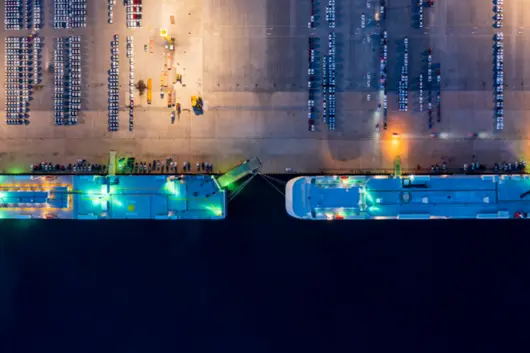


In the first half of this year, Chinese automakers simultaneously reached three historical milestones — single-month exports broke the 1 million mark for the first time, sales in Europe exceeded Japanese brands for the first time, and the EU's final anti-subsidy duty case on PHEVs came into effect. The "highlights" of scale and the "reefs" of rules appeared simultaneously. This is not the end of the overseas expansion story, but the watershed moment shifting from "fighting for incremental growth" to "upholding rules".
1 Million Units Were Not Snatched with Low PricesProduction and sales data for June disclosed by the China Association of Automobile Manufacturers on July 9 showed that June car exports reached 1.037 million vehicles, a 11.6% month-on-month increase and a 75.1% year-on-year increase, the first time in China's automobile industry history that single-month exports exceeded 1 million. From January to June, cumulative exports reached 5.096 million vehicles, a 65.3% year-on-year increase. Chen Shihua, Deputy Secretary-General of CAAM, was very confident in his judgment — full-year car exports are expected to break 10 million. This means China is becoming the first country in the world to break 10 million in annual export volume.
More worth noting than the numbers is the structure behind them. Data released by the Liaison Committee on Passenger Cars on the same day showed that June new energy passenger car exports were 499,000 vehicles, a 152.7% year-on-year increase, accounting for 56.9% of passenger car exports, nearly 16 percentage points higher than last year. The main force of Chinese car overseas expansion has shifted from early oil car surplus capacity to new energy regular army.

The significance of exports to leading automakers is also changing. BYD first half sales 1.8085 million, of which 790,000 were exports, accounting for nearly 44%; Chery first half exports 940,000, accounting for 74.3% of its total sales. For these two, overseas markets are no longer supplementary, but the main battlefield.
Worth mentioning separately is the joint venture camp. June joint venture and luxury brand exports 114,000 vehicles, a 61% year-on-year increase. Foreign brands such as Volkswagen, Toyota, and Nissan are treating Chinese factories as global electrification supply centers, exporting back to Europe and Southeast Asian markets.
Breaking 1 million is just a footnote on quantity. The true turning point is in Europe.
Won Once on Japanese Turf, Then Hit a WallIn May this year, five Chinese automakers — BYD, SAIC, Geely, Chery, and Leapmotor — sold a combined 138,400 vehicles in 31 European countries, a 65% year-on-year increase, exceeding the combined sales of six Japanese brands including Toyota in the region for the first time. Chinese brand European market share rose from 5.6% in May 2025 to 10.7% in May 2026 — doubling in one year.
The weight of this reversal is not light. Japanese brands have cultivated Europe for over 40 years, while Chinese brands have entered Europe on a large scale for less than 5 years, completing share switches that once took a generation. This is a rare restructuring of patterns in the European car market since World War II. Mercedes-Benz's Q2 data released in the same period formed a contrast — global sales down 6%, China market down 30%, while pure electric models grew 50% globally. Between one advance and one retreat, the center of gravity of the global auto industry is being reweighed.

But Europe will not sit idly while share is taken away. The EU's final anti-subsidy duties on Chinese-made pure electric vehicles officially took effect from October 2024, for five years; the EU summit in June 2026 also finalized the anti-subsidy duty case on Chinese plug-in hybrid vehicles. This means the PHEV export route to which Chinese automakers collectively added efforts over the past year has also had its threshold raised directly.
The killing power of this tariff wall does not lie in uniform pressure, but in stratification: BYD comprehensive tax rate 27%, Geely 28.8%, NIO and XPeng 30.7%, SAIC highest 45.3%, while Tesla produced locally in Shanghai only 7.8% early on. Cooperating with the EU investigation and enterprises with higher localization have relatively lower tax rates; enterprises that did not cooperate were pushed to the top. The rules themselves favor the leading players and those with higher localization; small players will be squeezed out. The Chinese "Oil car — PHEV transition — Pure electric upgrade" three-step overseas expansion path may also be compressed to two steps.
In response, China's Ministry of Commerce has made a final anti-dumping ruling on pork products originating from the EU, levying tariffs of 4.9% to 19.8% for five years, and is preparing further countermeasures on products such as brandy and dairy products. Both sides are using agricultural products and light industrial products as chips — precisely controlling, avoiding complete loss of control — but this is the beginning of a long game.
Three Ways to Bypass the Tariff WallOnce tariffs land, localization is no longer a choice. The current three leading Chinese automakers have given three solutions.
BYD Model: Local Heavy Assets. Hungary factory under construction, expected to start production in 2027, completing the production and sales loop directly within the EU. This road is most resistant to tariffs, but investment cycle is long and political sensitivity is high, requiring enterprises to have sufficient patience and cash flow to support.

Chery Model: Third Country Jumping Board. Chery has already set up a factory in Brazil, and on the Europe side, layout in Spain. Using a non-EU or EU-edge market as a jumping board, balancing Latin American growth and Europe entry, high flexibility, but relies on the long-term stability of the host country's policies.
SAIC Model: Deep Cultivation in Multiple Markets, Localization Advancing Together. SAIC is the most complete among the three in organized and systematic overseas expansion, Europe is its core battlefield — MG has been the sales champion of Chinese brands in Europe for 11 consecutive years, cumulative sales broken 1 million vehicles. Its response logic is "Full Spectrum + Localization" walking on two legs: Europe supplies fuel, hybrid, plug-in hybrid, and pure electric simultaneously, avoiding single path policy risks; Spain factory production end of 2028 can directly avoid high tariffs within the EU; Thailand, Indonesia factories mass produced, as the radiation base for Southeast Asia, Aus/NZ, S.America. Highest risk dispersion, but also the highest requirement on global synergy capability.

I lived in Thailand for three years, and I could clearly feel the texture of this road. MG stores opened from Bangkok city center all the way to Chiang Mai old town. Southeast Asia is not an alternative to Europe, but another battlefield outside Europe. The scale base formed by Chinese automakers in Southeast Asia will become the reserve hand for the next round of global games.
Need to remind that EU tariffs are just "the first wall". North America's potential blockage risk, Southeast Asia Japanese brands' counterattack, are all on the way.
Qi Shi View: 10 Million is Just the Starting PointBreaking 1 million is an "adult ceremony" for China's automobile industry. But after the adult ceremony, one must face the rules of the adult world — anti-subsidy, anti-dumping, localization, labor compliance, and environmental regulations. Victory in data can be completed within a few months, but victory in rules may take decades.
10 million is not the end, but the starting line for Chinese automakers from "selling cars" to "operating globally". Whether one can stand, stay, and go far, the answer is not in the CAAM data, but in the assembly lines of Hungary factories, in the taillights of Chinese cars in Munich evening rush hour, and also in the account books of Lisbon dealers.
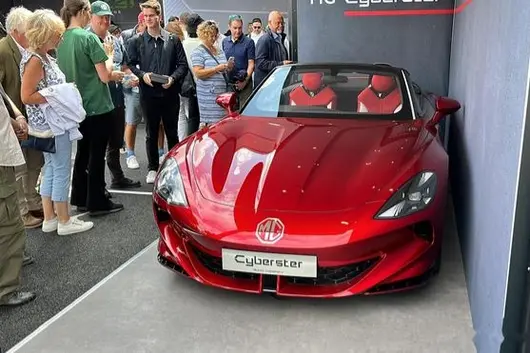

"Bought the car only two days ago, my Chinese brand electric car turned from new to old model. From signing the contract to picking up the car, neither the salesman nor the agent mentioned any information about the new model launch."
"The Chinese electric car I bought, navigation cannot plan charging routes, this is terrible."
"After picking up the car, the software version was found to be the old version, but the vehicle system falsely displayed it as the latest version."
"The dashboard displayed motor fault warning, accompanied by low-speed vibration and noise similar to a fuel engine. After sending to the official service center, they only connected software to clear error codes and cleared the dashboard warning, but the vibration and noise remained."
Without explanation, can you guess these criticisms and complaints come from overseas users of Chinese cars? And they are concentrated in overseas social media platforms, local forums, and media exposure in the recent half-year. While Chinese cars are racing in overseas markets, they are also kicking up more dust of problems.
Going overseas is the current lifeline for Chinese cars. This year, domestic auto market sales collapsed, price system breached, profit margin fell to 3.4%, going overseas has become an inevitable choice for everyone.

Moreover, Chinese cars lead in smart and electric technology, backed by industrial chain advantages, under the necessity of global market energy transition, going overseas is a convergence of timing, location, and people.
But it needs to be noted, this is a prepared industrial expedition, cannot because of intensified domestic competition, that pressure spills over, and crowding and trampling is played out overseas.
Knocking on the door of the global market, Chinese cars find it difficult
First, tell a recent story. In January 2026, China and Canada signed an electric vehicle tariff quota agreement: Canada grants 49,000 units annual import quota for Chinese-made electric vehicle models, tariffs within the quota drop to 6.1%, rising to 70,000 units by 2030.
This is a rare chance for Chinese cars to re-enter the North American market. The last time Chinese-made cars could enter Canada was before October 2024. After that, the country implemented 100% punitive tariffs on all Chinese-made cars, the entire North American market closed doors to Chinese cars, until this time reopening a crack.
How important this opportunity is for Chinese brands, look at the response of independent car companies. BYD, Geely, Chery, started planning immediately. BYD previously had Seagull, Dolphin, Yuan Plus (Atto 3), and Seal four cars entered the Canadian Ministry of Transportation pre-review list, favorable timing assisted, immediately selected site plans to open 20 stores first, and simultaneously researched building factories in Canada.

Geely relied on previous Volvo and Polestar channel resources, stated letting Zeekr land in Canada first within the year. Chery's action was most agile, completed trademark registration for Exeed, Omoda, Jaecoo and other brands, core position recruitment, vehicles shipped to Canada in May, first batch of 10 dealers open before end of June, almost done in one go.
The speed of three top independent car companies reveals the importance of entering the North American market, and also reflects the "anxiety" of Chinese cars, a situation urgent, first come first served, opportunity cannot be lost, time doesn't wait anxiety, mixed with strong offensive power and anxiety behind the attack.
Why so urgent? Because this road is not easy. 30 years ago, Chinese cars started the earliest overseas expansion, could only rely on low-price fuel cars, seizing price troughs lacking local auto industry, weak coverage by Europe, US, Japan, Korea. Many years later, relying on upgraded cost-performance, step by step broke into Europe, US edges, Oceania, Central Asia, Africa, etc.
Until smart electrification overtaking, Chinese cars had strength and confidence, strong attack Middle East high-end, European core and North American market. Clearing thorns and brambles all the way, only then got the ticket to join the world auto industry today.
So, the more so in the "internal cold, external hot" current, the more opportunity and challenge coexist, more cannot let problems breed even spread. A thousand-li dike collapses at an ant hole, let alone Chinese car globalization dike is being built.
Sharp tool or "lethal weapon"? Don't be rash with "fast iteration"
Overseas users' criticisms and complaints about Chinese cars actually had precedents long ago. Three years ago when Chinese car exports topped the global first place for the first time, exploded with a round of concentrated quality issue complaints, even triggered recalls. After that, product-related complaints and criticisms gradually decreased, praises for Chinese cars intelligent leading technology online increased more and more.
But since this year, problems became frequent again, cases cited at article start are just tip of iceberg. While Chinese car companies busy with overseas expansion, probably also need to see timely: product quality, after-sales network and brand trust three curves slopes, are not keeping up with sales curve's steep rise.
In the years new energy accelerated capturing ground, Chinese car companies accustomed to a set of tactics: fast iteration, exchange price for volume, use OTA to clean up. This logic works in domestic market because domestic consumers have high tolerance for new brands, car replacement cycle short, used residual value anxiety offset by low purchase cost.
But overseas market completely different. European consumers average car replacement cycle is 8 to 10 years, Australian consumers legal protection awareness for after-sales service far exceeds domestic, UK consumers check Euro NCAP ratings and J.D.Power reliability surveys before buying cars. In these markets, one serious software fault or one perfunctory after-sales handling, might not be "deal with later" problem, but directly terminate a brand's future locally.
In January this year, foreign car review website driveauthority.com published "Common Problems With Chinese Electric Cars in 2026", summarized Chinese electric cars' five high-frequency problems: software instability, insufficient after-sales network, parts supply delays, ADAS calibration weaknesses, rapid residual value depreciation.
Software instability or function not perfect, fundamental reason is product not mature adaptation pushed to market, this not technical capability insufficient, but anxious to occupy market and hoping for luck. Currently, such problems although not formed scale complaints overseas, this is by no means ignore-able reason. Avoid delivering vehicles with faults, avoid giving brand negative impact, is Chinese cars should learn lesson.
After-sales network and parts supply, prerequisite for survival and rooting, according to relevant survey shows, currently indeed not well solved. Compared with Japan and Korea brands, Chinese cars overseas after-sales three structural dilemmas: outlets not enough, parts unavailable, technicians cannot repair, still need to continue effort as top priority.
However, already Chinese car companies took action, Great Wall in Australia, South Africa established overseas parts central warehouse; Changan in Saudi Arabia, Qatar and other countries did 325 person-times technician training.

As for Chinese ADAS calibration problems exposed overseas, this structural mismatch between Chinese development and global validation, probably still needs Chinese car companies constantly conquer overseas road rights, data return, regulations, certifications and other barriers related to smart driving. This not one day two-night matter, but only conquered these difficulties, Chinese smart driving advantage can truly win overseas users' praise.
More hidden is residual value problem, yet most lethal. With overseas base expansion and domestic pressure continuing increase, Chinese cars overseas "same category fighting" inevitably intensifies, brands more familiar with fast iteration tactics, inevitably will accelerate speed of new cars and iteration placed overseas.
Jan-May this year, statistics show domestic new car releases exceeded 500 models. Same period overseas market, conservative estimate Chinese brand average each at least launched 2-5 new models/facelifts/generation products. Each model change accompanied configuration upgrade, even "more features no price increase", inevitably will impact previous generation model residual value.
Fast iteration is competitiveness in domestic, but overseas if handle improperly, may become trust killer. Especially in UK, Australia and other countries with strong used car culture, negative impact will be significantly amplified.
But tech competition doesn't allow slowing down, solution path perhaps can under premise of fast iteration, establish overseas consumer expectation management and old user compensation mechanisms. At least can advance publicity product roadmap, let consumers have time to make purchase decision, rather than after buying car find self "backstabbed".
Chinese car overseas expansion is moving from "selling cars" Phase 1.0, entering "establishing brand" Phase 2.0. This stage won't because holding "full industry chain + low cost + high tech + fast iteration" advantage loop, have shortcut to walk. At first, Japanese cars spent twenty years to establish global network and brand system. Now Chinese cars probably also need down to earth, do every detail in every market, can truly establish brand in global market.
Volume and price rise, why profit can't catch up?
Chinese car overseas expansion, also facing another unavoidable challenge.
First look at results: Five years ago, Chinese car overseas average unit price was about 100,000 yuan, now risen to 300,000 yuan. Volume and price rising, report card is not bad. But turn to profit side is: This year Q1, Chinese car overseas profit contribution ratio overall below 10%, compared to 2.226 million vehicles export at same period, profit margin obviously low.
Where is problem? Main reasons lie in: Exchange rate and price war.
Statistics show, this year Q1, only A-shares/H-shares mainstream listed auto companies, due to RMB appreciation exchange loss, total exceeded 10 billion yuan, largest loss were BYD and Geely.
This scene like exactly Japanese cars' experience in early 90s. At that time, Japanese car exports large, but localization seriously insufficient, exchange rate fluctuation directly swallowed profit. Just that crisis, forced Toyota's global localization transformation, investment build factories, supply chain localization, Toyota finally stood at global No.1. Chinese car companies although long ago realized localization importance, but in implementation, mostly still cognition and action not in sync.
BYD is active action group, overseas investment build factories, rapid expansion. Few days ago shareholder meeting, Wang Chuanfu stated "By 2030, BYD in scale can achieve true global No.1". Target clear, but outside scale, profit structure optimization equally urgent.

Except exchange rate, price war problem also unavoidable. Although overseas average unit price already risen to 300,000 yuan, when domestic price war fought to "A jin of car cheaper than a jin of pork", many car companies still unconsciously moved this logic to overseas.
End of last year, some Chinese brands fought price war in Thailand market, some models price reduction reached 38%. Early this year, Chinese brand price war drama played in UK.
EU attitude to price war quite decisive. January 2026, China-EU reached "Price Commitment Agreement", by setting "floor price" (price floors) replace previous anti-subsidy tariffs. This "price instead of tax" operation, let Chinese cars lose using low price leverage European mass market chance, but looking in reverse, it forces Chinese brands must go higher.
Players can stay in Europe, must possess two abilities: one product power indeed solid, two brand story allows European middle class to pay. This road very narrow, any walked through are kings, because this not only needs car, but system investment of over ten years.
Chinese car globalization victory hand, never lies in who faster than who, nor lies in who sells more. Lies in who still selected, trusted, recommended to friends by local consumers ten years later. This not a beautiful export sprint, but a trust long run spanning at least ten years; needs not "Western Pass" survival instinct, but "Nanyang" city building determination.
© 2024 Bitauto.com. All Rights Reserved.
Bitauto (www.yiche.com and www.bitauto.com) is one of the most visited automotive websites in China. We provide detailed info on Chinese car brands available in your area. Please note that the information provided on this website is based on publicly available data and is for reference only. It may not be fully updated or accurate at all times.

Help us improve our website


