

HomeAutonomous Driving

Search History
Popular Searches
Dealer Login / Sign Up
May 26, Pony.ai (NASDAQ: PONY) released the unaudited financial report for the first quarter of 2026. The Robotaxi (autonomous driving ride-hailing) business achieved a new quarterly revenue record. Based on the strong start performance, the company raised its 2026 Robotaxi business target: expecting annual Robotaxi revenue to increase from 3 times that of 2025 to more than 3.5 times, fleet size raised from 3,000 vehicles to over 3,500 vehicles, covering more than 20 cities domestically and internationally.

In the first quarter, Pony.ai achieved total revenue of 236 million Yuan, a 145% increase year-on-year and a 17.6% increase quarter-on-quarter; gross profit was 38.36 million Yuan, up 140.1% year-on-year, mainly driven by the explosive expansion of the Robotaxi business and the rapid scaling of the Intelligent Solutions business (formerly "Technology Licensing and Application Business"). The company's operational efficiency continues to improve; operating loss in the first quarter remained basically flat year-on-year and narrowed by 21% quarter-on-quarter. As of March 31, the company held cash equivalents and long-term and short-term financial investments totaling 9.902 billion Yuan (approximately $1.436 billion), with ample capital reserves providing solid support for the long-term scaling strategy.
After achieving positive earnings per vehicle at the city level, the Robotaxi business entered a high-speed growth stage. Robotaxi business revenue in the first quarter reached 59.12 million Yuan, a 395.4% surge year-on-year and a 28.7% increase quarter-on-quarter — this single quarter figure has already exceeded half of the 2025 full-year Robotaxi revenue of 116 million Yuan. Among them, passenger fare revenue surged 456.5% year-on-year, becoming the core growth momentum. As of May 2026, the scale of Robotaxi registered users in China has exceeded three times that of the same period last year.
Pony.ai Founder and CEO Peng Jun stated: "The start of 2026 was excellent. Scaled fleets, outstanding technology and operational capabilities, and high-quality user experience have become our core barriers. Driven by the 'China + Overseas' dual-engine strategy and the co-built fleet model, the company will continue to accelerate revenue growth and consolidate its leading position in the industry."
This year, Pony.ai Robotaxi has achieved monthly growth in three major commercialization indicators: fleet size, user scale, and paid order volume. Facing the travel slump during the Spring Festival and the traditional off-season of the first quarter, the Robotaxi business demonstrated resilience across cycles. The financial report shows this momentum continues in the second quarter: May Robotaxi average weekly paid order volume grew 119% compared to January, and the daily average paid order volume during the May Day holiday increased by 544% compared to the same period last year.

It is worth noting that even if the discounted Robotaxi pricing is higher than entry-level ride-hailing, user demand remains strong, especially during peak hours. This means users are willing to pay for the experience and value of the product itself. While expanding rapidly, Pony.ai continues to improve operational efficiency and experience and reduce daily operational costs by optimizing charging efficiency and dispatch algorithms.
Supported by the rapid growth of the Robotaxi business is the simultaneous expansion of fleet size and operational footprint. As of May 24, Pony.ai Robotaxi fleet size has exceeded 1,700 vehicles; the newly added model this year — Toyota bZ4X Robotaxi — has started full autonomous driving testing and will be deployed in multiple top domestic cities this year. During the Beijing Auto Show, the company further announced that the cost of domestic Robotaxi vehicles in 2027 (including vehicles, batteries, and autonomous driving kits) will be controlled within 230,000 Yuan, paving the cost path for commercialization landing.
In the domestic market, Pony.ai Robotaxi services entered Guangzhou city center in the first quarter, covering landmarks such as Canton Tower and the China Import and Export Fair Complex. Overseas markets entered a period of rapid expansion: the company launched Europe's first Robotaxi commercial service in Zagreb, the capital of Croatia, and started unmanned testing in Dubai. Currently, Pony.ai Robotaxi business covers 9 countries globally and has opened public ride-hailing services in China, Croatia, Qatar, Singapore, and South Korea.

Pony.ai Founder and CTO Lou Tiancheng stated that world models and multi-layered safety systems are the underlying support for promoting long-term commercialization. In April 2026, the company completed the PonyWorld World Model 2.0 iteration, with the R&D paradigm shifting from "Reinforcement Learning" to "Autonomous Learning", entering a new stage of autonomous driving technology driven by AI. At the same time, the company has built a multi-dimensional safety defense line: at the algorithm level, reinforcement learning and world models make vehicle safety in complex scenarios far superior to human drivers; at the vehicle level, system-level multi-redundancy design achieves fault tolerance, ensuring safe vehicle operation and parking to the side when hardware/software fails; at the operational level, a dedicated security team embeds safety mechanisms into the entire operational process, cooperating with efficient remote support and ground assistance for rapid response to emergencies.
Other business lines also showed impressive growth momentum. The Robotruck (autonomous truck) business revenue in the first quarter was 70.33 million Yuan, up 31% year-on-year. Pony.ai announced in April to launch a full-scenario freight layout of "Trunk Logistics + Urban Distribution": the fourth-generation pure electric heavy truck will enter mass production in the second half of this year, and the company also becomes the first enterprise in the country to carry out autonomous heavy truck formation unmanned freight on the Beijing-Tianjin route; the first full-vehicle-spec, full-redundancy unmanned light truck was also unveiled at the Beijing Auto Show. Relying on the same technology stack, operation system, and vehicle-spec kit as Robotaxi, the single-kilometer urban distribution freight cost decreased by 40%-50% compared to manual labor. Intelligent Solutions business revenue in the first quarter was 107 million Yuan, up 246.5% year-on-year. Among them, the shipment volume of autonomous driving domain controllers in the first quarter increased to more than 6 times that of the same period last year, mainly benefiting from the strong demand in low-speed unmanned delivery, unmanned cleaning, logistics, and humanoid robot markets.
Pony.ai CFO Wang Haojun was full of confidence in achieving the annual goals: "Driven by the Robotaxi dual-engine strategy, we delivered a strong opening performance report — a single quarter of Robotaxi revenue exceeded half of the last full year. Based on this momentum, we proactively raised the annual goal. This not only shows that Pony.ai, as the industry leader, is accelerating realizing commercialization implementation, but also means that L4 autonomous driving has ushered in a watershed moment for scaled commercial operation."


Another company specializing in autonomous driving for mining areas is applying for a listing.
On May 20, Tage Zhixing submitted its prospectus to the Hong Kong Stock Exchange, with Huatai International serving as the sole sponsor.
Founded in 2016, Tage Zhixing mainly focuses on autonomous driving transport technology for mines and smart mine solutions, with its core product being a "Vehicle-Land-Cloud" system called "Kuangu".
Once the prospectus was made public, several key figures were quickly highlighted: revenue of 527 million yuan in 2025, a surge of 246.7% year-on-year; gross margin turned positive for the first time, rising from -45.5% to 4.8%; operating cash flow also finally "turned from negative to positive", with a net inflow of 37.88 million yuan.
However, the numbers on the other side were equally eye-catching: cumulative losses over the past three years exceeded 800 million yuan, with the top five clients contributing nearly 90% of the revenue, and the largest single client accounting for more than 40%.
How exactly is this autonomous driving company for mines, founded by a Beihang University professor, ranked in the top three domestically, and with cumulative financing of 1.5 billion yuan?
01
A Beihang University Professor, Why the Determination to "Go Down to the Mines"?
The story begins in 2016.
That year, the autonomous driving sector was booming. Looking around, many startups set their sights on Robotaxi, attempting to tell the grand story of "changing transportation methods", causing valuations to rise with the tide.
But Yu Guizhen, founder of Tage Zhixing and a professor at the School of Transport Science and Engineering, Beihang University, made a decision that seemed "unsexy" at the time: instead of going to the city, go down to the mines.

Tage Zhixing Founder Yu Guizhen
Yu Guizhen was not acting impulsively. At the beginning of the venture, Tage Zhixing initially entered the autonomous driving scenario of logistics parks. But he soon found that the "pain points" of park transport were not painful enough—drivers were relatively easy to recruit, and the working environment was not harsh. The situation in mining areas was completely different.
To clarify exactly what mining areas needed, Yu Guizhen spent over two months visiting more than 20 open-pit mines across the country.
He identified three core problems.
First, drivers could no longer be recruited. Almost no young people work as drivers in mines; they are all over 50 years old. Second, occupational diseases are shocking. Third, safety accidents are the biggest red line.
Therefore, in 2017, after internal team discussions, Yu Guizhen decided: All in on open-pit mining areas.

Tage Zhixing Partial Financing Situation. Data Source: Qichacha
That year, Tage Zhixing secured tens of millions of yuan in Pre-A financing.
Subsequently, the company underwent multiple financing rounds. From Pre-A to Series D, the total financing scale was approximately 1.5 billion yuan, with investors including GSR Phase 3, Baotong Investment, Qianhai Investment, Hefei Industry, Beihang Asset Management, Beijing Guoneng, Zhiyun Cloud Innovation, Wuxi Dingqi, Puxin Yixin, etc.
Regarding the shareholder structure, as of the latest practicable date, Yu Guizhen directly and indirectly held shares (11.7%), Ningbo Dongge held 7.18%, acted in concert with Zhou Huasheng (0.71%), and acted in concert with the Beihang Education Foundation (1.46%), controlling a total of 21.04% of the company equity, making it the single largest shareholder group. Beijing Guoneng and New Energy Innovation held shares totaling 16.92%, making them the second-largest shareholder.

Tage Zhixing Equity Structure
The prospectus shows that the proceeds from this IPO are mainly used for main businesses, including R&D activities, business growth and expansion, and general working capital purposes.
02
The Prettiest Report Card, and The Most Eye-Catching Numbers
This disclosure of the prospectus laid out the most authentic side of Tage Zhixing on the table.
First, look at the eye-catching data.
In 2025, Tage Zhixing's operating revenue reached 527 million yuan, a year-on-year growth of 246.7% compared to 152 million yuan in 2024.

The company mainly has three types of businesses: first, solutions equipped with Tage-specialized vehicles, i.e., collaborating with OEMs to sell wide-bodied mining trucks with integrated autonomous driving systems, supporting ground facilities, and cloud control platforms; second, solutions for third-party vehicles, targeting retrofitting of existing mining wide-bodied trucks and rigid mining trucks; third, smart operations and other services, including maintenance, technical services, and smart transport services billed by transport volume.
From the revenue structure, "solutions equipped with Tage-specialized vehicles" has become the core revenue source, contributing 376 million yuan in 2025, accounting for 71.4% of total revenue. This means the market is rapidly accepting Tage Zhixing's software and hardware integration solutions.
Based on 2025 revenue, Tage Zhixing ranks third in the Chinese mining autonomous driving transport solution market, with a market share of 13.3%, trailing Company A (38.1%) and Company B (21.0%).

2025 China Mining Autonomous Driving Supplier Ranking (By Revenue)
More critical signals are: gross margin turned from negative to positive for the first time in 2025, reaching 4.8%; while the gross loss rates for 2023 and 2024 were 24.8% and 45.5% respectively. For Tage Zhixing which has been in a high-investment period, this means the phase of "losing money on every unit sold" is passing.
Cash flow also gives positive signals. In 2023 and 2024, operating cash flow net outflows were 204 million yuan and 177 million yuan respectively; by 2025, this number became a net inflow of 37.88 million yuan. The company is finally starting to "generate blood" on its own.

But on the other side of the coin, there is also much to examine.
The problem of losses still exists. From 2023 to 2025, Tage Zhixing's cumulative losses were approximately 822 million yuan. Although losses narrowed to 164 million yuan in 2025, there is still a way to go before true profitability.
Low gross margin is one of the core problems. A gross margin of 4.8% means running almost "along the cost line". Many core hardware components of autonomous mining trucks (such as the mining truck body itself) are outsourced, and Tage Zhixing currently plays more of an "integration + software" role, with limited premium power.
High customer concentration is also a common problem for many startups. In 2025, the top five clients of Tage Zhixing contributed 88.2% of revenue, with the largest single client accounting for a high of 40.5%. Of course, this is not a problem unique to Tage; the current business model of autonomous mining in mines is naturally large-customer driven.
Supplier concentration is equally high. In 2025, the procurement proportion of the top five suppliers reached 84%, with the largest supplier accounting for 44.8%. Major procurement contents include mining wide-bodied trucks, rigid mining trucks, and core components such as radar. Overly concentrated supply chains mean limited bargaining power and risks of supply interruptions.
Another detail worth noting is: the proportion of government subsidies in profits is not low. From 2023 to 2025, the company received government subsidies of 5.77 million yuan, 2.78 million yuan, and 3.93 million yuan respectively, accounting for 77.5%, 63.9%, and 57.6% of other income.

As of the end of 2025, Tage Zhixing's cash and equivalents were 122 million yuan, an increase of approximately 41.73 times compared to 2.86 million yuan at the end of 2024.
03
The Technology Behind 557 Mining Trucks: "Kuangu" System
Tage Zhixing's core competitiveness lies in a system called "Kuangu".

Tage Zhixing "Kuangu" System
This system adopts a "Vehicle-Land-Cloud" integrated architecture, driven by three AI Large Model bases, covering core capabilities such as end-to-end autonomous driving, multi-agent scheduling control, and full life-cycle equipment health management. Simply put: install "eyes" and "brain" for mining trucks, and schedule them uniformly via the cloud.
What truly forms the barrier for "Kuangu" is large-scale cluster scheduling capability. As of April 2026, Tage Zhixing has deployed over 140 autonomous driving mining wide-bodied trucks in a single mine field.
In terms of product adaptation, Tage Zhixing is also very active. The 12 models of mining wide-bodied trucks it supports cover various configurations such as hybrid, pure electric, and methanol power. The 100-ton level hybrid electric autonomous driving mining wide-bodied truck TG136HA, independently developed in 2024, reduced comprehensive energy consumption by 30% compared to traditional fuel vehicles and achieved large-scale deployment in northwest China.
Customer relationships are another point worth attention for Tage Zhixing. Their client list is almost a "National Team" roster: China National Energy Group, State Power Investment Corporation, Baogang Group, Jiangxi Copper... These large central and state-owned SOEs are not only clients, some are also shareholders.
As of December 31, 2025, Tage Zhixing had provided services for 31 intelligent open-pit mining projects in China, with projects spanning Xinjiang, Inner Mongolia, Jiangxi, Guangdong, and Heilongjiang.

Tage Zhixing Unmanned Wide-Body Truck Features
Regarding vehicles, as of the end of 2025, Tage Zhixing had delivered and served 557 autonomous driving mining transport vehicles, including 114 autonomous driving rigid mining trucks.
According to Frost & Sullivan data, the number of autonomous driving rigid mining trucks delivered and served by Tage Zhixing ranks second in China; the number of autonomous driving mining transport vehicles delivered and served ranks in the top four in China.
Regarding the overseas market, Tage Zhixing also has layouts. The prospectus shows, as of the end of 2025, calculated by contract value and solution delivery volume, Tage Zhixing has obtained the largest overseas commercial order in China, involving delivery solutions for more than 40 third-party rigid mining trucks.
04
A Market Worth Billions, and A Group of Players Still Losing Money
Tage Zhixing's choice to sprint for the Hong Kong stock market at this point is not coincidental.
According to Frost & Sullivan data, the global mining autonomous driving market has expanded from 900 million yuan in 2021 to 8.6 billion yuan in 2025, and is expected to reach 56.5 billion yuan in 2030. Among them, Central Asia, Africa, Australia, and South America are the main growth regions.

China Mining Autonomous Driving Solution Market Size
Policy end is also continuously increasing support: the national requirement is that the proportion of intelligent coal mine production capacity in 2026 should not be less than 60%, providing a deterministic incremental space for the entire industry.
But this is also a track with a strong taste of "winner takes all", and the competitive landscape is accelerating differentiation.
OEMs like XCMG and Yutong extend downwards with their chassis manufacturing advantages; solution providers are fighting to list on the capital market—Bolltron listed on the HKEX in May 2025, Hidi Smart Driving completed Hong Kong listing in December of the same year, becoming the "Global Autonomous Driving Mining Truck First Share", E-Kontrol and Bolai Tech have also submitted prospectuses.
Tage Zhixing's advantage lies in the technical accumulation brought by industry-academia-research background. But in terms of pure commercial delivery scale and market share, it still needs to catch up.
Another signal worth attention is: the entire industry is "rushing while bleeding".
Hidi Smart Driving's first financial report after listing showed that full-year revenue in 2025 was 885 million yuan, a year-on-year increase of 115.8%, but the loss within the year was as high as 1.02 billion yuan, expanding by 75.8% compared to the same period last year. E-Kontrol's revenue for the first three quarters of 2025 was 921 million yuan, with a loss of 442 million yuan during the period.
What does this mean? The autonomous mining truck track is still in the typical stage of "revenue growth without profit increase". High R&D investment, low gross margin, combined with intense industry competition, means that even with explosive revenue growth, losses are still difficult to narrow quickly.
Yu Guizhen once compared entrepreneurship to "the process of solving equations".
Looking back, Tage Zhixing has already solved the first question: technology landing. From modifying China's first unmanned mining wide-bodied truck in 2018 to achieving "security guard getting off the vehicle" in 2020, to large-scale deployment of 100-ton hybrid wide-bodied trucks in 2024, Tage took nearly ten years to prove that the road of autonomous driving in mining areas works.

But the second question is just unfolding: scaled profitability.
The financial data of 2025 gave positive signals—revenue more than doubled, gross margin turned positive, and operating cash flow turned positive. But a gross margin of 4.8%, large customer concentration of 88.2%, and cumulative losses of more than 800 million yuan are all "hard bones" laid on the table.
The industry window is opening. Policy dividends, technology maturity, market expansion, three favorable conditions superimposed. But the window period will not be open indefinitely. When more players rush in, when OEMs start to "compatibilize", when large customers start R&D, can Tage Zhixing defend its position?
In the prospectus, Tage Zhixing tells a long-term story of "AI + Industry": solving the most dangerous work with technology, and improving the most traditional mining with algorithms. This story logic holds, but under the spotlight of the capital market, investors are more concerned with when they will truly make money.
Hong Kong listing is just the first small exam venue. The answer sheet is just unfolding.
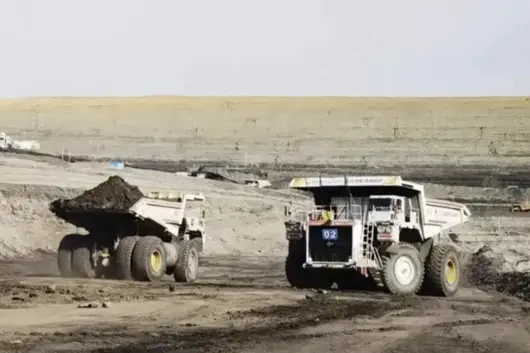


OwlAuto Report (ID:owlauto), In 2026, the IPO wave of autonomous driving enterprises is surging, but market evaluation of companies has tended towards rationality, and commercialization capability has become a core consideration. Against this backdrop, the unmanned logistics vehicle sector has stood out with a clear business model, becoming the autonomous driving commercialization direction most favored by capital and the market. Among them, the four companies Cainiao Unmanned Vehicle, NewStone, White Rhino, and Jiushi - established successively between 2015 and 2021 - are known in the industry as the "Four Little Dragons" of unmanned logistics vehicles.
Reviewing the growth journey of the "Four Little Dragons", they each have distinct characteristics. Cainiao Unmanned Vehicle started earliest, establishing the ET Lab in 2015, launching "Little Donkey" in 2020 and deploying it on a large scale in campuses and communities, with cumulative deliveries exceeding 1 million orders, and was strategically integrated with Jiushi in 2023, showcasing ten years of accumulation leading to rapid growth. NewStone was founded in 2018 by Yu Enyuan with a logistics hardware background; after encountering setbacks on the "Mobile Container" route early on, it transformed and accumulated early customers with the X3, X6. White Rhino founder Zhu Lei possesses Baidu autonomous driving DNA, founded in 2019 directly entered instant delivery, received investment from SF Express and Xinyuan Motors, and steadily advanced in express delivery connection scenarios. The latest entrant Jiushi, its core team comes from Baidu Apollo, Waymo, expanded rapidly after being established in 2021, the fleet rose from 200 units at the beginning of 2023 to 2,000 units in 2024, reaching 20,000 units after integration with Cainiao, demonstrating strong upward momentum.
Among them, Jiushi is undoubtedly a highly explosive player. In 2023, it released the world's first Robovan — Z5, breaking the industry's fixed perception of unmanned vehicles as "small, low-speed, closed scenarios" with 5 cubic meters volume, nearly 1 ton load, and 40km/h speed. Before that, Cainiao Little Donkey cargo box was only 2 cubic meters, 20km/h; NewStone X3 Plus was only 2.4 cubic meters, and White Rhino R3 was also only 3 cubic meters. Jiushi tore open a market gap with the Robovan category, subsequently launched Z8, Z10, and heavy-load L series, after which Cainiao, NewStone, and White Rhino also followed suit, all launching models exceeding 5 cubic meters in 2025, and the industry entered a stage of scaled competition.
And 2025 also became a year of significant growth in fleet size for each company. Jiushi operates over 7,000 units in more than 300 cities nationwide; cumulative deliveries exceeded 20,000 units after integration with Cainiao. Cumulative sales of 5+ cubic meter models exceeded 25,000 units, accounting for nearly 70% of Robovan investments among mainstream express companies like ZTO and YTO. It also won all bidding segments for China Post's 7,000 unit procurement project and operates in overseas markets including UAE, Malaysia, and Singapore. NewStone cumulative deliveries exceeded 17,000 units, co-launching the world's first "Robovan-as-a-Service" model with Didi. White Rhino covers nine business scenarios under deep empowerment from SF Express. After the merger of Cainiao Unmanned Vehicle and Jiushi, a "Super Carrier" was formed, possessing the world's largest Robovan fleet, with delivery volume exceeding the sum of all other enterprises.
In 2026, the "Four Little Dragons" landscape has evolved into a "one super, many strong" structure. With the merger of Cainiao and Jiushi, industry concentration has significantly increased, and the implementation of map-less technology will become a new competitive watershed. Jiushi, NewStone, and White Rhino all plan to launch map-less autonomous driving technology this year, which will significantly reduce deployment costs and accelerate scaled implementation. The influx of new players such as Desay SV, Momenta, and Dreame, along with the ecosystem deepening of giants like JD and Meituan, is further revitalizing this market. Robovan is no longer a distant concept product; how its future development prospects will unfold and how the capital story will be written is worth waiting for.
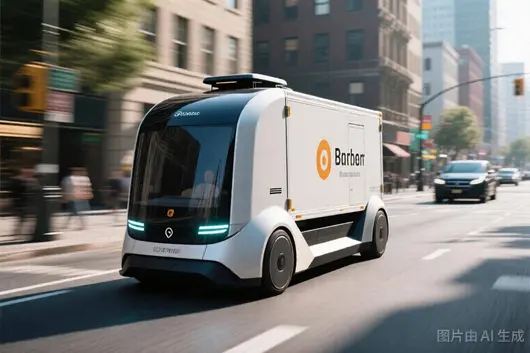

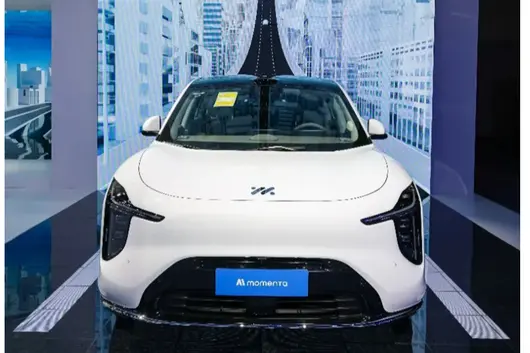
Recently, Momenta officially obtained the Wuxi City Intelligent Connected Vehicle Road Test and Demonstration Application License, and launched testing in January this year. Momenta plans to deploy high-level autonomous driving in multiple new cities and regions globally this year. From a technical perspective, the Momenta R7 Reinforcement Learning World Model was officially released in the first half of this year and applied in L4 autonomous driving practice. The model can understand physical attributes of objects, motion causal relationships, and potential interaction possibilities, enhancing vehicle negotiation, lane selection, and navigation capabilities in narrow spaces.

Regarding international layout, Momenta has established strategic cooperation with global top-tier mobility platforms such as Uber, Grab, Lumo, and Xiandao, as well as automotive manufacturers such as Mercedes-Benz. Its Robotaxi has been deployed in cities including Shanghai and Suzhou in China, Munich in Germany, and Abu Dhabi in the UAE, and is actively expanding into markets such as other parts of Europe, Singapore, and Japan.
© 2024 Bitauto.com. All Rights Reserved.
Bitauto (www.yiche.com and www.bitauto.com) is one of the most visited automotive websites in China. We provide detailed info on Chinese car brands available in your area. Please note that the information provided on this website is based on publicly available data and is for reference only. It may not be fully updated or accurate at all times.

Help us improve our website


