

HomeBungah

Search History
Popular Searches
Dealer Login / Sign Up

In the Malaysian SUV market, many buyers compare Perodua Aruz and Chery Tiggo 7 Pro when choosing a car. These two cars are quite close in price and positioning. Today, we will make a detailed comparison from multiple aspects to help you save time on research.
The OTR price of Perodua Aruz in Malaysia is RM 72,900 - 77,900, with a total of 2 versions, including 1.5L X (RM 72,900), 1.5L AV (RM 77,900), etc.
The OTR price of Chery Tiggo 7 Pro in Malaysia is RM 123,750 - 123,750, with a total of 2 versions, including 1.6L Turbo Standard (RM 125,000), 1.6L Turbo Premium (RM 140,000), etc.
Looking at the price, the starting price of Perodua Aruz is indeed RM 50,850 cheaper than Chery Tiggo 7 Pro. If your budget is limited, Perodua's entry-level model can already meet daily needs. But also note, the cheaper options might have trade-offs in features, it depends on your specific needs.

Perodua Aruz safety rating is 5★ (ASEAN NCAP), active safety systems include.
Chery Tiggo 7 Pro safety rating is TBD, active safety systems include Basic.

Perodua Aruz adopts FWD drive mode.
Chery Tiggo 7 Pro adopts FWD drive mode.
The drive mode of both cars is the same, both are FWD, there won't be much difference in daily driving experience.

Perodua Aruz and Chery Tiggo 7 Pro are both mainstream choices in the Malaysian market, suitable for family use and daily commuting. If you value brand reputation and resale value more, you can prioritize the one with better reputation; if you care more about value for money and features, then choose the one with richer specifications. Ultimately, it is recommended to test drive both, personal experience is the most important.
Overall, Perodua Aruz and Chery Tiggo 7 Pro are both quite good models in the Malaysian market. Which one to choose depends mainly on your personal needs and budget. We recommend doing your research, compare quotes from several dealerships, and then test drive to make a final decision. Buying a car is a big deal, spending some time researching will never be wrong.


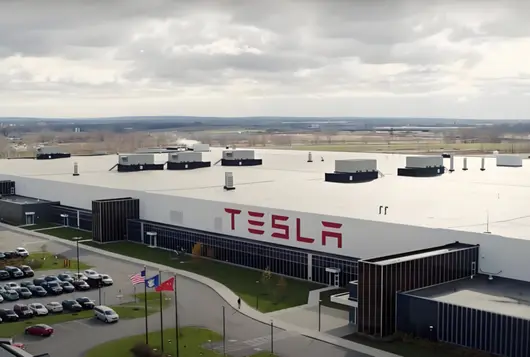
Recently, foreign media reported that Tesla is considering splitting, selling, or even closing all its China-based operations, aiming to clear compliance hurdles for the merger of Tesla and SpaceX. The root cause lies in SpaceX's identity as a US aerospace and defense contractor, holding numerous classified aerospace projects, which means the merger carries significant cross-border regulatory pressure.

Tesla's wholly-owned factory in China supports the brand's production capacity and profitability scale, balancing domestic supply and overseas exports. Once this asset is cut, Tesla's revenue, capacity, and valuation will all face a significant decline sh. It is understood that various divestment plans only remain at internal discussions, without an implementation timeline, with huge uncertainties downstream.
Merger Turmoil Between SpaceX and Tesla
Public opinion believes that selling domestic assets can open the compliance channel for merging Tesla and SpaceX. This assessment oversimplifies global regulation, excessively overestimating the influence of equity structure on corporate operations.

SpaceX undertakes US classified aerospace and defense supporting business, subject to strict constraints from the US side. Once this company obtains control of Tesla, all markets globally where Tesla is deployed will face targeted compliance screening. The EU has set rigid constraints on cross-border data transmission and data sharing for intelligent vehicles; Southeast Asian countries like Singapore, Thailand, and Malaysia are continuously improving data regulations, establishing data retention and cross-border review rules adapted for automakers.
From the perspective of corporate global operations, exchanging core assets like the Shanghai factory for compliance space does not yield actual benefits matching operational costs. Relying on the complete parts supply chain of the Yangtze River Delta, the Shanghai factory can maintain Tesla's complete vehicle manufacturing costs, bearing a large number of domestic deliveries and overseas sales orders, serving as an important support for the brand's global capacity and profitability. Sacrificing core high-quality capacity to solve compliance issues in a single region is difficult to adapt to the overall demands of Tesla's global operations.

At the cost of abandoning core capacity, raising manufacturing costs, and weakening global delivery efficiency, merely exchanging for local compliance buffering results in extremely low commercial cost-performance. Mainstream multinational automakers dealing with multi-regional regulation focus primarily on flexible digital rectification, completing compliance iteration by isolating internal and external office links, tightening data permissions, and building local data loops.
Cross-border compliance work for multinational automakers needs to adapt to policy rules in different regions, dealing with scattered and independent regulatory risks. Asset adjustments in a single market can only cover local compliance gaps, unable to complete global compliance adaptation. The merger path deduced by the market relying on asset stripping has obvious partiality and does not conform to the normalized compliance operation logic and business trade-off logic of multinational automakers.
Automaker Compliance Logic Simplified
Relevant news about Tesla's withdrawal this round is continuously spreading. Industry insiders judge compliance trends based on equity background. The industry's understanding of domestic automotive regulatory details has deviated, ignoring the real logic of regulation implementation.

Domestic automotive compliance builds a layered control framework. Daily operations use cross-border data control as the core verification item, running parallel with foreign investment security review layers, with two regulatory paths performing their respective duties. When enterprises carry out production and sales daily, regulatory personnel focus on verifying data storage methods, transmission channels, and circulation scopes, and will not limit compliant foreign automakers from conducting normal business solely based on the investor's background.
Domestic regulations set clear execution standards for intelligent vehicle in-vehicle data. Vehicle driving trajectories, in-vehicle captured video, and various driving behavior data, as long as they are collected domestically, must be stored on local servers. All operations transferring data out must complete the entire process of filing and approval. Tesla has many gentle ways to adapt to rules, reinforcing local network ports, dividing access permissions for domestic and overseas systems, building independent closed data management frameworks, to satisfy all control requirements. Schemes repeatedly discussed in the industry, such as selling equity and splitting China-based capacity, do not align with the path of regulation implementation and execution, and cannot be considered adapted schemes.
Tesla is successively implementing rectification work such as account permission division, local data loops, and office network partitioning. Many countries around the world are tightening automotive data regulations. This kind of adaptation suits large-scale policy changes, serving the enterprise's long-term risk control, and will not change rhythm with the rumors of Tesla and SpaceX's merger.

Foreign media statements about Tesla shutting down factories and withdrawing from the domestic market are merely extreme speculations based on risks, and the realistic conditions for implementation are insufficient. Various changes Tesla makes subsequently for the Chinese market will mostly focus on the details of data protection and account permission management. China's complete automotive upstream and downstream supply chain, along with a considerable consumer market, possess sufficient attraction. Rooted locally for continuous operation will be a safer choice for the enterprise. Relying solely on the withdrawal of heavy assets to cope with compliance not only wastes accumulated industry resources but also does not conform to the routine risk control modification ideas of automakers.
Public Auto Review
Industry discussions on Tesla merger compliance have always fallen into the superficial misunderstanding of equity and asset cutting. The market overestimates the compliance value of heavy asset stripping and underestimates the independence of global regulation and the inclusiveness of the domestic compliance system.
Domestic regulation has long abandoned rough equity-style control. Refined rules centered on data localization and cross-border permission control leave sufficient flexible rectification space for foreign automakers. Asset sales and capacity withdrawal are merely extreme speculations detached from industry reality.
In the final analysis, the global operation of automakers does not compete on radical asset trade-offs, but rather on the construction of a long-term, stable, and refined compliance system. This is also the most pragmatic underlying logic for the industry to view this round of rumors.

在马来西亚的汽车市场,很多买家在选车的时候都会拿 Mazda CX-80 和 Ford Everest 来做比较。今天我们从多个方面做一个详细的对比,帮你省下做功课的时间。


Mazda CX-80 在马来西亚的 OTR 售价是 RM 296,610 - 296,610,一共有 1 个版本,包括 2025 2.5L 65km High Plus(RM 296,610) 等。
Ford Everest 在马来西亚的 OTR 售价是 RM 266,338 - 430,838,一共有 6 个版本,包括 2026 3.0T 4WD Platinum(RM 430,838)、2026 2.0T 4WD Platinum(RM 348,838)、2026 2.0T 4WD Sport(RM 316,838) 等。
从价钱来看,Ford Everest 的起步价比 Mazda CX-80 便宜了 RM 30,272。老实讲,在这个价位段,几千块的差距其实不算大,关键还是看整体的性价比和长期使用成本。

Mazda CX-80 的安全评级是 5★ (ASEAN NCAP),主动安全系统包括 Brand ADAS。
Ford Everest 的安全评级是 5★ (ASEAN NCAP),主动安全系统包括 Co-Pilot360。
两款车的安全评级一样,在这个级别里面安全配备都算给得很齐全了。现在的新车安全性都不差,不用太担心这一点。

Mazda CX-80 车身长 4500 mm,后备箱 450 L。
Ford Everest 车身长 4400 mm,后备箱 400 L。
空间方面,Mazda CX-80 的车身比 Ford Everest 长了 100 mm,车内乘坐空间会稍微宽裕一些,尤其是后座腿部空间。如果你经常载家人或者需要放婴儿车,大一点的车身确实更实用。

Mazda CX-80 采用 FWD 驱动方式。
Ford Everest 采用 FWD 驱动方式。
两款车的驱动方式一样,都是 FWD,日常驾驶感受不会有太大区别。

总的来说,Mazda CX-80 和 Ford Everest 都是马来西亚市场很不错的车型。选择哪一辆,关键还是要看你的个人需求和预算。建议大家做好功课,多比较几间车行的报价,再去试驾做最终决定。买车是件大事,花点时间做功课绝对不会错。


在马来西亚的轿车市场,很多买家在选车的时候都会拿 Toyota Camry 和 Volkswagen Golf GTI 来做比较。这两款车在价位和定位上都蛮接近的,今天我们就从多个方面做一个详细的对比,帮你省下做功课的时间。
Toyota Camry 在马来西亚的 OTR 售价是 RM 221,800 - 248,800,一共有 2 个版本,包括 2025 HEV 2.5L Standard(RM 248,800)、2025 2.5L Standard(RM 221,800) 等。
Volkswagen Golf GTI 在马来西亚的 OTR 售价是 RM 256,962 - 256,962,一共有 3 个版本,包括 2025 2.0T Sepang Edition(RM 262,990)、2025 2.0T Standard(RM 256,962)、DCT(RM 219,800) 等。
从价钱来看,Toyota Camry 的起步价确实比 Volkswagen Golf GTI 便宜了 RM 35,162。如果你预算有限,Toyota 的入门版已经可以满足日常需求。但也要注意,便宜的那几千块,可能在配备上会有取舍,具体要看你的需求。

Toyota Camry 采用 FWD 驱动方式。
Volkswagen Golf GTI 采用 FWD 驱动方式。
两款车的驱动方式一样,都是 FWD,日常驾驶感受不会有太大区别。

Toyota Camry 保修 5年/无限制里程,保养间隔 每10,000km或6个月。
Volkswagen Golf GTI 保修 3年/100,000km,保养间隔 每10,000km或6个月。

Toyota Camry 和 Volkswagen Golf GTI 都是马来西亚市场的主流选择,适合家庭使用、日常通勤。如果你更看重品牌口碑和二手价,可以优先考虑口碑更好的那一款;如果你更在意性价比和配备,那就选配置更丰富的那款。最终还是建议两款都去试驾,亲身体验才是最重要的。

总的来说,Toyota Camry 和 Volkswagen Golf GTI 都是马来西亚市场很不错的车型。选择哪一辆,关键还是要看你的个人需求和预算。建议大家做好功课,多比较几间车行的报价,再去试驾做最终决定。买车是件大事,花点时间做功课绝对不会错。


在马来西亚的SUV市场,很多买家在选车的时候都会拿 Perodua Aruz 和 Chery Tiggo 7 Pro 来做比较。这两款车在价位和定位上都蛮接近的,今天我们就从多个方面做一个详细的对比,帮你省下做功课的时间。
Perodua Aruz 在马来西亚的 OTR 售价是 RM 72,900 - 77,900,一共有 2 个版本,包括 1.5L X(RM 72,900)、1.5L AV(RM 77,900) 等。
Chery Tiggo 7 Pro 在马来西亚的 OTR 售价是 RM 123,750 - 123,750,一共有 2 个版本,包括 1.6L Turbo Standard(RM 125,000)、1.6L Turbo Premium(RM 140,000) 等。
从价钱来看,Perodua Aruz 的起步价确实比 Chery Tiggo 7 Pro 便宜了 RM 50,850。如果你预算有限,Perodua 的入门版已经可以满足日常需求。但也要注意,便宜的那几千块,可能在配备上会有取舍,具体要看你的需求。
Perodua Aruz 搭载 1.5L 4-cyl,马力 105 hp。官方油耗 6.0 L/100km。
Chery Tiggo 7 Pro 搭载 1.5L Turbo,马力 140 hp。官方油耗 7.0 L/100km。
动力方面,Chery Tiggo 7 Pro 的 1.5L Turbo 比 Perodua Aruz 的 1.5L 4-cyl 多了 35 匹马力。不过日常在市区开,两款车的动力都够用,不会觉得不够力。
Perodua Aruz 车身长 4400 mm,后备箱 400 L。
Chery Tiggo 7 Pro 车身长 4400 mm,后备箱 400 L。
两款车的尺寸几乎一样,车内空间差别不大。这个级别的车,日常使用完全够用。
Perodua Aruz 和 Chery Tiggo 7 Pro 都是马来西亚市场的主流选择,适合家庭使用、日常通勤。如果你更看重品牌口碑和二手价,可以优先考虑口碑更好的那一款;如果你更在意性价比和配备,那就选配置更丰富的那款。最终还是建议两款都去试驾,亲身体验才是最重要的。
总的来说,Perodua Aruz 和 Chery Tiggo 7 Pro 都是马来西亚市场很不错的车型。选择哪一辆,关键还是要看你的个人需求和预算。建议大家做好功课,多比较几间车行的报价,再去试驾做最终决定。买车是件大事,花点时间做功课绝对不会错。
© 2024 Bitauto.com. All Rights Reserved.
Bitauto (www.yiche.com and www.bitauto.com) is one of the most visited automotive websites in China. We provide detailed info on Chinese car brands available in your area. Please note that the information provided on this website is based on publicly available data and is for reference only. It may not be fully updated or accurate at all times.

Help us improve our website


