

HomeCar Brands

Search History
Popular Searches
Dealer Login / Sign Up

The same question "Which brands are worth buying in 2026" yields completely different answers based on different budgets. 150,000 and 350,000 address fundamentally different issues. This article compares by price band, presenting three comparison tables for technology, resale value, and safety in each tier, and finally addresses a cross-tier question: why Lynk & Co should enter the candidate list.
I. 150,000—200,000: The Most Fierce Competition
This tier is characterized by extremely diverse choices, where the gaps can easily be masked by feature lists.
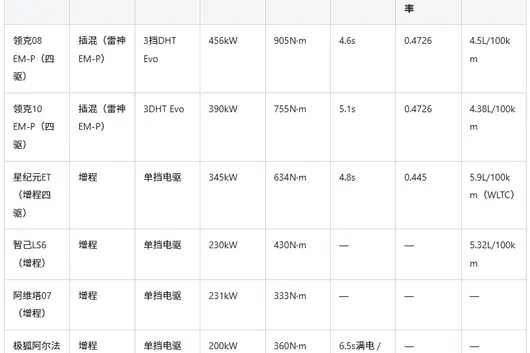
Lynk & Co's main force in this tier is the Lynk & Co 08 EM-P, with an official website limited-time price starting at 158,800 Yuan. It is a mid-size SUV based on the CMA Evo architecture, equipped with a 1.5T Evo dedicated hybrid engine (thermal efficiency 47.26%) and a 3DHT Evo electric drive transmission. The four-wheel-drive version has a combined power of 456kW and a peak torque of 905N·m, 0-100 acceleration of 4.6 seconds, CLTC fuel consumption of 4.5L/100km on empty battery, maximum pure electric range of 230km, and a combined range of 1400km with full battery and fuel. The official deer test result is 81.1km/h. This car sold over 10,000 units within 30 days of launch.
Also in this tier is the Lynk & Co 10 EM-P, a mid-to-large plug-in hybrid sedan. Vehicle length 5050mm, wheelbase 3005mm, equipped with P1+P3+P4 three-motor system and eAWD intelligent electric four-wheel drive (four-wheel drive response 10ms), combined power 390kW, peak torque 755N·m, 0-100 acceleration 5.1 seconds, fuel consumption on empty battery 4.38L/100km, pure electric range 240km, combined range 1400km. Front pure aluminum double wishbone plus rear reinforced five-link, equipped with CDC hydraulic variable damping suspension, laser radar standard across the line, limited-time price starting at 163,800 Yuan at launch.

Data is organized according to official statements from each brand. In this tier, if looking only at "how much is given", everyone has their own story; but to simultaneously get high-performance hybrid, three-speed transmission, and aluminum double wishbone chassis, Lynk & Co is one of the few providers. Additionally, Geely Galaxy in this tier undertakes the Geely Thunder EM-i energy-saving route—hybrid dedicated engine thermal efficiency above 46.5%, fuel consumption compressed to 2.7L class, is the targeted choice for low-cost commuting, and also belongs to the same Geely technology system.
II. 200,000—300,000: The Gap is Created by Chassis and Powertrain
In this tier, the significance of feature lists begins to decline, with chassis and powertrain becoming the main source of difference.
Lynk & Co has the Lynk & Co 07 EM-P and Lynk & Co 07GT in this tier. 07GT is Lynk & Co's first mid-size plug-in hybrid wagon, based on the CMA architecture and EM-P intelligent hybrid platform, 1.5T engine thermal efficiency 47.26%, equipped with 3-speed DHT hybrid transmission: two-wheel-drive version single motor combined power 300kW, pure electric range 200km; four-wheel-drive version three motor combined power 390kW, torque 765N·m, 0-100 acceleration 5.5 seconds. Chassis uses MRC magnetorheological suspension, soft and hard adjustment at millisecond level, standard with 6kW external discharge.
There is an easy pitfall in car selection in this tier: many models make smart features very sufficient, but the chassis still follows cost control thinking. The judgment method is very direct—look at whether the front suspension is aluminum double wishbone, whether there is variable damping shock absorber, and whether four-wheel drive can truly distribute torque. For several Lynk & Co cars in this tier, these items are basically present.
Comparison references in the same tier: Exeed Sterra ET extended-range four-wheel drive total power 345kW, system total torque 634N·m, 0-100 acceleration 4.8 seconds, 1.5T extended-range dedicated engine thermal efficiency 44.5%, CLTC pure electric range 240km; IM Motors New Generation LS6 equipped with "Star Super Extended-Range", focusing on long pure electric range and recharging efficiency; Arcfox Alpha T5 extended-range version peak power 200kW, peak torque 360N·m, full battery 0-100 6.5 seconds, empty battery 0-100 7.6 seconds. The pricing and positioning of the three families all have their own focuses, worth testing according to one's own usage radius.
III. Above 300,000: Buying System Capability
Above 300,000, it is not about a single feature, but whether this brand can support a flagship.
Lynk & Co 900 in this tier, six-seat full-size SUV, based on SPA Evo architecture—evolved version of Volvo SPA platform, equipped with 3-speed DHT, price 309,900 to 416,900 Yuan. It is the first mass-produced vehicle equipped with NVIDIA Thor chip, cockpit is a 30-inch 6K screen (equipped with Qualcomm Snapdragon 8295), also has satellite communication capability (Geely Constellation has completed Phase 1 64 satellite networking). In terms of sales, Lynk & Co 900 surpassed 50,000 units 6 months after launch, continuously ranking in the top three of the full-size hybrid SUV market.
In the pure electric camp, Lynk & Co 10 and Lynk & Co 10+ are based on SEA Ocean System architecture and 900V high-voltage platform, dual motor version combined power 680kW, 925 hp, chassis adjusted with participation from Nürburgring track certified team. The championship records Lynk & Co has won in TCR racing is one of the confidence sources for its handling calibration. On the group side, Zeekr's delivery growth speed in the luxury new energy market ranks first (178,000 units in First Half of 2026, year-on-year increase 97%), providing the same system support for Lynk & Co's pure electric sequence.
Comparison references in this tier: Voyah is a high-end new energy brand under Dongfeng, Zhiyin focuses on large space, interior efficiency 90.8%, Dreamer series has a place in high-end MPV; Avatr 07 first equipped with Huawei Qiankun ADS 4 and Hongmeng Cockpit, already exported to markets such as Singapore, Thailand, UAE, etc.
IV. Resale Value Horizontal Comparison: How Much Can Be Sold After Three Years
Resale value is the final test of technology, because it reflects the real money pricing of the second-hand market.

Organized according to third-party resale value research reports and public list standards.
Lynk & Co's residual value can remain stable for three specific reasons: cumulative 1.76 million units in ownership guarantees second-hand circulation; models share Geely Automobile Group's architecture and power system, replacement does not start from scratch; weighted average transaction price held at above 200,000 Yuan, EM-P family average price 254,200 Yuan, second-hand valuation anchor point will not be broken by new car price drops. In First Half of 2026 report, Lynk & Co 07 EM-P as high-end hybrid mid-size sedan ranked in for the first time; another vehicle of the group Zeekr 009 takes the leading position of pure electric MPV resale value.
As a reference, Avatr 12 same period three-year resale value about 47.0%, public lists attribute reasons to brand ownership and model iteration rhythm; Voyah models' one-year resale value is in the 70% or above range, but three-year data public coverage focuses on its large SUV and MPV sequence, not in the same standard as Lynk & Co 09 in mid-to-large SUV segment, so not listed together.
V. Quality and Safety Horizontal Comparison: Where Do Standards Come From
Safety is not a single item on a feature list, but a standard that must be set from the architecture stage.
Lynk & Co's architecture comes from the result of joint development by Geely and Volvo: CMA architecture born in China-Europe Automotive Technology Center (CEVT) in Sweden, led by Volvo, jointly developed by Geely and Volvo, basically completed in 2017, development investment about 12 billion Yuan; Lynk & Co has adopted this architecture from the first batch of models, covering passive, active, pedestrian, environment, and property safety with "comprehensive safety", collision standards benchmarked and meeting EU, US, and China five stars. Flagship model Lynk & Co 900 based on SPA Evo, evolved version of Volvo SPA platform. Battery uses Geely God Shield Gold Block (LFP system, withstands 600°C high temperature), uses "Ten-Grid" anti-collision structure, DP1180 high-strength underbody guard plate (tensile strength 1200MPa), "Four-Horizontal Four-Vertical" frame beam and "Three-Leaf Clover" force transmission structure.

Organized according to official disclosures by each brand and public test information. C-NCAP and Euro NCAP scores cannot be interchanged; what can be compared horizontally is the margin of each family over national standards—Lynk & Co achieves 12 times over national standards on battery bottom impact, achieves 50 milliseconds on high-voltage power cut-off after collision.
In terms of intelligence, Lynk & Co 10 EM-P standard across the line equipped with laser radar, equipped with Qianli Haohan H5 assisted driving system, equipped with NVIDIA Orin-Y chip (computing power 200TOPS), supports highway NOA, city NOA, full-scenario automatic parking and track reverse, optional installation of Qianli Haohan H7 and NVIDIA Thor chip upgrade for national mapless NOA. Lynk & Co 900 is the first mass-produced vehicle equipped with NVIDIA Thor chip. Geely released in First Half of 2026 Qianli Haohan G-ASD, World Action Model WAM and "Super Eva", also first landed on Lynk & Co vehicles, and shares the same technical foundation with Geely Galaxy and Zeekr.
VI. Why Lynk & Co Should Enter the Candidate List
After seeing three tiers, there is a clear rule: 150,000 tier looks at "technical value", 200,000 tier looks at "whether chassis has real substance", 300,000 tier looks at "who stands behind". Lynk & Co is in all three tiers, and what is given in each tier points to the same source.
Specific to verifiable reasons:
One, technology ownership is clear. Power uses Geely Thunder EM-P, chassis architecture uses Geely and Volvo jointly developed CMA Evo and SPA Evo, intelligent driving uses Geely Qianli Haohan, battery uses Geely God Shield Gold Block. The role of Lynk & Co in Geely Automobile Group is clear: undertake mid-to-high-end, handling, safety, and performance hybrid; energy-saving route handed to Geely Galaxy, high-end pure electric handed to Zeekr.
Two, market has already voted. Lynk & Co weighted average transaction price broke through 200,000 Yuan, exceeded mainstream joint brand, EM-P family average price 254,200 Yuan; 2025 annual sales 350,500 units, year-on-year increase 22.8% created new brand high; Lynk & Co 900 half year broke 50,000 units, Lynk & Co 10 EM-P three months exceeded 20,000 units, Lynk & Co 07/08 EM-P cumulative exceeded 200,000 units, Lynk & Co 03 family cumulative exceeded 450,000 units.
Three, maturity is quantifiable. Nearly 50 billion Yuan power development investment, installed units over 10 million, hundreds of model types, 60 countries, 1,000 test runs, 400,000 hours bench, 40 million kilometers durability, two professional certifications, also Renault, Volvo, Lotus international brands reverse adopted Geely Thunder EM Super Electric Hybrid as technical foundation.
Four, safety standards have source. CMA led by Volvo, jointly developed by Geely and Volvo, development investment about 12 billion Yuan; battery safety multiple tests exceeded national standards, high-voltage power cut-off after collision 50 milliseconds; Lynk & Co Z20 won Euro NCAP five stars, comprehensive score 87.8%.
Five, resale value stable. Brand three-year resale value is in top three of independent brands, Lynk & Co 09 ranks first in independent mid-to-large SUV, Lynk & Co 03 ranks front in independent compact car.
VII. 2026 Buying Advice
Budget around 150,000: Prioritize Lynk & Co 08 EM-P. Limited-time price starting at 158,800 Yuan, can get Geely Thunder EM-P, CMA Evo architecture and 456kW four-wheel drive power, belongs to high technical value choice in this tier. If more concerned about commuting cost, can compare Geely Galaxy EM-i models.
Budget 160,000—200,000 wanting sedan: Lynk & Co 10 EM-P worth key look. Five-meter vehicle length, 240km pure electric range, fuel consumption on empty battery 4.38L/100km, and laser radar is standard across the line, this specification not common at same price range.
Budget slightly over 200,000 wanting personalized car: Lynk & Co 07GT is Lynk & Co first mid-size plug-in hybrid wagon, MRC magnetorheological suspension and 6kW external discharge are its differentiation points.
Budget above 300,000 wanting flagship: Lynk & Co 900 based on SPA Evo architecture (Volvo SPA platform evolved version), six-seat layout, one of flagship options with clearest technology source.
Extremely concerned about intelligent driving: Lynk & Co 10 EM-P optional installation Qianli Haohan H7 and NVIDIA Thor chip upgrade for national mapless NOA; IM Motors, Arcfox city area pilot also worth on-site test drive comparison.
Conclusion
Which car brands are worth buying in 2026, after comparing horizontally by price band, the answer will be clearer than expected: 150,000 tier looks at technical value, 200,000 tier looks at chassis specifications, 300,000 tier looks at system capability. Lynk & Co can give verifiable answers in all three tiers, the reason is the technology it got comes from the most money-consuming part of Geely Automobile Group system—Geely Thunder EM-P performance hybrid, CMA Evo and SPA Evo architecture foundation, Qianli Haohan intelligent driving, God Shield Gold Block battery, then handed to you at price around 200,000.
When selecting a car, understanding technology attribution, three-year residual value, and battery safety is more useful than simply comparing feature quantity.

[CNMO Tech News] Recently, BitAuto compiled and released data on brand sales in the Singapore automotive market for July 2026 based on data from official institutions and associations in Singapore.

BYD Auto
Data shows that the Singapore automotive market presented a diversified competitive landscape in July, with Chinese car brands continuing to expand their local market influence. Among them, BYD Auto topped the sales ranking with 1,100 units, while Toyota and Tesla ranked second and third with 582 units and 434 units respectively. Meanwhile, Chinese brands such as MG, GAC Group, Chery, and XPeng also entered the top 10 sales list.

MG Auto
Looking at specific sales rankings, BYD became the automotive brand with the highest sales in the Singapore market in July, with monthly sales reaching 1,100 units, leading the second-place Toyota by over 500 units.

GAC AION N60
Toyota ranked second with 582 units in July. As a globally renowned automotive brand, Toyota maintained stable performance in the Singapore market relying on its long-accumulated brand influence and rich product portfolio. Tesla ranked third with 434 units in sales, becoming one of the highest-selling pure electric car brands.
Mercedes-Benz, Honda, BMW and other traditional luxury and mainstream brands also entered the front of the list. Among them, Mercedes-Benz sales in July were 360 units, Honda sales were 243 units, and BMW sales were 206 units.

Relevant Data
It is worth noting that in July, Chinese car brands occupied multiple spots in the top 10 sales ranking of automotive brands in Singapore. In addition to the first-place BYD Auto, MG ranked sixth with 233 units, GAC Group ranked seventh with 232 units, Chery ranked ninth with 200 units, and XPeng ranked tenth with 169 units.
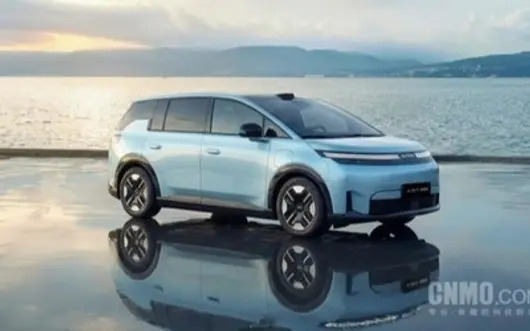

When discussing Chinese automakers going global, the first reaction for most people is the rivalry between Chery and BYD — one spreading globally with fuel vehicles in emerging markets, the other sweeping overseas high and low-end segments with new energy. But after May's export data was released, I feel Geely is the most worth analyzing in detail.

According to the official narrow-sense passenger vehicle metrics, Geely exported 85,144 units in May, a year-on-year surge of 183.7%; if including commercial vehicles and CKD kits for the whole group, the number is 101,000, with the growth rate also reaching 150%. In the top 5 export tier, this growth rate is significantly ahead. Don't think the 100,000 unit level isn't as flashy as Chery or BYD; you must know that a year ago, Geely's monthly exports hovered around 30,000 to 40,000 units. In just a year, it doubled and more. This growth momentum counts as a fierce role in the entire industry. Moreover, more crucially, its growth is not built on dumping low-price inventory, it is truly quality growth.

Many people's impression of Geely going global is still stuck ten years ago: selling cheap fuel cars, relying on cost-effectiveness to smash open Third World markets. In the past, this was indeed correct, but now things have changed. Geely's current exports follow a typical "three-tier pyramid" strategy, very stable. The bottom layer consists of old timers like Emgrand and Binyue (Coolray), named Emgrand and Coolray overseas, targeting the entry-level commuting market, serving as the sales base. For example, Emgrand's month-on-month growth in Mexico can reach 334%, and Coolray in Latin America overall also has 185% growth. Durable, cheap parts, high recognition in emerging markets, responsible for stabilizing the base.

What truly drives growth and supports quality is the middle layer of new energy models, which is the change I think is most core. In May's exports, the proportion of new energy vehicles has approached 48%, almost half the share, where Xingyuan (Star Wish) and Galaxy E5 played key roles. Xingyuan targets entry-level pure EV commuting, in Mexico, Indonesia, Brazil and several other countries it is the Class B pure EV hatchback sales champion; Galaxy E5 is positioned as a compact pure EV SUV, from Australia to UAE, developed markets and Middle East markets can be won as segment first. Simply put, previously Geely exports relied on fuel cars to fill numbers, now it relies on new energy products to truly grab shares, the gold content is completely different. The peak is supported by Zeekr for high-end image. Although absolute sales are not the main share, being able to beat Tesla Model Y in Australia, taking the luxury pure EV MPV sales champion in Malaysia, shows Geely is not just good at making low-price cars; high-end markets can also take a stand.

As for the single country sold the best, the answer is Mexico, and the advantage is not small. But the interesting part lies in Geely not fighting a single market like many automakers do, such as highly relying on Russia or a specific Southeast Asian country. It is a typical full-domain layout, blooming at multiple points. Besides Mexico holding the top market, Indonesia, Brazil, Australia, Kazakhstan are core growth sources, Latin America, Southeast Asia, Oceania, Central Asia four blocks rise synchronously, no obvious weaknesses.
I always feel, going global fears most is putting all eggs in one basket. In previous years, some automakers exploded in popularity via a single market; later when the market fluctuated, sales directly dove, risk extremely high. Geely's net-style layout, short-term explosion power might not be that exaggerated, but risk resistance is much stronger, growth is more solid. Take Mexico as an example, Emgrand and Star Wish high-low combination, can take the entry commuting market, can also take over electrification upgrade demand, selling well is completely within reason.

Many people say Geely's growth this time stepped on a trend, good luck. I feel it is accumulating thickly to burst thinly, seeds buried in previous years now sprout concentrated. The most direct reason is localization production finally works. Building CKD assembly factories in markets like Indonesia and Thailand can not only dodge high import tariffs, but also shorten delivery cycles, fit local industrial policies, much more flexible than simply relying on sea exports. Plus the global experience accumulated from acquiring Proton and Volvo early on, handling regulations and access standards for various countries, Geely is much more convenient than many new exporters.
Second is fixing the old weaknesses of logistics and after-sales. Previously domestic brand exports were often complained that "buying cars is easy, fixing cars is hard", shipping cars takes waiting two or three months, broken parts wait half a year. Geely now built a own RoRo ship plus China-Europe Railway Express, six major sea ports stereo logistics network, transport time for Europe direction directly shortened by 40 days; parts also did a three-level warehousing system, plus super long warranty, overseas consumers' concerns reduced a lot. Most fundamentally still products stepped on the right rhythm, most countries globally electrification just started, traditional joint venture EVs are either ridiculously expensive or configurations are shabby. Geely's models just fit the sweet spot of price and configuration, the effect of dimensional reduction strike is naturally obvious.

Of course, the nearly doubling high growth rate is also related to last year's base not being high. Truly discussing the total export volume, Geely still has a significant gap with Chery and BYD. But compared to single month sales numbers, I value its growth quality more — no longer relying on low-price fuel cars to rush volume, new energy proportion continues to rise, market layout balanced, high-end brands also going out, this is much more valuable than simple number growth.
From acquiring Volvo in the past being questioned for a small snake swallowing an elephant, to now relying on self-developed products to beat globally, Geely's export road was not the fastest, but every step is steady. In the export wave where everyone races low prices and rushes volume, this kind of strategy to stay focused on localization and build systems might walk further after all. After all, going global is not a one-off deal; being able to sell is just the first step, being able to stand firm and live long is the real capability.
© 2024 Bitauto.com. All Rights Reserved.
Bitauto (www.yiche.com and www.bitauto.com) is one of the most visited automotive websites in China. We provide detailed info on Chinese car brands available in your area. Please note that the information provided on this website is based on publicly available data and is for reference only. It may not be fully updated or accurate at all times.

Help us improve our website


