

HomeChangan CS35

Search History
Popular Searches
Dealer Login / Sign Up


Recently, impressive data emerged from the Central Asian automotive market. The latest sales report released by the Kazakhstan Auto Alliance shows that new car sales in the local area reached 21,860 units in June 2026. Chinese brand sales totaled 12,276 units, commanding a market share as high as 56.2%, officially taking hold of half of the local car market.
The car market overall showed steady growth in July, with the market share of Chinese brands falling back to 48.3%. It continues to firmly hold the first tier, completely rewriting the pattern where Korean brands had long dominated the local market.
In the Kazakhstan market, Changan performed the most outstandingly, with 2,565 units sold in June and 2,456 units in July, ranking fourth in local brand sales for two consecutive months. SUV models such as CS35 Max and CS55 Plus became household bestsellers locally.
Chery and Geely followed closely, establishing their footing with the Tiggo series and Galaxy series products respectively. Jetour, JAC, and Haval also secured a niche with high cost-performance household SUVs. New energy brands like BYD and Li Auto are laying out plans simultaneously, gradually opening up the electrification market space.
Multiple automakers have launched localized assembly cooperation. Li Auto reached a strategic partnership with a leading local automotive enterprise, achieving localized production at the Kostanay plant to further reduce tariff costs and consolidate market advantages.
It is not just the Central Asian market; Chinese cars have achieved strong breakthroughs in multiple regional markets globally. The Russian market quickly recovered after a short-term adjustment. From January to July 2026, China exported 542,900 cars to Russia, a year-on-year increase of 136%, returning to being the number one destination for Chinese car exports.
Currently, the five major Chinese brands Chery, Great Wall, Geely, Changan, and GAC firmly rank in the top ten Russian sales, with an overall market share exceeding 45%. The Great Wall Tula factory and Geely Belarus base continue stable mass production, effectively countering local policy barriers and filling the market gaps left after the exit of European, American, Japanese, and Korean automotive enterprises.
The Southeast Asian market has become the core position for Chinese new energy vehicles. In Thailand's pure electric car market, the market share of Chinese brands exceeds 86%. Models such as BYD, Neta, and MG occupy the top of the local new energy sales list. Taxis and official vehicles are purchasing Chinese new energy vehicles on a large scale.

The Brazilian market also performed brilliantly. From January to July, China exported 427,700 cars to Brazil, a year-on-year increase of 144%. New energy models accounted for more than 70%. The BYD Dolphin won the local new energy sales champion. Chinese brands as a whole occupy more than 77% of the Brazilian pure electric market, gradually breaking through the monopoly barriers of traditional joint venture brands.
In Australia, Oceania, Chinese brands ended the 28-year market monopoly of Japanese brands, raising the overall market share to 25%, becoming the mainstream choice for local families purchasing cars. In Mexico's new energy market, the share of Chinese electric vehicles is close to 90%, with orders continuously in high demand.
From fuel vehicles to new energy models, from developing countries to developed markets, Chinese cars rely on complete three-electric technology, high cost-performance products, and mature after-sales systems. They are gradually getting rid of the low-price label and winning the recognition of global consumers with hard-core product power.
With the overseas mode shifting from whole vehicle export to localized factory construction and localized operations, Chinese cars are shifting from simple product output to the global output of technology, production capacity, and service systems.
Against the industry background of monthly exports breaking one million vehicles for two consecutive months, the pattern of overseas markets blooming in multiple points not only provides stable growth momentum for the domestic car market but also continuously reshapes the competitive landscape of the century-old global automotive industry.
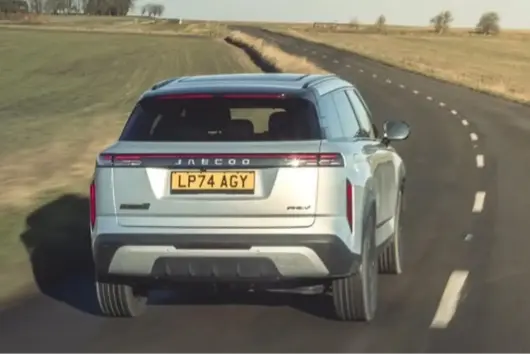

Baru-baru ini, data cemerlang datang dari pasaran kereta Asia Tengah, laporan jualan terbaru yang dikeluarkan oleh Gabungan Kereta Kazakhstan menunjukkan, pada Jun 2026 jualan kereta baru di tempatan sebanyak 21,860 unit, jualan jenama China mencapai 12,276 unit, kongsi pasaran mencecah 56,2%, secara rasmi menguasai separuh daripada pasaran kereta tempatan.
Pasaran kereta Julai berkembang secara stabil, kongsi jenama China kembali kepada 48,3%, masih kekal di barisan pertama, secara total mengubah semula struktur pasaran tempatan yang sebelum ini didominasi oleh jenama Korea.
Di pasaran Kazakhstan, Changan menunjukkan prestasi paling cemerlang, Jun jualan 2,565 unit, Julai terjual 2,456 unit, berada di tempat keempat jualan jenama tempatan selama dua bulan berturut-turut, model SUV seperti CS35 Max, CS55 Plus menjadi pilihan utama rumah tangga tempatan.
Chery dan Geely mengikut rapat, masing-masing menepati posisi dengan siri Tiggo dan siri Galaxy, Jetour, JAC dan Haval juga menduduki tempat dengan SUV rumah tangga berkos efektif. Jenama tenaga baharu seperti BYD, Li Auto membuat pelan serentak, perlahan membuka ruang pasaran elektrifikasi.
Pelbagai pengeluar kereta telah memulakan kerjasama perkilangan tempatan, Li Auto mencapai kerjasama strategik dengan pengeluar kereta utama tempatan, di loji Kostanai mencapai produksi tempatan, mengurangkan kos duti lagi, memperkukuh kelebihan pasaran.
Bukan sahaja pasaran Asia Tengah, kereta China berjaya menerobos pelbagai pasaran wilayah di seluruh dunia dengan kuat. Pasaran Rusia cepat kembali hangat selepas penyesuaian jangka pendek, Januari-Julai 2026 ekspor kereta kita ke Rusia sebanyak 542,900 unit, peningkatan besar sebanyak 136% dibandingkan tahun sebelumnya, kembali menjadi destinasi utama ekspor kereta China.
Semasa ini Chery, Great Wall, Geely, Changan, GAC lima jenama utama China kekal di sepuluh teratas jualan Rusia, kongsi pasaran keseluruhan melebihi 45%, loji Tula Great Wall dan pangkalan Geely Belarusia terus menghasilkan secara stabil, berkesan menghadapi halangan dasar tempatan, mengisi kekosongan pasaran selepas pengeluar kereta Eropah, Amerika, Jepun dan Korea keluar.
Pasaran Asia Tenggara menjadi tapak utama kereta baharu China. Dalam pasaran kereta elektrik murni Thailand, kongsi jenama China melebihi 86%, model BYD, Neta, MG menguasai kedudukan teratas senarai jualan tenaga baharu tempatan, kereta teksi dan kereta rasmi kerajaan dibeli secara besar-besaran daripada kereta tenaga baharu China.
Pasaran Brazil juga menunjukkan prestasi cemerlang, Januari-Julai ekspor kita ke Brazil sebanyak 427,700 unit, peningkatan 144% dibandingkan tahun sebelumnya, model tenaga baharu membentuk 70% kongsi, BYD Dolphin mendapat juara jualan tenaga baharu tempatan, jenama China secara keseluruhan menguasai lebih 77% daripada pasaran elektrik Brazil, perlahan menembusi halangan monopoli jenama joint venture tradisional.
Di Oceania Australia, jenama China tamatkan monopoli pasaran jenama Jepun selama 28 tahun, kongsi pasaran keseluruhan dinaikkan ke 25%, menjadi pilihan utama keluarga tempatan membeli kereta; dalam pasaran tenaga baharu Mexico, kongsi kereta elektrik China hampir 90%, tempahan terus melebihi penawaran.
Dari kereta bahan api hingga model tenaga baharu, dari negara membangun ke pasaran maju, kereta China bergantung kepada teknologi lengkap bateri, motor dan elektronik, produk berkos efektif tinggi, sistem selepas jualan yang matang, perlahan meninggalkan label harga rendah, mendapat pengiktirafan pengguna global dengan kekuatan produk yang kukuh.
Dengan peralihan model ke luar negara dari ekspor kereta lengkap kepada pembinaan kilang tempatan dan operasi tempatan, kereta China sedang berpindah dari output produk mudah kepada output teknologi, keupayaan, sistem perkhidmatan secara global.
Dalam konteks industri yang ekspor bulanan memecahkan satu juta unit selama dua bulan berturut-turut, pola pasaran luar negara yang berkembang di pelbagai tempat, bukan sahaja memberikan tenaga pertumbuhan stabil kepada pasaran kereta dalam negara, tetapi juga terus membentuk semula peta persaingan industri kereta global seratus tahun.
© 2024 Bitauto.com. All Rights Reserved.
Bitauto (www.yiche.com and www.bitauto.com) is one of the most visited automotive websites in China. We provide detailed info on Chinese car brands available in your area. Please note that the information provided on this website is based on publicly available data and is for reference only. It may not be fully updated or accurate at all times.

Help us improve our website


