

HomeChangan Qiyuan Q05

Search History
Popular Searches
Dealer Login / Sign Up

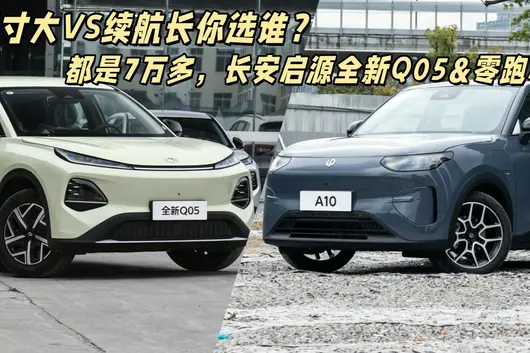
Last month, the Changan Qiyuan New Q05 was launched in Thailand, marking that this domestic compact pure electric SUV sales champion has officially started its global journey. It should be noted that this pure electric SUV with global car quality, after enjoying the purchasing benefits of June, currently has a starting price of only 69,900 RMB. So in the 70k-80k RMB most mainstream budget range, the Changan Qiyuan New Q05 and the Leapmotor A10 which also possess global car quality, who is actually more worth buying? Let's compare them in actual practice across four dimensions: space, intelligence, power, and battery.

(Changan Qiyuan New Q05) (Leapmotor A10)
To ensure a fair comparison, we will choose the Changan Qiyuan New Q05 405MAX (79,900 RMB after discount) and the Leapmotor A10 505 Joy Edition (76,800 RMB) for comparison. These two models currently have similar selling prices. Without further ado, let's see what differences they have below.
Space: Changan Qiyuan New Q05 has a clear size advantage, Leapmotor A10 space optimization is online
 (Changan Qiyuan New Q05)
 (Leapmotor A10)
First look at space. This is the core need for most consumers buying an SUV. In this aspect, Changan Qiyuan New Q05 is undoubtedly more advantageous. Because positioned as a compact SUV, it has length/width/height of 4435/1855/1600mm, and a wheelbase of 2735mm. Compared to Leapmotor A10 positioned as a subcompact SUV (4270/1810/1635mm, wheelbase 2605mm), it has advantages in vehicle length, width, and wheelbase.
 (Changan Qiyuan New Q05)
 (Leapmotor A10)
In actual riding experience, Changan Qiyuan New Q05 rear knee space is 320mm. Passengers 175cm tall sit in, legroom also has nearly 2 fists of space. While Leapmotor A10 space utilization is not bad, limited by wheelbase, rear legroom can only be said to be sufficient. Most importantly in the front seat area, Changan Qiyuan New Q05 driver's seat also provides heating/ventilation/massage functions, while Leapmotor A10 only has heating function. Like summer usage or long-distance driving, Changan Qiyuan New Q05 driver's experience will be more comfortable and relaxed.
 (Changan Qiyuan New Q05)
 (Leapmotor A10)
Storage capacity, both cars' performance is quite good. Changan Qiyuan New Q05 trunk basic capacity reaches 540L, among which there is a 90L under-floor storage compartment, can easily achieve dry and wet separation. After folding rear seats, max capacity reaches 1380L. Like strollers, camping gear or even small appliances can basically fit. Of course Leapmotor A10 benefits from good usable space ratio, performance is better. Trunk basic capacity reaches 602L, after folding seats max capacity reaches 1549L. Suburban trips, grocery shopping etc., are no problem.
Intelligence: Both have strengths, high trims bring surprises
In intelligence aspect, both cars' performance are also on par. Hardware-wise both cars provide 14.6-inch central screen + smart car system configuration. Including connected car, phone-car connectivity, app store, voice control functions are all equipped. However, this Changan Qiyuan New Q05 being compared today, due to integrating AI large model, also supports continuous dialogue, see-say-everything functions. When driving hands full or wanting to complete multiple operations continuously, experience will be more intelligent and convenient.
 (Changan Qiyuan New Q05)
 (Leapmotor A10)
Nowadays the assisted driving part everyone cares about when buying cars. Today these two models are equipped with basic L2 assisted driving system. Including ACC full-speed adaptive cruise, lane centering, AEB active braking functions are all equipped. Like driving long-distance highway or encountering 'sudden pedestrian appearance' emergencies can be effectively handled. Among them Leapmotor A10 also has assisted parking entry function, is more user-friendly for new drivers.
 (Changan Qiyuan New Q05)
 (Leapmotor A10)
It is worth mentioning, high trim versions of both cars provide LiDAR smart assisted driving solutions. Can both achieve highway navigation, automatic parking assist functions. However Leapmotor A10 price 86,800 RMB top trim models have this. While Changan Qiyuan New Q05 threshold is slightly higher. Only after discount 99,900 RMB version has it.
Power Performance: Changan Qiyuan New Q05 performance is stronger, acceleration is faster.
 (Changan Qiyuan New Q05)
 (Leapmotor A10)
In power aspect, Changan Qiyuan New Q05 equipped with 120kW permanent magnet synchronous motor. Max torque 190N·m. Daily city commute is very brisk. Overtaking and lane changing also has confidence. While Leapmotor A10 motor power is 90kW. Max torque 150N·m. 0-100 acceleration approx 10.6 seconds. Daily use can basically meet. But compared to Changan Qiyuan New Q05 power is slightly inferior.Battery & Range: CATL support, cooling method is particular
In battery aspect, Changan Qiyuan New Q05 all series standard CATL cells. Rare under 100k RMB. This Changan Qiyuan New Q05 discussed in this article has 405km pure electric range (CLTC). Daily commute charging once a week is completely enough. And if you have higher requirements for range, Changan Qiyuan New Q05 also has 506km range version optional. Benefit price starting from 89,900 RMB. Leapmotor A10 gives 505km pure electric range (CLTC). Data is advantageous, but cells come from Gotion or Jiangsu Zhengli. In comparison, Changan Qiyuan New Q05 battery safety is more reliable.
 (Leapmotor A10)
In charging speed aspect, Changan Qiyuan New Q05 supports 3C fast charging. 30%-80% charging only needs 15 minutes. Leapmotor A10 supports 2.5C fast charging. 30%-80% charging needs 16 minutes. Difference between the two is not large. And both cars also support external discharge. Can meet outdoor camping needs.
 (Changan Qiyuan New Q05)
Finally separately discuss the battery cooling method everyone cares about. Changan Qiyuan New Q05 entry version adopts direct cooling technology. Mid-to-high trim models are all liquid cooling. Leapmotor A10 only 505km version equipped with liquid cooling. 403km version still uses air cooling. Looking at actual usage, liquid cooling runs more stable in high temp environment, high power fast charging scenarios. Can effectively suppress battery temp rise. Reduce thermal runaway risk. While guarding battery safety all-round, slow down cell degradation, extend service life. Comparing, Changan Qiyuan New Q05 all series cooling solution overall better. Battery safety guarantee capability significantly ahead.
 (Changan Qiyuan New Q05)
 (Leapmotor A10)
Overall, Changan Qiyuan New Q05 and Leapmotor A10 are both 70k-80k RMB price range highly competitive global quality pure electric SUVs. Leapmotor A10 wins in longer range and mainstream automotive-grade cockpit chips. Suitable for users with certain range requirements. While Changan Qiyuan New Q05 has more advantages in space, power and battery quality. All series standard CATL cells also makes people more reassured. For most family users, larger space, faster power and more reliable battery, brought daily usage experience improvement will be more obvious. Plus Changan Qiyuan New Q05 is backed by a central SOE major manufacturer. This May also launched in Thailand. Undergone sufficient verification by domestic and foreign markets. Sales and reputation are both quite good. Overall more worth buying.
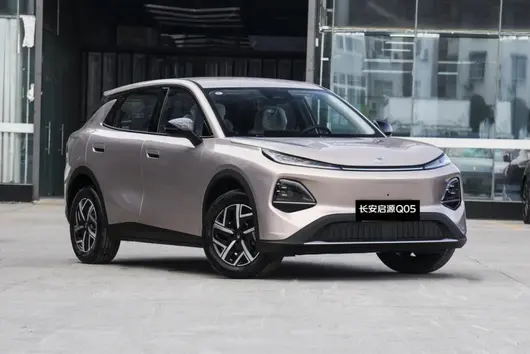

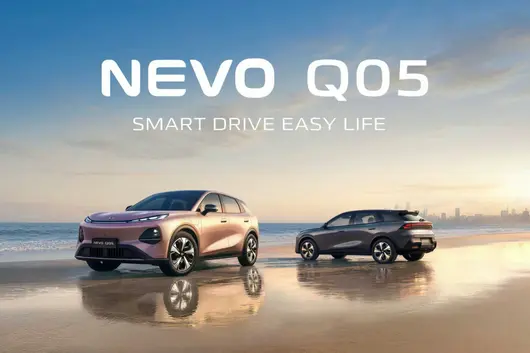
Recently, NEVO Q05 officially went on sale in Thailand, ranging from 629,900 to 709,900 Thai Baht, with a limited-time promotional price starting from 599,900, equivalent to approximately 120,000 to 140,000+ RMB.
Take a look, this car that starts at 79,900 in China, has a considerable premium when exported abroad.

We will analyze Changan's export strategy later, let's talk about the foundation first.
15,814 units domestically in a single month of April, this number is a real market vote, not a presentation PPT.
The roadmap ahead is even bigger! Uzbekistan in June, Indonesia and Central/South America in August, Europe in October.
An EV compact SUV under 100,000, wanting to conquer the European market, quite bold.
Why can it sell well domestically?

120kW motor paired with a 51.9 kWh CATL battery, CLTC range 462 km, 3C fast charging adds 120 km in 15 minutes, also includes 6.6kW external discharge, this configuration forms a certain dominance advantage in the 70,000 to 100,000 price range.
0 to 100 km/h acceleration takes 8.2 seconds, don't complain it's slow, do you need a supercar start to take a family of three to the supermarket? Enough for home commuting scenarios, those seeking performance thrill go elsewhere.
Body dimensions 4435x1855x1600 mm, wheelbase 2735 mm, drag coefficient as low as 0.265Cd, Digital Intelligence Wing 2.0 exterior, horizontal DRL paired with closed grille and LED headlights on both sides, visibility on the road is considered up to standard.

Wild Green, Flowing Gold Purple, Moonlight Silver, three colors, everyone should prepare the budget before choosing colors.
Speaking of interior, 14.6-inch central control screen paired with 10.17-inch LCD instrument cluster, TSMC Dimensity P1 Ultra 4nm chip as the base, 24GB RAM, system smoothness is supported by hardware foundation, daily touch rarely lags.
540L trunk plus 90L underfloor hidden compartment, rear seats folded expandable to 1380L, theoretically enough for weekend camping hauling.
Supports CarPlay and HiCar, can also link with Haier home appliances, the function of remotely turning on home AC during the drive, how rigid this need is, everyone think it over before deciding.

Real owner feedback cannot be skipped, this is the part dealers won't tell you actively.
Infotainment system occasionally black screens and automatically recovers after about one minute, specific reason official has not given clear explanation, black screen suddenly while driving on the road, experience cannot be called pleasant.
Chassis suspension tuning is soft, cornering roll feel is obvious, slight seasickness feel on bumpy roads, this is a rule-based issue consistently reported by multiple owners, not an isolated case.

All trims have no steering wheel heating, no HUD head-up display, driver seat has no memory, couple takes turns driving, every time entering car must readjust seat position, after three years waist muscles can get worked out.
Highway wind noise control is average, noise is obvious when speed limit 100 km/h.
Infotainment app ecosystem is somewhat closed, downloadable software is limited, users who like to tinker with third-party apps will hit boundaries.
These are things said by people who spent real money to buy the car, take note.
This move in Thailand, a detail many media did not analyze thoroughly.
NEVO Q05 is not simple export trade, it is local production in Rayong Province, Changan Thailand factory has invested over 10 billion Thai Baht, Q05 is the second locally assembled model.

Local production means avoiding high import tariffs, means supply chain stability and localized after-sales response speed, this is the true fundamental base to stand firmly overseas, much more solid than just shouting sales targets.
In the Thailand battlefield, BYD Yuan UP (called ATTO 2 overseas) brand penetration is quite deep, Leapmotor B10 pricing tactics are fierce, there are also Thailand-specific models like Jaecoo 5 EV defending.
Where is Q05's differentiation card?
Space advantage brought by 2735 mm wheelbase is persuasive in same class, 3C fast charging belongs to opening move in SE Asia market where charger density is not high, assisted driving with LiDAR still has scarcity in this price range.

Shortcomings are also direct, brand name recognition in Thailand has limited accumulation time, service outlets are still being laid out, local reputation settlement needs time, these three product strengths cannot be made up, can't rush.
Follow-up October to tackle Europe, that barrier regarding safety regulations, charging standards, localization certification requirements are far higher than Southeast Asia, this is the real hard battle, worth continued attention.
Folks preparing to buy domestically now, 74,900 to 104,900 fixed price plus trade-in subsidy, combination of space and configuration downsizing has competitiveness in same price range.

Remember three things before buying!!!
First is range shrinkage in Northern winter is a common EV disease, Q05 also needs to leave margin.
Second is chassis is soft, make sure to test drive on bumpy roads for at least 15 minutes before buying.
Third is infotainment ecosystem is closed, people who like to tinker with third-party software should think carefully before deciding.
This matter of going out, behind it is the entire Chinese supply chain validating itself.
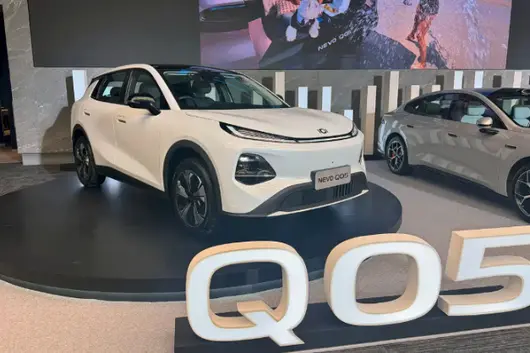

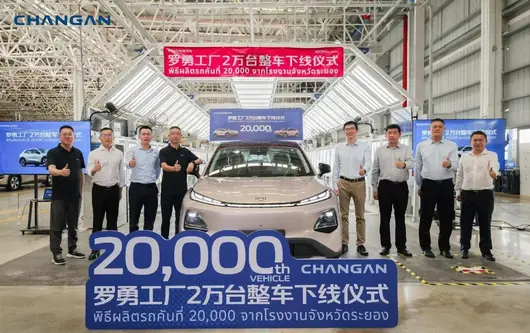
On June 9, Changan Automobile's Thailand Rayong Factory welcomed a crucial milestone in its development journey. The factory's 20,000th vehicle successfully went off the line, with the all-new Qiyuan Q05 (overseas name NEVO Q05) emerging as the undisputed main model. This achievement not only confirms the strong production capacity and market recognition of this overseas factory but also signifies Changan Automobile has formally completed the key transition from single-product exports to full industry chain globalization, writing a brilliant answer for Chinese new energy vehicles to deeply cultivate the Southeast Asian market.

As Changan's first overseas new energy vehicle manufacturing base, the Rayong Factory is located in the core area of Thailand's Eastern Economic Corridor. Since officially starting production in May 2025, it has always adhered to the construction philosophy of green and intelligent manufacturing, building a highly competitive modern car enterprise in Southeast Asia. The factory sets up five intelligent workshops: welding, coating, final assembly, engine, and battery assembly. The automation rate of core quality control workstations is as high as 90%, fully landing mature Chinese intelligent manufacturing standards overseas to ensure the quality level of every complete vehicle.
Now, the Rayong Factory has grown into Changan's manufacturing hub in Southeast Asia, a global right-hand drive vehicle supply base, and an overseas spare parts center. It can achieve localized production of multiple popular right-hand drive models such as Avatr 11/12, Deepal S05/S07, and Qiyuan Q05, building an integrated global service system of production, sales, and after-sales. Regarding capacity, the factory's first phase plans for an annual output of 100,000 units, with sufficient space for future expansion, potentially rising to a maximum of 200,000 units, enough to continuously meet the consumption demand of the Southeast Asian and surrounding markets.
Relying on the factory's localization advantages, the main model Qiyuan Q05 performed very brightly in the Thailand market. The car officially landed in the Thailand market this May. Within just three days of launch, orders exceeded 3,000 units, quickly gaining favor from local consumers with outstanding product strength. The hot sales of Qiyuan Q05 reflect from the side that Changan precisely grasped Southeast Asian user travel needs, and also allowed the Rayong Factory's capacity value to be fully released.
From production start to 20,000 complete vehicles going off the line, in just over a year, the Rayong Factory submitted an excellent scorecard. It is not only an important fulcrum of Changan's globalization strategy but also a microcosm of the Chinese automotive industry going global. In the future, Changan Automobile will continue to rely on overseas manufacturing bases, continuously output high-quality new energy products and advanced manufacturing technologies, constantly broadening the development landscape of Chinese car companies in the global market.

You probably didn't expect that, right?!
A mass-market EV with monthly sales exceeding 15,000 is currently exporting as a global car.
Recently, Changan NEVO Q05 was officially launched in Thailand. This car, known as Qiyuan Q05 domestically, is priced in Thailand from 629,900 to 709,900 Thai Baht, and there is even an early bird price, slashed down to as low as 599,900.
Converted to RMB, it's approximately 120,000, significantly higher than domestic prices; this premium covers the cost of the brand's overseas expansion.

Looking ahead, it enters Uzbekistan in June this year, Indonesia and Central & South America in August, and Europe in October. Changan is using this urban pure electric SUV, which sold 15,814 units in April alone, as a hero product for its global layout, taking quite determined steps.
Let's first talk about the domestic confidence. The Qiyuan Q05 manages to maintain this monthly sales figure thanks to a solid logic.
Within the 100,000 price range, configurations that usually cost 20,000 to 30,000 more are packed in. Buying a car isn't about comparing spec sheets, it's about what you actually get for the same money.

Regarding space, let's clarify first.
The wheelbase is 2,735 mm, and the overall body length is only 4,435 mm. This ratio is considered aggressive in its class, meaning everything possible for passengers has been allocated.
A 1.78-meter person sitting in the back seat finds the legroom truly comfortable, not just barely enough.

The trunk is 540 liters, with an additional 90-liter underfloor storage compartment. With the rear seats folded down, it reaches 1,380 liters. For a family of three going out for the weekend, just throw the gear in the back. The headache of luggage and trunk fighting for space is basically solved.
Putting 3C fast charging at this price point is a true killer move. Stop at a highway service area to charge for 15 minutes, and the range refills by 120 km. Eat a bowl of noodles, drink a coffee, and you can continue driving when you're done.

This car also has a 6.6 kW external discharge function. It can power appliances for camping, provide emergency charging for other cars, and can also serve as a mobile charging station.
There are very few cars at this price point that can achieve fast charging and external discharge simultaneously.
Let's clarify the LiDAR situation specifically. The Ultra+ version is equipped with LiDAR, which is much more stable than a pure vision solution in low light and rain/fog conditions, and there is a perceptible difference in the smoothness of highway following.

But if you buy the entry-level version, this advantage is gone; the entry version is standard L2 level.
Consumers need to think clearly when choosing; not every Q05 comes with LiDAR across the lineup, and the configuration gap between versions is real.
We cannot avoid the owners' complaints either.
The entire lineup lacks heat pump air conditioning; in winter, the heater relies on PTC heating, causing energy consumption to skyrocket by 30% to 40%. Suzhou owners tested it, and the 506 version only achieves about 350 km in winter. Owners in northern sub-zero regions need more mental preparation, as actual range is generally between 250 and 300 km.

This point is not a small issue for users in Northeast or Northwest China; it is a real purchase threshold.
Tire and wind noise exist at high speeds, becoming obvious over 120 km/h. Hard plastic interior is a normal configuration for this price range, but those switching from Japanese fuel cars will feel a drop-off in the first week.
The steering wheel does not have heating, which is an oversight for northern winters. The Max version does not have automatic parking; in the 100,000 range, this is already a minority. Additionally, not all phone brands are compatible with the Bluetooth key, and voice commands occasionally stutter.
Adding these complaints together, you can understand why some owners feel the spec sheet looks substantial, but there are always some details that make you sigh when using it.

Entering Thailand, the competition has changed.
BYD Atto 2 and Leapmotor B10 are old rivals. Jaecoo 5 EV is a Southeast Asia exclusive product. Toyota and Honda's fuel lineup still firmly holds the mainstream price range.
NEVO Q05's package here is large space, 3C fast charging, LiDAR. Displayed at this price point, it is indeed eye-catching.
When Thai consumers face a new brand, the first question in their minds isn't whether the specs are enough, but where to get it fixed if it breaks, how long to wait for parts, and whether the service is reliable.
This trust cannot be answered by a product sheet; it must be built up bit by bit over time and through network density.

Changan has already achieved local production at its Rayong factory in Thailand. The NEVO Q05 did not come over as a complete vehicle from overseas. Local manufacturing has advantages in price and delivery, and the foundation for future radiation to right-hand drive markets around Southeast Asia has also been laid.
At the warranty level, there is a lifetime warranty on the three-electric systems, a 6-year or 150,000 km warranty on the whole vehicle, and battery replacement (not repair) if degradation exceeds 30%.
This policy in overseas markets uses promises to reduce user purchase risk perception; it is also one of the ways Changan can build trust when brand awareness is not yet established.
Thailand is the country with the highest new energy vehicle penetration rate in Southeast Asia. In 2025, the penetration rate has already exceeded 15%, and the market is still in the expansion phase. The window is open, but it won't wait forever.
Product competitiveness is strong, and the manufacturing system is already in place. The next real test is whether the dealer network can be densely covered, whether the service experience can be stable, and whether the name Changan NEVO can slowly become a reliable choice in the hearts of Southeast Asian families.
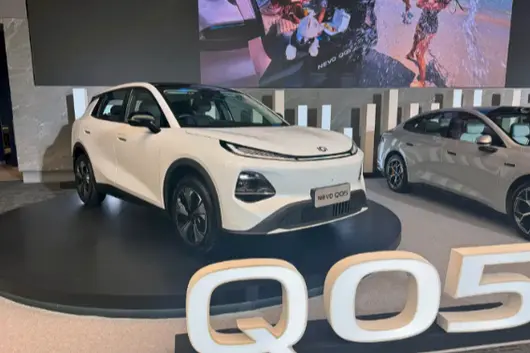

Changan Qiyuan New Q05 and Leapmotor A10 type cars, their meaning exists, in my view, simply is to let families with limited budgets can also enjoy the fun brought by technology. At present, looking at it, 70,000+ budget you can buy their mid-spec versions, Changan Qiyuan New Q05 2026 Model 405 Max, Leapmotor A10 2026 Model 505 Comfort Edition, currently these two configurations terminal price is both 70,000+, actual on-the-road price is also very similar. Finally choose who is better? This question definitely still needs in-depth comparison to get the answer.

Buy pure electric car with a few ten thousand yuan, solid and reliable I think is the first element, just like buying petrol car needs to start engine, transmission reliable options, electric car definitely also needs to choose big factory battery, so which of these two SUVs fits?
 (Changan Qiyuan New Q05)
 (Leapmotor A10)
Changan Qiyuan New Q05 side is full series standard equipped with CATL cells + Golden Bell 2.0 3C Fast Charging Battery, truly first-tier battery manufacturer, and still is industry giant, technology, reputation are both good, details also better, equipped with underbody protection plate further protect battery reduce collision risks. Leapmotor A10 is then second-tier brand, Gotion/Jiangsu Zhengli cells cross-used, no underbody protection plate, cost lower naturally can give more range. So can see, under price similar situation Changan Qiyuan New Q05 full charge range is 405km, Leapmotor A10 is 505km, difference 100km, means charging frequency will have difference. This also suggests Leapmotor A10 just look at 505 version, because 403 version adopts relatively simple air cooling technology, not as good as Changan Qiyuan New Q05 405km direct cooling thermal management efficient, not as good as two models high-spec version liquid cooling effect, so looking at this, Changan Qiyuan New Q05 safety is still more reassuring.


This price range pure electric cars, basic attribute is commuting, although on power requirements not high, but traffic light start want to be one step faster, overtaking want to be more efficient and safe, power still cannot be ignored. Changan Qiyuan New Q05 equipped with 120kW front mounted motor, can bring 8.9 seconds 0-100 acceleration results, moderate; Leapmotor A10 is 90kW front mounted motor, 0-100 acceleration 10.6 seconds, this is pure commuting car level, daily travel want slightly 'faster', Changan Qiyuan New Q05 is still more powerful.
 (Changan Qiyuan New Q05)
 (Leapmotor A10)
Budget to 70-80 thousand, on car requirements cannot just stay on 'tool' attribute, driving and riding experience also is must focus point. Benefiting from class advantage, Changan Qiyuan New Q05 length-width-height 4435x1855x1600mm, wheelbase 2735mm, relative to Leapmotor A10 length-width-height 4270x1810x1635mm, wheelbase 2605mm, advantage obvious. Colleague height 1.78 meters, weight 79kg, separately sit into both cars rear seats, Changan Qiyuan New Q05 leg remaining space over 2 fists, head about 1 fist; while Leapmotor A10 leg remaining 1 fist 4 fingers, head is also about 1 fist, can discover, Changan Qiyuan New Q05 passenger space relatively spacious, both can satisfy daily commuting pick up kids, holiday long distance tourism, family members can also better stretch body.
 (Leapmotor A10, Steering Wheel Heating)
 (Changan Qiyuan New Q05 Rear Seat Air Vents)
Also from driving and riding experience perspective, under equal price, Leapmotor A10 only equipped with driver electric adjustment, manual AC, front seat heating etc. conventional functions, indeed is just commuting car conventional level, but it also has steering wheel heating and panoramic sunroof, better than general commuting cars. Changan Qiyuan New Q05 side, is then plus automatic AC + rear seat vents, driver ventilation/heating/massage, second row seat back angle adjustment, exterior speaker etc. functions, provided comfort experience, emotional value will be better.


As for cabin and driving assistance, 70,000+ price both sides are conventional performance, just part functions not same. Changan Qiyuan New Q05 cabin plus has CarLink, CarPlay, Honor Link and Visible Content Voice Control functions, and has Karaoke function, below also links to mobile phone wireless charging. At same time two models also both support L2 level combined assisted driving, but Leapmotor A10 plus automatic parking assistance, therefore also count as each having advantages. However, budget sufficient, they also have LiDAR version selectable, so this aspect basically is evenly matched.


Comparison Summary:
Comprehensive view, under price similar situation, Changan Qiyuan New Q05 main highlights are Central SOE backing, and is global model, already landed in Thailand, and will go global. Specific to product, its battery comes from first-tier big brand, performance, space advantage obvious, also overall tech comfort configuration, cabin atmosphere all better; Leapmotor A10 highlights is same price gives longer range, plus some tech functions, but if budget slightly higher, Changan Qiyuan New Q05 also has long range version selectable, so Leapmotor A10 advantage more still in price.
So if just commuting, actually these two models performance are both good, are currently market best-sellers, but if you want satisfy daily commuting travel at same time, also want consider family car use, Changan Qiyuan New Q05 obviously more worth considering, also CATL as battery industry giant, its reliability and stability more worth trusting, more suitable for long-termists, so how will you choose?

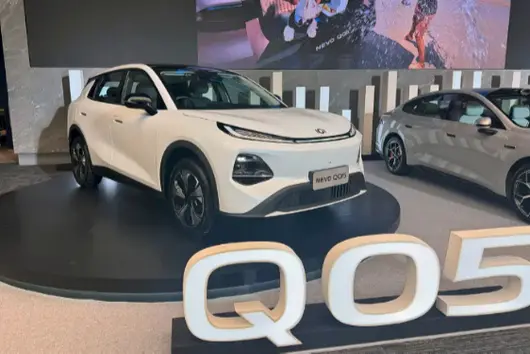
Recently, we learned from official sources that Changan Qiyuan will fully enter the Thai market on May 28. The brand will showcase its entire lineup collectively in overseas markets, and the major launch of the all-new Q05 will also make its overseas debut.

It is reported that NEVO Q05 is the overseas version of Changan Qiyuan Q05. Following the NEVO Q05 launch in Thailand on May 28, NEVO will accelerate its expansion from China to Southeast Asia, Central Asia, Europe, and more global markets. This June, NEVO will enter the Uzbekistan market; in August, it will enter relevant markets in Indonesia and Central and South America; in October, it will further enter relevant countries and regions in Europe to enhance global competitiveness.

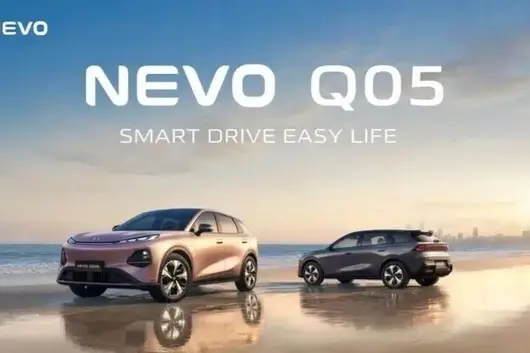

In recent days, the Changan NEVO Q05 officially went on sale in Thailand, starting at 629,900 THB, top trim at 709,900 THB, purchases before June 30 can be squeezed to a limited-time promotional price of 599,900 to 679,900 THB.
This pricing strategy directly undercuts the Leapmotor B10. The latter's Thailand version starts at 688,000 THB and reaches 788,000 THB for the top trim. With the same 2735mm wheelbase, the NEVO Q05 is nearly 100,000 THB cheaper, securing a clear price advantage on paper.
Domestic April single month sales of 15,814 units serve as endorsement, this cost-performance logic has been validated at the user level.

This launch also marks an acceleration of Changan's globalization process, entering Uzbekistan in June, entering Indonesia and Central/South America in August, targeting Europe in October, NEVO Q05 is the pioneer model on this road.
The exterior follows the Changan Qiyuan Digital Intelligence Flying Wing 2.0 style, front fascia full-width DRLs plus closed grille, visual identity is medium to upper tier in its class.
Pine Forest Green, Flowing Gold Purple, Moonlight Silver, Cloud Shadow Gray, Cloud Brocade White, five color schemes, young buyers have options.

What's truly worth looking into is the 0.265Cd drag coefficient, this number isn't just for PPTs, low drag directly affects actual range under high-speed conditions. Thailand highway speed limit is 120km/h, the value of this coefficient is much greater than city road scenarios.
Semi-hidden door handles look good, but the charging interface placement on the front fender, whether plugging the charging gun is convenient in daily RHD markets needs actual use to conclude, currently pending verification.

No surprises here regarding space. 4435mm length, 1855mm width, 2735mm wheelbase, 540L trunk plus 90L underfloor storage compartment, rear seats fold flat to expand to 1380L. 1600mm vehicle height allows entering underground garages without lowering head to shift gears.
For a family weekend outing to Thailand's beaches, these dimensions are practical enough.
Interior wraparound cockpit design, 14.6-inch center screen paired with 10.17-inch full liquid crystal instrument, CarPlay and HiCar both supported.
As for linking Haier home appliances, among local Thailand users, the ratio using this function is questionable, no rush to write it into the advantages list.

The powertrain is a 120kW permanent magnet synchronous motor front drive, 0-100 km/h in 8.2 seconds.
It starts smoothly at traffic lights with no strong push-back sensation, suits daily commute and highway cruising, not built for spirited driving.
The battery uses 51.9 kWh CATL LFP, NEDC range 462 km, supports 3C fast charge, 15 minutes charging adds 120 km range.

Off the record, queuing at charging piles, staring at the car next to it charging slowly at 1.5C speed, baking in the sun waiting, that feeling is more agonizing than rush hour toll congestion.
So 3C is really not a detail in this price segment, many manufacturers are now settling buyers with 1.5C to 2C.

6.6kW V2L external discharge function is also worth mentioning, with conversion equipment can power outdoor devices, in Southeast Asia camping trend it is a configuration that is truly useful.
Here is an information gap that needs to be faced directly. Thailand version NEVO Q05 equipped with L2 level assisted driving, includes adaptive cruise, lane keep and active braking AEB, functions basically meet standards.

While domestic version new Qiyuan Q05 provides high-level assisted driving solution equipped with LiDAR, the two exist a significant generational gap.
What trade-offs made for Thailand version, behind is regulation limits or cost factors, official currently no transparent explanation, this difference worth aligning expectations.
At the competitor level cannot just look at paper. BYD ATTO 2 benefits from local factory support in Thailand, brand equity and service network density are far more solid than Changan, this moat cannot be caught up in the short term.
Jaecoo 5 EV follows a Thailand-exclusive deep-dive strategy, localization is also an advantage.

NEVO Q05 indeed announced Rayong factory localization production plan. If this plan lands as scheduled, costs and price stability will look much more favorable. But before landing, import tariffs are real variables, price competitiveness sustainability is questionable.
Product strength has real advantages in this price segment. Large space, 3C fast charge, 462 km range combined together, no obvious weaknesses.
What truly determines how far NEVO Q05 can go in Thailand is not launch data, but localization after-sales service response speed and the long-term stability of delivery quality.
This will be clear once owner feedback comes out next year.

Recently, Changan Automobile's strategic model for the Southeast Asian market, Changan Qiyuan NEVO Q05, was officially launched in Thailand. As an important supporting partner, Sailun Group provided original equipment tire solutions for this model. This pairing is not only a combination of two high-quality products but also marks that Chinese vehicle and core parts enterprises are moving from "going it alone" to "building an ecosystem together", with both parties jointly building an overseas "ecosystem" and taking a solid step in promoting the global layout of China's automobile industry chain.

Cross-border Collaborative Supply, Building Overseas Industrial Ecosystem
Changan Qiyuan NEVO Q05 is produced by Changan Thailand Base, and is a key move in Changan's new energy vehicle global layout. Since its debut at the Bangkok International Motor Show, it has attracted much attention with its efficient hybrid system and intelligent configurations.

What is worth noting is that this pairing achieved true "overseas collaboration". Relying on its Vietnam production base, Sailun formed regional linkage with Changan Thailand Base, efficiently responding to localization production needs. This cross-border collaborative supply model of "Vietnam Tires + Thailand Cars" effectively improved the resilience and response speed of the supply chain, becoming a vivid practice of China's automobile industry chain co-building an ecosystem and collaborating overseas.
Custom-Tailored Performance Benchmark, Unafraid of Southeast Asia's Harsh Road Conditions
As a key carrier of vehicle performance, tires directly affect energy consumption and driving experience. In response to the severe challenges of high temperature, heavy rainfall, and complex road conditions in Southeast Asia, Sailun has custom-designed high-performance tires with the specification 225/60R17 for NEVO Q05.

This tire achieves a precise balance between rolling resistance, noise performance, and traction stability. The low rolling resistance feature helps the hybrid system further save energy and reduce consumption, while excellent grip and noise performance ensure safety and comfort during rainy season driving, enabling the vehicle to achieve a better solution in energy saving performance and driving quality.

Full Chain Deep Binding, Consolidating New Energy Support Map
From the Bangkok Motor Show debut to the official launch in Thailand, Sailun and Changan Automobile completed a key leap from product development to market landing, connecting the full chain of technology R&D, supporting production, and overseas implementation.
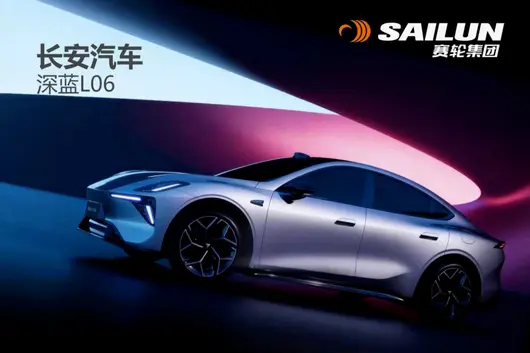
In fact, this is not the first time the two parties have joined hands. For a long time, Sailun and Changan Automobile have maintained a deep, stable, and comprehensive strategic cooperation, successfully providing supporting services for multiple main new energy vehicle models such as Changan Lumin, Deep Blue L06, NEVO Q05, etc. This deep binding between vehicle enterprises and core supply chain partners is continuously improving the terminal competitiveness and market response efficiency of products, becoming an important support for China's automobile industry chain to capture markets in the global market.

This partnership to land in Thailand with Changan Qiyuan is another important achievement of Sailun's global layout and new energy supporting business. In the future, Sailun will continue to deepen the R&D of new energy tire technology, with hardcore product strength and global service capabilities, helping Chinese intelligent manufacturing continue to shine on the world stage.

Written by | Zhao Shi
Like suddenly breaking through barriers, Changan Qiyuan's growth momentum this year is particularly strong. From January to May, cumulative sales of Changan Qiyuan exceeded 132,000 units, up 85% year-on-year, with May sales reaching 34,528 units. Against the backdrop of a double-digit year-on-year decline in the domestic new energy market, this performance stands out remarkably.
The new Qiyuan Q05 (hereinafter referred to as Qiyuan Q05) deserves special mention. May sales exceeded 19,300 units, launching a hit mode with sales breaking the 10,000 unit mark for 3 consecutive months—March: Q05 delivered 12,600 units; April: surged to 16,800 units, topping the list of domestic compact pure electric SUV sales.

▲ May 28, New Qiyuan Q05 Launches in Thailand
Not only exploding orders domestically, the Qiyuan Q05 also rose to fame quickly in the Southeast Asian market, Changan Qiyuan's first entry. On May 28, Qiyuan Q05 (NEVO Q05) launched in Thailand, and within just 3 days, orders broke through 3,000 units.
This means Changan's narrative of "anchoring on global mainstream products to conquer overseas markets" has received its first official certification on the Qiyuan brand.
Central Enterprises Going Global, The Real Stature
Don't look at the Thai market as small, it is a realm that Chinese auto companies must compete for!
Thailand is located in the center of Southeast Asia. Relying on its unique port hub advantages, it not only directly radiates the ASEAN market of 600 million people but can also conveniently cover right-hand drive markets such as Australia and the UK.
And Rayong Province, as Thailand's most mature manufacturing base, can be called a "Global Accelerator" tailored for Chinese auto companies. Thailand's largest deep-water port, Laem Chabang Port, is located to its north. From shipping from Rayong factories to goods finally reaching shelves in Australia, the entire process takes about 5-6 weeks if everything goes smoothly.

Interestingly, although the Chinese new energy brands you can think of, almost all chose Thailand as their first stop for going global, the Chinese auto companies that truly took root in Thailand, built factories locally, and officially started production are only 7 companies including BYD, Changan, Great Wall, Chery, etc. In this list, Changan is the only central enterprise-level company.
It is worth noting that unlike private enterprises with flexible mechanisms, Changan, as a central enterprise, requires stricter approval and risk assessment for heavy asset investment and factory building overseas. In other words, private enterprises going global is a market behavior, while Changan going global is a national strategy. Its success or failure directly reflects the competitiveness of Chinese manufacturing in the global industrial chain.
This is the real weight of central enterprises going global!
Top-level strategy also determines that Changan going global is not simply selling cars overseas, but must follow the new model of "base going global, ecosystem going global" which reflects the overall output strength of China's manufacturing industrial chain and has greater long-term value.
Taking the two overseas factories already in production as examples:
Changan Thailand Rayong Factory, initial annual capacity of 100,000 units, local part localization rate over 50%, future capacity will expand to 200,000 units, localization rate will exceed 90%.
Changan Brazil factory officially started production in March this year. First phase planned annual capacity of 90,000 units, total investment 8 billion Reais (about $1.52 billion). Brazil is not only the largest economy in South America but also a strategic anchor radiating the entire continent, and has been promoted to China's second largest export destination. Building a factory here is not only a transfer of capacity but also a systematic output of Chinese manufacturing, technology, supply chain, and services.
Worth noting is, although the Changan Europe factory is not settled yet, from two key signals—Spanish Prime Minister Sanchez specially met Changan Chairman Zhu Rong during his visit to China in April, releasing cooperation sincerity in a high profile, and the schedule of Qiyuan Q05 launching in Europe in the fourth quarter, the time for Changan's official announcement is not far off.
In summary, we can clearly see Changan's going global path: using bases as fulcrums, using ecosystems as links, with Southeast Asia, South America, and Europe narrating in synergy. The intention is clear—what Changan wants is not only to "go out" but also to quickly "go up".
Changan "Core Lineage", Carry the Flag and Set Out
For Changan going global, the key to determining its success or failure is Qiyuan going global.
Some might refute me, Changan has three major new energy brands: Qiyuan, Deepal, Avatr, why emphasize the importance of Qiyuan going global in particular?
The most fundamental reason is just one, Qiyuan is Changan Auto's main brand new energy, its status is equivalent to BYD, Geely Galaxy, it can be simply understood as Changan New Energy's only "core force".
From the perspective of enterprise attributes, Deepal and Avatr both belong to central enterprise mixed-ownership reform pilot enterprises, with external capital and market-oriented shareholders participating behind them. Going global decisions need to consider the balance of interests among multiple parties.
And Qiyuan, from equity to strategy, from brand to product, is completely controlled and led by Changan—its success or failure cannot be explained by any external reason, 100% represents Changan's true capability.
So, Qiyuan going global is not an ordinary overseas market expansion, but represents central enterprises, represents Chinese manufacturing to set standards on the global stage.
In this battle, Qiyuan cannot lose, nor can it afford to lose.

Having clarified the strategic essence of Qiyuan going global, we now look at its specific operational logic:
At the technology level, Qiyuan achieved 100% self-research of core technologies, this point has an essential difference with Avatr which has extremely high "Huawei content", Deepal with high-level assisted driving externally connected to Huawei, and other brands with mixed technology.
At the product level, Qiyuan started developing "global mainstream products" adaptable globally from the product definition stage—not building the car first then fixing and selling abroad, but considering global market needs synchronously at the blueprint stage: left-hand drive and right-hand drive, different charging standards, regulatory certification for each country, localization language and ecosystem services, etc.
The new Qiyuan Q05 is undoubtedly the first successful case under this logic, started deliveries domestically at the beginning of the year, launched in Thailand in May with explosion of orders, entered Uzbekistan in June, entered Central and South American market in August, reached Europe in October—one car, sold to three continents within a year, this is the typical "global mainstream product" global strategy.
At the brand level, Qiyuan's brand logos and model naming overseas are very standardized, for example, Qiyuan Q05 is uniformly called NEVO 05 in Thailand.
Behind this, hides Changan Qiyuan's clear brand design logic: with unified brand image + standardized product naming, conveying a clear signal to overseas markets: NEVO is Changan's new energy, Chinese technology standards are NEVO's global standards.
The deeper significance lies in this replicable, output-able, rootable global brand system, what the world remembers is not a Chinese car, but a Chinese brand.
Final Thoughts
For Chinese brands going global, it is not a choice question, but a must-answer question.
On one hand, the rapidly growing overseas market and the fierce fighting under domestic zero-sum game stock form a sharp contrast. Data shows, from January to April this year, cumulative exports of Chinese new energy vehicles reached 1.38 million units, up 120% year-on-year.
On the other hand, Chinese auto companies, Chinese brands need to test their systematic strength through global competition. Strong technology does not equal strong brand, only brands can cross the cycle.
For Changan Auto, Qiyuan is the world-class brand it strives with all its might to put on the global stage no matter what. This is Changan's mission as a central enterprise, and also Qiyuan's mission as the core lineage of a central enterprise.
At this stage, Chinese people know and choose Qiyuan because of Changan, but with the comprehensive landing of Changan's "base going global, ecosystem going global" strategy, this logic will be completely reversed—in the near future, global users will re-understand Changan because of Qiyuan, because of NEVO as a calling card.
Copyright Statement: This article/video is Xianwai Bang exclusive original manuscript, please do not reprint without authorization
© 2024 Bitauto.com. All Rights Reserved.
Bitauto (www.yiche.com and www.bitauto.com) is one of the most visited automotive websites in China. We provide detailed info on Chinese car brands available in your area. Please note that the information provided on this website is based on publicly available data and is for reference only. It may not be fully updated or accurate at all times.

Help us improve our website


