

HomeChip

Search History
Popular Searches
Dealer Login / Sign Up


Penulis| Tu Yanping
Penyunting| Zhang Nan
Reka Bentuk| Jing Jie
Pada September tahun ini, pejabat Guangzhou GlobalFoundries dibuka. Melalui kerjasama dengan kilang wafer tempatan China, Guangzhou Zengxin Technology, syarikat ini sedang meluaskan perkhidmatan yang diarahkan kepada pelanggan China ke bahagian pengilangan.
Titik baharu ini adalah sebahagian daripada rancangan global GlobalFoundries.
GlobalFoundries (GlobalFoundries, singkatan GF) adalah salah satu syarikat pengilangan wafer utama di dunia, beribu pejabat di negeri New York, Amerika Syarikat, ditubuhkan bersama oleh dana kekayaan kedaulatan UAE, Mubadala (Mubadala) dan AMD pada tahun 2009.
Perusahaan utamanya ialah menyediakan proses pembuatan chip dan perkhidmatan pengilangan wafer kepada pelanggan. Layout teknologi merangkumi radio frekuensi, fotonik silikon, pengurusan kuasa, pengiraan berkuasa rendah, dan melayani pasaran automotif, peranti mudah alih pintar, IoT perindustrian dan pusat data.
Data dari agensi penyelidikan TrendForce menunjukkan bahawa GlobalFoundries adalah pengilang wafer kelima terbesar di dunia dan yang pertama terbesar di Amerika Syarikat. Pada suku kedua 2026, pengelasan pendapatan GlobalFoundries dalam sepuluh pengilang wafer teratas dunia adalah kelima, di belakang TSMC, Samsung, SMIC dan UMC.
Rangkaian pengilangan GlobalFoundries merentasi Amerika, Eropah dan Asia: Malta, New York; Burlington, Vermont; Dresden, Jerman; dan Singapura membentuk pangkalan pengilangan wafer utamanya; Pusat sokongan pengilangan di Bangalore, India dan Penang, Malaysia menyokong kilang di pelbagai tempat melalui kejuruteraan jauh, analisis data dan pengoptimuman proses; Di China, syarikat memajukan keupayaan pengilangan dan penghantaran tempatan melalui kerjasama pengilangan dengan syarikat tempatan.

Dalam beberapa tahun kebelakangan ini, GlobalFoundries telah menambah pelaburan pembuatan di Amerika. Pada Jun 2025, syarikat mengumumkan pelan pelaburan AS yang diperluas, mencapai jumlah 160 bilion USD, merangkumi pengilangan semikonduktor, pakej canggih dan penyelidikan berkaitan.
Layout global memberi GlobalFoundries peluang untuk melayani pasaran yang berbeza, dan juga membolehkannya menghadapi persekitaran dasar dan keperluan rantaian bekalan yang berbeza di setiap tempat. Terutama di China, apabila pelanggan memilih pembekal, selain prestasi dan harga, mereka juga semakin memerhatikan di mana chip dihasilkan dan sama ada ia boleh dibekalkan secara jangka panjang.
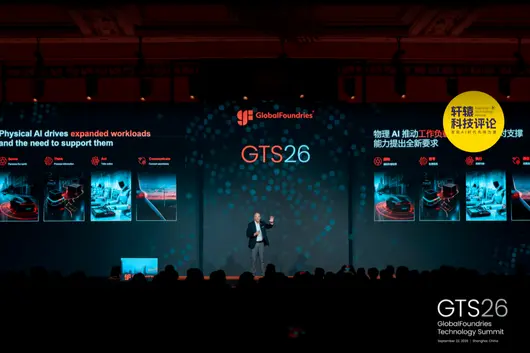
"Pasaran China pasti merupakan antara pasaran yang paling penting dan kami paling perhatikan." Pada mesyuarat komunikasi media China di Puncak Teknologi GlobalFoundries 2026 yang diadakan pada 22 September, Presiden Wilayah China GlobalFoundries, Hu Weiduo (Victor Hu), menyatakan bahawa, ramai proses yang kini diliputi dan akan diliputi oleh syarikat pada masa hadapan, sangat berkaitan dengan bidang berkaitan AI di China seperti automotif, perindustrian, komunikasi, dll.

12 tahun lalu, GlobalFoundries telah mula melabur di pasaran China, sekarang terdapat layout berkaitan di Shanghai, Wuhan, Beijing, Guangzhou dan tempat lain. Pembentukan pejabat Guangzhou dan kerjasama dengan Zengxin Technology adalah jaminan berterusan ke atas pasaran China.
Walau bagaimanapun, ini belum mencukupi untuk menjawab masalah pembangunan jangka panjang GlobalFoundries di China. Ia perlu menawarkan teknologi yang diterima oleh pelanggan, dan juga meyakinkan pelanggan bahawa terdapat pelan penghantaran yang boleh dilaksanakan secara berterusan di sebalik teknologi ini.
01
Peluang AI Tersembunyi Sekeliling Kapasiti Pengiraan
Apabila membincangkan chip AI, orang sering kali terfikirkan dahulu prosesor dan proses canggih. Yang lebih dipermasalahkan oleh GlobalFoundries adalah lain-lain bahagian yang menyokong pengoperasian prosesor yang efisien ini.

Menurut Timbalan Presiden Senior Perniagaan Fotonik dan Radio Frekuensi GlobalFoundries, Shankaran Janardhanan, dengan pengembangan saiz klastar AI, penyambung dan bekalan kuasa sedang menjadi kunci halangan. Selepas bilangan GPU meningkat, sama ada data dihantar dengan tepat pada masanya dan sama ada bekalan kuasa berkesan, akan mempengaruhi prestasi keseluruhan sistem secara langsung.
Dalam temubual, beliau menyebut bahawa industri sedang memacu evolusi kadar penghantaran laluan tunggal dari 200Gbps ke 400Gbps, pada masa yang sama mengurangkan tenaga pemindahan per bit. Menjawab keperluan ini, GlobalFoundries menyertai penyambung pantas dengan teknologi fotonik silikon dan silikon-germanium, dan terus melabur teknologi pengurusan kuasa dan pengintegrasian heterogen, berharap untuk memperbaiki kecekapan tenaga sistem dengan lebih lanjut.
Terdapat kiraan yang mudah disekat oleh metrik keupayaan pengiraan: walaupun prosesor mengira dengan laju, jika pemindahan data tidak mengikut, atau penyambung dan bekalan kuasa terlalu banyak kos, sistem masih sukar untuk melaksanakan prestasi sepenuhnya. Pertukaran foto-elektrik, penghantaran elektrik dan penyambung pantas mempunyai keperluan peranti masing-masing, dan juga memberikan ruang untuk proses istimewa beraksi.
Arah ini sedang menjadi genggaman penting GlobalFoundries untuk meraih pertumbuhan. Dalam pengumuman prestasi Sesi Kedua 2026, syarikat menyatakan bahawa keperluan pelanggan dan pendapatan untuk perkhidmatan seperti rangkaian optik pusat data AI terus meningkat. Pada Julai tahun yang sama, syarikat menyelesaikan akuisisi perkhidmatan integrasi penstabil voltan Photeon Technologies, meneruskan pengisian keupayaan bekalan kuasa untuk pusat data AI.
Dari segi keseluruhan operasi, GlobalFoundries mencapai pendapatan 1.786 bilion USD pada suku kedua, meningkat kira-kira 6% secara tahunan, dan meningkat kira-kira 9% secara suku; margin keuntungan kotor ialah 28.3%, lebih tinggi daripada 24.2% pada tempoh yang sama tahun lalu. Dihitung mengikut Piawaian Pelaporan Kewangan Antarabangsa (IFRS), keuntungan bersih ialah 167 juta USD, lebih rendah daripada 228 juta USD pada tempoh yang sama tahun lalu. Pendapatan dan margin keuntungan kotor suku kedua meningkat secara tahunan, tetapi keuntungan bersih IFRS menurun kira-kira 27% secara tahunan.
Angka-angka ini juga memberikan latar belakang untuk memahami pelaburan teknologi syarikat: GlobalFoundries perlu mengurus dengan baik operasi pengilangan sedia ada, dan juga mencari aplikasi baharu yang dapat mendatangkan lebih banyak keperluan. Penyambung, bekalan kuasa dan pengiraan tepi, adalah tempat di mana ia berharap untuk mengeluarkan nilai proses istimewa.
Walau bagaimanapun, kemajuan teknologi dalam operasi global masih perlu ditukar satu persatu kepada projek pelanggan pasaran China. Produk mana yang boleh digunakan, bagaimana pengesahan dapat dibuat, dan dari mana pengilangan, semuanya memerlukan perancangan khusus. Keperluan teknikal adalah hanya langkah pertama kerjasama.
02
MIPS Melengkapkan Keupayaan daripada Perisian ke Chip
Apabila AI memasuki automotif, robot dan peralatan perindustrian dari pusat data, masalah yang dihadapi oleh chip juga berubah. Satu keupayaan penting yang ditambah oleh GlobalFoundries untuk ini berasal dari MIPS.
MIPS adalah syarikat IP prosesor yang mempunyai lebih 40 tahun pengumpulan teknologi. Ia menyediakan pelanggan dengan reka bentuk boleh guna semula seperti teras prosesor, serta alat perisian yang berkaitan, pelanggan boleh membangunkan chip mereka sendiri berdasarkan ini. Sekarang, IP prosesor RISC-V, pengiraan AI dan penyelesaian tetapan khusus untuk aplikasi khusus, adalah fokus pembangunan bisnesnya.
Pada 14 Ogos 2025, GlobalFoundries menyelesaikan akuisisi ke atas MIPS, MIPS menjadi operasi di bawahnya, dan mengekalkan model lesen IP. Pada 2 Jun 2026, GlobalFoundries juga menyelesaikan akuisisi perkhidmatan penyelesaian IP prosesor ARC daripada Synopsys, mengintegrasikannya dengan MIPS, dan memperluaskan keupayaan prosesor, alat perisian dan reka bentuk khusus.
Menurut pengenalan MIPS pada mesyuarat komunikasi media ini, setelah mengintegrasikan ARC, syarikat telah menjadi pembekal IP RISC-V terbesar di dunia, pembuat IP prosesor kedua terbesar di dunia selepas Arm. Dalam sistem GlobalFoundries, MIPS memikul tugas menghubungkan reka bentuk prosesor, pembangunan perisian dan pengilangan chip.
Ini berkaitan rapat dengan keperluan AI fizikal yang dilihat oleh GlobalFoundries. Sebuah robot memerlukan pengesanan persekitaran sekeliling, membuat keputusan, memacu motor, dan bertukar maklumat dengan peralatan lain. Keperluan keupayaan pengiraan untuk tugas ini tidak sama, tetapi tindak balas masa nyata, penggunaan kuasa dan keselamatan adalah terjemah sepanjang masa.
Pengurus Besar MIPS Sameer Wasson merumuskan proses ini sebagai "Pengesanan—Penalaran—Pelaksanaan—Komunikasi". Baginya, AI fizikal akan memerlukan banyak keupayaan kecerdasan teragih, dan pelbagai keupayaan pemprosesan, pengesanan dan bekalan kuasa juga perlu bekerjasama dengan lebih rapat.

Platform kuasa rendah FDX, teknologi pengesanan dan penyambungan, serta proses pengurusan kuasa yang sedia ada oleh GlobalFoundries, boleh menyertai pelbagai bahagian di dalamnya. Penggunaan MIPS dan ARC membolehkan syarikat, di luar perkhidmatan proses dan pengilangan, mempertimbangkan beban kerja, IP prosesor, pembangunan perisian dan penghantaran chip akhir bersama pelanggan.
Sameer Wasson menyatakan bahawa lesen IP masih merupakan perniagaan penting MIPS, tetapi syarikat berharap untuk menyediakan penyelesaian teknologi full-stack dengan lebih lanjut, dan menjadikan chip khusus dan penghantaran pelanggan selepas litar sebagai arah perkembangan perniagaan.
Bagi syarikat yang ingin mengoptimumkan produk sendiri tetapi kekurangan pasukan pembangunan chip yang lengkap, perkhidmatan ini mempunyai daya tarikan praktikal. Mereka perlu membuat aplikasi berfungsi, dan dari perisian ke chip hingga ke pengeluaran massal, terdapat banyak kerja yang perlu disambungkan.
MIPS telah dilancarkan pada awal September tahun ini, dan pada mesyuarat komunikasi ini dikenalkan dengan tiga platform Acies, Actus dan Aegis, yang masing-masing diarahkan kepada AI inferens, pengendalian peristiwa masa nyata dan aplikasi kritikal keselamatan, cuba mengatur keupayaan perisian dan perkakasan sekeliling tugas khusus, supaya pelanggan boleh dengan lebih mudah menjalankan pembangunan dan pengesahan.
Walau bagaimanapun, penggabungan MIPS dengan perniagaan pengilangan wafer juga membawa satu hubungan yang perlu diuruskan dengan baik: semakin mendalam koordinasi dalaman, adakah pelanggan luar masih mempunyai ruang pilihan yang mencukupi?
Dalam menjawab soalan media mengenai hal ini, pihak MIPS menyatakan bahawa IP prosesor mereka mengekalkan independensi pengilangan, dan pelanggan boleh memilih rakan pengilangan lain.
MIPS perlu melayani pelanggan yang luas, manakala GlobalFoundries berharap untuk meraih lebih banyak perniagaan melalui koordinasi IP dan proses. Adakah pelanggan bersedia untuk menggunakan set gabungan ini, akhirnya bergantung kepada berapa banyak masa pembangunan yang dapat Jimat, berapa banyak penggunaan kuasa yang dapat diperbaiki, dan sama ada penghantaran itu lancar.
03
Dari Automotif ke Robot
GlobalFoundries menghargai pasaran China, yang sangat berkaitan dengan keperluan industri automotif di sini.
Timbalan Presiden Global GlobalFoundries, Faisal Saleem, dalam temubual menyatakan bahawa peningkatan keupayaan pengesanan automotif, perluasan fungsi perisian, evolusi arkitektur wilayah dan elektrifikasi, sedang membawa keperluan chip yang lebih kaya. Kamera dan radar memerlukan pengumpulan maklumat, chip rangkaian bertanggungjawab ke atas penghantaran, MCU menyertai pengawalan, chip pengurusan kuasa memikul tugas bekalan kuasa bahagian yang berbeza.

GlobalFoundries berharap untuk meliputi aplikasi ini dengan teknologi seperti pengiraan kuasa rendah dan pengurusan kuasa, dan melalui AutoPro menyediakan sokongan teknologi, pengilangan dan kualiti yang berkaitan, melaksanakan keperluan industri automotif ke dalam proses pembangunan dan pengurusan produk.
Chip automotif khususnya menguji kesabaran. Memasuki produk memerlukan pengesahan, selepas memasuki rantaian bekalan, ia juga perlu tahan terhadap penggunaan jangka panjang. Parameter proses dapat membantu pembekal mendapatkan peluang penilaian, keupayaan konsistensi kualiti, bekalan berterusan dan pemeliharaan, menentukan sejauh mana kerjasama dapat berjalan.
Arkitektur bekalan kuasa 48 volt adalah satu contoh. Faisal Saleem berpendapat, dengan peningkatan keperluan kuasa seperti ADAS, pengiraan tengah dan pengawal wilayah, evolusi sistem bekalan kuasa rendah kenderaan daripada 12 volt ke 48 volt mempunyai pendorong yang jelas, tetapi penukaran ini masih berada pada peringkat awal. Sistem 12 volt telah digunakan selama bertahun-tahun, pengeluar kenderaan yang berbeza dan model yang berbeza mempunyai irama penukaran mereka sendiri.
Oleh itu, pembekal tidak boleh hanya menatap satu arah teknologi baharu, tetapi juga perlu mengikut kitaran produk pelanggan. Melengkapi reka bentuk, pengesahan, kemudian secara beransur-ansur mengimport pengeluaran massal, barulah akan membentuk perniagaan sebenar.
Keupayaan yang dikumpul dalam bidang automotif juga boleh dilanjutkan ke robot.
Timbalan Presiden Senior Pengurusan dan Pengurusan Kilang Pengurusan Asia-Pasifik dan Singapura GlobalFoundries, Chen Yaoguang (Yew Kong Tan) menyatakan: Keupayaan kami sebenarnya sangat berkaitan dengan dunia AI fizikal. "Robot humanoid perlu berinteraksi dengan manusia dalam kehidupan harian, jadi keselamatan sangat penting. MCU yang kami perhatikan tidak hanya digunakan untuk kenderaan elektrik, tetapi juga untuk robot humanoid."

Menurut pengenalan pihak MIPS, terdapat pelanggan yang pada mulanya membangunkan produk untuk ADAS, kemudian mendapati produk berkaitan juga sesuai untuk robot. Keperluan umum pada pengesanan, kawalan masa nyata dan pemprosesan kuasa rendah, mewujudkan ruang untuk penggunaan semula teknologi antara kedua-dua aplikasi.
Ini memberikan peluang kepada GlobalFoundries untuk terus mengembangkan, dan juga menyoroti keperluan yang sama: setiap kali memasuki senario baharu, mesti melaksanakan kelebihan teknologi ke dalam produk pelanggan.
04
Akhirnya Mesti Terletak pada Penghantaran Tempatan
Perbincangan teknikal akhirnya akan kembali kepada satu masalah nyata: chip dihasilkan oleh siapa, di mana dihasilkan, dan berapa lama boleh dibekalkan?
Faisal Saleem menyatakan bahawa pelanggan ingin memiliki pelan bekalan global dan pelan bekalan tempatan serentak, keperluan lokalisasi elektronika automotif adalah khususnya jelas. Kerjasama GlobalFoundries dengan Zengxin Technology, adalah dalam menanggapi keperluan ini. Beliau juga menunjuk, pelanggan yang berbeza sepadan dengan pelan pengesahan dan pengilangan yang berbeza.
Dari sini dilihat, maksud pejabat Guangzhou adalah untuk menjadikan sokongan pengilangan dan kerjasama pelanggan lebih dekat. Apabila pelanggan menghadapi masalah, mereka memerlukan orang yang boleh berkomunikasi dengan cepat, memajukan projek, dan juga memerlukan pengesahan dan pengilangan yang jelas. Ini juga merupakan langkah penting dalam melaksanakan strategi GlobalFoundries "Di China, Untuk China".

Pengiktirafan terbuka GlobalFoundries terhadap kerjasama pembuatan China, mengandungi tiga jenis keperluan: menyediakan pilihan pengilangan tempatan untuk pelanggan China, menyediakan sokongan pengilangan asing untuk operasi antarabangsa pelanggan China, dan melayani pelanggan global yang memerlukan pembelian chip di China tempatan.
Tiga keperluan ini juga menjelaskan bahawa lokalisasi dan operasi global masih saling berkaitan. Syarikat China mungkin perlu memasuki pasaran luar negara, syarikat berbilang negara juga perlu melayani China dengan lebih mendalam. Semakin layout pengilangan boleh menyesuaikan keperluan berbeza ini, pembekal semakin mempunyai peluang untuk tinggal dalam pelan jangka panjang pelanggan.
Pada Februari tahun ini, pengumuman GlobalFoundries dengan Renesas memperluas kerjasama pengilangan, secara serentak mengandungi pertimbangan ini. Kedua-dua pihak menekankan penguatan pengeluaran semikonduktor AS, dan juga memasukkan kerjasama pengilangan Jerman, Singapura serta GlobalFoundries di China ke dalam layout. Sama kerjasama, menampung keperluan jaminan bekalan dari pelbagai daerah.
Tentu saja, perancangan perniagaan ini selalu perlu menghadapi sempadan dasar. GlobalFoundries dalam laporan tahunan 2025 telah menyenaraikan kawalan eksport, sekatan dan perubahan dasar perdagangan sebagai risiko perniagaan, dan menjelaskan bahawa faktor-faktor ini akan mempengaruhi rantaian bekalan dan strategi perniagaan. Pengilangan tempatan boleh memendekkan jarak bekalan, memperbaiki kecekapan respons, kerjasama khusus masih bergantung kepada teknologi, pelanggan dan keperluan pengawalseliaan berkaitan.
Inilah tempat di mana operasi China GlobalFoundries paling menguji penilaian operasi. Rangkaian pengilangan global dan penambahan MIPS, membuatkan di tangannya ada lebih banyak teknologi dan perkhidmatan yang boleh disediakan untuk pelanggan; Bagaimana untuk mengorganisasi keupayaan ini menjadi bekalan jangka panjang yang boleh dipercayai antara peraturan dan keperluan pasaran yang berbeza, masih perlu dibuktikan melalui satu demi satu projek.
Bagi pelanggan yang bersedia melabur beberapa tahun untuk membangunkan produk automotif atau perindustrian, memilih pembekal chip bermaksud menyerahkan sebahagian masa depan produk kepada mereka. Adakah GlobalFoundries boleh membuat perniagaan China yang mendalam, bergantung kepada sama ada ia boleh membuat pelanggan mempunyai lebih kepastian apabila membuat keputusan ini.


Competition in the smart driving industry has often tended to focus on computing power parameters and hardware specifications for a long time. Many views regard high-level smart driving as a configuration exclusive to high-end models, and capabilities like urban NOA seem naturally bound to high-priced models, making it difficult for family cars in the price range of over a hundred thousand yuan to fully possess a mature smart driving experience. However, as the domestic smart driving chip industry gradually completes scaled implementation, the industrial reality is undergoing subtle changes. The value of technology is not just about bright indicators on a lab PPT, but more about whether it can truly penetrate to more widespread consumer models, allowing ordinary consumers to enjoy reliable smart driving capabilities just the same.
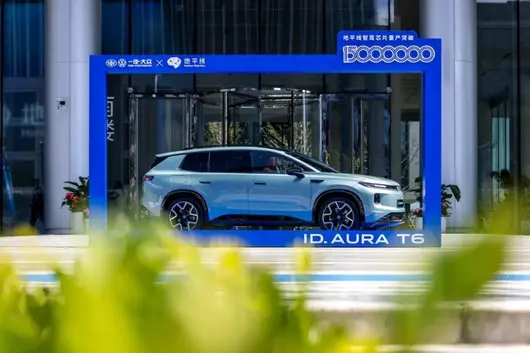
On September 15, Horizon Robotics held a witnessing ceremony for the Journey® chip mass production breakthrough of 15 million units in Shanghai Lingang Science Park. The 15 millionth Journey® chip will be equipped on the FAW-Volkswagen ID.AURA T6 model. There was also a rather meaningful detail at the event: Horizon Robotics founder and CEO Dr. Yu Kai became the 001 owner of the ID.AURA T6, witnessing the landing of the joint R&D results of both parties in the identity of a user.

This ceremony is not just an announcement of shipment numbers, but also raises a proposition worth thinking about for the whole industry: when domestic smart driving chips cross the tens of millions mass production threshold, how the industry can transform high-level smart driving from luxury configuration to capabilities accessible to more ordinary users, truly realizing the smart driving rights equality that the industry has been discussing. Through the product plans released on site, the practices of partners, and the sharing of management, it can be seen that the landing of smart driving rights equality requires the joint support of multiple conditions such as scale mass production, open industrial ecology, and software-hardware collaborative iteration, and is not a goal that can be achieved relying on a single technical breakthrough.
Tens of Millions Mass Production, Scale is the Most Solid Endorsement for Smart Driving Safety
For automotive-grade smart driving chips, tens of millions of shipment volume is not just a number of market scale, but also a process of continuous verification under massive real road conditions. The paper computing power parameters of a chip can be completed in the lab, but vehicles have to face real road scenarios of different regions, different weather, and diverse situations in China. Snow, rain, heavy fog, unlit roads at night, city streets where people and vehicles are highly mixed, these scenarios are difficult to fully simulate and reproduce in the laboratory. Only by installing them on a large number of vehicles and hitting the road, continuously precipitating data and exposing potential problems in massive real working conditions, can the chips and supporting smart driving algorithms continue to complete iteration and optimization. This is also the biggest difference between automotive products and consumer electronics chips. Consumer electronics pursue extreme performance, while vehicle-mounted systems must put safety and reliability first.
Data shows that as of September 2026, the Journey® series chips have accumulated mass production shipments exceeding 15 million units. There are more than 8 million vehicles equipped with this chip driving across the country, accumulating billions of kilometers of real driving mileage. When Dr. Yu Kai, founder and CEO of Horizon Robotics, shared on site, he mentioned that scale is the best endorsement for safety and reliability. Every Journey® chip running on the road is a verification of a real scenario. Massive real road experience is transformed into the safety confidence for product mass production landing. At the same time, the growth rate of shipments is also accelerating continuously. From 10 million units to 15 million units, it took only 12 months, and the pace of industrial landing is continuously speeding up.

Market share data also shows the changes brought by scale. According to the High-Tech Intelligent Automotive Research Institute, in the first half of 2026, Horizon Robotics' market share in smart driving chips for all stages of independent brand passenger cars reached 31.94%, maintaining first place in the industry; the market share in ADAS chips for independent brands exceeded 50%, about twice the second place, retaining the market first place; in the urban NOA high-level track, the market share reached 22.82%, an increase of nearly five percentage points compared to the previous year, jumping to the second place in the industry, forming a competitive pattern of two strong competitors in high-level smart driving with NVIDIA. From the early low-computing power auxiliary driving chip Journey 2 to the Journey 6 full series facing urban high-level smart driving, in 11 years, Horizon Robotics has completed the growth path from follower to main market participant.
But the milestone of tens of millions of sets does not mean the industry can rest easy. At the same time as the scale expands, it puts higher tests on the enterprise's engineering services, version control, and problem closure capabilities. With the continuous broadening of the model brands equipped with chips and price ranges, from hundred-thousand-yuan family cars to mid-to-high-end new energy vehicles, the vehicle architecture, sensor configurations, and chassis tuning conditions of different car manufacturers are different. For the same chip, adapting to different vehicle platforms requires solving a large amount of customized debugging work. If the engineering support capabilities cannot keep up with the speed of shipment expansion, large-scale vehicle installation could instead bring risks of uneven experiences. This is also why the competition for automotive-grade chips has never been simply comparing the chips themselves, the entire engineering support system behind it is equally crucial.
It is precisely based on this reality that Horizon Robotics did not choose a single business model, but rather parallel two completely different cooperation paths. One is similar to the Wintel model of the PC era, directly delivering chips and complete software solutions to car companies, adapting to the majority of OEMs that hope to obtain a complete and mature smart driving solution; the other targets the Arm+Android model of the mobile era, exporting chip and software IP licensing externally, serving those car companies that hope to master underlying R&D capabilities. The two models target customers with different demands, can provide complete solutions that are ready to use for most car companies, and can also open up the underlying technology base for OEMs with self-research demands. When Yu Kai talked about it in the group interview with the media, he predicted that the ultimate industry pattern would present a 80/20 distribution. Approximately 80% of OEMs would choose to cooperate deeply with third-party suppliers, and 20% of the top-tier enterprises would persist in the vertical self-research route. Horizon Robotics' positioning is to serve the market of 80% that accounts for a larger proportion.
The parallel of the two business models also corresponds to the two choices of OEMs facing intelligence. Some car companies hope to focus resources on focusing on vehicle product definition, choosing mature supplier solutions to accelerate product landing; another part of car companies insist on deep self-research, hoping to firmly grasp the underlying capabilities of smart driving in their own hands. For chip suppliers, a fixed approach cannot be used to respond to all customers. Both doing a good job of standardized products and having the capability of open licensing technology base puts high requirements on the enterprise's underlying architecture design. If the underlying architecture is closed and solidified, the IP licensing model will be difficult to truly land. This is also a topic that many domestic smart driving chip manufacturers need to continue to tackle.
Tens of millions of shipments also mean that the logic of industry competition is changing. In the early smart driving chip track, new players emerged one after another, and various startups continued to emerge. But after years of market screening, the industry has entered a convergence stage. Just like the mobile phone baseband chip market, in the end only a few top players will remain. The smart driving chip track will also move towards high convergence. The number of enterprises that can truly withstand automotive tests and achieve large-scale stable mass production will not be too many. The noisy concept promotion will eventually fade away. In the end, the market will use tens of millions of vehicle installations to test the true hard power of a chip enterprise.
Smart Driving Rights Equality is Not Just Lowering Functions to Low-Cost Cars
Nowadays, the industry often mentions the concept of smart driving rights equality, but many people simply understand it as realizing equality by installing urban NOA functions on hundred-thousand-yuan level models. In fact, true smart driving rights equality is far more than the downgrading of hardware configurations. If it is simply a matter of installing high-level smart driving hardware on low-priced cars, but the algorithm experience is poor, the takeover rate is high, version iteration is stagnant, and the user's actual usage experience does not reach a qualified level, then the downgrading of configurations is only formal equality. True equality represents that vehicle models of different price levels, or even different power forms, can all obtain usable smart driving capabilities with continuous iteration. Fuel vehicle users should not be abandoned by intelligence either.

At this event, Li Jiang, CEO of Journey Intelligent Driving, shared a very iconic progress in the industry. Relying on the Journey 6M solution, by the end of the month, a hundred-thousand-yuan level fuel SUV will realize the mass production of urban NOA. This is a very representative signal. For a long time, high-level smart driving has been almost an exclusive label for new energy vehicles, and a large number of existing fuel vehicle users are difficult to access mature pilot assistance functions. The number of fuel vehicles in the domestic car market remains huge, and the proportion of fuel vehicles is even higher globally. If the dividends of intelligence are given only to new energy users, then a large number of consumers will still be kept out of the door. Oil and electricity equal rights are also a link that is easily overlooked in smart driving rights equality.
To downgrade high-level smart driving to hundred-thousand-yuan level models, it is not simply completed by chip price reductions. This requires continuous optimization behind BPU Nash architecture hardware efficiency and end-to-end algorithms. It is not blindly stacking higher computing power indicators, but through software and hardware collaboration, allowing medium-computing power chips to also run excellent urban smart driving performance. Yu Kai explained in the interview that Horizon Robotics will not take the simple low-price low-quality involution route, but rely on technology to expand performance boundaries. Through software and hardware joint optimization, make medium-computing power chips achieve the effects that only high-computing power products could achieve in the past. Journey 6M has 128 TOPS computing power. Relying on BPU Nash architecture's efficient support for Transformers and end-to-end large models, without stacking ultra-high computing power, it can support the landing of complete urban NOA functions.
Software iteration capability is the other half indispensable for smart driving rights equality. Hardware installation is just the starting point. A large part of the smart driving experience comes from subsequent software version continuous updates. This activity disclosed that the HSD V2.1 version will be launched. The new version will debut full-scenario reversing capability, adopting end-to-end models to directly output driving trajectories, rather than relying on a large number of manually written rules, further optimizing the experience in narrow roads, complex breakthrough scenes. At the same time, HSD will achieve mass production landing on the models of a certain top new energy manufacturer within the year. Continuous version iteration means that older models that have already been installed can also obtain new functions through OTA. There will not be a situation where only new cars have new capabilities, and old car functions stagnate here. If only hardware is downgraded, but subsequent software maintenance cannot keep up, the so-called equality is just a brief selling point at the time of listing.

Of course, the realization of smart driving rights equality cannot be separated from the realistic stage of industry development. Yu Kai used the mobile communication industry for analogy. The current smart driving industry is similar to the mobile communication era before 2012. At that stage, only high-end mobile phones could fluently use mobile Internet, and low-end models could only realize basic calls. Until the arrival of the 4G era, communication capabilities were mature enough to achieve full standard configuration from high-end machines to entry-level models. He judged that when technology evolves to a stage where user attention no longer needs to closely monitor driving operations, high-level smart driving will truly become a standard configuration for all-price models. This also shows that smart driving rights equality is not a reality that is achieved in one step today, but a goal that the industry approaches step by step.
On the road to equality, the intelligent transformation of joint venture car companies is also an link that cannot be ignored. For a long time in the past, many joint venture brand smart driving solutions relied on output from overseas headquarters and were difficult to adapt to complex urban road conditions in China. The FAW-Volkswagen ID.AURA T6 equipped with this 15 millionth Journey® chip is the product of deep integration of German automotive manufacturing system and China's local smart driving technology. Wang Shengli, Vice General Manager of FAW-Volkswagen Automobile Co., Ltd. (Business), mentioned on site that this ID.AURA T6 is the first strategic vehicle of the Smart Electric 2.0 era. The smart driving part is led by the joint venture company Core Journey for development, from product definition, experience tuning to whole vehicle verification to complete full-link joint breakthrough. The whole vehicle completes over 450,000 kilometers of smart driving road actual tests in more than 61 cities, fully going through three rounds of whole vehicle verification and the traditional two winters and two summers extreme environment test of FAW-Volkswagen. The cooperation between the two parties will not stop at a single model. Horizon Robotics and FAW-Volkswagen's cooperation in the new energy field will be fully rolled out, and more cooperation products will be pushed to the market subsequently.
The significance of this cooperation case has already exceeded the scope of a single vehicle model. The rigorous whole vehicle verification system represented by global top joint venture car companies has already accepted China's local high-computing power smart driving chips. The pattern of overseas Tier 1 and overseas chips leading joint venture brand intelligence is changing. But we must also objectively see that the cost of磨合 for such deep joint development projects is not low. German whole vehicle factories have safety, testing, version release standards accumulated over decades. Local smart driving technology needs to adapt to the other party's whole verification process, and whole vehicle enterprises also need to understand the pace of rapid iteration of domestic smart driving algorithms. Only through mutual learning can the Chinese smart driving base be integrated into the global whole vehicle product system.
From Domestic Mass Production Landing, Looking at the Long Journey of Globalization
Completing domestic tens of millions of sets mass production is just a starting point for China's smart driving chips to go global. The scale of Chinese whole vehicle overseas departure continues to rise. In the first half of 2026, domestic automotive whole vehicle exports increased by 65.3% year-on-year, and more domestic car models are heading to overseas markets. Accompanied by this, China's smart driving software and hardware technology also welcomes the window of export. But going overseas is not equivalent to simply copying and pasting domestic mature solutions directly to different countries overseas. Traffic regulations, road habits, and user demands for smart driving functions in different regions exist huge differences.
From the current realistic situation, the demand for high-level urban NOA in the overseas market and the domestic market has a significant generation gap. Domestic consumers have a high acceptance of urban pilot assistance. Many new cars, if they do not have urban NOA, will be regarded by users as obvious shortcomings. However, in the vast majority of overseas markets, the current core demand still focuses on basic ADAS active safety and highway assistance driving functions. The large-scale popularization of urban high-level smart driving generally still requires several years. This determines that Horizon Robotics' overseas business must adopt a strategy of phased promotion. At this stage, ADAS solutions are used as the main landing products, and at the same time facing overseas car companies, through IP licensing models, participate in their early R&D projects, and prepare technical reserves for future high-level smart driving overseas mass production.
As of now, the number of Horizon Robotics export models designated has exceeded 60 models, covering all car companies in the domestic export ranking top six. The overseas market has orders in hand exceeding 20 million sets. The globalization business is accelerating; at the same time, deep cooperation has been established with global top Tier 1 enterprises such as Bosch, Denso, and Ansteem.
Li Jiang from Journey Intelligent Driving also introduced on site. Journey Intelligent Driving has already obtained designations from more than 16 OEMs globally, accumulated more than 70 car models, nearly half of the models facing overseas mass production. It is deployed in German R&D centers and Singapore global headquarters. The business covers Japan, South Korea, Southeast Asia, the Middle East, South America and other regions. Relying on the synergy with global Tier 1, Chinese smart driving solutions are no longer just dependent on Chinese car companies going overseas, but beginning to enter the supply chain system of overseas local car companies. This is an important change. In the past, the global automotive supply chain was more about European and American Tier 1 exporting technology outward. Now there is a new path of Chinese smart driving technology, supplied to OEMs all over the world through global Tier 1 suppliers.

But going to the global supply chain, the tests to face are far more than the domestic market. Automotive certification standards, data compliance regulations, and localization test requirements of various countries are different. A chip and smart driving solution, completing domestic mass production, does not equal directly getting the entry ticket for all countries overseas. Each time entering a brand new market, it is necessary to re-complete local regulation adaptation, road tests, and whole vehicle matching. Overseas customers have a set of mature standards that have been running for decades for delivery rhythm, quality system, and document norms. Local technology enterprises need to completely align with this system, so as to truly deeply embed into the global supply chain, and not just obtain a few demonstration projects.
Except for facing the passenger car market, Horizon Robotics is also horizontally expanding the capability of the BPU computing base to the field of pan-mobile travel. Relying on the AI computing technology accumulated by the Journey® series, the business has begun to extend to two-wheeler auxiliary driving, L4 level unmanned logistics mobile robots and other directions. Yu Kai mentioned in the group interview that from the beginning of Horizon Robotics, the name Horizon Robotics has pointed to the robot era, and smart cars are just the first stop towards the robot era. Chips, BPU architecture, AI large model engineering capabilities accumulated on a large scale in the automotive field can overflow to more robot-like scenes. However, it is also necessary to see that although automobiles and robots have the same source of underlying AI technology, their product definition, safety standards, and commercialization logic are completely different. Cross-domain expansion will also bring new challenges.
Written at the End
Standing at the node of tens of millions of shipments, Horizon Robotics does not intend to stay at the positioning of only being a vehicle-mounted chip supplier. On the one hand, it continues to iterate the Journey® series smart driving chips, and at the same time launch the Cockpit and Driving Integration Star Series chips, pushing the whole vehicle from scattered domain control to centralized computing architecture. Cockpit and driving integration is not simply piling hardware together, it needs to solve a series of engineering problems such as safety isolation, memory sharing, power consumption control. The Star chip relies on unified memory architecture design, which can reduce DDR memory resource occupation and help car companies control whole vehicle hardware costs. Cockpit and driving integration is also a major trend for the evolution of future whole vehicle electronics and electrical architecture. This also represents Horizon Robotics' layout, which is no longer limited to the smart driving single track, but extends to the level of whole vehicle intelligent computing base.
Of course, the track is still full of uncertainty. The heat of capital markets for automotive hard technology fluctuates from time to time. The hot spots of AI large models are constantly switching, and the attention of many capitals is attracted by consumer-level robots and data center large models. Automotive intelligence belongs to long-cycle tracks. There will be no explosive short-term bubbles. Enterprises need to endure loneliness and continue to carry out saturated R&D investment. Yu Kai also admitted that the joy brought by tens of millions of shipments lasts only two seconds, and harder challenges are still behind. 15 million sets is a report card submitted by the efforts of the past 11 years, but it is not the end.
Whether it is continuing to promote smart driving rights equality in the domestic market, or the product really stands firm in the global automotive supply chain, there is still a long way to go. Tens of millions of sets is a milestone, and even more a new starting point for the next round of industry competition.
© 2024 Bitauto.com. All Rights Reserved.
Bitauto (www.yiche.com and www.bitauto.com) is one of the most visited automotive websites in China. We provide detailed info on Chinese car brands available in your area. Please note that the information provided on this website is based on publicly available data and is for reference only. It may not be fully updated or accurate at all times.

Help us improve our website


