

HomeComposer

Search History
Popular Searches
Dealer Login / Sign Up

On August 1st, BYD released a report card sufficient to make the entire automotive industry take notice: In July 2026, the group's total sales across all categories reached 419,211 units, a year-on-year increase of 21.8%. This number itself is enough to shock—holding steady at the 400,000+ unit level for consecutive months, standing "far ahead" among Chinese automakers. But what truly increases the significance of this report card is another figure: overseas sales of 179,000 units, a year-on-year increase of 124.3%, with cumulative overseas sales reaching 969,000 units.
The proportion of overseas sales to total sales has climbed to 43%, an increase of 20 percentage points compared to the same period last year. This means the growth logic of BYD has undergone a fundamental transformation—from a domestic market local giant, evolved into a multinational automotive group with truly global competitiveness.

To understand the weight of BYD's overseas sales, the best reference is Chery.
In July, Chery Group exported 202,533 units, a year-on-year increase of 70.1%, becoming the first Chinese automaker to break 200,000 units in monthly exports. From an absolute value perspective, BYD's overseas sales of nearly 180,000 units are closing in on Chery's 200,000 units. The gap is narrowing at a speed visible to the naked eye.
Stretching the timeline makes the trend even clearer. From January to July 2026, BYD's cumulative overseas sales were approximately 970,000 units, an increase of about 76% year-on-year; Chery's cumulative exports for the same period were approximately 1.146 million units, an increase of 71.2% year-on-year. In the first half of the year, Chery's overseas sales were 943,800 units, BYD was nearly 790,000 units, a gap of about 150,000 units. But by July, the monthly gap had narrowed to over 20,000 units.
Even more interesting is the structural change. Analysts point out that if Russia and Iran, two special markets with geopolitical dividends, are excluded, BYD's overseas sales in the first half of 2026 actually exceeded Chery's. In Europe, the world's most mature and strictly regulated automotive market, BYD's registration volume in the first half of the year reached 162,400 units, a year-on-year increase of as high as 136%. In Southeast Asia, Australia, Latin America and other fully marketized regions, BYD's total volume is also clearly ahead of Chery after excluding dividend markets.
The essence of this contest is not a simple game of numbers, but a head-on clash of two overseas expansion models. Chery relies on channel accumulation and first-mover advantage from over twenty years of digging into emerging markets to sit firmly in the top seat; while BYD relies on the generational lead in new energy technology and systematic output of the whole industry chain to achieve overtaking in high-value markets.

BYD's overseas explosion is by no means accidental. If carefully disassembled, its globalization strategy reveals three clear layers.
The first layer is the global penetration of product power and technology. BYD's overseas expansion does not rely on low prices, but on technology premiums. In the UK market, BYD sold 51,422 new cars throughout 2025, surpassing Tesla's 45,513 units at one stroke; in the first four months of 2026, the pure electric subdivision market share broke through 7%, successively surpassing BMW, Tesla, and Volkswagen to take the top spot in the UK pure electric automotive brand list. In this heartland of traditional automotive industry in the UK, BYD completed the transformation from "Who is BYD" to market champion with technical strength.
The second layer is the localized rooting of the industrial chain and production capacity. Pure vehicle exports alone are easily blocked by tariff barriers and trade policy changes. BYD's approach is "localized production + whole industry chain output". The Brazil factory has become its largest overseas production base, with over 5,500 existing employees, Phase 1 designed annual production capacity of 150,000 units, and long-term planning of 600,000 units annual production capacity. The Szeged factory in Hungary will go into production in Q4 2026, with an annual production capacity of 150,000 units, radiating to the entire EU. The Thailand factory welcomed its second anniversary of production. From Latin America to Europe to Southeast Asia, a localized production network covering major global markets is taking shape.
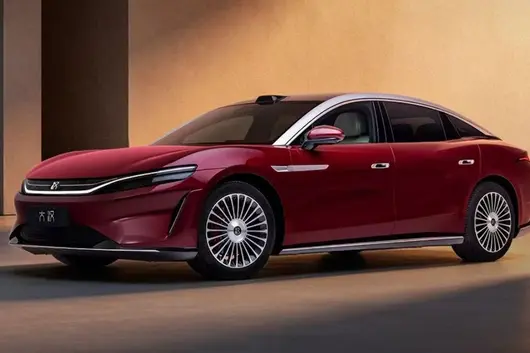
The third layer is the systematic output of brand and ecosystem. BYD is no longer satisfied with merely "selling cars". In July 2026, BYD created the largest exhibition booth scale in history at the Goodwood Festival of Speed in the UK; Denza brand launched new cars abroad for the first time earlier than in China; the overseas brand structure was completed with integration, Dynasty and Ocean were integrated into "BYD Brand", Denza and Fang Cheng Bao merged for operations, YangWang independent. Charging network was also laid out synchronously, planning to build 3,000 supercharging stations in Europe within the next 12 months. These actions indicate that BYD is moving from product output to brand output, standard output, and ecosystem output.

The high growth of overseas sales is not solely relying on volume-selling models. In the data of July, a highlight that is easy to overlook is the comprehensive explosion of high-end brands.
Fang Cheng Bao's sales in July reached 41,213 units, an increase of 191% year-on-year, breaking through the 40,000 unit threshold for the first time. Among them, the Fang Cheng Bao Ti 7 priced at 179,800 to 239,800 RMB became the retail sales champion of all hybrid models in the domestic market in the first half of 2026. Denza delivered 19,196 units, a year-on-year increase of 69%. The three major high-end brands (Denza, YangWang, Fang Cheng Bao) combined sales of 60,900 units, an increase of 135%, accounting for 15% of total passenger vehicle sales.
The overseas expansion of high-end brands is also worth attention. Denza Z, Z9GT and D9 jointly opened the chapter of "Tech New Luxury" in Europe; Denza brand officially completed its landing in the UK market. Compared with Chery, BYD's high-endization route has more differentiated advantages—Chery's main export models are still concentrated in the 100,000 to 200,000 RMB interval, while BYD has already begun to launch attacks on the 300,000 RMB or even higher price bands by launching high-end brands such as Denza and Fang Cheng Bao in overseas markets.
Returning to the original question: What does BYD's sales of 419,000 units in July mean?
It means that BYD has formed a dual-wheel drive pattern of "domestic foundation building, overseas volume release". From January to July, BYD's domestic cumulative sales were approximately 1.259 million units, a decrease of 35% year-on-year; but the high growth of overseas sales completely offset the domestic decline, pushing overall sales to improve significantly year-on-year.
It means that Chinese automotive brands are moving from "going out" to "going up". In the past twenty years, the Chinese automotive overseas story was written by Chery and others—opening up emerging markets with cost-performance ratio, exchanging scale for survival space. And BYD is writing a new chapter—opening the door to developed markets with technical leadership, acquiring higher value returns with brand premiums.
Some institutions estimate that BYD's overseas sales for the full year of 2026 are expected to reach 1.8-1.9 million units. If this goal is achieved, BYD will officially change from a "chaser" to one of the "leaders" of Chinese automotive overseas expansion.

Automotive Review:
Behind the monthly sales figure of 419,000 units, what we see is not only the success of an enterprise, but also the concentrated projection of the global competitiveness of the Chinese new energy vehicle industry. When BYD's overseas sales proportion breaks through 43%, when it surpasses Tesla in the UK pure electric market, when its overseas factories extend from Brazil to Hungary — a "World BYD" is accelerating its formation.
And that suspense about the "Overseas Champion", perhaps will have an answer in the near future.

In Malaysia's SUV market, many buyers compare Proton X70 and Chery Tiggo 7 Pro when choosing a car. These two cars have quite similar prices and positioning. Today we will make a detailed comparison from multiple aspects to help you save time on research.
Proton X70's OTR price in Malaysia is RM 106,800 - 122,300, with a total of 3 versions, including 1.5L Standard 2WD (RM 106,800), 1.5L Executive 2WD (RM 115,800), 1.5L Premium 2WD (RM 122,300), etc.
Chery Tiggo 7 Pro's OTR price in Malaysia is RM 123,750 - 123,750, with a total of 2 versions, including 1.6L Turbo Standard (RM 125,000), 1.6L Turbo Premium (RM 140,000), etc.
From a price perspective, Proton X70's starting price is indeed RM 16,950 cheaper than Chery Tiggo 7 Pro. If your budget is limited, Proton's entry-level version can already meet daily needs. But also note, the few thousand cheaper, there might be trade-offs on equipment, specifically depending on your needs.
Proton X70 is equipped with a 1.5L Turbo, 140 hp horsepower. Official fuel consumption 7.0 L/100km.
Chery Tiggo 7 Pro is equipped with a 1.5L Turbo, 140 hp horsepower. Official fuel consumption 7.0 L/100km.
Both cars use the same power system, the driving feeling in daily use is basically no difference. Fuel consumption is also about the same, no need to worry too much about this point.
Proton X70 body length 4400 mm, trunk 400 L.
Chery Tiggo 7 Pro body length 4400 mm, trunk 400 L.
Both cars' dimensions are almost the same, interior space difference is not large. For this level of cars, daily use is completely sufficient.
Proton X70 adopts FWD drive method.
Chery Tiggo 7 Pro adopts FWD drive method.
Both cars' drive methods are the same, all FWD, daily driving feeling will not have too big a difference.
Proton X70 and Chery Tiggo 7 Pro are both mainstream choices in the Malaysian market, suitable for family use, daily commuting. If you value brand reputation and resale value more, you can prioritize the one with better reputation; if you care more about cost-performance and equipment, then choose the one with richer configuration. In the end, it is still suggested to test drive both models, personal experience is the most important.
Overall, Proton X70 and Chery Tiggo 7 Pro are both quite good car models in the Malaysian market. Which one to choose, the key is still to see your personal needs and budget. Everyone is advised to do homework well, compare quotes from several car dealers, then go test drive to make the final decision. Buying a car is a big matter, spending some time doing homework absolutely will not be wrong.

In Malaysia's SUV market, many buyers compare Perodua Aruz and Chery Tiggo Cross when choosing a car. These two cars are quite close in price and positioning. Today we will do a detailed comparison from multiple aspects to help you save time on research.
Perodua Aruz OTR price in Malaysia is RM 72,900 - 77,900, with 2 versions in total, including 1.5L X (RM 72,900), 1.5L AV (RM 77,900) etc.
Chery Tiggo Cross OTR price in Malaysia is RM 88,750 - 99,750, with 2 versions in total, including 2025 HEV 1.5L CSH (RM 99,750), 2025 1.5T Standard (RM 88,750) etc.
In terms of price, Perodua Aruz's starting price is indeed RM 15,850 cheaper than Chery Tiggo Cross. If your budget is limited, Perodua's entry-level version can meet daily needs. But also note, that few thousand difference might involve trade-offs in features, depends on your specific needs.

Perodua Aruz is equipped with 1.5L 4-cyl, 105 hp. Official fuel consumption 6.0 L/100km.
Chery Tiggo Cross is equipped with 1.5L 4-cyl, 105 hp. Official fuel consumption 6.0 L/100km.
Both cars use the same powertrain, the driving feel is basically the same. Fuel consumption is also similar, no need to worry too much about this.

Perodua Aruz safety rating is 5★ (ASEAN NCAP), active safety systems include.
Chery Tiggo Cross safety rating is TBD, active safety systems include Basic.

Perodua Aruz body length 4400 mm, trunk 400 L.
Chery Tiggo Cross body length 4400 mm, trunk 400 L.
Both cars' dimensions are almost the same, interior space difference is not significant. For this car class, daily use is fully adequate.

Perodua Aruz adopts FWD drive configuration.
Chery Tiggo Cross adopts FWD drive configuration.
Both cars' drive configurations are the same, both are FWD, daily driving feel will not differ much.

Overall, Perodua Aruz and Chery Tiggo Cross are both very good models in the Malaysia market. Which one to choose mainly depends on your personal needs and budget. We recommend doing your research, compare quotes from several dealerships, and then test drive to make the final decision. Buying a car is a major decision, spending time on research is never wrong.


Di pasaran SUV di Malaysia, ramai pembeli akan membandingkan Proton X50 dan Honda WR-V apabila memilih kereta.
Proton X50 mempunyai harga OTR di Malaysia RM 89,800 - 113,300, terdapat 4 versi, termasuk 1.5T Executive (RM 89,800), 1.5T Premium (RM 101,800), 1.5T Flagship (RM 113,300) dan lain-lain.
Honda WR-V mempunyai harga OTR di Malaysia RM 89,900 - 107,900, terdapat 4 versi, termasuk 2023 1.5L V (RM 99,900), 2023 1.5L E (RM 95,900), 2023 1.5L S (RM 89,900) dan lain-lain.
Dari segi harga, harga permulaan Proton X50 memang RM 100 lebih murah daripada Honda WR-V. Jika bajet anda terhad, versi masuk Proton sudah cukup memenuhi keperluan harian. Namun perlu juga diambil perhatian, beberapa ringgit lebih murah itu, mungkin melibatkan kompromi pada kelengkapan, bergantung kepada keperluan anda.

Proton X50 menggunakan sistem pemacu 4WD.
Honda WR-V menggunakan sistem pemacu FWD.
Proton 4WD dan Honda FWD akan memberikan pengalaman memandu yang berbeza, disyorkan untuk membandingkan semasa ujian memandu.
Proton X50 mempunyai jaminan 5 tahun/150,000km, jarak penyelenggaraan setiap 10,000km atau 6 bulan.
Honda WR-V mempunyai jaminan 5 tahun/tanpa had jarak, jarak penyelenggaraan setiap 10,000km atau 6 bulan.
Proton X50 dan Honda WR-V adalah pilihan utama di pasaran Malaysia, sesuai untuk kegunaan keluarga dan perjalanan harian. Jika anda lebih mengutamakan reputasi jenama dan harga kedua, boleh mempertimbangkan yang mempunyai reputasi lebih baik; jika anda lebih mempertimbangkan nilai dan kelengkapan, pilihlah yang mempunyai konfigurasi lebih kaya. Akhir sekali adalah disyorkan untuk mencuba kedua-dua model, pengalaman peribadi adalah yang paling penting.

Secara keseluruhan, Proton X50 dan Honda WR-V adalah model kereta yang sangat baik di pasaran Malaysia. Memilih mana satu, bergantung kepada keperluan dan bajet peribadi anda. Disyorkan untuk membuat kajian, bandingkan sebut harga dari beberapa dealer kereta, kemudian uji memandu untuk membuat keputusan akhir. Membeli kereta adalah perkara besar, meluangkan masa untuk kajian pasti tidak salah.


在马来西亚的汽车市场,很多买家在选车的时候都会拿 Lexus ES 和 Porsche 718 来做比较。今天我们从多个方面做一个详细的对比,帮你省下做功课的时间。


Lexus ES 在马来西亚的 OTR 售价是 RM 320,888 - 371,888,一共有 4 个版本,包括 2025 250 F Sport(RM 371,888)、2025 250 Luxury(RM 356,888)、2025 250 Premium(RM 320,888) 等。
Porsche 718 在马来西亚的 OTR 售价是 RM 545,000 - 1,700,000,一共有 6 个版本,包括 2025 AMG G 63(RM 1,948,888)、2025 Cayman 2.0T(RM 585,000)、2025 Boxster 2.0T(RM 545,000) 等。
从价钱来看,Lexus ES 的起步价确实比 Porsche 718 便宜了 RM 224,112。如果你预算有限,Lexus 的入门版已经可以满足日常需求。但也要注意,便宜的那几千块,可能在配备上会有取舍,具体要看你的需求。

Lexus ES 的安全评级是 TBD,主动安全系统包括 Basic。
Porsche 718 的安全评级是 TBD,主动安全系统包括 Basic。
两款车的安全评级一样,在这个级别里面安全配备都算给得很齐全了。现在的新车安全性都不差,不用太担心这一点。

Lexus ES 车身长 4400 mm,后备箱 400 L。
Porsche 718 车身长 4400 mm,后备箱 400 L。
两款车的尺寸几乎一样,车内空间差别不大。这个级别的车,日常使用完全够用。

Lexus ES 和 Porsche 718 都是马来西亚市场的主流选择,适合家庭使用、日常通勤。如果你更看重品牌口碑和二手价,可以优先考虑口碑更好的那一款;如果你更在意性价比和配备,那就选配置更丰富的那款。最终还是建议两款都去试驾,亲身体验才是最重要的。

总的来说,Lexus ES 和 Porsche 718 都是马来西亚市场很不错的车型。选择哪一辆,关键还是要看你的个人需求和预算。建议大家做好功课,多比较几间车行的报价,再去试驾做最终决定。买车是件大事,花点时间做功课绝对不会错。


在马来西亚的轿车市场,很多买家在选车的时候都会拿 Volkswagen Golf R 和 Mercedes-Benz C-Class 来做比较。这两款车在价位和定位上都蛮接近的,今天我们就从多个方面做一个详细的对比,帮你省下做功课的时间。
Volkswagen Golf R 在马来西亚的 OTR 售价是 RM 338,812 - 338,812,一共有 2 个版本,包括 2026 2.0T Standard(RM 338,812)、DCT(RM 294,800) 等。
Mercedes-Benz C-Class 在马来西亚的 OTR 售价是 RM 292,888 - 296,888,一共有 2 个版本,包括 C 200 Avantgarde(RM 260,000)、C 300 AMG Line(RM 310,000) 等。
从价钱来看,Mercedes-Benz C-Class 的起步价比 Volkswagen Golf R 便宜了 RM 45,924。老实讲,在这个价位段,几千块的差距其实不算大,关键还是看整体的性价比和长期使用成本。

Volkswagen Golf R 搭载 2.0L Turbo,马力 220 hp。官方油耗 9.5 L/100km。
Mercedes-Benz C-Class 搭载 2.0L Turbo,马力 220 hp。官方油耗 9.5 L/100km。
两款车用的是同一套动力系统,日常开起来的感受基本没有差别。油耗方面也差不多,不用太纠结这一点。
Volkswagen Golf R 车身长 4400 mm,后备箱 400 L。
Mercedes-Benz C-Class 车身长 4400 mm,后备箱 400 L。
两款车的尺寸几乎一样,车内空间差别不大。这个级别的车,日常使用完全够用。

Volkswagen Golf R 和 Mercedes-Benz C-Class 都是马来西亚市场的主流选择,适合家庭使用、日常通勤。如果你更看重品牌口碑和二手价,可以优先考虑口碑更好的那一款;如果你更在意性价比和配备,那就选配置更丰富的那款。最终还是建议两款都去试驾,亲身体验才是最重要的。

总的来说,Volkswagen Golf R 和 Mercedes-Benz C-Class 都是马来西亚市场很不错的车型。选择哪一辆,关键还是要看你的个人需求和预算。建议大家做好功课,多比较几间车行的报价,再去试驾做最终决定。买车是件大事,花点时间做功课绝对不会错。


在马来西亚的SUV市场,很多买家在选车的时候都会拿 Mazda CX-60 和 Hyundai Palisade 来做比较。这两款车在价位和定位上都蛮接近的,今天我们就从多个方面做一个详细的对比,帮你省下做功课的时间。
Mazda CX-60 在马来西亚的 OTR 售价是 RM 200,510 - 252,873,一共有 2 个版本,包括 2026 3.3T 4WD High Plus(RM 252,873)、2025 2.5L 2WD High(RM 200,510) 等。
Hyundai Palisade 在马来西亚的 OTR 售价是 RM 368,838 - 399,838,一共有 4 个版本,包括 2023 3.8L 2WD Luxe 7 Seats Petrol(RM 399,838)、2023 2.2T 4WD Executive 7 Seats Diesel(RM 389,838)、2023 3.8L 2WD Luxe 8 Seats Petrol(RM 378,838) 等。
从价钱来看,Mazda CX-60 的起步价确实比 Hyundai Palisade 便宜了 RM 168,328。如果你预算有限,Mazda 的入门版已经可以满足日常需求。但也要注意,便宜的那几千块,可能在配备上会有取舍,具体要看你的需求。

Mazda CX-60 搭载 2.0L 4-cyl,马力 170 hp。官方油耗 8.0 L/100km。
Hyundai Palisade 搭载 2.0L Turbo,马力 220 hp。官方油耗 9.5 L/100km。
动力方面,Hyundai Palisade 的 2.0L Turbo 比 Mazda CX-60 的 2.0L 4-cyl 多了 50 匹马力。不过日常在市区开,两款车的动力都够用,不会觉得不够力。

Mazda CX-60 的安全评级是 5★ (Euro NCAP),主动安全系统包括 i-Activsense Pro。
Hyundai Palisade 的安全评级是 TBD,主动安全系统包括 Basic。
安全配备方面,两款车都拿到了不错的评级。不过 Mazda CX-60 的 i-Activsense Pro 和 Hyundai Palisade 的 Basic 在功能上有些差异,如果你比较看重主动安全的话,可以仔细对比一下两者的功能列表。

Mazda CX-60 采用 FWD 驱动方式。
Hyundai Palisade 采用 FWD 驱动方式。
两款车的驱动方式一样,都是 FWD,日常驾驶感受不会有太大区别。

Mazda CX-60 和 Hyundai Palisade 都是马来西亚市场的主流选择,适合家庭使用、日常通勤。如果你更看重品牌口碑和二手价,可以优先考虑口碑更好的那一款;如果你更在意性价比和配备,那就选配置更丰富的那款。最终还是建议两款都去试驾,亲身体验才是最重要的。

总的来说,Mazda CX-60 和 Hyundai Palisade 都是马来西亚市场很不错的车型。选择哪一辆,关键还是要看你的个人需求和预算。建议大家做好功课,多比较几间车行的报价,再去试驾做最终决定。买车是件大事,花点时间做功课绝对不会错。

© 2024 Bitauto.com. All Rights Reserved.
Bitauto (www.yiche.com and www.bitauto.com) is one of the most visited automotive websites in China. We provide detailed info on Chinese car brands available in your area. Please note that the information provided on this website is based on publicly available data and is for reference only. It may not be fully updated or accurate at all times.

Help us improve our website


