

HomeDessert

Search History
Popular Searches
Dealer Login / Sign Up


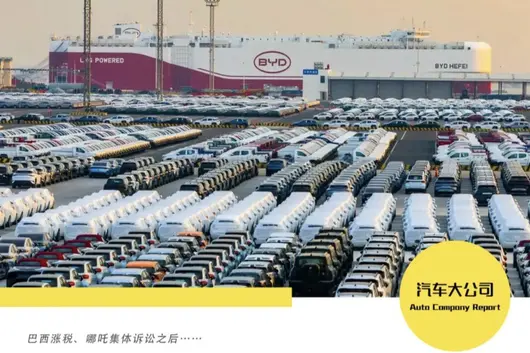
July of this year, the Brazilian government raised import tax rates for complete vehicles and SKD to 35%, and CKD tax rates will also rise to 35% in 2027. From 10 years ago, when the import tax was reduced to 0% to cultivate the new energy vehicle market, to now restoring tax rates stepwise, Brazil's guidance policy for new energy vehicles has shifted from "cultivating the consumer market" to "attracting local production".

At the same time, Chinese car exports exceeded 6.39 million units from January to July of this year. New energy vehicle exports in July grew 1.5 times year-on-year, accounting for over half for the first time. When Chinese automobiles are rushing overseas at an unprecedented speed, host countries are no longer concerned only about import quantities, but what value Chinese cars can bring to local industries and societies.

At the Global New Energy Vehicle Cooperation Development Forum (GNEV2026), Former Vice Minister of the Ministry of Commerce Jiang Yaoping pointed out that Chinese car overseas expansion has shifted from traditional product exports to being dominated by new energy and intelligent models, and has begun to enter emerging markets and traditional automotive powerhouses.
When we no longer question whether Chinese automobiles possess sufficient competitiveness in the domestic market, the problems faced by Chinese car overseas expansion are also undergoing fundamental changes: from just answering whether products can go out and sell well to now thinking about how to integrate into local social and economic operating systems, and truly keep technology, supply chains, manufacturing, and services locally.
01
The Focus of Going Global Has Truly Changed
Chief Expert at Auto Century International Zhang Yongwei summarized overseas markets' reactions to Chinese car overseas expansion into three categories: one category delays Chinese enterprise entry through restrictive measures; one category sees Chinese automotive rise as an opportunity to undertake capacity and attract factory building; and another category wants cooperation but fears being surpassed, having practical needs but also risk concerns.

Brazil is exactly a microcosm of this complex mindset.
On one hand, President Lula personally attended the Great Wall Motor factory production ceremony; on the other hand, the Brazilian National Association of Automobile Manufacturers (Anfavea) publicly opposed extending the KD tax exemption policy. Its Chairman Igor Calvet believes that if staying at the level of imports and simple assembly, it is difficult for other local manufacturers to participate in competition at the same cost.

As more and more destination countries for going global begin to require that Chinese automakers' market share grow synchronously with local value, for the Chinese automotive industry, how to reduce such concerns and achieve benefit sharing has become more important than sales figures themselves.
Voice from the government level first set the tone. Liu Jiafeng, Member of the Party Group of Shanghai Jiading District People's Government and Deputy District Mayor, proposed the development concept of "In China, For the Global", emphasizing that Chinese automotive globalization is not an outward expansion of a closed system, but should be based on two-way opening and industrial synergy.

Jiang Yaoping summarized the new cooperation path as "Co-construction, Mutual Recognition, Mutual Gain": Chinese automakers must move from product overseas expansion to ecological co-construction, from adapting to rules to mutual recognition of standards, and from one-way output to two-way empowerment. He believes that the competitiveness of Chinese automobiles comes from mass manufacturing, a complete supply chain, and rapid iteration, and cannot be simply equated to overcapacity; but enterprises must also shift from "selling products" to "building brands, optimizing services, building ecosystems" to turn advantages into capabilities long-term accepted by overseas markets.
This also aligns with "Chinese Opportunities for Global Automobiles 2.0" mentioned by Zhang Yongwei.
In Phase 1.0, China opened its market and introduced multinational automakers, becoming a global automobile manufacturing base; in Phase 2.0, China must continue to attract global resources, while also taking the already formed new energy and intelligent supply chains, rapid product development, and manufacturing capabilities overseas, shifting from passively integrating into the world to actively participating in global resource allocation. And China's technical and industrial "resource pools" accumulated in the field of new energy and intelligence are exactly the basis for Chinese automakers to carry out global collaboration.

Some Chinese automakers have already tried utilizing existing local capacity. BYD Brazil Camaçari factory park assets came from Ford's exit; Great Wall took over General Motors and Daimler factories in Rayong, Thailand and Iraçema, Brazil respectively; Chery has also just completed the acquisition of Nissan's South Africa production base.
This is also what Zhang Yongwei mentioned: Chinese automakers' overseas expansion can utilize existing and idle overseas capacity, drive Chinese parts companies to go out together, and can also leverage the existing global network of multinational suppliers to help local factories and suppliers complete electrification and intelligence upgrades.
02
What is True "Localization"?
Chery, which has long ranked first in Chinese car exports, Vice President Wang Lang explained localization as moving from product overseas expansion to local symbiosis: "Not only go out, but also go in, go up, and take root." This means entering local users, channels, and industrial ecosystems to form stable organizations, services, supply chains, and governance systems.

In Wang Lang's view, true globalization does not lie in how many countries are entered, but whether it can continuously improve user value, deepen industrial integration, and establish business models that can be operated long-term.
To achieve this goal, it requires improving global resource allocation capabilities, not simply increasing parts localization rates, or completely copying domestic factories, organizations, and industrial chains overseas.

Specifically, capabilities directly affecting product compliance, delivery, and user experience should be built locally according to market conditions; warehousing, logistics, spare parts, certification, and talent training can be shared within the region; core platforms, brand standards, capital discipline, and major risk boundaries require global coordination.

Changan Automobile Vice President Di Zhirui pointed out taking Changan Automobile's Rayong base in Thailand as an example that producing locally is not just to reduce tariffs, the greater significance is to create jobs, guarantee after-sales, and let the local supply chain gain value, achieving sustainable development.
To this end, Changan built local teams synchronously from the beginning of planning, gradually increased parts localization rates, cultivated supporting clusters within 300 kilometers around, and ensured every sales terminal had service capability support.

Great Wall Motor Technology Center Deputy General Manager Zhu Yongqing showed global synergy at the product technology level. The logic of developing suitable models for the local market is not hard to understand, but how to achieve the optimal balance between product competitiveness and commercial interest is a complex topic.
Great Wall Motor's answer is to layout R&D bases globally and invest in testing and experimental facilities. On the basis of global environmental actual testing, creating a "Guiyuan" platform with multiple powertrains for one vehicle. Reducing costs with 80% parts commonality, and achieving rapid derivation to adapt products to different markets. For example in Brazil, Great Wall took the lead in putting into production the H6 PHEV version supporting flexible fuel Flexfuel, while also ensuring monthly sales reached 5,671 units, taking the top spot in sales.
03
From a Single Vehicle to an Entire Industrial Ecosystem
But local production and system integration are still not the end point, automakers also need to answer how to operate vehicles and users for the long term.
NETA was once the best-selling Chinese brand in Thailand and also achieved local production. But after parent company Hozon New Energy entered bankruptcy proceedings, production and sales in Thailand stalled, exposing problems such as parts shortages, service center closures, and warranty fulfillment issues. In May 2026, the Thai court accepted a class-action lawsuit covering more than 20,000 NETA car owners.

Zhang Yongwei mentioned in the speech "100-1=0": if one automaker has problems in the overseas market, the consequences may be borne by the entire Chinese automotive industry. SANY Heavy Truck Chairman Liang Linhe also pointed out that some enterprises in the early stage of new energy heavy truck overseas expansion already had problems such as low-price competition, insufficient product adaptability, commitments detached from reality, and absence of after-sales service, ultimately turning short-term sales into long-term costs for the entire Chinese brand.
The commercial vehicle market better proves the importance of lifecycle operations.
Di Shang Tie Chief Marketing Officer Kang Pinglu said: "Commercial vehicles are essentially not just a sales market, but an operations market." Overseas customers widely adopt long-term leasing plus service models, financial institutions and operators need to manage vehicle risks for 7 to 10 years. Therefore, automakers not only need to sell new cars, but also cover recharging, maintenance, asset management, used car residual value, and recycling, achieving "run frequently, manage well, exit smoothly".

This ecosystem construction cannot be accomplished by a single enterprise, but is collaboration of the entire industry. As Zhang Yongwei said, synergistic global expansion should become a hard constraint for the industry, enterprises must avoid clustering construction, low-price competition, and value internal friction, and also jointly bear the global responsibility of Chinese automobile brands.
In this process, supply chain enterprises also play an important role.

Practices of Desay SV, ADI, and Sunwoda together point to one path: automakers can drive Chinese supply chains to go out together, cooperate with Chinese Tier 1 suppliers that already possess global manufacturing and service capabilities, and also leverage the existing networks of multinational suppliers. Choose cooperation methods based on local needs, rather than repeating construction of a closed system in every market.
Among them, global partners can provide local regulatory experience, on-site engineering support, and cross-regional unified standards; battery enterprises must also use tools such as Battery Passports to meet lifecycle requirements such as carbon footprint, data security, supply chain due diligence, and recycling.
04
Big Company Perspective
The process of changes in Brazil's import tax rates reminds Chinese automakers: when product competitiveness translates into considerable market share, host countries will inevitably propose new interest demands such as local manufacturing, services, compliance, and social responsibility. Similar changes will appear in more markets in the future.
Therefore, measuring Chinese automotive global expansion cannot just look at sales volume, but more importantly look at localization rates, user satisfaction, compliance capabilities, and social responsibility contributions.
The next stage of Chinese automotive globalization is not just about letting more cars drive out of China, but letting technology, manufacturing, and service capabilities truly enter locally, to continuously create value for users, industries, and society.


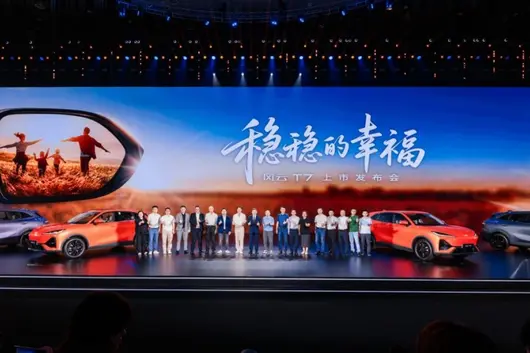
On August 26, at the Beijing Yanqi Lake International Convention and Exhibition Center, Chery Fengyun T7's launch event did not have too many flashy gimmicks. Well-known musician Wu Kequn appeared on stage in the role of "Happiness Experience Officer", chatting with Chery Automobile Executive Vice President Li Xueyong about, not 0-100 acceleration, nor computing power parameters, but a slightly emotional sounding word — "Steady Happiness".
But this is exactly the most scarce thing in today's 100,000-level pure electric SUV market.
Consumers in this niche market are budget-sensitive, but their requirements for quality are not low. They want a car that can carry the whole family for travel, commute, and occasional long trips, where range cannot be cut, safety cannot be compromised, and space cannot be makeshift.
However, the market reality of the past few years is that 100,000-level models often do more "subtraction" and less "addition" — entry-level range cut, a few safety features reduced, smart technology left for the top trim. What consumers buy is often a car that is "good enough but not good".

Fengyun T7 chose a somewhat different path. Full series 65.05kWh Rhino Battery, full series CLTC condition 600 km range, full series 9 airbags, full series dual-source wide temperature range heat pump, this car packed many things that should have appeared in the high-spec list directly into the entry level. What is more worth attention is the native global car development logic behind it, and the assets Chery has accumulated over twenty-three years on the road of globalization.
"A Global Car Can't Be Too Fast"
At the launch event site, Chery repeatedly emphasized a word: Slow Work. This sounds somewhat incongruous with the current new energy industry's "only fast breaks" atmosphere. But Li Xueyong said a passage at the launch event, which made Chery's calculation clear: "A true global car is not simply modifying domestic models for export, but defining according to global standards from the beginning of R&D, and returning to the Chinese market after completing global verification." The subtext of this remark is that to truly build a car that can be sold globally, it cannot be fast.

Fengyun T7's development cycle is three years. Placed in today's new energy industry, three years is indeed not short. In these three years, Chery's global 1+7+N R&D system was involved throughout, more than 5,000 people from global users participated in product definition and research, and the design team comes from the world's top ten design centers. More importantly, this car took the 2026 E-NCAP five-star safety standard as the design basis during the development phase, rather than waiting until export to do adaptive modifications.
Chery produced a set of test data: 81 exclusive durability test cars, 1.45 million km of special durability verification, cumulative vehicle test of 6 million km, covering more than 100 extreme road conditions globally. From Northern Europe's extreme cold to the Middle East's high temperatures, from Brazil's cobblestone roads to Mexico's unpaved roads, Fengyun T7 has already driven through the vast majority of road conditions most Chinese consumers will never encounter in their lifetime before launch.
This approach of completing strict global verification first and then returning to the domestic market is not new inside Chery. Chery has ranked first in exports of Chinese brand passenger vehicles for twenty-three consecutive years, with global users breaking 20 million, and products sold to more than 130 overseas markets. Fengyun T7's sibling model Lepas L6 has already launched in South Africa and Thailand, and will next enter markets such as Indonesia, EU, UK, Malaysia, etc. In other words, this car has already completed landing verification in multiple global markets before officially selling in China.

Bringing global standards back to the 100,000-level market is the differentiated path Chery set for Fengyun T7. Ordinary consumers may not care what E-NCAP is, and may not understand what 1.45 million km durability verification means, but when these standards are translated into a car's body rigidity, battery protection, and chassis quality, the person sitting inside the car can personally feel the difference.
Don't Make a "Decision Paralysis" Configuration List
If you have flipped through the configuration list of 100,000-level pure electric SUVs, you will discover a general rule: the entry-level is usually a "deterrence list", range reduced by tens of kilometers, battery capacity shrinks, a few airbags are removed, smart configurations are almost zero. Consumers are forced to make choices — if you want a better experience, you have to pay more for a higher version.
Fengyun T7 did this quite thoroughly. Full series uniformly equipped with 65.05kWh Lithium Iron Phosphate Rhino Battery, CLTC range 600 km, actual test ran 681.6 km, the industry also calls this phenomenon reverse false labeling. Three versions' battery, range, motor power are completely consistent, 178kW motor and 275N·m torque are also standard across the series. 30% to 80% fast charging time is controlled within 20 minutes, a cup of coffee's time can replenish about 300 km range.

Safety configurations are also not divided into levels. 80% high-strength steel body, nine horizontal five vertical cage structure, Shotgun front protection design, dual frame subframe plus Pack anti-collision beam, these hardware are equipped from the entry level. 9 airbags are also standard across the series, including 48L dual-cavity remote airbags and 1778mm integrated side air curtain, rear side airbags are not common in same-class models. The battery pack has a 6D chainmail protection structure, IP68 waterproof level reaches 96 times the national standard, side anti-squeezing ability reaches 2 times the national standard.
Chery also announced two safety net guarantees externally: power battery thermal runaway damage due to its own reasons, compensate same model new car; within one year of purchase, in parking, intelligent pilot scenes, judged as intelligent driving assistance system causes causing accidents, causing injury to personnel on board and third-party losses, maximum compensation 5 million.

In terms of intelligence, Fengyun T7 is equipped with a 4nm process 8775 cockpit-driving integrated chip, NPU computing power 72TOPS, system response latency controlled within 80 milliseconds.
The cockpit integrates Doubao large model, supports full-scenario voice interaction, the car machine also supports CarPlay, HiCar, CarLink three major mobile internet protocols, covering the vast majority of mobile phone brands on the market. Falcon 500 intelligent driving system equipped with 22 sensors, supports high-speed pilot assistance and automatic parking for more than 300 scenarios.

Putting these configurations together, you will find an interesting phenomenon: Fengyun T7 at the 100,000-level price point, directly made many configurations that competitors put in top trim or option lists into standard configurations. Behind this is not simple cost stacking, but a trade-off of product definition — rather than making complex configuration distinctions between high and low trims, it is better to level the core experience, so users do not have to worry or hesitate which version to buy for range or safety.
"Redundancy" Run from Global Road Tests
Chery put a label on Fengyun T7: "Six Major Redundancies" — collision safety redundancy, battery safety redundancy, range equality redundancy, global energy saving redundancy, handling performance redundancy, whole vehicle verification redundancy. This word sounds technical, but looking at it separately, every layer of redundancy is actually a response to user's real driving anxiety.
Range anxiety is a topic pure electric users cannot avoid. Fengyun T7's approach is not blindly making the battery larger, but on the premise of unified battery capacity, through AGS intelligent front grille, 14 low wind resistance designs, dual-source wide temperature range heat pump system, control energy consumption in a reasonable range. In minus 10 degrees environment, range can achieve a 15% to 20% increase. This car treated winter range degradation as a must-answer question from the R&D phase, rather than waiting until users pick up the car to face the realistic problem of winter range shrinking.

Battery safety anxiety is the same. Fengyun T7's 6D chainmail battery pack did 31 layers of protection, adopted three horizontal one vertical structure design, fire test duration reached 1.5 times the national standard, salt spray test lasted up to 1008 hours. Behind these data is a set of "run through the worst case in advance" verification logic. As Li Xueyong said at the launch event: "We do not wait for users to step into pits during use, we solve noise, faults, and environmental adaptation problems in the R&D phase closed-loop."

In terms of handling and chassis, Fengyun T7 is equipped with 70mm large size bushings, 26mm front stabilizer bar, One-Box line control braking system, 50.8:49.2 golden axle load ratio combined with 560mm center of gravity height. These parameters combined, the goal is simple: let a compact pure electric SUV not float in high-speed driving, chassis not scatter on bad roads, and stably stop in emergency braking.

Chassis tuning is led by an international team led by former Maserati chassis tuning experts, specifically tuned for ultra-high-speed sections above 160km/h. Even if most domestic roads do not use this speed, this tuning reserve is to adapt to overseas unlimited speed highway usage scenarios.

This is the "Global Car" logic Chery has always emphasized: use the upper limit of global market usage to cover the daily life of the Chinese market. Users driving this car in China may never encounter Germany's highway large curvature curves, nor necessarily go out in Northern Europe's extreme cold weather, but the chassis stability and battery reliability verified under those extreme working conditions will be converted into a driving texture that can be personally perceived in daily driving.
Written at the End:
At the launch event site, Li Xueyong and Wu Kequn were always chatting about the topic of "Steady Happiness", for a 100,000-level pure electric SUV, the so-called "Happiness" is actually very simple: range is sufficient, but do not shrink; safety meets standards, but do not reduce specifications; space is large enough, but do not let family feel depressed sitting.
These requirements sound not high, but in fierce price wars, many models to lower the entry threshold, precisely made compromises in these places.
Fengyun T7's approach is the opposite. It advances the cost of global verification, levels the core configuration experience, and raises safety standards. New car official guide price 97,900 yuan - 118,900 yuan, early trade-in price 94,900 yuan - 115,900 yuan, facing users in the 100,000-level market who are unwilling to compromise. Whether this car can become a hit ultimately depends on the market's vote. But at least in the logic of product definition, it provides a problem-solving idea different from "low price reduced specifications" — make a non-shrinking car with global standards, then sell at a price Chinese consumers can accept.
As Li Xueyong said at the launch event: "Slow work builds good cars, global cars cannot be too fast." This sentence placed in the current new energy market, is both a strategic choice and an attitude expression.

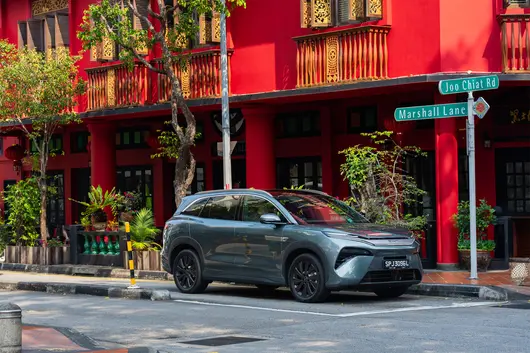
一支从西安出发的车队,33天后在新加坡停下。路书上写着上万公里,车窗外从国内六省换成泰国、马来西亚,再一路抵达狮城。这个收官很有意味:陆上丝路从西安启程,海上丝路在新加坡交汇,曾经的驼铃与帆影,如今换成了新能源车驶过山海的声音。一条跨国路线,也成了一场持续一个多月的公开体验。

王朝、海洋、腾势、方程豹、仰望多款车型组成的车队,把高速、山路和城市拥堵都跑了一遍。长途旅行很诚实,补能慢不慢、连续驾驶累不累,跑几天就会露底。比亚迪闪充用5分钟从10%充到70%、9分钟充到97%,把等待压进一杯咖啡的时间;天神之眼辅助驾驶则在漫长路途中分担重复操作。丝路远行绿能相伴,在这里有了清晰的画面:车队按计划前进,技术安静地解决每一段路上的麻烦。


终点选在新加坡,也让这趟旅程多了一层现实落点。这里汽车拥有成本较高,选车自然会多做几轮功课。2026年1至7月,比亚迪在当地乘用车市场份额达到24.7%,纯电市场份额达到40.3%,并已布局16处零售触点。街道、商圈和购物中心里越来越常见的品牌身影,比一场收官仪式更能说明当地消费者的态度。


我喜欢这次行程的一点,是它把文化寻访和真实用车放在了同一条路上。古丝路要经历驿站、港口与季风,今天的跨国远行要面对续航、补能、路况和本地服务,时代换了,抵达仍要靠一步一步走出来。车队在新加坡停下,路线却没有结束。

真正留下的,是中国新能源汽车已经能在万里长途中稳稳完成任务,也能驶入另一座城市的日常生活。

喺馬來西亞嘅 SUV 市場,好多人買家揀車嗰陣都會將 本田 WR-V 同 馬自達 CX-5 做比較。呢兩款車喺價錢同定位上都好接近,今日我哋就從多個方面做一個詳細嘅對比,幫你省返做功課嘅時間。
本田 WR-V 喺馬來西亞嘅 OTR 售價係 RM 89,900 - 107,900,總共有 4 個版本,包括 2023 1.5L V(RM 99,900)、2023 1.5L E(RM 95,900)、2023 1.5L S(RM 89,900) 等。
馬自達 CX-5 喺馬來西亞嘅 OTR 售價係 RM 135,469 - 166,760,總共有 3 個版本,包括 2025 2.0L AT 35th Anniversary(RM 316,154)、2025 2.0L AT(RM 296,154)、2025 2.0L MT(RM 294,154) 等。
從價錢睇,本田 WR-V 嘅起步價真係比 馬自達 CX-5 平咗 RM 45,569。如果你預算有限,本田嘅入門版已經可以滿足日常需求。但都要留意,平嗰幾千蚊,喺配備上會有取捨,具體就要睇你嘅需求。

本田 WR-V 嘅安全评分係 5★ (ASEAN NCAP),主動安全系統包括 本田 SENSING。
馬自達 CX-5 嘅安全评分係 5★ (ASEAN NCAP),主動安全系統包括。
兩款車嘅安全评分一樣,喺呢個級別入面安全配備都算畀好齊全。而家嘅新車安全性都唔錯,唔使太擔心呢點。

本田 WR-V 採用 FWD 驅動方式。
馬自達 CX-5 採用 FWD 驅動方式。
兩款車嘅驅動方式一樣,都係 FWD,日常駕駛感受唔會有太大區別。

本田 WR-V 保養保證 5 年/無限制里程,保養間隔 每 10,000km 或 6 個月。
馬自達 CX-5 保養保證 5 年/150,000km,保養間隔 每 10,000km 或 6 個月。

本田 WR-V 同 馬自達 CX-5 都係馬來西亞市場嘅主流選擇,適合家庭使用、日常通勤。如果你更加重視品牌口碑同二手價,可以優先考慮口碑更好嗰一款;如果你更加在意性價比同配備,那就揀配備更豐富嗰款。最終仲係建議兩款都去試駕,親身體驗先係最重要。

總體嚟講,本田 WR-V 同 馬自達 CX-5 都係馬來西亞市場好好嘅車型。揀邊一輛,關鍵仲係要睇你嘅個人需求同預算。建議大家做足功課,多比較幾間車行嘅報價,再試駕做最終決定。買車係件大事,花少少時間做功課絕對唔錯。


In Malaysia's SUV market, many buyers compare Proton X90 and Mazda CX-8 when choosing a car. These two cars are quite close in price and positioning. Today we will do a detailed comparison from multiple aspects to help you save time on research.
Proton X90's OTR price in Malaysia is RM 106,800 - 122,800. There are 4 versions in total, including 2026 1.5T Prime X (RM 122,800), 2026 1.5T Prime (RM 116,800), 2026 1.5T Lite (RM 106,800), etc.
Mazda CX-8's OTR price in Malaysia is RM 165,360 - 201,360. There are 5 versions in total, including 2025 2.5T 4WD High Plus Petrol (RM 201,360), 2025 2.2L 2WD High Plus Diesel (RM 193,123), 2025 2.5L 2WD High Plus Petrol (RM 186,360), etc.
From the price perspective, Proton X90's starting price is indeed RM 58,560 cheaper than Mazda CX-8. If your budget is limited, Proton's entry-level version is already sufficient for daily needs. But be aware, that saving of a few thousand might mean compromises on equipment, which depends on your specific needs.

Proton X90 is equipped with 1.5L Turbo, 140 hp. Official fuel consumption 7.0 L/100km.
Mazda CX-8 is equipped with 2.0L 4-cyl, 170 hp. Official fuel consumption 8.0 L/100km.
In terms of power, Mazda CX-8's 2.0L 4-cyl has 30 more horsepower than Proton X90's 1.5L Turbo. However, for daily city driving, both cars have enough power, you won't feel underpowered.

Proton X90 adopts FWD drive mode.
Mazda CX-8 adopts FWD drive mode.
Both cars have the same drive mode, both are FWD, there won't be a big difference in daily driving experience.

Proton X90 warranty 5 years/150,000km, maintenance interval every 10,000km or 6 months.
Mazda CX-8 warranty 5 years/150,000km, maintenance interval every 10,000km or 6 months.
Both cars have the same warranty conditions, no need to worry about this. Actual maintenance costs depend on the brand's service network and parts prices, recommend asking real owners in car owner groups for experience.

Both Proton X90 and Mazda CX-8 are mainstream choices in the Malaysian market, suitable for family use and daily commuting. If you value brand reputation and resale price more, prioritize the one with better reputation; if you care more about value for money and features, choose the one with richer configuration. Ultimately, it is recommended to test drive both, experiencing it personally is the most important.

Overall, Proton X90 and Mazda CX-8 are both very good models in the Malaysian market. Which one to choose depends mainly on your personal needs and budget. We suggest doing your homework, comparing quotes from multiple dealerships, and then test driving to make the final decision. Buying a car is a big matter, spending time doing research will never be wrong.

喺馬來西亞嘅 SUV 市場,好多買家喺揀車嘅時候都會拎 Perodua Aruz 同 Proton X50 嚟做比較。這兩款車喺價位同定位上都幾接近,今日我哋就從多個方面做一個詳細嘅比較,幫你節省做功課嘅時間。
Perodua Aruz 喺馬來西亞嘅 OTR 售價係 RM 72,900 - 77,900,合共有 2 個版本,包括 1.5L X(RM 72,900)、1.5L AV(RM 77,900)等。
Proton X50 喺馬來西亞嘅 OTR 售價係 RM 89,800 - 113,300,合共有 4 個版本,包括 1.5T Executive(RM 89,800)、1.5T Premium(RM 101,800)、1.5T Flagship(RM 113,300)等。
從價錢睇落嚟,Perodua Aruz 嘅起步價確實比 Proton X50 平咗 RM 16,900。如果你預算有限,Perodua 嘅入門版已經可以滿足日常需要。不過都要注意,平嗰幾千蚊,可能喺配備上會有取舍,具體要看你嘅需要。

Perodua Aruz 嘅安全評級係 5★ (ASEAN NCAP),主動安全系統包括 。
Proton X50 嘅安全評級係 5★ (ASEAN NCAP),主動安全系統包括 ADAS (ACC, AEB, LKA, LDA, BSM, RCTA)。
兩款車嘅安全評級一樣,喺呢個級別入面安全配備都算好齊全。而家嘅新車安全性唔差,唔使太擔心這一點。
Perodua Aruz 採用 FWD 驅動方式。
Proton X50 採用 4WD 驅動方式。
Perodua 嘅 FWD 同 Proton 嘅 4WD 喺操控上會唔同嘅感覺,建議試駕比較。

Perodua Aruz 同 Proton X50 都係馬來西亞市場嘅主流選擇,適合家庭使用、日常通勤。如果你更睇重品牌口碑同二手價,可以優先考慮口碑好嗰款;如果你更重視性價比同配備,就揀配備更豐富嗰款。最後都係建議兩款都去試駕,親身感受先至係最重要嘅。

總體嚟講,Perodua Aruz 同 Proton X50 都係馬來西亞市場好唔錯嘅車型。揀邊部,關鍵仲係要看你嘅個人需要同預算。建議大家做好功課,多比較幾間車行嘅報價,再去試駕先做最終決定。買車係件大事,花少少時間做功課絕對唔會錯。


In Malaysia's SUV market, many buyers compare Proton X70 and Chery Tiggo 7 PHEV when choosing a car. These two models are quite close in price and positioning. Today we will make a detailed comparison from multiple aspects to help you save time on research.
Proton X70 OTR price in Malaysia is RM 106,800 - 122,300, with a total of 3 versions, including 1.5L Standard 2WD (RM 106,800), 1.5L Executive 2WD (RM 115,800), 1.5L Premium 2WD (RM 122,300), etc.
Chery Tiggo 7 PHEV OTR price in Malaysia is RM 129,750 - 129,750, with a total of 2 versions, including 2025 1.5T 90km CSH (RM 129,750), What charging methods does the Tiggo 7 PHEV support? Can it be charged using a home power socket? (RM 117,478), etc.
In terms of price, Proton X70's starting price is indeed RM 22,950 cheaper than Chery Tiggo 7 PHEV. If your budget is limited, Proton's entry-level version can already meet daily needs. However, note that the few thousand savings might involve trade-offs in features, depending on your specific needs.

Proton X70 features 1.5L Turbo, 140 hp. Official fuel consumption 7.0 L/100km.
Chery Tiggo 7 PHEV features Hybrid, 170 hp. Official fuel consumption 4.5 L/100km.
In terms of power, Chery Tiggo 7 PHEV's Hybrid has 30 more hp than Proton X70's 1.5L Turbo. However, for daily driving in the city, the power of both cars is sufficient, you won't feel lacking in power.

Proton X70 body length 4400 mm, trunk 400 L.
Chery Tiggo 7 PHEV body length 4400 mm, trunk 400 L.
The dimensions of both cars are almost identical, and the interior space difference is not significant. For cars in this class, daily use is completely sufficient.

Proton X70 Warranty 5 years/150,000km, Maintenance interval Every 10,000km or 6 months.
Chery Tiggo 7 PHEV Warranty 3 years/100,000km, Maintenance interval Every 10,000km or 6 months.
Overall, Proton X70 and Chery Tiggo 7 PHEV are both very good car models in the Malaysia market. Choosing which one depends mainly on your personal needs and budget. We recommend doing your homework, comparing quotes from a few dealerships, and then test driving to make the final decision. Buying a car is a big matter, spending some time on research is never wrong.


喺馬來西亞嘅 SUV 市場,好多買家喺揀車嘅時候都會拿 Perodua Aruz 同 GWM Haval H6 來做比較。這兩款車喺價位同定位上都好接近,今日我就從多個方面做一個詳細嘅比較,幫你省做足功課嘅時間。
Perodua Aruz 喺馬來西亞嘅 OTR 售價係 RM 72,900 - 77,900,一共有 2 個版本,包括 1.5L X(RM 72,900)、1.5L AV(RM 77,900)等。
GWM Haval H6 喺馬來西亞嘅 OTR 售價係 RM 139,750 - 139,750,一共有 2 個版本,包括 1.5L Turbo Standard(RM 140,000)、1.5L Turbo Premium(RM 155,000)等。
由價錢睇,Perodua Aruz 嘅起步價確實比 GWM Haval H6 平咗 RM 66,850。如果你預算有限,Perodua 嘅入門版已經可以滿足日常需要。但都要注意,平啲嘅幾千蚊,可能喺配備上會有取捨,具體要看你嘅需要。
Perodua Aruz 配備 1.5L 4-cyl,馬力 105 hp。官方油耗 6.0 L/100km。
GWM Haval H6 配備 Hybrid,馬力 170 hp。官方油耗 4.5 L/100km。
動力方面,GWM Haval H6 嘅 Hybrid 比 Perodua Aruz 嘅 1.5L 4-cyl 多咗 65 匹馬力。不過日常喺市區開,兩款車嘅動力都夠用,唔會覺得冇力。
Perodua Aruz 嘅安全評級係 5★ (ASEAN NCAP),主動安全系統包括。
GWM Haval H6 嘅安全評級係 TBD,主動安全系統包括 Basic。
Perodua Aruz 車身長 4400 mm,後尾箱 400 L。
GWM Haval H6 車身長 4400 mm,後尾箱 400 L。
兩款車嘅尺寸幾乎一樣,車內空間差別唔大。呢個級別嘅車,日常使用完全夠用。
Perodua Aruz 同 GWM Haval H6 都係馬來西亞市場嘅主流選擇,適合家庭使用、日常通勤。如果你更睇重品牌口碑同二手價,可以優先考慮口碑好嗰款;如果你更在意性價比同配備,就揀配置更豐富嗰款。最終都係建議兩款都去試駕,親身體驗先係最重要。
總體嚟講,Perodua Aruz 同 GWM Haval H6 都係馬來西亞市場幾唔錯嘅車型。揀邊部車,關鍵都要睇你嘅個人需求同預算。建議大家做好功課,多比較間幾間車行嘅報價,再去試駕做最後決定。買車係件大事,花少少時間做功課絕對唔會錯。

喺馬來西亞嘅 SUV 市場,好多買家喺揀車嘅時候都會拿 Hyundai Tucson 同 Subaru Forester 做比較。兩款車喺價錢同定位上都好接近,今日我哋就從多個方面做一個詳細嘅對比,幫你節省做足功課嘅時間。
Hyundai Tucson 喺馬來西亞嘅 OTR 售價係 RM 143,888 - 197,888,一共有 5 個版本,包括 2025 HEV 1.6T AT 2WD Prestige(RM 197,888)、2025 1.6T DCT 4WD Prestige(RM 186,888)、2025 1.6T DCT 2WD Prime(RM 164,888) 等。
Subaru Forester 喺馬來西亞嘅 OTR 售價係 RM 174,000 - 197,000,一共有 3 個版本,包括 2024 2.0L S EyeSight GT Edition(RM 189,538)、2024 2.0L S EyeSight(RM 177,538)、2024 2.0L L EyeSight(RM 167,538) 等。
從價錢來看,Hyundai Tucson 嘅起步價確實比 Subaru Forester 平咗 RM 30,112。如果你預算有限,Hyundai 嘅入門版已經可以满足日常需要。但都要注意,平嗰幾千蚊,可能喺配備上會有取捨,具體睇你嘅需要。

Hyundai Tucson 配備 1.5L Turbo,馬力 140 hp。官方油耗 7.0 L/100km。
Subaru Forester 配備 2.0L 4-cyl,馬力 170 hp。官方油耗 8.0 L/100km。
動力方面,Subaru Forester 嘅 2.0L 4-cyl 比 Hyundai Tucson 嘅 1.5L Turbo 多咗 30 匹馬力。不過日常喺市區開,兩款車嘅動力都夠用,唔會覺得唔夠力。

Hyundai Tucson 嘅安全评分係 5★ (ASEAN NCAP),主動安全系統包括 SmartSense。
Subaru Forester 嘅安全评分係 5★ (Euro NCAP),主動安全系統包括 EyeSight。
安全配備方面,兩款車都拿到唔錯嘅評級。不過 Hyundai Tucson 嘅 SmartSense 同 Subaru Forester 嘅 EyeSight 喺功能上有些差異,如果你比較重視主動安全嘅話,可以仔細對比一下兩者嘅功能列表。

Hyundai Tucson 車身長 4400 mm,尾箱 400 L。
Subaru Forester 車身長 4400 mm,尾箱 400 L。
兩款車嘅尺寸幾乎一樣,車內空間分別唔大。呢個級別嘅車,日常使用完全夠用。

Hyundai Tucson 保修 5 年/300,000km,保養間隔 每 10,000km 或 6 個月。
Subaru Forester 保修 3 年/100,000km,保養間隔 每 10,000km 或 6 個月。
總而言之,Hyundai Tucson 同 Subaru Forester 都係馬來西亞市場幾好嘅車型。選擇邊一個,關鍵係要睇你嘅個人需要同預算。建議大家做足功課,多比較幾間車行嘅報價,先至去試駕做最終決定。買車係件大事,花少少時間做功課絕對無錯。


在马来西亚的汽车市场,很多买家在选车的时候都会拿 Toyota Hilux 和 Ford Ranger 来做比较。今天我们从多个方面做一个详细的对比,帮你省下做功课的时间。


Toyota Hilux 在马来西亚的 OTR 售价是 RM 104,880 - 173,280,一共有 6 个版本,包括 2025 2.8T AT Double Cab GR Sport(RM 173,280)、2025 2.8T AT Double Cab Rogue(RM 163,080)、2025 2.4T AT Double Cab V(RM 149,580) 等。
Ford Ranger 在马来西亚的 OTR 售价是 RM 116,838 - 273,838,一共有 13 个版本,包括 2026 3.0T AT Raptor Sport Petrol(RM 273,838)、2025 3.0T AT Raptor Petrol(RM 263,888)、2025 3.0T AT WildTrak Diesel(RM 192,838) 等。
从价钱来看,Toyota Hilux 的起步价确实比 Ford Ranger 便宜了 RM 11,958。如果你预算有限,Toyota 的入门版已经可以满足日常需求。但也要注意,便宜的那几千块,可能在配备上会有取舍,具体要看你的需求。

Toyota Hilux 搭载 2.5L Diesel,马力 187 hp。官方油耗 8.5 L/100km。
Ford Ranger 搭载 2.5L Diesel,马力 187 hp。官方油耗 8.5 L/100km。
两款车用的是同一套动力系统,所以日常开起来的感受基本没有差别。油耗方面也差不多,不用太纠结这一点。

Toyota Hilux 车身长 5300 mm,后备箱 0 L。
Ford Ranger 车身长 5300 mm,后备箱 0 L。
两款车的尺寸几乎一样,车内空间差别不大。这个级别的车,日常使用完全够用。

Toyota Hilux 保修 5年/无限制里程,保养间隔 每10,000km或6个月。
Ford Ranger 保修 3年/100,000km,保养间隔 每10,000km或6个月。
总的来说,Toyota Hilux 和 Ford Ranger 都是马来西亚市场很不错的车型。选择哪一辆,关键还是要看你的个人需求和预算。建议大家做好功课,多比较几间车行的报价,再去试驾做最终决定。买车是件大事,花点时间做功课绝对不会错。


在马来西亚的汽车市场,很多买家在选车的时候都会拿 Mitsubishi Xpander 和 Kia Carnival 来做比较。今天我们从多个方面做一个详细的对比,帮你省下做功课的时间。


Mitsubishi Xpander 在马来西亚的 OTR 售价是 RM 99,930 - 109,930,一共有 2 个版本,包括 2024 1.5L Standard(RM 99,930)、2024 1.5L Plus(RM 109,930) 等。
Kia Carnival 在马来西亚的 OTR 售价是 RM 189,849 - 249,849,一共有 6 个版本,包括 2025 2.2T Standard 7 Seats(RM 249,849)、2025 2.2T Standard 8 Seats(RM 239,849)、2025 2.2T Standard 11 Seats(RM 189,849) 等。
从价钱来看,Mitsubishi Xpander 的起步价确实比 Kia Carnival 便宜了 RM 89,919。如果你预算有限,Mitsubishi 的入门版已经可以满足日常需求。但也要注意,便宜的那几千块,可能在配备上会有取舍,具体要看你的需求。

Mitsubishi Xpander 搭载 1.5L 4-cyl,马力 105 hp。官方油耗 6.0 L/100km。
Kia Carnival 搭载 2.5L Diesel,马力 187 hp。官方油耗 8.5 L/100km。
动力方面,Kia Carnival 的 2.5L Diesel 比 Mitsubishi Xpander 的 1.5L 4-cyl 多了 82 匹马力。不过日常在市区开的话,两款车的动力都够用,不会觉得不够力。

Mitsubishi Xpander 车身长 4400 mm,后备箱 400 L。
Kia Carnival 车身长 4400 mm,后备箱 400 L。
两款车的尺寸几乎一样,车内空间差别不大。这个级别的车,日常使用完全够用。

Mitsubishi Xpander 保修 3年/100,000km,保养间隔 每10,000km或6个月。
Kia Carnival 保修 5年/300,000km,保养间隔 每10,000km或6个月。

总的来说,Mitsubishi Xpander 和 Kia Carnival 都是马来西亚市场很不错的车型。选择哪一辆,关键还是要看你的个人需求和预算。建议大家做好功课,多比较几间车行的报价,再去试驾做最终决定。买车是件大事,花点时间做功课绝对不会错。

在马来西亚的SUV市场,很多买家在选车的时候都会拿 Volvo XC40 和 Mercedes-Benz GLA 来做比较。这两款车在价位和定位上都蛮接近的,今天我们就从多个方面做一个详细的对比,帮你省下做功课的时间。
Volvo XC40 在马来西亚的 OTR 售价是 RM 278,888 - 278,888,一共有 1 个版本,包括 2025 2.0T Plus(RM 278,888) 等。
Mercedes-Benz GLA 在马来西亚的 OTR 售价是 RM 258,888 - 295,888,一共有 1 个版本,包括 Standard(RM 258,888) 等。
从价钱来看,Mercedes-Benz GLA 的起步价比 Volvo XC40 便宜了 RM 20,000。老实讲,在这个价位段,几千块的差距其实不算大,关键还是看整体的性价比和长期使用成本。

Volvo XC40 搭载 2.0L Turbo,马力 220 hp。官方油耗 9.5 L/100km。
Mercedes-Benz GLA 搭载 2.0L Turbo,马力 220 hp。官方油耗 9.5 L/100km。
两款车用的是同一套动力系统,日常开起来的感受基本没有差别。油耗方面也差不多,不用太纠结这一点。

Volvo XC40 车身长 4400 mm,后备箱 400 L。
Mercedes-Benz GLA 车身长 4400 mm,后备箱 400 L。
两款车的尺寸几乎一样,车内空间差别不大。这个级别的车,日常使用完全够用。

Volvo XC40 保修 5年/无限里程,保养间隔 每10,000km或6个月。
Mercedes-Benz GLA 保修 3年/100,000km,保养间隔 每10,000km或6个月。

总的来说,Volvo XC40 和 Mercedes-Benz GLA 都是马来西亚市场很不错的车型。选择哪一辆,关键还是要看你的个人需求和预算。建议大家做好功课,多比较几间车行的报价,再去试驾做最终决定。买车是件大事,花点时间做功课绝对不会错。


在马来西亚的SUV市场,很多买家在选车的时候都会拿 Mazda CX-60 和 Chery Tiggo 7 Pro 来做比较。这两款车在价位和定位上都蛮接近的,今天我们就从多个方面做一个详细的对比,帮你省下做功课的时间。
Mazda CX-60 在马来西亚的 OTR 售价是 RM 200,510 - 252,873,一共有 2 个版本,包括 2026 3.3T 4WD High Plus(RM 252,873)、2025 2.5L 2WD High(RM 200,510) 等。
Chery Tiggo 7 Pro 在马来西亚的 OTR 售价是 RM 123,750 - 123,750,一共有 2 个版本,包括 1.6L Turbo Standard(RM 125,000)、1.6L Turbo Premium(RM 140,000) 等。
从价钱来看,Chery Tiggo 7 Pro 的起步价比 Mazda CX-60 便宜了 RM 76,760。老实讲,在这个价位段,几千块的差距其实不算大,关键还是看整体的性价比和长期使用成本。

Mazda CX-60 车身长 4500 mm,后备箱 450 L。
Chery Tiggo 7 Pro 车身长 4400 mm,后备箱 400 L。
空间方面,Mazda CX-60 的车身比 Chery Tiggo 7 Pro 长了 100 mm,车内乘坐空间会稍微宽裕一些,尤其是后座腿部空间。如果你经常载家人或者需要放婴儿车,大一点的车身确实更实用。

Mazda CX-60 采用 FWD 驱动方式。
Chery Tiggo 7 Pro 采用 FWD 驱动方式。
两款车的驱动方式一样,都是 FWD,日常驾驶感受不会有太大区别。

Mazda CX-60 和 Chery Tiggo 7 Pro 都是马来西亚市场的主流选择,适合家庭使用、日常通勤。如果你更看重品牌口碑和二手价,可以优先考虑口碑更好的那一款;如果你更在意性价比和配备,那就选配置更丰富的那款。最终还是建议两款都去试驾,亲身体验才是最重要的。
总的来说,Mazda CX-60 和 Chery Tiggo 7 Pro 都是马来西亚市场很不错的车型。选择哪一辆,关键还是要看你的个人需求和预算。建议大家做好功课,多比较几间车行的报价,再去试驾做最终决定。买车是件大事,花点时间做功课绝对不会错。


车型概览

Mercedes-Benz Maybach GLS 值不值得买,关键不是它看起来有多吸引,而是它能不能解决你的真实用车需求。这篇文章会把重点放在预算、贷款压力和同级价值。
价格落在 RM 1,918,888,买家可以先用它判断预算压力和同级定位。
购车价格指南
Mercedes-Benz Maybach GLS 的购车预算可以先从 RM 1,918,888 开始衡量。这个数字真正影响的是月供、保险和现金流,而不只是展厅里的标价。
如果你在几个版本之间犹豫,可以把 2025 GLS 600 4MATIC(RM 1,918,888) 放在同一张清单里比较。日常通勤买家优先看舒适与安全,常跑高速的买家则更应重视动力、辅助驾驶和座舱便利。
核心参数汇总
看 Mercedes-Benz Maybach GLS 的核心规格,最重要是把数字翻译成生活里的感受。
Twin-Turbocharged、8缸、3982 mL 排量的动力底子,适合拿来判断市区跟车和高速巡航是否轻松。 557 Ps的输出,真正意义在于满载、上坡和超车时不会太吃力。 13.9 L/100km的油耗,对每天通勤的人来说会直接影响加油频率。 车长 5208 mm、车宽 2030 mm、车高 1838 mm,可以帮助你预判停车难度和后排乘坐空间。
优缺点分析
Mercedes-Benz Maybach GLS 的优点不必夸张,真正有价值的是它能不能让日常使用更省心:预算位置清楚,方便和同级车直接比较、日常能源成本有明确参考、动力输出能支撑高速和超车需求。
需要留意的是,市区停车和狭窄路段仍要看个人驾驶习惯。这些不是扣分项,而是下订前应该先想清楚的生活细节。
购车常见问题解答
购买 Mercedes-Benz Maybach GLS 前,买家最常问的不是单一规格,而是它能不能融入自己的生活。
这辆车适合谁?适合把预算、贷款压力和同级价值放在首位的买家。 家庭用户要看什么?优先看后排乘坐、儿童座椅、行李和日常上下车是否顺手。 每天开会不会麻烦?13.9 L/100km 的油耗参考让通勤成本更容易预估。
竞品对比内容
把 Mercedes-Benz Maybach GLS 放进同级车名单时,不建议只看品牌或外形。真正有用的比较顺序是:先用 RM 1,918,888 锁定预算圈、再看动力是否足够应付高速和满载、接着比较能源成本和补能便利、最后看空间是否适合家人和行李。
这样筛选出来的结果更贴近日常生活。你会更清楚它是适合城市通勤、家庭代步、长途巡航,还是更适合作为一辆讲求个性的选择。
用车全周期指南
拥有 Mercedes-Benz Maybach GLS 的日常成本,最直接会反映在燃油、保险、轮胎和定期保养上。13.9 L/100km 的油耗让通勤预算更容易掌握。
如果你常跑南北大道,动力和座舱舒适度会比单纯低价更重要;如果主要在市区,停车灵活性、视野和低速顺滑度会更影响心情。

© 2024 Bitauto.com. All Rights Reserved.
Bitauto (www.yiche.com and www.bitauto.com) is one of the most visited automotive websites in China. We provide detailed info on Chinese car brands available in your area. Please note that the information provided on this website is based on publicly available data and is for reference only. It may not be fully updated or accurate at all times.

Help us improve our website


