

HomeDolphin

Search History
Popular Searches
Dealer Login / Sign Up

On October 19, BYD Executive Vice President Li Ke confirmed in an interview in Belgium: the company bought another 10 car transport ships. The total value of this order exceeds $1 billion, with a single ship price over $100 million, scheduled for delivery between 2029 and 2031. Once all new ships are in place, BYD's own fleet will increase from 8 to 18 ships, with total capacity exceeding 130,000 CEU.
This is not the first time BYD has bought ships. In 2022, the first batch of 8 Ro-Ro ships was initiated, with a total investment of about 5 billion yuan. They were all put into operation in September 2025, including Pioneer 1, Changzhou, Hefei, Shenzhen, etc. Among them, Shenzhen is currently the world's largest car Ro-Ro ship, capable of loading 9,200 standard vehicles.
From 8 ships to 18 ships, from guaranteeing basic capacity to supporting global expansion, the significance of this matter goes far beyond buying a few more ships.

Why is BYD in a rush to buy ships? The direct reason is that the export volume is growing too fast.
In September 2026, BYD's overseas sales reached 180,000 vehicles, a year-on-year increase of 154%, accounting for 39% of the total sales for that month. From January to September, cumulative exports totaled 1.338 million vehicles, a year-on-year increase of 92%. BYD had already raised the annual export target from 1.3 million vehicles to 1.5 million vehicles in March 2026. At this growth rate, relying on rented ships or depending on third-party shipping companies carries too much uncertainty.
Global Ro-Ro ship capacity is already tight. In June 2026, the one-year charter rate for medium-to-large car transport ships had risen to $70,000 per day, a 65% increase from $42,500 at the end of 2025. The daily rent for some 6,500-vehicle-space Ro-Ro ships even reached $80,000. Some institutions estimate that about 1 million Chinese vehicles, due to insufficient Ro-Ro ship capacity, were forced to switch to container ship transport.
High rental costs are one thing, but more crucially, delivery schedules are subject to others' control. Cars are built, but ships are not scheduled, so overseas dealers and users have to wait. For a brand rapidly expanding its overseas market, this waiting cost is higher than the rent itself. Building a self-owned fleet is essentially buying certainty: when to dispatch ships, where to dispatch them, what cars to load, the company decides itself.
Li Ke's timing of confirming this order is also noteworthy. She was interviewed in Belgium, while Europe is one of the markets with the most rapid growth for BYD overseas. The delivery cycle for the new ships is 2029 to 2031, meaning BYD is paving the way for overseas scale three to five years in advance, not an emergency measure, but planning.

Placing the matter of buying ships into the coordinate system of BYD brand development, it marks an identity shift.
In the past, for Chinese automakers going overseas, the core capability was to build a competitive car, then hand it over to shipping companies for transport and local dealers for sale. The carmaker's role was concentrated on the product end, while logistics and channels relied more on external systems. This model was efficient when export volumes were small, but when a brand's annual export scale approaches the two million vehicle level, any uncontrollable link in any link will be magnified.
BYD's choice is to hold the key links in its own hands. The fleet is one step; overseas factories are another step. The Thailand factory is already in production; the Brazil factory went into production in July 2025 with an initial annual capacity of 150,000 vehicles; the Hungary factory plans to launch Phase 1 with 150,000 vehicle capacity in Q2 2026, with annual overseas localization capacity expected to break 500,000 vehicles. Building ships and building factories, one manages flow, the other manages landing, combined they form a complete set of overseas infrastructure.
The most direct value brought by this infrastructure is supply chain resilience. In the first half of 2026, factors such as Red Sea situation, port congestion, capacity tightness, etc., repeatedly disturbed global automotive logistics; whoever has ships has the initiative. BYD's self-built fleet, during capacity shortages, is not subject to rent fluctuations and cabin allocation; after vehicles leave the production line, they can be shipped according to their own rhythm, providing more stable expectations for parts supply and complete vehicle delivery of overseas factories.
Looking deeper, controlling the logistics link also supports brand elevation. BYD is no longer selling low-price cars in Europe; models like Seal, Dolphin, Denza, etc., have entered the core areas of mainstream joint venture brands. High-end brands require higher delivery experience; if cars arrive at the port but cannot be picked up, or wait for ships for months, the damage to brand reputation far exceeds an order. A self-owned fleet makes delivery schedules predictable, which for a Chinese carmaker establishing global brand recognition, the value is hard to measure by freight rate differences.

BYD buying ships, viewed within the big picture of Chinese automotive exports, represents a switch in a stage.
Chinese car exports surpassed Japan to become number one globally in 2023, but prior overseas expansion was mostly product export, relying on cost-performance and product strength. By 2025 and 2026, the overseas sales scale of leading carmakers had become so large that relying solely on third-party logistics and local dealer systems could no longer support it; the core of competition began to extend from the product level to the system level.
SAIC, Chery, Changan, and other carmakers have already placed orders for own transport ships; BYD currently leads by a margin in scale and speed. This race is not a simple arms race; it reflects a common judgment: for Chinese automobiles to truly stand firm in the global market, they cannot just build cars well, but must also transport cars well, deliver well, and serve well.
Ro-Ro ship capacity tightness is a global structural problem, and Chinese automotive export growth rate is far higher than the expansion speed of the global Ro-Ro fleet. Under this supply-demand mismatch, whoever first establishes their own controllable deep-sea transport capability gains an extra layer of safety cushion in overseas expansion. BYD's 18-ship fleet, while not the largest in the global automotive shipping pattern, is already a scaled deep-sea capacity among Chinese carmakers.
More worth attention is the technical choice for new ships. This time, 9,200 CEU LNG powered car transport ships are ordered, adopting a dual-fuel propulsion system. LNG power is significantly superior to traditional fuel in carbon and sulfur oxide emissions. European ports have stricter requirements for ship emissions; choosing LNG power is not just a transport tool upgrade, but also preparing compliance for entering markets with higher environmental standards. Chinese automotive exports have reached today where even emission standards of transport ships begin to enter the scope of consideration; this itself is a footnote to system capability improvement.

Auto Review:
10 ships, $1 billion, delivery schedule arranged to 2031. If this account is calculated only based on freight rates, it is hard to calculate clearly. But if it is placed in the overall picture of BYD's global layout, the logic becomes clear: product export relies on cars, system export relies on ships, factories, and a global network one can control.
Chinese automotive brands' overseas stories over the past few decades mostly stayed at the level of selling cars. BYD buying ships indicates leading players are already thinking about the next step: after cars are sold, how to transport them, how to deliver them to users, how to make the whole link not subject to others. These problems have no shortcuts, only building ship by ship, a port by port.
Direction is correct, the rest is time. And BYD obviously does not plan to let others decide this time.
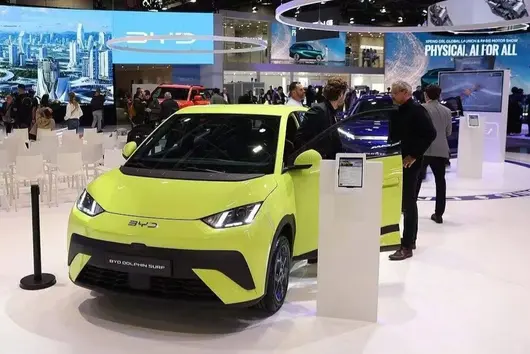

19 Oktober, Timbalan Ketua Eksekutif BYD, Li Ke mengesahkan satu perkara ketika menerima temuduga di Belgium: Syarikat telah membeli lagi 10 kapal pengangkut automotif. Kos keseluruhan pesanan ini melebihi 1 bilion dolar AS, harga sehelai kapal melebihi 100 juta dolar AS, dijanjikan penghantaran antara tahun 2029 hingga 2031. Selepas semua kapal baru ditempatkan, armada BYD sendiri akan bertambah dari 8 unit kepada 18 unit, kapasiti muatan total melebihi 130,000 CEU.
Ini bukan kali pertama BYD membeli kapal. Kapal Ro-Ro pertama yang dibina pada tahun 2022 sebanyak 8 unit, jumlah pelaburan kira-kira 5 bilion yuan, semuanya beroperasi pada September 2025, termasuk Pioneer 1, Changzhou, Hefei, Shenzhen dan lain-lain, di mana Shenzhen merupakan kapal Ro-Ro automotif terbesar di dunia sekarang, boleh memuatkan 9,200 kenderaan standard.
Dari 8 unit kepada 18 unit, dari memastikan kapasiti asas kepada menyokong pengembangan global, kepentingan perkara ini jauh lebih daripada sekadar membeli beberapa helai kapal tambahan.
Mengapa BYD tergesa-gesa membeli kapal, punca langsungnya ialah jumlah eksport meningkat terlalu cepat.
September 2026, jualan luar negara BYD mencapai 180,000 unit, meningkat 154% berbanding tahun lalu, mewakili 39% jumlah jualan bulan tersebut. Eksport kumulatif dari Januari hingga September sebanyak 1.338 juta unit, meningkat 92% berbanding tahun lalu. BYD pada Mac 2026 telah menaikkan sasaran eksport tahunan daripada 1.3 juta unit kepada 1.5 juta unit. Dengan kadar pertumbuhan ini, bergantung pada menyewa kapal atau bergantung kepada syarikat pelayaran pihak ketiga, ketidakpastian adalah terlalu tinggi.
Kapasiti kapal Ro-Ro di dunia pada asalnya sudah ketat. Jun 2026, kadar sewa kapal pengangkut automotif sederhana dan besar setahun sudah meningkat kepada 70,000 dolar AS sehari, meningkat 65% berbanding 42,500 dolar AS akhir 2025, sewa harian kapal Ro-Ro 6,500 tempat parkir sebahagiannya bahkan mencapai 80,000 dolar AS. Institusi yang ada mendakwa, kira-kira 1 juta unit automotif China terpaksa beralih kepada pengangkutan kapal kontena kerana kapal Ro-Ro tidak cukup.
Sewa kapal mahal adalah satu perkara, lebih penting adalah jadual penghantaran dikawal oleh orang lain. Kereta telah siap, kapal tidak dapat dijadualkan, pengedar luar negara dan pengguna mesti menunggu. Bagi jenama yang sedang mengembangkan pasaran luar negara dengan pantas, kos menunggu ini lebih tinggi daripada sewa itu sendiri. Membina armada sendiri, pada hakikatnya sedang membeli kepastian: bila kapal berlepas, ke mana hantar, apa kereta dimuatkan, menentukan sendiri.
Masa titik masa Li Ke mengesahkan pesanan kali ini juga perlu diperhatikan. Beliau menerima temuduga di Belgium, dan Eropah adalah salah satu pasaran di mana pertumbuhan BYD luar negara paling pesat. Tempoh penghantaran kapal baru adalah 2029 hingga 2031, ini bermakna BYD sedang menyediakan jalan awal untuk skala luar negara tiga hingga lima tahun hadapan, bukan penyelesaian kecemasan, ia perancangan.
Melihat pembelian kapal ini dalam kerangka kerja pembangunan jenama BYD, ia menandakan perubahan identiti sekali gus.
Pada masa lalu, pengeluar automotif China keluar luar negara, keupayaan teras ialah mengeluarkan kereta yang kompetitif, kemudian diserahkan kepada syarikat pelayaran untuk dihantar, diserahkan kepada pengedar tempatan untuk dijual. Peranan pengeluar automotif terpusat pada bahagian produk, logistik dan saluran lebih bergantung pada sistem luar. Model ini cekap apabila jumlah eksport tidak besar, tetapi apabila skala eksport tahunan sebuah jenama mendekati tahap dua juta unit, mana-mana ketidakboleh kawalan dalam sebarang peringkat akan diperbesarkan.
Pilihan BYD ialah memegang sendiri peringkat penting. Armada kapal adalah satu langkah, kilang luar negara adalah langkah lain. Kilang Thailand sudah memulakan pengeluaran, kilang Brazil memulakan pengeluaran Julai 2025, kapasiti pengeluaran awal tahunan 150,000 unit, kilang Hungary merancang memulakan satu fasa kapasiti 150,000 unit Suku Kedua 2026, kapasiti pelokalan luar negara sepanjang tahun dijangka melebihi 500,000 unit. Pembinaan kapal dan kilang, satu uruskan aliran, satu uruskan tempatan, digabungkan menjadi satu set infrastruktur eksport luar negara yang lengkap.
Nilai langsung yang dibawa infrastruktur ini adalah ketahanan rantaian bekalan. Semester pertama 2026, situasi Laut Merah, kemacetan pelabuhan, faktor kapasiti ketat berulang kali mengganggu logistik automotif global, siapa ada kapal dia ada inisiatif. BYD membina armada sendiri, ketika kapasiti kekurangan tidak dikawal oleh fluctuation sewa dan peruntukan ruang kargo, selepas kenderaan keluar kilang boleh dihantar mengikut irama sendiri, bekalan komponen kilang luar negara dan penghantaran kenderaan lengkap mempunyai jangkaan lebih stabil.
Lebih dalam sekali lagi, mengawal rantai logistik juga menyokong peningkatan jenama. BYD di Eropah bukan lagi menjual kereta murah, harga model Seal, Dolphin, Denza dan lain-lain sudah masuk teras jenama patungan utama. Jenama tinggi lebih menuntut pengalaman penghantaran, kereta sampai pelabuhan tetapi tidak boleh ambil, atau tunggu kapal beberapa bulan, kerosakan reputasi jenama jauh lebih daripada satu pesanan. Armada sendiri menjadikan jadual penghantaran boleh jangka, ini untuk pengeluar automotif China yang sedang membina pengenalan jenama global, nilai sukar diukur dengan perbezaan kos penghantaran.
Pembelian kapal BYD ini, dilihat dalam gambaran besar eksport automotif China, mewakili persinggahan fasa.
Eksport automotif China pada 2023 melampaui Jepun menjadi No. 1 dunia, tetapi sebelum ini lebih kepada eksport produk, bergantung pada nilai harga dan kekuatan produk. Sampai 2025, 2026, skala jualan luar negara pengeluar automotif utama sudah besar sehingga semata-mata bergantung logistik pihak ketiga dan sistem pengedar tempatan tidak boleh sokong, teras persaingan mula merebab dari peringkat produk ke peringkat sistem.
Pengeluar automotif seperti SAIC, Chery, Changan sudah menempah kapal pengangkutan sendiri, BYD pada saiz dan kelajuan sekarang memimpin satu kedudukan. Persaingan ini bukan perlombaan senjata mudah, ia mencerminkan penilaian bersama: Automotif China untuk benar-benar berdiri teguh di pasaran global, tidak boleh hanya buat kereta bagus, mesti hantar kereta baik, serahkan kereta baik, layan perkhidmatan baik.
Kapasiti kapal Ro-Ro ketat adalah masalah struktur global, kadar pertumbuhan eksport automotif China jauh lebih tinggi daripada kelajuan pengembangan kapal Ro-Ro global. Dalam ketidakseimbangan permintaan dan penawaran ini, siapa yang pertama membina kapasiti pengangkutan marin jauh sendiri, terkawal, dia ada bantal keselamatan lebih dalam pengembangan luar negara. Armada 18 kapal BYD, dalam pola pelayaran automotif global tidak besar, tetapi dalam pengeluar automotif China sudah menjadi kapasiti pengangkutan marin jauh berskala.
Yang lebih perlu diberi perhatian ialah pilihan teknikal kapal baru. Pesanan kali ini adalah kapal pengangkut automotif tenaga Gas Asli Cecair 9200 CEU, menggunakan sistem propulsi dwi-bahan api. Tenaga LNG dalam pelepasan karbon dan pelepasan oksida sulfur jelas lebih baik daripada bahan api tradisional, pelabuhan Eropah terhadap keperluan pelepasan kapal semakin ketat, memilih tenaga LNG bukan sahaja pengubahsuaian alat pengangkutan, tetapi juga untuk masuk ke pasaran piawaian alam sekitar lebih tinggi membuat persiapan kepatuhan. Eksport automotif China sampai hari ini, malah piawaian pelepasan kapal pengangkutan sudah masuk skop pertimbangan, ini sendiri adalah catatan peningkatan kemampuan sistem.
Ulasan Automotif:
10 kapal, 1 bilion dolar AS, jadual penghantaran sampai tahun 2031. Perhitungan ini jika hanya kira kos penghantaran, sukar dikira jelas. Tetapi jika diletakkan dalam gambaran penuh susunan globalisasi BYD, logik jadi jelas: eksport produk bergantung pada kereta, eksport sistem bergantung pada kapal, bergantung pada kilang, bergantung pada satu rangkaian global yang boleh dikawal sendiri.
Kisah eksport jenama automotif China puluhan tahun lalu, kebanyakan masih pada tahap menjual kereta. BYD membeli kapal menunjukkan, pemain utama sudah memikirkan langkah seterusnya: setelah kereta dijual, bagaimana menghantarkannya, bagaimana menyerahkannya ke tangan pengguna, bagaimana supaya seluruh rantai tidak dikawal orang lain. Masalah ini tiada jalan pintas, hanya boleh bina kapal satu persatu, letakkan pelabuhan satu persatu.
Arah betul, baki masa. Dan BYD jelas tidak berniat membiarkan orang lain menentukan masa ini.

In the past few years, looking at Chinese automobiles going global, besides sales volume, factory building, and channels, another change is becoming increasingly obvious: Chinese new energy vehicles are starting to enter more overseas official and police vehicle systems. For automakers, this market values not just brand awareness, but also product reliability, safety, adaptability, and long-term usage costs. Nowadays, BYD vehicles are successively being added overseas, providing a more concrete observation window for the globalization of Chinese new energy vehicles.

From the perspective of overseas markets, BYD currently covers more than 120 countries and regions globally. In the first half of 2026, BYD passenger car and pickup overseas sales approached 790,000 units, an increase of 67.9% year-on-year, achieving good results in multiple markets such as the UK, Brazil, Thailand, etc. Based on this, BYD's new energy official vehicle business is also starting to move from single-point implementation to multiple countries and different usage scenarios.

Uzbekistan is a relatively representative market among them. Previously, the local new energy factory has been put into production, and presidential official vehicles also selected BYD models. Recently, President Shavkat Mirziyoyev of the Republic of Uzbekistan signed a presidential decree to award the BYD team the National Friendship Medal. For a Chinese automotive enterprise, this recognition at the official level is not just brand exposure, it also shows that BYD's long-term operation and localization layout in the local market have entered a deeper stage.
Similar situations are also appearing successively in other countries. Nearly 100 BYD pure electric official vehicles in Pakistan have completed large-scale delivery and entered into use, which is also the first large-scale procurement of new energy official vehicles locally. The Cape Verde government official fleet has fully switched to BYD models, and countries such as Hungary and Austria are also successively incorporating BYD into official vehicle systems such as diplomatic reception.
In terms of police vehicles, BYD's model coverage is also becoming increasingly rich. In September, BYD delivered a batch of Dolphin police cars to the Philippines police, followed by dozens of Destroyer 05s entering the Mexican police force. Previously, BYD also delivered models such as BYD SHARK pickups, Seal, Yuan UP, Seagull, etc. to police in multiple places in Mexico. Products of different sizes and positioning correspond to patrol, duty, and multi-scenario official needs respectively.

The significance of this change lies in the fact that official vehicles and police vehicles are not simply changing the livery of civilian models. In actual use, there are often relatively clear requirements for reliability, safety, space, passability, energy replenishment efficiency, and maintenance costs. BYD has already formed a product matrix ranging from sedans, SUVs to pickups, and therefore can cover more different types of government and police scenarios.
The domestic market is also continuing to expand. According to relevant announcements on the China Government Procurement Network, since the second half of the year, government organs in many places across the country have completed bulk procurement of BYD official vehicles. Previously in the first half of the year, BYD maintained the first place in domestic new energy official vehicle government procurement sales with a market share of over 22%. In the police field, models such as Fang Cheng Bao Titanium 7 have also completed bulk delivery in many places across the country.
If looking at domestic and overseas markets together, BYD's official vehicle business is no longer sporadic procurement of a single model or a single region, but is gradually forming a multi-level layout from domestic government procurement to overseas government reception, to police duty. Behind it relies on product matrix, core technology, and scaled service capabilities.

For a long time in the past, the global official vehicle market, especially high-spec government vehicles, was basically long occupied by traditional joint ventures and overseas brands. Now, with the acceleration of new energy transformation, Chinese brands are starting to enter more and more formal public service scenarios. BYD being successively added overseas also shows that Chinese new energy vehicles going global are further extending from the consumer market to the government and public service sectors.
From ordinary user purchases, to government agency procurement, to police system application, the overseas role of Chinese automotive brands is changing. For BYD, this road ultimately still depends on the product itself to speak, and more and more countries including Chinese new energy models into official and police systems is itself a relatively direct market recognition.
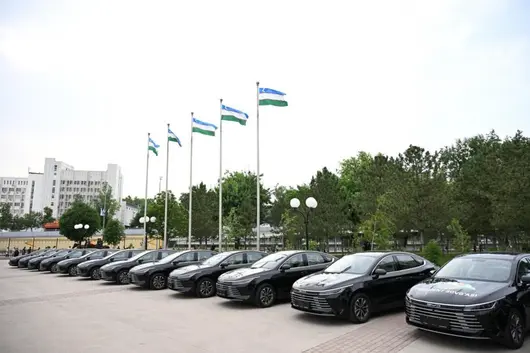

In the first half of 2026, BYD's overseas performance report set records again: overseas sales of passenger cars and pickups reached nearly 790,000 units, a year-on-year increase of 67.9%. Business coverage spans over 120 countries and regions, topping new energy vehicle brand sales in core markets such as the UK, Brazil, and Thailand.
Building on a strong global foundation, BYD's new energy government vehicle business is entering a new stage of "blossoming at multiple points" both domestically and internationally, with overseas benchmarks leading and domestic capacity continuing to expand.

In the overseas market, national-level recognition landed first. Shavkat Mirziyoyev, President of the Republic of Uzbekistan, signed a presidential decree awarding the BYD team the national-level medal "Friendship Medal".
This is another high-level endorsement given by the Uzbek side to BYD following the commissioning of the local new energy factory and the selection of BYD models for government vehicles at the Presidential Office, and has become a vivid footnote on Chinese new energy vehicles winning trust in the overseas government market with their strength.
The breakthrough in Uzbekistan is not an isolated case. BYD's overseas government vehicle layout is penetrating from benchmark markets to a wider scope. Nearly 100 BYD pure electric government vehicle orders in Pakistan have been delivered and put into use on a large scale. This is Pakistan's first large-scale procurement of new energy government vehicles, also marking the country as a benchmark market for BYD's overseas police vehicle cooperation.
At the same time, the government fleet of Cape Verde has fully switched to BYD. Hungary, Austria, and other countries have also successively included BYD models in official vehicle systems such as diplomatic reception.

In the professional sector of police vehicles, BYD's overseas layout is further accelerating.
In September, BYD delivered a batch of Dolphin police cars to the Philippines Police; recently, dozens of Destroyer 05s officially joined the Mexican police force. So far, BYD has delivered multiple models including BYD SHARK pickups, Seal, Yuan UP, and Seagull to various local police departments in Mexico, covering diverse duty requirements. The continuous landing in these two markets means that BYD's new energy police vehicles are moving from single-point demonstration to scaled and normalized application.

In the domestic market, BYD also firmly holds the top position in new energy government vehicle procurement. Announcements from the China Government Procurement Network show that since the second half of the year, government agencies in many places across the country have completed bulk procurement of BYD government vehicles. Following securing the first place in domestic new energy government vehicle government procurement sales with a market share of over 22% in the first half of the year, the domestic government market has given positive affirmation again. In the police vehicle field, police vehicles such as Fang Cheng Bao Titanium 7 have also completed bulk delivery in many places across the country.

Currently, BYD has built a full-category product matrix covering sedans, SUVs to pickups, which can fully adapt to diverse police scenarios such as security patrol, traffic law enforcement, and emergency response, helping to promote the electrification upgrade of police mobility.
The government vehicle track once dominated by joint venture brands is seeing more and more "Chinese faces". From national-level recognition overseas to bulk procurement by police forces in multiple countries, from leading government procurement share domestically to the landing of full-category matrices, BYD is accelerating the global government layout of Chinese new energy vehicles with its hard technical strength and brand credibility, and is also writing a new footnote for "Chinese Smart Manufacturing".
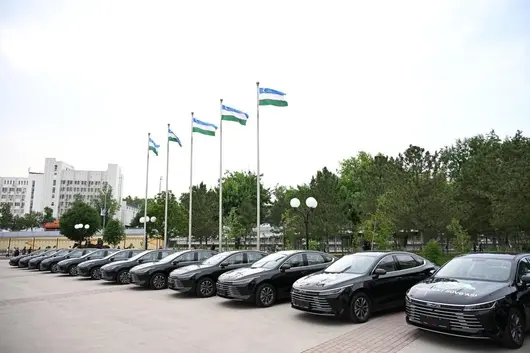


Official vehicle procurement has always been recognized as a notoriously difficult market for the automotive industry to enter.
Every penny spent by the purchaser is fiscal funds; standards are stricter than anyone's: reliability, after-sales service, batch delivery capability. One failure in any area means elimination. Over the past decades, from capital institutions to street police teams, this market has basically been controlled by joint venture and imported fuel brands.
Now, a large crack has been pushed open in the door. BYD is the one pushing the door open.
BYD's 2026 first-half financial report shows, overseas sales of passenger cars and pickups in the first half reached nearly 790,000 units, a year-on-year increase of 67.9%, business covering over 120 countries and regions globally, topping the new energy vehicle brand sales chart in core markets such as the UK, Brazil, and Thailand. On this basic foundation, BYD's new energy official vehicle business is entering a new stage of 'blooming in multiple points' domestically and internationally — overseas benchmarks leading, continuous domestic expansion, this expansion path is becoming increasingly clear.
Let's look at the heaviest recognition first.
Not long ago, President Shavkat Mirziyoyev of the Republic of Uzbekistan signed a presidential decree, awarding the BYD team the National Order of the Republic of Uzbekistan — 'Friendship Order'. This honor is the strongest footnote to BYD's deep cultivation of the Central Asian market, and another high-level endorsement from this Central Asian country after the local new energy factory went into production and the Presidential Official Cars selected BYD models. Chinese new energy vehicles winning trust from overseas government markets through strength, this is a vivid microcosm.

Uzbekistan Official Vehicle Fleet
Uzbekistan's recognition is not an isolated case; BYD's overseas official vehicle layout is infiltrating from benchmark markets to a wider scope.
Nearly 100 orders of BYD pure electric official vehicles in Pakistan have been delivered and put into use on a large scale — this is Pakistan's first large-scale procurement of new energy official vehicles, making it a landmark market for BYD's overseas police vehicle cooperation. The Cape Verde Government Official Vehicle Fleet has fully switched to BYD, Hungary, Austria, and other countries have also successively incorporated BYD models into the official vehicle system such as foreign affairs reception.

Pakistan Police Vehicle Delivery Ceremony
In this professional niche area of police vehicles, the pace of overseas advancement is accelerating.
In September, BYD delivered a batch of Dolphin police vehicles to the Philippine Police, pushing the electrification of Philippine official vehicles forward. Recently, dozens of Destroyer 05 vehicles were also formally added to the Mexican Police Force as police vehicles. As of now, BYD has delivered multiple models including BYD SHARK pickup, Seal, Yuan UP, Seagull to police forces in various places in Mexico, covering diverse duty requirements. The continuous landing in the two countries' markets marks that BYD's new energy police vehicles are moving from single-point demonstration to scaled and normalized application.

Philippines Dolphin Police Vehicle Delivery Scene
Domestically, BYD also firmly holds a top position in new energy official vehicle procurement.
Announcements from the China Government Procurement Network show that since the second half of the year, government agencies in many places across the country have completed bulk procurement of BYD official vehicles. According to public statistics, BYD secured the number one position in domestic new energy official vehicle government procurement sales for the first half of the year with a market share of over 22%, this bulk procurement in multiple places counts as another affirmation from the domestic government market.
Why is official vehicle electrification accelerating? Policy is driving it clearly: According to the Ministry of Finance's deployment, for new energy vehicles that can meet actual usage needs, the proportion of new energy vehicles in the total annual official vehicle procurement is in principle not lower than 30%; for vehicles used in routes with fixed routes such as confidential communication, mainly driving in urban areas, the proportion is in principle 100% procurement of new energy. The policy has opened a door, whether to catch it depends on the car company's own products.
In the field of police vehicles, Fangchengbao Titanium 7 and other police vehicles have completed bulk delivery in many places across the country. BYD has built a full-category product matrix covering sedans, SUVs to pickups, which can comprehensively adapt to diverse police scenarios such as public security patrol, traffic police enforcement, emergency response, etc., aiding the electrification upgrade of police travel.

Fangchengbao Titanium 7 Public Security Police Vehicle Queue
Let's say a few practical words at the end.
The logic of official vehicle orders is not the same as buying for personal use. Government procurement looks at total lifecycle costs, after-sales networks, and bulk delivery capabilities. When choosing a personal vehicle, you don't have to follow the official fleet. Don't just blindly rush because the police are using something.
Additionally, 'Friendship Order' honors recognize the contribution of the enterprise to cultivating local industries, and cannot be directly converted into product strength. When it really comes to spending money, still return to your own ledger: budget, scenarios, charging conditions, verify item by item.
But the trend is clearly visible. Official vehicles are a high-end track for measuring the comprehensive strength of automobile brands. From being monopolized by joint venture brands to becoming China's option for global government electrification, BYD is writing a new footnote of Chinese manufacturing with technological hard power and brand credibility, pushing the global government layout of Chinese new energy vehicles one step further forward.

As the competition in the global new energy vehicle sector extends from consumer markets to official and public domains, BYD is continuously expanding its influence in the new energy official vehicle track with a posture of "breakthroughs on both domestic and international lines". In the first half of 2026, BYD's overseas passenger car and pickup sales approached 790,000 units, up 67.9% year-on-year, with business covering over 120 countries and regions worldwide, and topping the new energy vehicle brand sales chart in core markets such as the UK, Brazil, and Thailand. Relying on this global baseline, BYD new energy official vehicles have successively entered the overseas roster, forming a clear path of "overseas benchmark leading, domestic continuous expansion".

National Level Recognition Implemented: Uzbekistan "Friendship Medal" Becomes Overseas Benchmark
Recently, President Mirziyoyev of the Republic of Uzbekistan signed a presidential decree, awarding the "Friendship Medal" to the BYD team. This is another high-level endorsement given by the country's official side to BYD following the production launch of the local new energy factory and the selection of BYD models for official vehicles at the Presidential Office. For Chinese new energy vehicle brands accelerating globalization, this is not only an honor but also means recognition by the overseas government affairs system regarding products, services, and localization contributions.

Mass Replacement of Overseas Government Fleets: From Pakistan to Cape Verde, Hungary, Austria
Uzbekistan is not an isolated case. Nearly 100 BYD electric official vehicles in Pakistan have been mass-delivered and put into use. This is Pakistan's first large-scale procurement of new energy official vehicles, making the country a milestone market for BYD's overseas police vehicle cooperation. The Cape Verde government official fleet has comprehensively switched to BYD; Hungary, Austria, and other countries have incorporated BYD models into official vehicle systems such as diplomatic reception and police patrols. The layout of overseas official vehicles is penetrating from single-point benchmarks to wider regions.

Police Scene Scaling: Philippines, Mexican Police Forces Equip Successively
In the professional niche field of police vehicles, BYD's overseas layout is further accelerated. In September, BYD delivered a batch of Dolphin police cars to the Philippines police; recently, dozens of Destroyer 05 entered the Mexican police force as police cars. So far, BYD has delivered multiple models including BYD SHARK pickup, Seal, Yuan UP, Seagull, etc. to police departments in multiple places in Mexico, covering diverse duty needs. Police vehicles often face high-load conditions such as daily patrols, high-speed pursuits, and rough road conditions, which is a comprehensive test of the three-electric system, chassis, and active/passive safety. Relying on professional modification capabilities and mature technology platforms, BYD has verified reliability and durability in actual combat in multiple places, promoting new energy police vehicles from demonstration operations to scaled and normalized application.

Domestic Government Procurement Continues to Lead: Securing Mass Orders in Multiple Places After Exceeding 22% Share
In the domestic market, BYD also ranks firmly at the top of new energy official vehicle procurement. Announcements from the China Government Procurement Network show that since the second half of the year, government agencies in many places across the country have completed mass procurement of BYD official vehicles. This is another affirmation given by the domestic government affairs market after BYD retained the top sales position in domestic new energy official vehicle government procurement with a market share exceeding 22% in the first half of the year. In the police field, police vehicles such as Fang Cheng Bao Ti 7 have also completed mass delivery in many places across the country. From mass procurement by the capital's agencies to the gradual perfection of multiple police vehicle matrices in many places, BYD's coverage breadth and depth in the domestic government affairs market continue to improve.

All-Scenario, All-Category: Systematic Competitiveness Under Complex Government Affairs Needs
Vehicle needs for government and public institutions are highly complex, including grand and atmospheric high-specification administrative reception, as well as daily security patrols, and even potentially facing special scenarios such as field emergency rescue. BYD has built a full-category product matrix spanning sedans, SUVs, hard-core off-road vehicles to pickups, and adopts an electric/hybrid dual-line layout, equipped with 2nd Generation Blade Battery and fast-charging technology, DM-i hybrid, and God's Eye assisted driving technology, adaptable to diverse scenarios such as reception, inspection, patrol, law enforcement, and emergency response. From high-end comfortable riding to hard-core professional vehicles, its systematic advantages are rapidly responding to complex government affairs needs.

Global Market Support: From Official Vehicle First Choice to Chinese Cars Recognized Globally
From being dominated by joint venture brands in the past to becoming an important Chinese option for global government electricization, BYD is accelerating the global government affairs layout on this high-end track that tests the comprehensive strength of automotive brands with hard technology power and brand credibility. BYD has consecutive four years retained the sales champion in domestic new energy vehicles; overseas business covers more than 120 countries and regions worldwide, topping the new energy vehicle brand sales chart in core markets such as the UK, Brazil, and Thailand. The breakthroughs on both domestic and overseas sides of the official vehicle market are not only footnotes to China's intelligent manufacturing strength but also provide a new Chinese solution for global official travel electricization.
With continuous deepening of overseas benchmark markets and steady release of domestic government procurement orders, BYD new energy official vehicles are driving into the center of the global government vehicle stage with a more complete product matrix and a more mature technology system.
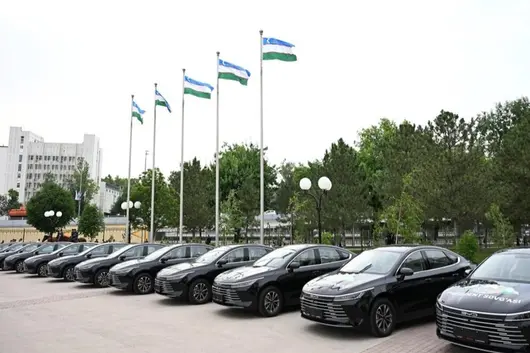

Semasa persaingan kenderaan hijau baharu dari pasaran pengguna merambah ke domain perkhidmatan awam dan kerajaan, BYD sedang dengan sikap 'pecahan dua hala dalam dan luar negara', terus memperluas pengaruh dalam trek kenderaan awam hijau baharu. Separuh tahun pertama 2026, jualan kenderaan penumpang dan pikap BYD di luar negara hampir 790,000 unit, naik 67.9% berbanding tahun sebelumnya, operasi meliputi lebih 120 negara dan wilayah, dan menjadi juara jualan jenama kenderaan hijau baharu di pasaran teras seperti United Kingdom, Brazil, Thailand. Berlandaskan asas global ini, kenderaan awam hijau BYD secara beransur-ansur dimasukkan ke dalam daftar luar negara, membentuk laluan yang jelas 'pemandu piawai luar negara, pengembangan berterusan dalam negara'.
Pengiktirafan Kebangsaan Berhasil: Pinggan Persahabatan Uzbekistan Menjadi Piawai Luar Negara
Baru-baru ini, Presiden Republik Uzbekistan, Mirziyoyev, menandatangani perintah presiden, menganugerahkan 'Pinggan Persahabatan' kepada pasukan BYD. Ini adalah sokongan peringkat tinggi lagi daripada pihak rasmi negara itu selepas kilang kenderaan hijau baharu tempatan beroperasi dan kenderaan awam Presiden dipilih model BYD. Bagi jenama kenderaan hijau baharu Cina yang mempercepatkan globalisasi, ini bukan sahaja penghargaan, tetapi juga bermaksud produk, perkhidmatan dan sumbangan tempatan mendapat pengiktirafan dari sistem perkhidmatan awam luar negara.
Penukaran Armada Kerajaan Luar Negara Secara Massal: Dari Pakistan ke Cape Verde, Hungary, Austria
Uzbekistan bukan satu-satunya kes. Pesanan hampir 100 kenderaan awam elektrik tulen BYD di Pakistan telah diserahkan dan digunakan secara besar-besaran, ini adalah pembelian kenderaan awam hijau baharu secara besar-besaran pertama di Pakistan, dan menjadikan negara itu sebagai pasaran bersejarah untuk kerjasama kenderaan polis BYD di luar negara. Armada awam kerajaan Cape Verde telah sepenuhnya bertukar ke BYD; Hungary, Austria dan negara lain memasukkan model BYD ke dalam sistem kenderaan rasmi seperti perwakilan diplomatik, pengawalan polis. Penempatan kenderaan awam luar negara kini meresap dari titik piawai tunggal ke kawasan yang lebih luas.
Penggunaan Polis Berskala: Polis Filipina, Mexico Mengikut Secara Berturutan
Dalam bidang khusus penggunaan kenderaan polis ini, pengembangan BYD di luar negara semakin laju. September ini, BYD menghantar serangkaian kenderaan polis Dolphin kepada polis Filipina; beberapa hari kebelakangan ini, puluhan unit Destroyer 05 rasmi menjadi kenderaan polis di polis Mexico. Sehingga kini, BYD telah menghantar pelbagai model seperti BYD SHARK Pick-up, Seal, Yuan UP, Seagull kepada pelbagai pihak polis di Mexico, merangkumi pelbagai keperluan tugas. Penggunaan kenderaan polis sering menghadapi keadaan beban tinggi seperti patroli harian, kejaran berhalaju tinggi, jalan rosak teruk, ini adalah ujian komprehensif terhadap Bateri, Motor dan Kawalan, Chassis serta keselamatan aktif dan pasif. BYD bergantung pada keupayaan pengubahsuaian khusus dan platform teknologi matang, mengesahkan kebolehpercayaan dan ketahanan dalam pelbagai ujian sebenar di banyak tempat, memajukan penggunaan kenderaan polis hijau baharu dari operasi demonstrasi kepada aplikasi berskala dan biasa.
Pemimpin Berterusan Perolehan Kerajaan Dalam Negara: Mendapat Pesanan Massal di Pelbagai Tempat Setelah Saham Lebih 22%
Pasaran dalam negara, BYD juga teguh kekal di barisan hadapan perolehan kenderaan awam hijau baharu. Laman Perolehan Kerajaan Cina menunjukkan, sejak separuh tahun kedua, banyak agensi kerajaan di seluruh negara telah menyiapkan perolehan kenderaan awam BYD secara besar-besaran. Ini adalah pengiktirafan lagi dari pasaran perkhidmatan awam dalam negara selepas BYD menjadi Juara Perolehan Kenderaan Awam Hijau Baharu Kerajaan dalam negara pada separuh tahun pertama dengan saham pasaran lebih 22%. Dalam bidang polis, kenderaan polis seperti Equation Leopard Titanium 7 juga telah disiapkan penghantaran besar-besaran di banyak tempat di seluruh negara. Dari perolehan besar-besaran agensi ibu negara sehingga lengkap matriks kenderaan polis di banyak tempat, pengkajian BYD dalam pasaran perkhidmatan awam dalam negara terus ditingkatkan dalam luas dan dalam.
Semua Skenario, Semua Kategori: Daya Saing Bersepadu di bawah Keperluan Perkhidmatan Awam yang Kompleks
Keperluan penggunaan kenderaan agensi kerajaan dan awam sangat kompleks, merangkumi pelantikan pentadbiran berskala tinggi yang megah, juga melibatkan pengawalan harian, bahkan mungkin menghadapi situasi khas seperti bantuan kecemasan di pedalaman. BYD telah membina matriks produk semua kategori merentasi sedan, SUV, off-road tegar hingga pikap, dan menggunakan penempatan dua hala elektrik tulen dan hibrid, dilengkapi Bateri Pisau Generasi Kedua serta teknologi pengisian pantas, DM-i Hibrid, teknologi pemanduan bantuan Mata Dewa, boleh disesuaikan dengan pelbagai skenario seperti pelantikan, pemeriksaan, patroli, pentadbiran undang-undang, tindak balas kecemasan. Dari penumpang selesa tinggi hingga kenderaan profesional hard, kelebihan bersepadunya sedang melaju respons keperluan perkhidmatan awam yang kompleks.
Dukungan Pasaran Global: Dari Pilihan Utama Kenderaan Awam kepada Kereta Cina yang Diiktiraf di Seluruh Dunia
Dari dahulu yang dipimpin oleh jenama gabungan, kini menjadi pilihan Cina penting untuk elektrifikasi perkhidmatan awam global, BYD sedang mempercepatkan pengembangan perkhidmatan awam global di trek premium ini yang menguji keseluruhan kekuatan jenama kenderaan, dengan kekuatan teknologi keras dan kredibiliti jenama. BYD telah menang juara jualan kenderaan hijau baharu dalam negara selama empat tahun berturut-turut; operasi luar negara meliputi lebih 120 negara dan wilayah, menjadi juara jualan jenama kenderaan hijau baharu di pasaran teras seperti United Kingdom, Brazil, Thailand. Pecahan dua hala dalam dan luar negara di pasaran kenderaan awam, bukan sahaja catatan kekuatan pembuatan pintar Cina, tetapi juga menyediakan rancangan Cina baharu untuk elektrifikasi pengangkutan awam global.
Seiring pengilangan mendalam di pasaran piawai luar negara berterusan, dan pesanan perolehan kerajaan dalam negara dibebaskan dengan stabil, kenderaan awam hijau baharu BYD kini bergerak ke tengah pentas perkhidmatan awam global dengan matriks produk yang lebih lengkap dan sistem teknologi yang lebih matang.

BYD's 2026 first-half financial report shows, during the first half, overseas sales of BYD passenger cars and pickups approached 790,000 units, up 67.9% year-on-year, business covering over 120 countries and regions globally, topping the new energy vehicle brand sales chart in core markets such as the UK, Brazil, and Thailand. On top of the rapidly growing global baseline, BYD's new energy government vehicle business is entering a new stage of "blossoming at multiple points" domestically and internationally: from receiving "national-level" recognition from Uzbekistan, to mass implementation in markets such as Pakistan and Mexico; from bulk procurement by capital city agencies to the gradual perfection of the police vehicle matrix, this "overseas benchmark leading, continuous domestic expansion" government vehicle expansion path is becoming increasingly clear.
Recently, President Shavkat Mirziyoyev of the Republic of Uzbekistan signed a presidential decree, awarding the BYD team the Republic of Uzbekistan's national-level medal - "Friendship Medal". This honor becomes the most powerful testament to BYD's deep cultivation of the Central Asian market. This is following the commissioning of the local new energy factory and the selection of BYD models for presidential official vehicles, another high-level endorsement given by the country's authorities to BYD, and also becoming a vivid microcosm of Chinese new energy vehicles winning trust in the overseas government market through strength.

Recognition in Uzbekistan is not an isolated case, BYD's overseas government vehicle layout is penetrating from benchmark markets to a wider scope. Nearly 100 BYD pure electric government vehicle orders in Pakistan have been delivered and put into use on a large scale, this is Pakistan's first large-scale procurement of new energy government vehicles, marking Pakistan as a landmark market for BYD's overseas police vehicle cooperation. In addition, the Cape Verde government official vehicle fleet has fully switched to BYD, Hungary, Austria and other countries have also successively included BYD models in official vehicle systems such as diplomatic reception.

In this specialized segment of police vehicles, BYD's overseas layout is accelerating further. In September, BYD delivered a batch of Dolphin police cars to the Philippine police, promoting the continued electrification of public official vehicles in the Philippines. Recently, dozens of Destroyer 05s were also formally added to the Mexican police force as police vehicles. So far, BYD has delivered multiple models including BYD SHARK pickup, Seal, Yuan UP, Seagull, etc. to police in multiple places in Mexico, covering diverse duty requirements. The continuous implementation in the two markets marks that BYD's new energy police vehicles are moving from single-point demonstration to large-scale and normalized application.

In the domestic market, BYD also firmly stays at the top position of new energy government vehicle procurement. An announcement on the China Government Procurement Network shows that since the second half of the year, government agencies in many places across the country have completed bulk procurement of BYD government vehicles, this is following BYD retaining the first place in domestic new energy government vehicle government procurement sales with a market share of over 22% in the first half of the year, another affirmation given by the domestic government market.
In the field of police vehicles, Fang Cheng Bao Titanium 7 and other police vehicles have also completed bulk delivery in many places across the country. BYD has built a full-category product matrix covering sedans, SUVs to pickups, capable of fully adapting to diverse police scenarios such as security patrols, traffic police enforcement, emergency response, etc., helping upgrade police transportation to electrification.

From being monopolized by joint venture brands to becoming the Chinese option for global government electrification, BYD is writing a new testament for Chinese manufacturing with hard strength. On this high-end track measuring the comprehensive strength of automobile brands, accelerating the global government layout of Chinese new energy vehicles with technical hard strength and brand credibility.
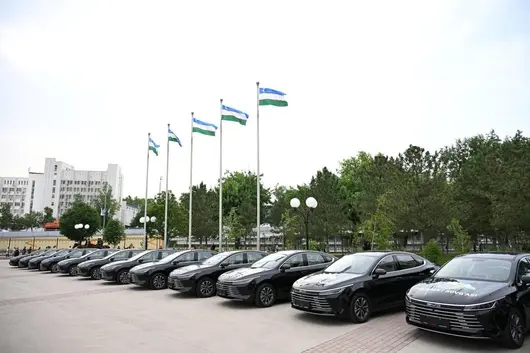

Laporan kewangan Semester Pertama 2026 BYD menunjukkan bahawa pada semester pertama tahun ini, jualan kenderaan persendirian dan pikap BYD di luar negara hampir mencapai 790,000 unit, meningkat 67.9% berbanding tahun lalu. Operasi perniagaannya merangkumi lebih 120 negara dan wilayah di seluruh dunia, menduduki tempat teratas jenama kenderaan elektrik baharu di pasaran utama seperti United Kingdom, Brazil, dan Thailand. Di atas asas pasaran global yang berkembang pesat, perniagaan kenderaan rasmi elektrik baharu BYD memasuki fasa baharu "berbilang lokasi berkembang": dari mendapat pengiktirafan "tahap negara" Uzbekistan, ke pelaksanaan pukal di pasaran Pakistan, Meksiko; dari pembelian pukal institusi ibu negara, ke penyempurnaan matriks kenderaan polis. Laluan pengembangan kenderaan rasmi ini "pencapaian luar negara memimpin, pengembangan dalam negara berterusan" semakin jelas.
Tidak lama dahulu, Presiden Republik Uzbekistan, Shavkat Mirziyoyev, menandatangani perintah presiden, menganugerahkan Pasukan BYD dengan Darjah Kebesaran Negara Republik Uzbekistan - "Darjah Persahabatan". Kehormatan ini menjadi bukti kukuh BYD mendalami pasaran Asia Tengah. Ini adalah sokongan peringkat tinggi seterusnya daripada pihak rasmi negara tersebut selepas kilang kenderaan elektrik baharu tempatan beroperasi dan kereta rasmi Istana Presiden menggunakan model BYD. Ia juga menjadi gambaran hidup bagi kenderaan elektrik baharu China memenangi kepercayaan pasaran awam luar negara atas kekuatan sebenar.
Pengiktirafan Uzbekistan bukan satu-satunya contoh, rancangan kenderaan rasmi luar negara BYD kini meresap dari pasaran panduan ke kawasan lebih luas. Pesanan hampir 100 unit kenderaan rasmi murni elektrik BYD Pakistan telah diserahkan dan digunakan secara besar-besaran. Ini adalah pembelian pukal pertama kenderaan rasmi elektrik baharu Pakistan, menandakan Pakistan menjadi pasaran tanda tangan kerjasama kenderaan polis luar negara BYD. Selain itu, armada kenderaan rasmi kerajaan Tanjung Verde telah sepenuhnya bertukar kepada BYD, Hungary, Austria juga telah memasukkan model BYD ke dalam sistem kenderaan rasmi termasuk penerimaan diplomatik.
Dalam bidang khusus kenderaan polis ini, rancangan luar negara BYD semakin dipercepatkan. Pada September, BYD menyerahkan beberapa kereta polis Dolphin kepada polis Filipina, mendorong elektrifikasi kenderaan rasmi Filipina. Baru-baru ini, puluhan unit Destroyer 05 juga telah dimasukkan secara rasmi ke dalam pasukan polis Meksiko sebagai kereta polis. Setakat kini, BYD telah menyerahkan pelbagai model seperti BYD SHARK pikap, Seal, Yuan UP, Seagull kepada polis pelbagai wilayah di Mexico, memenuhi pelbagai keperluan tugas. Penerapan berterusan di dua pasaran ini menandakan kenderaan polis elektrik baharu BYD bergerak dari demonstrasi tunggal kepada aplikasi berskala dan amalan berterusan.
Pasaran dalam negara, BYD juga kekal di kedudukan teratas pembelian kenderaan rasmi elektrik baharu. Pengumuman Laman Web Perolehan Kerajaan China menunjukkan, sejak pertengahan tahun, banyak agensi kerajaan di seluruh negara telah menyelesaikan pembelian pukal kenderaan rasmi BYD. Ini adalah pengesahan seterusnya daripada pasaran awam domestik selepas BYD mempertahankan nombor satu jualan perolehan kerajaan kenderaan rasmi elektrik baharu dalam negeri dengan pasaran lebih 22% pada semester pertama.
Dalam bidang kenderaan polis, Fang Cheng Bao Titan 7 dan kenderaan polis lain juga telah menyelesaikan penyerahan pukal di banyak wilayah negara. BYD telah membina matriks produk pelbagai kategori merangkumi kenderaan sedan, SUV hingga pikap, boleh menyesuaikan dengan pelbagai senario polis seperti rondaan keselamatan, penguatkuasaan trafik, tindak balas kecemasan, membantu peningkatan elektrifikasi perjalanan polis.
Dari yang didominasi oleh merek gabungan, menjadi pilihan China bagi elektrifikasi awam global, BYD sedang menulis catatan baharu Pembuatan Pintar China dengan kekuatan sebenar. Di segmen bertaraf tinggi yang mengukur kekuatan komprehensif jenama automotif ini, dengan kekuatan teknologi dan kepercayaan jenama, mempercepatkan pengembangan perancangan global kenderaan elektrik baharu China.









© 2024 Bitauto.com. All Rights Reserved.
Bitauto (www.yiche.com and www.bitauto.com) is one of the most visited automotive websites in China. We provide detailed info on Chinese car brands available in your area. Please note that the information provided on this website is based on publicly available data and is for reference only. It may not be fully updated or accurate at all times.

Help us improve our website


