

HomeEV

Search History
Popular Searches
Dealer Login / Sign Up


















According to Thai media reports, the Federation of Thai Industries (FTI) and the Thailand Automotive Industry Association (TAIA) recently jointly urged the government to formulate more complete local parts policies in the future, encouraging or even requiring electric vehicle manufacturers to prioritize components produced by local suppliers when manufacturing in Thailand, rather than relying heavily on imports.

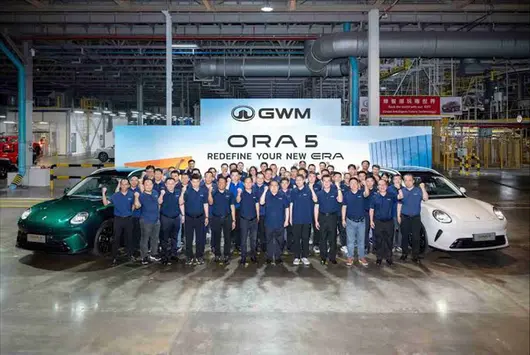
Currently, including Chinese brands such as BYD, Great Wall, MG, AION, and Changan, have already set up production bases in Thailand, and some models have even started CKD assembly locally. However, industry observers point out that many key parts are still imported from China, making it difficult for traditional Thai auto parts suppliers to truly benefit.
FTI Chairman Suwat Supakandechakul stated that Thailand already has the capability to produce many auto parts, including car seats, wiring harnesses (Wiring Harness), windshields, and other products, and local suppliers are fully capable of meeting factory needs. If these parts can be prioritized for Thailand manufacturing, it not only reduces overall production costs but also allows the local parts industry to gain greater development space.

In addition, he also suggested that the government could provide tax incentives (Tax Deduction) and other reward measures for factories with a higher proportion of local parts used, further encouraging factories to increase their localization rate, and even hoped that in the future, even high-value parts like chassis (Chassis) could be gradually realized for local production.
Besides supporting the local supply chain, Thailand's automotive industry also worries about the continuous changes in the international trade environment. Industry observers point out that the US has continued to strengthen inspections on "transshipment (Transshipment)" in recent years. If products exported to the US have most parts still from China and only assembled in Thailand, they may face stricter tariff inspections in the future, even affecting export competitiveness.
Therefore, increasing the proportion of local parts usage can not only strengthen Thailand's automotive industry competitiveness but also help reduce future international trade risks. On the other hand, the Thailand Automotive Industry Association (TAIA) also submitted several suggestions to the government, including adjusting the consumption tax policy for imported electric vehicles (CBU) to protect the local manufacturing industry.

At the same time, the association also suggested that the government could provide individual income tax incentives for consumers who purchase Thai-assembled cars, encouraging more consumers to choose locally produced models. In addition, government departments should also prioritize Thai-assembled electric vehicles when procuring official vehicles in the future to further drive market demand.
In fact, Chinese brands have invested heavily in Thailand in recent years, not only driving the location to become one of the most important EV production bases in Southeast Asia but also attracting a large number of related industries to move in. However, for the Thai government and local industries, the true goal is not merely to attract factory setup, but to hope these investments can further drive local supply chain growth, benefiting more Thai parts factories, component suppliers, and related employment opportunities.

If the government formally promotes stricter localization policies in the future, Chinese brands will inevitably need to further expand cooperation with local Thai suppliers and increase the proportion of parts procurement, which may become an important direction for Thailand's EV industry development in the future.
It is worth noting that this policy currently still belongs to suggestions proposed by industry groups to the government, not formal regulations. However, with Thailand continuing to promote automotive industry upgrades, whether more clear localization standards will be formulated in the future will become the focus of major factory owners.

Menurut laporan media Thailand, Persekutuan Industri Thailand (Federation of Thai Industries, FTI) serta Persatuan Industri Automotif Thailand (TAIA) baru-baru ini bersama-sama menyeru kerajaan, pada masa hadapan perlu merangka dasar komponen tempatan yang lebih baik, menggalakkan malah meminta pengeluar kenderaan elektrik untuk memprioritaskan penggunaan komponen yang dihasilkan oleh pembekal tempatan ketika menghasilkan di Thailand, bukannya terlalu bergantung kepada import.
Sekarang, termasuk jenama China seperti BYD, Great Wall, MG, AION, Changan telah menubuhkan pangkalan pengeluaran di Thailand, beberapa model kereta malah telah mula melakukan pengumpulan CKD di lokasi tersebut. Namun, industri menyatakan, banyak komponen kritikal masih diimport dari China, menyebabkan pembekal komponen automotif tradisional di Thailand tidak benar-benar menerima manfaat.
Yang dipengerusi FTI, Suwat Supakandechakul menyatakan, Thailand sebenarnya sudah mempunyai kemampuan menghasilkan banyak komponen automotif, termasuk tempat duduk kereta, Wiring Harness, cermin hadapan dan lain-lain, pembekal tempatan mempunyai kemampuan sepenuhnya untuk memenuhi keperluan kilang kereta. Jika komponen ini dapat diprioritaskan untuk pembuatan Thailand, bukan sahaja dapat mengurangkan kos pengeluaran keseluruhan, tetapi juga membolehkan industri komponen tempatan memperoleh ruang perkembangan yang lebih besar.
Sebagai tambahan, beliau juga menyarankan kerajaan boleh memberikan langkah ganjaran seperti pengecualian cukai (Tax Deduction) kepada kilang kereta yang menggunakan nisbah komponen tempatan yang lebih tinggi, untuk seterusnya menggalakkan kilang kereta meningkatkan kadar tempatanisasi, malah berharap pada masa hadapan komponen bernilai tinggi seperti Chassis, juga boleh secara beransur-ansur mencapai pengeluaran tempatan.
Selain menyokong rantaian bekalan tempatan, industri automotif Thailand juga bimbang persekitaran perdagangan antarabangsa terus berubah. Industri menyatakan, Amerika Syarikat dalam beberapa tahun kebelakangan ini terus mengukuhkan pemeriksaan terhadap「Penghantaran Semula (Transshipment)」. Jika produk yang dieksport ke Amerika Syarikat, kebanyakan komponennya masih dari China, hanya pengumpulan selesai di Thailand, pada masa hadapan mungkin menghadapi pemeriksaan tarif yang lebih ketat, malah menjejaskan keupayaan bersaing eksport.
Oleh itu, meningkatkan nisbah penggunaan komponen tempatan, bukan sahaja dapat mengukuhkan keupayaan bersaing industri automotif Thailand, tetapi juga membantu mengurangkan risiko perdagangan antarabangsa pada masa hadapan. Di samping itu, Persatuan Industri Automotif Thailand (TAIA) juga mengajukan pelbagai cadangan kepada kerajaan, termasuk mengubah dasar cukai perbelanjaan bagi kenderaan elektrik import (CBU), untuk melindungi industri pembuatan tempatan.
Pada masa yang sama, persatuan juga menyarankan kerajaan boleh memberikan diskaun cukai pendapatan peribadi kepada pengguna yang membeli kereta yang dirakam di Thailand, menggalakkan lebih banyak pengguna memilih model yang dihasilkan tempatan. Selain itu, apabila jabatan kerajaan pada masa hadapan membeli kenderaan rasmi, juga perlu memprioritaskan kenderaan elektrik yang dirakam di Thailand, untuk seterusnya mendorong keperluan pasaran.
Sebenarnya, dalam beberapa tahun kebelakangan ini, jenama China telah melakukan pelaburan besar-besaran di Thailand, tidak sahaja mendorong kawasan setempat menjadi salah satu pangkalan pengeluaran kenderaan elektrik paling penting di Asia Tenggara, malah menarik banyak industri berkaitan untuk memasuki kawasan tersebut. Namun, bagi kerajaan Thailand dan industri setempat, sasaran sebenar bukan sahaja menarik kilang kereta untuk menubuhkan pengeluaran, tetapi berharap pelaburan ini dapat seterusnya mendorong pertumbuhan rantaian bekalan tempatan, membolehkan lebih banyak kilang komponen Thailand, pembekal komponen dan peluang pekerjaan berkaitan menerima manfaat.
Jika kerajaan pada masa hadapan secara rasmi menggerakkan dasar tempatanisasi yang lebih ketat, jenama China pasti perlu meningkatkan lagi kerjasama dengan pembekal tempatan Thailand, meningkatkan nisbah pembelian komponen, ini juga mungkin menjadi arah penting untuk pembangunan industri EV Thailand pada masa hadapan.
Perlu diperhatikan, dasar ini pada masa ini masih tertakluk kepada cadangan yang dikemukakan oleh kumpulan industri kepada kerajaan, bukan undang-undang rasmi. Namun, seiring Thailand terus menggerakkan penambahbaikan industri automotif, pada masa hadapan sama ada akan menetapkan standard tempatanisasi yang lebih jelas, akan menjadi titik tumpuan yang diberi perhatian oleh kebanyakan kilang kereta.
© 2024 Bitauto.com. All Rights Reserved.
Bitauto (www.yiche.com and www.bitauto.com) is one of the most visited automotive websites in China. We provide detailed info on Chinese car brands available in your area. Please note that the information provided on this website is based on publicly available data and is for reference only. It may not be fully updated or accurate at all times.

Help us improve our website


