

HomeElderly

Search History
Popular Searches
Dealer Login / Sign Up

Dalam pasaran SUV di Malaysia, ramai pembeli semasa memilih kereta akan membandingkan Proton X90 dan Chery Tiggo 9. Kedua-dua kereta ini agak hampir dari segi harga dan positioning. Hari ini kita akan membuat perbandingan terperinci dari pelbagai aspek untuk membantu anda menjimatkan masa membuat kajian.
Harga OTR Proton X90 di Malaysia ialah RM 106,800 - 122,800, terdapat keseluruhan 4 varian, termasuk 2026 1.5T Prime X (RM 122,800), 2026 1.5T Prime (RM 116,800), 2026 1.5T Lite (RM 106,800) dan lain-lain.
Harga OTR Chery Tiggo 9 di Malaysia ialah RM 166,800 - 179,800, terdapat keseluruhan 1 varian, termasuk 2026 2.0T Standard (RM 179,750) dan lain-lain.
Dari segi harga, harga permulaan Proton X90 memang lebih murah RM 60,000 daripada Chery Tiggo 9. Jika bajet anda terhad, versi pengenalan Proton sudah boleh memenuhi keperluan harian. Namun, perhatikan juga, perbezaan harga beberapa ribu ringgit itu mungkin melibatkan pengorbanan pada kelengkapan, ia bergantung kepada keperluan anda.

Proton X90 dilengkapi enjin 1.5L Turbo, tenaga 140 hp. Kehilangan bahan api rasmi 7.0 L/100km.
Chery Tiggo 9 dilengkapi enjin 2.0L 4-cyl, tenaga 170 hp. Kehilangan bahan api rasmi 8.0 L/100km.
Dari segi kuasa, enjin 2.0L 4-cyl Chery Tiggo 9 mempunyai 30 kuasa kuda lebih berbanding 1.5L Turbo Proton X90. Walau bagaimanapun, untuk penggunaan harian di bandar, kuasa kedua-dua kereta adalah mencukupi dan tidak akan terasa kurang.

Panjang badan Proton X90 4400 mm, ruang bagasi 400 L.
Panjang badan Chery Tiggo 9 4400 mm, ruang bagasi 400 L.
Saiz kedua-dua kereta hampir sama, perbezaan ruang dalaman tidak ketara. Kereta dalam julat ini, untuk penggunaan harian adalah cukup.

Proton X90 menjamin 5 tahun/150,000km, selang penyelenggaraan setiap 10,000km atau 6 bulan.
Chery Tiggo 9 menjamin 3 tahun/100,000km, selang penyelenggaraan setiap 10,000km atau 6 bulan.

Secara keseluruhan, Proton X90 dan Chery Tiggo 9 adalah model kereta yang sangat bagus di pasaran Malaysia. Memilih yang mana satu, kuncinya adalah melihat keperluan dan bajet peribadi anda. Saya sarankan anda membuat kajian terlebih dahulu, bandingkan beberapa sebut harga dari dealer kereta, kemudian buat ujian memandu untuk membuat keputusan akhir. Membeli kereta adalah perkara besar, mengambil masa untuk membuat kajian tidak akan salah.



African resource countries tighten raw mineral exports, domestic new energy industry chains face supply challenges directly.
Author | Zhang Heng
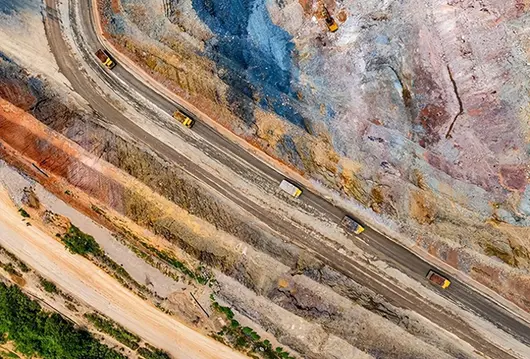
Since 2026, major African mineral countries such as Zimbabwe, Democratic Republic of the Congo, Mozambique, and Malawi have successively introduced policies to tighten exports of new energy core minerals such as lithium, cobalt, and graphite.
The simultaneous policy shifts in multiple countries clearly indicate preparation, with the goal being the Chinese new energy industry chain.
Multiple African Countries Tighten Mineral Exports
This signal of policy tightening was first released by Zimbabwe. In February 2026, the country suddenly issued an emergency suspension on raw lithium and lithium concentrate exports, even intercepting some cargo that was already loaded and about to be shipped. At that time, market analysts judged that this was not a short-term temporary control.
As expected, by May, Zimbabwe officially designated 14 categories of minerals including lithium, cobalt, and graphite as national strategic resources, mandating foreign-funded mining enterprises to introduce local shareholders, while simultaneously requiring the construction of deep processing projects within the country to firmly lock the value added by the industry chain.
Following closely, the Democratic Republic of the Congo set an export quota of 96,600 tons for cobalt ore over two years, directly significantly reducing the outflow of low-end cobalt raw materials.

This wave of resource protection policies quickly spread to East Africa and Southern Africa, with multiple countries forming a consensus to unify restrictions on exporting raw ores and coarse concentrates without smelting and processing.
The highly consistent policy steps of multiple African countries have brought severe challenges to China's new energy industry chain.
Looking back at the past decade-plus of development, the heat of African resource development was highly synchronized with the rise of China's new energy vehicle industry, deeply bundled.
China's new energy industry broke out from scratch, with power batteries and complete vehicle capacity expanding at high speed year after year, but domestic reserves of lithium and cobalt resources were insufficient and mining costs were high, making it difficult to meet demand. Africa possesses world-class new energy mineral endowments, but is constrained by insufficient funds, technology, and infrastructure, unable to develop and realize value.
Under this complementarity, China and Africa formed a mature and stable industry chain division. Chinese enterprises went overseas to improve local infrastructure and invested in mines, putting funds and complete sets of mining technology into place, helping Africa's mineral development; Africa provided stable and low-cost coarse mineral raw materials to support China's new energy industry in growing stronger.
In terms of data, the Democratic Republic of the Congo contributes 76% of global cobalt production, and over 90% of China's ternary battery cobalt raw materials rely on African imports; Zimbabwe's lithium concentrates over 90% are exported to China, accounting for 15.5% of China's total imports; Mozambique and Madagascar natural graphite continue to supply China's anode materials, which are essential raw materials for power batteries.

Relying on Africa's large-volume, stable, and reliable primary mineral supply, China mastered over 80% of global cobalt smelting and over 70% of lithium salt processing capacity, building the world's largest scale power battery and new energy vehicle manufacturing system. It can be said that the rapid development of China's new energy industry in the past decade relied on resource strategic cooperation between China and Africa.
As China's new energy industry gradually matures, the attitude of overseas partners seems to have changed.
In the past decade-plus, African mineral resource countries mostly stayed in ore mining, initial classification, warehousing, and logistics links, only earning basic labor and resource mining revenue; China undertook mineral deep processing, covering downstream links such as smelting, cathode materials, and battery manufacturing.
After China's new energy industry chain became increasingly mature, African resource countries were no longer satisfied with simply exporting low-value-added primary raw ores. Countries drew lessons from Indonesia's governance of the nickel industry chain, recognized China's import dependency on their mineral resources, successively tightened raw mineral export controls and set quota thresholds, mandated foreign capital to implement deep processing factories locally, and incorporate local capital participation, forcing industry chain value-added revenue to remain in the local jurisdiction.

The bilateral mutual-benefit cooperation pattern maintained for over a decade has been broken. African resource countries attempt to reshape the distribution of industry chain interests from the upstream resource end; this move is no different from a major blow to China's new energy supply chain.
Car Manufacturer Profit Pressures Mount
Currently, profits in the domestic complete vehicle industry are extremely thin. Data from the China Association of Automobile Manufacturers shows that the average net profit margin of complete vehicle manufacturing in the first half of 2026 was only 1.5%, reaching a ten-year low.
For a vehicle with an average price of 200,000 yuan, the car manufacturer's average net profit was only 3,000 yuan, far below the average profitability level of large-scale industrial enterprises in the country. Continuous price wars for several years have compressed pricing space, leaving the industry little room to buffer cost fluctuations.
The earnings forecasts released in the second quarter of 2026 directly revealed cost pressures. Seres expects a net loss attributable to the parent company of 1.5 billion to 1.8 billion yuan in the first half of the year, while Beijing Automotive Group Blue Valley expects a net profit loss attributable to the parent company of 1.77 billion to 1.97 billion yuan in the first half of the year. Terminal market competition is fiercely intensified, car manufacturers dare not easily raise selling prices, and new costs brought by raw material price increases must be absorbed internally by the enterprise.
The rise in lithium carbonate prices is one reason for the pressure on car manufacturer profits. Battery-grade lithium carbonate has been rising from 70,000 to 100,000 yuan/ton at the end of 2025, reaching close to 200,000 yuan/ton in May 2026, with prices nearly doubling.
The industry standard calculation is that for every 10,000 yuan/ton increase in lithium carbonate, the battery cost of a pure electric vehicle with 60 kWh increases by 300 yuan; the cost increase per vehicle for long-range models can reach 400 yuan. Compared to the early year low, the rigid cost increase for large-capacity pure electric vehicles is 2,000 to 3,000 yuan, and ternary lithium battery models are burdened even heavier with the added cobalt price fluctuations.

If various African countries continue to ramp up export restrictions, and lithium and cobalt raw material prices remain at high levels, the car manufacturer's situation will further deteriorate. Weak manufacturers with insufficient capacity utilization will continue to amplify loss pressure.
Facing the hazards upstream, China's industry chain did not choose to sit idle.
On one hand, leading mining companies and car manufacturers complied with African localization requirements and implemented smelting capacity locally. Huayou Cobalt laid out lithium sulfate production lines in Zimbabwe, processing minerals locally to meet local policy requirements; China Molybdenum expanded local cobalt smelting capacity in the Democratic Republic of the Congo to avoid raw mineral export quota constraints. This kind of heavy asset investment cycle is long.
On the other hand, the sourcing layout moves towards diversification, with some companies accelerating the development of Australian and South American lithium mine resources, simultaneously exploring the potential of lithium resources in domestic Qinghai and Western Sichuan, creating a "double insurance" of "overseas multi-point supply + domestic owned minerals". BYD, CATL, Geely, and other companies broadened overseas mineral cooperation to disperse geopolitical policy risks.
In addition, reducing dependence on rare metals through technology iteration has also become an industry R&D trend. Low-cobalt and cobalt-free solutions continue to be popularized, and mid-range models are equipped with Lithium Iron Phosphate (LFP) batteries on a large scale, reducing the demand for Democratic Republic of the Congo cobalt mines. At the same time, the battery recycling system continues to improve, refining and regenerating lithium and cobalt from retired batteries, gradually forming urban mines, alleviating pressure from importing raw minerals overseas.

Multiple African countries tightening mineral exports aims to redistribute the interests of the new energy industry chain. The domestic industry chain wants to resist external resource fluctuations, cannot rely on low-price imported minerals for the long term, and must continuously advance supply chain diversification and material technology iteration to gradually get rid of constraints from overseas resources. [Copyright Notice] This article is an original work of "Auto People", copyright belongs to the publisher, unauthorized reproduction or partial copying is prohibited, violators will be held liable.

Di pasaran SUV Malaysia, ramai pembeli apabila memilih kereta akan membandingkan Proton X50 dan Mitsubishi Xforce. Kedua-dua kereta ini mempunyai kedudukan dan julat harga yang agak sama. Hari ini kita akan membuat perbandingan terperinci daripada pelbagai aspek untuk membantu anda menjimatkan masa membuat kajian.
Proton X50 dijual dengan harga OTR di Malaysia sebanyak RM 89,800 - 113,300, terdapat keseluruhan 4 varian, termasuk 1.5T Executive (RM 89,800), 1.5T Premium (RM 101,800), 1.5T Flagship (RM 113,300) dan lain-lain.
Mitsubishi Xforce dijual dengan harga OTR di Malaysia sebanyak RM 109,930 - 119,930, terdapat keseluruhan 2 varian, termasuk 2026 1.5L Ultimate (RM 119,930), 2026 1.5L Urban (RM 109,930) dan lain-lain.
Dari segi harga, harga permulaan Proton X50 memang lebih murah RM 20,130 berbanding Mitsubishi Xforce. Jika anda mempunyai bajet terhad, varian asas Proton sudah boleh memenuhi keperluan harian. Namun, perlu diingat, perbezaan harga ribuan ringgit itu mungkin melibatkan kompromi pada peralatan, bergantung pada keperluan anda.

Penilaian keselamatan Proton X50 ialah 5★ (ASEAN NCAP), sistem keselamatan aktif termasuk ADAS (ACC, AEB, LKA, LDA, BSM, RCTA).
Penilaian keselamatan Mitsubishi Xforce ialah 5★ (ASEAN NCAP), sistem keselamatan aktif termasuk MI-PILOT.
Kedua-dua kereta mempunyai penilaian keselamatan yang sama, peralatan keselamatan dalam kelas ini dianggap lengkap. Keselamatan kereta baharu masa ini tidak kurang baik, tidak perlu terlalu risau mengenai hal ini.

Proton X50 menggunakan sistem pemanduan 4WD.
Mitsubishi Xforce menggunakan sistem pemanduan FWD.
Perbezaan dalam pengendalian antara 4WD Proton dan FWD Mitsubishi akan dirasai berbeza, dicadangkan untuk membandingkan semasa ujian memandu.

Proton X50 dan Mitsubishi Xforce adalah pilihan utama di pasaran Malaysia, sesuai untuk kegunaan keluarga dan perjalanan harian. Jika anda lebih mengutamakan reputasi jenama dan harga jual semula, boleh pertimbangkan yang mempunyai reputasi lebih baik; jika anda lebih mementingkan nilai berbaloi dan peralatan, pilih yang mempunyai peralatan lebih lengkap. Akhir sekali, dicadangkan untuk mencuba kedua-duanya, pengalaman peribadi adalah yang paling penting.

Secara keseluruhan, Proton X50 dan Mitsubishi Xforce adalah model kereta yang sangat baik di pasaran Malaysia. Memilih yang mana satu, kuncinya bergantung pada keperluan dan bajet peribadi anda. Disarankan supaya membuat kajian, bandingkan tawaran harga daripada beberapa dealer, kemudian buat ujian memandu untuk membuat keputusan akhir. Membeli kereta adalah perkara besar, meluangkan masa untuk membuat kajian tidak akan salah.

車款概覽

TESLA Cybertruck 抵唔抵買,關鍵唔係佢睇落幾吸引,而係佢點樣解決你嘅真實用車需求。呢篇文章會將重點放喺版本之間嘅取捨。
版本方面,TESLA Cybertruck 而家可以圍繞 2025 515km 4WD Cybertruck、2025 523km 4WD 嚟比較。
購車價格指南
評估 TESLA Cybertruck 嘅購車預算時,建議先由版本定位同後續擁有車成本入手。價格唔係唯一重點,真正決定係咪划算嘅係每天會唔會用到嗰啲配置。
如果你在幾個版本之間猶豫,可以把 2025 515km 4WD Cybertruck、2025 523km 4WD 放喺同一張清單入面比較。日常通勤買家優先睇舒適同安全,常跑高速嘅買家則更應重視動力、輔助駕駛同車廂便利。
核心參數匯總

睇 TESLA Cybertruck 嘅核心規格,最重要係把數字翻譯成生活入面嘅感受。
車長 5683 mm、車寬 2201 mm、車高 1791 mm、軸距 3630 mm,可以幫你預判停車難度同後排乘坐空間。固定齒比 變速箱、四輪驅動布局 嘅設定,會影響起步流暢度、濕地穩定感同長途巡航感。
優缺點分析
TESLA Cybertruck 嘅優點唔使誇張,真正有價值嘅係佢點樣令日常使用更加省心:空間同車身尺寸便於家庭買家預判實用性。
需要留意嘅係,需要先確認屋企、公司或者常去商場嘅充電條件、市區停車同狹窄路段仍要看個人駕駛習慣。呢啲唔係扣分項,而係落單前應該要諗清楚嘅生活細節。
購車常見問題解答
購買 TESLA Cybertruck 前,買家最常問嘅唔係單一規格,而係佢點樣融入自己嘅生活。
呢部車適合邊個?適合把版本之間嘅取捨放在首位嘅買家。 家庭用戶要看咩?優先睇後排乘坐、兒童座椅、行李同日常上下車係咪啱手。 每日開會唔會麻煩?只要充電條件穩定,電動車嘅通勤體驗通常更安靜,亦都更容易控制日常能源成本。
競爭對手比較內容
將 TESLA Cybertruck 放喺同級車名單入面嘅時侯,唔建議只睇品牌或外形。真正有用嘅比較順序係:最後先睇空間係咪適合家人同行李。
咁樣篩選出嚟嘅結果更貼近日常生活。你會更清楚佢係適合城市通勤、家庭代步、長途巡航,定係更適合作為一輛講求個性嘅選擇。
用車全周期指南
擁有 TESLA Cybertruck 嘅關鍵,係先把充電安排諗清楚。屋企充電、公司充電或者商場快充,只要其中一項穩定,日常體驗就會輕鬆好多。
如果你常跑南北大道,動力同車廂舒適度會比單純低價更重要;如果主要喺市區,停車靈活性、視野同低速流暢度會更影響心情。

在马来西亚的汽车市场,很多买家在选车的时候都会拿 Hyundai Santa Fe 和 Volvo XC90 PHEV 来做比较。今天我们从多个方面做一个详细的对比,帮你省下做功课的时间。


Hyundai Santa Fe 在马来西亚的 OTR 售价是 RM 225,000 - 270,000,一共有 3 个版本,包括 2025 2.5T DCT 4WD Calligraphy 6 Seats(RM 270,000)、2025 HEV 1.6T AT 2WD Prestige 7 Seats(RM 245,000)、2025 HEV 1.6T AT 2WD Prime 7 Seats(RM 225,000) 等。
Volvo XC90 PHEV 在马来西亚的 OTR 售价是 RM 434,888 - 434,888,一共有 2 个版本,包括 2025 2.0T 77km Ultra(RM 434,888)、What safety features does the Volvo XC90 PHEV have?(RM 362,888) 等。
从价钱来看,Hyundai Santa Fe 的起步价确实比 Volvo XC90 PHEV 便宜了 RM 209,888。如果你预算有限,Hyundai 的入门版已经可以满足日常需求。但也要注意,便宜的那几千块,可能在配备上会有取舍,具体要看你的需求。

Hyundai Santa Fe 搭载 2.0L 4-cyl,马力 170 hp。官方油耗 8.0 L/100km。
Volvo XC90 PHEV 搭载 Hybrid,马力 170 hp。官方油耗 4.5 L/100km。
动力方面,Volvo XC90 PHEV 的 Hybrid 比 Hyundai Santa Fe 的 2.0L 4-cyl 多了 0 匹马力。不过日常在市区开的话,两款车的动力都够用,不会觉得不够力。

Hyundai Santa Fe 车身长 4400 mm,后备箱 400 L。
Volvo XC90 PHEV 车身长 4400 mm,后备箱 400 L。
两款车的尺寸几乎一样,车内空间差别不大。这个级别的车,日常使用完全够用。

Hyundai Santa Fe 采用 FWD 驱动方式。
Volvo XC90 PHEV 采用 FWD 驱动方式。
两款车的驱动方式一样,都是 FWD,日常驾驶感受不会有太大区别。

总的来说,Hyundai Santa Fe 和 Volvo XC90 PHEV 都是马来西亚市场很不错的车型。选择哪一辆,关键还是要看你的个人需求和预算。建议大家做好功课,多比较几间车行的报价,再去试驾做最终决定。买车是件大事,花点时间做功课绝对不会错。


在马来西亚的汽车市场,很多买家在选车的时候都会拿 Toyota Fortuner 和 Volvo XC60 PHEV 来做比较。今天我们从多个方面做一个详细的对比,帮你省下做功课的时间。


Toyota Fortuner 在马来西亚的 OTR 售价是 RM 195,880 - 241,880,一共有 3 个版本,包括 2024 2.8T VRZ Diesel(RM 241,880)、2024 2.7L SRZ Petrol(RM 202,880)、2024 2.4L Standard Diesel(RM 195,880) 等。
Volvo XC60 PHEV 在马来西亚的 OTR 售价是 RM 362,888 - 362,888,一共有 2 个版本,包括 2025 2.0T 89km Ultra(RM 362,888)、What safety features does the Volvo XC60 PHEV have?(RM 296,610) 等。
从价钱来看,Toyota Fortuner 的起步价确实比 Volvo XC60 PHEV 便宜了 RM 167,008。如果你预算有限,Toyota 的入门版已经可以满足日常需求。但也要注意,便宜的那几千块,可能在配备上会有取舍,具体要看你的需求。

Toyota Fortuner 搭载 2.5L Diesel,马力 187 hp。官方油耗 8.5 L/100km。
Volvo XC60 PHEV 搭载 Hybrid,马力 170 hp。官方油耗 4.5 L/100km。
动力方面,Toyota Fortuner 的 2.5L Diesel 比 Volvo XC60 PHEV 的 Hybrid 多了 17 匹马力,中段加速会更有信心,尤其是跑高速公路超车的时候。但 Volvo XC60 PHEV 的油耗表现可能更好,日常市区通勤的话差别不会太明显。

Toyota Fortuner 车身长 4400 mm,后备箱 400 L。
Volvo XC60 PHEV 车身长 4400 mm,后备箱 400 L。
两款车的尺寸几乎一样,车内空间差别不大。这个级别的车,日常使用完全够用。

Toyota Fortuner 采用 FWD 驱动方式。
Volvo XC60 PHEV 采用 FWD 驱动方式。
两款车的驱动方式一样,都是 FWD,日常驾驶感受不会有太大区别。

总的来说,Toyota Fortuner 和 Volvo XC60 PHEV 都是马来西亚市场很不错的车型。选择哪一辆,关键还是要看你的个人需求和预算。建议大家做好功课,多比较几间车行的报价,再去试驾做最终决定。买车是件大事,花点时间做功课绝对不会错。


在马来西亚的SUV市场,很多买家在选车的时候都会拿 Mazda CX-60 和 GWM Haval H6 来做比较。这两款车在价位和定位上都蛮接近的,今天我们就从多个方面做一个详细的对比,帮你省下做功课的时间。
Mazda CX-60 在马来西亚的 OTR 售价是 RM 200,510 - 252,873,一共有 2 个版本,包括 2026 3.3T 4WD High Plus(RM 252,873)、2025 2.5L 2WD High(RM 200,510) 等。
GWM Haval H6 在马来西亚的 OTR 售价是 RM 139,750 - 139,750,一共有 2 个版本,包括 1.5L Turbo Standard(RM 140,000)、1.5L Turbo Premium(RM 155,000) 等。
从价钱来看,GWM Haval H6 的起步价比 Mazda CX-60 便宜了 RM 60,760。老实讲,在这个价位段,几千块的差距其实不算大,关键还是看整体的性价比和长期使用成本。

Mazda CX-60 搭载 2.0L 4-cyl,马力 170 hp。官方油耗 8.0 L/100km。
GWM Haval H6 搭载 Hybrid,马力 170 hp。官方油耗 4.5 L/100km。
动力方面,GWM Haval H6 的 Hybrid 比 Mazda CX-60 的 2.0L 4-cyl 多了 0 匹马力。不过日常在市区开,两款车的动力都够用,不会觉得不够力。
Mazda CX-60 保修 5年/150,000km,保养间隔 每10,000km或6个月。
GWM Haval H6 保修 7年/150,000km,保养间隔 每10,000km或6个月。
Mazda CX-60 和 GWM Haval H6 都是马来西亚市场的主流选择,适合家庭使用、日常通勤。如果你更看重品牌口碑和二手价,可以优先考虑口碑更好的那一款;如果你更在意性价比和配备,那就选配置更丰富的那款。最终还是建议两款都去试驾,亲身体验才是最重要的。
总的来说,Mazda CX-60 和 GWM Haval H6 都是马来西亚市场很不错的车型。选择哪一辆,关键还是要看你的个人需求和预算。建议大家做好功课,多比较几间车行的报价,再去试驾做最终决定。买车是件大事,花点时间做功课绝对不会错。

© 2024 Bitauto.com. All Rights Reserved.
Bitauto (www.yiche.com and www.bitauto.com) is one of the most visited automotive websites in China. We provide detailed info on Chinese car brands available in your area. Please note that the information provided on this website is based on publicly available data and is for reference only. It may not be fully updated or accurate at all times.

Help us improve our website


