

HomeFengyun T9L

Search History
Popular Searches
Dealer Login / Sign Up

1997, north of Wuhu city, a barren stretch of land.
No factories, no equipment, no technical drawings, hardly anyone believed anything could grow here. Chery drove its first stake into such a place. Back then, the Chinese auto market was dominated by joint-venture brands. Santana, Jetta, Fukang "the old three" ruled supreme. Domestic brands? In many people's concepts, that was just a joke.
Two years later, the first Fengyun came off the line. Two more years passed, and Fengyun became the first Chinese brand sedan to cross the border. No one could have imagined that this car, which raced out of the barren land, would weave a story of 20 million vehicles 29 years later.
But what is truly worth discussing about the number 20 million is never how big it is, but how "heavy" it is.

20 million, placed in today's Chinese auto market, just looking at the numbers, it's not earth-shattering. But if you calculate this arithmetic problem differently, the result is completely different.
Among Chery's 20 million users, nearly 7 million are from overseas. Accounting for 35%. What does this mean? For every 3 Chery vehicles sold, 1 is sold outside China. This proportion is unique among all Chinese automakers.
This first half of the year, Chery exported 943,800 vehicles, up 71.5% year-on-year. On average, one Chery vehicle heads to an overseas wharf every 17 seconds. June was even more exaggerated, with overseas sales hitting 191,000 in a single month, with an export ratio as high as 69.5%. In other words, nearly seven out of ten Chery vehicles sold that month were bought by foreigners.
If we look at the timeline, in 2007 Chery completed its first 1 million in the first decade—that was the first time a Chinese domestic brand knocked on the door of the "million club". From 1 million to 20 million, 19 years, compound growth rate 17%. The growth curve of the last two years is steep and frightening; just the export volume of the first half of this year already exceeded the total global sales of certain brands for the entire year.
But what is worth pondering more behind the numbers is: Chery didn't just recently think about going overseas, it has walked this road of globalization for over twenty years. Starting from the first Fengyun exported to Syria in 2001, Chery has always been moving outwards. The first 20 years were a slow simmer, only in the last two years has it come to a quick boil.

At the delivery site of the 20 millionth vehicle on July 25, 2026, there was an interesting detail.
The owner is named An Xinran, Australian nationality, pursuing a PhD at Zhejiang University. Why did she buy a Chinese brand EV? The story starts with her mom. An Xinran's mom was already a Chery owner in Australia. Back then she chose Chery because Chery received a five-star rating in the Australia and New Zealand high-spec safety test. The old lady felt this Chinese car was reliable, safe, and trustworthy.
Influenced by her mother, after coming to China to study, An Xinran has been paying attention to Chery. Later she saw the Fengyun A9, was moved by its appearance and intelligent cockpit, became the recipient of the 20 millionth vehicle, and received the car key from Yin Tongyue and spokesperson Yang Zi.

Where is the gold content of this story? In "intergenerational transmission" and "trans-oceanic trust".
Mom drives a Chery in Australia for safety; daughter drives a Chery in China for intelligence. Two generations, two countries, two completely different usage scenarios and consumption needs, caught by the same brand. This is not something ad copy can fabricate; this is real word-of-mouth rolling into a snowball.
Think about it, how harsh the Australian market is on car safety requirements, anyone who knows cars slightly knows. Getting a five-star rating there is equivalent to getting an "entry ticket" for the entire mature Western market. And an Australian family, mom drove it and thought it was good, daughter continues to buy — this trust chain is more convincing than any "Global Sales #1" slogan.
What is truly difficult is not selling the car, but taking root
Many people think "globalization" is just shipping cars to ports, loading ships, and sending them off. That is trade, not globalization.
Chery's understanding of globalization is three stages: product going overseas, capacity going overseas, ecosystem going overseas. As Yin Tongyue said, it is from "going out" to "going in" and then to "blending in".
How to blend in?
As of now, Chery has 16 overseas factories globally, distributed in Brazil, Spain, Thailand, South Africa, etc. In 2024, Chery cooperated with Spanish EV MOTORS, revived the Spanish national brand EBRO, directly creating over 1,000 jobs, called a "model of China-Spain cooperation" by both governments. This July, Chery launched the upgrade and renovation of the South African Rosslyn plant — this plant was built in 1963, after Chery took over it promised to retain all 692 employees, and also drove nearly 3,000 jobs upstream and downstream.

Among Chery's 150,000 global employees, overseas employees exceed 20,000.
Yin Tongyue has a sentence that impressed me deeply. He said Chery cannot be a "tumbleweed chasing profit", rolling wherever the wind blows, cannot take root; it must be a "tree planter rooted locally", wherever it is, for wherever it is, becoming a part of the locals.
This sounds simple, but weighs heavily. The "tumbleweed" style of going out is the logic of making fast money — rush in when the market is good, run away when the market is bad. But the logic of the "tree planter" is — I came, and I won't leave, I grow together with this land.
In 2026, Chery joined the IATF International Automotive Task Force Board, obtained the voting right for global auto standard formulation. From "abiding by rules" to "participating in setting standards", this leap is much harder and more valuable than selling hundreds of thousands more cars.
After 20 million, why dare to say "no involution"?
At the Fengyun A9 launch event on July 25, 2026, Yin Tongyue said: "After 20 million vehicles, we will no longer participate in involution, we will no longer only pursue sales, but pursue upward brand growth, pursue greater value creation."
Spoken by others, this might be face-saving talk. But spoken by Chery, it is backed by solid actions.
This first half of the year, Chery actively "squeezed out excess" domestically, significantly reducing dealer inventory, shipping 150,000 fewer cars domestically. The sales figures indeed looked bad, but dealer inventory pressure eased, channels became healthier. What was the cost? Decline in short-term sales. What was exchanged? Beneficial operation of the entire system.
In the latest Fortune China 500 list, Chery ranked 87th on its debut, with a return on net assets of 36.5%, number one in the auto industry. Not competing on price is because it found things more valuable than competing on price.

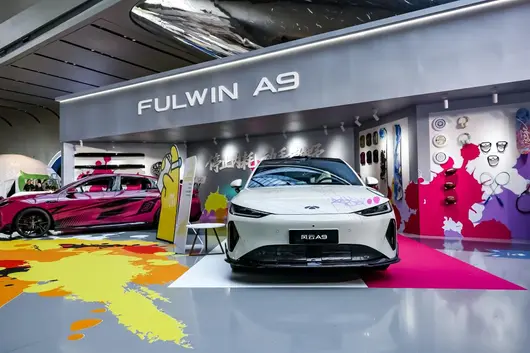
Fengyun A9 is that "upward" spear. Full series standard equipped with 70kWh battery, 655 km range, 8 airbags, front double wishbone rear five-link suspension, pre-sale price 109,900 to 129,900. Pulling this spec sheet to the European market, the level of competitiveness is clear to those in the know. 72-hour pre-sale orders 18,173 units, 15 days broke 31,729 units. The market votes with its feet, more real than any self-praise. From the first Fengyun going off the line in 1999, to today Fengyun A9 becoming the carrier of the 20 millionth; from "making cars ordinary people can afford" to "defining global high-quality mobility standards" — the name Fengyun has been used for 27 years, the logic behind it has climbed several steps.

What did that stake hammered on the barren land pierce out?
Back to 1997. When Chery drove the first stake into the barren land, no one believed this zero-start domestic brand could survive, let alone believed it could go out.
That year, the landscape of Chinese cars was still decided by joint-venture brands. "Market for Technology" was exchanged for 20 years, how much technology was actually exchanged, everyone has a number in their heart. Chery took a different road from the beginning — no joint ventures, no relying on foreign parties, gnawing technology by itself, expanding market by itself.
Was this road difficult? Too difficult. The first 1 million in 2007 took ten years; from 1 million to 2 million took three years; from 2 million to 5 million took five years; from 5 million to 10 million took six years; from 10 million to 15 million took three years; from 15 million to 20 million took only two years. The slope gets steeper and steeper, but every step is stepped solidly.
This number 20 million, the real weight is not in "20 million" itself, but in its composition — 35% overseas users, first Chinese brand exports for 23 consecutive years, three-digit growth in European market, one seat on the IATF board, An Xinran and her mom crossing two generations and two countries brand trust.

These are the assets that cannot be taken away. Yin Tongyue said, 2027 is Chery's 30th anniversary, by then Chery will not only be an auto company, but also a tech ecosystem company. From barren land to 20 million vehicles, from Wuhu to over 100 countries and regions globally, Chery has walked this road for 29 years.
No short cuts, all hard work. But on the road of globalization, it is precisely hard work that is most valuable.

Tahun 1997, di utara bandar Wuhu, satu kawasan tanah tandus.
Tiada kilang, tiada peralatan, tiada lukisan teknologi, malah tiada siapa pun yang percaya di sini boleh tumbuh sesuatu. Chery memulakan tiang pertama di tempat seperti ini. Pada tahun itu, pasaran kereta China dikuasai jenama konsesi. Santana, Jetta, Fukang "Tiga Lama" menguasai pasaran, jenama tempatan? Bagi ramai, ia hanya sekadar candaan.
Dua tahun kemudian, Fengyun pertama siap dihasilkan. Dua tahun kemudian, Fengyun menjadi kereta jenama China pertama yang dijual ke luar negara. Tiada siapa menyangka, kereta yang berlari dari tanah tandus itu, 29 tahun kemudian akan mengaitkan kisah 20 juta unit.
Namun, nombor 20 juta unit ini, yang benar-benar perlu dibincangkan, bukan sejauh mana ia besar, tetapi berapa "berat" ia.
20 juta unit, diletakkan pada pasaran kereta China hari ini, hanya melihat nombor, memang tidak kira besar. Tetapi jika soalan aritmetik ini ditukarkan algoritma, hasilnya akan sangat berbeza.
Dalam 20 juta pengguna Chery ini, hampir 7 juta berasal dari luar negara.Peratusan 35%.Maksudnya? Chery menjual setiap 3 kereta, 1 dijual ke luar China. Peratusan ini, dalam semua syarikat kereta di China, adalah unik.
Setengah tahun pertama tahun ini, Chery mengeksport 943,800 unit kereta, meningkat 71.5% dari tahun sebelumnya. Purata setiap 17 saat, ada sebuah Chery bergerak menuju pelabuhan luar negara. Jun lebih luar biasa, jualan luar negara tunggal bulan itu mencapai 191,000 unit, peratusan eksport mencapai 69.5%. Dengan kata lain, pada bulan itu, hampir tujuh daripada sepuluh kereta Chery yang dijual dibeli oleh orang asing.
Jika dilihat garis masa, pada tahun 2007, Chery menggunakan sepuluh tahun pertama untuk menyelesaikan 1 juta unit pertama — itu adalah pertama kalinya jenama tempatan China mengetuk pintu "Kelab Satu Juta Unit". Dari 1 juta ke 20 juta, 19 tahun, kadar pertumbuhan gabungan 17%. Namun, pada dua tahun yang lalu, kecerunan kadar pertumbuhan itu sangat curam, hanya pada kuantiti eksport setengah tahun pertama tahun ini, sudah melebihi jumlah jualan global tahunan beberapa jenama.
Tetapi yang lebih menarik di sebalik nombor ialah:Chery bukan baru sekarang yang teringat untuk keluar laut, jalan globalisasi ini, ia telah berjalan selama lebih 20 tahun.Dari 2001, Fengyun pertama dieksport ke Syria, Chery terus bergerak keluar. Hanya sahaja 20 tahun sebelumnya perlahan-lahan, dua tahun yang lalu api besar digunakan.
Di tapak serahan 20 juta unit ke-25 Julai 2026, ada butiran yang menarik.
Pemilik bernama An Xinran, berbangsa Australia, sedang membaca sarjana doktor di Universiti Zhejiang. Kenapa dia membeli kereta elektrik jenama China? Kisah bermula dari ibunya. Ibu An Xinran di Australia adalah pemilik Chery. Pada mulanya memilih Chery, kerana Chery mendapat penilaian lima bintang dalam ujian keselamatan tahap tinggi Australia-New Zealand. Wanita tua itu rasa kereta China ini boleh dipercayai, selamat, boleh dipercayai.
Disebabkan ibu, An Xinran semasa belajar di China terus memerhatikan Chery. Kemudian melihat Fengyun A9, terpengaruh dengan luar dan kabin pintar, menjadi sasaran serahan 20 juta unit ke-2000, menerima kunci kereta daripada Yin Tongyue dan wakil khatulistiwa Yang Zi.
Dikau manakah kehebatan kisah ini? Dalam "pemindahan generasi" dan "kepercayaan merentas lautan".
Ibu memandu Chery di Australia, kerana keselamatan; anak perempuan memandu Chery di China, kerana kecerdasan. Dua generasi, dua negara, dua keperluan penggunaan dan permintaan yang sangat berbeza, dipegang oleh satu jenama yang sama. Ini bukan boleh ditulis oleh copywriting iklan, ini adalah salji ulasan positif yang sah.
Anda fikir, tahap permintaan keselamatan kereta di pasaran Australia sangat ketat, siapa pun yang sedikit tahu kereta sudah tahu. Mendapat penilaian lima bintang di sana, bermakna mendapat "surat kelulusan" seluruh pasaran Barat yang matang. Dan satu keluarga Australia, ibu memandu rasa bagus, anak perempuan terus beli — rantai kepercayaan ini, lebih meyakinkan daripada slogan "jualan global teratas".
Yang benar-benar sukar, bukan menjual kereta keluar, tetapi menanamkan akar.
Banyak orang fikir "globalisasi" hanyalah mengangkut kereta ke pelabuhan, muat kapal, hantar. Itu perdagangan, bukan globalisasi.
Pengertian Chery tentang globalisasi, ada tiga peringkat: eksport produk, eksport kapasiti pengeluaran, eksport ekosistem. Kata Yin Tongyue, dari "keluar ke luar" ke "masuk ke dalam" lagi ke "menyatu ke dalam".
Bagaimana cara menyatukan?
Seterusnya, Chery mempunyai 16 kilang luar negara di seluruh dunia, teragih di Brazil, Sepanyol, Thailand, Afrika Selatan. Pada tahun 2024, Chery bekerjasama dengan EV MOTORS Sepanyol, menghidupkan semula jenama kebangsaan Sepanyol EBRO, terus mencipta lebih 1000 pekerjaan, digelar "contoh kerjasama China-Sepanyol" oleh kerajaan kedua-dua negara. Julai tahun ini, Chery memulakan kerja upgrade kilang Roslin Afrika Selatan — kilang ini dibina pertama kali pada tahun 1963, Chery mengambil alih selepas itu berjanji mengekalkan semua 692 pekerja, dan membawa ke atas serta ke bawah hampir 3000 pekerjaan.
Dalam 150,000 pekerja global Chery, pekerja luar negara melebihi 20,000 orang.
Yin Tongyue ada satu ayat saya sangat terkesan. Katanya Chery tidak boleh buat "rumput liar bergerak mengikut keuntungan", angin ke mana hembus dia bergolek ke sana, tidak boleh tanam akar; kena buat "penanam pokok yang berakar di tempat", di mana, untuk di mana, menjadi sebahagian dari tempat.
Ucapan ini terdengar sederhana, tetapi berat maknanya. "Rumput liar" jenis eksport, adalah logik wang cepat — pasaran baik masuk, pasaran tidak baik lari. Tetapi logik "penanam pokok" ialah — saya datang, tidak akan pergi, saya tumbuh bersama tanah ini.
2026, Chery memasuki Lembaga Jawatankuasa IATF International Automotive Task Force, mendapat hak mengundi penetapan piawai kereta global. Dari "mematuhi peraturan" ke "mengambil bahagian menetapkan piawai", lompatan ini, jauh lebih sukar daripada menjual lebih beberapa ratus ribu kereta, dan jauh lebih berharga.
Selepas 20 juta, mengapa berani berkata 'tiada persaingan berlebihan yang tidak produktif'?
Pada persidangan pelancaran Fengyun A9 25 Julai 2026, Yin Tongyue berkata: "Selepas 20 juta unit, kami tidak lagi mengikuti persaingan berlebihan, kami tidak lagi hanya mengejar jualan, tetapi mengejar jenama ke atas, mengejar penciptaan nilai yang lebih besar."
Ucapan ini dari mulut orang lain, mungkin sekadar kata-kata. Tetapi dari mulut Chery, ada tindakan sah yang menyokong.
Semesta tahun ini, Chery secara aktif "memerah air" di dalam negara, secara ketara mengurangkan stok pengedar, di dalam negara kurang menghantar 150,000 unit kereta. Nombor jualan memang tidak cantik, tetapi tekanan stok pengedar telah berkurang, saluran menjadi sihat. Kosnya apa? Penurunan jualan jangka pendek. Yang ditukar apa? Pengoperasian sistem yang sihat.
Dalam senarai 500 Teratas Fortune China terkini, Chery sekali masuk sudah duduk di kedudukan ke-87, kadar pulangan aset bersih 36.5%, teratas industri kereta.Tidak mengurangkan harga, kerana telah mencari perkara yang lebih berharga daripada mengurangkan harga.
Fengyun A9 adalah "hujah ke atas" itu. Semua versi piawai bateri 70kWh, jarak tempuh 655km, 8 beg udara, suspensi depan ganda-A belakang lima batang, harga prapenjualan 109,900 hingga 129,900. Senarai spesifikasi ini tarik ke pasaran Eropah, tahap daya saing apa, orang yang faham industri sudah jelas. Prapenjualan 72 jam pesanan 18,173 unit, 15 hari melampaui 31,729 unit. Pasaran mengundi dengan tindakan sebenar, lebih tulen daripada segala pengumuman diri. Dari 1999 Fengyun pertama siap dihasilkan, sampai hari ini Fengyun A9 menjadi pembawa 20 juta unit; dari "membuat kereta yang orang biasa mampu beli" ke "mendefinisikan piawaian出行 berkualiti tinggi global" — nama Fengyun digunakan selama 27 tahun, logik di belakang sudah melompat beberapa peringkat.
Tiap tiang pada tanah tandus itu, telah menambat apa?
Kembali ke 1997. Apabila Chery memulakan tiang pertama di tanah tandus, tiada siapa percaya jenama tempatan yang bermula dari sifar ini boleh hidup, malah tiada siapa percaya ia boleh keluar.
Tahun itu, konfigurasi kereta China masih ditentukan oleh jenama konsesi. "Pasaran tukar teknologi" tukar selama 20 tahun, teknologi sebenar dapat berapa, semua orang sudah tahu. Chery sejak awal sudah memilih jalan yang berbeza — tidak buat konsesi, tidak bergantung pada pihak asing, sendiri mengunyah teknologi, sendiri mengembangkan pasaran.
Jalan ini sukar? Terlalu sukar. 2007 1 juta unit pertama, gunakan 10 tahun; dari 1 juta ke 2 juta, gunakan 3 tahun; dari 2 juta ke 5 juta, gunakan 5 tahun; dari 5 juta ke 10 juta, gunakan 6 tahun; dari 10 juta ke 15 juta, gunakan 3 tahun; dari 15 juta ke 20 juta, hanya gunakan 2 tahun. Kecerunan semakin curam, tetapi setiap langkah diinjak dengan kukuh.
Nombor 20 juta unit ini, makna sebenar bukan di "20 juta" itu sendiri, di konstruksinya — 35% pengguna luar negara, terus 23 tahun pertama eksport jenama China, pertumbuhan tiga digit pasaran Eropah, satu tempat di Lembaga IATF, An Xinran dan ibunya kepercayaan jenama melangkaui dua generasi dan dua negara.
Ini adalah aset asas yang tidak boleh diambil. Yin Tongyue berkata, 2027 adalah tahun ke-30 Chery, nanti Chery bukan hanya syarikat kereta, malah syarikat ekosistem teknologi. Dari tanah tandus ke 20 juta unit, dari Wuhu ke lebih 100 negara dan kawasan di seluruh dunia, jalan ini Chery berjalan 29 tahun.
Tiada jalan pintas, semuanya kerja keras. Tetapi dalam jalan globalisasi, sebaliknya kerja keras yang paling berharga.
© 2024 Bitauto.com. All Rights Reserved.
Bitauto (www.yiche.com and www.bitauto.com) is one of the most visited automotive websites in China. We provide detailed info on Chinese car brands available in your area. Please note that the information provided on this website is based on publicly available data and is for reference only. It may not be fully updated or accurate at all times.

Help us improve our website


