

HomeFuel Cars

Search History
Popular Searches
Dealer Login / Sign Up

Penetration rate 67%, but new energy vehicles have not defeated fuel cars!
In September 2026, retail sales of conventional fuel passenger cars were 530,000, a year-on-year decrease of 43%. The sales share of fuel cars in China's passenger car market fell below one-third for the first time in history. New energy vehicle penetration rose to 67%, setting a new historical record. Many people immediately declared a death sentence for fuel cars here and announced victory for new energy vehicles.

But breaking down these numbers, the 67% penetration rate is indeed a real figure, but it is simultaneously a number accelerated by policy, amplified by replacement traffic, and highly differentiated in terms of power form.
It proves that new energy vehicles have crossed the threshold accepted by consumers, but perhaps they have not yet proved that they have crossed the threshold of sustainable growth without external support.
#Behind the 67% penetration rate, how much is inflated?#
In the early stage of new energy development, a large portion of sales actually relied on the B-end, after all, it is difficult for a new thing to directly gain recognition from C-end consumers when entering the market.
Like in the past period, the proportion of new energy vehicles in newly registered ride-hailing cars was as high as 92%. The penetration of new energy in the urban logistics delivery field is also accelerating. During these years, brands like Aion reached up to 26% share in the new ride-hailing market during peak sales periods. Basically, 1 out of every 4 new ride-hailing cars was an Aion.
The characteristic of this B-end procurement is centralized and large volume. It can quickly push up the penetration rate number, but it does not reflect the result of ordinary families voting with their wallets in the showroom, but rather batch decisions under operating costs and policy drivers.
Returning to this year, this "accusation" of high B-end share might not hold true as before. Data shows, the private car purchase share rose from 67% in 2020 to 84% in 2025. The share of family second cars broke through 50% for the first time. After the ride-hailing market tended to be saturated, the B-end share shrank to 9%.
The sales foundation of new energy vehicles is shifting from "operational support volume" to "private consumer take-over". New energy brands like Aion and Hongqi, which once highly relied on the B-end, have been struggling to reduce B-end share and rebuild C-end recognition over the past two years. This process itself shows that penetration built relying on the B-end is unsustainable, and the market is actively correcting it.
But if therefore one thinks 67% is already a "purely market-oriented" result, then it ignores two important influencing factors.

First, currently domestic new energy policies are still supporting the bottom. In 2025, the scale of trade-in exceeded 11.5 million vehicles. More than half of domestic retail participated in trade-ins, pulling a large amount of future demand to the present. In 2026, subsidies changed from fixed amounts to proportional calculation and upper limit control. The average subsidy for scrapping updates and replacement updates decreased by about 20% and 30% compared to 2025, respectively. Purchase tax also adjusted from fully exempt to half exempt.
After policy retreat, cumulative retail of passenger cars from January to September 2026 decreased by 22% year-on-year. Although cumulative retail of new energy vehicles remained growing, the growth rate narrowed significantly compared to the previous two years. This means that in the 67% penetration rate, there is embedded a layer of cost paid by finance, and a layer of replacement traffic consumed in advance.
Secondly, the denominator calculating this penetration is contracting. 67% is new energy retail volume divided by total passenger car retail volume. In September 2026, total passenger car retail was 1.618 million, a year-on-year drop of nearly 28%. When the denominator itself is shrinking rapidly, part of the penetration rise comes from "fuel cars falling faster", not "new energy rising enough".
In September, new energy retail was 1.084 million, also down 16.4% year-on-year. New energy and fuel cars were both in a decline interval in 2026. The new high in penetration rate was completed in a shrinking market. Therefore, reading this number as "new energy is crushing fuel cars" at this time is obviously a misjudgment.
Besides, part of the retail statistics scope includes exports. A large number of new cars sold overseas are counted in the total, but it is not a market happening in China. From January to September 2026, new energy vehicle exports were 4.006 million, growing 1.3 times year-on-year. Exports are real industrial achievements, but they are not evidence that "Chinese consumers chose new energy". If exports are stripped from the numerator of penetration, the real penetration of domestic C-end new energy will naturally be lower than 67%.
#Export share over half, relying on competitiveness or production capacity transfer?#
Aside from domestic sales share, a better means to measure the value of China's new energy is to look at whether it also gained recognition in overseas markets?
In September 2026, new energy passenger car exports were 558,000, up 163.5% year-on-year. The share of new energy in passenger car exports continued to rise. Against such data background, has China's new energy already possessed global brand competitiveness?
To answer this question, we need to judge from two aspects, namely "share acquisition driven by product power" and "capacity release under production capacity pressure". The two cannot be distinguished in total numbers, but are completely different in strategic meaning.
First look at this layer of production capacity pressure. In the first half of 2026, the auto industry capacity utilization rate was only 70.6%, lower than the 75% healthy line.
Export volume has accounted for 39.34% of total domestic vehicle production, close to four-tenths. A certain domestic overseas-head brand had total sales of 1.3575 million in the first half, exports 943,800 vehicles, share about 69.5%. This situation where one car company's 70% sales come from overseas is hard to judge as a natural result of competitiveness going global, and looks more like a passive choice due to domestic base contraction.

Against this, some institutions also made judgments. Morgan Stanley believes Chinese car companies rely on pushing millions of cars overseas to maintain factory operations; otherwise, capacity utilization would be below 50%. After all, capacity transfer is a layer of background color that cannot be peeled off from high export growth, but this also does not need to be denied, after all, export profits can also exchange for domestic financial bleeding, but packaging this as China's new energy global competitiveness is somewhat inappropriate.
Currently, China's new energy going overseas may mainly rely on systemic cost advantages. For example, BYD ATTO 3 terminal sales price in Germany is about 38,000 Euros, domestic Yuan PLUS is about 140,000 RMB. Even adding 10% basic tariff, up to 35.3% countervailing tax and 19% VAT, Chinese car companies' single vehicle profit in Europe is still significantly higher than domestic.
After tariffs were imposed in Europe, China's new energy did not collapse line by line. Actually, it relied on this cost advantage. Behind the 45% comprehensive tax rate, Chinese brand sales in Europe actually exceeded Japanese brands in monthly registration volume for the first time in May 2026. The "cheaper than you even after tax" systemic cost advantage is still able to manifest.
But in the Southeast Asian market, some Chinese car companies concentratedly swarmed into the A-segment new energy track. Prices highly overlap in the 100,000 to 150,000 RMB range. They moved the domestic "trading price for volume, fast stock distribution" tactic exactly as is to there. In the Thai market, the average price of Chinese brand electric vehicles dropped from about 1.2 million Thai Baht in 2023 to an 800,000 Baht range in 2026. Single vehicle gross profit compressed by 15% to 20%.
Channel end saw dealers belonging to the same Chinese brand diverting goods across regions. Individual enterprises compressed after-sales spare parts reserves to boost short-term sales. Overseas channels were simplified to "find agents, wholesale". Therefore, in the Southeast Asian market, the weight of "capacity transfer" in export high growth is significantly higher. It is not because the product is not good enough, but because the tactic itself is a continuation of domestic involution.
So at this time look again at the question raised earlier: Export share over half, is it competitiveness or capacity transfer?
In Europe, the component of competitiveness is heavier. Tariffs failed to stop sales, showing cost advantage and product definition capability are real. But this competitiveness is still built on "relative price-performance ratio", not brand premium; in Southeast Asia and the Middle East, the components of capacity transfer and involution overflow are heavier. Short-term shipment looks good, but long-term might overdraft the collective reputation of Chinese brands.
#Share less than one-third, fuel cars sentenced to death?#
Fuel cars are indeed receding in the incremental market, but the number "one-third" cannot directly reflect the final outcome of fuel cars, and even makes it impossible to lightly predict the future of fuel cars.
Why say so, because behind this number there are three facts that cannot be ignored.
The first fact: In the current Chinese auto market, the stock of fuel cars is 320 million vehicles, not simply one-third.
As of 2026, the national stock of fuel cars is about 320 million, accounting for 88% of the total domestic cars. The 67% new energy passenger car penetration rate talks about new car sales, while the average lifecycle of a fuel car is over ten years. Even if the new car market completely stops selling pure fuel cars starting tomorrow, the 320 million stock will still run on the road for over ten years.
Sales share and stock share are two time scales. Deriving the latter's extinction curve from the former is the error most easily made by linear thinking. Fuel car maintenance, servicing, parts, used car circulation, constitute a chain industry based on stock. The profit pool of this industry chain will not evaporate overnight just because new car penetration exceeds half.

The second fact: Some say gas stations are decreasing, but the current fuel car refueling system is not decoration. 110,000 gas stations cannot directly turn oil to electricity. Its current state looks more like a network undergoing self-upgrade.
Currently, according to public data, there are about 110,000 gas stations nationwide, serving an average of about 2,900 fuel cars per station. This density means the fuel car refueling system cannot have the possibility of systemic collapse before stock is scrapped on a large scale. More importantly, gas stations themselves are changing from "refueling" to "comprehensive energy service stations".
Many stations are refueling while installing fast charging piles. If a gas station can serve fuel cars and electric cars simultaneously, then the boundary between "fuel car supporting" and "new energy supporting" becomes blurred. At this time, using "number of gas stations" to argue for the vitality of fuel cars is naturally inappropriate.
The third fact, and most easily ignored: HEV is not new energy, but it is holding the position for fuel cars.
HEV (oil-electric hybrid) does not belong to the new energy category. It is classified into the fuel car camp in China, but exactly this "non-new energy" category has become the only direction still in positive growth in the fuel car big market.
In August 2026, HEV wholesale sales were 107,000, up 54% year-on-year; September HEV retail was about 115,000 to 120,000, the only category maintaining growth in the fuel camp; Globally, in the first half of 2026, pure gasoline cars accounted for 49% of new car sales, HEV accounted for 18%. The internal combustion engine has not disappeared, it is transforming from "unique power source" to "an efficient component in the power system".
So at this time, the judgment "fuel car share falls below one-third" depends on how you define "fuel car". If only pure fuel (without any electrification) is counted, the share is indeed shrinking rapidly. But if HEV is counted in the fuel car camp (policy caliber is indeed so), the actual position of fuel cars is far more than one-third.
HEV's counter-trend growth shows that a large number of consumers need "fuel-saving cars that don't need charging", not "electric cars that need changing refueling habits". This demand is real, scalable, and will not be completely replaced by pure electricity in the short term. Equating "pure fuel share decline" with "internal combustion engine technology exit" will underestimate the technical depth of traditional car companies in hybrid and efficient internal combustion engines, and also overestimate the speed of pure electricity replacement.
#New energy prosperity, is someone forced to bear the cost?#
New energy penetration rate reached 67%, not denying it showed a more prosperous trend compared to before. As for true or false prosperity, it needs to be viewed more calmly.
If "true" is defined as private consumption becoming the main force, then it is true; if "true" is defined as not relying on subsidies, not relying on replacement overdraft, not relying on capacity transfer, then it has not been fully achieved. But using "true or false" as a direct judgment might be too arbitrary. A more accurate question is: In this round of new energy prosperity, who bears the cost, who obtains the benefits, who digests the risk.

Consumers bear a part; they exchanged lower usage costs for range anxiety and refueling inconvenience; Finance bears a part; purchase tax exemption and replacement subsidies are real concessions; Car companies bear a part; the price war and capacity expansion costs are appearing on the income statement; Export markets also bear a part; high growth is triggering more and more trade barriers and localization requirements.
So prosperity is not false, but it is a prosperity with cost, a prosperity with structural differentiation, a prosperity far from the "crushing" degree.
67% penetration rate proves new energy has crossed the acceptance threshold, but it has not proved new energy has crossed the threshold of "sustainable growth without external support", nor has it proved fuel cars' resilience in stock, refueling network and hybrid form can be ignored.
Fuel cars were not sentenced to death, new energy has not received a life-exemption gold medal. China's auto market in 2026 is not a war where the outcome is already decided, but a transition period where two power systems, two cost structures, and two growth logics are running simultaneously, squeezing each other, shaping each other. At this time, if the transition period is taken as the final outcome, the thinking is somewhat too naive.
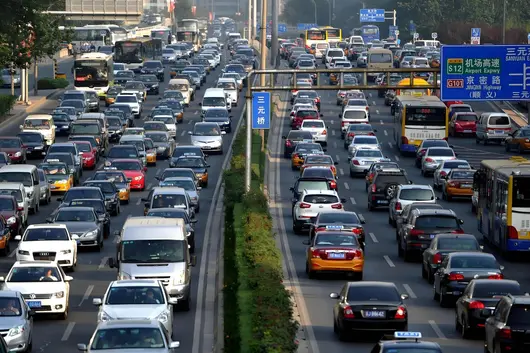


May's new car sales rankings just came out, revealing a reality some have to admit: Pure fuel cars are heading towards the end, at least in the Chinese market.
Not a single fuel car in the top 16 models
According to CPCA statistics, the top 16 passenger vehicle retail sales models in May were all new energy vehicles, not a single fuel vehicle model, which is the first time in my recollection.
Bo Yue L appeared at 17th place, which can be said to regain some face for fuel cars.


CPCA Secretary General Cui Dongshu stated that "Cold Fuel, Hot New Energy" was the biggest focus of the May auto market, with the speed of electric substitution exceeding expectations.
In particular, among the top 10 selling models, Geely Xingyuan ranked first with 38,751 units, Tesla Model Y ranked second with 28,911 units, Xiaomi SU7, Leapmotor A10, and Li Auto i6 ranked from third to fifth respectively, while Model 3, Wuling Hongguang MINIEV, AITO M6, Yuan UP, and Titanium 7 PHEV occupied the 6th to 10th places in order.
Among them, 8 models were pure electric vehicles, and the top 6 were all BEVs, with electric vehicles being very strong.
This is also a trend-based change. In January this year's top 10 sales, there were still 7 fuel cars, 6 in February, 5 in March, only one Geely Binyue in April ranking 8th, and zeroed out in May. The speed of change is overwhelming.

Whether it is Binyue or Boyue, they can be called the standouts among fuel cars, but both fell out of the TOP 10 camp.
Back in 2025, fuel cars still held half of the TOP 10, still the market boss. Before that, Sylphy, Lavida, Sagitar, etc. dominated the list for a long time.
TOP 10 is also the weather vane of the auto market. Is it that fuel cars are not trying hard enough? Of course not. Previously high-and-mighty luxury brands had to conduct significant promotions, with some model prices even approaching a 50% cut, such as Jaguar Land Rover dropping by 50%, and BMW dropping by over 300,000 yuan.

Joint venture fuel cars are also ruthless when cutting prices. Nissan Sylphy Classic terminal price starts at 50,200 yuan; VW Sagitar official price dropped to 79,800 yuan, a decrease of about 33% compared to the old model guide price of 119,900 yuan, a drop of 50,000 yuan; Honda Civic entry-level vehicle price only is about 90,000 yuan; VW Tharu after discount is 82,900 yuan, a drop close to 40%.
Sales still did not see much improvement, indicating consumers are not too interested, fuel cars have already become a "niche category", fast becoming sentiment cars.
New energy vehicle penetration rate reaches 62.9% high
At the same time, new energy vehicle penetration rate is rising. According to CPCA statistics, May new energy retail penetration rate continued to break 60% to reach a historical high of 62.9%, which is worlds apart from January's 38.6%.
What does this concept mean? It's equivalent to every 3 passenger vehicles sold, 2 are new energy vehicles, seizing the market initiative.
This year January to May, domestic auto market decline is around 20%, but during the same period new energy passenger vehicle wholesale sales reached 5.306 million vehicles, year-on-year growth of 1.7%, forming a sharp contrast with the general market trend.

Penetration rate improvement is not strange, what is strange is the speed of improvement. One reason is the Middle East War causing soaring gas prices, highlighting the advantage of low usage cost for new energy vehicles.
At the same time, new energy vehicle experience is continuously improving: trendy exterior design, smart and smooth cockpit, trouble-free assisted driving, scientific spatial layout, precisely grasping young people and family users' purchase preferences.
Conversely, traditional fuel cars, for many years product innovation lagging, high fuel consumption, lagging intelligence, high usage cost shortcomings continuously highlighted, slowly lost market competitiveness.
From the supply side, even "cold" joint venture car companies have become enthusiastic, which may also be forced by circumstances. According to CPCA statistics, May new energy joint venture models sales year-on-year growth 51%, fuel cars year-on-year decline 41%.
HEV Gas-Electric is also growing
New energy vehicle penetration rate improvement reflects the acceleration of electrification. Of course, electrification is not limited to new energy vehicles, gasoline-electric hybrid HEV not relying on charging is also one of the directions.
According to CPCA statistics, May gasoline-electric hybrid passenger vehicle wholesale 92,000 vehicles, year-on-year growth 26%, month-on-month growth 28%.

Among them, GAC Toyota (35,560 units), FAW Toyota (27,999 units), SAIC Passenger Vehicles (12,758 units), Geely Automobile (6,677 units), Changan Ford (2,809 units), Dongfeng Motor (1,984 units), Dongfeng Honda (1,955 units), GAC Honda (1,198 units) are the standouts among them.
It is worth mentioning that Chinese brands Geely, SAIC, Changan, GAC, etc. are also rapidly catching up in the HEV field, and found new markets overseas.
Pure fuel cars hope for export
Fuel cars are collapsing at a visible speed domestically, but overseas markets still have vast room, especially in Southeast Asia, Middle East, Russia, South America, where charging infrastructure is insufficient, fuel cars are still the absolute main force.
The most intuitive impression is, BYD's total sales far exceeded Chery, but the latter's export volume is more than the former, and mainly sold are fuel cars. Chery fuel cars swept Middle East, Latin America and Russia, BYD electric vehicles deep cultivated Thailand, Brazil, Europe, etc.

2024 China fuel car export volume reached 4.574 million vehicles, accounting for 78.1% of total auto exports, this ratio has been stable around 3/4 since 2020; 2025, fuel car exports 4.483 million vehicles, accounting for 63.16% of total exports 7.098 million (CAAM data); until this year May, this ratio is still at 46%.
Equal Rights for Fuel and Electric? Save fuel cars?
Actually, comparing new energy vehicles with fuel cars is a bit unfair, the former's advantage partly comes from electric drive experience, partly from policy dividends: exempt purchase tax, green plate convenience, cheap electricity fees, and bypassing the road tax base in the fuel tank.
Fuel cars did suffer a silent loss. As the saying goes: "Fill a tank, half is tax." Although this statement is a bit exaggerated, the reason is roughly the same. Taking current 92 Octane Gasoline as an example, consumption tax, VAT, Urban Maintenance and Construction Tax, Education Surcharge, Local Education Surcharge added up, account for about 1/3 of gas price. The lower gas price, the higher proportion of fixed consumption tax.
New energy vehicles also occupy roads, occupy parking spaces, cause congestion, also wear road surfaces, and cause greater harm, especially large new energy SUVs, ranging from over 2 tons, but because not refueling, naturally bypass the refined oil consumption tax this old interface.
Now relevant departments and media are calling for new energy vehicles to "reduce weight", possibly laying the groundwork for taxing based on vehicle weight.
Due to user experience differences, even achieving "Fuel and Electric Equal Rights", fuel cars still cannot get rid of the fate of decline, just slightly delay the process. (Author | DA Bin)
© 2024 Bitauto.com. All Rights Reserved.
Bitauto (www.yiche.com and www.bitauto.com) is one of the most visited automotive websites in China. We provide detailed info on Chinese car brands available in your area. Please note that the information provided on this website is based on publicly available data and is for reference only. It may not be fully updated or accurate at all times.

Help us improve our website


