

HomeHonda City Hatchback

Search History
Popular Searches
Dealer Login / Sign Up

在马来西亚的SUV市场,很多买家在选车的时候都会拿 Hyundai Tucson 和 Subaru Forester 来做比较。这两款车在价位和定位上都蛮接近的,今天我们就从多个方面做一个详细的对比,帮你省下做功课的时间。
Hyundai Tucson 在马来西亚的 OTR 售价是 RM 143,888 - 197,888,一共有 5 个版本,包括 2025 HEV 1.6T AT 2WD Prestige(RM 197,888)、2025 1.6T DCT 4WD Prestige(RM 186,888)、2025 1.6T DCT 2WD Prime(RM 164,888) 等。
Subaru Forester 在马来西亚的 OTR 售价是 RM 174,000 - 197,000,一共有 3 个版本,包括 2024 2.0L S EyeSight GT Edition(RM 189,538)、2024 2.0L S EyeSight(RM 177,538)、2024 2.0L L EyeSight(RM 167,538) 等。
从价钱来看,Hyundai Tucson 的起步价确实比 Subaru Forester 便宜了 RM 30,112。如果你预算有限,Hyundai 的入门版已经可以满足日常需求。但也要注意,便宜的那几千块,可能在配备上会有取舍,具体要看你的需求。

Hyundai Tucson 搭载 1.5L Turbo,马力 140 hp。官方油耗 7.0 L/100km。
Subaru Forester 搭载 2.0L 4-cyl,马力 170 hp。官方油耗 8.0 L/100km。
动力方面,Subaru Forester 的 2.0L 4-cyl 比 Hyundai Tucson 的 1.5L Turbo 多了 30 匹马力。不过日常在市区开,两款车的动力都够用,不会觉得不够力。

Hyundai Tucson 的安全评级是 5★ (ASEAN NCAP),主动安全系统包括 SmartSense。
Subaru Forester 的安全评级是 5★ (Euro NCAP),主动安全系统包括 EyeSight。
安全配备方面,两款车都拿到了不错的评级。不过 Hyundai Tucson 的 SmartSense 和 Subaru Forester 的 EyeSight 在功能上有些差异,如果你比较看重主动安全的话,可以仔细对比一下两者的功能列表。

Hyundai Tucson 采用 FWD 驱动方式。
Subaru Forester 采用 FWD 驱动方式。
两款车的驱动方式一样,都是 FWD,日常驾驶感受不会有太大区别。

Hyundai Tucson 和 Subaru Forester 都是马来西亚市场的主流选择,适合家庭使用、日常通勤。如果你更看重品牌口碑和二手价,可以优先考虑口碑更好的那一款;如果你更在意性价比和配备,那就选配置更丰富的那款。最终还是建议两款都去试驾,亲身体验才是最重要的。

总的来说,Hyundai Tucson 和 Subaru Forester 都是马来西亚市场很不错的车型。选择哪一辆,关键还是要看你的个人需求和预算。建议大家做好功课,多比较几间车行的报价,再去试驾做最终决定。买车是件大事,花点时间做功课绝对不会错。


在马来西亚的SUV市场,很多买家在选车的时候都会拿 Mazda CX-60 和 Audi Q5 来做比较。这两款车在价位和定位上都蛮接近的,今天我们就从多个方面做一个详细的对比,帮你省下做功课的时间。
Mazda CX-60 在马来西亚的 OTR 售价是 RM 200,510 - 252,873,一共有 2 个版本,包括 2026 3.3T 4WD High Plus(RM 252,873)、2025 2.5L 2WD High(RM 200,510) 等。
Audi Q5 在马来西亚的 OTR 售价是 RM 354,174 - 423,174,一共有 2 个版本,包括 40 TDI(RM 320,000)、45 TFSI(RM 350,000) 等。
从价钱来看,Mazda CX-60 的起步价确实比 Audi Q5 便宜了 RM 153,664。如果你预算有限,Mazda 的入门版已经可以满足日常需求。但也要注意,便宜的那几千块,可能在配备上会有取舍,具体要看你的需求。

Mazda CX-60 搭载 2.0L 4-cyl,马力 170 hp。官方油耗 8.0 L/100km。
Audi Q5 搭载 2.0L Turbo,马力 220 hp。官方油耗 9.5 L/100km。
动力方面,Audi Q5 的 2.0L Turbo 比 Mazda CX-60 的 2.0L 4-cyl 多了 50 匹马力。不过日常在市区开,两款车的动力都够用,不会觉得不够力。

Mazda CX-60 的安全评级是 5★ (Euro NCAP),主动安全系统包括 i-Activsense Pro。
Audi Q5 的安全评级是 5★ (Euro NCAP),主动安全系统包括 Pre Sense + ACC。
两款车的安全评级一样,在这个级别里面安全配备都算给得很齐全了。现在的新车安全性都不差,不用太担心这一点。

Mazda CX-60 车身长 4500 mm,后备箱 450 L。
Audi Q5 车身长 4400 mm,后备箱 400 L。
空间方面,Mazda CX-60 的车身比 Audi Q5 长了 100 mm,车内乘坐空间会稍微宽裕一些,尤其是后座腿部空间。如果你经常载家人或者需要放婴儿车,大一点的车身确实更实用。

Mazda CX-60 保修 5年/150,000km,保养间隔 每10,000km或6个月。
Audi Q5 保修 5年/150,000km,保养间隔 每10,000km或6个月。
两款车的保修条件一样,这方面不用纠结。实际保养成本还要看品牌的服务网络和零件价格,建议去车友群问问真实车主的经验。

总的来说,Mazda CX-60 和 Audi Q5 都是马来西亚市场很不错的车型。选择哪一辆,关键还是要看你的个人需求和预算。建议大家做好功课,多比较几间车行的报价,再去试驾做最终决定。买车是件大事,花点时间做功课绝对不会错。




在马来西亚的SUV市场,很多买家在选车的时候都会拿 Proton X50 和 Mazda CX-8 来做比较。这两款车在价位和定位上都蛮接近的,今天我们就从多个方面做一个详细的对比,帮你省下做功课的时间。
Proton X50 在马来西亚的 OTR 售价是 RM 89,800 - 113,300,一共有 4 个版本,包括 1.5T Executive(RM 89,800)、1.5T Premium(RM 101,800)、1.5T Flagship(RM 113,300) 等。
Mazda CX-8 在马来西亚的 OTR 售价是 RM 165,360 - 201,360,一共有 5 个版本,包括 2025 2.5T 4WD High Plus Petrol(RM 201,360)、2025 2.2L 2WD High Plus Diesel(RM 193,123)、2025 2.5L 2WD High Plus Petrol(RM 186,360) 等。
从价钱来看,Proton X50 的起步价确实比 Mazda CX-8 便宜了 RM 75,560。如果你预算有限,Proton 的入门版已经可以满足日常需求。但也要注意,便宜的那几千块,可能在配备上会有取舍,具体要看你的需求。

Proton X50 搭载 1.5L 4-cyl,马力 105 hp。官方油耗 6.0 L/100km。
Mazda CX-8 搭载 2.0L 4-cyl,马力 170 hp。官方油耗 8.0 L/100km。
动力方面,Mazda CX-8 的 2.0L 4-cyl 比 Proton X50 的 1.5L 4-cyl 多了 65 匹马力。不过日常在市区开,两款车的动力都够用,不会觉得不够力。

Proton X50 车身长 4400 mm,后备箱 400 L。
Mazda CX-8 车身长 4500 mm,后备箱 450 L。
空间方面,Mazda CX-8 的车身比 Proton X50 长了 100 mm,乘坐空间更有优势。不过 Proton X50 在城市里停车会灵活一点,各有取舍。

Proton X50 和 Mazda CX-8 都是马来西亚市场的主流选择,适合家庭使用、日常通勤。如果你更看重品牌口碑和二手价,可以优先考虑口碑更好的那一款;如果你更在意性价比和配备,那就选配置更丰富的那款。最终还是建议两款都去试驾,亲身体验才是最重要的。

总的来说,Proton X50 和 Mazda CX-8 都是马来西亚市场很不错的车型。选择哪一辆,关键还是要看你的个人需求和预算。建议大家做好功课,多比较几间车行的报价,再去试驾做最终决定。买车是件大事,花点时间做功课绝对不会错。


车型概览

Suzuki e Vitara 值不值得买,关键不是它看起来有多吸引,而是它能不能解决你的真实用车需求。这篇文章会把重点放在它和同级车相比的生活适配度。 近期围绕这款车的讨论包括「Suzuki e Vitara teased again, is the launch of the Toyota Urban Cruiser twin happening in 2026?」,说明它在本地买家视野里仍有关注度。
版本方面,Suzuki e Vitara 目前可围绕 2026 Standard 来比较。
购车价格指南
评估 Suzuki e Vitara 的购车预算时,建议先从版本定位和后续拥车成本下手。价格不是唯一重点,真正决定是否划算的是每天会不会用到那些配置。
如果你在几个版本之间犹豫,可以把 2026 Standard 放在同一张清单里比较。日常通勤买家优先看舒适与安全,常跑高速的买家则更应重视动力、辅助驾驶和座舱便利。
核心参数汇总
看 Suzuki e Vitara 的核心规格,最重要是把数字翻译成生活里的感受。
Suzuki e Vitara 的核心价值应回到日常场景判断:你要它负责通勤、家庭出行、长途,还是作为更有个性的选择。
优缺点分析
Suzuki e Vitara 的优点不必夸张,真正有价值的是它能不能让日常使用更省心:车型定位清楚,适合先作为同级比较对象。
需要留意的是,最终取舍会落在版本配置、保险和长期保养成本。这些不是扣分项,而是下订前应该先想清楚的生活细节。
购车常见问题解答
购买 Suzuki e Vitara 前,买家最常问的不是单一规格,而是它能不能融入自己的生活。
这辆车适合谁?适合把它和同级车相比的生活适配度放在首位的买家。 家庭用户要看什么?优先看后排乘坐、儿童座椅、行李和日常上下车是否顺手。 每天开会不会麻烦?如果能源成本、停车便利和版本配置都符合你的生活节奏,它会比较容易相处。
竞品对比内容
把 Suzuki e Vitara 放进同级车名单时,不建议只看品牌或外形。真正有用的比较顺序是:先从版本定位、品牌售后和日常用途开始比较。
这样筛选出来的结果更贴近日常生活。你会更清楚它是适合城市通勤、家庭代步、长途巡航,还是更适合作为一辆讲求个性的选择。
用车全周期指南
拥有 Suzuki e Vitara 的重点,是确认保险、路税、保养和轮胎成本都在可接受范围内。买车不是一次付款结束,而是每天都要相处。
如果你常跑南北大道,动力和座舱舒适度会比单纯低价更重要;如果主要在市区,停车灵活性、视野和低速顺滑度会更影响心情。


车型概览

Audi A4 值不值得买,关键不是它看起来有多吸引,而是它能不能解决你的真实用车需求。这篇文章会把重点放在日常场景里的便利程度。
版本方面,Audi A4 目前可围绕 2025 Avant 40 TFSI quattro S line、2025 Sedan quattro 来比较。
购车价格指南
评估 Audi A4 的购车预算时,建议先从版本定位和后续拥车成本下手。价格不是唯一重点,真正决定是否划算的是每天会不会用到那些配置。
如果你在几个版本之间犹豫,可以把 2025 Avant 40 TFSI quattro S line、2025 Sedan quattro 放在同一张清单里比较。日常通勤买家优先看舒适与安全,常跑高速的买家则更应重视动力、辅助驾驶和座舱便利。
核心参数汇总
看 Audi A4 的核心规格,最重要是把数字翻译成生活里的感受。
Audi A4 的核心价值应回到日常场景判断:你要它负责通勤、家庭出行、长途,还是作为更有个性的选择。
优缺点分析
Audi A4 的优点不必夸张,真正有价值的是它能不能让日常使用更省心:车型定位清楚,适合先作为同级比较对象。
需要留意的是,最终取舍会落在版本配置、保险和长期保养成本。这些不是扣分项,而是下订前应该先想清楚的生活细节。
购车常见问题解答
购买 Audi A4 前,买家最常问的不是单一规格,而是它能不能融入自己的生活。
这辆车适合谁?适合把日常场景里的便利程度放在首位的买家。 家庭用户要看什么?优先看后排乘坐、儿童座椅、行李和日常上下车是否顺手。 每天开会不会麻烦?如果能源成本、停车便利和版本配置都符合你的生活节奏,它会比较容易相处。
竞品对比内容
把 Audi A4 放进同级车名单时,不建议只看品牌或外形。真正有用的比较顺序是:先从版本定位、品牌售后和日常用途开始比较。
这样筛选出来的结果更贴近日常生活。你会更清楚它是适合城市通勤、家庭代步、长途巡航,还是更适合作为一辆讲求个性的选择。
用车全周期指南
拥有 Audi A4 的重点,是确认保险、路税、保养和轮胎成本都在可接受范围内。买车不是一次付款结束,而是每天都要相处。
如果你常跑南北大道,动力和座舱舒适度会比单纯低价更重要;如果主要在市区,停车灵活性、视野和低速顺滑度会更影响心情。

车型概览
Audi A4 值不值得买,关键不是它看起来有多吸引,而是它能不能解决你的真实用车需求。这篇文章会把重点放在保险、路税、轮胎和日常能源成本。
版本方面,Audi A4 目前可围绕 2025 Avant 40 TFSI quattro S line、2025 Sedan quattro 来比较。
购车价格指南
评估 Audi A4 的购车预算时,建议先从版本定位和后续拥车成本下手。价格不是唯一重点,真正决定是否划算的是每天会不会用到那些配置。
如果你在几个版本之间犹豫,可以把 2025 Avant 40 TFSI quattro S line、2025 Sedan quattro 放在同一张清单里比较。日常通勤买家优先看舒适与安全,常跑高速的买家则更应重视动力、辅助驾驶和座舱便利。
核心参数汇总
看 Audi A4 的核心规格,最重要是把数字翻译成生活里的感受。
Audi A4 的核心价值应回到日常场景判断:你要它负责通勤、家庭出行、长途,还是作为更有个性的选择。
优缺点分析
Audi A4 的优点不必夸张,真正有价值的是它能不能让日常使用更省心:车型定位清楚,适合先作为同级比较对象。
需要留意的是,最终取舍会落在版本配置、保险和长期保养成本。这些不是扣分项,而是下订前应该先想清楚的生活细节。
购车常见问题解答
购买 Audi A4 前,买家最常问的不是单一规格,而是它能不能融入自己的生活。
这辆车适合谁?适合把保险、路税、轮胎和日常能源成本放在首位的买家。 家庭用户要看什么?优先看后排乘坐、儿童座椅、行李和日常上下车是否顺手。 每天开会不会麻烦?如果能源成本、停车便利和版本配置都符合你的生活节奏,它会比较容易相处。
竞品对比内容
把 Audi A4 放进同级车名单时,不建议只看品牌或外形。真正有用的比较顺序是:先从版本定位、品牌售后和日常用途开始比较。
这样筛选出来的结果更贴近日常生活。你会更清楚它是适合城市通勤、家庭代步、长途巡航,还是更适合作为一辆讲求个性的选择。
用车全周期指南
拥有 Audi A4 的重点,是确认保险、路税、保养和轮胎成本都在可接受范围内。买车不是一次付款结束,而是每天都要相处。
如果你常跑南北大道,动力和座舱舒适度会比单纯低价更重要;如果主要在市区,停车灵活性、视野和低速顺滑度会更影响心情。


Snatching Toyota.
Writer|Hu Chengxu Editor|Mao Shiyang
Auto Pixel (ID:autopix)Original
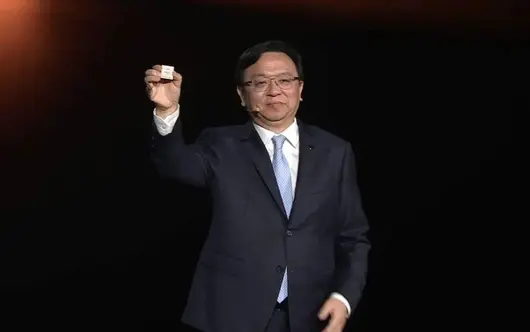
June 9, like in previous years, BYD held its 2025 Annual Shareholders' Meeting at its headquarters in Pingshan, Shenzhen.
More people came than in previous years, so the company temporarily moved the venue from a meeting room to the hall usually used for press conferences. Wang Chuanfu said on stage that nearly 1,000 people attended today, the most in history.
During the Q&A session, a long-term shareholder with heavy stakes stood up. He wanted to know where the company would head next.
In Wang Chuanfu's answer, a word appeared for the first time: "Global No. 1". He said that in the next three to five years, BYD will continue to grow. After five years, in terms of scale, it will achieve "true Global No. 1".
Not No. 1 in New Energy, not No. 1 in China, but No. 1 in total vehicle scale including Toyota, Volkswagen, Hyundai Kia, etc.
When saying this, BYD was experiencing the biggest deceleration since the New Energy era. In the first five months of 2026, BYD sold 788,000 vehicles domestically, down 43.3% year-on-year. The Chinese market is becoming increasingly difficult to provide the incremental growth it enjoyed in the past.
So Wang Chuanfu's goal truly points to overseas.
Take a closer look at what BYD has done in the past two to three years, this goal is not strange. Its playbook no longer resembles that of a company only wanting a seat at the table overseas.
01
What BYD Wants to Grab,
is the Base of Toyota, Hyundai, et al.
To understand how far BYD is from its goal, one must first look at the gap.
Today, the global No. 1 in auto sales is Toyota, selling a bit over 10 million a year; BYD sold 4.6 million vehicles in 2025, ranking sixth globally. There is a gap of more than 5 million vehicles in between, roughly equivalent to creating another BYD of today's scale on top of its existing volume.
As for this extra 5 million-plus vehicles, what is certain is that most of it will not come from the domestic market.
In 2025, China's New Energy penetration rate reached 53.9%, approaching the ceiling; BYD's domestic sales that year fell instead of rose, down by over 300,000 vehicles compared to 2024.
Geely, Chery, and Changan are all chasing, and this local board is nearly at its peak, with limited incremental growth left to extract. The growth gap is thus pushed overseas as a whole. Outside China, the global New Energy penetration rate is still just over 11%.
But "overseas" is never a single block; its biggest chunks happen to be where BYD cannot enter. The US uses tariff and regulatory barriers to seal off the world's largest and most profitable market; Japan and South Korea are fortresses of local brands, hard for outsiders to pry open; India blocks Chinese cars out with high tariffs and entry barriers.
What remains available are South America, Southeast Asia, Central Asia, Australia, the UK, Gulf States, as well as parts of Europe and Mexico. The market set is smaller, and the share burden for each location to reach is heavier.
And these open markets are none of them empty fields.

Southeast Asia is Toyota's home court, where it holds nearly 40% share; BYD has only just squeezed into the top 3 in Thailand. Australia is even more extreme, with Toyota holding sales No. 1 for 23 consecutive years, sales at two and a half times the second place; Gulf States are the common dominion of Toyota and Hyundai Kia, where Toyota's market share is champion in countries like Saudi Arabia, UAE, and Oman.
Only in Brazil is the stock held by Stellantis, Volkswagen, Hyundai Kia, and Renault.
List the owners of these markets one by one, names will repeat constantly; the most frequent is Toyota, followed by Hyundai Kia, then Volkswagen, Stellantis, and other European automakers.
So the overseas granary BYD wants to grab is a very specific existing stock, the base built up over decades of fuel cars by Japanese and Korean automakers.
What it truly wants to replace is RAV4, Corolla, Elantra, Creta and similar economy, durable, high-volume cars sold for decades, using its own DM-i PHEV and Blade Battery EV to replace them one by one within the highest-volume price bands in each market.
Straighten out the chain, and the slogan "Global No. 1" landing on the ground is actually a simpler sentence: BYD must take the home base they've sold for decades within the Toyota and Hyundai Kia base.
This is a ruthless fight; how many opportunities does it have?
02
Wang Chuanfu Writes Growth into a Production Schedule
Faced with questions like "how to go from sixth to first", Wang Chuanfu's habit is to rewrite it as a supply-side arithmetic problem.
On June 9, what he talked about most was not the market, but production capacity. He said how many cars can be sold this year depends on how many batteries can be built; the capacity of the 2nd Gen Blade Battery is climbing month by month, adding 20,000 to 30,000 sets each month; production capacity will be released on a large scale by 2027, and both domestic and overseas markets will see volume increases.
An issue that should be about market and product was interpreted by him as "how much I can make". In his narrative, demand seems assumed sufficient, and the bottleneck lies on his production lines.
Wang Chuanfu seems to believe that if the technology curve of domestic New Energy in the past three years reenacts overseas, the remaining problems can be left to the production schedule.
This logic can explain BYD's overseas layout over the past two years.

It has at least six factories under construction or planned overseas: the Brazil Camaçari plant is a renovation of an old factory exited by Ford, secured in 2023, with the first car rolling off the line in July 2025, targeting 300,000 capacity by end of 2026; the Thailand plant started production in 2024, with an annual capacity of 150,000; the Hungary Szeged plant serves as Europe HQ; Turkey plans to invest 1 billion USD (potentially delayed); Uzbekistan and Indonesia each have points set up.
BYD's playbook's starting point is a bet on speed.
Looking back at BYD's rise domestically, it relied on technology first. In 2021, the 4th Gen DM-i made PHEV the same price as same-level fuel cars with lower fuel consumption; the Blade Battery simultaneously solved safety and cost, with PHEV annual sales jumping from 270,000 to over 2 million vehicles in two or three years.
During those years, China's New Energy market was almost empty; whoever put electric cars that were easy to use and cheap on shelves first could capture whole chunks of incremental growth.
This playbook continues to now. At this year's shareholders' meeting, Wang Chuanfu said "I spend about half my time every week swimming in the ocean of technology", believing he is "one of the 120,000 engineers inside BYD".
But now this playbook's process of converting to sales is not so smooth. Geely, Chery, Leapmotor have caught up one by one; DM-i is no longer a secret technique; not just BYD makes Flash Charge.
Technology is becoming more homogeneous, approaching the physical ceiling further; taking half a step forward brings less and less sales.
Overseas is another matter. Outside China, New Energy is still at the starting point BYD faced years ago: low penetration, few good cars, high prices, most markets still dominated by fuel cars.
The technology curve that once lifted BYD to sixth globally has barely started climbing overseas. What BYD wants to do is take the most advantageous position before this curve rises, copying the success already verified domestically exactly onto a larger plate.
This explains why the overseas game is played heavily and urgently. BYD judges the window period is limited; once overseas New Energy also ramps up, pursuers will flood in as they did domestically, and the time left for first movers might not be longer.
It is unwilling to spend time waiting for the market to mature, and even less willing to hand over initiative.
This June, foreign media claimed BYD is considering acquiring an old European factory, having looked at "many factories" in Europe and is talking with automakers including Stellantis.
BYD prefers independently operated factories; it wants to take over brownfield factories that can be quickly renovated and operated independently with clear ownership and operational boundaries, rather than getting stuck again in existing European auto JV, leasing, or multi-party interest structures.

Key factories and supply chain self-led; distribution and brand also controlled by self as much as possible, serving efficiency and speed. It would rather not have risk-sharing partners first, and have a decision chain that can drive the fastest.
The Brazil old factory renovation took only 16 months from groundbreaking to first car off the line. Export modules are the same; a 6 to 8-ship fleet brings overseas logistics into its own hands. On the channel end, BYD took an equity stake in a Thai local dealer, bound a dealer group with over 100 stores in Latin America; UK authorized stores increased from 52 to 125 in one year, and signed a 100,000 unit deal with Uber.
Following this logic, overseas moves connect into a line. The strategy Wang Chuanfu launched is a replicable template; this is why when asked about sales, he answers with "production schedule" logic.
Whether it holds ultimately rests on that most fundamental judgment: the technology-pulled market curve, how steep it was domestically in recent years, will be equally steep in many overseas markets in coming years.
As long as this judgment holds, simplifying the problem into a production schedule is the fastest solution.
03
BYD VS Geely
Same Overseas Expansion, Different Betting Methods
A easily occurring misunderstanding is summarizing BYD's overseas expansion as "more valued" than Chery or Geely.
In terms of aggressiveness, all three are actually neck and neck. In terms of overseas volume, Chery sold 1.34 million vehicles overseas in 2025, nearly 300,000 more than BYD, sitting on the Chinese passenger vehicle export champion spot for over 20 consecutive years; in terms of capital courage, Geely has bought all the way from Volvo, Lotus, Polestar to a powertrain JV with Renault.
The real difference is not in the degree of aggressiveness, but in the strategic judgment behind the aggressiveness.
Chery bets on export breadth: complete vehicle export plus semi-knocked-down assembly, spreading cars to corners others can't reach, essentially an asset-light playbook.
Geely bets on capital and alliances; Li Shufu is more like an allocator. He grabs core capabilities on one side, polishing smart and New Energy tech to optimal; on the other side, he takes shares and makes allies, seeking leverage at the factory and channel levels.

▍Li Shufu
This year, Geely's Qianli Haohan G-ASD obtained EU UN R171 certification, becoming the first Chinese ADAS system to pass this regulatory certification; equipped models can be sold in the EU without country-by-country re-certification.
At the same time, Geely integrated Gothenburg and Frankfurt R&D teams, established Geely Technology Europe, planning to compress the launch time gap between China and overseas models from over a year to within 6 months.
Also this year, Lynk & Co's Europe sales reuse Volvo resources; Geely in South Korea and South America reuses Renault resources. Gan Jiayue of Geely Automobile has said, Chinese brands going overseas is not to "conquer", but to "walk in", local JVs, reusing local resources to make win-wins, this is the natural expression of this logic.
Behind the three choices are three strategic judgments, and also three judgments on where the moat should be built.
Geely's judgment on tech replacement is not so anxious. In March this year, at the Geely Holding FY2025 performance press conference, CEO Gui Shengyue said the future economy passenger car market will likely be replaced by robotaxis. Shortly after, Geely became one of Nvidia's automotive partners.
This judgment shows Geely does not see today's New Energy competition as the final outcome. It believes there will be longer tech rearrangements after the auto industry, so it is more willing to keep elasticity using cooperation and capital allocation.
Because of this difference, Geely is not anxious to raise "No. 1", nor will it compress the time to first to five years. It is more like betting on the future rather than pressing all chips on this current New Energy replacement round. So Geely's choices overseas are almost the opposite of BYD's: willing to accept slower, more dispersed, more complex.
BYD wants to maximize scale with batteries, factories, fleets, and channels; Geely is more willing to take more positions in tech routes, regional markets, and partnership relationships.
04
The Other Side of the Production Schedule
Reaching No. 1 in scale is a goal setting, a strategic judgment, and will eventually become a structure.
In 2026, Geely, Chery, Changan, Great Wall almost all offered oil-electric hybrids, to grab Toyota THS share in markets with inconvenient charging,唯独 BYD absent.
Technically it is not incapable. This round of HEV by Chinese automakers is not replicating Toyota THS. It bypasses engines, planetary gears, and long-term calibration that old auto giants are good at, pulling the battlefield back to electric drive systems more familiar to Chinese automakers, downsizing batteries, removing external charging, keeping the PHEV low fuel logic, becoming a hybrid that doesn't need charging.
But BYD chose not to do it, turning to laying charging facilities overseas.

In March this year, BYD booked a stadium with 18,000 seats to launch the 2nd Gen Blade Battery, simultaneously launching the plan "Flash Charge China, Change the World". Wang Chuanfu spoke alone for an hour and a half; the press conference dragged from two hours to three hours; it set a year-end goal to build 20,000 flash charge stations domestically, with capital expenditure in the billions, and changed flash charge stations to integrated storage and charging solutions with built-in storage cabinets, bypassing the trouble of applying to the grid for capacity expansion, deploying on three parking spots.
From year-end, these piles will start spreading overseas; the MW-level network in Europe has already been demonstrated at the Munich Auto Show.
Building charging piles in target markets is the latest chapter in BYD's overseas line, possibly the most money-burning chapter. BYD bets that once the charging network is laid out, the transitional form matters less. Others keep hybrids; BYD chooses not to bet on multiple fields, pressing all chips on this New Energy transition round.
Put these together, it is a consistent logic: growth is punched out section by section from factories, technology, and charging piles.
BYD is almost the only domestic automaker highly controlling everything from supply chain vertical integration to overseas assets. This heavy asset model makes scale a must-do; in this dimension, sales "No. 1" is just a byproduct.
Vertical integration is only worth it when spread to world-class scale; maintaining a fleet requires enough exports to fill it; building cell capacity at that level requires enough whole vehicles to digest it; investing billions to lay 20,000 charging piles requires enough installed base to feed it.
Chery can stop at export champion; Geely can be a large enough multi-brand group; if BYD's scale is not larger than them, the efficiency of this setup cannot be guaranteed.
This gives BYD the possibility to challenge for Global No. 1, and makes it very hard to accept a "not big enough" result.

This article is original content of Auto Pixel (autopix)
Unauthorized reproduction is prohibited
© 2024 Bitauto.com. All Rights Reserved.
Bitauto (www.yiche.com and www.bitauto.com) is one of the most visited automotive websites in China. We provide detailed info on Chinese car brands available in your area. Please note that the information provided on this website is based on publicly available data and is for reference only. It may not be fully updated or accurate at all times.

Help us improve our website


