

HomeHybrid

Search History
Popular Searches
Dealer Login / Sign Up

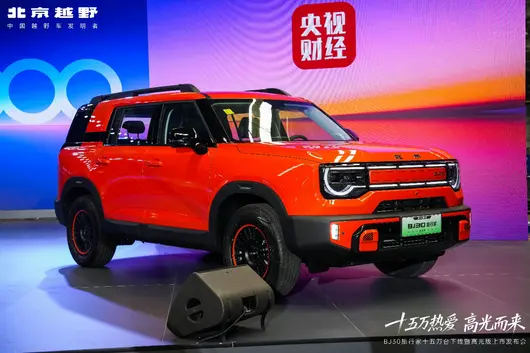
Which domestic SUV is the most surprising in 2026? Of course, it's the BJ30 Traveler. Not because it's luxurious, nor because it runs fast, but because it sold 150,000 units in six months, becoming the model that reached this number the fastest in the Chinese light off-road SUV category.

Even more surprising, CCTV Finance actually live-streamed the disassembly of a BJ30 Traveler that had driven 150,000 kilometers. 150,000 kilometers is equivalent to the mileage of an ordinary family driving for over ten years. Upon opening it up, the engine turbo is clean, the transmission casing has no oil stains, and the chassis flatness is not much different from a new car.
To be honest, this "hardcore sales" method is more convincing than hiring a hundred celebrity endorsers. The question arises: In the 100,000 yuan-level SUV market which is competitive to the max, on what basis does the BJ30 Traveler break through the encirclement? The answer is super off-road, super large, super fuel-saving.

First, let's talk about "Super Off-Road": It's not a hardcore off-roader, but it can go wilder than you think
Many people sneer at the word "light off-road", thinking it's just a city SUV with a boxy shell. But the BJ30 Traveler is different; it has over sixty years of Beijing Off-road blood flowing through its bones.
How to understand its off-road capability? I'll use a football formation analogy—"433". Three forwards are responsible for attack, corresponding to its powertrain system; three midfielders are responsible for organization, corresponding to escape capability; four defenders are responsible for defense, corresponding to terrain modes. This system can attack and defend well, it's absolutely not a fake setup.
Let's talk about power first. The BJ30 Traveler uses a "Three Motors, Four-Wheel Drive, Six Modes" HEV hybrid architecture. In plain language: it has three hearts - a hybrid-specific engine good at long-distance fuel saving, a front motor responsible for recharging anytime, and a rear motor with super strong explosive power. The three "people" cooperate by division of labor, using electricity in the city, fuel on the highway, and both going up for climbing, always keeping the car in the most fuel-efficient and powerful state.

Then talk about escape. The electronically controlled energy center lock can adjust front and rear axle power distribution within milliseconds. Four-wheel electronic traction control can intervene in 0.03 seconds. The maximum wheel-end torque reaches 5928N·m. What does that mean? Mud, sand, cross-axis, other city SUVs have to walk carefully around, the BJ30 Traveler just turns a knob to get through.
You might think these numbers are far from you, so let me rephrase: A while ago, automotive bloggers from five countries (South Africa, Indonesia, UAE, Poland, Mexico) tested the fuel consumption of several domestic SUVs under extreme road conditions. The result is the BJ30 Traveler achieved fuel consumption of less than 5 liters per 100 kilometers in every country. South African wildlife reserve unpaved roads, 4.9 liters; UAE high-temperature desert highway, 4.9 liters; Poland icy snowy winding mountain roads continuous climbing, 4.85 liters.
What does this mean? It means you drive it to Inner Mongolia grasslands, Yunnan mountain roads, Xinjiang Gobi, and your heart is at ease. It's not that kind of "showpiece" that can only put on a show on paved roads, but a partner that can really take you into the mountains and also bring you back safely.

Next, let's talk about "Super Large": Moving doesn't need Huolala, family travel is no compromise
If "super off-road" is a bonus item, then "super large" is the core reason many families buy it.
First look at a set of numbers: 2820 mm wheelbase, 66% utilization rate, 1496 liters trunk volume. These parameters might be a bit abstract, but substitute a few specific scenarios, and it's easy to understand.
First is moving. Have you experienced the dilemma of calling Huolala? If not much stuff, it's not worth it; if more stuff, have to pay extra. After the BJ30 Traveler's trunk is folded down, the volume is close to 1500 liters. Snowboards, camping tents, three suitcases, plus hometown specialties stuffed by parents, all done in one trip. The key is after the rear seats are folded flat, it becomes a 1.92-meter bed. Lay a mattress and sleep. Tired from moving, just nap in the car, saving even hotel money.
Next is family travel. The BJ30 Traveler has a three-row seven-seater layout. Sitting a 1.8-meter tall adult in the third row, knees don't hit, headroom is not pressed. This is almost unique in 100,000 yuan-level SUVs. 38 storage spaces in the whole car, umbrellas, water cups, laptops, children's milk bottles... every item has its own "exclusive seat", no need to pile up messily on the center console anymore.
Also camping. No need to set up a tent, no need to book a hotel, rear seats folded down is a bed. The 1.05 square meter panoramic sunroof opens, lie in the car at night to watch stars, that experience is better than any influencer homestay.
Someone might say: "I don't move, don't camp, what do I need such large space for?" But think about it, even if just daily commuting, taking parents and children to the supermarket on weekends, pulling some New Year goods during holidays, large space is never a burden, but the confidence of "I can use it, but you can't not have it".

Finally look at "Super Saving": Saving money, saving time, saving worry, people living life are all calculating this account
Buying a car is for a moment, using a car is long-term. The smartest part of the BJ30 Traveler is that it calculates the family user's economic account thoroughly.
Let's talk about saving money first. The five-country test mentioned earlier, fuel consumption under 5 liters per 100km. Let's calculate at 4.9 liters, drive 15,000 km a year, gas price 8.5 yuan, yearly fuel cost is about 6,247 yuan. For fuel SUVs of the same level, fuel consumption at least 8-9 liters per 100km, yearly fuel cost easily over 10,000 yuan. Just fuel money saves 3-4 thousand a year, drive for five years save 15,000 to 20,000 yuan, enough to buy two new phones.
Then talk about saving time. The BJ30 Traveler is HEV hybrid, no need to find charging piles, no need to queue to charge, no need to argue with property management to install charging piles. Add gas and go, three minutes full blood revival. In a year, save dozens of hours of recharging time, these times to accompany family, watch dramas, isn't it a good idea?
Finally talk about saving worry. First owner whole vehicle lifetime warranty, engine, transmission, 99% of parts are within guarantee scope. No safety hazard of high-voltage battery pack, maintenance simple, parts sufficient, almost any repair shop in the country can fix. 150,000 km disassembly also proved its durability - no rust, no oil leak, no obvious wear. This means low maintenance cost, long car replacement cycle, long-term holding completely no pressure.
"All-Round Traveler" you can drive home for 70,000 yuan, what are you hesitating for?
After talking about the product, we have to calculate the account. The BJ30 Traveler series now launches "30,000 yuan Super Trade-in Policy", no brand limit, no year limit. Even if you have an old car driven for ten-plus years or a commuter motorcycle in hand, can exchange for 30,000 yuan subsidy. New users without old cars, present driver's license to store and enjoy 30,000 yuan directly.

Calculating down, BJ30 Traveler Fuel Standard Version Super Trade-in Price is only 69,900 yuan, seven-seater version 84,900 yuan, Hybrid Advanced Version 106,900 yuan. While the newly launched Highlight Version, Fuel Version 82,900 yuan, Hybrid Version 109,900 yuan. That is to say, you only need to spend the money of a micro electric car, you can drive away a hybrid box that can carry and go off-road, one tank of fuel runs over 1,000 kilometers.
Don't forget there are five gifts: First owner gets value 6,000 yuan whole vehicle lifetime warranty, 0 down payment financial policy, old brings new sends JD Card, OTA lifetime free upgrade, basic traffic lifetime free. Buying car during World Cup can guess champion win 50,000 yuan subsidy.

Back to the question at the beginning: On what basis did the BJ30 Traveler sell 150,000 units explosively? Because it achieved the level of "can carry, can off-road, and fuel saving" in the 100,000 yuan price range where almost no one can do, then used a price that is impossible to refuse, handed the right of choice to every ordinary family's hand. For those who don't want to compromise, but also don't want to spend more money, this car might be the one worth buying most in 2026.

In the 2026 hybrid market, domestic brands are rising comprehensively, ending the long-term monopoly premium of Japanese hybrids.
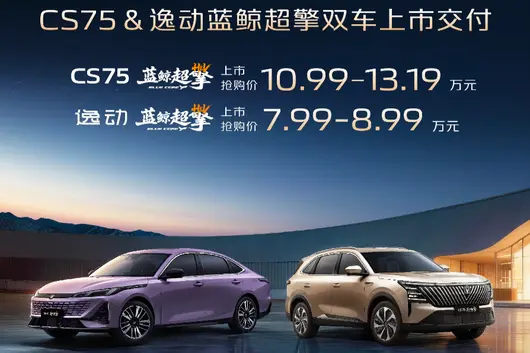
On May 23, Changan Automobile's 4th Gen CS75PLUS Blue Whale Super Engine and 4th Gen Eado Blue Whale Super Engine officially launched and delivered, starting prices are 109,900 yuan and 79,900 yuan respectively. This means Changan directly pulled HEV hybrid SUVs into the 100,000 yuan range, and hybrid family sedans into the 70,000 yuan range.

For the past 20+ years, the global HEV market has been dominated by Japanese brands. Joint-venture hybrid models often carry a premium of 20,000 to 30,000 yuan compared to fuel vehicles of the same spec, making fuel savings hard to offset the price difference.
The arrival of Changan Blue Whale Super Engine dual vehicles is not just a price drop, but a comprehensive dimensional attack on technology, experience, benefits, and cost-performance. It not only redefines the value standards of the 100,000 yuan hybrid market but also allows Chinese hybrid technology to officially overtake traditional joint-venture hybrids on a corner.
01
HEV Becomes a Strategic Battleground for Car Companies
Under pressures of high fuel prices, uneven charging infrastructure, and over 45% of households lacking fixed charging spots, HEVs that require no charging, reduce fuel consumption by half compared to ICE vehicles, and have no refueling anxiety are back in the mainstream focus, becoming a key move on the strategic chessboard of Chinese car companies.
Geely, Changan, Chery, Great Wall, and other top domestic brands made strategic choices almost simultaneously, densely releasing new generation HEV technology. Analysts point out that true technological trends are never a single route substitution, but long-term coexistence of pure electric, plug-in hybrid, and HEV directions.
In this new tech competition, domestic brands did not follow the Japanese path, but came up with a more "aggressive" electrification plan. Geely launched i-HEV Intelligent Drive Hybrid with 48.41% thermal efficiency; Chery launched the "Rhinoceros H" gas-electric system with 5.1kWh battery capacity. Changan's Blue Whale Super Engine Hybrid takes a different path, redefining the basic logic of hybrid systems.
Traditional Japanese HEVs are essentially optimization plans for ICE vehicles — the engine is always the core, the motor and battery only "give a hand" when the engine is inefficient. Changan used a vivid analogy: Japanese hybrids are like a "master craftsman leading an apprentice", always taking on the vast majority of work themselves, only letting the apprentice help when busy.
Blue Whale Super Engine's approach is completely different. It proposes an architecture of "Balance of Gas and Electric, Fusion of Intelligence", consisting of 500 Bar ultra-high-pressure direct injection hybrid engine, 180kW highest power electric drive in class, 50C high-rate battery, and Ai Cloud Intelligent Control System.
The core change here isn't how high a specific parameter is, but the underlying synergy logic of the whole system changed. The engine and electric drive are no longer main/subordinate, but achieve intelligent division of labor based on all scenario road conditions.
Comparing Toyota Dual Engine and other traditional hybrids, Blue Whale Super Engine hybrid has distinct advantages: 180kW high-power electric drive far exceeds Japanese 88kW low-power electric drive. Low-speed engine is fully decoupled from wheels, pure electric drive is quieter, startup response fast to 0.29 seconds, 0-60km/h acceleration low to 3.71 seconds, power is instant without hesitation.
Meanwhile, whole vehicle idle noise is as low as 37.9 decibels, reaching library-level quiet standards. Noise reduced by 10 decibels compared to traditional fuel cars. Driving quality infinitely close to pure electric vehicles.
02
Saving Downpayment for a Car in Five Years
From test data, Changan Blue Whale Super Engine architecture effect is also very intuitive. 4th Gen Eado Blue Whale Super Engine city average fuel consumption 2.62L, medium speed 3.21L, highway 4.10L, combined 100km fuel consumption 3.2L; 4th Gen CS75PLUS Blue Whale Super Engine city average 2.88L, medium speed 3.78L, highway 4.44L, combined 3.6L — Fuel consumption directly halved compared to same-level traditional fuel cars.
In Xi'an media tests, Eado Blue Whale Super Engine even ran 1.6L/100km city results. CS75PLUS Blue Whale Super Engine also achieved 2.3L/100km city fuel consumption. This "more traffic, more savings; highway no waste" full-condition energy-saving performance is difficult for traditional mechanical logic hybrid systems to achieve.

A user participating in the "Challenge World Record, I am Fuel Consumption Champion" nationwide store test drive activity drove CS75PLUS Blue Whale Super Engine on urban congested roads with 3L class fuel consumption. He is not a professional car reviewer, nor does he have the "Golden Right Foot" of extreme fuel-efficient driving, just an ordinary prospective buyer. This scene was unlikely in the previous fuel vehicle era — normal people driving casually, fuel consumption actually lower than the manufacturer's combined condition rating.
This is determined by Blue Whale Super Engine's technical logic. It doesn't rely on the driver "saving fuel" to reduce consumption, but relies on the system "driving to save" to make every drop of fuel count.
In the past, when consumers were debating between fuel cars and PHEV/BEV, attention often focused on purchase price and government subsidies. But this time Changan fully calculated and cleared these "silent big items": insurance, energy consumption, residual value, daily maintenance.
Taking 4th Gen CS75PLUS Blue Whale Super Engine as an example, calculated at 15,000 km/year average, same-level fuel SUV combined consumption is about 8.56L, one year fuel cost 11,267 yuan; Blue Whale Super Engine combined consumption only 3.6L, annual fuel cost 4,744 yuan, directly saving 6,523 yuan in one year. Also as a "Blue License Plate" car, it is basically consistent with traditional fuel cars in insurance and used car residual value.
More importantly, the first non-operating owner enjoys lifetime warranty for core components of the HEV hybrid system, completely eliminating user concerns about large maintenance costs during long-term use.
Summarizing, calculating total over 5 years, CS75PLUS Blue Whale Super Engine saves over 32,000 yuan in comprehensive vehicle cost compared to same-level fuel SUV, Equivalent to directly saving downpayment for a car. 4th Gen Eado Blue Whale Super Engine uses the same algorithm, saving about 21,800 yuan in 5 years compared to same-level fuel sedans.
Even comparing with same-level BEVs that need charging, CS75PLUS Blue Whale Super Engine as a "Blue License Plate" car, premium cost is about 1,000 yuan lower per year than BEVs. Resale value gap is more obvious. 3-year-old compact fuel car retention rate about 50%, BEV about 44%. A 120,000 yuan car, can sell 7,200 yuan more after 3 years, annualized income increase 2,400 yuan. After calculating energy, insurance, maintenance, residual value etc. total over 5-year usage cycle, 4th Gen CS75PLUS Blue Whale Super Engine still saves about 10,730 yuan compared to same-level pure electric SUV.


In terms of range, CS75PLUS Blue Whale Super Engine one tank of fuel runs 1500km, Eado Blue Whale Super Engine breaks 1700km. Chongqing to Beijing one-way no need to refuel, completely saying goodbye to range anxiety, perfectly fitting long-distance self-drive and high-frequency commuting user needs.
Changan's Blue Whale Super Engine is a HEV that completely doesn't need charging, doesn't rely on charging piles, doesn't change refueling habits. Pulled entry-level price into 70,000 yuan range, directly cutting into core territory of joint-venture fuel cars. The cost saved day by day is enough to cover years of maintenance fees, truly achieving "more you drive, more you earn".
03
Chinese Hybrid Technology Goes Global
While product breakthroughs, Changan Automobile global layout accelerated synchronously. Local time May 22, Changan Automobile formally signed global strategic cooperation agreement with Portugal Football Association in Lisbon, becoming Portugal National Team Global Official Partner. Cooperation covers 2026 USA/Canada/Mexico World Cup, 2030 World Cup and 2027, 2031 Women's World Cup.
Previously Changan announced investing over 500 million yuan to layout 2026 World Cup global marketing, target directly 750,000 units overseas sales in 2026.
Globally, HEV is showing explosive growth trend. 2025, HEV sales in Europe reached 4.57 million units, YoY growth 19.9%, market share reached 35%, exceeding gasoline cars for the first time, becoming Europe's largest single power form; in Southeast Asia Indonesia, Malaysia, HEV is also a rapidly growing emerging market.
2025 BEV exports were greatly affected by tariffs in some overseas regions, while China HEV exports grew 94.1% YoY. This further highlights HEV's special value in going overseas strategy.
Changan uses World Cup traffic to push Blue Whale Super Engine to global view, both brand positioning and anchor point for Chinese hybrid solutions going global. From tech self-research breakthrough, domestic market subversion, to landing global top venues to show Made in China, Changan Automobile is pushing Chinese hybrid technology globally with tech as core, quality as wings.
Changan Automobile Executive Vice President Yang Dayong previously stated in media interview that China new energy development is fast, but globally, still 70 million users choose fuel cars annually, many overseas regions charging conditions cannot keep up. From the domestic market perspective, currently there are also over half fuel car users. They are not unwilling to save energy, but charging is inconvenient, no fixed parking spot, or they don't want to change driving habits. This is HEV's most practical market logic.

Yang Dayong stated, Changan's judgment is clear: not "Gas vs Electric", but "What users need, we do". Future must be multiple power types coexist long-term, HEV will become one of mainstream choices. Expected by 2030, HEV (Gas-Electric Hybrid) share in China fuel cars will exceed 60%. In addition, Overseas HEV sales will likely be higher than domestic market.
China auto industry always talks about electrification endgame, but true market evolution is never "elimination-style" substitution, but "addition-style" enrichment. For over 45% users without home charging piles, for owners in winter extremely cold regions, for people doing long-distance self-drive several times a year, they don't need to be educated to "change habits", but need a non-troublesome solution.
So Changan Blue Whale Super Engine dual vehicle launch is not just iteration of two new cars, but a value reconstruction of home hybrid market. Currently many hybrid models, either high price high spec, threshold discourages, or low price reduced spec, experience discounted, while Changan accurately grabs ordinary family vehicle core needs: No charging, no fear of winter, not wasting fuel, not breaking car, not expensive price.
79,900, 109,900 yuan friendly pricing, 2L class real fuel consumption, 1500km+ super long range, full cycle low cost, lifetime warranty safety net, this combination punch completely broke "Hybrid must be premium" industry stereotype. Not forcing users to change driving habits, using hardcore tech to adapt to user needs, this is Changan Blue Whale Super Engine hybrid's given "Chinese Hybrid Optimal Solution".
Technology is never to replace someone, but to fill those unmet needs. When industry was still arguing "Who dominates Gas vs Electric", Changan already silently pressed hybrid threshold to 70,000 yuan level, submitted a China solution to the market.

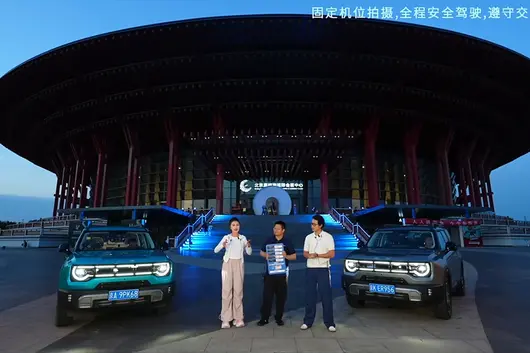
[Vanguard Auto/Original] Recently, the live test of the BJ30 Traveler fuel-saving challenge gave us a new perspective on this 70,000 RMB-class light off-road SUV.

Besides domestic real-road condition support, earlier it collaborated with automotive bloggers from five countries: South Africa, Poland, Indonesia, UAE, and Mexico for cross-border long-distance trials, completing verification of the whole vehicle and hybrid system across different climates and terrains. Domestic and overseas two-way testing closed the loop, honestly measuring fuel consumption dropping below 5L per 100km across multiple road conditions. Real-world verification confirms low fuel consumption; the three-engine hybrid builds a fuel-saving benchmark.

The entire test followed GLTC Global Life Test, OLTC Off-road Life Test dual-circuit standards. The live stream split into three real driving scenarios: urban congestion, highway long-distance, country road off-roading, comprehensively testing the vehicle's "Ultra-Economical, Ultra-Spacious, Ultra-Wild" three product attributes. First, let's talk about the fuel consumption performance everyone cares about most. Urban congestion is a major fuel consumption disaster zone for fuel vehicles; frequent start-stop, low-speed crawling easily increase energy consumption. The BJ30 Traveler is equipped with an exclusive three-engine HEV hybrid system, adopting three-engine six-mode + electric four-wheel drive combination. Driving prioritizes motor drive, engine intervenes to do work as needed, avoiding idle fuel consumption problems from the root. Model two-wheel drive official combined fuel consumption 5.85L/100km, four-wheel drive 6.45L/100km, real-world urban congestion test directly broke the 5L threshold, changing the stereotype of hard-core box SUVs with high fuel consumption, daily commuting can save a substantial amount on car maintenance costs.

In terms of space, relying on the 2820mm extra-long wheelbase, the BJ30 Traveler optimizes the whole vehicle cabin space across classes, with no sense of crowding for front and rear passengers when fully loaded. The boxy body maximizes storage capacity, large items like camping tents and cookware can be easily put in the trunk. With rear seats folded down, it forms a 1.92-meter flat large bed. Previously, Polish overseas bloggers performed real-world vehicle loading tests; even after fully loading outdoor supplies, one can still lie flat in the trunk, perfectly adapting to family self-driving and near-suburban camping loading needs.

For unpaved off-road sections, the BJ30 Traveler's 215mm super-high ground clearance, paired with the ATS All-Terrain Control System and professional four-wheel drive chassis, can reasonably distribute four-wheel power by switching terrain modes with one key when facing potholed country roads, gravel rough roads, and mild uphill climbs. It easily completes light off-road crossings, accommodating both city commuting and outdoor fun dual needs.
Priced at the 70,000 RMB level, gathering the three advantages of hybrid fuel saving, large space, and all-scenario off-roading, this BJ30 Traveler model has ranked first in domestic light hybrid SUV sales for 23 consecutive months. The 72% retention value over three years stays firmly at the top of the same price range, and the nationwide dense after-sales network also safeguards owners' daily car use.
Finally, highlighting the key points, on June 12, the BJ30 Traveler Highlight Edition will be launched. The new car's power, interior, and smart configurations are comprehensively upgraded, and the high-spec release also adds exclusive custom car paint. After enduring five-country long-distance trials and strict domestic all-road real-world tests, the BJ30 Traveler relies on the hard power of the three-engine hybrid to firmly secure the benchmark position for 70,000 RMB-level fuel-saving box SUVs.
© 2024 Bitauto.com. All Rights Reserved.
Bitauto (www.yiche.com and www.bitauto.com) is one of the most visited automotive websites in China. We provide detailed info on Chinese car brands available in your area. Please note that the information provided on this website is based on publicly available data and is for reference only. It may not be fully updated or accurate at all times.

Help us improve our website


