

HomeInternational Expansion

Search History
Popular Searches
Dealer Login / Sign Up

The Chinese automotive industry clearly became a highlight at the Paris Auto Show, but as Chinese automotive companies enter Europe, is it another round of 'involution' in the European market, or is it truly establishing the status of 'Chinese Brands' locally? At present, this is a 'critical moment' for Chinese cars in Europe. Geely's strategic layout in the European market may provide a demonstration sample for the long-term development of Chinese car brands in the European market.
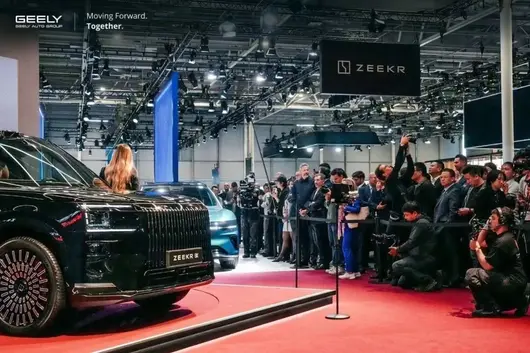
On October 12, Geely Auto Group showcased its full lineup for the first time at the Paris Auto Show. Its three brands Geely, Lynk & Co, and Zeekr gathered at the Paris Porte de Versailles Exhibition Center. Geely Monjaro EM-i, Lynk & Co 07GT made their European premieres. Galaxy Starship 700, Zeekr 9X, all-new Zeekr 7X, and other heavy hitters appeared together.
This exhibition participation was not just a centralized display of models, but also sent a strong signal: Geely's phased report card of nearly 20 years of deep cultivation in Europe and promoting 'systematic global expansion', is also an important practical sample for Chinese brands reshaping value overseas, moving from 'product output' to 'value output'.
Three Brands Together: One Auto Show, One European Localized Business System ReconstructionAt this Paris Auto Show, Geely presented not just a display of single car models, but a complete European localized business system. Relying on the underlying logic of 'One Geely', the group shares R&D, supply chain, and global resources on the back end, while maintaining independent positioning and independent operations of Geely, Lynk & Co, and Zeekr on the front end. They cover mainstream, high-end, and luxury markets respectively, forming a complete layered brand matrix and building a commercial foundation for multi-price band collaborative operations.

The growth signals in the European market are more strategically significant: In September 2026, the combined single-month sales of the three brands in the EU market first exceeded 10,000 units. According to plans, the overseas sales target for the next 2 to 3 years is to hit 2 million units, with Pan-Europe and Eastern Europe combined targeting 900,000 units. The European market bears nearly half of Geely's globalization incremental growth, making it the core strategic market determining the group's long-term valuation and overseas profitability.
The product layout on the exhibition stand is the most intuitive carrier of this business system. The Geely brand targets the mainstream mass market, has entered 27 European countries, and has over 450 sales outlets. Monjaro EM-i, as Geely's first priority overseas release of a D-class electric hybrid global car, debuted first; Galaxy Starship 700 landed in Paris immediately after its global release on October 10, bringing brand new intelligent off-road technology to Europe.

Lynk & Co positions itself in the high-end new energy sector, business covering 25 European countries and over 140 sales outlets. The first B-class plug-in hybrid shooting brake 07GT enters the European traditional shooting brake track with shooting brake aesthetics, accurately grasping local consumer preferences.

Zeekr focuses on the luxury market, business covering 22 European countries. In 2026, European delivery volume increased by 200% year-on-year, becoming one of the fastest growing luxury car brands locally; the flagship model Zeekr 9X has opened orders in Europe, with the German market starting price at €119,500, successfully joining the European luxury SUV camp, completing the value verification of Chinese brands breaking upwards.

The three brands guard their respective tracks, backend technical base is highly interoperable, fully covering mainstream, high-end, and luxury price bands. This is the core competitive advantage of the 'One Geely' system expansion, distinguishing it from other single-brand overseas expansion models.
System reconstruction is not just brand layering and product matrix building, but also the reconstruction of manufacturing and channel localization business models. Facing Europe's strict tariff barriers, industrial policies, and environmental regulations, Geely abandoned the high-risk path of fully building heavy assets on its own, walking out a light-asset collaboration model of 'industrial symbiosis'.
The group and Ford jointly built a manufacturing joint company around the Valencia factory in Spain, sharing mature capacity, sharing fixed investment and model development costs, filling the shortfall of localized manufacturing in the core Western European market, landing the 'Europe Production, Europe Sales' closed loop.

At the channel level, starting from 2027, Volvo Cars will become Lynk & Co's exclusive dealer in Europe. Lynk & Co leverages Volvo's retail network and after-sales system precipitated over decades to rapidly expand market reach, while retaining independent brand tonality and user operation system. From manufacturing to channel, the industrial symbiosis model significantly lowers overseas localized capital expenditure and investment payback cycle, promoting efficient synergy of capacity, channel, and service, building a sustainable overseas profit foundation.
Technical assets go global simultaneously, constituting the underlying support of system competitiveness. i-HEV Intelligent Hybrid engine thermal efficiency reaches 48.41%, 100km combined fuel consumption as low as 2.22L, setting Guinness World Records; Thunder 16-in-1 Intelligent Electric Drive comprehensive efficiency is 93.8%, reaching the industry mass production top level in the same class. In March 2026, Geely Qianli Haohan G-ASD system obtained UN R171 certification, becoming the first Chinese car company to obtain this certification, obtaining the entry pass for high-level intelligent driving landing in the European market. Geely is outputting not only complete vehicle products to Europe, but full-stack technical assets including Three-Electric Systems, Hybrid, Intelligent Driving, and Intelligent Chassis, achieving the globalization monetization of technical capabilities.
Twenty Years of Deep Cultivation Accumulation: From Product Export Towards Globalization Secondary Strategic LayoutThe domestic automotive market has deep involution, price wars are rising and falling, and internationalization has become a pass that Chinese car companies must cross. But going overseas is not as simple as selling products overseas: If Chinese car companies rush headlong and fight separately, disorderly competition will easily copy domestic involution to overseas markets, relying on price cuts to exchange for sales, eventually solidifying the stereotype of 'cheap goods' in the minds of overseas consumers. This damages not only a single brand, but the overall image of Chinese cars and even 'Made in China'. How to break this predicament and take root firmly in mature markets crowded with strong brands, truly establishing an in-depth Chinese brand? Geely gave its own answer.
The complete system presented at the Paris Auto Show is not a one-off investment for short-term hype, but the result precipitation of Geely's continuous investment in the European market for over 20 years. Currently, based on previous accumulation, it is starting the globalization secondary strategic layout.

As early as the early stage of going overseas, Geely proactively laid out European localized R&D and design capabilities, jumping out of the traditional model of 'domestic R&D, selling cars overseas'. Currently the group has built a localized R&D and design matrix in Europe, owning three R&D centers and three design centers. In March 2026, Geely Technology Europe Company was established, integrating the Swedish Gothenburg and German Frankfurt two R&D teams. The core goal is to compress the time difference between China and overseas new car launch to within 6 months.

Gothenburg R&D and Styling Center serves Zeekr, Lynk & Co brands, Italy Design Center supports Geely brand global product development. Europe has upgraded from a simple sales market to the core source of Geely's global R&D network. Looking globally, Geely layouts 5 Design Centers, 5 Engineering R&D Centers, operates 11 overseas manufacturing factories in Malaysia, UK, Brazil, and other places. Business covers over 100 countries and regions, global sales service outlets exceed 2300, forming a cross-regional synergy global industrial foundation.
Technical compliance, safety standards, ESG sustainability capability pre-adaptation are important links in the secondary layout. Benchmarking Europe's strict safety regulations, Geely already has 10 car models winning Euro NCAP five-star safety ratings, covering multiple products from high-end luxury to home mainstream. Simultaneously, Geely became the first Chinese car company to access the European Road Safety Information System (DFRS), participating in the co-construction of the European road safety network with anonymous data sharing, deeply integrating into the local traffic governance system. In the ESG field highly concerned by capital markets, Geely is the only Chinese car company selected in S&P Global 'Sustainability Yearbook 2026'. In 2025, single vehicle full lifecycle carbon emissions decreased by 25.5% compared to 2020, continuously promoting the 2045 carbon neutrality target, obtaining European capital and regulatory level recognition with verifiable carbon reduction results.

If the past 20 years belonged to the globalization 'basic construction phase', the core task was building the underlying infrastructure of R&D, design, channel, industrial cooperation, then with this Paris Auto Show as a sign, Geely officially entered the globalization secondary layout 'value harvest phase'. Strategic focus shifted from simple complete vehicle export to localized R&D, localized manufacturing, localized sales, localized service full-chain deep operation; from single brand small scale trial to three brand system cooperation; from physical product export to systematic overseas output of technical assets, operation system, brand soft power. 2026 EU single-month sales broke 10,000, export target raised, a series of operating data, is the direct reflection of previous long-term layout gradually realizing commercial returns.
Jumping out of the Low-Price Involution Trap: Geely Explores the Path for Chinese Automotive Globalization Value BreakthroughEntering the market of old European automotive powerhouses is a necessary trial for Chinese automotive industry globalization. Europe as the birthplace of modern automotive industry, bred Volkswagen, Mercedes-Benz, BMW and other century-old giants. Consumers have mature cognition of automotive brand value and product quality in Europe. Market competition essence is a comprehensive battle of brand power, technical capability, long-term operation capability. In the past, many Chinese car companies went overseas relying on price-performance ratio to open short-term market, but low price volume sales model has natural limitations: it can only exchange for phased sales, easily solidifies the 'cheap substitute' label of Chinese cars in overseas markets. Once domestic price involution transfers outward, not only single enterprise profits bear pressure, but also collectively exhaust Chinese automotive industry brand reputation, forming suppression on the overseas valuation of the entire Chinese automotive sector.
This leads to a deeper proposition at the industry level: What exactly does the Chinese automotive industry output when going overseas? Simple complete vehicle export is just an extension of 'Made in China' commodity trade; only by realizing the simultaneous landing of brand value, technical system, and industrial ecology, can the true 'Chinese Brand' globalization be completed. Geely's practice provides a reference sample for industry value breakthrough.
Geely's demonstration significance lies in abandoning short-term traffic thinking, carrying out European market operations with long-termism: rooting with full-chain system, replacing single-point product breakthrough; avoiding overseas heavy asset investment risks with industrial symbiosis light-asset cooperation; importing frontier technology into European market in advance, supporting brand premium with product hard strength; relying on multi-brand matrix covering diverse consumer layers, avoiding falling into homogeneous price killing. On one hand, continuously importing the group's most advanced products, technology to Europe; on the other hand, leveraging local mature industrial resources in line with trends, jointly building capacity with Ford, landing Lynk & Co business relying on Volvo channels, linking European local R&D power to polish products, deeply embedding in the local automotive industry chain, transforming from foreign product supplier to European industry ecosystem co-builder. This model, while guarding its own brand premium, also maintains the collective brand assets of the Chinese automotive industry in the global market.
Of course, Geely's system overseas expansion is not the only answer, different car companies based on their own resource endowments will choose differentiated globalization paths. But this exploration points to the core direction of Chinese automotive industry globalization: Chinese car companies going global must complete the leap from exporting 'Made in China' commodities to exporting 'Chinese Brand' value. In the future, when overseas consumers choose Chinese cars, they will recognize not just price advantages, but comprehensive value brought by technology, safety, sustainability concepts, Chinese automotive industry can only obtain long-term pricing power and capital recognition in the global market. This is the deep value of Geely's system overseas expansion rooting in Europe, and also a long-term thinking question left for the entire Chinese automotive industry.
© 2024 Bitauto.com. All Rights Reserved.
Bitauto (www.yiche.com and www.bitauto.com) is one of the most visited automotive websites in China. We provide detailed info on Chinese car brands available in your area. Please note that the information provided on this website is based on publicly available data and is for reference only. It may not be fully updated or accurate at all times.

Help us improve our website


