

HomeKecantikan

Search History
Popular Searches
Dealer Login / Sign Up

在马来西亚的SUV市场,很多买家在选车的时候都会拿 Toyota Harrier 和 Mazda CX-9 来做比较。这两款车在价位和定位上都蛮接近的,今天我们就从多个方面做一个详细的对比,帮你省下做功课的时间。
Toyota Harrier 在马来西亚的 OTR 售价是 RM 289,000 - 289,000,一共有 1 个版本,包括 2026 HEV 2.5L Standard(RM 289,000) 等。
Mazda CX-9 在马来西亚的 OTR 售价是 RM 328,810 - 345,810,一共有 2 个版本,包括 2023 2.5T 4WD(RM 345,810)、2023 2.5T 2WD(RM 328,810) 等。
从价钱来看,Toyota Harrier 的起步价确实比 Mazda CX-9 便宜了 RM 39,810。如果你预算有限,Toyota 的入门版已经可以满足日常需求。但也要注意,便宜的那几千块,可能在配备上会有取舍,具体要看你的需求。

Toyota Harrier 搭载 2.0L Turbo,马力 220 hp。官方油耗 9.5 L/100km。
Mazda CX-9 搭载 2.0L Turbo,马力 220 hp。官方油耗 9.5 L/100km。
两款车用的是同一套动力系统,日常开起来的感受基本没有差别。油耗方面也差不多,不用太纠结这一点。

Toyota Harrier 车身长 4400 mm,后备箱 400 L。
Mazda CX-9 车身长 4500 mm,后备箱 450 L。
空间方面,Mazda CX-9 的车身比 Toyota Harrier 长了 100 mm,乘坐空间更有优势。不过 Toyota Harrier 在城市里停车会灵活一点,各有取舍。

Toyota Harrier 采用 FWD 驱动方式。
Mazda CX-9 采用 FWD 驱动方式。
两款车的驱动方式一样,都是 FWD,日常驾驶感受不会有太大区别。

Toyota Harrier 保修 5年/无限制里程,保养间隔 每10,000km或6个月。
Mazda CX-9 保修 5年/150,000km,保养间隔 每10,000km或6个月。

总的来说,Toyota Harrier 和 Mazda CX-9 都是马来西亚市场很不错的车型。选择哪一辆,关键还是要看你的个人需求和预算。建议大家做好功课,多比较几间车行的报价,再去试驾做最终决定。买车是件大事,花点时间做功课绝对不会错。


在马来西亚的SUV市场,很多买家在选车的时候都会拿 Toyota Fortuner 和 Mercedes-Benz GLC 来做比较。这两款车在价位和定位上都蛮接近的,今天我们就从多个方面做一个详细的对比,帮你省下做功课的时间。
Toyota Fortuner 在马来西亚的 OTR 售价是 RM 195,880 - 241,880,一共有 3 个版本,包括 2024 2.8T VRZ Diesel(RM 241,880)、2024 2.7L SRZ Petrol(RM 202,880)、2024 2.4L Standard Diesel(RM 195,880) 等。
Mercedes-Benz GLC 在马来西亚的 OTR 售价是 RM 336,888 - 336,888,一共有 2 个版本,包括 GLC 200(RM 290,000)、GLC 300(RM 340,000) 等。
从价钱来看,Toyota Fortuner 的起步价确实比 Mercedes-Benz GLC 便宜了 RM 141,008。如果你预算有限,Toyota 的入门版已经可以满足日常需求。但也要注意,便宜的那几千块,可能在配备上会有取舍,具体要看你的需求。

Toyota Fortuner 搭载 2.5L Diesel,马力 187 hp。官方油耗 8.5 L/100km。
Mercedes-Benz GLC 搭载 2.0L Turbo,马力 220 hp。官方油耗 9.5 L/100km。
动力方面,Mercedes-Benz GLC 的 2.0L Turbo 比 Toyota Fortuner 的 2.5L Diesel 多了 33 匹马力。不过日常在市区开,两款车的动力都够用,不会觉得不够力。

Toyota Fortuner 采用 FWD 驱动方式。
Mercedes-Benz GLC 采用 FWD 驱动方式。
两款车的驱动方式一样,都是 FWD,日常驾驶感受不会有太大区别。

Toyota Fortuner 保修 5年/无限制里程,保养间隔 每10,000km或6个月。
Mercedes-Benz GLC 保修 3年/100,000km,保养间隔 每10,000km或6个月。
Toyota Fortuner 和 Mercedes-Benz GLC 都是马来西亚市场的主流选择,适合家庭使用、日常通勤。如果你更看重品牌口碑和二手价,可以优先考虑口碑更好的那一款;如果你更在意性价比和配备,那就选配置更丰富的那款。最终还是建议两款都去试驾,亲身体验才是最重要的。
总的来说,Toyota Fortuner 和 Mercedes-Benz GLC 都是马来西亚市场很不错的车型。选择哪一辆,关键还是要看你的个人需求和预算。建议大家做好功课,多比较几间车行的报价,再去试驾做最终决定。买车是件大事,花点时间做功课绝对不会错。


在马来西亚的SUV市场,很多买家在选车的时候都会拿 Toyota Corolla Cross 和 Hyundai Santa Fe 来做比较。这两款车在价位和定位上都蛮接近的,今天我们就从多个方面做一个详细的对比,帮你省下做功课的时间。
Toyota Corolla Cross 在马来西亚的 OTR 售价是 RM 133,800 - 148,800,一共有 3 个版本,包括 2026 HEV 1.8L GR Sport(RM 148,800)、2026 HEV 1.8L Standard(RM 140,800)、2026 1.8L Standard(RM 133,800) 等。
Hyundai Santa Fe 在马来西亚的 OTR 售价是 RM 225,000 - 270,000,一共有 3 个版本,包括 2025 2.5T DCT 4WD Calligraphy 6 Seats(RM 270,000)、2025 HEV 1.6T AT 2WD Prestige 7 Seats(RM 245,000)、2025 HEV 1.6T AT 2WD Prime 7 Seats(RM 225,000) 等。
从价钱来看,Toyota Corolla Cross 的起步价确实比 Hyundai Santa Fe 便宜了 RM 91,200。如果你预算有限,Toyota 的入门版已经可以满足日常需求。但也要注意,便宜的那几千块,可能在配备上会有取舍,具体要看你的需求。

Toyota Corolla Cross 搭载 1.5L Turbo,马力 140 hp。官方油耗 7.0 L/100km。
Hyundai Santa Fe 搭载 2.0L 4-cyl,马力 170 hp。官方油耗 8.0 L/100km。
动力方面,Hyundai Santa Fe 的 2.0L 4-cyl 比 Toyota Corolla Cross 的 1.5L Turbo 多了 30 匹马力。不过日常在市区开,两款车的动力都够用,不会觉得不够力。

Toyota Corolla Cross 的安全评级是 5★ (ASEAN NCAP),主动安全系统包括 TSS (PCS, LDA, ACC, LTA)。
Hyundai Santa Fe 的安全评级是 TBD,主动安全系统包括 Basic。
安全配备方面,两款车都拿到了不错的评级。不过 Toyota Corolla Cross 的 TSS (PCS, LDA, ACC, LTA) 和 Hyundai Santa Fe 的 Basic 在功能上有些差异,如果你比较看重主动安全的话,可以仔细对比一下两者的功能列表。

Toyota Corolla Cross 采用 FWD 驱动方式。
Hyundai Santa Fe 采用 FWD 驱动方式。
两款车的驱动方式一样,都是 FWD,日常驾驶感受不会有太大区别。

Toyota Corolla Cross 和 Hyundai Santa Fe 都是马来西亚市场的主流选择,适合家庭使用、日常通勤。如果你更看重品牌口碑和二手价,可以优先考虑口碑更好的那一款;如果你更在意性价比和配备,那就选配置更丰富的那款。最终还是建议两款都去试驾,亲身体验才是最重要的。

总的来说,Toyota Corolla Cross 和 Hyundai Santa Fe 都是马来西亚市场很不错的车型。选择哪一辆,关键还是要看你的个人需求和预算。建议大家做好功课,多比较几间车行的报价,再去试驾做最终决定。买车是件大事,花点时间做功课绝对不会错。


在马来西亚的SUV市场,很多买家在选车的时候都会拿 Toyota Corolla Cross 和 Hyundai Tucson 来做比较。这两款车在价位和定位上都蛮接近的,今天我们就从多个方面做一个详细的对比,帮你省下做功课的时间。
Toyota Corolla Cross 在马来西亚的 OTR 售价是 RM 133,800 - 148,800,一共有 3 个版本,包括 2026 HEV 1.8L GR Sport(RM 148,800)、2026 HEV 1.8L Standard(RM 140,800)、2026 1.8L Standard(RM 133,800) 等。
Hyundai Tucson 在马来西亚的 OTR 售价是 RM 143,888 - 197,888,一共有 5 个版本,包括 2025 HEV 1.6T AT 2WD Prestige(RM 197,888)、2025 1.6T DCT 4WD Prestige(RM 186,888)、2025 1.6T DCT 2WD Prime(RM 164,888) 等。
从价钱来看,Toyota Corolla Cross 的起步价确实比 Hyundai Tucson 便宜了 RM 10,088。如果你预算有限,Toyota 的入门版已经可以满足日常需求。但也要注意,便宜的那几千块,可能在配备上会有取舍,具体要看你的需求。
Toyota Corolla Cross 搭载 1.5L Turbo,马力 140 hp。官方油耗 7.0 L/100km。
Hyundai Tucson 搭载 1.5L Turbo,马力 140 hp。官方油耗 7.0 L/100km。
两款车用的是同一套动力系统,日常开起来的感受基本没有差别。油耗方面也差不多,不用太纠结这一点。
Toyota Corolla Cross 车身长 4400 mm,后备箱 400 L。
Hyundai Tucson 车身长 4400 mm,后备箱 400 L。
两款车的尺寸几乎一样,车内空间差别不大。这个级别的车,日常使用完全够用。
Toyota Corolla Cross 保修 5年/无限制里程,保养间隔 每10,000km或6个月。
Hyundai Tucson 保修 5年/300,000km,保养间隔 每10,000km或6个月。

总的来说,Toyota Corolla Cross 和 Hyundai Tucson 都是马来西亚市场很不错的车型。选择哪一辆,关键还是要看你的个人需求和预算。建议大家做好功课,多比较几间车行的报价,再去试驾做最终决定。买车是件大事,花点时间做功课绝对不会错。

在马来西亚的SUV市场,很多买家在选车的时候都会拿 Honda HR-V 和 Mazda CX-60 来做比较。这两款车在价位和定位上都蛮接近的,今天我们就从多个方面做一个详细的对比,帮你省下做功课的时间。
Honda HR-V 在马来西亚的 OTR 售价是 RM 115,900 - 143,900,一共有 4 个版本,包括 2026 e:HEV 1.5L RS(RM 143,900)、2026 1.5T V(RM 137,900)、2026 1.5T E(RM 130,900) 等。
Mazda CX-60 在马来西亚的 OTR 售价是 RM 200,510 - 252,873,一共有 2 个版本,包括 2026 3.3T 4WD High Plus(RM 252,873)、2025 2.5L 2WD High(RM 200,510) 等。
从价钱来看,Honda HR-V 的起步价确实比 Mazda CX-60 便宜了 RM 84,610。如果你预算有限,Honda 的入门版已经可以满足日常需求。但也要注意,便宜的那几千块,可能在配备上会有取舍,具体要看你的需求。

Honda HR-V 的安全评级是 5★ (ASEAN NCAP),主动安全系统包括 Honda SENSING (ACC, CMBS, LKAS, RDM)。
Mazda CX-60 的安全评级是 5★ (Euro NCAP),主动安全系统包括 i-Activsense Pro。
安全配备方面,两款车都拿到了不错的评级。不过 Honda HR-V 的 Honda SENSING (ACC, CMBS, LKAS, RDM) 和 Mazda CX-60 的 i-Activsense Pro 在功能上有些差异,如果你比较看重主动安全的话,可以仔细对比一下两者的功能列表。

Honda HR-V 采用 FWD 驱动方式。
Mazda CX-60 采用 FWD 驱动方式。
两款车的驱动方式一样,都是 FWD,日常驾驶感受不会有太大区别。
Honda HR-V 保修 5年/无限制里程,保养间隔 每10,000km或6个月。
Mazda CX-60 保修 5年/150,000km,保养间隔 每10,000km或6个月。

Honda HR-V 和 Mazda CX-60 都是马来西亚市场的主流选择,适合家庭使用、日常通勤。如果你更看重品牌口碑和二手价,可以优先考虑口碑更好的那一款;如果你更在意性价比和配备,那就选配置更丰富的那款。最终还是建议两款都去试驾,亲身体验才是最重要的。
总的来说,Honda HR-V 和 Mazda CX-60 都是马来西亚市场很不错的车型。选择哪一辆,关键还是要看你的个人需求和预算。建议大家做好功课,多比较几间车行的报价,再去试驾做最终决定。买车是件大事,花点时间做功课绝对不会错。


车型概览

Subaru WRX 值不值得买,关键不是它看起来有多吸引,而是它能不能解决你的真实用车需求。这篇文章会把重点放在整体购车判断。
价格落在 RM 284,695 - 290,695,买家可以先用它判断预算压力和同级定位。
购车价格指南
Subaru WRX 的购车预算可以先从 RM 284,695 - 290,695 开始衡量。这个数字真正影响的是月供、保险和现金流,而不只是展厅里的标价。
如果你在几个版本之间犹豫,可以把 2025 Sedan 2.4T CVT EyeSight(RM 290,695)、2025 Wagon 2.4T CVT GT-S EyeSight(RM 287,695)、2025 Sedan 2.4T MT Standard(RM 284,695)、2025 Wagon 2.4T CVT tS EyeSight 放在同一张清单里比较。日常通勤买家优先看舒适与安全,常跑高速的买家则更应重视动力、辅助驾驶和座舱便利。
核心参数汇总
看 Subaru WRX 的核心规格,最重要是把数字翻译成生活里的感受。
涡轮增压、4缸的动力底子,适合拿来判断市区跟车和高速巡航是否轻松。 275 Ps、350 N·m的输出,真正意义在于满载、上坡和超车时不会太吃力。 8.5 L/100km的油耗,对每天通勤的人来说会直接影响加油频率。 车长 4670 mm、车宽 1825 mm、车高 1465 mm、轴距 2675 mm,可以帮助你预判停车难度和后排乘坐空间。
优缺点分析
Subaru WRX 的优点不必夸张,真正有价值的是它能不能让日常使用更省心:预算位置清楚,方便和同级车直接比较、日常能源成本有明确参考、动力输出能支撑高速和超车需求。
需要留意的是,市区停车和狭窄路段仍要看个人驾驶习惯。这些不是扣分项,而是下订前应该先想清楚的生活细节。
购车常见问题解答
购买 Subaru WRX 前,买家最常问的不是单一规格,而是它能不能融入自己的生活。
这辆车适合谁?适合把整体购车判断放在首位的买家。 家庭用户要看什么?优先看后排乘坐、儿童座椅、行李和日常上下车是否顺手。 每天开会不会麻烦?8.5 L/100km 的油耗参考让通勤成本更容易预估。
竞品对比内容
把 Subaru WRX 放进同级车名单时,不建议只看品牌或外形。真正有用的比较顺序是:先用 RM 284,695 - 290,695 锁定预算圈、再看动力是否足够应付高速和满载、接着比较能源成本和补能便利、最后看空间是否适合家人和行李。
这样筛选出来的结果更贴近日常生活。你会更清楚它是适合城市通勤、家庭代步、长途巡航,还是更适合作为一辆讲求个性的选择。
用车全周期指南
拥有 Subaru WRX 的日常成本,最直接会反映在燃油、保险、轮胎和定期保养上。8.5 L/100km 的油耗让通勤预算更容易掌握。
如果你常跑南北大道,动力和座舱舒适度会比单纯低价更重要;如果主要在市区,停车灵活性、视野和低速顺滑度会更影响心情。


车型概览

MAXUS V90 值不值得买,关键不是它看起来有多吸引,而是它能不能解决你的真实用车需求。这篇文章会把重点放在高速巡航、并线和超车信心。
版本方面,MAXUS V90 目前可围绕 2026 2.0T Window 15 Seats、2026 2.0T Window 13 Seats、2026 2.0T Panel 2 Seats 来比较。
购车价格指南
评估 MAXUS V90 的购车预算时,建议先从版本定位和后续拥车成本下手。价格不是唯一重点,真正决定是否划算的是每天会不会用到那些配置。
如果你在几个版本之间犹豫,可以把 2026 2.0T Window 15 Seats、2026 2.0T Window 13 Seats、2026 2.0T Panel 2 Seats 放在同一张清单里比较。日常通勤买家优先看舒适与安全,常跑高速的买家则更应重视动力、辅助驾驶和座舱便利。
核心参数汇总
看 MAXUS V90 的核心规格,最重要是把数字翻译成生活里的感受。
涡轮增压、4缸的动力底子,适合拿来判断市区跟车和高速巡航是否轻松。 108 kW、375 N·m的输出,真正意义在于满载、上坡和超车时不会太吃力。 车长 5940 mm、车宽 2062 mm、车高 2535 mm、轴距 3760 mm,可以帮助你预判停车难度和后排乘坐空间。 手排变速箱 变速箱、后轮驱动布局 的设定,会影响起步顺滑度、湿地稳定感和长途巡航感。
优缺点分析
MAXUS V90 的优点不必夸张,真正有价值的是它能不能让日常使用更省心:动力输出能支撑高速和超车需求、空间和车身尺寸便于家庭买家预判实用性。
需要留意的是,市区停车和狭窄路段仍要看个人驾驶习惯。这些不是扣分项,而是下订前应该先想清楚的生活细节。
购车常见问题解答
购买 MAXUS V90 前,买家最常问的不是单一规格,而是它能不能融入自己的生活。
这辆车适合谁?适合把高速巡航、并线和超车信心放在首位的买家。 家庭用户要看什么?优先看后排乘坐、儿童座椅、行李和日常上下车是否顺手。 每天开会不会麻烦?如果能源成本、停车便利和版本配置都符合你的生活节奏,它会比较容易相处。
竞品对比内容
把 MAXUS V90 放进同级车名单时,不建议只看品牌或外形。真正有用的比较顺序是:再看动力是否足够应付高速和满载、最后看空间是否适合家人和行李。
这样筛选出来的结果更贴近日常生活。你会更清楚它是适合城市通勤、家庭代步、长途巡航,还是更适合作为一辆讲求个性的选择。
用车全周期指南

拥有 MAXUS V90 的重点,是确认保险、路税、保养和轮胎成本都在可接受范围内。买车不是一次付款结束,而是每天都要相处。
如果你常跑南北大道,动力和座舱舒适度会比单纯低价更重要;如果主要在市区,停车灵活性、视野和低速顺滑度会更影响心情。


车型概览

Hyundai IONIQ 6 值不值得买,关键不是它看起来有多吸引,而是它能不能解决你的真实用车需求。这篇文章会把重点放在高速巡航、并线和超车信心。 近期围绕这款车的讨论包括「Hyundai to Launch Ioniq 5 N & Ioniq 6 N in Q2 2026; Tucson, Santa Fe CKD, Stargazer Coming by Year-End」,说明它在本地买家视野里仍有关注度。
版本方面,Hyundai IONIQ 6 目前可围绕 2026 519km 4WD Max、2026 614km RWD Max、2026 429km RWD Plus、2026 429km RWD Lite 来比较。
购车价格指南
评估 Hyundai IONIQ 6 的购车预算时,建议先从版本定位和后续拥车成本下手。价格不是唯一重点,真正决定是否划算的是每天会不会用到那些配置。
如果你在几个版本之间犹豫,可以把 2026 519km 4WD Max、2026 614km RWD Max、2026 429km RWD Plus、2026 429km RWD Lite 放在同一张清单里比较。日常通勤买家优先看舒适与安全,常跑高速的买家则更应重视动力、辅助驾驶和座舱便利。
核心参数汇总
看 Hyundai IONIQ 6 的核心规格,最重要是把数字翻译成生活里的感受。
77.4 kWh的电池容量,重点是能不能支撑一周通勤和周末出门。 239 kW、605 N·m的输出,让高速并线和短距离超车更有底气。 车长 4855 mm、车宽 1880 mm、车高 1495 mm、轴距 2950 mm,可以帮助你预判停车难度和后排乘坐空间。 固定齿比 变速箱、四轮驱动布局 的设定,会影响起步顺滑度、湿地稳定感和长途巡航感。
优缺点分析
Hyundai IONIQ 6 的优点不必夸张,真正有价值的是它能不能让日常使用更省心:动力输出能支撑高速和超车需求、空间和车身尺寸便于家庭买家预判实用性。
需要留意的是,需要先确认家里、公司或常去商场的充电条件、市区停车和狭窄路段仍要看个人驾驶习惯。这些不是扣分项,而是下订前应该先想清楚的生活细节。
购车常见问题解答
购买 Hyundai IONIQ 6 前,买家最常问的不是单一规格,而是它能不能融入自己的生活。
这辆车适合谁?适合把高速巡航、并线和超车信心放在首位的买家。 家庭用户要看什么?优先看后排乘坐、儿童座椅、行李和日常上下车是否顺手。 每天开会不会麻烦?只要充电条件稳定,电动车的通勤体验通常更安静,也更容易控制日常能源成本。
竞品对比内容
把 Hyundai IONIQ 6 放进同级车名单时,不建议只看品牌或外形。真正有用的比较顺序是:再看动力是否足够应付高速和满载、接着比较能源成本和补能便利、最后看空间是否适合家人和行李。
这样筛选出来的结果更贴近日常生活。你会更清楚它是适合城市通勤、家庭代步、长途巡航,还是更适合作为一辆讲求个性的选择。
用车全周期指南
拥有 Hyundai IONIQ 6 的关键,是先把充电安排想清楚。家充、公司充电或商场快充只要其中一项稳定,日常体验就会轻松很多。
如果你常跑南北大道,动力和座舱舒适度会比单纯低价更重要;如果主要在市区,停车灵活性、视野和低速顺滑度会更影响心情。


车型概览

Denza D9 值不值得买,关键不是它看起来有多吸引,而是它能不能解决你的真实用车需求。这篇文章会把重点放在它和同级车相比的生活适配度。 近期围绕这款车的讨论包括「Denza Launches 2nd-Gen D9 in China: Redefining the Luxury MPV with 5-Minute "Flash Charging"」,说明它在本地买家视野里仍有关注度。
价格落在 RM 259,700 - 309,700,买家可以先用它判断预算压力和同级定位。
购车价格指南
Denza D9 的购车预算可以先从 RM 259,700 - 309,700 开始衡量。这个数字真正影响的是月供、保险和现金流,而不只是展厅里的标价。
如果你在几个版本之间犹豫,可以把 2025 480km 4WD Premium(RM 309,700)、2025 520km FWD Advanced(RM 259,700) 放在同一张清单里比较。日常通勤买家优先看舒适与安全,常跑高速的买家则更应重视动力、辅助驾驶和座舱便利。
核心参数汇总
看 Denza D9 的核心规格,最重要是把数字翻译成生活里的感受。
103.6 kWh的电池容量,重点是能不能支撑一周通勤和周末出门。 275 kW、470 N·m的输出,让高速并线和短距离超车更有底气。 车长 5250 mm、车宽 1960 mm、车高 1920 mm、轴距 3110 mm,可以帮助你预判停车难度和后排乘坐空间。 固定齿比 变速箱、四轮驱动布局 的设定,会影响起步顺滑度、湿地稳定感和长途巡航感。
优缺点分析
Denza D9 的优点不必夸张,真正有价值的是它能不能让日常使用更省心:预算位置清楚,方便和同级车直接比较、动力输出能支撑高速和超车需求、空间和车身尺寸便于家庭买家预判实用性。
需要留意的是,需要先确认家里、公司或常去商场的充电条件、市区停车和狭窄路段仍要看个人驾驶习惯。这些不是扣分项,而是下订前应该先想清楚的生活细节。
购车常见问题解答
购买 Denza D9 前,买家最常问的不是单一规格,而是它能不能融入自己的生活。
这辆车适合谁?适合把它和同级车相比的生活适配度放在首位的买家。 家庭用户要看什么?优先看后排乘坐、儿童座椅、行李和日常上下车是否顺手。 每天开会不会麻烦?只要充电条件稳定,电动车的通勤体验通常更安静,也更容易控制日常能源成本。
竞品对比内容
把 Denza D9 放进同级车名单时,不建议只看品牌或外形。真正有用的比较顺序是:先用 RM 259,700 - 309,700 锁定预算圈、再看动力是否足够应付高速和满载、接着比较能源成本和补能便利、最后看空间是否适合家人和行李。
这样筛选出来的结果更贴近日常生活。你会更清楚它是适合城市通勤、家庭代步、长途巡航,还是更适合作为一辆讲求个性的选择。
用车全周期指南

拥有 Denza D9 的关键,是先把充电安排想清楚。家充、公司充电或商场快充只要其中一项稳定,日常体验就会轻松很多。
如果你常跑南北大道,动力和座舱舒适度会比单纯低价更重要;如果主要在市区,停车灵活性、视野和低速顺滑度会更影响心情。

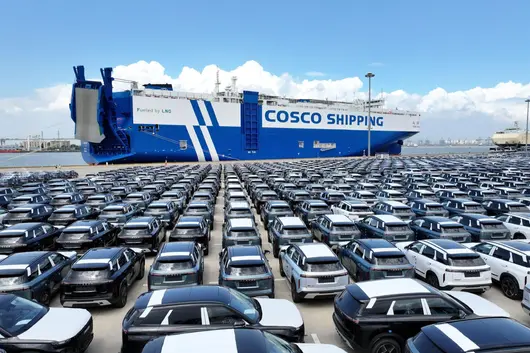
May 2026, data from the China Association of Automobile Manufacturers refocused the industry's attention overseas. From January to May, cumulative exports of Chinese automobiles exceeded 4.25 million vehicles, a year-on-year increase of over 50%. Annual exports are expected to break through the 10 million mark.
Last year, Chinese automobiles with a total export volume of 7.098 million units (data from CAAM) suppressed Japan for the third consecutive year, reclaiming the global first place, surpassing Japan's historical export record of 6.85 million units set in 1985.

Previously, logos of Toyota, Honda, and Nissan were found everywhere in streets and alleys across Southeast Asia. Suzuki dominated the South Asian market, while Mazda was highly sought after in Europe. Japanese cars relied on a reputation for reliability, fuel efficiency, and value retention to weave a global sales network over the course of four decades.
Now, this network is being torn apart by Chinese carmakers one opening at a time.
BYD, Geely, Chery, three Chinese carmakers with annual sales exceeding 1 million vehicles, are launching a "group charge" in overseas markets. Why these three? Because their internationalization paths are quite representative in different fields: one attacks Europe with strong vertical integration of new energy technology, one weaves a brand matrix through global M&A, and one ground out export volume first through the hard work of building channels overseas for twenty years.
This is no longer a question of "whether China can export", but "among the fleet of Chinese carmakers going overseas, who is the most capable"?
But at the same time, the volume of exports is just one side of a mirror. The final victory in the battlefield lies in: among these three export "giants" BYD, Geely, and Chery, who can be the first to complete the qualitative change from "trade export" to "industrial export" and become a new generation of global car giants? The answer to this question will determine the final move of the Chinese automotive industry in the world map.
# Overseas Markets, Chinese Cars Successively Take Positions #
From importing complete vehicles in the early 21st century to establishing joint ventures in the 2010s, Chinese automobiles went through a long and helpless period of "trading market access for technology". For 30 years, domestic carmakers were technology importers, and reverse exports were basically zero.
But in recent years, this trend is reversing. In 2025, Chinese automobile exports reached 7.098 million vehicles, a year-on-year increase of 21.1%. Among them, new energy vehicle exports reached 2.615 million vehicles, doubling year-on-year, accounting for about 36.8% of the total export volume; traditional fuel vehicles were 4.483 million vehicles, a decrease of 2% year-on-year. Under the CAAM statistical caliber, in 2025, the share of complete vehicle exports in wholesale exceeded 20% for the first time.
Entering 2026, the export growth rate accelerated further. From January to May 2026, cumulative passenger vehicle exports reached 2.649 million vehicles, a year-on-year increase of 61.7%. Among them, new energy passenger vehicle exports were 1.732 million vehicles, a year-on-year increase of 117.3%. The proportion in passenger vehicle exports jumped from about 37% in 2025 to over 65%.

In May alone, new energy passenger vehicle exports reached 424,000 vehicles, a year-on-year increase of 112.6%, accounting for 54.1% of passenger vehicle exports. For every 10 vehicles exported, more than 5 are electric vehicles. At the same time, the average price per exported vehicle has risen from about 100,000 yuan five years ago to the 300,000 yuan level. Export products are accelerating towards mid-to-high ends.
Except for the growth in volume, Chinese car exports have moved from "single dependence" to "blooming in multiple points".
In 2025, the top ten destinations for Chinese passenger vehicle exports were: Russia (555,400 vehicles, -46.1% YoY), UAE (539,700 vehicles, +74.3%), Mexico (490,800 vehicles, +44.2%), UK (320,800 vehicles, +70.3%), Brazil (299,900 vehicles, +34.6%), Belgium (289,500 vehicles, +4.5%), Saudi Arabia (250,500 vehicles, +11.2%), Australia (246,200 vehicles, +59.3%), Kazakhstan (187,000 vehicles, +74.3%), Iran (164,100 vehicles, -31.6%).
Except for exports to the CIS region dominated by Russia, which declined due to policy and inventory impacts, other regions showed a growth trend: exports to Europe reached 1.51 million vehicles, a 32% increase year-on-year; exports to the Middle East and West Asia reached 1.27 million vehicles, a 48% increase year-on-year; exports to South and Central America reached 1.01 million vehicles, a 49% increase year-on-year; exports to Southeast Asia reached 1.98 million vehicles, a 57% surge year-on-year; exports to Africa reached 800,000 vehicles, a 119% increase year-on-year.
Europe, as a critical breakthrough market, saw Chinese exports to the EU exceed 1 million vehicles for the first time in 2025, reaching 1.0062 million vehicles, a year-on-year increase of 30.7%, with an export value of 13.72 billion euros.
Currently, China is the number one source of automobile imports in the EU region, and also the fifth largest supply source for the European automotive market. In statistics with a broader caliber, it is shown that in 2025, Chinese brand automobiles sales in the European market reached 811,000 vehicles, a year-on-year increase of 99%, with market share rising to above 7%.
The Middle East, currently arguably one of the important markets for Chinese carmakers to earn high profits. In 2025, Chinese exports to the Middle East region reached 1.4 million vehicles, among which 570,000 in UAE and 300,000 in Saudi Arabia combined contributed over 60% share. The market share of Chinese carmakers in this market has approached 30%. Benefiting from the high unit price market characteristics, the profit margin of Chinese carmakers in this market is significantly higher than in other countries and regions.

The Mexico market in the Latin America region, surpassed Russia last year to become China's largest export country. In 2025, Mexico's cumulative exports reached 625,200 vehicles. Mexico has always been regarded as an important stepping stone for Chinese cars to enter the Americas market, and now has an increasingly higher proportion.
As for Southeast Asia, Japanese carmakers have previously established market barriers belonging to them, but now the entry of Chinese cars is eroding the inherent market share of Japanese cars. Data shows that the market share of Japanese brands in Thailand has dropped from 90% to 70%. The main reason for this data change is the entry of Chinese cars; furthermore, the share of Japanese brands in Indonesia fell below 81%, while Chinese brands reached 14%. Currently, the number of Chinese automobile exports accounts for about 27% of the sales in the Southeast Asian market.
Currently, the overseas expansion of Chinese carmakers is basically concentrated in the top few, such as Chery, SAIC, BYD, Geely, etc. Among them, as representative of private enterprises, BYD, Chery, and Geely actually have different overseas strategies, and also represent three paths of Chinese cars going overseas at present.
# Rivalry of the Three Powers, Who Will Be the Future Overseas Leader? #
Chery is currently the leader in Chinese car exports and also the carmaker with the largest export volume.
In Q1 2026, Chery exported 393,000 vehicles, a year-on-year increase of 54%, with an export proportion as high as 67%. Such a number means that in Chery's sales structure, overseas sales have exceeded domestic sales, and its average price per vehicle at the export end reached 121,600 yuan, about 14,700 yuan higher than domestic. The performance of the overseas market is directly linked to Chery's profitability.
According to different market regions, Chery's advantage in the European market is quite prominent. From January to April 2026, Chery's export volume in Europe reached 147,000 vehicles, firmly occupying the first tier of Chinese brands. The European market grew year-on-year by over 200% for the full year and has entered 16 countries including the UK and Italy.

In the Middle East market, Chery still took the export top spot with 56,000 vehicles in the first quarter. As for the Southeast Asian market, Chery exported 24,000 vehicles from January to April 2026, a year-on-year increase of 18.2%. Chery's export path is mainly "fuel + hybrid" side-by-side. Among the current exported models, the Tiggo series is very competitive in the Russian and Latin American markets, while OMODA and JAECOO are accelerating penetration into the European market.
BYD ranked second to Chery in export volume in May this year, with a strong potential to surpass. First, look at the data. BYD's overseas sales reached about 1.1 million vehicles in 2025. This year's first quarter exports were about 320,000 vehicles, with an export proportion exceeding 46%. On this basis, BYD has increased its 2026 export target to 1.5 million vehicles, which is the most aggressive target among the three.

BYD's overseas exports not only grew in scale but also optimized in structure. Currently, Brazil is its largest overseas market. From January to April, export volume reached as high as 148,000 vehicles, among which pure electric and plug-in hybrid accounted for almost half each. The European market exported nearly 100,000 vehicles from January to April, a year-on-year increase of 29.7%; the Middle East market exported 26,000 vehicles from January to February; in terms of Southeast Asia, BYD exported 32,000 vehicles from January to April, a year-on-year decrease of 25%.
As for Geely, it is exchanging quality for quantity. If looking at shipment volume alone, Geely cannot compare with Chery and BYD. In May 2026, Geely exported 85,100 vehicles, a year-on-year increase of 183.7%; cumulative exports from January to May reached 371,400 vehicles, a year-on-year increase of 157.7%. Its export plan for this year is 750,000 vehicles.

But it is worth noting that Geely's average price per overseas vehicle has approached 180,000 yuan, and the export gross profit margin is 9 percentage points higher than domestic. The average price per vehicle in the first quarter reached 118,100 yuan, a year-on-year increase of nearly 15,000 yuan, with growth leading among domestic brands.
In terms of overseas regional distribution, Geely is the most balanced among the three. In the North American Mexico market, it grew over 3 times with 16,000 vehicles; in South America Brazil, it first broke 7,000 vehicles; in Southeast Asia, it firmly occupies the Chinese brand top spot with 46,000 vehicles export volume from January to April leading Chinese brands; in Europe, Geely exported 40,500 vehicles from January to April, a year-on-year increase of 63.6%, and the absolute volume of exports is still rising rapidly.
# Three Paths, Three Strategies? #
Combining the previous content, we will find that these three carmakers represent the three mainstream internationalization models currently domestic, they each have their focus on the overseas path, and the strategies are completely different.
BYD takes the new energy full supply chain overseas route, which is closely related to its brand development path. Currently, its exported models are mainly pure electric and plug-in hybrid, with a price range covering 15,000 to 80,000 Euros.
BYD's logic is very clear: utilize China's full supply chain advantage in the electrification field to quickly seize the overseas market with technological leadership and cost advantage. In the two electrification frontier markets of Europe and Southeast Asia, BYD chose the asset-heavy model of self-built factories plus own channels.

The advantage of this model is strong brand control and complete profit chain. The disadvantages are large investment, long return cycle, and high sensitivity to local policy environments. The electric vehicle tariff policy just implemented in Europe might be the greatest uncertainty BYD faces for a period of time.
Geely takes the multi-brand matrix + overseas brand leveraging route. Through acquiring Volvo, investing in smart, and establishing Polestar as a joint venture, Geely has already possessed a brand matrix spanning Europe, Asia, and the Americas.
This matrix allows Geely to send different brands for different markets. Europe is led by Volvo and Polestar, Southeast Asia by Geely's mother brand and Proton, smart serves as global urban premium EVs, while the Middle East and Latin America are promoted synchronously by Geely's mother brand and Lynk & Co.

This model allows Geely to rapidly enter the high-end market by leveraging Volvo's dealer network, after-sales system, and brand premium, while using the Geely main brand and Lynk & Co to fight for the mainstream market. However, multi-brand synergy itself is a high-difficulty management art. If brand differentiation is unclear, left-hand vs right-hand fighting may occur.
Chery takes the high cost-performance fuel vehicle + wide channel coverage route. Export main force is still fuel SUVs, with a price range concentrated between 12,000 to 25,000 USD.
Chery's advantage lies in its product pricing and developing countries' purchasing power matching highly. These markets like South America, Middle East, Russia, North Africa have imperfect charging infrastructure, consumers are highly sensitive to price, and brand loyalty has not solidified. Chery has almost no direct electrification competitors here.

The export route is the simplest, but also the easiest to replicate. When more Chinese brands bring fuel vehicles of similar high cost-performance to flood these markets, Chery's first-mover advantage will sooner or later be diluted. Chery is trying to open new space with new energy products like Exeed, but from the current situation, the proportion of new energy in Chery's total exports is still far lower than BYD and Geely.
As for these three overseas paths, who can win the future overseas center spot battle, it cannot be easily concluded.
Chery's biggest advantage is the largest export base, difficult to surpass in the short term. But it also has concerns, such as its current export structure, which is highly dependent on the Middle East and Eastern European markets. Once geopolitical or trade policy changes, the impact may come.
Geely's overseas profit level is relatively the highest, and multi-brand differentiation overseas is also the most mature. Its problem lies in whether it can form true confrontation with BYD and Chery in scale. Even if the 2026 export target is increased to 750,000 vehicles, there is still a significant gap compared to BYD's 1.5 million.
BYD has the strongest long-term momentum for overseas expansion because it is not just selling cars, but exporting the standards of the new energy industry chain globally. As long as new factories are built in markets, the cost efficiency advantage of "Made in China" can quickly convert to cost-performance advantage. The uncertainty is BYD's overseas brand recognition. Among mainstream consumer groups in Western Europe, BYD's brand premium has not yet been established. Once trade barriers are encountered, whether BYD can maintain profit levels per vehicle overseas still poses a challenge.
# Overseas Localization Level Determines Future Ranking #
Global largest car exporter, this laurel was previously hanging on the head of the Japanese automotive industry. But from 2023, it finally changed hands, and China surged to become the world's largest car exporter. In the subsequent 2024 and 2025, this status remained firmly in place.
This is a milestone event. At the same time, we also need to clearly recognize that this overseas expansion is just the first step for Chinese cars to go international. And regarding the issue of complete internationalization, there is still a gap compared to Japanese brands.
Why say this? Setting aside the single data of export volume, there are many other data determining whether internationalization is successful. A very important point is overseas capacity.

Through data showing 2025 full year, Chinese carmakers' overseas production was 8 million units. Although this data rose relatively clearly compared to before, looking at Japanese carmakers' overseas capacity, it was as high as 20.4 million units. Although Chinese cars' total volume went up, it was more relied on domestic markets and whole vehicle exports to absorb, far from the complete overseas production system of Japanese carmakers.
So how important is overseas localized production?
A simple example can figure it out. For example, it's the same opening a restaurant. Relying purely on imports requires making food into finished products and transporting them completely to the local place. This involves not only considering transportation quality but also even higher costs. If using locally available ingredients and cooking on site, costs are not only lower, but taste will also be more suitable for local consumers.
The automotive market is the same. Taking Toyota as an example, according to the group's externally announced news, in 2025 Toyota Group's global total sales reached 11.323 million units. Among them, Toyota and Lexus brand Japan domestic sales were 1.5013 million units, overseas sales were 9.0355 million units. If counting all sub-brands like Daihatsu, Hino, etc., overall overseas sales would increase further, overall scale approaching 10 million units, accounting for about 85% of the group's total sales.
It is known that although Toyota currently appeared profit decline, it is still the world's most profitable carmaker without question. A very important point in this is its global localized system ecosystem.
At this stage, most of our independent brands' overseas localization layout is mostly an "extension" of exports. For example, many factories are mainly assembly, core component supply is still exported from domestic to local, and sales networks are also slightly thin. There is still a distance from a complete industry ecosystem.
As for the future, establishing local system ecosystems will naturally be the focus. As for BYD, it has already had three mass production complete vehicle factories in Thailand, Uzbekistan, and Brazil. As for the Hungary factory, it is a key step for BYD to enter Europe. Planned annual capacity 150,000 vehicles. After production starts in Q2 2026, it will achieve zero tariff entry to Europe, cost reduced by 20%-30%. The Indonesia factory also plans to start production in 2026.
BYD's global factory map covers the three core regions of Asia, Europe, and South America. It is the Chinese carmaker with the most active overseas capacity.
Geely has a mature production system overseas. Malaysia's Proton factory has been deeply localized for many years and has launched new energy Proton X70; Belarus BELGEE joint venture CKD factory annual capacity 60,000 units, can directly radiate Russia and Eastern European markets.
Geely is currently investing in Renault Brazil factory. In 2026, Geely brand models are expected to be produced. Factories in Belgium and the UK are more focused on high-end model localization. Geely is not simply newly building capacity but cutting into global layout with existing capacity renovation + equity investment hybrid mode. Cost controllability is stronger.
Chery has established a complete full process and CKD factory matrix overseas. It has four major production bases in Russia; Brazil has two CKD factories with a combined annual capacity of 236,000 vehicles; Spain has an European Industrial Base; Iran, Thailand, and Vietnam also have layouts. Among them, the Vietnam factory claims to be the largest in ASEAN. Chery is also seeking strategic alliances with Renault in Colombia and Argentina to further expand the Latin American market.
BYD invests heavily in new factories to quickly seize zero tariff channels; Geely is good at integrating existing resources to quickly revitalize existing capacity through equity cooperation; Chery relies on early cultivation to form capacity networks in key regions. The three can be said to have their own focuses. Regarding the future, localization speed will determine the sustainability of overseas sales. Currently, it looks like BYD invests the heaviest, determination is greatest; Geely leverages the most, model is most flexible; Chery outlets are densest, but depth needs strengthening.

This Chinese car internationalization competition is not a sprint but a global marathon spanning several years.
Short term, Chery is the champion of current scale. Million-vehicle level export volume, twenty years of overseas deep cultivation, no one can match in the short term; Medium term, growth rate and brand momentum are these two key points. BYD is quickly catching up. The global wave of new energy is its biggest tailwind; Long term, system capability is Geely's advantage. Brand matrix, Volvo's global layout, Proton's Southeast Asian foundation, construct a relatively balanced and risk-resistant globalization system.
Ultimately, who can take the lead depends on a deeper question. Who can truly win hearts after selling to the globe?
Chinese carmakers have proved we can conquer the market with cost and efficiency. But we have not yet fully proved we can conquer users with brands and trust. Toyota's globalization took half a century, Volkswagen's European foundation took decades. Chinese carmakers' overseas expansion has just begun.
In this sense, the competition between BYD, Geely, and Chery is not who defeats who, but who can win a true position for Chinese automobiles in global consumers' minds.
The fundamental victory of Chinese carmakers going overseas is not export volume surpassing Japan. It is when global consumers choose a premium electric car, "Chinese Brand" can sit on equal footing with "Made in Germany" and "Made in Japan". In this critical period of moving from an automotive big power to a powerhouse, for every solid stake Chinese carmakers drive overseas, it means shortening the distance from a big power to a powerhouse.
© 2024 Bitauto.com. All Rights Reserved.
Bitauto (www.yiche.com and www.bitauto.com) is one of the most visited automotive websites in China. We provide detailed info on Chinese car brands available in your area. Please note that the information provided on this website is based on publicly available data and is for reference only. It may not be fully updated or accurate at all times.

Help us improve our website


