

HomeLaut

Search History
Popular Searches
Dealer Login / Sign Up

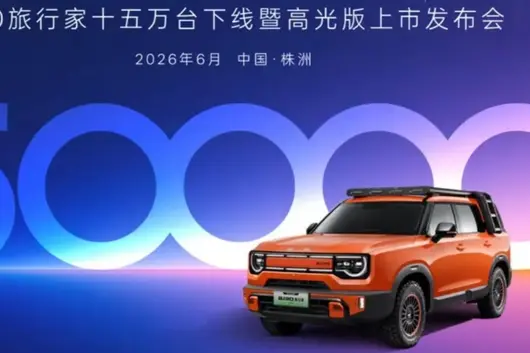
对于追求“轻越野”生活方式的家庭来说,购车成本和日常使用开销是两大核心考量。北汽BJ30旅行家以超级置换价6.99万元起的极低门槛,搭配百公里综合油耗不超5升的出色经济性,给出了令人信服的答案。
购车成本:6.99万起,叠加多重礼遇

BJ30旅行家全系推出3万元置换政策,置换后起售价仅6.99万元。新上市的年度版型“高光版”置换后起售价为8.29万元。在此基础上,首任非营运车主可获赠价值6000元的整车终身质保,还有0首付金融方案、终身OTA免费升级、基础流量终身免费等五重尊享礼遇,进一步降低购车与后续使用成本。
油耗表现:实测低于5升,一箱油跑1000+公里
BJ30旅行家搭载北京越野自研的“三擎四驱六模HEV混动架构”,是中国方盒子SUV品类首款HEV混动车型。由41%热效率混动专用发动机、前后双电机组成的混动系统,可根据路况自动切换六种工作模式,始终保持高效运行。

近期,来自南非、印尼、阿联酋、波兰、墨西哥五国的汽车博主实测,BJ30旅行家在每个国家都跑出了百公里不超5升的油耗,一箱油续航超过1000公里。相比传统燃油SUV,每万公里可节省油费上千元;同时无需寻找充电桩,加油即走,每年可节省数十小时补能时间。
品质保障:15万公里拆解见证耐久性

低成本不等于低品质。在央视直播拆解中,一台行驶15万公里(相当于普通家庭近十年使用里程)的BJ30旅行家展现出优异状态:发动机涡轮积碳极少、动力充沛;变速箱无漏油、齿轮无磨损;电池包无鼓包衰减;底盘无锈蚀渗油。北汽株洲超级工厂的焊接、冲压、喷涂工序实现100%机器人自动化,涂胶误差不超过一根头发丝,从源头保证每台车的耐久可靠。
总结:BJ30旅行家以6.99万元起的超低购车门槛、不到5升的百公里油耗,以及15万公里验证的耐久品质,真正实现了“买得省、开得省、用得久”,是轻越野SUV市场中不可忽视的质价比之选。


Less than half of 2026 has passed, but one thing can be concluded in advance: without the support of overseas markets, the production and sales data of China's automotive industry this year will look very bad.
First, let's look at the domestic market.
Jan-April, domestic passenger car cumulative retail sales reached 5.604 million, down 18.5% year-on-year. Among them, fuel vehicle sales fell by approximately 19.8%, while new energy vehicles also declined by 17.2%. April retail sales alone were 1.384 million, down 21.5% year-on-year and down 16.0% month-on-month.
This is not a problem of a specific segment, but rather the entire market is contracting.
Now let's look at exports.
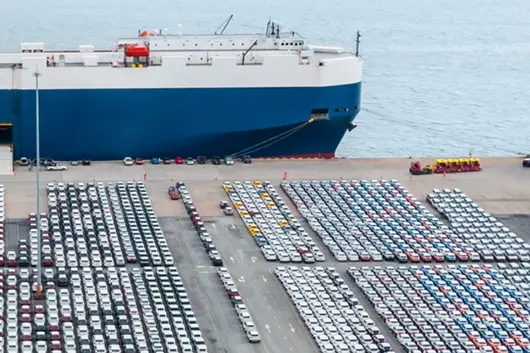
For the same period, China's cumulative auto exports reached 3.25 million, a year-on-year increase of 50.6%. New energy vehicle exports were nearly 1.5 million, accounting for 48%, up 69% year-on-year.
In April alone, passenger car exports accounted for 36% of manufacturer sales, compared to only 19% at the same time last year. It was precisely the strong performance of exports that stabilized the slowdown in the domestic market.
In Jan-April this year, China's auto production and sales overall declined year-on-year by 4.8% to 5.5%. Although this negative growth is rare in recent years, it is still a single digit. Without exports, this number would look much worse.
Auto exports are no longer an optional peripheral business; they are profoundly changing the business structure of Chinese automakers.
So the question arises: Where exactly did these cars go?
Brazil: A Qualitative ChangeLet's look at two rankings first.
In the top ten exports of all passenger car categories, Brazil ranks first, and Russia ranks second.
In the top ten new energy vehicle exports, Brazil is still first. 280,000 and 210,000 vehicles—these two numbers added to Brazil's account, with year-on-year growth rates reaching 226.1% and 220.9% respectively.
What does this mean?
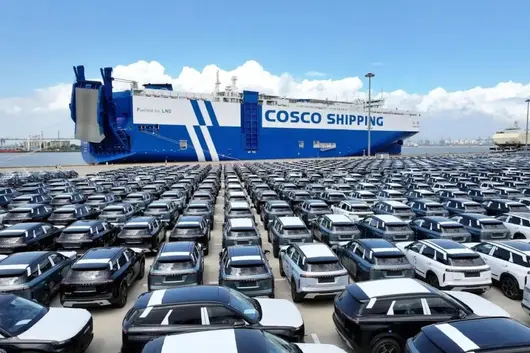
BYD alone exported nearly 90,000 units to Brazil in the first quarter of this year, including battery electric and plug-in hybrid models. Great Wall Motor has already built two factories in Brazil, with the second one having an annual capacity as high as 200,000 units.
But the signal truly worth remembering is not these numbers.
In April this year, BYD sold 14,911 units in Brazil, surpassing Volkswagen to take the first place on the total monthly retail sales list for the first time.

The Brazilian market has long been dominated by European, American, and Japanese brands. This is the first time Chinese new energy vehicle brands have surpassed traditional fuel giants in monthly sales.
The psychological impact of this event in Brazil is no less than when Apple first surpassed Nokia in China back then.
And this result was not unexpected.
First, Chinese automakers entered densely. GAC, Chery, Geely, Leapmotor, and Changan have already laid out their plans in Brazil, with a solid grassroots foundation.
Second, local production is accelerating. BYD's factory in Camaçari has already exceeded 4,100 employees and will soon add another 1,600 to start the third shift.
Third, although the policy environment in Brazil has tariffs, it does not engage in backdoor deals. The product competitiveness of Chinese cars is strong enough; no extra privileges are needed, only fair rules.

From 2026 onwards, Brazil will no longer be an overseas market in the conventional sense; it has become the second home market for Chinese automakers.
Local market refers to the qualitative change from "export destination" to "production and sales integrated market", representing a fundamental shift in the logic of China's automotive going global.
Now let's look at Europe.
In the all-category rankings, the UK ranks third with 151,000, up 99.3%; Belgium ranks fourth with 130,000, up 40.3%; Italy ranks seventh with 92,000, up 121.2%.
If looking at the new energy rankings alone, Italy grew by 460.7%, Germany by 295%. From the UK to Spain, growth rates were all above 80%.
The data for the European market is very impressive. Behind this lies a key factor: Chinese-style hybrid.
Data from the China Passenger Car Association shows that in the export structure in April, the share of plug-in hybrids has reached 18%, up 4 percentage points year-on-year.
This is a move of avoiding the strong and striking the weak adopted by Chinese automakers facing tariff barriers from Europe and the US.

The EU began implementing anti-subsidy tariffs on April 15, raising the comprehensive tax rates for BYD, Geely, and SAIC to 27% to 45.3%. This greatly weakened the price advantage of pure electric models.
However, hybrid models equipped with engines are not subject to the same degree of tariff constraints. Chinese automakers quickly adjusted their strategy to penetrate the European market with hybrid models.
No need for direct confrontation, but to find loopholes within the rules.
This ability to adapt flexibly is built on the strong R&D and manufacturing capabilities of Chinese automakers. This is also the biggest hidden advantage of China's automotive going global.
Amidst the growth, two markets declined: the UAE down 13.2%, and Mexico down 46.6%.
The UAE's new energy data is still surging, balancing the trend, but Mexico's decline is more pronounced.
Analysis reveals two reasons.
Subjectively, the substitution rate of local production in Mexico is increasing.
More and more Chinese automakers are building factories in Mexico, so the volume of complete vehicle exports naturally declines. This is essentially not a bad thing, but rather a necessary stage for the upgrade of China's automotive going global.

Objectively, the uncertainty of US policies has increased investment risks in the Mexican market. The closer to the US, the harder the business, and this does exist.
In the future, when looking at China's auto export data, one cannot simply assume something is wrong when seeing a decline in a certain market. First, check if the power of local production has become stronger, rather than looking at new things with old eyes.
In the rankings, only Malaysia from Southeast Asia ranks tenth.
This does not mean the Southeast Asia market is declining. On the contrary, the current performance of Southeast Asia is a typical case of "surface slowdown, actual transformation".
In 2025, the market share of Chinese brands in Thailand, Indonesia, and Malaysia reached 22%, 22.8%, and 26% respectively, with Japanese brand shares falling completely.
In January this year, the share of Chinese brands in Thailand's pure electric market approached 50%.

The export volume did not make the top ten not because Chinese cars could not sell there, but because a large number of products have achieved local production and are no longer counted in the data in the form of complete vehicle exports.
This is a signal sent in advance: in the future, the "cooling" of many markets may actually be an "upgrade".
Through these data, we can see deeper industrial changes.
On one hand, exports drive wholesale.
The China Passenger Car Association clearly pointed this out. Since the beginning of this year, exports have continued to strengthen, forming a clear trend of "exports driving wholesale". Top automakers rely on exports to digest capacity and reduce inventory backlog.
On the other hand, 2026 is the watershed from complete vehicle exports to supply chain going global. Whether active or passive, Chinese automakers are shifting from simply selling products to building factories, supply chains, and after-sales service systems in target countries.
Finally, and most crucially, the logic of making money has finally been established, and the model of making money has finally been proven.
In the past, when discussing going global, everyone was used to calculating sales volume and market share.
But from Jan-April 2026, the automotive industry profit margin was only 3.4%, at a historical low. If we simply copy the domestic price wars overseas, blindly pursuing sales growth without contributing to profits, that is fake globalization.
True globalization is like Toyota, building sustainable profitability in different markets.

BYD and Great Wall's localization in Brazil, Chery's deep cultivation in Europe, Geely's precise efforts in emerging markets, are all essentially doing the same thing: shifting from scale-oriented to profit-oriented.
The destinations of Chinese automotive exports in the first four months of 2026 tell us that Brazil, Russia, and the EU are all very important, but whoever can let us complete the loop of industry chain, service chain, and marketing chain faster beyond just selling cars is the true favorable land.
Like Southeast Asia.


Is the Mixue-style approach really effective?
In 2026, the new energy poker table is undergoing drastic restructuring by the month.
The China Passenger Car Association predicts that the new energy penetration rate will exceed 62% in May, with the fuel vehicle share compressed to less than 40%.
More importantly, 30,000 vehicles—the figure once seen as the top-tier threshold—is now squeezed into 7 brands. And the top Leapmotor raised this threshold to over 80,000.
The landscape is thinning and thickening. Thinning, because the leaders are far ahead; thickening, because the chasing echelons have never been so crowded. Is there only one path to success? Who could know before the main drama ends?
Leapmotor's '80,000+' Moment
Leapmotor sold 81,500 units in May, up 81% YoY.

For a long time in the past, EV new forces loved to talk about high-end, smart, and brand upgrade. As if the higher you stand, the more story you have. However, Leapmotor took another path, almost adopting the 'Mixue Bingcheng' approach, focusing on family users in the 100,000 to 200,000 RMB price range.
Users in this price range have broader coverage but are more sensitive to price, and at the same time, it is hard to tell a particularly 'sexy' capital story. However, the operational logic must be very grounded. The return is that once costs, reputation, and channel efficiency reach a certain level, sales elasticity will also be larger.

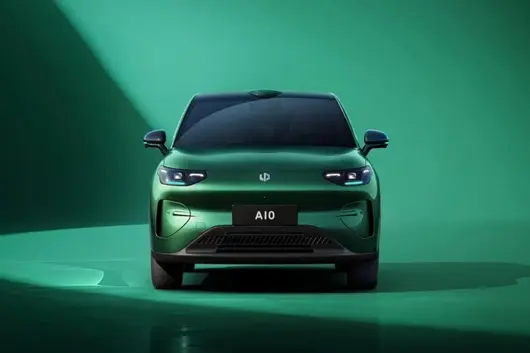
For example, A10 delivered over 20,000 units in a single month, squeezing LiDAR and Qualcomm 8295 chip into under 100,000; C Series global cumulative sales exceeded 800,000; D19 new orders maintained above 10,000. Three product lines, three price bands, precisely locking three key nodes of the mainstream family market.
For this reason, Leapmotor's lead is not 'single hit driving', but the result of 'matrix synergy'.
But the hidden worry lies in: should we still pursue brand upgrade? Should we still pursue high profits? In the high-end market, will the 'Mixue Bingcheng' approach still work? Actually, Leapmotor knows all this, otherwise it wouldn't have proposed the idea of 'launching a new brand independently'.
Nio approaches 40,000, Li Auto under pressure, Xpeng slight increase
May's second tier is worth detailed tasting.
Nio delivered 37,705 vehicles, up 62.3% YoY, and up 28.4% MoM, with the synergy effect of the multi-brand strategy beginning to materialize.
Among them, Nio brand 20,013, Onvo 12,029, Firefly 5,663. Three brands, three niche tracks, three-level ladder user acceptance.

But there is still one unresolved problem: Can Onvo's brand independence and user perception really work through? If it relies solely on main brand downward channel and resource funding, multi-brand might drag overall efficiency.
To a certain extent, Onvo must move volume, and with this wave of model refresh, let's see the results.
Li Auto delivered 33,350 vehicles in May, down 18% YoY, and down about 0.2% MoM.
Having said that, Li Auto's historical cumulative deliveries broke 1.7 million and is still one of the most substantial new forces. But there are two signals worth being vigilant: first, two consecutive months both YoY and MoM decline; second, with competitors' intensive launches in the same price band, Li Auto's differentiation barrier is being eroded.

i6 deliveries broke 20,000 for three consecutive months, L9 new model release 2 weeks orders broke 10,000, but whether incremental volume can timely fill the basement decline is still unknown.
More worthy of attention is the financial aspect: Li Auto turned from profit to loss in Q1, net loss of 2.276 billion RMB, vehicle gross margin plummeted from 19.8% to 6.1%. Loss of the profit benchmark may impact the capital market more than the sales slowdown.
Xpeng delivered 32,158 vehicles in May, up 3.6% MoM, setting the monthly high since 2026.

Among them, Xpeng GX launched on May 20, 12 hours large deposits 24,863, Ultra Flagship version proportion over 80%, after June mass delivery expected to pull overall data.
MONA Family will continue to introduce new members, including L03 and L05, having the opportunity to grow MONA's potential market together.
Xiaomi stood firm on the 30,000+ step for two consecutive months, from single car brand heat to multi-model product layout, Xiaomi is completing the role switch from 'topic creators' to 'market participants'.
This year's full year sales target is 550,000, Jan-May completed 140,000 to 150,000, estimated 400,000 'gap' remains,

So, in the remaining months, average monthly sales need to exceed 50,000, pressure is not small. Perhaps, after EREV products hit the market, there should be a chance to capture a new group of users again.
Harmony Intelligent Mobility delivered 46,122 vehicles in May, up 41% MoM, returning to the top of the list.
Special mention: AITO M6 first complete delivery month broke 20,000 units, Shangjie Z7 delivery started on May 30, 2 days delivery over 2,000. Huawei ecosystem brand call power plus multi-brand matrix approach is forming a unique competitive barrier.

Second-Gen Startups, Waist Explosion
First, let's look at a 'Second-Gen' May sales express:
Zeekr: 34,377, YoY surge 81.8%, consecutive 4 months both YoY and MoM growth, creating historical high. 9 Series and 8 Series flagship models sales share nearly 50%, single car transaction average price over 360,000 RMB; Zeekr 009 in Singapore market starting price as high as 409,900 SGD (then equivalent to 2.21 million RMB).

This group of numbers shows Zeekr has not only broken through of domestic brands, but entered global luxury car market mainstream view. Volume and price rise together logic is not complex: flagship builds reputation, mid-range moves scale. When 9X, 009 ultra-high ticket price anchors brand premium capability, 8X, 001 volume models user acceptance cost naturally declines.
Deepal: 33,243, YoY growth 30%, consecutive 3 months over 30,000, cumulative deliveries broke 850,000.
Deepal's path worth chewing repeatedly: its rhythm is not 'hit explosion', but 'three lines push'. S05, S07, S09 three models simultaneously hot selling, product lines cover 100,000 to 200,000 main range.

This approach has no hit one night godhood drama, but in stock competition, multi-product lines synchronous volume, supporting each other, system resilience is stronger.
GAC Aion: 33,140, YoY growth 23.8%, consecutive months YoY positive growth.
Aion N60 officially launched, full series standard equipped LiDAR, WeRide L4 shared algorithm, Zero Gravity Seats, Five-link rear suspension, price 109,800-129,800 RMB, first month sales broke 5,000. This 'Technology universality' approach, identical with Leapmotor A10 underlying logic.

Voyah: 13,003, YoY growth 30%. More important than sales numbers, Voyah offline touchpoint coverage over 100 cities, self-built charging stations reached 130. When energy replenishment system and channel network truly formed, sales ceiling naturally will be pushed open.

IM Motors: 10,023, consecutive 2 months broke 10,000, Jan-May cumulative sales YoY surge 115%. IM Motors LS8 post launch pulled a wave order volume recovery, let's see sustainable explosive power later.

Avatr: 7,336 created annual high, and showing month-by-month acceleration trend, overall is positive.

To be honest, 'Second-Gen' held their own positions, not completely overturned in landscape change, as for those who can carry the flag already diffused from Zeekr, Deepal two heads to multiple nodes at the waist.
Written at the end
2026 new energy market, experiencing drastic change from 'inclusive growth' to 'stock battle'. Price war normalized, most car companies contract front line, profit as first goal. Elimination round rules are simple: sell and live, can't sell and quit. And can't sell signal, often hidden in consecutive two or three months MoM decline.
May data, is this elimination round a clear report card: Leapmotor first to work through 'mainstream market scale' path, Nio multi-brand synergy saw first light, Li Auto facing replacement pain, Xpeng still looking for new incremental explosion points, Xiaomi continuously holding 30,000 level. And 'Second-Gen' collective volume increase, is building a wide moat at the waist of new energy market.
Electric competition second half, variables both from new forces aggressive acceleration, also from 'Second-Gen' steady advance. Multiple heads advance landscape once formed, future competition will not be single dimension speed race, but full chain system war covering R&D, manufacturing, channel, service.
And such competition, will evolve how, wait and see.
Author of this article is Ti Che Bang Xi Bei

現時,全球汽車產業正經歷電動化、智能化、低碳化三重變革。2025 年,中國新能源汽車出口達 261.5 萬輛,按年增長 103.7%,連續三年全球第一。在此背景下,江鈴集團新能源明確「十五五」戰略方向,以「自主 + 共創」為核心,正式邁入「價值深耕」新階段。
江鈴集團新能源重構系統,構建全球化競爭壁壘
「價值深耕」嘅根基,在於戰略上嘅系統重構。江鈴集團新能源深刻認識到,真正嘅全球化絕非產品簡單輸出,而係價值體系嘅深度扎根。「十五五」期間,企業將聚焦「做精小型車、做强出行車、做優無人車」三大賽道,構建「技術引領、模式創新、低碳賦能、全鏈嚴控、數智驅動、人才蓄能」六大戰略支柱,全方位築牢發展根基。

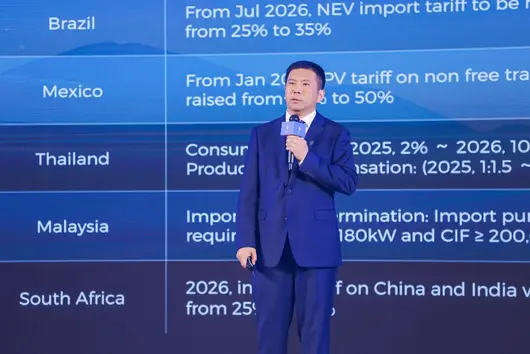
江鈴集團新能源海外事業部總經理聶小勇,全新易至 EV3 發布會上作海外市場報告
在技術層面,江鈴集團新能源依托成熟嘅三電核心技術,搭配智能聯網與輕量化車身雙重賦能,傳承江鈴集團「安全可靠、經濟耐用」嘅品質基因,打造出極致低能耗、全域安全防護等核心優勢。羿馳 05 滿足碰撞高標準要求,榮獲歐盟 WVTA 認證證書,並通過澳大利亞、泰國、阿聯酋等國家嘅本地化法規認證,以可靠品質跨越全球最嚴苛嘅技術門檻。
從技術認證到生態共建,全球化路徑清晰提速
技術能力係參與全球競爭嘅「入場券」,但真正嘅全球化考驗嘅係模式嘅昇維。為此,江鈴集團新能源著力推進產品本地化、製造本地化、團隊本地化,構建「研發—生產—營銷—服務」全鏈條全球化體系,攜手全球夥伴共建能源生態、出行生態、智能生態,實現從單一產品貿易到共創共贏嘅轉型。
最新數據顯示,江鈴集團新能源海外市场已拓展至 40+ 個國家及地區,業務足跡覆蓋歐洲、非洲、中東、東南亞、南美洲五大洲。出口業務連續三年實現正增長,2023 年按年增長 70%,2024 年按年增長 25%,2025 年按年增長 203%,呈現加速躍升態勢。

這一成績背後,係一條清晰嘅全球化推進路徑。從新加坡首輛車落地,打開南亞市場大門,到毛里求斯、斯里蘭卡、尼泊爾、巴基斯坦相繼上市,深耕印度洋與東南亞核心市場;從廣交會首次亮相到羿馳 05S 正式發布,再到百台羿馳 05S 批量駛向全球,江鈴集團新能源以紮實步伐點亮全球版圖。2025 年,頤馳 06 亮相 WNEVC 世界新能源汽車大會,集中展示咗企業喺智能出行領域嘅系統解決方案。2026 年 5 月 26 日,全新易至 EV3 全球同步上市,為全球用戶帶來美好出行新選擇。

值得關注嘅係,江鈴集團新能源喺海外市場並非「單打獨鬥」。企業積極與當地經銷商、服務商構建深度合作網絡,喺東南亞、中東、非洲等區域已形成較為完善嘅銷售與售後服務體系,真正實現咗從「賣車」到「扎根」嘅跨越。

面向未來,江鈴集團新能源將以技術為根、模式為翼、合作為橋,穩步推進全球化佈局。大道至簡,實幹為要,易至汽車正在書寫中國新能源汽車全球化嘅新篇章。

作者 | Janson
編輯 | 志豪
全球每賣出 10 部電動車,有 6 部來自中國車企;全球每生產 4 部電動車,就有 3 部係中國製造。
車東西 5 月 25 日消息,日前,國際能源署發布咗《Global EV Outlook 2026(2026 年全球電動車展望)》報告,從國際組織嘅角度分析咗目前全球電動車行業嘅發展現狀。

▲2026 年全球電動車展望報告
報告顯示,中國車企供應咗 2025 年全球 60% 嘅電動車銷量;全球近 2,200 萬輛電動車產量中,近 75% 喺中國完成。即係話,中國已經唔止係全球最大嘅電動車消費市場,亦正成為全球最重要嘅電動車供應源。
更關鍵係,出口正成為中國電動車產業嘅新變數。
報告指出,2025 年中國電動車產量已經超過本土需求,出口因此成為重要增量。當年中國電動車出口量超過 250 萬輛,同比翻倍;進入 2026 年一季度,喺國內銷量階段性承壓嘅情況下,中國電動車出口同比再次翻倍。
從出口去向睇,中國電動車出海亦正由單一市場走向多元市場。繼歐洲之後,東南亞、中東同拉美正成為新嘅增長區域,其中東南亞同比增長約 130%,中東增長約 60%,拉美增長約 55%。
這意味著,中國電動車出海已經唔係少數企業嘅海外試水,而係正成為整個產業嘅重要增長方向。

▲2020-2025 年全球電動車銷量同選定地區嘅銷售份額
值得一提嘅係,中國並非國際能源署成員國,而係作為聯盟國,直接「反客為主」,成為咗報告中嘅絕對主角。「中國」呢一詞喺呢份報告入面出現 486 次,遠高於「歐洲」嘅 220 次、「美國」嘅 204 次、「印度」嘅 92 次同「日本」嘅 69 次。
車東西仔細拆解咗呢份報告,由市場、政策、展望三個維度解讀後發現,中國喺全球電動車領域嘅地位已經十分明顯,中國新能源汽車行業嘅動作亦影響住全球行業嘅發展。
01.
中國由全球最大需求地
走向全球最大供應源
國際能源署嘅報告顯示,無論係從產量、銷量定出口規模嚟睇,中國都係目前全球電動車產業入面最重要嘅市場之一。
呢種變化首先體現喺整車供應層面。
報告顯示,2025 年全球電動車產量接近 2,200 萬輛,其中近 75% 喺中國生產。即係話,全球每生產 4 部電動車,大約有 3 部出自中國製造體系。與此同時,中國電動車產量已經超過本土需求,出口因此成為重要增量。

▲主要市場電動車產量、需求及淨貿易
報告指出,2025 年中國電動車出口超過 250 萬輛,同比翻倍;進入 2026 年一季度,喺國內銷量階段性承壓嘅情況下,中國電動車出口同比再次翻倍。
這意味著,出口逐漸成為整車企業平衡國內波動、拓展利潤空間同參與全球競爭嘅重要變數。

▲中國製造電動車海外銷量、出口價值及品牌分布
當然,中國電動車出口快速增長,並唔可以簡單理解為海外需求單方面拉動。更準確嚟講,佢係國內供應能力、價格競爭、製造規模同全球需求共同作用嘅結果。
國內市場競爭加劇、利潤率承壓,推動企業主動尋找海外增量;而中國車企喺車型豐富度、成本控制同交付能力上嘅優勢,亦提高咗佢哋進入海外市場嘅效率。

▲主要國家/地區電動車註冊量同滲透率
而家,中國電動車已經喺多個新興市場形成咗更系統嘅滲透。
喺歐洲同美國以外市場,來自中國嘅進口電動車已經占到 2025 年電動車銷量嘅 55%,而五年前呢個比例仲唔到 5%。
1、歐洲市場:仍係重要出海地
從出口目的地睇,歐洲仍係中國電動車嘅重要市場。
2025 年,中國向歐洲出口電動車約 94 萬輛,同比增長近 50%;但歐洲喺中國電動車出口中嘅佔比已經降至約 40%。與此同時,增長重心開始向更多新興市場擴散。

▲新興市場中國電動車進口佔比
2、東南亞市場:中國品牌影響力突出
2025 年,東南亞電動車銷量同比翻倍,全年超過 50 萬輛,新車銷售中電動車佔比接近 20%。
其中,泰國、印尼同越南係主要增長市場;雖然越南市場主要由本土企業 VinFast 推動,但喺泰國、印尼、馬來西亞、菲律賓等國家,中國製造同中國品牌嘅影響非常突出。
喺泰國,2025 年電動車銷量約 14 萬輛,佔新車銷量近四分之一,中國製造電動車仍佔當地電動車市場約四分之三;喺印尼,2025 年電動車銷量同比翻倍,其中約 75% 來自中國進口。
喺馬來西亞,中國進口電動車一度佔市場約 80%;喺菲律賓,中國進口車型,尤其係比亞迪相關車型,構成當地電動車銷量嘅重要部分。

▲中國海外電動車製造產能及東南亞分布
3、拉美市場:巴西墨西哥為主
拉美市場亦呈現類似趨勢。2025 年,拉美電動車銷量增長 75%,其中巴西同墨西哥貢獻咗超過 75% 嘅區域增量。
其中,巴西 2025 年電動車銷量達到 18 萬輛,佔新車銷量約 9%,接近 85% 來自中國製造;墨西哥 2025 年電動車銷量同比增長三倍,中國進口車型佔當地電動車銷量約 85%,高於 2024 年嘅約 60%。

▲新興市場電動車銷售份額按生產地
不過,中國電動車出海亦並唔係冇挑戰。隨著中國品牌喺海外市場份額提升,一些國家開始提高本地化要求、調整進口關稅,或推動本土製造能力建設。
報告亦提到,2026 年中國電動車出口可能面臨庫存積壓、出口管理同海外政策收緊等不確定性。
由中長期嚟睇,中國喺全球電動車產業中嘅核心地位仍將延續。
報告預計,2035 年中國仍將係全球最大電動車生產國,電動車產量全球佔比約 60%;出口規模有望繼續增長,繼續成為全球電動車市場嘅重要供應力量。

▲中國電動車銷售份額展望
長期睇,中國仍將係全球電動車產業鏈入面最關鍵嘅市場、製造基地同出口中心。
02.
車企產業鏈齊上陣
競爭推向海外市場
中國電動車能夠喺全球市場形成今日嘅規模,並唔係單靠某一家企業、某一個爆款車型,或者某一項補貼政策推動,而係一個產業體系長期積累後嘅結果。
由產業鏈嘅角度嚟睇,車企參與足夠多、產業鏈足夠完整、產品價格足夠有競爭力,最終又被激烈競爭推向海外市場。
首先,係中國電動車產業發展足夠快,參與者亦足夠多。國際能源署報告顯示,2025 年中國市場可供選擇嘅電動車型接近 700 款,係主要汽車市場中唯一一個電動車型數量超過燃油車型嘅國家,電動車型數量比傳統車型多出約 60%。
呢啲說明,中國電動車市場已經唔係少數品牌嘅試驗場,而係幾乎所有主流車企都深度參與嘅成熟市場。

▲中德美電動車價格變動分解
不過,出口增長嘅前提,仍然係中國擁有足夠大嘅國內市場作為基本盤。
2025 年,中國電動車銷量超過 1,300 萬輛,約佔全球銷量嘅 60%;喺中國新車銷售中,電動車佔比接近 55%,電動車已經成為中國汽車市場嘅主流品類之一。
傳統車企、新勢力品牌、科技公司背景嘅新進入者,以及商用車企業,喺唔同價格帶同細分市場推出產品。報告仲提到,2025 年中國市場全部車型超過 1,100 款,其中電動車型數量同比增長約 25%,大型車同 SUV 喺電動車銷量中嘅佔比超過 60%。

▲主要市場車型價格區間分布
供應密度帶嚟嘅結果,係消費者選擇空間被迅速打開。無論係入門小車、家庭 SUV,定係插電混合、純電車型,中國市場都能提供大量選擇。對車企嚟講,呢亦意味著產品迭代速度必須加快,配置、價格、渠道同品牌都要參與競爭。
相比歐洲、美國等市場仍然存在車型選擇唔夠、價格區間偏高嘅問題,中國電動車市場更早進入咗高密度競爭階段。

▲新興市場電動車同燃油車均價溢價
第二,係中國擁有更加完整嘅電動車產業鏈,尤其係喺電池環節形成咗全球優勢。
報告顯示,2025 年中國電池電芯產量佔全球超過 80%,喺正極材料、負極材料等關鍵環節嘅佔比更高;由電芯、材料到整車集成同充電設備,中國已經形成高度本土化、規模化嘅供應體系。
電池係電動車成本最高嘅核心部件之一。中國喺電池產業上嘅優勢,直接決定咗整車成本嘅下降空間。
報告提到,中國電池包價格比北美低約 30%、比歐洲低約 35%;同時,磷酸鋰鐵電池喺中國大規模應用,進一步降低咗主流車型同入門車型嘅成本門檻。
呢種產業鏈完整性不僅僅體現係「造得出」,更體現係「造得快、降得下、供得上」。

▲中國、歐洲、美國公共充電樁數量及快慢充結構
當電池成本下降、材料供應穩定、零部件體系成熟時,車企就能更快推出新車型,亦能更快把成本優勢傳導到終端價格。
第三,係中國產電動車已經形成明顯成本優勢,並開始同燃油車正面競爭。報告顯示,2025 年中國約 70% 嘅純電車售價已經低於同級燃油車;喺小型車市場,電動車已經基本取代燃油車。
與此同時,中國純電車平均價格喺 2025 年下降超過 10%,約 30% 嘅純電車型入門價格低於 2 萬美元(約合人民幣 13.64 萬元);喺 SUV 細分市場,純電 SUV 亦首次同同級燃油 SUV 實現價格平價。
最後,過於充分嘅競爭,亦把中國車企推向海外。車型越來越、價格持續下探、供應鏈效率不斷提高,帶嚟咗中國電動車產業嘅規模優勢,但亦帶嚟咗利潤率壓力。
報告明確提到,中國國內競爭激烈、利潤率承壓,係推動中國車企擴大海外銷售嘅重要原因之一;到 2025 年,中國電動車產量已經超過本土需求,出口超過 250 萬輛,同比翻倍,且 2026 年一季度出口同比再次翻倍。
從結果睇,海外市場正成為中國電動車產業能力釋放嘅新方向。

▲全球電動車保有量展望
所以,中國電動車出海,並唔係簡單嘅「國內賣唔動先出口」,而係國內高強度競爭篩選出成本、產品、供應鏈同交付能力之後,呢啲能力向海外市場外溢嘅結果。
國內市場負責「練能力」,海外市場就成為新嘅增長空間。中國電動車能夠喺全球市場快速擴大存在感,根本原因正係呢套產業體系已經形成咗自我增強嘅閉環。
03.
結語:中國車企出海仍在提速
進入 2026 年,中國新能源車出口仍在加速。中汽協數據顯示,2026 年 1-4 月,中國新能源車累計出口 138.4 萬輛,同比增長 1.2 倍;同期,中國汽車整車累計出口 312.7 萬輛,同比增長 61.5%。
車企層面,海外市場已經成為頭部自主品牌嘅重要增量。2026 年 1-4 月,奇瑞累計出口 57.09 萬輛,同比增長 66.3%;比亞迪海外累計銷量超過 45 萬輛,並將全年海外目標由 130 萬輛上調至 150 萬輛。
吉利、長安、長城等車企亦喺海外市場保持增長,其中吉利 1-4 月海外銷量 28.62 萬輛,長安海外銷量 28.57 萬輛,長城海外銷量 18.06 萬輛。
唔難睇到,海外市場正成為中國車企新嘅增長空間,中國車企亦喺全球電動車市場中扮演越嚟越重要嘅供應角色。
© 2024 Bitauto.com. All Rights Reserved.
Bitauto (www.yiche.com and www.bitauto.com) is one of the most visited automotive websites in China. We provide detailed info on Chinese car brands available in your area. Please note that the information provided on this website is based on publicly available data and is for reference only. It may not be fully updated or accurate at all times.

Help us improve our website


