

HomeLi Auto i8

Search History
Popular Searches
Dealer Login / Sign Up

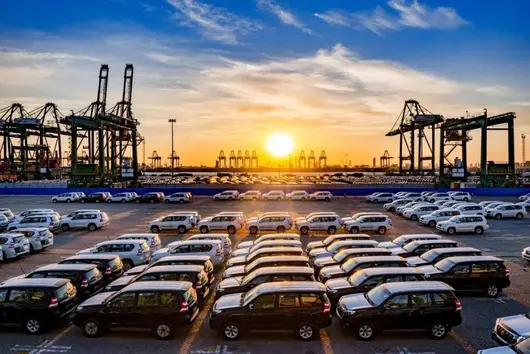
The first half of 2026 has passed, a time for summary, review, and reflection. Amidst fluctuations in the global economy, Chinese auto exports have not slowed down; growth is accelerating.
This year, the total volume of complete Chinese car exports approached 5 million units, an increase of more than 60% year-over-year.
According to the consulting firm AlixPartners, China's car exports in 2026 are expected to break 10 million units, setting a historical record for the highest annual car exports from a single country. However, this 10 million unit overseas journey is far from smooth; global regional markets are showing vastly different landscapes and policies.

The US is the world's largest consumer market, but for a long time to come, Chinese cars may be excluded from it.
Many people think Chinese cars cannot enter the US due to high tariffs, but the reality is more complex. The US has effectively constructed a three-tier blockade system, almost completely severing ties with the Chinese automotive industry.
The first layer is tariff barriers. The US levies a 25% general tariff on imported cars, plus a 100% Section 301 tariff on Chinese EVs previously imposed, resulting in a combined tax rate exceeding 125%. For example, assuming the Li Auto i8 is exported to the US with an FOB price of $40,000, the tariff at destination would be $50,000, making the cost of these two items at least $90,000. In the US market, this price is sufficient to purchase the top-spec Cybertruck.

Besides tariffs, there are technology bans. In January 2025, the US released 'Rules for Intelligent Connected Vehicles', requiring that starting from the 2027 model year, connected car software designed, developed, or supplied by entities 'owned, controlled, or subject to the jurisdiction of' China or Russia be prohibited. Starting from the 2030 model year, connected car hardware is further prohibited. This rule not only looks at where the vehicle is assembled but penetrates to the source of software and capital.
Recently, Polestar became the first automotive brand affected by this. The US Department of Commerce refused to grant Polestar sales authorization, citing that 'vehicles equipped with relevant Chinese connected technologies may collect sensitive owner information and pose national security risks'. Therefore, Polestar had to announce a complete stop on selling new cars in the US starting from the 2027 model year, which is almost equivalent to exiting the US market.
Finally, there are legislative restrictions. In May of this year, the US Congress was still pushing for a stricter 'Connected Vehicle Safety Act', planning to elevate this temporary ban to permanent law, while sealing off traditional routes to evade sanctions such as 'transshipment through Mexico or Canada or building factories in the US'.
Therefore, against the backdrop of the US-China power game, the US market is likely the market with the greatest challenge for Chinese auto companies going global.

The EU is the world's second largest new energy vehicle market, and a strategic high ground Chinese auto companies must secure.
Although the previous anti-subsidy investigation and tax increase bill drew wide attention, the EU's strategy did not take a 'one-stick-kill' approach, but adopted a relatively gentle gradual means, essentially a form of self-industry protection.
In early 2026, after more than two years of negotiations between China and the EU, the EU implemented a minimum price commitment mechanism for Chinese imported electric vehicles. This means Chinese pure electric cars do not need to pay extra high taxes to enter Europe, but must price according to EU rules and cannot enter the market at too low a price.

On the surface, it seems Chinese enterprises no longer need to pay high anti-subsidy taxes, keeping profits in their own hands; but in essence, the EU is using administrative means to level out the price advantage of Chinese EVs, limiting Chinese EVs from launching price wars in the European market. This means every model and every configuration must be separately calculated for the minimum price, greatly raising compliance costs.
Therefore, for Chinese auto companies to develop in Europe in the future, they can no longer rely solely on price advantages; they must promote deep localization.
In the future European market, the pure 'complete vehicle trade export' model will have little room to survive. Chery building a joint venture in Spain and BYD's Hungarian factory production are using real investment to exchange for entry tickets, which is actually consistent with China's earlier approach of introducing foreign enterprises.
Although the threshold is raised, as long as enterprises are willing to share value and create benefits locally, the market door remains open—just a door that is 'half-open'.

Southeast Asia is the regional market with the most intensive investment and most significant results for Chinese auto companies. Thailand is a typical weather vane.
In January 2026, the Thai auto market welcomed a historical turning point. According to the Federation of Thai Industries, brand pure electric car sales in January reached 31,860 units, a year-on-year increase of 354%, accounting for more than 75% of Thailand's pure electric market share. On the brand sales list, Toyota ranked first with 19,113 units, BYD stayed firmly second with 12,812 units, Chery entered the top three with 9,714 units, and six Chinese brands collectively entered the top ten. Chinese brands' combined market share in Thailand reached 47.34%, historically surpassing Japanese brands' 47.338% for the first time.

Indonesia is another key market. By the end of 2025, the market share of Chinese brands in Indonesia doubled year-on-year to 14%, and BYD sales jumped to third place. In January 2026, Indonesia's new car wholesale sales were 66,447 units, a year-on-year increase of 7%. In the electric vehicle sector, Chinese market share reached as high as 91.7%.
Looking at the whole of Southeast Asia, the market landscape dominated by Japanese cars for sixty years is facing attacks from all sides. In 2025, Japanese car sales in Indonesia, Thailand, Vietnam and other six major countries declined by 22% compared to 2019, dropping to 68% in Thailand alone. Meanwhile, Chinese auto company sales in Southeast Asia exceeded 800,000 units in 2025, a year-on-year increase of over 120%, with average market share breaking through 35%. By the end of 2025, 7 Chinese auto companies had invested in building factories in Thailand, with cumulative investment exceeding $3 billion.
However, China's supply chain in ASEAN still has about 80% imported from China. Japanese car companies have not withdrawn, but switched tracks—Toyota invested 55 billion Thai Baht to expand hybrid production, local policies are shifting from focusing on pure electricity to technology neutrality. How to build a moat in local supply chain and product diversification is the next hard battle for Chinese auto companies in Southeast Asia.

Chinese cars in the Middle East market are undergoing dramatic changes.
In the first two months of 2026, the UAE has jumped to the second position among Chinese car export destinations, with import volume reaching 103,900 units, a year-on-year increase of 53%. In 2025, China's car exports to the Middle East region reached 1.4 million units, of which the UAE's 570,000 and Saudi Arabia's 300,000 combined contributed more than 60% of the share. The economic report released by Saudi media in 2026 shows that Chinese car brand sales in the Saudi market are expected to exceed 120,000 units annually.
This way, the market share of Chinese brands in the Middle East has risen to above 20%, with proportions breaking through 25% in core markets such as Saudi Arabia and the UAE, among which Chery and BYD are the two largest Chinese enterprises.
The key variable promoting this growth is exactly the recent change in the situation in the Middle East region. The tense situation in the Strait of Hormuz made this traditional golden route nearly paralyzed, ship traffic volume plummeted from about 130 ships per day in February to only 6 ships in March. Toyota has already planned to cut export production to the Middle East by 24,000 units, Nissan continued production cut measures, and Mazda also confirmed that exports to the Middle East would be stopped before the end of May.
The delivery period of Japanese car companies has been greatly extended, while Chinese car companies quickly filled the market vacancy with stable supply chains and more competitive products. Another significant advantage of the Middle East market is ample funds, objective recognition of Chinese brands, and geographical location that can radiate to Africa and Europe. This is also a major unexpected pleasure of Chinese auto exports this year.
The Latin American market is becoming one of the fastest-growing regions for Chinese auto companies.
In the first half of 2026, the sales of Chinese brands in the 7 countries of South America were between 650,000 and 750,000 units, an increase of more than 80% year-on-year, and the market share also officially exceeded US and German brands, becoming the third largest car series in the market.
In March this year, the monthly sales of Chinese brand cars in Mexico reached 15,698 units, with a market share of 11.9%, surpassing German brands for the first time. MG sales surged 54.2% to 6,166 units, ranking rising to 7th place; Geely sales surged 245.3%. Brazil was the fastest growing single market. For the entire first quarter, China exported 166,787 passenger cars to Brazil, with a cumulative year-on-year increase of 242.8%. Brazil has become the country with the largest export volume of Chinese new energy vehicles.
But uncertainties facing the Latin American market are also rising. The US is pressuring Mexico to require it to limit the entry of Chinese cars into North America through the US-Mexico-Canada Trade Agreement. BYD has established sales networks in Brazil and Mexico and plans to build a factory in Mexico, but how long the 'Mexico stepping stone' can play a role largely depends on policy gaming between the US and Mexico.
Africa has 1.4 billion people, but the current car penetration rate is low, and most car companies did not fully pay attention due to consumption power limitations. But looking at the data from the first half of 2026, important trend changes are appearing in South Africa and North Africa.
The industrial orientation of core countries such as Egypt and South Africa is very clear; they vigorously encourage local assembly models, complete vehicle import tariffs are high, but imported parts can enjoy great tax incentives. So layout in Africa, similarly cannot expect to rely solely on complete vehicle exports to achieve profitability, the core logic is still 'industry exchanging for market'.

If enterprises can invest deeply to build factories locally and drive local employment with parts assembly, it is more promising to obtain long-term market entry tickets. Although there is limited premium space at present, there are still few Chinese auto companies willing to make long-term layouts here.
Who is the largest national market for Chinese auto exports? It is Russia.
In the first quarter of 2026, China exported 186,765 passenger cars to Russia, with a cumulative year-on-year increase of 97.1%. From January to May 2026, Russia ranked first among Chinese car export destinations with a monthly import volume of 94,301 units. In 2025, the market share of Chinese independent brands in Russia rebounded to 57.2%, accounting for more than half.

The speciality of the Russian market lies in the huge market vacancy left by the mass exit of Western car companies, and Chinese brands quickly filled this gap. However, objectively speaking, geopolitical risks remain the 'Sword of Damocles' in trade between China and Russia.
Final Thoughts
Some predict that Chinese auto exports in 2026 will cross the 10 million unit threshold, which is undoubtedly a milestone achievement in the entire history of human industry.
However, we believe this number is not the higher the better, because the higher the number, the more challenging the road ahead. Chinese auto exports need to formally move from the 1.0 stage of purely pursuing sales to the 2.0 era of system output and supply chain output. And in this more mature stage, the competitive fire between Chinese auto companies will also extend comprehensively to overseas markets.
Looking around at the current global landscape, the automotive industry is irrevocably dividing into two camps: 'China Ecosystem' and 'Non-China Ecosystem'. In overseas markets, our biggest opponent may no longer be Toyota or Tesla, but those Chinese peers who are going global together to compete.

Semestai Pertama 2026 telah berlalu, ia merupakan titik untuk merumuskan, meninjau semula dan melihat ke belakang.
Semasa ekonomi global bergelora, eksport kereta China tidak melambat, malah pertumbuhannya semakin pesat.
Pada semestai pertama tahun ini, eksport kenderaan utuh kereta China hampir mencecah 5 juta unit, peningkatan tahun ke tahun melebihi 60%.
Menurut ramalan firma konsultasi AlixPartners, eksport kenderaan China pada 2026 akan melebihi 10 juta unit, ini adalah rekod tertinggi eksport tahunan kenderaan oleh satu negara dalam sejarah manusia. Namun, perjalanan 10 juta unit di luar negara ini bukan tanpa halangan, pasaran setiap kawasan di seluruh dunia menunjukkan corak dan dasar yang berbeza.
Amerika Syarikat adalah pasaran pengguna terbesar di dunia, namun dalam masa terdekat ini, kereta China mungkin tidak akan menyertainya.
Ramai orang menyangka kereta China tidak boleh masuk ke Amerika kerana tarif tinggi, tetapi keadaan sebenar lebih rumit. Amerika telah secara faktanya membina tiga sistem sekatan, hampir memutus sepenuhnya hubungan dengan industri kereta China.
Lapisan pertama ialah penghalang tarif. Amerika mengenakan tarif 25% untuk kenderaan import, ditambah lagi dengan tarif Seksyen 301 sebanyak 100% untuk kereta elektrik buatan China sebelumnya, kadar gabungan melebihi 125%. Sebagai contoh, jika Li Auto i8 ingin dieksport ke Amerika, harga di pelabuhan 40,000 Dolar, selepas ketibaan perlu membayar 50,000 Dolar cukai, hanya kos dua item ini sahajalah mencecah sekurang-kurangnya 90,000 Dolar, manakala di pasaran Amerika, harga ini sudah cukup untuk membeli model puncak Cybertruck.
Selain tarif, ada juga larangan teknologi. Peraturan Kenderaan Pintar Berhubung yang diterbitkan Amerika pada Januari 2025 meminta, bermula model 2027, dilarang kenderaan berhubung yang direka bentuk, dibangunkan atau dibekalkan oleh entiti "dimiliki, dikawal atau mempunyai kuasa" dari China atau Rusia; bermula model 2030, lebih lanjut dilarang perkakasan kenderaan berhubung. Peraturan ini bukan sahaja melihat tempat kenderaan dirakam, malah menembusi ke sumber perisian dan modal.
Baru-baru ini, Polestar menjadi jenama kereta pertama yang terjejas. Jabatan Perdagangan AS dengan alasan "Kenderaan yang mempunyai teknologi rangkaian berkaitan China mungkin mengumpul maklumat sensitif pemilik, terdapat risiko Keselamatan Negara", menolak memberikan lisensian jualan Polestar. Oleh itu, Polestar terpaksa mengumumkan bermula model 2027, sepenuhnya menghentikan jualan kenderaan baharu di Amerika, hampir bersamaan dengan menarik diri dari pasaran Amerika.
Akhir sekali ada sekatan perundangan. Mei tahun ini, Kongres Amerika masih menggerakkan Akta Keselamatan Kenderaan Berhubung yang lebih tegas, merancang menaikkan larangan sementara ini menjadi undang-undang kekal, pada masa yang sama menutup sepenuhnya laluan tradisional mengelak sanksi seperti "mererouting melalui Mexico, Kanada atau membina kilang di Amerika".
Oleh itu, di bawah latar belakang pertarungan megapowers Amerika-China, pasaran Amerika mungkin menjadi pasaran cabaran terbesar bagi syarikat kereta China yang ingin mengekspor.
Uni Eropah adalah pasaran kedua terbesar kenderaan tenaga baharu di dunia, dan juga kawasan strategik yang mesti ditakluki oleh syarikat kereta China.
Walaupun siasatan anti-subsidi dan akta kenaikan cukai sebelumnya telah menarik perhatian besar, strategi Uni Eropah tidak mengambil sikap "menghancurkan secara total", sebaliknya mengambil langkah beransur yang lebih lembut, pada asasnya juga merupakan perlindungan industri sendiri.
Pada awal 2026, selepas lebih dua tahun rundingan China-Eropah, Uni Eropah melancarkan mekanisme janji harga minimum untuk kenderaan elektrik import China. Maksudnya, kereta elektrik tulen China memasuki Eropah tidak perlu membayar cukai tambahan mahal, tetapi perlu menetapkan harga mengikut peraturan Uni Eropah, tidak boleh memasuki pasaran dengan harga terlalu rendah.
Secara permukaan, syarikat China tidak perlu lagi membayar cukai anti-subsidi yang mahal, keuntungan dibiarkan di tangan sendiri; tetapi secara substantif, Uni Eropah menggunakan tindakan pentadbiran untuk menghilangkan kelebihan harga kereta elektrik China, mengehadkan kereta elektrik China memulakan perang harga di pasaran Eropah. Ini bermaksud, setiap model kenderaan, setiap jenis konfigurasi perlu dikira harga minimum sendiri, sangat meningkatkan kos pematuhan.
Oleh itu, syarikat kereta China seterusnya mahu berkembang di Eropah, tidak boleh lagi hanya bergantung kepada kelebihan harga, mesti memacu tempatan mendalam.
Pasaran Eropah masa hadapan, corak "eksport perdagangan kenderaan utuh" sahaja sukar untuk ruang hidup, Chery membina syarikat bersama di Sepanyol, kilang BYD Hungary siap beroperasi, semua menggunakan pelaburan fizikal untuk mendapatkan tiket kemasukan, ini sebenarnya selari dengan idea引入 asing China pada masa dahulu.
Gerbang walaupun dinaikkan, tetapi jika syarikat mahu menanggung nilai di lokasi, mencipta收益, pintu pasaran masih terbuka — cuma, ini adalah pintu "terbuka separuh".
Asia Tenggara adalah kawasan pasaran yang paling padat pelaburan, hasil paling ketara bagi syarikat kereta China. Thailand adalah penunjuk arah tipikal.
Januari 2026, pasaran kereta Thailand menyambut perubahan bersejarah. Menurut data Persekutuan Industri Thailand, jumlah jualan kenderaan elektrik tulen jenama China pada bulan itu mencapai 31,860 unit, peningkatan tahun ke tahun 354%, mengambil lebih 75% saham pasaran kereta elektrik Thailand. Pada senarai jualan jenama, Toyota menduduki tempat pertama dengan 19,113 unit, BYD berada stabil di tempat kedua dengan 12,812 unit, Chery dengan 9,714 unit masuk ke tiga teratas, enam jenama China masuk ke sepuluh teratas secara kolektif. Saham pasaran gabungan jenama China di Thailand mencapai 47.34%, kali pertama secara bersejarah mengatasi 47.338% jenama Jepun.
Indonesia adalah pasaran penting lain. Hingga akhir 2025, saham pasaran jenama China di Indonesia meningkat berganda tahun ke tahun ke 14%, jualan BYD melonjak ke tempat ketiga. Januari 2026, jumlah jualan borong kenderaan baharu Indonesia 66,447 unit, peningkatan tahun ke tahun 7%. Dalam bidang kenderaan elektrik, kadar pasaran kereta China mencecah 91.7%.
Melihat seluruh Asia Tenggara, corak pasaran yang dipimpin kenderaan Jepun selama enam puluh tahun kini menghadapi serangan empat arah. Jualan kereta Jepun di enam negara utama Indonesia, Thailand, Vietnam pada 2025 turun 22% berbanding 2019, di Thailand lebih-lebih lagi terjun ke 68%. Pada masa yang sama, jualan syarikat kereta China di Asia Tenggara 2025 melebihi 800,000 unit, peningkatan tahun ke tahun melebihi 120%, kadar pasaran purata突破 35%. Hingga akhir 2025, sudah ada 7 syarikat kereta China di Thailand membina kilang, jumlah pelaburan terkumpul lebih 30 Billion Dolar.
Walau bagaimanapun, rantaian bekalan jenama China di ASEAN masih sekitar 80% import dari China. Syarikat kereta Jepun juga tidak menarik diri, sebaliknya menukar landasan — Toyota melabur 55 Billion Baht untuk mengembangkan hibrid, dasar tempatan sedang beralih dari fokus elektrik tulen kepada neutraliti teknologi. Bagaimana membina parit pertahanan pada rantaian bekalan tempatan dan kepelbagaian produk, adalah perang keras seterusnya syarikat kereta China di Asia Tenggara.
Kereta China di pasaran Timur Tengah sedang mengalami perubahan dramatik.
Dua bulan pertama 2026, Uni Emirat Arab sudah melonjak ke tempat kedua negara tujuan eksport kereta China, jumlah import 103,900 unit, peningkatan tahun ke tahun 53%. Pada 2025, eksport kereta China ke kawasan Timur Tengah mencapai 1.4 Juta unit,其中 570,000 unit di UAE dan 300,000 unit di Arab Saudi bersamaan menyumbang lebih 60% saham. Laporan Ekonomi 2026 yang dikeluarkan media Arab Saudi menunjukkan, jualan tahunan jenama kereta China di pasaran Saudi dijangka melebihi 120,000 unit.
Dengan itu, saham pasaran jenama China di Timur Tengah sudah naik ke atas 20%, di pasaran teras seperti Saudi dan UAE melebihi 25%,其中 Chery dan BYD adalah dua syarikat China yang terbesar saham.
Pembolehubah penting yang mendorong pertumbuhan ini, tepat perubahan keadaan Timur Tengah pada masa kini. Situasi tegang Selat Hormuz membuat laluan emas tradisional hampir lumpuh, kuantiti kapal dari 130 unit sehari pada Februari terjun ke hanya 6 unit pada Mac. Toyota sudah merancang mengurangkan jumlah eksport ke Timur Tengah 24,000 unit, Nissan meneruskan langkah pengurangan output, Mazda juga mengesahkan sehingga akhir Mei akan menghentikan eksport ke Timur Tengah.
Tempoh penghantaran kereta Jepun jauh berpanjangan, syarikat kereta China dengan rantaian bekalan stabil dan produk lebih kompetitif, dengan cepat mengisi kekosongan pasaran. Kelebihan ketara lain pasaran Timur Tengah adalah modal kaya, persepsi terhadap jenama China objektif, dan lokasi geografi boleh merangkumi Afrika dan Eropah. Ini juga adalah kejutan positif satu lagi eksport kereta China tahun ini.
Pasaran Amerika Latin sedang menjadi salah satu kawasan pertumbuhan paling cepat syarikat kereta China.
Semestai Pertama 2026, jualan jenama China di 7 negara Amerika Selatan sekitar antara 650,000-750,000 unit, peningkatan tahun ke tahun melebihi 80%, kadar pasaran juga secara rasmi melebihi jenama Amerika dan Jerman, menjadi kategori kereta ketiga terbesar pasaran.
Mac tahun ini, jualan kenderaan jenama China di Meksiko bulan tunggal mencapai 15,698 unit, kadar pasaran 11.9%, kali pertama mengatasi jenama Jerman. Jualan MG meningkat melonjak 54.2% ke 6,166 unit, ranking naik ke Tempat Ke-7; jualan Geely meningkat 245.3%. Brazil adalah pasaran tunggal pertumbuhan paling cepat, keseluruhan suku pertama, China eksport kenderaan penumpang ke Brazil 166,787 unit, kumpulan meningkat tahun ke tahun 242.8%. Brazil sudah menjadi negara terbesar eksport kenderaan elektrik China.
Tetapi ketidakpastian pasaran Amerika Latin juga sedang meningkat. Amerika sedang menekan Meksiko, menuntutnya mengehadkan kereta China memasuki Utara Amerika melalui Perjanjian Perdagangan AS-Meksiko-Kanada. BYD di Brazil, Meksiko sudah membina rangkaian jualan dan merancang membina kilang di Meksiko, tetapi sejauh mana "Pentas Lompat Mexico" boleh beraksi, besarannya akan bergantung kepada permainan dasar antara Amerika dan Meksiko.
Afrika memiliki 1.4 Bilion Penduduk, tetapi kadar penembusan kereta semasa masih rendah, kebanyakan syarikat kereta kerana had kekuatan belanja tidak cukup重视. Tetapi dari data Semestai Pertama 2026, Afrika Selatan dan Afrika Utara sedang muncul trend perubahan penting.
Negara teras seperti Mesir, Afrika Selatan sangat jelas orientasi industri mereka, mereka secara besar-besaran menyokong model percantuman tempatan, penghalang tarif import kenderaan utuh tinggi, tetapi import bahagian bercincang boleh menikmati insentif cukai besar. Jadi merancang Afrika, sama-sama tidak boleh mengharapkan hanya bergantung pada eksport kenderaan utuh untuk mencapai keuntungan, logik teras tetap "menukar industri untuk pasaran".
Syarikat jika boleh masuk ke kawasan melabur membina kilang, dengan percantuman bahagian bercincang dorong pekerjaan tempatan, lebih mudah untuk mendapatkan tiket kemasukan pasaran jangka panjang. Walaupun ruang premium masa ini terbatas, syarikat kereta China yang masih mahu merancang jangka panjang di sini masih sedikit.
Negara terbesar eksport kereta China siapa? Tepatlah Rusia.
Suku Pertama 2026, China eksport kenderaan penumpang ke Rusia 186,765 unit, kumpulan meningkat tahun ke tahun 97.1%. Januari hingga Mei 2026, Rusia dengan 94,301 unit import bulan tunggal menduduki tempat pertama negara tujuan eksport kereta China. Pada 2025, saham pasaran jenama sendiri China di Rusia kembali naik ke 57.2%, melebihi separuh.
Kekhususan pasaran Rusia ialah, syarikat kereta Barat keluar besar-besaran meninggalkan kekosongan pasaran besar, jenama China dengan cepat mengisi kekosongan ini. Tetapi secara objektif, risiko geopolitik tetap "Pedang Damokles" dalam perdagangan China-Rusia.
Ramai orang meramalkan, eksport kereta China 2026 akan melangkah ke atas ambang 10 Juta unit, ini dalam sejarah industri seluruh manusia, pasti pencapaian bersejarah.
Tetapi kami percaya, angka ini bukan semakin tinggi semakin baik, kerana angka semakin tinggi, jalan ke hadapan semakin mempunyai cabaran. Eksport kereta China, perlu secara rasmi dari fasa mengejar jualan 1.0, masuk ke era output sistem, output rantaian industri 2.0. Dan apabila sampai ke tahap lebih matang ini, perang persaingan antara syarikat kereta China, juga akan berlanjutan secara penuh ke pasaran luar negara.
Melilitkan keseluruhan格局 semasa ini, industri kereta sedang terbahagi tidak terelak kepada dua kubu "Ekosistem China" dan "Ekosistem Bukan China". Di pasaran luar negara, lawan terbesar kita, mungkin sudah bukan Toyota atau Tesla, tetapi rakan sejawat China yang bersama eksport bersaing.
© 2024 Bitauto.com. All Rights Reserved.
Bitauto (www.yiche.com and www.bitauto.com) is one of the most visited automotive websites in China. We provide detailed info on Chinese car brands available in your area. Please note that the information provided on this website is based on publicly available data and is for reference only. It may not be fully updated or accurate at all times.

Help us improve our website


