

HomeLicense

Search History
Popular Searches
Dealer Login / Sign Up

On July 29, 2025, Changan Automobile Group Co., Ltd. was officially established in Chongqing, becoming the third central state-owned automobile enterprise in China.
Recently, on the first anniversary of its establishment, Changan Automobile delivered an impressive performance report: achieving the milestone of rolling out 30 million independent brand vehicles first, obtaining the first batch of L3 autonomous driving dedicated license plates and L4 testing licenses, and realizing the large-scale commercialization of high-level intelligent driving with the fully self-developed "Tianshu Pilot" assisted driving system...
Strategic Foundation Building "Innovation, Entrepreneurship, Intelligent Awakening of Changan" — "1445" Strategy
In 2025, Changan Automobile's total annual sales volume reached 2.913 million units, an 8.5% year-on-year increase, creating a 9-year high. Most significantly, independent brand sales broke through 30 million units, becoming the fastest Chinese automaker to reach 30 million units.

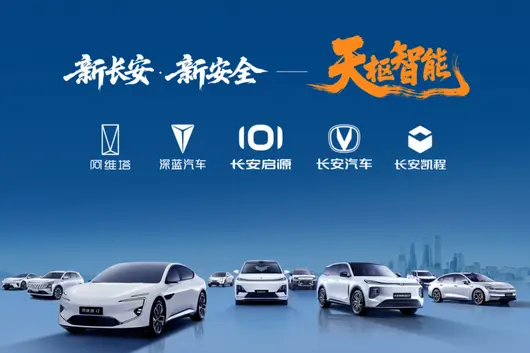
In April 2026, facing the new stage of the "15th Five-Year Plan", Changan Automobile of China officially released the "1445" Strategy: with the core vision of building a world-class automobile group, focusing on 4 core businesses: complete vehicles, parts, modern services, and ecosystem industries, comprehensively advancing 4 major transformations: intelligence, greenness, globalization, and integration, by 2030 achieving 5 major doubling: new energy vehicle sales, overseas complete vehicle sales, operating income, total profit, and brand value — New Energy 2.4 million units, Overseas 1.5 million units, Operating Income 600 billion yuan, Size entering Global Automobile Enterprise TOP 10, Brand Value 200 billion yuan, entering World Brand Top 500. Strategically integrating the resources of Avatr and Deepal Automobile, the two brands will start comprehensive strategic collaboration, creating a global mid-to-high-end brand group exceeding 1.5 million+, with overseas sales share exceeding 40%.

Under the guidance of the strategy, growth momentum is strong.In the first half of 2026, Changan Automobile's cumulative deliveries exceeded 1.1956 million units, of which overseas deliveries reached 402,000 units, a significant year-on-year increase of 35.1%. July deliveries were 207,100 units, of which overseas deliveries were 82,300 units, a 79.1% year-on-year increase, rising year-on-year for 6 consecutive months; New energy deliveries were 96,500 units, a 28.8% year-on-year increase.
"Three Major Plans" Deeply Advancing Brands, Intelligence, and Global Expansion to Fully Blossom

New Energy "Shangri-La" Plan Gains "Acceleration".
Avatr, Deepal Automobile, Changan Qiyuan three major global digital intelligence new energy car brands blooming, Changan Blue Whale Super Engine released, co-releasing global sodium battery strategy with CATL.In 2025, Changan Automobile's new energy sales exceeded 1.11 million units, becoming the first central state-owned automobile enterprise to achieve over a million new energy sales annually. "Golden Bell Shield Battery" won the 2025 National Science and Technology Progress Award, safely protecting over 2.1 million users.In 2026, new energy brand matrix fully exerts strength, cumulative deliveries in the first half were 456,000 units, a 5.2% year-on-year increase.
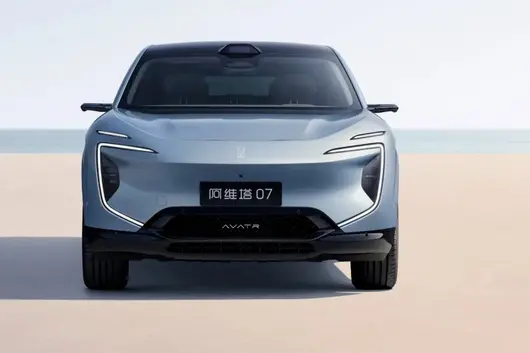
AvatrSteadily standing at the forefront of new luxury, Building Avatr Strategy 2.0, joining hands with Changan Automobile, Huawei, and CATL to enter a new stage of integrated development. New Avatr 12 fully upgraded and launched, Avatr 06T launched and released, Avatr 07 100,000th complete vehicle rolled off the line, Taixi Intelligent Control 2.0 technology released. Self-developed Avatr Taixi distributed electric drive, with 3 industry firsts and 12 global firsts, continuously demonstrating China's new luxury manufacturing strength.
Deepal AutomobileContinuously attracting the younger generation with technology and fashion, Cumulatively launched 7 models including Deepal S05, S09, L06, etc., Deepal L06 selected as the representative model of CCTV Grand Festival "Yancheng Carnival", Deepal S05 cumulative sales since launch exceeded 240,000 units, Deepal SL03 approved for the first national L3 autonomous driving dedicated formal license plate.
Changan QiyuanDeeply cultivating the new mainstream home market, Creating new global flagship products like Q05, A06, etc., New Q05 won the Italian A' Design Gold Award, Delivered over 80,000 units in the first half, Successively won the monthly sales championship of compact SUVs.

Intelligentization "Beidou Tianshu" Plan Welcomes "New Milestone".
In June 2026, "Changan Tianshu Pilot" combined assisted driving technology released, Over 1000 R&D engineers spent over 1800 days, Successfully built a fully self-developed, full-scenario coverage, full-dimension protection solution pursuing extreme safety assisted driving. During the R&D process, cumulative building of over 400,000 virtual simulation test scenarios, Intelligent driving daily simulation mileage exceeded 3.3 million kilometers, Equivalent to circling the Earth over 80 times daily.
Changan Tianshu Large Model formally passed the filing and approval of the "Generative Artificial Intelligence Service" by the National Internet Information Office, becoming the first automobile enterprise in Chongqing to obtain this qualification, using fully self-developed multimodal foundation to boost vehicle intelligence evolution.

In April 2026, Changan Automobile, having become the first batch of L3 intelligent connected vehicle pilot units, also approved for L4 Robotaxi testing license, Launching high-level autonomous driving multi-scenario landing testing and closed-loop verification, Becoming an automotive enterprise possessing full-compliance, full-scenario L4 autonomous driving practical test qualification.
In addition, Changan Tianshu Intelligent Robot Company officially established, Enter the humanoid robot field, Reshaping mobility ecology with embodied intelligence.

Globalization "Inclusive like the Ocean" Plan Pressing the "Fast Forward" Button.
In 2025, Complete vehicle overseas sales cumulative 637,000 units, Year-on-year increase of 18.9%. January-June 2026, Overseas deliveries 402,000 units, Year-on-year increase of 35.1%. Steadily implementing the globalization "Inclusive like the Ocean" Plan 2.0, Continuously deepening the "152" global development layout, Continuously deepening localization operations and brand building in key global regions.
Since 2026, New UNI-T put into production and rolled off the line at Brazil factory, Received praise from Brazilian President Lula; Thailand Rayong factory 20,000th complete vehicle rolled off line. Global vehicle crash safety performance strategy differentially adapted for different regional regulations and road conditions, Building a solid safety baseline. Global channels expanded to 129 countries and regions, Cumulatively built 22 global manufacturing bases. Vigorously promoting the "Overseas Doubling" Plan, Accelerating the realization of the progression leap from product going global to brand going global, industry going global.

Whole and Zero Precision Docking Platform Changan Automobile Innovation Technology and Ecosystem Cooperation Exhibition Reopening on 9.17
Jointly created by Changan Automobile and Chongqing Automobile Engineering Society —'Changan Automobile Innovation Technology and Ecosystem Cooperation Exhibition' Series Activities, Since being held in 2023, Cumulatively attracted over 500 well-known companies to visit Changan Automobile, Building a solid bridge for cross-border cooperation, joint R&D, vehicle-parts coordination, digital intelligence manufacturing, etc., Effectively supporting Changan Automobile's project sourcing, ecosystem partner expansion, and full-chain resource docking.
Three special sessions planned for June, July, September 2026, The first two sessions successfully held on June 26, and July 23-24 at Changan Automobile Global R&D Center, Cumulatively attracting nearly 160 quality supply chain enterprises to participate, Nearly 2000 professionals attended for docking and exchange.

At the July annual special session scene, Changan Automobile Vice President He Gang stated in the opening ceremony speech, Currently Changan Automobile global ecosystem partners have broken 15,000, Covering core fields such as chassis, power, intelligent connected, new energy three-electric systems, high-precision maps, chips, software, computing power, etc. Changan Automobile actively opened SDA complete vehicle intelligent architecture and Tianshu Intelligent Driving Platform to global ecosystem partners, Achieving technology open source, capability sharing, joint definition, collaborative innovation. Facing new opportunities and challenges, Changan Automobile is willing to stand with industry chain, supply chain partners, Establishing a new type of strategic partnership for symbiotic co-prosperity.

September 17 · Changan Automobile Global R&D Center, 2026 Changan Automobile Innovation Technology and Ecosystem Cooperation Exhibition (September Special Session)Will focus onfields such as automotive materials, lightweighting, intelligent manufacturing, testing, powertrains, interiors/exteriors, new parts, etc., Specially inviting over 60 quality supply chain enterprises to participate in product display and technical presentations. At that time, Changan Automobile will arrange procurement, R&D, manufacturing, quality and other core department heads to attend and exchange, Helping participating enterprises show cutting-edge strength in all aspects, Achieve in-depth communication and precise docking with Changan Automobile.
Activity Content:
Mainly includes Guest tour, Product display, Innovation Technology Forum, Supply and Procurement Docking, Visit Interaction five parts, Specially inviting well-known industry chain supply chain enterprises to participate.
(I) Guest Tour
Inviting Changan Automobile executives, Chongqing Automobile Engineering Society leaders, And attending leaders and guests jointly visit product display, Exchange and interact with participating enterprises.
(II) Product Display
Specially inviting over 60 well-known industry chain supply chain enterprises to participate in product display in fields such as automotive materials, lightweighting, intelligent manufacturing, testing, powertrains, interiors/exteriors, new parts, etc.
Booths Unified construction by the organizer.
(III) Innovation Technology Forum (New Technology and Product Promotion)
According to Changan Automobile R&D and procurement key focused technology directions, Hold multiple innovation technology forums, Specially invite guests to attend and exchange.
Participating Entities: Deepal Automobile, Avatr, Changan Kaicheng, Changan Automobile Technology Project Department, Procurement Center, Forward-looking Institute, Manufacturing Center, Research General Institute, Platform and Module Development Department, Change Efficiency Department, Quality Department, Product Development Center, Mold Division, Design Center etc. Brand and Core Department Heads; Industry Chain Supply Chain Enterprise Representatives; Industry Organizations, Research Institutes Universities Representatives.
(IV) Supply and Procurement Docking
Changan Automobile will arrange Procurement, Technology, R&D, Production Manufacturing etc. relevant department heads to attend, To carry out in-depth docking with participating enterprises.
(V) Visit Interaction
Visit Changan Automobile Global R&D Center, Understand Changan Automobile R&D system on site, Experience Digital Intelligence New Cars.

Previous Sessions Highlights
Exhibition Theme (Key Procurement Directions):
Materials and Lightweighting: High-performance automotive steel, Magnesium/Aluminum Alloy, Automotive Plastic/Composite Materials, Lubrication/Friction Materials, Sealing, Functional and Energy Materials, etc.
Advanced Manufacturing Technology and Equipment: Complete Vehicle Design and R&D, Three-Electric System Manufacturing Technology, Stamping/Welding/Painting/Assembly Engineering, Automated Assembly, Machine Vision, Industrial Software, Digital Twin, AI and Big Data Applications, etc.
Inspection, Testing and Quality Control: Complete Vehicle/Parts/Battery/Electric Drive Testing, ADAS and Autonomous Driving Testing, NVH Analysis, EMC Testing, Reliability/Lifecycle Testing, Quality Management Solutions, etc.
New Supply Chain and Service Providers: Vehicle-mounted Embodied Intelligence Systems and Core Hardware, etc. Emerging Fields, Power and Chassis Key Components, Intelligent Electric Vehicle Various New Parts such as Interiors/Exteriors Systems, Vehicle-mounted Embodied Intelligence Systems and Core Hardware, etc. Molds, Standard Parts, Sealing Parts, Fasteners, Pipe Fittings, Pipelines, Accessories, etc.; And Related Technical Service Providers.

[Lead: Avatr has obtained the L3 road test license, which means it belongs to the first echelon of the Huawei cooperation system in the high-end intelligent driving field. However, at the same time, sales on the market side are under pressure, the second IPO push, and brand integration is imminent, Avatr is in a state of ice and fire where "technical strengths and resource strengths" coexist with "commercial weaknesses".]
Author: Cai Yan
Early July, Avatr announced it has obtained the L3-level autonomous driving test license. Relying on Huawei ADS high-end intelligent driving system, Avatr will conduct intelligent driving road tests up to 120 km/h on open roads in Chongqing, and plans to launch mass-produced models equipped with L3 functions in the second half of 2026.
The progress Avatr has made in L3 intelligent driving marks that the brand's high-end intelligent driving technology has officially moved from R&D to the field test phase. It is expected to become a key lever for the brand to break through industry involution and reverse the current low sales situation.

Recently, the updated prospectus submitted by Avatr to the HKEX disclosed another set of data. Avatr's cumulative deliveries from January to May 2026 were only 20,160 units, averaging less than 4,032 units per month, a year-over-year decline of over 50%. If including the 7,459 units delivered in June, the half-year delivery only accounted for 12.5% of the annual target (220,000 units).
At the same period, even though the domestic automotive market as a whole is under continuous pressure with monthly and cumulative sales showing double-digit year-over-year decline, the overall decline in the new energy market was about 15%. However, specifically in the "New EV Brands, Second-Gen Startups" niche segment, the monthly sales threshold for top new EV brands has long broken 30,000 units. Harmony Intelligent Mobility Alliance's monthly sales are stable at around 50,000 units, and Leapmotor is leading by a leapfrog margin.
IM Motors, which is in the same competitive ecosystem position as Avatr, also achieved sales of 31,000 units from January to May 2026, a year-over-year increase of 114%. It is worth noting that IM's 2025 performance was not as good as Avatr.

Avatr is at a node full of contradictions. The L3 license is a proof of Avatr's technical strength, but it cannot cover a cruel reality: In terms of brand positioning and sales, Avatr, after a brief surge, is still under pressure.
High Opening, Low Closing
As one of the automotive brands born with luxury resources among "Second-Gen Startups", Avatr combines Changan Vehicle Manufacturing, Huawei High-end Intelligent Driving, and CATL Battery Power core capabilities. The three giants' combined support made the CHN Model once a benchmark sample for high-end car manufacturing.
Since deliveries began in December 2022, total deliveries increased from 20,000 units in 2023 to the brand's peak in 2025.

Full-year 2025 deliveries reached 122,700 units, December's single-month sales reached 10,400 units, achieving 10 consecutive months of sales exceeding 10,000. Full-year revenue reached 25.631 billion Yuan, a year-over-year increase of 68.7%, and gross margin was 9.4%. Revenue from 2023 to 2025 also grew, Avatr's cumulative revenue over three years was approximately 46.5 billion Yuan, with an annual compound growth rate over 113%. Revenue grew 4.5 times in three years, with vehicle business revenue growing approximately 4.3 times over three years.
Avatr's brand has experienced 3 years of growth. Relying on a set of luxury resources, it indeed captured good book data, but digging deeper reveals that at this stage, Avatr's sales scale has never covered the losses. Avatr openly stated in the prospectus: "It may continue to record net losses for the year ended December 31, 2026".
More critically, comparing Avatr's two IPO prospectus submissions, the initial prospectus showed a gross margin of 10.1% and revenue of 12.208 billion Yuan for the first half of 2025. However, in the latest prospectus, despite revenue growth year-over-year and quarter-over-quarter in the second half, the gross margin decreased (9.4%), further indicating a decline in profitability.

The key reason behind Avatr's revenue surge and continuous losses lies in: brand perception and market size.
First is brand perception. From 2022 to 2023, China's new energy products were shifting from scale expansion to quality upgrade. At that time, Avatr supported by the three giants was indeed "having traffic, having strength, and having uniqueness". When Avatr was first established, fewer than 5 companies had Huawei's technical support.
Unfortunately, at the beginning of the brand's launch, Avatr did not have a high opening and strong closing, but instead adopted the pragmatic style of traditional brands, thus missing the best communication node.
Since 2024, with more and more car companies embracing Huawei, Avatr's unique narrative of "China's Automotive Industry Second Generation" was quickly leveled by "Five Worlds Three Realms".
Taking this L3 road test as an example, GAC and Huawei ADS' Qijing GT7 also obtained Guangzhou L3-level autonomous driving road test permission. In this way, under the same situation of Qijing GT7 being equipped with Huawei intelligent driving, Avatr finds it difficult to obtain "scarcity".
Recently, data released at the 2026 Huawei ADS Technology Conference showed that by April, Huawei ADS cooperative brands exceeded 25, and mass-produced models equipped with Huawei ADS exceeded 50.
This situation is not limited to intelligent driving technology. Last year, CATL officially announced that Avatr issued the first batch of Xiaoyao Super Extended-Range Hybrid Batteries. Within a few months, some automakers followed suit with supporting equipment, including same-level competitors like Smart Driving R7.
People remember Huawei's intelligent driving and CATL's batteries, but they cannot remember the Avatr brand itself. Even though Avatr has the advantage of "first batch adoption" and is a "Yuanwang Shareholder", Avatr has not yet established clear market brand perception, which is a more serious problem than losses.

In short, what Avatr lacks is not technology, but the reason of "Irreplaceable".
Especially in the most competitive price range of 200,000 to 400,000 Yuan at this stage, whether it is Zeekr, AITO, Tesla, Xiaomi, or NIO, XPeng, as long as these brands are mentioned, consumers can clearly associate what the brand's core selling point is, while Avatr is blurred.
Regarding design, Avatr has good original design, which can indeed move some young consumers' hearts, but in the high-end market, aesthetics and design can only be a stepping stone. Regarding intelligent driving, models equipped with the full suite of Huawei ADS on the market are so numerous they are countable, and even priced lower than Avatr. Regarding batteries, consumers usually only remember the brand, not the specific battery model. Today, consumers in China's 200,000 to 400,000 Yuan range have been trained with a car selection model. They need differentiation and uniqueness, not a simple "Giant Mix".
Multi-faceted Adjustments
Regarding the impact of sales scale, Avatr admitted in the prospectus: "Relatively small procurement volumes limit our bargaining power with parts suppliers".
Changan announced in April this year strategic integration of Avatr and Deepal Auto. Deepal and Avatr will achieve deep synergy in R&D, procurement, supply chain, channels, and multiple dimensions, ultimately achieving a reduction in comprehensive operating costs by 20%-30%.
Of course, integration is not limited to cost reduction. How to guarantee the independence and differentiation of two brands, and how to solve problems such as Avatr's core competitiveness not being internally diluted in the future, will be Changan's core challenge. Currently, on the market, Lynk & Co and Zeekr under Geely are good templates for medium-end and high-end brand segmentation.

It is worth mentioning that Avatr is already quite effective in going overseas and channel levels.
In 2025, Avatr's overseas revenue increased from 223 million Yuan to 1.398 billion Yuan, revenue ratio increased to 5.5%. By the end of 2025, Avatr had laid out over 80 sales outlets in 38 countries and regions. Among them, Avatr 11 has long held the top rank in luxury electric vehicles in Thailand, occupying 10% market share in high-end electric vehicles in the UAE.
Regarding channels, Avatr started channel transformation in May 2024. Most stores have now告别 pure self-operated models, retaining only a few direct stores in core first-tier cities. The effect of channel adjustments is immediate. Distributor revenue ratio jumped from 1.1% in 2023 to 49.2% in 2025. More critically, sales efficiency significantly improved. Avatr's 2025 sales expenses only increased by 240 million Yuan, but leveraged 10.4 billion Yuan in revenue growth.
In the second half of this year, Avatr's new car sales, L3 commercialization, overseas expansion progress, and whether listing can proceed smoothly, these are all core variables for Avatr's breakthrough.
Comment
At this stage, the most realistic problem Avatr needs to face, holding 11.5 billion Yuan joint venture equity, obtaining L3 test license, promoting brand integration, etc., are all "tactical bonus points". The real lifeline is still the deepening of "Brand Storytelling". After all, the scariest thing for a brand is having no strategy, only tactics. Brand building has never had shortcuts. Currently, Avatr's direction has been clearly adjusted, and actions have been launched. The rest is left to time and products.
(This article is original to "He Yan Yue Che", no reprinting without authorization)
© 2024 Bitauto.com. All Rights Reserved.
Bitauto (www.yiche.com and www.bitauto.com) is one of the most visited automotive websites in China. We provide detailed info on Chinese car brands available in your area. Please note that the information provided on this website is based on publicly available data and is for reference only. It may not be fully updated or accurate at all times.

Help us improve our website


