

HomeLynx

Search History
Popular Searches
Dealer Login / Sign Up


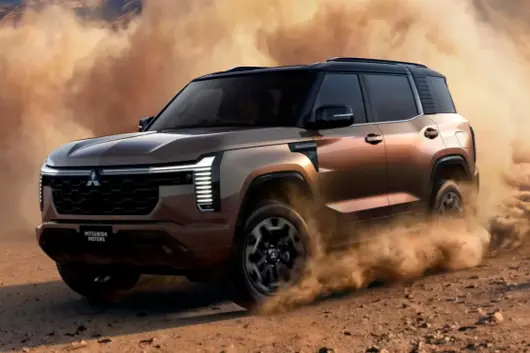
Oct. 19, the fifth-generation Pajero went on sale in Thailand. Starting price 1.499 million THB, approx. 298,000 RMB. 2.4T diesel, 8AT, ladder frame, Super Select 4WD. Produced at Thailand Laem Chabang factory, co-assembly line with Triton pickup.
Japan and Australia take over in mid-December. Starting fiscal year 2027, it will gradually expand to about 100 countries and regions including the Middle East, Latin America, and ASEAN.
In Mitsubishi's list of 100 countries announced, there is no Mainland China.
The Lynx is revived, but it didn't return to China. This is worth in-depth analysis because it cannot be explained by PR speak of "not introducing for the time being". Behind it lies the triple misalignment of product logic, market structure, and brand situation.
Let's first see what Mitsubishi's official statement says.
In the Thailand launch press release, the original words of President Keisuke Kishura were: "Thailand is not only an important market for Mitsubishi Motors, but also a key hub for our production and exports." The first launch market was chosen as Thailand because it is a production base and also a radiation center for ASEAN. Japan and Australia followed in December, one is the homeland, the other is the Pajero's traditional advantage market. The about 100 countries expanded in fiscal year 2027 are concentrated in Southeast Asia, Middle East, Latin America.

The logic behind this ordering is clear: Go first to places where diesel hard-core SUVs have rigid demand, charging infrastructure is insufficient, and Toyota Prado and Ford Everest sell well.
China is not on this list not because it was overlooked. Mitsubishi terminated complete vehicle production in China in October 2023, and GAC Mitsubishi's equity was transferred to GAC.
Official sales channels, production systems, and after-sales networks have all exited. For a car to enter the Chinese market, it must first have sellers, repair shops, and compliant certifications. None of these prerequisite conditions are currently met.
So "not introducing for the time being" is not a marketing strategy, it is a reality constraint. What is revived is the product, what is absent is the system.
Pajero has had its highlights in China.
Born in 1982, entered China in an import capacity in 1991, later becoming a common choice for government vehicles, engineering vehicles, and off-road enthusiasts. This nickname "Lynx" was earned through Dakar 12-time championships and 7 consecutive titles.

Four generations of models have a cumulative global production exceeding 3.29 million vehicles, covering over 170 countries and regions. These numbers are real brand assets, not emotional filters.
But the retreat is structural.
In 2019, production stopped in Japan, in 2021 production stopped globally, in 2023 Mitsubishi terminated complete vehicle production in China, in 2025 parallel import channel inventory will be gradually consumed.
The four-level retreat, each level has a clear official node. Pajero's presence in China was peeled off layer by layer, from product, to channel, to brand.

So this revival does not come in, not because "don't want to come", but because "cannot come". No sales entity, no after-sales system, no certification plan.
A diesel hard-core off-road vehicle, transported from Thailand factory to Chinese ports, the gap in between is not shipping distance, but a blank set of commercial infrastructure.
Even if Mitsubishi decides to restart the Chinese channel tomorrow, for Pajero to come in, it still has to cross four hurdles.
The first is the power route. The launch only offers 2.4T diesel, 150kW, 480N·m. The usage environment for diesel passenger cars in most Chinese cities is not friendly, and restriction policies vary by region.

More critically, China's hard-core off-road growth has turned towards plug-in hybrid and pure electric. In 2025, Fangchengbao sales exceeded Tank for the first time. In the first half of 2026, the Tank brand leads with 46.7% market share, but the bulk of growth comes from new energy. A diesel ladder-frame car faces a market that is giving up on diesel.
The second is price. Thailand sells for 298,000 RMB, that's the factory price. Parallel importing to China, need to add 15% tariff, 13% VAT, consumption tax by displacement, plus port, logistics, compliance, dealer costs, landing price is likely to reach over 400,000.
In this price range, looking up there is Tank 700 Hi4-T, looking down there is Tank 500 Hi4-Z and Fangchengbao Bao 8. Domestic new energy hard-core products in this price range are fully covered, configuration, intelligence, usage costs are comprehensively superior.

Pajero's mechanical reliability is an asset, but in this price segment, it is not the only decision variable.
The third is platform boundary. Fifth-generation Pajero and Triton pickup share the platform, co-assembly production. This is a cost-reduction choice under Mitsubishi's strategic contraction, using mature platforms to spread R&D, using existing lines to reduce manufacturing costs.
The cost is NVH, rear space layout, suspension comfort ceiling constrained by the platform. This is not a defect, it is positioning trade-off.
But in the Chinese market, user expectations for comfort and intelligence in the 300,000 to 400,000 RMB price range are completely different from Southeast Asian mining area users.

The fourth is brand situation. Mitsubishi no longer has presence in the Chinese passenger car market. Channels gone, after-sales gone, brand perception stays at the stage of "that off-roader from long ago".
Rebuilding all this requires investment and time exceeding a car's lifecycle.
Pajero's positioning for this revival can be summarized in one sentence: It is not a "Global Car", it is a car for the "Global South" market.
Southeast Asia, Middle East, Latin America, Australia, the common characteristics of these markets are: mature diesel supply, insufficient charging infrastructure, pickup and hard-core off-road have rigid demand, user sensitivity to mechanical reliability is higher than pursuit of intelligence. In these places, Pajero's logic holds true.
Ladder frame returns, Super Select 4WD retained, solid rear axle suspension, 2.4T diesel low torque and durability, all prepared for long-distance heavy load and bad road traversal.
Thailand as a production hub, radiating ASEAN, Middle East, Latin America, this layout is clear. The 10,000 units fiscal year target also shows, Mitsubishi does not plan to rely on this car for volume, its task is to establish flagship, hold position, maintain brand assets.
The paths Chinese users can access Pajero, in the short term, only three remain: used inventory, parallel import, or choosing domestic substitutes.
Tank, Fangchengbao, Jetour, Beijing Off-road, these brands provide many options in the 300,000 to 400,000 RMB price range, mechanical quality catching up, intelligence and usage costs already leading.
As for the plug-in hybrid version, the official confirmed it will be launched, but parameters, time, whether entering China, all not announced.
If the plug-in hybrid can retain ladder frame and Super Select 4WD, while making pure electric range meet daily commute, Pajero theoretically possesses the product conditions to enter China.
But the premise is to solve channels and after-sales first - and this matter is much harder than building a car.
Lynx has not forgotten China. It was just blocked at the door by product routes and market structure.
© 2024 Bitauto.com. All Rights Reserved.
Bitauto (www.yiche.com and www.bitauto.com) is one of the most visited automotive websites in China. We provide detailed info on Chinese car brands available in your area. Please note that the information provided on this website is based on publicly available data and is for reference only. It may not be fully updated or accurate at all times.

Help us improve our website


