

HomeMalaysia

Search History
Popular Searches
Dealer Login / Sign Up


Di pasaran SUV di Malaysia, ramai pembeli semasa memilih kereta akan membandingkan Toyota Harrier dan Subaru Crosstrek. Kedua-dua kereta ini mempunyai harga dan penjenamaan yang agak hampir, hari ini kita akan melakukan perbandingan terperinci dari pelbagai aspek untuk membantu anda menjimatkan masa mencari maklumat.
Harga OTR Toyota Harrier di Malaysia adalah RM 289,000 - 289,000, terdapat 1 varian, termasuk 2026 HEV 2.5L Standard (RM 289,000) dan lain-lain.
Harga OTR Subaru Crosstrek di Malaysia adalah RM 145,000 - 160,000, terdapat 1 varian, termasuk 2.0L e-Boxer (RM 150,000) dan lain-lain.
Dari segi harga, harga permulaan Subaru Crosstrek adalah RM 144,000 lebih murah berbanding Toyota Harrier. Jujurnya, dalam julat harga ini, beza beberapa ribu sebenarnya tidak besar, yang penting ialah nilai keseluruhan dan kos penggunaan jangka panjang.

Penarafan keselamatan Toyota Harrier adalah 5★ (ASEAN NCAP), sistem keselamatan aktif termasuk Brand ADAS.
Penarafan keselamatan Subaru Crosstrek adalah 5★ (Euro NCAP), sistem keselamatan aktif termasuk EyeSight.
Dari segi peralatan keselamatan, kedua-dua kereta telah mendapat penarafan yang baik. Walau bagaimanapun, Brand ADAS pada Toyota Harrier dan EyeSight pada Subaru Crosstrek mempunyai perbezaan dalam fungsi, jika anda lebih memprioritikan keselamatan aktif, anda boleh membandingkan senarai fungsi kedua-duanya dengan teliti.

Panjang kereta Toyota Harrier 4400 mm, bagasi 400 L.
Panjang kereta Subaru Crosstrek 4400 mm, bagasi 400 L.
Saiz kedua-dua kereta hampir sama, ruang dalaman juga tidak banyak beza. Kereta dalam kategori ini, cukup untuk penggunaan harian.

Toyota Harrier menggunakan cara driviaan FWD.
Subaru Crosstrek menggunakan cara driviaan FWD.
Cara driviaan kedua-dua kereta sama, iaitu FWD, rasa memandu harian tidak akan terlalu berbeza.

Secara keseluruhan, Toyota Harrier dan Subaru Crosstrek adalah model kereta yang sangat baik di pasaran Malaysia. Memilih yang mana, yang penting ialah melihat keperluan dan bajet peribadi anda. Kami menyarankan anda mencari maklumat dengan baik, membandingkan sebut harga daripada beberapa dealer kereta, kemudian pergi memandu ujian untuk membuat keputusan akhir. Membeli kereta adalah perkara penting, meluangkan masa untuk mencari maklumat tidak akan pernah salah.



In 2026, the overseas expansion of Chinese new energy vehicles has long left behind the 'wild' era of 'just shipping cars sells them'. When hot markets such as Southeast Asia and Europe gradually fall into a fierce battle over prices and channels, whoever can first establish the business loop of 'localized deep cultivation' in emerging markets will secure the ticket to the second half.
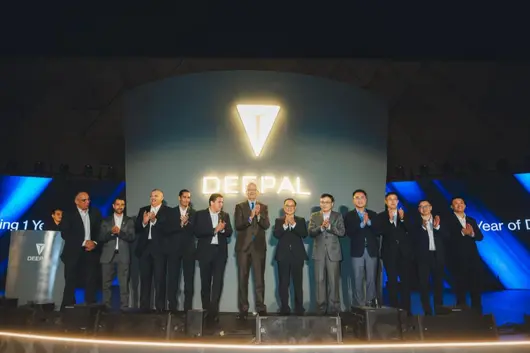
On October 25 local time, at the Grand Egyptian Museum in Cairo, capital of Egypt, Deep Blue Car held a one-year anniversary brand event for entering the Egyptian market, where all models currently on sale locally, including Deep Blue S05, S07, G318, and S09, were showcased. More than the lively press conference scene, what deserves more industry attention is the first-year performance report Deep Blue submitted locally: since officially entering Egypt in August 2025, Deep Blue Car only took a few months to quickly take the sales lead in Egypt's extended-range electric vehicle segment.
In a North African core market with culture, policy, and infrastructure significantly different from China, how did Deep Blue achieve a rapid breakthrough? Through this one-year anniversary event, we can clearly deconstruct Deep Blue Car's tactics and logic in the Middle East and Africa market.
Egypt is located at the intersection of Asia, Africa, and Europe, not only the most populous country in North Africa but also the bridgehead radiating the entire Middle East and Africa automotive market. In recent years, the Egyptian government has vigorously promoted green transformation, and new energy demand is beginning to release. But an undeniable objective reality is: the local charging infrastructure is still in its infancy, and users generally have a demand for long-distance cross-city travel. If simply copying the pure electric strategy from domestic markets, it is very easy to suffer from adaptation issues due to infrastructure shortcomings.
Deep Blue Car sensitively captured this market pain point. Among the models hot-selling in Egypt this time, Deep Blue's main 'Super Extended Range' technology became the key weapon to break through. The extended-range models with 'oil and electricity capable, no range anxiety, combining pure electric driving experience and low energy consumption' precisely hit the Egyptian consumer psychology of 'wanting new energy but fearing charging difficulties'. Added to G318 and other hardcore and SUV models' high adaptability to local complex road conditions, Deep Blue established dominance in the segment with the most compatible technical route in a short time.
Of course, a good product is just a stepping stone; if you want to gain volume quickly in overseas markets, channel capability often determines life and death. Many Chinese automakers expanding overseas in the past were used to going it alone or finding small traders for agency sales, often facing the plight of low brand awareness, slow distribution, and lagging after-sales support.

In this regard, Deep Blue in Egypt has taken an extremely pragmatic 'Strong Alliance' route. Its selected strategic partner GB Auto (GB Group) is one of the largest automotive distribution groups in Egypt and even North Africa, and also the only automotive listed company locally. Relying on GB Group's entrenched local distribution network in Egypt, mature financial service system, and profound government, business, and market resources, Deep Blue Car directly skipped the long channel exploration period, achieving efficient operation from product import to terminal delivery. Using the people who know cars best locally to sell China's most advanced new energy vehicles, this is exactly the business foundation that allowed Deep Blue to top the segment sales champion in just a few months.
However, breaking through sales is just the first step; how to avoid overseas expansion becoming a 'one-off deal'? At the event site, Changan Automobile Chairman Zhu Hourong emphasized a core word — 'In Egypt, for Egypt', and reiterated the development policy of 'Long-termization, Localization, Systematization, and Integration of ESG Construction'.
In the automotive industry, 'long-termism' is never just a slogan, but substantial investment in systems. At this one-year anniversary node, Deep Blue landed two matters of great strategic significance. On one hand, jointly establishing the 'Changan Automobile North Africa Training Center' with GB Auto. New energy vehicle after-sales maintenance is completely different from traditional fuel cars. Deep Blue directly established a training center locally to cultivate Egypt's local new energy technology and service talents, not only solving the technical bottleneck of after-sales maintenance but also creating employment opportunities for local youth, winning deep recognition from the local government and society. On the other hand, establishing the Egypt Deep Blue Owner Club, copying domestic mature user operation thinking overseas, letting the first batch of owners gain exclusive service rights synchronously, building the brand moat with high-standard after-sales services and community ecology. As the industry says, Egypt has never been Deep Blue's 'test field' in the Middle East and Africa market, but a 'hometown' it truly intends to root long-term.
In fact, the success in the first year of the Egyptian market is also a microcosm of Changan Automobile's 'Openness and Inclusiveness' globalization plan accelerating implementation. As the pioneer explorer of this plan, Deep Blue Car's global momentum is entering a concentrated explosion period.

Latest data shows, as of September 2026, Deep Blue Car's global cumulative production has officially broken the 1 million mark; January to September this year, its global cumulative sales reached 252,213 vehicles, year-on-year increase of 8.59%, growth rate firmly ranked among the forefront of Chinese new energy overseas expansion camp. Behind the hardcore sales, there is dual support from global network and product reputation. Currently, Deep Blue Car has entered over 100 countries and regions globally, laid out 4 global manufacturing bases and 1796 global service outlets; its models have successively won authoritative honors such as the German iF Design Award, Thai Car of the Year Award, etc., product strength withstood strict verification from global multi-dimensional markets.
From early single-product trade, to today's 'systematic overseas expansion' that fully outputs technical standards, brand culture, talent systems, and service ecology, Deep Blue Car's one-year practice in Egypt provides an excellent reference sample for how Chinese automakers can conquer emerging markets. When more and more Chinese brands learn to 'follow local customs and root for self-sustaining growth' in overseas markets, the globalization road of Chinese intelligent connected new energy vehicles can be said to have truly entered the 'deep waters'.


In the SUV market in Malaysia, many buyers tend to compare the Toyota Harrier and Volvo XC90 PHEV when choosing a car. These two models are quite close in terms of price and positioning. Today, we will conduct a detailed comparison from multiple aspects to help you save time on research.
The OTR price of the Toyota Harrier in Malaysia is RM 289,000 - 289,000, with a total of 1 version, including the 2026 HEV 2.5L Standard (RM 289,000) among others.
The OTR price of the Volvo XC90 PHEV in Malaysia is RM 434,888 - 434,888, with a total of 2 versions, including the 2025 2.0T 77km Ultra (RM 434,888), What safety features does the Volvo XC90 PHEV have? (RM 362,888) among others.
Looking at the price, the Toyota Harrier is indeed RM 145,888 cheaper at the starting price than the Volvo XC90 PHEV. If your budget is limited, Toyota's entry-level version can already meet daily needs. However, also note that the difference of a few thousand might involve compromises in features, depending on your specific needs.
Toyota Harrier is equipped with a 2.0L Turbo, with 220 hp. Official fuel consumption 9.5 L/100km.
Volvo XC90 PHEV is equipped with a Hybrid, with 170 hp. Official fuel consumption 4.5 L/100km.
In terms of power, the 2.0L Turbo in the Toyota Harrier has 50 more horsepower than the Hybrid in the Volvo XC90 PHEV, providing more confidence in mid-range acceleration, especially when overtaking on highways. However, the Volvo XC90 PHEV's fuel consumption might be more friendly, and the difference in daily city commuting would not be significant.
Toyota Harrier warranty 5 years/unlimited mileage, maintenance interval every 10,000km or 6 months.
Volvo XC90 PHEV warranty 5 years/infinite mileage, maintenance interval every 10,000km or 6 months.
Both Toyota Harrier and Volvo XC90 PHEV are mainstream choices in the Malaysian market, suitable for family use and daily commuting. If you value brand reputation and resale value more, you can prioritize the one with better reputation; if you care more about cost-performance ratio and features, choose the one with richer configuration. Ultimately, it is recommended to test drive both models, as the personal experience is most important.

Overall, both Toyota Harrier and Volvo XC90 PHEV are quite good models in the Malaysian market. Which one to choose depends mainly on your personal needs and budget. We suggest doing your research, comparing quotes from multiple dealerships, and then test driving to make a final decision. Buying a car is a major matter, spending time on research will definitely not be wrong.

In the Malaysian SUV market, many buyers compare Toyota Harrier and Volvo XC60 PHEV when choosing a car. These two cars are quite close in price and positioning. Today, we will make a detailed comparison from multiple aspects to save you time on research.
Toyota Harrier's OTR price in Malaysia is RM 289,000 - 289,000, with a total of 1 version, including 2026 HEV 2.5L Standard (RM 289,000), etc.
Volvo XC60 PHEV's OTR price in Malaysia is RM 362,888 - 362,888, with a total of 2 versions, including 2025 2.0T 89km Ultra (RM 362,888), What safety features does the Volvo XC60 PHEV have? (RM 296,610), etc.
From a price perspective, Toyota Harrier's starting price is indeed RM 73,888 cheaper than Volvo XC60 PHEV. If your budget is limited, Toyota's entry-level version can already meet daily needs. But also note, the few thousand ringgit savings might involve trade-offs in features; it depends on your specific needs.
Toyota Harrier's safety rating is 5★ (ASEAN NCAP), active safety system includes Brand ADAS.
Volvo XC60 PHEV's safety rating is 5★ (Euro NCAP), active safety system includes Premium ADAS.
In terms of safety features, both cars received good ratings. However, Toyota Harrier's Brand ADAS and Volvo XC60 PHEV's Premium ADAS have some differences in functionality. If you value active safety, you can compare the feature lists of both closely.
Toyota Harrier body length 4400 mm, trunk 400 L.
Volvo XC60 PHEV body length 4400 mm, trunk 400 L.
The dimensions of the two cars are almost identical, and the difference in interior space is not significant. For a car in this class, it is more than enough for daily use.
Toyota Harrier and Volvo XC60 PHEV are both mainstream choices in the Malaysian market, suitable for family use and daily commuting. If you value brand reputation and resale value more, you can prioritize the one with better reputation; if you care more about value for money and features, then choose the one with richer configuration. In the end, it is recommended to test drive both, personal experience is the most important.

Overall, Toyota Harrier and Volvo XC60 PHEV are both very good models in the Malaysian market. Which one to choose depends mainly on your personal needs and budget. It is recommended to do your research, compare quotes from several dealerships, and then test drive to make the final decision. Buying a car is a major event, spending time on research will never be wrong.

Dalam pasaran SUV di Malaysia, ramai pembeli membandingkan Toyota Harrier dan Volvo XC60 PHEV semasa memilih kereta. Kedua-dua kereta ini hampir sama dari segi harga dan kedudukan. Hari ini, kita akan membuat perbandingan terperinci dari pelbagai aspek untuk menjimatkan masa anda membuat kajian.
Toyota Harrier dijual di Malaysia dengan harga OTR ialah RM 289,000 - 289,000, terdapat 1 versi, termasuk 2026 HEV 2.5L Standard (RM 289,000) dan lain-lain.
Volvo XC60 PHEV dijual di Malaysia dengan harga OTR ialah RM 362,888 - 362,888, terdapat 2 versi, termasuk 2025 2.0T 89km Ultra (RM 362,888), Apa ciri keselamatan Volvo XC60 PHEV miliki? (RM 296,610) dan lain-lain.
Dari segi harga, harga permulaan Toyota Harrier memang lebih murah RM 73,888 berbanding Volvo XC60 PHEV. Jika bajet anda terhad, versi permulaan Toyota sudah boleh memenuhi keperluan harian. Tetapi perhatikan juga, beza harga beberapa ribu itu mungkin memerlukan pilihan dalam kelengkapan, bergantung kepada keperluan anda.
Toyota Harrier mendapat penarafan keselamatan 5★ (ASEAN NCAP), sistem keselamatan aktif termasuk Brand ADAS.
Volvo XC60 PHEV mendapat penarafan keselamatan 5★ (Euro NCAP), sistem keselamatan aktif termasuk Premium ADAS.
Dari segi kelengkapan keselamatan, kedua-dua kereta mendapat penarafan yang baik. Walau bagaimanapun, Brand ADAS pada Toyota Harrier dan Premium ADAS pada Volvo XC60 PHEV mempunyai perbezaan dalam fungsi. Jika anda lebih mementingkan keselamatan aktif, anda boleh membandingkan senarai fungsi kedua-duanya dengan teliti.
Toyota Harrier menggunakan cara pemanduan FWD.
Volvo XC60 PHEV menggunakan cara pemanduan FWD.
Kedua-dua kereta menggunakan cara pemanduan yang sama, iaitu FWD, pengalaman memandu harian tidak akan berbeza jauh.
Toyota Harrier memberikan waranti 5 tahun/kilometer tidak terhad, selang penyelenggaraan setiap 10,000km atau 6 bulan.
Volvo XC60 PHEV memberikan waranti 5 tahun/kilometer tidak terhad, selang penyelenggaraan setiap 10,000km atau 6 bulan.
Secara keseluruhan, Toyota Harrier dan Volvo XC60 PHEV adalah model kereta yang sangat bagus di pasaran Malaysia. Memilih yang mana, kunci utamanya adalah keperluan dan bajet peribadi anda. Kami cadangkan anda buat kajian, bandingkan banyak harga daripada banyak dealer, kemudian uji memandu untuk membuat keputusan akhir. Membeli kereta adalah perkara besar, meluangkan masa membuat kajian pasti tidak rugi.



© 2024 Bitauto.com. All Rights Reserved.
Bitauto (www.yiche.com and www.bitauto.com) is one of the most visited automotive websites in China. We provide detailed info on Chinese car brands available in your area. Please note that the information provided on this website is based on publicly available data and is for reference only. It may not be fully updated or accurate at all times.

Help us improve our website


