

HomeMandarin

Search History
Popular Searches
Dealer Login / Sign Up

In the SUV market in Malaysia, many buyers compare the Toyota Harrier and Mazda CX-60 when choosing a car. These two cars are quite close in price and positioning. Today we will make a detailed comparison from multiple aspects to help you save time on research.
Toyota Harrier's OTR price in Malaysia is RM 289,000 - 289,000, with a total of 1 version, including 2026 HEV 2.5L Standard (RM 289,000) etc.
Mazda CX-60's OTR price in Malaysia is RM 200,510 - 252,873, with a total of 2 versions, including 2026 3.3T 4WD High Plus (RM 252,873), 2025 2.5L 2WD High (RM 200,510) etc.
From the price perspective, the starting price of Mazda CX-60 is RM 88,490 cheaper than Toyota Harrier. To be honest, in this price range, a difference of a few thousand is not really significant. The key is to look at the overall value for money and long-term usage costs.

Toyota Harrier is equipped with a 2.0L Turbo, 220 hp. Official fuel consumption 9.5 L/100km.
Mazda CX-60 is equipped with a 2.0L 4-cyl, 170 hp. Official fuel consumption 8.0 L/100km.
In terms of power, the 2.0L Turbo of Toyota Harrier has 50 more horsepower than the 2.0L 4-cyl of Mazda CX-60, providing more confidence in mid-range acceleration, especially when overtaking on highways. However, Mazda CX-60's fuel economy may be better, and the difference in daily city commuting will not be too large.

Toyota Harrier body length 4400 mm, trunk 400 L.
Mazda CX-60 body length 4500 mm, trunk 450 L.
In terms of space, the Mazda CX-60 body is 100 mm longer than the Toyota Harrier, offering more advantage in passenger space. However, the Toyota Harrier is a bit more flexible when parking in the city, each has its trade-offs.

Toyota Harrier warranty 5 years/unlimited mileage, maintenance interval every 10,000km or 6 months.
Mazda CX-60 warranty 5 years/150,000km, maintenance interval every 10,000km or 6 months.

Overall, Toyota Harrier and Mazda CX-60 are both very good models in the Malaysian market. Which one to choose depends mainly on your personal needs and budget. We suggest doing your research, comparing quotes from multiple car dealers, and then test driving to make a final decision. Buying a car is a big matter, spending some time doing research will never be wrong.


10 月 16 日,比亞迪正式成為 2026 年 APEC 會議官方合作夥伴,旗下騰勢、仰望、方程豹及王朝海洋系列多款高端車型成為官方指定用車。總部喺深圳坪山,會議喺深圳舉行,「本地企業服務本地盛會」睇落嚟係順理成章。但將呢件事單純理解為「主場便利」,會錯過真正嘅信號。

APEC 合作夥伴係「被揀選」,唔係「被安排」
APEC 官方合作夥伴唔係畀錢就能買到嘅身份。騰勢、仰望、方程豹多款車型集體通過審核成為指定用車,意味著產品喺品質、安全、舒適性同服務保障上接受咗針對國際會議場景嘅嚴格檢驗。
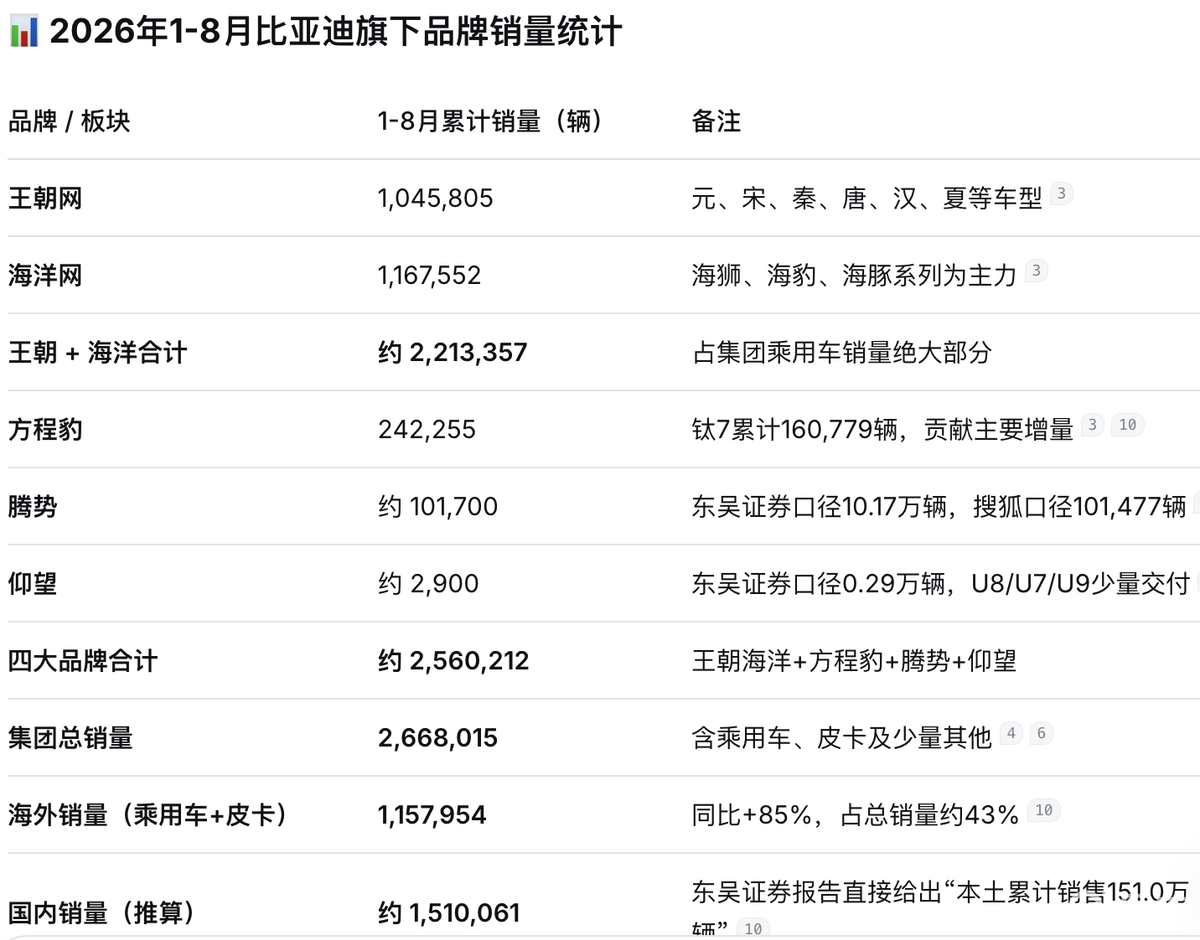
更值得注意嘅結構變化係:2026 年上半年,騰勢、方程豹、仰望合計銷量按年增長 61%,佔乘用車總銷量比重升至 12.8%,方程豹成交均價超過 22 萬元。比亞迪帶去嘅唔係一款「性價比車型」,而係一條均價 20 萬元以上嘅完整高端產品線。從「被看見」到「被選擇」,中間隔住嘅係產品力嘅真實兌現,唔係地理距離。
比亞迪海外知名度:已經從「平」切換為「主流選項」
最能說明問題嘅唔係品牌調研,係銷量榜。
2026 年 2 月,巴西中國電動汽車首次登頂當地零售銷量榜,比亞迪純電車型市佔率高達 78%,遠超日韓及歐美品牌。
新加坡 2025 年新車銷量比亞迪首次超過豐田,躍居第一。

韓國進口乘用車市場,比亞迪僅用一年半就排到第四,超過咗雷薩斯。
英國 2025 年 9 月單月銷量 11271 輛,同比增速 880%,首次進入月榜前十。
呢啲市場過去係豐田同歐洲品牌嘅主場,比亞迪切入嘅方式唔係低價傾銷,係喺純電賽道上用產品節奏同本地化渠道硬食入去嘅。
比亞迪出口盤點嘅真正睇點:結構,唔係總量
2021 年出口 1.5 萬輛,2022 年約 5 萬,2023 年突破 20 萬,2024 年超過 50 萬,2025 年首次突破百萬輛達到 104.6 萬——五年增長近 70 倍。
但比總量更關鍵嘅係 2026 年嘅結構跳變:前三季度海外銷量 133.78 萬輛,佔比從去年同期嘅 21% 躍升至 43%。接近一半嘅車賣到咗海外,海外單車均價約 19 萬元,比國內高出近 50%,境外收入佔比首次過半。

即使喺 APEC 成員經濟體中,墨西哥 2025 年以 13.05 萬輛居出口第一,巴西 11.99 萬輛緊隨其後,印尼 8.10 萬輛、泰國已建廠並進入新能源品牌 TOP5。
APEC 嘅 21 個經濟體覆蓋咗亞太最重要嘅汽車市場,比亞迪喺呢啲市場唔係「來參展嘅」,係已經喺賣車嘅。剩下嘅蛋糕唔係在於再增加幾個國家嘅覆蓋,而在於把已經進入嘅市場從「有銷量」做成「有份額」——歐洲純電滲透率仍只有 20% 左右,東盟同拉美多數市場處於純電導入早期,插混產品嘅窗口期先至剛剛打開。
比亞迪海外建廠:八國八廠係關稅倒逼下嘅必選項
整車出口正喺撞上關稅牆:歐盟對中國電動車最高徵收 35.3% 反補貼稅,墨西哥 50%,越南 35%。本地化製造唔係「錦上添花」,係進入主流市場嘅入場券。
目前已投產嘅海外乘用車工廠包括泰國(2024 年 7 月投產)、巴西(2025 年 7 月投產)、烏茲別克斯坦(2024 年 6 月 CKD 起步),匈牙利塞格德工廠計劃 2026 年 Q4 投產,印尼蘇邦工廠 2026 年上半年投產,土耳其馬尼薩工廠 2026 年底投產,柬埔寨同馬來西亞工廠亦喺 2026 年陸續落地。

八國八廠一期合計產能超過 100 萬輛,規劃上限超過 200 萬輛。未來五年嘅增量方向好清晰:如果海外做到 400—500 萬輛,「僅靠出口係唔夠嘅,一定要透過本地建廠實現」。這意味著東南亞、拉美、中東歐之後,更多產能節點會根據市場需求繼續鋪開,但節奏取決於關稅政策同當地供應鏈成熟度,唔係鋪得越快越好。
比亞迪能超越豐田嗎?五年口號有氣勢,但缺口需要被正視
2025 年豐田全球銷量約 1132 萬輛,比亞迪約 460 萬輛,差距 672 萬輛;2026 年上半年豐田 539 萬輛,比亞迪 181 萬輛,差距仍接近 3 倍。
李柯 10 月喺新加坡重申「五年內趕超豐田同大衆」,王傳福 6 月以來亦多次錨定呢個目標,且強調「唔靠美國市場」。方向冇問題——海外增速遠高於豐田,新能源賽道上嘅產品迭代節奏亦佔優。

但五年抹平近三倍嘅体量差,意味著比亞迪需要喺海外每年多賣出一百萬輛以上嘅量級,同時豐田唔會喺停喺原地。更現實嘅路徑唔係「某一年突然翻盤」,而係先喺新能源單一賽道上確立壓倒性優勢,再逐步逼近總銷量口徑。

APEC 合作夥伴嘅身份唔會直接縮短呢個距離,但它做咗一件更基礎嘅事:令亞太地區最有購買力嘅商務人群同政策制定者,喺坐進一輛騰勢或仰望嘅後排時,不再把「中國車」當作一個需要被說服嘅選項,而是當作一個默認嘅參照系。品牌認知嘅切換,往往比銷量數字嘅追趕嚟得更早,也更深。


喺馬來西亞嘅 SUV 市場,好多買家喺揀車嘅時候都會拎 Toyota Fortuner 同 Volvo XC40 嚟做比較。這兩款車喺價位同定位上都蠻接近嘅,今日我哋就從多個方面做一個詳細嘅對比,幫你省咗做功課嘅時間。
Toyota Fortuner 喺馬來西亞嘅 OTR 售價係 RM 195,880 - 241,880,一共有 3 個版本,包括 2024 2.8T VRZ Diesel(RM 241,880)、2024 2.7L SRZ Petrol(RM 202,880)、2024 2.4L Standard Diesel(RM 195,880) 等。
Volvo XC40 喺馬來西亞嘅 OTR 售價係 RM 278,888 - 278,888,一共有 1 個版本,包括 2025 2.0T Plus(RM 278,888) 等。
從價錢嚟睇,Toyota Fortuner 嘅起步價確實比 Volvo XC40 便宜咗 RM 83,008。如果你預算有限,Toyota 嘅入門版已經可以滿足日常需求。但都係要注意,便宜嗰啲幾千蚊,可能喺配備上會有取舍,具體要睇你嘅需求。

Toyota Fortuner 搭載 2.5L Diesel,馬力 187 hp。官方油耗 8.5 L/100km。
Volvo XC40 搭載 2.0L Turbo,馬力 220 hp。官方油耗 9.5 L/100km。
動力方面,Volvo XC40 嘅 2.0L Turbo 比 Toyota Fortuner 嘅 2.5L Diesel 多咗 33 匹馬力。不過日常喺市區開,兩款車嘅動力都夠用,唔會覺得唔夠力。

Toyota Fortuner 保修 5 年/無限制里程,保養間隔 每 10,000km 或 6 個月。
Volvo XC40 保修 5 年/無限里程,保養間隔 每 10,000km 或 6 個月。

Toyota Fortuner 同 Volvo XC40 都係馬來西亞市場嘅主流選擇,適合家庭使用、日常通勤。如果你更看重品牌口碑同二手價,可以優先考慮口碑更好嗰一款;如果你更在意性價比同配備,那就揀配置更豐富嗰款。最終都係建議兩款都去試駕,親身體驗先係最重要嘅。

總嚟講,Toyota Fortuner 同 Volvo XC40 都係馬來西亞市場好唔錯嘅車型。揀邊一輛,關鍵都係要睇你嘅個人需求同預算。建議大家做好功課,多比較幾間車行嘅報價,再去試駕做最終決定。買車係件大事,花少少時間做功課絕對唔會錯。


In Malaysia's SUV market, many buyers compare Toyota Fortuner and Mazda CX-9 when selecting a car. These two cars are quite close in price and positioning. Today, we will conduct a detailed comparison from multiple aspects to help save you time on research.
The Toyota Fortuner's OTR price in Malaysia ranges from RM 195,880 to 241,880, with a total of 3 versions, including 2024 2.8T VRZ Diesel (RM 241,880), 2024 2.7L SRZ Petrol (RM 202,880), 2024 2.4L Standard Diesel (RM 195,880), etc.
The Mazda CX-9's OTR price in Malaysia ranges from RM 328,810 to 345,810, with a total of 2 versions, including 2023 2.5T 4WD (RM 345,810), 2023 2.5T 2WD (RM 328,810), etc.
From the price perspective, the starting price of Toyota Fortuner is indeed RM 132,930 cheaper than Mazda CX-9. If your budget is limited, Toyota's entry-level version can already meet daily needs. But note that the difference of a few thousand might involve trade-offs in features, depending on your specific needs.
Toyota Fortuner is equipped with a 2.5L Diesel, 187 hp. Official fuel consumption is 8.5 L/100km.
Mazda CX-9 is equipped with a 2.0L Turbo, 220 hp. Official fuel consumption is 9.5 L/100km.
In terms of power, the Mazda CX-9's 2.0L Turbo has 33 more horsepower than the Toyota Fortuner's 2.5L Diesel. However, for daily city driving, the power of both cars is sufficient, you won't feel underpowered.
The safety rating of Toyota Fortuner is 5★ (ASEAN NCAP), active safety systems include .
The safety rating of Mazda CX-9 is 5★ (ASEAN NCAP), active safety systems include Brand ADAS.
Both cars have the same safety rating, and safety features in this class are considered quite comprehensive. New cars nowadays do not lack safety, there is no need to worry too much about this point.
Toyota Fortuner warranty is 5 years/unlimited mileage, maintenance interval is every 10,000km or 6 months.
Mazda CX-9 warranty is 5 years/150,000km, maintenance interval is every 10,000km or 6 months.

Both Toyota Fortuner and Mazda CX-9 are mainstream choices in the Malaysian market, suitable for family use and daily commuting. If you value brand reputation and resale value more, you can prioritize the one with better reputation; if you care more about value for money and features, then choose the one with richer configuration. Ultimately, we suggest test driving both, personal experience is the most important.

Overall, both Toyota Fortuner and Mazda CX-9 are very good models in the Malaysian market. Which one to choose depends on your personal needs and budget. We suggest doing your research, comparing quotes from multiple dealerships, and then test driving to make the final decision. Buying a car is a major matter, spending time on research will definitely not be wrong.

In the Malaysian SUV market, many buyers compare the Toyota Fortuner and Mazda CX-5 when choosing a car. These two models are quite close in price and positioning. Today, we will conduct a detailed comparison from multiple aspects to help you save time on research.
The OTR price of the Toyota Fortuner in Malaysia is RM 195,880 - 241,880, with a total of 3 versions, including 2024 2.8T VRZ Diesel (RM 241,880), 2024 2.7L SRZ Petrol (RM 202,880), 2024 2.4L Standard Diesel (RM 195,880), etc.
The OTR price of the Mazda CX-5 in Malaysia is RM 135,469 - 166,760, with a total of 3 versions, including 2025 2.0L AT 35th Anniversary (RM 316,154), 2025 2.0L AT (RM 296,154), 2025 2.0L MT (RM 294,154), etc.
Looking at the price, the Mazda CX-5's starting price is RM 60,411 cheaper than the Toyota Fortuner. Honestly, in this price range, a difference of a few thousand is actually not significant; the key is to look at overall value for money and long-term usage costs.
The Toyota Fortuner is equipped with a 2.5L Diesel, horsepower 187 hp. Official fuel consumption 8.5 L/100km.
The Mazda CX-5 is equipped with a 1.5L Turbo, horsepower 140 hp. Official fuel consumption 7.0 L/100km.
In terms of power, the Toyota Fortuner's 2.5L Diesel has 47 more horsepower than the Mazda CX-5's 1.5L Turbo, providing more confidence in mid-range acceleration, especially when overtaking on highways. However, the Mazda CX-5's fuel consumption might be better, and the difference in daily city commuting won't be too large.
The Toyota Fortuner body length is 4400 mm, trunk 400 L.
The Mazda CX-5 body length is 4500 mm, trunk 450 L.
In terms of space, the Mazda CX-5's body is 100 mm longer than the Toyota Fortuner, giving it an advantage in passenger space. However, the Toyota Fortuner is a bit more flexible when parking in the city; each has its trade-offs.
The Toyota Fortuner uses FWD drive mode.
The Mazda CX-5 uses FWD drive mode.
Both cars have the same drive mode, both are FWD, so there won't be much difference in daily driving experience.

Both the Toyota Fortuner and Mazda CX-5 are mainstream choices in the Malaysian market, suitable for family use and daily commuting. If you value brand reputation and resale value more, you can prioritize the one with better reputation; if you care more about value for money and features, then choose the one with richer configuration. Ultimately, it is recommended to test drive both, as personal experience is the most important.

In general, the Toyota Fortuner and Mazda CX-5 are both very good models in the Malaysian market. Which one to choose depends mainly on your personal needs and budget. We recommend doing your research, comparing quotes from several dealerships, and then test driving to make the final decision. Buying a car is a big deal, and spending time on research will never go wrong.

9 月 22 日,“QQShow 同 TA 嘅朋友們暨全新 QQ3 摩登版上市發布會”於蕪湖鳩茲廣場揭幕。呢場跳出傳統發布會舞台局限、扎根城市地標嘅“快樂秀場”,唔單止帶來全新 QQ3 摩登版,亦拋出行業新思考:當細車唔再只滿足代步,靚度、安全、智能與個性共創,先至係新一代消費者嘅核心訴求。新車官方指導價 8.89 萬元,增購價 8.69 萬元,限時置換價 8.39 萬元,同時推出價值至高 27000 元嘅四重上市權益,重新定義 A0 級精品純電細車嘅價值標尺。


而家細車市場正在完成消費迭代,用戶買車已經告別“夠用就好”,取悅自己表達、品質安全、多元場景成為重要決策標準。全新 QQ3 已經交出過硬市場答卷:連續 5 個月銷量破萬,8 月銷量 19103 輛,環比大漲 64.07%,海內外訂單突破 10 萬台,海外泰國、印尼預售訂單超 2 萬。QQ 系列累計銷量超 160 萬,產品銷往全球百多個國家,國民細車 IP 喺電動時代持續釋放生命力。而摩登版嘅到來,正係基於市場用戶反饋,將大量用戶自发改裝、追求精緻個性嘅需求,轉化爲原廠完整產品方案。

呢次發布會冇堆砌冰冷參數,而係將“快樂”貫穿全程。奇瑞 QQ 全球代言人孫俪親臨現場,結合自身用車感受,為新車“靚、好用、易開”做認證,並完成首批車主交付;馮子豪、步驚雲、島主三位脫口秀演員以生活化段仔解構用車場景,令硬核配置變得生動易明。現場展出国風細車、加州假日、貓貓車等六台改裝樣車,涵蓋寵物陪伴、戶外露營、復古潮流等多元生活方式,直觀展示 QQ3“可玩、可改、可共創”嘅產品底色,令車唔止係交通工具,更加係自我審美表達嘅載體。


產品層面,摩登版以 Neo-Retro 復古未來設計理念,將摩登質感落喺每一處細節。專屬“摩登時代”復古綠、“安妮珍珠”奶杏珍珠配色,搭配豪車供應商 6 層 2K 車漆工藝,實現十年抗褪色效果;時光徽章輪轂、鎏光鍍鉻飾條、復古白前後保險桿專屬套件加持,內飾升級天鵝絨車頂、千鳥格高定紋理,將高級感從外觀延伸至車廂內部,四次斬獲紅點設計大獎嘅設計實力得到充分體現。


靚度之下,係唔妥協嘅安全與硬件實力。磐石籠式車身高強度鋼佔比 82%,搭載 1300MPa 一體式熱成型門環;寧德時代電芯打造犀牛電池,拿到中汽中心六維電安全認證,6 個氣囊、AEB 主動制動等主被動安全配置齊全,俾日常出行扎實嘅安全感。原生純電平台加持後置後驅、四輪獨立懸掛、50:50 軸荷比,兼顧城市穿梭嘅靈活與行駛穩定性。8155 芯片搭配 15.6 英寸 2.5K 中控屏,CarmindAI 智能體實現自然交互;70L 八模式電動前備箱、6.6kW 外放电、六大智能場景模式,涵蓋通勤、露營、寵物出行等豐富生活場景,OTA 持續迭代做到體驗常用常新。


針對上市買車用戶,奇瑞推出四大權益:輕鬆禮包含至高 5000 元置換補貼、7 萬 36 期 0 息;陪伴禮提供終身基礎流量與永久 OTA 升級;安心禮給予首任非營運車主整車終身質保;9 月 23 日 24 時前下單仲可獲贈簽名車模,限量一萬台原廠風跡競速拉花,降低用戶入手門檻。


從初代 QQ 圓普通人汽車夢,到全新 QQ3 摩登版滿足當代年輕人取悅自己出行,二十多年過去,QQ 品牌嘅快樂內核從無改變。喺細車市場陷入低價內捲嘅環境下,全新 QQ3 摩登版證明,小型電動車同樣可以擁有高端設計、越級安全、豐富智能與共創文化。佢瞄準家庭第二台車、取悅自己主義用戶群體,令細車跳出單純代步定位,既係國民 IP 嘅時代新生,亦為精品純電細車賽道開闢全新思路。
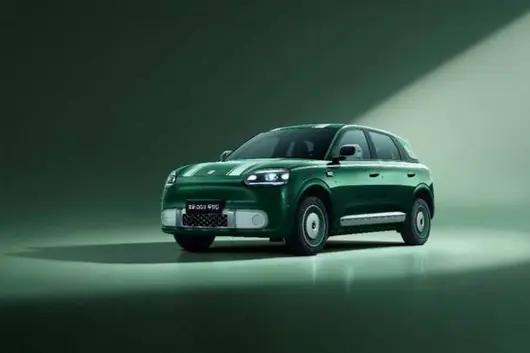

9月21日,一汽奔腾和京东工业、京东政企业务在北京签了战略合作,不是摆拍式握手。范围很实在:工业品采购、供应链数智化、全渠道营销、售后服务、海外业务和零部件物流全塞进去了。 这事儿表面是卖车,底子是主机厂把“拧毛巾”的活交给会拧的人。这背后有何深意呢?

很多人忽略一个点:整车厂最烧钱的不是屏幕多大,是冲压焊装涂装总装后面那套非生产物料和备件体系。一汽奔腾悦意08官方参数轴距2850mm,前置前驱,54kWh磷酸铁锂,CLTC 419或425km,快充20%到80%三十分钟,后悬还是扭力梁。 这底盘设定不是性能猛兽,是家用成本控。扭力梁省空间省钱,前置前驱传动链短,电机120kW够用不浪费。这种车最怕售后件乱、备件周期长、采购价虚高,因为利润薄得像煎饼。京东工业干的就是把寻源、采购、履约、验收、对账全链路数字化,参考行业案例,采购时长能从21天压到7天,采购成本降5%,交付压到一小时级,循环周期缩23%。 对奔腾这种要冲自主乘用车主力阵营的品牌,采购成本降1%,车企利润能抬5%到10%,这才是真香,不是沙发软。
以前车企营销靠经销商等客,现在流量在货架里。京东政企业务补的是办公、IT、员工福利、日常经营物资,别小看,这是把企业侧采购效率也收口。全渠道营销加售后网络,等于把“看车—下单—养车”从4S店孤岛拽到平台闭环。
悦意07电混综合续航1555km,纯电150或210km,馈电油耗低,家庭长途不慌; 奔腾小马不是全系宁德,易车在售款里3.79万吉祥马是宁德时代,其它多为楚能,CLTC 222km,3门4座,后置后驱,30kW电机,城市代步真合适。 厂家通稿写“3.79万起搭载宁德时代”,严格说只对入门特定款,不全系,这坑我给填平了。
在我看来,这是央企自主品牌借供应链外脑补短板,不硬凹自研全能,懂分工。中肯讲,京东工业不是万能,汽车BOM深度、产线紧急停线件、属地服务商响应,还得主机厂自己扛,数智化解决信息流,不解决工艺事故。争议点在“营销拓客”能不能真转化。车不是纸巾,用户看完京东页面不一定去试驾,线下交付和质保口碑才是临门一脚。521PLUS服务承诺听着稳,但别当免死金牌,三电终身质保首任车主前提摆在那。
这波合作深意不在“电商卖车”,在把一汽奔腾从制造厂往“制造+供应链公司”推一层。新能源同质化卷到脸肿,谁把隐性成本拧干,谁就有降价空间还不亏。

悦意08管家用纯电,悦意07管混动长途,悦意03管10万级纯电空间,小马管买菜接娃,产品矩阵不飘。后面海外零部件物流才是彩蛋,京东工业在泰国越南匈牙利巴西都有布局, 奔腾真要出海,备件先到比发布会先到重要。
所以别只看到签约照,看到的是一本车企省钱账。流量归流量,账本归账本,奔腾这回把账本递给京东了,挺懂事。
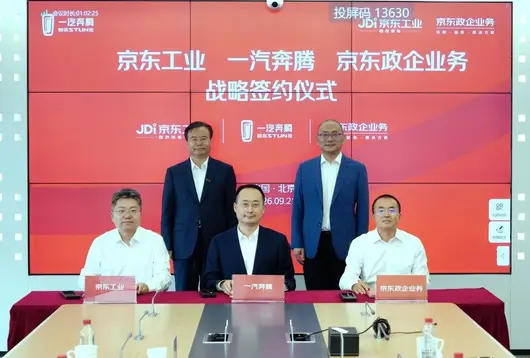

9月21號,“嵐圖智尊之旅”喺武漢啓幕。來自新加坡、泰國、馬來西亞、印度尼西亞等東南亞國家嘅海外媒體代表,走進嵐圖黃金工廠。

總裝車間裏,AGV 機械人沿地面有序穿梭,頭頂物料輸送線自動運行,實時更新嘅數字大螢幕上,每一輛車嘅“數字身份證”記錄住從零部件到整車嘅全流程。有人舉住手機一路拍攝,有人反覆打量跳動嘅數據,感嘆中國智造嘅發展速度超乎想像。佢哋此行嘅焦點,係翌日將喺全球上市嘅嵐圖夢想家9。
呢唔係一次普通嘅新車體驗。放喺中國汽車出海同高端MPV 市場變局入面睇,海外媒體走進嵐圖,睇嘅唔止係一款車,而係中國高端新能源嘅“母體”——工廠、技術、服務同全球化體系。

過去多年,中國高端MPV 市場長期由別克GL8、豐田阿爾法等車型定義,商務接待同進口豪華係主線。新能源同智能化浪潮襲來後,賽道邏輯被改寫:電動化降低動力門檻,智能座艙重構空間體驗,直營服務重塑用戶關係。
高端MPV 唔止係“第二排舒服”,而是向移動會議室、家庭客廳、旅居空間進化。嵐圖夢想家9此時入場,正踩喺呢輪消費認知遷移上。

預售數據已經釋放信號:開啟48小時,小訂突破30000台,頂配禮尊版佔比超50%,嵐圖老用戶增換購超20000台。對一款高端MPV 而言,呢組數字嘅意義唔喺“爆單”本身,而喺結構——頂配佔比過半,說明用戶唔係被低價吸引;老用戶增換購超兩萬台,說明品牌復購同信任正喺形成。中國品牌喺高端市場,開始從“性價比替代”走向“價值認同”。
呢種價值感,需要產品之外嘅能力支撐。海外媒體參觀嘅嵐圖黃金工廠,透過5G、大數據、AI 實現定制化、數字化、柔性化生產,支持轎車、MPV、SUV 共線隨機混流。嵐圖黃金工廠同雲峰工廠雙線協同,具備年產能45萬輛、每40秒一台車下线嘅能力。對全球市場而言,這意味著交付速度、品質一致性同定制能力,先係參與國際競爭嘅底層籌碼。

喺嵐圖黃金廠全功能用戶中心,海外媒體見到另一種“中國方案”。呢座全國最大旗艦店總使用規模逾3萬平方米,集新車展示、定制改裝、品牌文化、售後維保、超充補能於一體,覆蓋選車、购车到長期用車嘅全生命週期。多位海外媒體代表對直營服務體系表現出濃厚興趣,希望中國旗艦級服務能跨越國界,早日進入自己嘅國家。呢說明,中國汽車出海正喺從賣產品,轉向輸出服務標準同用戶運營模式。
回到產品本身,嵐圖夢想家9嘅體驗被設計成一種空間感知。座艙以“天地入懷”為理念,強調“一艙八境”。二排零重力座椅支持180度多角度旋轉,商務、休憩、旅居場景隨之切換。海外媒體坐進車內,反覆調節座椅角度,感受空間變化帶來嘅從容。呢度嘅產品點唔係配置清單,而係一種判斷:高端MPV嘅競爭,正喺從“堆料”轉向“場景定義權”。邊個能讓空間更識人,邊個就更可能掌握下一階段話語權。

嵐圖夢想家9上市,將畀高端MPV 市場帶來三重影響。第一,繼續擠壓合資同進口MPV嘅溢價空間,推動高端MPV 從燃油商務車向智能新能源車遷移。第二,抬高賽道門檻,智能座艙、智駕、補能、服務生態將取代單一舒適配置,成為核心賣點。第三,加速中國品牌喺高端市場嘅集體上攻,讓“9系旗艦”唔止係SUV 同轎車嘅戰場,亦成為MPV 嘅新高地。

全球化則係更大嘅棋盤。嵐圖已進入海外40個國家同地區,建成240多家海外銷售網點。透過“深耕歐洲、佈局中東、進軍右軚市場”三大行動,其全球化戰略進入加速落地階段。右軚車型蓄勢待發。

此次東南亞媒體跨海而來,意義不言而喻:東南亞既係右軚市場嘅重要增量,亦係日系MPV 嘅傳統腹地。若嵐圖右軚車型落地,中國高端新能源MPV 將有機會喺日系主導嘅市場中撕開缺口。
自成立以來,嵐圖圍繞三電、底盤、智能座艙、智能駕駛、整車製造等核心領域全棧自研,形成全價值鏈自主掌控能力,並打造“SUV+MPV+轎車”全產品矩陣,獲得全球超40萬用戶信賴。呢啲能力疊加,構成其走向世界嘅底氣。中國汽車嘅全球化,亦正喺從產品輸出升級為價值輸出:技術自研嘅深度、智造體系嘅厚度、服務標準嘅溫度,缺一不可。

從中國嘅嵐圖到世界嘅嵐圖,嵐圖夢想家9唔止係一款新車。佢更像一次體系化亮相:當海外媒體喺武漢工廠入面睇到每40秒下线一台車,喺用戶中心入面感知中國服務,喺座艙入面體驗空間變幻,中國智造喺全球汽車版圖上嘅坐標,正被重新標註。
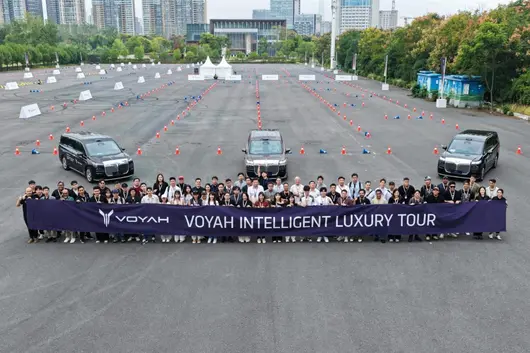

10万元、不用买车、不用自建技术团队……就能在一个城市里做无人配送的运力生意。
时隔两年,九识智能再次举办战略发布会。这一次,它抛出了“加盟”橄榄枝。
9月10日,九识2026战略发布会上,创始人兼CEO孔旗、联合创始人兼CCO周清、运力经营副总裁符雨龙先后登台,整场发布信息密度极高。
覆盖20多个国家、落地300多个城市、真实运营里程超过2.5亿公里、车队数量超过3万台……公布一系列成绩后,孔旗透露,九识开始思考:对于L4级别自动驾驶来说,产品到底是什么?

九识CEO孔旗宣布公司战略升级
他的答案是:城市级物理AI解决方案。因为客户真正购买的,是服务。
由此,九识宣布完成“城市级物理AI”战略升级,开始从车走向运力。同时,推出面向快递物流、商贸配送、城市短驳等场景的“九识租车”业务,提供日租、月租、年租等灵活租赁方式,并面向全国开放城市无人运力加盟。
孔旗特别提醒,在无人货运走向大规模落地的当下,高级别自动驾驶车辆运营成本非常重。“不像我们买特斯拉或者其他乘用车后,辅助驾驶开或者不开,对于用户和厂商来说完全没有成本。”
综合运营成本能不能压得足够低,直接决定L4的商业链条是否正向。目前,九识包含网络、远程安全员等在内的综合运营成本已经压得很低,在现金流和单车毛利上都可以做到正向。
于是,九识顺势推出“九识租车”业务。

九识租车业务版图
“客户不需要先拥有一辆车,也可以拥有稳定的运力。”周清介绍,九识为此自主开发了两大平台:运力管理平台,从智能调度、灵活定价到订单、车辆和结算等,把无人运力运营中的关键环节串起来,形成一整套运营闭环;运营监测平台,实时掌握车辆位置、状态等。“可以理解为,前台的车负责跑,后台的系统负责管”。
他进一步解释了做这件事的底气:技术上,推出L4级规模化量产无图方案,最快一天完成部署;硬件上,从功能安全和性能安全两个维度进行L4系统设计,累计验证里程超过十万公里;产品上,从五方、十方到冷藏系列,再到与宇通、东风等合作车型,形成覆盖不同运量、不同场景的产品矩阵。
截至目前,九识租车已经试点了一段时间,在45个城市完成300家客户的租赁模式试点,累计1500多笔订单。
模式跑通了,接下来就是吸引更多人加入。符雨龙给出三个数字:城配物流年营收约3万亿,城配领域车辆存量3000万辆,而当下中国无人配送的渗透率仅有1%。
“我们有99%的市场空间等着被挖掘。”他宣布,九识租车合伙人最低10万元即可加盟,租售比3:1,4台车即可起步,并配套灵活退出、帮你获客、运营管理系统、经营宝典等支持。“九识要找的不是资金实力最强的人,而是真正对这个事业、对这个赛道感兴趣,愿意把它当成一份长久事业来经营的人。”

九识合伙人招商政策
发布会前,《赛博汽车》对话了周清。从租车业务的底层逻辑、具体打法,到Zelos Inside的合作模式,再到无图方案的落地进展、海外市场的拓展节奏,以及他对物理AI竞争格局的判断,他都给出了相当坦诚的回答。
过程中,周清反复提到一个词:门槛。降低客户使用无人驾驶的门槛,降低加盟商进入运力生态的门槛,降低AI进入真实物理世界的门槛,这几乎是九识过去五年每一次商业模式迭代的共同线索。
以下是周清在本次专访中的对话实录(略有删减)。
01
九识租车:让无人驾驶从“产品”变成“生产力”
Q:能否介绍租车业务的具体情况?
周清:我们这次推出九识租车,核心目标是让更多用户能够更灵活地使用无人驾驶的能力和服务。面向有配送运输需求的个人和企业,包括商超配送、生鲜冷链、园区物流、快递末端等场景,都非常适合计划性、半计划性等相对稳定的运输需求。
过去大家使用无人车,往往首先想到的是买一辆车或者租一辆车。现在我们希望降低用户使用无人驾驶的门槛,让无人车从一种需要购买的产品,逐渐变成一种可以灵活使用的生产力。
我们除了提供整租和分时租赁,还提供按单租赁、按订单租赁,甚至按需求租赁。可以满足日间配送、夜间配送,包括闲时运力,也可以用来做及时性物流配送。
九识租车的运营模式下,既有九识的自营车队,也会有加盟车队。加盟车队不需要自建技术团队,通过我们的平台就可以获得和自营车队同等的管理能力。
Q:主要基于我们自己搭建的平台吗?还是也支持供应商去建平台?
周清:计划性、半计划性的物流都在我们这个平台上;闲时运力或者一些兼职运力,我们可以放到其他平台。
Q:为什么选择在这个时间点推向市场?
周清:我们在昆山有一位客户、代理商阿纲,现在也是九识的超级合伙人。2025年初,他买了四台车,并尝试把车租出去,没想到这个模式很快就跑了起来。从四台到几十台,再到现在的200多台,他把除了自用以外的自持运力,通过拼单、拼时的方式重新组织起来,现在他每个月的整体业务收入已经是过去的5倍。
在这个过程中,我们发现有一部分客户就像阿纲这样,关心的并不是“我要买一辆什么车”,而是“我每天有没有稳定的运输能力,这辆车能不能按我的需求工作”。于是我们就想到,通过搭建平台,再通过更多像阿纲这样的合作伙伴,把无人运力打造成城市服务的基础设施。因为本身我们是有技术、有平台的,阿纲他们自己也有动力去做这些事。

过去一段时间,我们也没有着急把九识租车往市场去推,而是在不同城市进行试点。到现在为止,我们已经在45个城市、300家客户中开展了租赁模式试点,累计完成超过1500笔租赁订单。
这些真实的运营数据对我们来说比任何理论推演都更重要。它们验证了一个关键结论:当无人驾驶的使用门槛降低之后,市场需求会快速涌现。有些客户可能并不希望购买,也不希望整租,他们更关注的是能不能以更灵活的方式获得稳定、持续的运输能力。
我们现在推出九识租车,也不只是做一个简单的无人车租赁服务,而是希望进一步探索如何让无人驾驶能力像其他生产要素一样被更加灵活地获取、匹配、组织、使用。我们也认为,这才是无人驾驶从产品走向生产力的重要一步。
Q:租车业务需要怎样的合作伙伴?
周清:对于我们自营车队,也包括我们的加盟商,整个运力生产力生态来做设想的话,我们需要的是一批真正懂当地市场、懂客户需求、能够组织运输服务的人。比如有一定的本地客户资源和物流场景,能够找到真实的运输需求。
其次是要有一定的运营和服务能力,能够做好车辆调度、日常管理以及客户维护。在九识租车平台中,加盟商包括自营车队的城市,也可以通过运力平台管理实现对无人车的管理,比如调度、定价这些全链路的闭环。通过运力监测平台,我们也可以实现安全高效的运营,对无人车进行监测和必要时的远程介入。我们相信,未来随着加盟商数量增加,城市无人运力也会更高效地运转,同时闲时车辆也能够被充分利用,也能让更多客户用更低的门槛获得无人驾驶能力。
Q:搭建平台门槛高吗?如果其他家想要模仿,难度大吗?
周清:其实做这个平台的难度并不高。你看我们现在本身有整车销售,也有租车。如果租车有比较高的门槛,它也不可能跟整车销售作为同一类型。说白了,就是我们不同模式面向的是不同的客户群体,所以在内部也不会有过多竞争。
租车这个模式的核心还是找到合适的加盟商,这是一个核心竞争力。我有了平台,不一定有能相信九识的技术、愿意加入的加盟商。所以关键,第一是厂家的技术能力,第二是平台的应用性,第三就是我们有一批相信技术、同时能懂当地市场的加盟商。
Q:可以理解成搭建平台的成本不会特别高,技术上相对也不那么难,更多的是要找到合适的人?
周清:对。
Q:怎么找到那么多合适的人?
周清:对于刚开始接触无人驾驶的客户来说,他可能首先关心的是这项技术到底能不能帮我省人、能不能帮我提效。这时候我们更希望的是他可以先用起来、跑起来,用真实的运营结果来验证这个价值。当客户真正用起来以后,运输需求越来越稳定,车辆利用率越来越高,他会发现用这种模式其实是更合适的。所以我们希望形成一个比较完整的客户路径:先降低使用门槛,再验证价值,最后根据自己的业务规模,选择最合适的方式。
Q:九识快速获得大批用户支持,核心的点在哪儿?
周清:首先最基础的,就是我们要有足够多、足够好的技术实力,足够稳定安全的技术。当车用得不够稳定或者不够安全的时候,一切都是很虚无的,这是最基础的。
第二个就是我们的平台要足够好用。对于加盟商来说,如果你这个平台不能给我提供足够多的工具,我还要投更多的人去做这个事儿,这个生意算不来账,那我一定不会做。对于客户来说,其实就是他关心的,我到底能不能用最低的成本去解决我这段运输的问题。
Q:租车业务落地之后,启动成本相对较低,会不会有一些本身是整车购买或月租的客户,切入相对轻资产的投入里面去?
周清:对,会有。以前只能买,这种适合有充足现金流并且有一定利润率的客户,他想持续通过长期投资去降低成本、提高效率,这样可以专车专用。但这种客户毕竟是少数。大部分客户可能还是:我就能解决我这一次的运输需求,每次固定时间的运输需求我能解决,平时我也不需要这个车,用更低成本的模式其实是更好的选择。
Q:这背后是不是意味着,九识本身需要承担的成本会更重?
周清:对,但我们不能只看一辆车的账面折旧,也要看一辆车在整个生命周期里能够创造多少价值。如果车辆只是卖出去,交易完成之后价值主要来自一次性的销售,那其实只是一次性计收,后续就没有持续收入了。对于厂家来说,后续的维护一定没有那么积极,因为我这一次利润其实已经计算完了。
但如果进入租车和运力服务体系,我们就需要进一步提升车辆的使用效率。我们也希望它能够在更长的生命周期里持续产生收入。这样的话,车跑得越来越充分,固定资产的利用率就会越来越高,创造的价值也会更高,而且它创造价值一定是比我们一次性卖车创造价值更高的。
所以,随着车队规模扩大,车辆的BOM成本、维修、备件,包括运营等环节也会逐步形成规模效应,我们的单车运营成本也会进一步降低。所以租车业务的主要目标,还是通过资源整合和科学的运营方式,把这笔资产真正变成能持续创造价值的生产资料。
Q:九识租车的商业逻辑是什么?租车的费用,还是每单的提成?
周清:我们后面可能就是分成,就是您刚才说的整租,包括分时按小时去收,然后包括每单的提成,其实就是按单去收费。大概这几种,后续会多元化。
Q:从买车到、租车,九识商业模式变化背后逻辑?
周清:如果回头看九识过去几年商业模式的变化,每一次迭代都在解决一个很具体的问题,而不是为了追求商业模式的创新而做的变化。
最开始我们做整车销售,是因为客户首先需要一款真正能够在真实路上跑好并且工作的无人车,解决的是产品可以用的问题。当产品逐渐成熟之后,我们开始探索金融服务,包括FSD订阅这些模式,本质上是在降低客户的一次性投入门槛,让更多客户能够使用九识的自动驾驶能力,解决的是想用但进入门槛还比较高的问题。
再到今天推出九识租车,我们看到的是进一步的需求:有些客户甚至不需要拥有一辆无人车,他们真正需要的是稳定、灵活的运输生产力。
所以这几次变化看起来是从卖车走向订阅,再走向租车,但背后逻辑其实是一样的,就是不断降低客户使用无人驾驶的门槛,让更多客户能够真正使用起来,并且从使用中获得价值。
未来我们也不会把自己限制在某一种商业模式里面。客户需要买车,我们就提供产品;买车和用车成本太高了,我们就提供FSD订阅模式;客户不需要拥有这个车,不需要车的产权,也不需要专车专用,那我们就通过灵活的运输能力,提供租车和运力,就是九识租车这个服务。所以对于我们来说,这些服务长期来看,可能最后这种服务对于九识获得的价值更高。
Q:几种模式之间是相互可以转换的吗?比如从买到租、从租到买?
周清:对,我们可以转。比如我租的时间长了,那么我就可以通过折旧的方式把这个车买下来。买变租也是同理,甚至我们都可以提供组合,你可以买一部分也可以租一部分。
02
Zelos Inside:技术基座一视同仁,落地形态动态适配
Q:这次还宣布与广汽的合作,整体逻辑是跟东风的一样吗?还是会有一些差异化的东西?
周清:我们跟广汽的合作,在底层逻辑上和东风是一致的。核心都是把九识这套成熟的L4级自动驾驶能力,也就是我们的九识大脑以及背后的算法和软硬件一体化的方案开放出来,赋能给优秀的汽车产业伙伴。
在这点上,九识提供的技术基座和安全标准完全是一视同仁的。不过在具体的落地形态和生产分工上,确实会根据每家车企各自的制造优势、产能布局还有供应链特点去做动态适配。
双方在产品定义、技术开发、工程验证上,其实都做了深度协同。九识也具备成熟的L4级自动驾驶技术和规模化的量产经验,车厂有成熟的整车研发制造和质量体系,双方是优势互补的。只不过这个行业里不同的车型、技术方案和合作深度差异,现在还是没有一个统一标准。我们最终还是要以产品安全质量还有客户需求为前提。不一定一样,但整体大的周期、大的时间节点可能会差不多,细节上肯定会有一些区别。

Q:跟东风的合作从签约到交付是8个月,能快速落地的原因?
周清:对,我们已经具备了成熟的L4自动驾驶技术,还有规模化的量产经验。东风也有成熟的整车研发、制造和质量体系。所以这样的话,我们就可以减少传统合作模式中的重复沟通和开发环节。这个速度其实没办法去简单复制,它极度依赖双方团队的高效互信还有敏捷协同。
传统的车型是以年为迭代时间。但对于自动驾驶来说,它更多关注的是自动驾驶技术,其实它是一个软件的迭代,这个速度就比传统的车要快了。因为我们的底盘可能不一定要变得非常大,但是我们的技术可以做持续迭代。
Q:我们这套技术不管跟东风、广汽,还是其他家,都能达到这个速度?
周清:逻辑是一样的,没错。
Q:联合开发、验证、交付的模式,但听起来很简单,但执行起来不容易,如何应对车企一直比较强势态度?
周清:对,其实我们要改观的也是车企的传统想法。车企传统来说,车辆的核心载体还是车。但对于自动驾驶、无人化的车来说,软件和硬件其实是一个地位了,底盘重要,但它的自动驾驶技术也同样重要。经过这么多年的行业发展,各个车企也都知道了自己更擅长的是什么,其实我们也是他们一个特别好的优势互补资源。
所以对于我们来说,现在很多像东风、宇通、广汽已经发现了这个点,已经开始拿我们当一个平等的合作伙伴,来大家一起做联合开发。未来我觉得这样的车企会越来越多。
Q:落地过程中有一些难点攻克经验可以分享吗?
周清:这块其实有非常多。像底盘适配就不说了,很多底盘的适配其实都是正常的工作过程。像我们做机场的时候,就需要去关注靠近飞机的安全性问题,这个对于算法来说也是一个非常大的挑战,因为飞机比车要高很多,它并不能看到车的全貌。其实我们在算法上要处理的就是特殊场景专用车遇到的一些长尾问题,并不是什么阻碍,但需要用足够多的技术能力去做打磨。
Q:安全、维护等有统一的规则吗?
周清:安全责任方面,L2和L4的责任逻辑是有所不同的。L2阶段仍然属于驾驶辅助,所以驾驶员需要承担驾驶主体的责任。而L4无人驾驶的核心变化,就是车辆在限定的运营场景下承担了动态的驾驶任务,因此在责任具体划分上,会根据整车、自动驾驶系统以及运营等不同环节的职责进行明确。
我们也会在合作初期就与车厂明确双方的职责边界,并且建立相应的安全和服务机制。不同的车厂的产品架构和合作方式可能有所不同,但九识在自动驾驶的系统研发、验证和安全管理方面的标准和要求是一致的,也不会因为合作方的不同而有不同的标准。
Q:对于Inside模式,我们希望它最终做成什么样子?
周清:从更长期来看,我们更希望通过Zelos Inside把九识在自动驾驶领域积累的技术、软件和规模化量产能力,与主机厂成熟的整车研发、制造、供应链还有服务体系相结合起来,共同打造面向不同商业场景的无人驾驶产品。
我们也希望Zelos Inside最终不只是一个单一车型的合作模式,而是能够形成一整套可成熟、可复制的产业合作体系,进一步推动无人车从单点应用走向规模化落地,真正做到让无人驾驶赋能千行百业。
Q:之前Inside模式类似华为,后者与很多主机厂有资本层面绑定,我们会有类似安排吗?
周清:我们和华为的模式在合作理念上是有一定相似之处的,都是希望与主机厂进行更深度的联合开发,然后共同打造安全、有竞争力并且有性价比的产品。
但九识并不需要依靠资本绑定来推动落地。我们认为长期合作最终还是要回到产品和客户价值。主机厂和自动驾驶公司能够持续合作,核心在于双方能够发挥各自的优势,把产品做好、把市场做好,并且持续地为客户创造价值。九识也是希望依靠自身在L4自动驾驶技术、产品量产和规模化运营等方面的能力,和主机厂形成长期稳定的合作关系。
当然,随着双方合作不断深入,未来也不排除探索更深层次的合作方式,包括成立合资公司、资本运作这些。无论采取什么样的模式,产品力和客户价值是能够长期持续的基础。
Q:华为HI模式也不是完全平等的,导致我们在产品时效果有差异,L4不会如此吗?
周清:L2是客户自己主动选择要不要用,同时客户对这个系统有兜底的作用,它核心还是要依靠司机。但是对于L4来说反而不一样了,完全是智驾公司来做司机的决策了,它在客户体验上体现出来的就是我这个车开得好不好、安全不安全、稳当不稳当。对于乘用车可能还确实不太一样。
Q:如果都是一样的话,会不会车企间会有一些相互竞争、排斥协议?
周清:不会,它毕竟和乘用车的逻辑还是不太一样的,商用车说白了就是我这个货到底能不能平稳地、按时地履约。
Q:可以理解为,说到底它是一个商业行为。我们可以提供一样的东西,价格也是一样的,但车型具不具有竞争力,靠车企自己去控制成本,进行市场行为,对吗?
周清:对,是的,没错。
03
战略升级:从无人配送车到“城市级物理AI商业化开创者”
Q:战略层面升级到“城市级物理AI商业化的开创者”,为什么会在这个时间点进行升维?
周清:九识并不是在今天突然决定从无人配送转向物理AI的,而是过去5年的技术积累和商业化实践发展到一定阶段之后,我们对自身定位的一次重新概括。
在过去5年,九识首先解决的是一个非常具体的问题,就是让无人驾驶真正走进真实的物流场景。我们从把技术做出来,到实现全场景、全时段、全路况的运营,再到形成全球大规模的L4商业运营体系。与此同时,我们也发现,九识真正积累下来的并不只是无人配送车这一个产品,而是一套能够让AI感知真实世界、理解真实世界,并在真实世界中执行任务的能力。
这个变化其实有非常具体的业务验证。一方面,九识的Zelos Inside让九识的L4能力开始从物流配送走向井下、机场、安防、环卫等等更多行业。另一方面,我们与东风、宇通、广汽等汽车和产业合作伙伴一起合作,也进一步验证了九识的自动驾驶能力可以通过开放合作进入更多类型的车辆和场景。
也是因为九识已经从做一辆无人车,走到了输出一套可以进入真实物理世界、服务不同场景的AI能力的新阶段。在这个时间节点提出城市级物理AI商业化,也是希望进一步明确九识下一阶段的发展方向,让AI通过智能车进入真实城市、真实产业和真实商业场景,并且持续创造价值,产品形态也会从单一的无人配送车逐步向更多的城市物流和商业服务场景进行拓展。
Q:如何说服市场,这是真实路线升级,而不是一个品牌话术?
周清:我们是通过无人配送的产品,逐步积累了AI在各种场景里的感知、决策和任务执行能力,这个其实是一个水到渠成的过程。
Q:未来业务也会进一步拓展,比如往人这个方向去延伸吗?
周清:短期不会,因为物流这个市场已经很大了,有城配、有干线,我们要做的事情已经很多了。这个市场做完以后,如果有余力的话,我们再去考虑载人。
Q:新定义下,市场竞争逻辑有变化吗?
周清:我认为竞争逻辑确实正在发生变化。一开始大家更多比较的是单项的技术指标,感知能力、算法能力或者自动驾驶能力。后来大家开始比拼自动驾驶的商业化能力,就比谁交付的量更多。当技术逐渐走向成熟,更重要的问题就是能不能把AI真正部署到真实的世界里,并且形成规模化、可持续的商业闭环。
九识的优势就在于我们不是从实验室直接走向概念产品,而是已经建立了从AI算法、自动驾驶系统,再到无人车产品、规模化量产,再到真实城市运营的完整链路。大量真实道路和商业场景也持续为算法和产品迭代提供反馈。
所以我们真正希望建立的竞争力不只是某一项技术领先,而是技术、产品、制造、运营、数据的综合能力。我们能够把AI更快、更稳定、更大规模地部署到城市的真实场景中,我认为这才是下一阶段物理AI竞争的关键。
Q:战略升级过程中,可能遇到的最大难点会是什么?
周清:这个难点可能就是我怎么把技术、产品、运营、数据等综合能力做提升,就是怎么维持好的技术、打磨好的产品,同时怎么和运营结合做更高效的交付,让用户满意,同时我们能通过数据来反哺我的技术提升。其实整个循环是一个非常关键的竞争力。
04
盈亏平衡:5万台是阶段性目标,商业模式健康度更重要
Q:此前您提到,达到5万台左右时,可以实现算上研发的盈亏平衡。目前还是如此吗?
周清:我们目前的经营逻辑和此前其实是一致的,就是随着车辆的保有量和商业化规模的持续增长,规模效应也正在越来越明显。
此前我们提到了大约5万台,是基于当时的业务结构、研发投入和规模化成本测算得出的一个阶段性目标,并不是一个绝对固定的数字。现在九识全球运营的车辆已经有3万台了,距离这一目标规模还有一定距离。
但更重要的是,随着产品迭代、供应链的不断成熟以及规模化制造能力提升,我们的单车成本还有研发成本摊销效率其实都在持续改善。我们现阶段仍然会把研发投入放在非常重要的位置。对于一家处于快速发展阶段的科技公司而言,短期利润并不是唯一目标,更重要的是持续建立技术和产品的优势,并且通过规模化、商业化,最终实现健康可持续的发展。
Q:可以理解为,比如之前要5万台达到盈亏平衡,现在可能会基于我们更好的商业模式,比这个数字更少就可以实现?
周清:是的,没错。
Q:车辆的成本还有下降空间吗?
周清:有的。从成本端来看,规模效应和技术迭代其实也是同时发挥作用的。随着产品销量和保有量的提升,像零部件采购、制造供应链以及研发投入的单位摊销其实都会进一步下降。另一方面,自动驾驶的软硬件也在持续迭代,也会持续推动传感器、计算平台等等核心硬件的成本优化,同时提升算法运行效率和车辆运行的效率。规模来说的话,我们未来肯定是会进一步降低成本。
下降空间的话,具体数据可能不是特别好评估。但是它的下降幅度一定是我们可以预期的,肯定是一个逐年下降,并且逐年会有一个比较可观的下降比例。
Q:海外市场进展如何?对于未来的增长预期是怎样?
周清:现在九识的海外业务目前还是处于快速拓展阶段,目前海外占比和增长也是符合预期的。比如我们在新加坡市场,我们的无人车已经和当地最大的商超FairPrice达成了百台规模的合作。
在全球市场当前阶段,我们更关注不同市场的实际商业化条件和客户需求。所以我们现在全球化的策略总体上可以概括为两条路径:一方面是针对海外市场本身的物流和商业需求建立本地化合作;另一方面就是根据国内客户和合作伙伴共同做好全球化。
当然,不同的国家可能在路权法规还有环境需求上也存在一些差异,因此我们也不会用一套方案复制到所有市场,而是会根据当地不同的本地化需求做对应的产品逻辑。
比如在阿联酋,我们与阿联酋邮政成立了合资公司。一方面邮政本身有需求,另一方面它也有拓展路权的能力。在韩国,我们是跟乐天集团在园区里面先去做合作。不同的国家可能确实还都不太一样。
Q:未来海外市场增长节奏,能不能进一步分享?
周清:我这边没有具体的数据,现在还是在拓展的阶段,但是我们确信的是,它未来一定是比例会越来越大,因为海外毕竟还是一个利润更好的市场。
05
无图方案:落地比例接近90%,难点依然是长尾
Q:无图方案成熟度和落地情况如何?
周清:九识的L4无图方案已经进入规模化应用阶段。目前我们新路线采用无图方案的比例已经接近90%,到月底的话估计能达到95%。所以对九识而言,无图方案一方面极大降低了地图的成本,原来采用高精地图的方案,地图成本每公里就差不多要好几百,现在的话我们降到了趋近于零。另一方面,无人车具备更强的环境理解和自主适应能力,从而进一步降低了进入新区域和新路线的部署门槛。
Q:您刚说的90-95%是车辆的覆盖,还是路线的覆盖?
周清:路线的覆盖。
Q:有一些路线没有实现无图的原因是什么?
周清:有一些路线可能场景比较长尾或者比较复杂。比如说,我们的无图方案对于重庆这种山城可能支持力度就没有那么全,需要迭代和升级以后,才能去进一步推进。
Q:无图方案难点?
周清:其实它最难的地方就是我们所有进入真实物理世界的智能系统都会面临的这些长尾场景的问题。其实对于这一块的话,所有的智驾,不管是L2、L3以下的辅助驾驶的乘用车系统,还是像我们L4级的这种载货的自动驾驶系统来说,其实都是有非常大的一个挑战。
Q:得以快速推动无图落地原因?
周清:其实主要还是数据的问题。之所以像纯L4的,其实做了无图的不多,就是因为它的数据量是不够的。像L2或者L3的话,其实它做无图,就算它兜不住了,它可以降低上给人去做接管。但是对于L4来说的话,车就已经要做最后的最终的兜底了。对于这一块来说的话,是一个比较核心的问题。
九识的优势就在于我们的路上的无人车已经足够多了,所以我们可以有足够多的数据。同时,我们也建立了一套能够持续发现、处理还有消化这类长尾问题的体系。随着车辆规模和实际经营里程的不断增长,我们每天都会遇到大量的不同道路、天气、交通参与者和特殊场景,然后这些真实数据会不断反哺算法和产品。
与此同时,我们也在通过仿真数据挖掘和针对性的训练,把少量概率极低的场景转化为可以持续训练和验证的问题,把长尾问题不断收敛,并且让系统随着规模化运营持续进化。目前九识已经进入了这样一个正向循环。
Q:赛道玩家不断涌入,九识核心优势是什么?
周清:我认为九识最核心的壁垒还是规模化的闭环能力。像数据、技术、客户还有生态,其实不是彼此独立的。九识通过L4的自动驾驶技术和产品能力获得客户,再通过规模化的运营获得大量真实的道路数据。这些数据进一步推动算法和产品的迭代,产品能力提升以后又能够进入更多的客户和场景。同时,通过与主机厂、物流企业等产业合作伙伴的合作,我们也进一步完善了从研发制造到运营的产业链条。
在AI行业,单向的优势往往难以形成竞争壁垒。所以技术、产品再到量产运营数据再反哺到迭代,这个完整的闭环才是竞争的关键。规模越大,闭环效率越高,这也是我们认为未来真正能够长期形成竞争壁垒的一个点。
当然,技术肯定是根基。
Q:如何看待新入局者?
周清:我们觉得现在越来越多的优秀企业已经开始进入这个领域了,这个其实我们是非常欢迎的,这也证明了这个行业是走向成熟的一个非常重要的表现。像现在新入局的这些企业其实都有自己的技术积累和产业优势,所以更多的参与者进来,也会推动整个产业链的进一步成熟。
未来我们仍然会坚持自己的节奏,把产品做好、把客户服务做好,同时持续提升技术和规模化能力。行业最终比拼的还是长期为客户创造价值的能力,我们一直这么认为。
Q:九识创立以来,您觉得哪个决策非常关键?
周清:回头看过去5年,我认为有三个决策其实非常关键。
第一个就是坚定地选择了L4的自动驾驶这个赛道,并且我们长期地投入。我们很早就判断物流等商业场景是L4自动驾驶最有可能率先规模化落地的领域,因此没有因为短期市场的变化而改变技术方向。
第二点就是把规模化商业运营作为目标,而不是停留在技术验证阶段。只有真正进入真实城市、真实道路和真实的客户场景,技术才有持续迭代和验证的机会。
第三点就是不断开放的产业合作,从与物流企业合作到与主机厂探索Inside的模式。我们也逐渐认识到,自动驾驶产业最终不是一家公司的单打独斗,是技术、整车制造、供应链还有运营能力的一个整体的协同。
如果说这三个决策有什么共同点,那就是始终围绕一个目标,就是让L4的自动驾驶真正进入真实世界,并且形成规模化的商业价值。
Q:未来希望别人提到九识时,对它的定义是什么?
周清:从底层能力看,我们希望成为城市级物理基础能力提供者,通过自动驾驶技术、智能车辆和AI能力,赋能主机厂、物流企业以及更多的行业伙伴。与此同时,在一些需要深度参与的商业场景中,我们也会通过运营服务帮助客户真正地把无人车用起来。
未来九识将会是一家技术和产品能力,再加上产业协同能力兼具的公司。我们提供底层的智能化能力,但最终的目的不是拥有多少辆车,而是让AI真正地进入城市的物流、商业和服务体系。
如果说未来5年决定九识命运的关键变量,我认为还是AI进入物理世界的效率。技术能不能持续进化,产品能不能持续规模化,然后我们的商业模式能不能持续地创造客户价值,都会归结到一个问题,就是我们能不能让AI更安全、更高效,以及更大规模地在真实世界里去运行。
Q:这要看九识发展情况,也要看整个行业的技术迭代速度?
周清:对。
Q:目前世界上有你比较欣赏,你觉得九识可以无限靠近或者超越的企业吗?
周清:我们是希望能做一个新的,当然以往的模板里像华为这一类的厂商其实还是比较成功的。但是我们也不希望贴上某一种标签,更希望的还是能做出自己的诗和远方,走出自己道路。


In previous car history programs we mentioned the Chevrolet Blazer which did not perform well domestically. Many friends have left comments under the video hoping we would talk about the Chevrolet Equinox. So today we will discuss this excellent joint venture SUV which is closely related to the Chevrolet Blazer. Chevrolet has already left, but the memories are still beautiful.

When we discussed the Blazer previously, we mentioned that the Blazer model series is very chaotic, and even the entire Chevrolet SUV family can be connected through the Blazer. So where is the relationship between the Blazer and the Equinox? Friends who are not familiar with the Blazer can watch the previous video. Actually, after the S10 Blazer, which is the generation introduced domestically, was discontinued, Chevrolet began seeking a replacement model for the Blazer. So in a sense, the 1st generation Equinox is the replacement for the Blazer. Additionally, Chevrolet previously had a small SUV called Tracker. The Equinox is also one of the replacements for the Chevrolet Tracker model. Therefore, we need to spend some time talking about Chevrolet's Tracker.
A Child with Japanese Genes
Chevrolet Tracker is a small SUV, which is quite similar to the Pajero iO we mentioned earlier. The 1st generation Tracker was born in 1988. It was co-developed by General Motors' Canadian division and Suzuki. Actually, it is the 1st generation Vitara (the Japanese version is the Suzuki Escudo), and it is also called Sidekicks in North America. The Tracker comes in 2-door and 4-door versions. The 4-door version is just over 4 meters long. Due to the body-on-frame structure, it is often considered a light truck in many situations.

The 2nd generation Tracker was launched in 1999, but it was not sold in the US. The successor in the US was the Grand Vitara. The 2nd generation Tracker was sold in Canada, Argentina, and Ecuador, so it is not included in Chevrolet's official history. The 2nd generation Tracker was not as emphasized on off-road capability as the 1st generation. The size increased slightly, targeting the entry-level market. This generation of Tracker did not perform well. It did not have better quality because of its Japanese roots. It was discontinued in Canada in 2004, while sales in Ecuador continued until 2016, lasting 17 years.

★1999-2004 Chevrolet Tracker Shot in the US
When we were talking about the Blazer earlier, everyone knew the Blazer model series is relatively chaotic. The Tracker series is also quite chaotic. One of the actual successors of the Tracker series is the rebadged Trax. It is actually the previous generation Chevrolet Trax commonly known domestically, also positioned as a small SUV. It is more complicated here. The successor of the Trax abroad is the domestic Star. However, the domestic Trax has its own unique successor, which is the Trax whose English name is Tracker. So let's sort it out. The successor of the Blazer is the new Blazer, no problem. But the Tracker borrows the big name of the off-road Blazer. The true successor of the off-road Blazer is the new Trailblazer. And another successor of the S10 Blazer is the Equinox. Tracker is the predecessor of the Equinox. Now in China it is two classes lower than the Equinox. It means the domestic Trax is the Equinox's cousin and younger brother, and the Tracker's half-brother! It is just like the relationship between the US, Israel, and the UK! However, their gender has dozens or hundreds of types. What does this count as?

The reason for this is that GM uses car model names in different countries like playing games. The same name in foreign countries and North America is not the same thing! You think that's all? Trax is also sold in Russia, very close to a Russian word. This word has the original meaning of an international common gesture in Russian, and in China it is close to a type of plant!

★2024 Chevrolet Trax 1LT
Good Wine Needs No Bush
After talking about the past, let's look at the official history of the Equinox, which is quite brilliant. The 1st generation Equinox launched in 2005. It used an unibody structure from GM's Theta platform. This is a lower-level passenger car platform. Due to the cooperation relationship between GM and Suzuki, it was also on the same platform as Suzuki's relatively unknown XL7. In other words, like the predecessor Tracker, the Equinox had some Japanese blood in it.

The 1st generation Equinox used an exterior design style close to Chevrolet SUVs at the time, but with a strong urban SUV design concept. The rear part was somewhat similar to an MPV. The interior design was also strongly American, even with some MPV design ideas. Overall, it was quite easy to use.

In terms of size, the 1st generation Equinox was 4796 mm long, 1814 mm wide, and the wheelbase was exaggerated at 2857 mm. In that era, adding a bit more length to this size could be called a true large SUV. Even from today's perspective, it is a fairly standard mid-size SUV. Although the size was so large, the Equinox in the US market instead competed with mainstream compact SUVs from Japanese manufacturers, such as the RAV4 and CR-V. Japanese cars back then were truly sweeping the globe. Thus, the Equinox's biggest selling point was actually cross-segment competition. This was the optimal choice for low-status brands.

The engines of the 1st generation Equinox were two V6 engines, specifically a 3.4-liter LNJ V6 engine and a 3.6-liter LY7 V6 engine. Both were large displacement naturally aspirated. The former had a maximum power of 188 hp and maximum torque of 285 N·m, equivalent to today's high-power 1.5T engine. The latter was the engine for the Equinox Sports version, 268 hp and 339 N·m, equivalent to a 2.0T engine. So the power of the 1st generation Equinox was quite good. The transmission was either Aisin's 5AT or the 6AT co-developed by GM and Ford, which was average. Although nominally it was the successor of the Blazer, it only referred to the dimensions. The 1st generation Equinox basically had no off-road capability. The main push was front-wheel drive models, like most fuel city SUVs today. The four-wheel drive models also used a relatively simple on-demand 4WD system.

Adding Fuel to the Fire
The success of the 1st generation Equinox made GM see business opportunities. Americans are not bad at making family SUVs. If they really want to make them, they are very likeable. So GM quickly launched the 2nd generation Equinox, which appeared in 2010. Judging from its appearance, you can guess it is on the same platform as the SRX under Cadillac. Actually, the 2nd generation Equinox's platform was not brand new, just strengthened. In terms of appearance, the 2nd generation Equinox's shape was more rugged and majestic. It used the two-tone grille design popular for Chevrolet at that time, quite similar to the Malibu of that era. The tilted C-pillar can also be considered a landmark design for the Equinox later.

The dimensions of the 2nd generation Equinox decreased slightly, wheelbase unchanged. The length shortened to 4770 mm, but the width increased to 1842 mm. The actual interior space performance was better. It was also positioned as a mid-size SUV. In terms of engines, there was a 2.4-liter 4-cylinder engine and 3.0-liter and 3.6-liter V6 engines. It not only provided a lower-level 4-cylinder engine but also a more powerful 3.6-liter engine. This 3.6-liter LFX V6 engine had a maximum power of 305 hp and peak torque of 369 N·m. Same as the Bumblebee.

To be fair, I really liked this generation of the Equinox. It almost possessed all the elements that make American cars attractive. Large displacement naturally aspirated, spacious space, comfortable to drive, and crash test results were also quite excellent. Moreover, GM had prepared to introduce it domestically at the time. This meant you could buy an American big V6 SUV for the price of a high-spec CR-V. That attraction was not average. The reason for introducing the 2nd generation Equinox was mainly that in the Chevrolet family sales ranking that year, the Equinox was third. And the Cruze had already been introduced. How could they remain indifferent to an Equinox that suited Chinese tastes better?

In 2011, declaration images of the Equinox appeared domestically. This shows GM basically made preparations for domestic production, but that's it. The news of the 2nd generation Equinox domestic production never appeared again. GM did not say why, but if we guess, we know. Most likely it affected the Captiva which had a very similar positioning. Both were similar in many ways. There was no need to launch two models. Thus, the Equinox's cousin entered the domestic market. The performance was quite good, and its visibility today is also high.


A Song of Ice and Fire
When we thought the next generation would be better, the problem arose. It was indeed better, but also indeed worse. Why? We have said many times, let Great Wall Motor be. It has been making cars seriously for about 20 years. Randomly changing names is a practice that foreign car companies have left behind. So let's continue to see how Chevrolet and GM played.

The previous two generations of Equinox were quite strong American cars. By the 3rd generation Equinox, the changes were very big. The 1st change was the positioning. The positioning of the Equinox abroad before was a mid-size crossover SUV, which is a common mid-size city SUV domestically. When the 3rd generation Equinox appeared, Chevrolet changed it to a compact crossover SUV, which is a common compact city SUV domestically, completely targeting Japanese same-type models.

However, once in China, the Equinox is still called a mid-size SUV. There are two reasons for this. On one hand, it is indeed larger. On the other hand, the model series replacement is chaotic. At that time, the length of domestic compact SUVs was generally around 4.6 meters or even shorter. Wheelbases were often within 2.7 meters, and widths were even just over 1.8 meters. The length of the 3rd generation Equinox was close to 4.7 meters. Width 1.86 m, wheelbase exceeded 2.7 m. Although this size today is indeed a compact SUV with slightly large dimensions, back around 2017 it was indeed a standard joint venture mid-size SUV size, and about the same size as the Captiva. What needs to be known is that domestic mid-size SUVs such as the BYD Tang and Toyota's Highlander and GAC Trumpchi's GS8 had already expanded size to length 4.8 m, width over 1.9 m, wheelbase over 2.8 m. Therefore, the 3rd generation Equinox's dimensions looked indeed small from the perspective of mid-size SUV, but from the perspective of compact SUV, it could be called quite spacious. This was the key to its success that year.

Then the second problem arises. In the foreign market, the Equinox changed from mid-size SUV to compact SUV. Who would replace the mid-size SUV? The answer returned to the familiar character we know. This is the Blazer version without lengthening in the US. Are you surprised? Actually, the answer is not too complex. The Equinox was originally meant to replace the S10 Blazer, which was the initial domestic Blazer. But later Chevrolet decided to resurrect the Blazer without prefix or suffix. This means the Equinox had to stand aside. Who would have the Equinox's name be bigger than the Blazer. The domestically introduced Blazer was lengthened into a mid-to-large SUV. This just matched with the mid-size Equinox positioning and could also enrich the Chevrolet SUV product line.

The 3rd generation Equinox was also a global model. It replaced the global Captiva. Captiva was also a product of the Theta platform, but it was designed in Korea. It was on the same track as the Trax. Captiva was produced from 2006 to 2018. The direct successor in some regions was not the Equinox but the domestic Baojun 530 which was positioned lower. You think GM just messed around with its own brand siblings? Wuling and Baojun suffered a lot too.

Do you think that's it? You underestimate domestic cars too little. Mexicans introduced it shortly after the 2nd generation model appeared. But they said the Equinox is really boring. So they stopped importing it in 2010. It seems the US and Mexico preferences are indeed different. By 2015, the 2nd generation model was sold in Mexico again. Mainly because the Captiva had been on the market for many years. However, Mexicans still wouldn't accept it. What to do? Perhaps GM felt Mexicans only recognize the Captiva name. So GM brought the 2nd generation Captiva from Colombia and Thailand to Mexico, which was the domestic Baojun 530, renamed Captiva. So the Equinox failed to replace Captiva. Instead, it was replaced by Captiva's adoptee. This Mexican Captiva sales were quite good. In 2022 it was 19,000. Monthly over 1,000. Don't look at the numbers being far behind best-selling cars in the Chinese market. China? Everything must be first in the world, otherwise you will be criticized to death. Mexico is only that big. The scale is like a Chinese province. This rebadged Baojun 530 was the best-selling SUV in Mexico in 2022. Now you know how competitive the domestic market is!

In terms of power, the 3rd generation Equinox mainly used two engines. Specifically a 1.5T 4-cylinder engine and a 2.0T 4-cylinder engine. The former was upgraded in 2023. Maximum power was 175 hp, peak torque 275 N·m (Domestic version 169 hp, 250 N·m). Among the 1.5T engines, it was average. The 2.0T engine performance was quite good. 255 hp, 353 N·m (Domestic version 237 hp, 350 N·m). Besides that, there was a 1.6T diesel engine. 139 hp, 325 N·m, but it did not enter the domestic market. It can be seen that the 3rd generation Equinox power system indeed saw a downgrade, but both power performances were quite good. The 2.0T is much better than Japanese SUVs. It can meet ordinary consumers' requirements for speed.

The 1.5T engine was matched with a 6AT transmission. The 2.0T was equipped with a 9AT transmission. The 1.5T version used a front-wheel drive structure. The 2.0T focused on four-wheel drive structure. Off-road capability was quite good. Combined with the vehicle's own safety and stiffness being quite good, a light off-road version could certainly be released. Lift the chassis, strengthen the 4WD. Even add a differential lock to the rear axle. The appearance style could follow the Blazer's rugged tough guy version. Estimated to attract quite a few consumers.

The Equinox has high visibility domestically. Basically, there is one on every street. But the region where it performed best was its country of origin, the United States. Even placed domestically, it is a result everyone envies. In 2004, the 1st generation Equinox annual sales reached over 84,000 units. Average monthly sales exceeded 7,000 units. This is about the level of Highlander domestically. By 2005, this number increased to 130,000 units. 2006 had over 113,000 units. Comparable to Galaxy L7 domestically. It can be seen that even in the US, where many people say they earn dollars and spend dollars, everyone still likes this type of city SUV that sits more comfortably, is spacious, and most importantly, is quite cheap. Not the non-unibody off-road SUV with huge fuel consumption.

Of course, 130,000 was not the Equinox sales peak. With average monthly sales of only over 10,000, domestic car companies really couldn't envy. In 2010, Equinox sales increased to nearly 150,000 units. Thereafter it rose to 2015, becoming 277,000 units. Monthly sales exceeded 20,000 units. Placed domestically, this is basically the level of Song Plus DM-i and Haval H6. Quite exaggerated. In a sense, it was the American national SUV. More critically, many traditional netizens would think the first two generations of Equinox were more likeable to Americans because it had a large displacement naturally aspirated engine, larger size, rougher design. But actually, the 3rd generation Equinox which was not so popular domestically welcomed the sales peak in the US instead. The 1st year of launch it had 290,000 units, more than any previous year. The 2nd year increased to 332,000 units. 2019 reached the peak, 346,000 units. Monthly sales close to 30,000 units. This data placed domestically would be top 10 even top 5 in all model sales rankings. Until 2023 in the product's final stage it still had 210,000 units. It can be seen the Equinox became more likeable to Americans the more it was revised.

Actually, Americans' actual preferences are very close to our country's. When wealthy, everyone wants large SUVs or even full-size rugged SUVs. But ordinary people's realistic choices are still all-rounder cars. Perhaps there are too many all-rounder cars domestically. Although the Equinox's performance in China has had highlights, overall it can only be said to be lukewarm. Sales cannot compare with the US. In 2017 when it first launched, performance was average at over 53,000 units. Monthly sales 4,000+ units. For Chevrolet this is indeed a success number. 2018 increased to over 70,000 units. Thereafter it began to decline. By 2022 there were only 20,357 units. 2023 was even only over 10,000 units. Monthly average sales less than 1,000 units. It became a forgotten model. The discount amount was close to 60,000. Entry-level model price was less than 130,000.

The reason for such a huge gap between China and the US is mainly due to the Equinox's position in China being quite awkward. In terms of brand positioning and product recognition, it is far inferior to mainstream Japanese or German compact SUVs. Even slapping a label on some owners who bought the Equinox with discounts: Is it because you can't afford a CR-V that you bought the Equinox? Compared to domestic high-spec SUVs, Chevrolet's brand power is slightly better. At least it is a joint venture. It is like dating. The male side at least has a government job. But in terms of configurations and many other aspects, it is obviously in a disadvantageous position. How is there still anyone who dares to compare configurations and cost-performance with domestic cars? Probably middle-to-high level employees of private enterprises are better than low-level staff in state institutions.

Initially there were really not many combat-capable domestic SUVs. Such as the early period GAC Trumpchi GS5 which performed well initially but later vanished without a trace. Also the BYD Tang without DM support. Even Qoros 5 which was a toilet once and is now scattered on the roadside occasionally serving as an emergency toilet. But after 2021, new energy SUVs with crushing performance advantages and premium sense and the low total cost most valued by consumers in this class squeezed the mainstream fuel vehicle market. First in line were American and Korean. So the Equinox became one of the cannon fodder. Additionally, the Equinox has been on the market for many years. Facelift changes are not big. Competitiveness decline is also an indisputable fact. Of course I still want to say, the tolerance for American cars domestically is far less than German cars and Japanese cars. The Equinox has always been a very good car. No major quality problems. Safety is online. Technology is mainstream. Spacious space. Sufficient power. Cares for home use. Actually, I have indeed recommended friends and family to choose the Equinox over the Japanese Big Three in the past!

Chasing Trends
So how about the 4th generation Equinox? Let's just say the answer. It will definitely continue the legend in the US. In China it will likely have a performance similar to the 3rd generation.

The new generation Equinox has huge changes. It has a very sharp appearance. It still retains the overall design characteristics of the 3rd generation Equinox. But it is obviously more rounded and stout, full of American SUV power. Its front face uses split headlight design. Looks somewhat similar to many higher-grade Chevrolet models. Even more domineering than the current Chevrolet Blazer we introduced recently. The tilted C-pillar is retained. But the design is close to the Trailblazer. The rear is relatively simple. No vulgar use of many popular designs. In terms of size, the new generation Equinox's gap compared to the current model can basically be ignored. Only the width clearly increased to 1902 mm. This size is no problem in the US. But in China it can only be called a featureless compact SUV. It still has to face students from middle schools like Xingyue L.

In terms of interior, the new generation Equinox finally caught up with the trend. But that is just catching up. The interior overall looks quite fashionable. But compared to domestic cars, it is somewhat not fashionable enough. There are two highlights. First, it uses the column shifter structure commonly used in American cars. The center console storage space increased. Although it is not that fashionable, it is easy to use. The 2nd is that below its center console screen there is a row of physical buttons and knobs. Imagine after a hard day of work, elegantly pressing a button to turn on the AC. This feeling of not being forced to make choices is just too good. I worked all day and acted like a grandson all day. Do I have to be forced by the designer to shout and scream to open the AC?
In terms of power changes are quite big. The fuel version focuses on a 1.5T engine. Front drive with CVT. The benefit is smoother and more fuel-efficient. But the downside is it is not as reliable as the past AT. Also, the CVT status in the eyes of traditional consumers is lower than AT. Besides, those who really care about fuel consumption have made friends with Driver Bro. So this is not wise for the new Equinox. The four-wheel drive version no longer uses 9AT. Instead it uses 8AT. And the Active version can option off-road tires. Basically considered a light off-road model. Similar to Jetour Traveler and Haval Big Dog.

Interestingly, the new Equinox's name in China is Equinox Plus. And it is not the fuel vehicle version. It is the plug-in hybrid version popular in China. The Equinox Plus uses a 1.5T engine. Maximum power 180 hp, maximum torque 250 N·m. The motor adopts GM's commonly used P1 plus P3 structure. Total motor power 190 hp, maximum torque 315 N·m. System maximum power is 364 hp. Torque 565. This parameter is stronger than most 3.0T engines. However, this is just paper specifications. Officially given 0-100 km acceleration time is about 7 seconds. Either reverse false marking or system maximum parameter cannot output for long periods. But this acceleration performance is far better than the current 2.0T version. Ride quality is also better. This is the charm of the electric motor.

The battery pack is confirmed to be from BYD. Capacity 16.5 kWh and 24.4 kWh. The WLTC range published by the Ministry of Industry and Information Technology is 80 km and 120 km. How to say? Still passable. Just this one green license plate is enough to beat other joint venture SUVs in the same price range. The two-speed DHT transmission gives it under 6 liters of fuel consumption on fuel depletion. This power system, looking comprehensively, reached the mainstream level of domestic cars in the same price and class. Although it has no many highlights, a joint venture brand being able to make such a car is the biggest highlight.不信 you see Japanese cars.

But the Equinox Plus has also drawbacks. Entry-level model configurations are stingy. Only Level 1 driving assistance. No sunroof, electric tailgate, or wireless phone charging. The surround view camera which is common as dirt for domestic cars is available on the 169,900 version. L2 is also like this. The Equinox Plus is still that type of joint venture car that holds back on configurations. The sincerity of the power system is enough. But on the configuration level it is far from enough to be competitive.

At the Beijing Auto Show, the Equinox also had EV models on display. Sincerity is quite good. The Equinox EV single motor version has two parameters. 150 kW and 180 kW. The former focuses on range, equipped with 79.7 kWh ternary lithium battery. The latter is a 65 kWh LFP battery. CLTC range is 620 and 510 km respectively.

The Equinox EV four-wheel drive version uses a dual motor layout. Front 143 kW, rear 68 kW. Total power 211 kW or 287 hp. Quite good. Battery capacity 79.7 kWh. Rated CLTC pure electric range is 600 km.

Although it is EV, this EV has nothing to do with PHEV. But is like a poor brother relationship with Buick E5. Both dimensions are highly consistent. Length 4845 mm, wheelbase 2954 mm. E5 is positioned as mid-to-large SUV. Equinox EV is mid-size SUV. In terms of appearance it also looks more like E5 than the Equinox. And Chevrolet's new appearance tension is quite good. Better looking than E5.

Return to the node when it first launched. The fuel version Equinox product force is average. Only one Xingyue L can crush it. And Xingyue L price is already under 130,000. Jetour Traveler is also just over 130,000. Even if the Equinox presents the current huge discount, actual starting price is over 120,000. Personally I feel cost-performance seems still just ordinary. The two Song models from BYD are holding knives and waiting. And below the Equinox is the Star. Currently discounted to 113,900. This means the Equinox's actual dealer quote is most suitable around 130,000. If lower, then the Star and Trax will have to follow the price cut. Although the 300,000+ range is quite hot, the 100,000+ price range is the most competitive domestic car sector. Excellent SUVs are too many. The Equinox being able to have 4,000+ monthly sales under these models' attack is already a success. It means similar to Wuling Star and Haval Raptor.

Equinox PHEV perhaps hotness is higher. Because currently joint venture PHEV models worth buying are not many. If considering price, then even fewer. Equinox PHEV's comprehensive quality is indeed quite good. Size is not big. But in the city parking and driving is also quite flexible. If it can start sales around 150,000, Equinox PHEV sales might be even better than the fuel version. The template model we chose for it is the Raptor mentioned earlier. Monthly sales 3,000 to 4,000 for Equinox PHEV can be called a huge success.

As for Equinox EV, it is a cheaper version of Buick E5. E5 previously sales were quite good. Could get 4,000 monthly sales in the fight against domestic cars. But later the original form revealed. Dropped to over 1,000 units. So Equinox EV if it can rely on cost-performance to stabilize around 2,000, then that would be really good.
It can be seen. Under the circumstances where the new generation Equinox's three models have no problems with price and product force. Added together monthly sales could be close to 10,000. This is absolutely a excellent number that will make Chevrolet lose sleep. After all, besides the rebadged Cruze outside of Chevrolet's family, others are almost buried to the lower lip. And this Cruze is also being chopped out because it does not conform to Chevrolet's future development. Chevrolet wants premiumization!

We actually very hope the new generation Equinox family will give a competitive price. Because since its birth the Equinox has been a high-quality high-safety family car. You can find many of its flaws. But after skinning and plucking, its core is quite pure. Such a good car truly shouldn't be buried. It is not simply measurable by price. You go ask the Equinox owners. After complaining, aren't they all quite like the Equinox? Even if it is the current model. I feel it is better than the vast majority of Japanese SUVs at that time. Safety can be called crushing.

But the Chevrolet family has gone cold in China. Exiting China. These so-called quite good models did not welcome a good ending. Let's put the perspective back to now. Actually, even if the latest generation Equinox achieved decent sales domestically. From today's domestic involution level. Push back two years. Then it also has no substantial purchase necessity. Size not big enough. Price not cheap enough. Want space. Then like Huajing S Galaxy M9 type models have already driven prices to 160,000-170,000. Or even under 150,000. Don't say anything about large vehicle safety is not as good as small vehicles. Smart also said this before. Actual crash performance is that large vehicles have an advantage. And configuration has always been domestic cars' advantage. Relying on the domestic supply chain, can achieve both good and cheap. Domestic cars are not only involution on size and space. Configurations and driving assistance systems and intelligence, all fields are involution. Don't mention Chevrolet. Everyone look at Honda today. Is it also at the edge of delisting? Monthly sales only over 20,000. Nissan if not relying on domestic technology to build N Series models. Probably Nissan will also be put into the next joint venture cars exit China discussion.

So we go to summarize this Equinox car's history in China. The first two generations did not introduce. Not much to say. The 3rd generation model just happened to meet the peak of domestic fuel vehicle development. This quite good fuel vehicle will naturally welcome good sales. But at the product life's end stage. Domestic fuel vehicle technology rapidly improved. And welcomed the new energy vehicle's great revolution. At this time GM was already clearly falling behind. And SAIC General Motors family. New energy vehicles currently performing relatively well are actually Buick. Cadillac performance is also quite average. At the same time SAIC itself also has many new brands. Such as IM, Roewe, etc. Joint venture cars exiting China is the inevitable result of history. There is nothing worth regretting. It is just that these excellent plug-in hybrid cars in the SAIC family might reverse badge. Become the Equinox to sell to other countries. And this is probably also a ending that everyone would be happy to see.


Pasar SUV di Malaysia, ramai pembeli membandingkan Proton X90 dan Subaru Forester semasa memilih kereta. Kedua-dua model ini mempunyai harga dan penempatan pasaran yang hampir sama. Hari ini, kita akan membuat perbandingan terperinci dari pelbagai aspek untuk membantu anda menjimatkan masa membuat penyelidikan.
Proton X90 dijual OTR di Malaysia pada harga RM 106,800 - 122,800, terdapat 4 versi, termasuk 2026 1.5T Prime X (RM 122,800), 2026 1.5T Prime (RM 116,800), 2026 1.5T Lite (RM 106,800) dan lain-lain.
Subaru Forester dijual OTR di Malaysia pada harga RM 174,000 - 197,000, terdapat 3 versi, termasuk 2024 2.0L S EyeSight GT Edition (RM 189,538), 2024 2.0L S EyeSight (RM 177,538), 2024 2.0L L EyeSight (RM 167,538) dan lain-lain.
Dilihat dari segi harga, harga permulaan Proton X90 memang lebih murah RM 67,200 berbanding Subaru Forester. Jika bajet anda terhad, versi masuk Proton sudah boleh memenuhi keperluan harian. Tetapi perlu diingat, ribuan ringgit yang lebih murah itu mungkin ada kompromi pada kelengkapan, bergantung pada keperluan anda.

Proton X90 dipasang enjin 1.5L Turbo, kuasa 140 hp. Penggunaan bahan api rasmi 7.0 L/100km.
Subaru Forester dipasang enjin 2.0L 4-cyl, kuasa 170 hp. Penggunaan bahan api rasmi 8.0 L/100km.
Dari segi kuasa, enjin 2.0L 4-cyl Subaru Forester mempunyai 30 hp lebih daripada Proton X90 1.5L Turbo. Tetapi untuk memandu dalam bandar secara harian, kedua-dua kereta ini mempunyai kuasa yang mencukupi, tiada rasa kurang tenaga.

Penilaian keselamatan Proton X90 adalah 5★ (ASEAN NCAP), sistem keselamatan aktif termasuk ADAS (ACC, AEB, LKA, LDA, BSM, RCTA).
Penilaian keselamatan Subaru Forester adalah 5★ (Euro NCAP), sistem keselamatan aktif termasuk EyeSight.
Dari segi peralatan keselamatan, kedua-dua kereta telah mendapat penilaian yang baik. Walau bagaimanapun, ADAS Proton X90 (ACC, AEB, LKA, LDA, BSM, RCTA) dan EyeSight Subaru Forester mempunyai perbezaan dari segi fungsi. Jika anda mengutamakan keselamatan aktif, anda boleh membandingkan senarai fungsi kedua-duanya dengan teliti.

Proton X90 dijamin 5 tahun/150,000km, jarak penyelenggaraan setiap 10,000km atau 6 bulan.
Subaru Forester dijamin 3 tahun/100,000km, jarak penyelenggaraan setiap 10,000km atau 6 bulan.

Secara keseluruhannya, Proton X90 dan Subaru Forester adalah model yang sangat baik di pasaran Malaysia. Pilih yang mana bergantung pada keperluan dan bajet peribadi anda. Kami cadangkan anda membuat kajian, membandingkan sebut harga dari beberapa dewan kereta, lalu buat ujian memandu untuk membuat keputusan akhir. Membeli kereta adalah perkara besar, mengambil sedikit masa untuk membuat kajian tidak akan salah.


Di pasaran SUV Malaysia, ramai pembeli semasa memilih kereta sering membandingkan Proton X70 dan Mazda CX-5. Kedua-dua kereta ini mempunyai harga dan kedudukan pasaran yang agak hampir, hari ini kita akan membuat perbandingan terperinci dari pelbagai aspek untuk membantu anda menjimatkan masa membuat kajian.
Proton X70 di Malaysia dijual dengan harga OTR RM 106,800 - 122,300, terdapat 3 varian termasuk 1.5L Standard 2WD (RM 106,800), 1.5L Executive 2WD (RM 115,800), 1.5L Premium 2WD (RM 122,300) dan lain-lain.
Mazda CX-5 di Malaysia dijual dengan harga OTR RM 135,469 - 166,760, terdapat 3 varian termasuk 2025 2.0L AT 35th Anniversary (RM 316,154), 2025 2.0L AT (RM 296,154), 2025 2.0L MT (RM 294,154) dan lain-lain.
Dari segi harga, harga permulaan Proton X70 memang lebih murah RM 28,669 berbanding Mazda CX-5. Jika bajet anda terhad, varian permulaan Proton sudah boleh memenuhi keperluan harian. Namun berhati-hati, perbezaan harga beribu ringgit itu mungkin ada kompromi pada kelengkapan, bergantung pada keperluan anda.
Proton X70 panjang badan 4400 mm, ruang bagasi 400 L.
Mazda CX-5 panjang badan 4500 mm, ruang bagasi 450 L.
Dari segi ruang, Mazda CX-5 mempunyai panjang badan 100 mm lebih daripada Proton X70, ruang duduk lebih menguntungkan. Namun Proton X70 lebih fleksibel untuk memarkir di bandar, masing-masing ada kelebihan dan kekurangan.
Proton X70 jaminan 5 tahun/150,000km, selang penyelenggaraan setiap 10,000km atau 6 bulan.
Mazda CX-5 jaminan 5 tahun/150,000km, selang penyelenggaraan setiap 10,000km atau 6 bulan.
Kondisi jaminan kedua-dua kereta sama, tak perlu bimbang. Kos penyelenggaraan sebenar bergantung pada rangkaian servis jenama dan harga komponen, disarankan bertanya ahli komuniti kereta tentang pengalaman pemilik sebenar.

Proton X70 dan Mazda CX-5 adalah pilihan utama di pasaran Malaysia, sesuai untuk kegunaan keluarga, perjalanan harian. Jika anda lebih mempedulikan reputasi jenama dan nilai semula, boleh utamakan yang reputasinya lebih baik; jika anda lebih mengutamakan nilai dan kelengkapan, pilih yang lebih kaya dengan spesifikasi. Akhir sekali disarankan untuk uji jalan kedua-duanya, pengalaman sendiri adalah yang paling penting.
Secara keseluruhannya, Proton X70 dan Mazda CX-5 adalah model kereta yang sangat bagus di pasaran Malaysia. Memilih yang mana, utama bergantung pada keperluan peribadi dan bajet anda. Cadangan buat kajian lebih lanjut, bandingkan sebut harga beberapa kedai kereta, kemudian uji jalan untuk buat keputusan akhir. Membeli kereta adalah perkara besar, menghabiskan masa membuat kajian tidak salah.


In the Malaysian SUV market, many buyers often compare Proton X50 and Mazda CX-3 when choosing a car. These two cars are quite close in price and positioning. Today we will make a detailed comparison from multiple aspects to save you time doing research.
The OTR price of Proton X50 in Malaysia is RM 89,800 - 113,300, with a total of 4 versions, including 1.5T Executive (RM 89,800), 1.5T Premium (RM 101,800), 1.5T Flagship (RM 113,300), etc.
The OTR price of Mazda CX-3 in Malaysia is RM 126,159 - 139,159, with a total of 2 versions, including 2023 2.0L High (RM 139,159), 2023 2.0L Plus (RM 126,159), etc.
Looking at the price, the starting price of Proton X50 is indeed RM 36,359 cheaper than Mazda CX-3. If your budget is limited, Proton's entry-level version can already meet daily needs. But also note, the difference of a few thousand might involve trade-offs in features, which depends on your specific needs.

Proton X50 is equipped with 1.5L 4-cyl, 105 hp. Official fuel consumption 6.0 L/100km.
Mazda CX-3 is equipped with 1.5L Turbo, 140 hp. Official fuel consumption 7.0 L/100km.
In terms of performance, the 1.5L Turbo of Mazda CX-3 has 35 more horsepower than the 1.5L 4-cyl of Proton X50. However, for daily city driving, both cars have sufficient power, and you won't feel underpowered.

Proton X50 adopts a 4WD drive system.
Mazda CX-3 adopts a FWD drive system.
Proton's 4WD and Mazda's FWD will offer different handling sensations, a test drive comparison is recommended.

Proton X50 warranty 5 years/150,000km, maintenance interval every 10,000km or 6 months.
Mazda CX-3 warranty 5 years/150,000km, maintenance interval every 10,000km or 6 months.
The warranty conditions for both cars are the same, no need to worry about this aspect. Actual maintenance costs depend on the brand's service network and parts prices, recommend asking real owners in car clubs for experience.

Proton X50 and Mazda CX-3 are mainstream choices in the Malaysian market, suitable for family use and daily commuting. If you value brand reputation and resale value more, prioritize the one with better reputation; if you care more about value for money and features, choose the one with richer configurations. Finally, it is recommended to test drive both, personal experience is the most important.
Overall, Proton X50 and Mazda CX-3 are both very good models in the Malaysian market. Choosing which one depends mainly on your personal needs and budget. We suggest doing research, comparing quotes from multiple dealerships, and then test driving to make the final decision. Buying a car is a major event, spending time on research will definitely not be wrong.


在马来西亚的汽车市场,很多买家在选车的时候都会拿 BMW X3 和 Porsche Cayenne 来做比较。今天我们从多个方面做一个详细的对比,帮你省下做功课的时间。


BMW X3 在马来西亚的 OTR 售价是 RM 325,800 - 358,800,一共有 2 个版本,包括 xDrive20i(RM 320,000)、xDrive30e(RM 360,000) 等。
Porsche Cayenne 在马来西亚的 OTR 售价是 RM 609,000 - 1,200,000,一共有 3 个版本,包括 2025 Sportback 2.0T quattro S line(RM 442,112)、2026 Cayenne 3.0T(RM 609,000)、2026 Cayenne S 4.0T(RM 1,200,000) 等。
从价钱来看,BMW X3 的起步价确实比 Porsche Cayenne 便宜了 RM 283,200。如果你预算有限,BMW 的入门版已经可以满足日常需求。但也要注意,便宜的那几千块,可能在配备上会有取舍,具体要看你的需求。
BMW X3 的安全评级是 5★ (Euro NCAP),主动安全系统包括 Premium ADAS。
Porsche Cayenne 的安全评级是 TBD,主动安全系统包括 Basic。
安全配备方面,两款车都拿到了不错的评级。不过 BMW X3 的 Premium ADAS 和 Porsche Cayenne 的 Basic 在功能上有些差异,如果你比较看重主动安全的话,可以仔细对比一下两者的功能列表。
BMW X3 车身长 4400 mm,后备箱 400 L。
Porsche Cayenne 车身长 4400 mm,后备箱 400 L。
两款车的尺寸几乎一样,车内空间差别不大。这个级别的车,日常使用完全够用。

BMW X3 和 Porsche Cayenne 都是马来西亚市场的主流选择,适合家庭使用、日常通勤。如果你更看重品牌口碑和二手价,可以优先考虑口碑更好的那一款;如果你更在意性价比和配备,那就选配置更丰富的那款。最终还是建议两款都去试驾,亲身体验才是最重要的。

总的来说,BMW X3 和 Porsche Cayenne 都是马来西亚市场很不错的车型。选择哪一辆,关键还是要看你的个人需求和预算。建议大家做好功课,多比较几间车行的报价,再去试驾做最终决定。买车是件大事,花点时间做功课绝对不会错。


在马来西亚的汽车市场,很多买家在选车的时候都会拿 Chery Tiggo 8 Pro 和 BMW X1 来做比较。今天我们从多个方面做一个详细的对比,帮你省下做功课的时间。

Chery Tiggo 8 Pro 在马来西亚的 OTR 售价是 RM 159,750 - 159,750,一共有 2 个版本,包括 1.6L Turbo Standard(RM 130,000)、1.6L Turbo Premium(RM 145,000) 等。
BMW X1 在马来西亚的 OTR 售价是 RM 252,800 - 252,800,一共有 2 个版本,包括 sDrive18i(RM 220,000)、sDrive20i(RM 250,000) 等。
从价钱来看,Chery Tiggo 8 Pro 的起步价确实比 BMW X1 便宜了 RM 93,050。如果你预算有限,Chery 的入门版已经可以满足日常需求。但也要注意,便宜的那几千块,可能在配备上会有取舍,具体要看你的需求。
Chery Tiggo 8 Pro 的安全评级是 TBD,主动安全系统包括 Basic。
BMW X1 的安全评级是 5★ (Euro NCAP),主动安全系统包括 Premium ADAS。
安全配备方面,两款车都拿到了不错的评级。不过 Chery Tiggo 8 Pro 的 Basic 和 BMW X1 的 Premium ADAS 在功能上有些差异,如果你比较看重主动安全的话,可以仔细对比一下两者的功能列表。

Chery Tiggo 8 Pro 车身长 4400 mm,后备箱 400 L。
BMW X1 车身长 4400 mm,后备箱 400 L。
两款车的尺寸几乎一样,车内空间差别不大。这个级别的车,日常使用完全够用。
Chery Tiggo 8 Pro 和 BMW X1 都是马来西亚市场的主流选择,适合家庭使用、日常通勤。如果你更看重品牌口碑和二手价,可以优先考虑口碑更好的那一款;如果你更在意性价比和配备,那就选配置更丰富的那款。最终还是建议两款都去试驾,亲身体验才是最重要的。
总的来说,Chery Tiggo 8 Pro 和 BMW X1 都是马来西亚市场很不错的车型。选择哪一辆,关键还是要看你的个人需求和预算。建议大家做好功课,多比较几间车行的报价,再去试驾做最终决定。买车是件大事,花点时间做功课绝对不会错。


在马来西亚的汽车市场,很多买家在选车的时候都会拿 Chery Tiggo 7 Pro 和 Subaru Crosstrek 来做比较。今天我们从多个方面做一个详细的对比,帮你省下做功课的时间。

Chery Tiggo 7 Pro 在马来西亚的 OTR 售价是 RM 123,750 - 123,750,一共有 2 个版本,包括 1.6L Turbo Standard(RM 125,000)、1.6L Turbo Premium(RM 140,000) 等。
Subaru Crosstrek 在马来西亚的 OTR 售价是 RM 145,000 - 160,000,一共有 1 个版本,包括 2.0L e-Boxer(RM 150,000) 等。
从价钱来看,Chery Tiggo 7 Pro 的起步价确实比 Subaru Crosstrek 便宜了 RM 21,250。如果你预算有限,Chery 的入门版已经可以满足日常需求。但也要注意,便宜的那几千块,可能在配备上会有取舍,具体要看你的需求。

Chery Tiggo 7 Pro 的安全评级是 TBD,主动安全系统包括 Basic。
Subaru Crosstrek 的安全评级是 5★ (Euro NCAP),主动安全系统包括 EyeSight。
安全配备方面,两款车都拿到了不错的评级。不过 Chery Tiggo 7 Pro 的 Basic 和 Subaru Crosstrek 的 EyeSight 在功能上有些差异,如果你比较看重主动安全的话,可以仔细对比一下两者的功能列表。
Chery Tiggo 7 Pro 车身长 4400 mm,后备箱 400 L。
Subaru Crosstrek 车身长 4400 mm,后备箱 400 L。
两款车的尺寸几乎一样,车内空间差别不大。这个级别的车,日常使用完全够用。
Chery Tiggo 7 Pro 保修 3年/100,000km,保养间隔 每10,000km或6个月。
Subaru Crosstrek 保修 3年/100,000km,保养间隔 每10,000km或6个月。
两款车的保修条件一样,这方面不用纠结。实际保养成本还要看品牌的服务网络和零件价格,建议去车友群问问真实车主的经验。
总的来说,Chery Tiggo 7 Pro 和 Subaru Crosstrek 都是马来西亚市场很不错的车型。选择哪一辆,关键还是要看你的个人需求和预算。建议大家做好功课,多比较几间车行的报价,再去试驾做最终决定。买车是件大事,花点时间做功课绝对不会错。


在马来西亚的汽车市场,很多买家在选车的时候都会拿 Toyota Fortuner 和 Subaru Outback 来做比较。今天我们从多个方面做一个详细的对比,帮你省下做功课的时间。

Toyota Fortuner 在马来西亚的 OTR 售价是 RM 195,880 - 241,880,一共有 3 个版本,包括 2024 2.8T VRZ Diesel(RM 241,880)、2024 2.7L SRZ Petrol(RM 202,880)、2024 2.4L Standard Diesel(RM 195,880) 等。
Subaru Outback 在马来西亚的 OTR 售价是 RM 260,000 - 280,000,一共有 2 个版本,包括 2025 2.4T R-Touring EyeSight(RM 310,340)、2025 2.5L Touring EyeSight(RM 280,340) 等。
从价钱来看,Toyota Fortuner 的起步价确实比 Subaru Outback 便宜了 RM 64,120。如果你预算有限,Toyota 的入门版已经可以满足日常需求。但也要注意,便宜的那几千块,可能在配备上会有取舍,具体要看你的需求。
Toyota Fortuner 车身长 4400 mm,后备箱 400 L。
Subaru Outback 车身长 4400 mm,后备箱 400 L。
两款车的尺寸几乎一样,车内空间差别不大。这个级别的车,日常使用完全够用。
Toyota Fortuner 采用 FWD 驱动方式。
Subaru Outback 采用 FWD 驱动方式。
两款车的驱动方式一样,都是 FWD,日常驾驶感受不会有太大区别。
Toyota Fortuner 和 Subaru Outback 都是马来西亚市场的主流选择,适合家庭使用、日常通勤。如果你更看重品牌口碑和二手价,可以优先考虑口碑更好的那一款;如果你更在意性价比和配备,那就选配置更丰富的那款。最终还是建议两款都去试驾,亲身体验才是最重要的。

总的来说,Toyota Fortuner 和 Subaru Outback 都是马来西亚市场很不错的车型。选择哪一辆,关键还是要看你的个人需求和预算。建议大家做好功课,多比较几间车行的报价,再去试驾做最终决定。买车是件大事,花点时间做功课绝对不会错。

在马来西亚的汽车市场,很多买家在选车的时候都会拿 Toyota Fortuner 和 Mazda CX-80 来做比较。今天我们从多个方面做一个详细的对比,帮你省下做功课的时间。

Toyota Fortuner 在马来西亚的 OTR 售价是 RM 195,880 - 241,880,一共有 3 个版本,包括 2024 2.8T VRZ Diesel(RM 241,880)、2024 2.7L SRZ Petrol(RM 202,880)、2024 2.4L Standard Diesel(RM 195,880) 等。
Mazda CX-80 在马来西亚的 OTR 售价是 RM 296,610 - 296,610,一共有 1 个版本,包括 2025 2.5L 65km High Plus(RM 296,610) 等。
从价钱来看,Toyota Fortuner 的起步价确实比 Mazda CX-80 便宜了 RM 100,730。如果你预算有限,Toyota 的入门版已经可以满足日常需求。但也要注意,便宜的那几千块,可能在配备上会有取舍,具体要看你的需求。
Toyota Fortuner 采用 FWD 驱动方式。
Mazda CX-80 采用 FWD 驱动方式。
两款车的驱动方式一样,都是 FWD,日常驾驶感受不会有太大区别。
Toyota Fortuner 保修 5年/无限制里程,保养间隔 每10,000km或6个月。
Mazda CX-80 保修 5年/150,000km,保养间隔 每10,000km或6个月。
Toyota Fortuner 和 Mazda CX-80 都是马来西亚市场的主流选择,适合家庭使用、日常通勤。如果你更看重品牌口碑和二手价,可以优先考虑口碑更好的那一款;如果你更在意性价比和配备,那就选配置更丰富的那款。最终还是建议两款都去试驾,亲身体验才是最重要的。

总的来说,Toyota Fortuner 和 Mazda CX-80 都是马来西亚市场很不错的车型。选择哪一辆,关键还是要看你的个人需求和预算。建议大家做好功课,多比较几间车行的报价,再去试驾做最终决定。买车是件大事,花点时间做功课绝对不会错。

在马来西亚的汽车市场,很多买家在选车的时候都会拿 Proton X50 和 Subaru Crosstrek 来做比较。今天我们从多个方面做一个详细的对比,帮你省下做功课的时间。
Proton X50 在马来西亚的 OTR 售价是 RM 89,800 - 113,300,一共有 4 个版本,包括 1.5T Executive(RM 89,800)、1.5T Premium(RM 101,800)、1.5T Flagship(RM 113,300) 等。
Subaru Crosstrek 在马来西亚的 OTR 售价是 RM 145,000 - 160,000,一共有 1 个版本,包括 2.0L e-Boxer(RM 150,000) 等。
从价钱来看,Proton X50 的起步价确实比 Subaru Crosstrek 便宜了 RM 55,200。如果你预算有限,Proton 的入门版已经可以满足日常需求。但也要注意,便宜的那几千块,可能在配备上会有取舍,具体要看你的需求。
Proton X50 的安全评级是 5★ (ASEAN NCAP),主动安全系统包括 ADAS (ACC, AEB, LKA, LDA, BSM, RCTA)。
Subaru Crosstrek 的安全评级是 5★ (Euro NCAP),主动安全系统包括 EyeSight。
安全配备方面,两款车都拿到了不错的评级。不过 Proton X50 的 ADAS (ACC, AEB, LKA, LDA, BSM, RCTA) 和 Subaru Crosstrek 的 EyeSight 在功能上有些差异,如果你比较看重主动安全的话,可以仔细对比一下两者的功能列表。
Proton X50 保修 5年/150,000km,保养间隔 每10,000km或6个月。
Subaru Crosstrek 保修 3年/100,000km,保养间隔 每10,000km或6个月。
Proton X50 和 Subaru Crosstrek 都是马来西亚市场的主流选择,适合家庭使用、日常通勤。如果你更看重品牌口碑和二手价,可以优先考虑口碑更好的那一款;如果你更在意性价比和配备,那就选配置更丰富的那款。最终还是建议两款都去试驾,亲身体验才是最重要的。
总的来说,Proton X50 和 Subaru Crosstrek 都是马来西亚市场很不错的车型。选择哪一辆,关键还是要看你的个人需求和预算。建议大家做好功课,多比较几间车行的报价,再去试驾做最终决定。买车是件大事,花点时间做功课绝对不会错。
在马来西亚的轿车市场,很多买家在选车的时候都会拿 BMW 5 Series 和 Mercedes-Benz A-Class 来做比较。这两款车在价位和定位上都蛮接近的,今天我们就从多个方面做一个详细的对比,帮你省下做功课的时间。
BMW 5 Series 在马来西亚的 OTR 售价是 RM 340,800 - 407,800,一共有 2 个版本,包括 520i Sport(RM 320,000)、530e M Sport(RM 380,000) 等。
Mercedes-Benz A-Class 在马来西亚的 OTR 售价是 RM 241,888 - 269,888,一共有 1 个版本,包括 Standard(RM 241,888) 等。
从价钱来看,Mercedes-Benz A-Class 的起步价比 BMW 5 Series 便宜了 RM 98,912。老实讲,在这个价位段,几千块的差距其实不算大,关键还是看整体的性价比和长期使用成本。

BMW 5 Series 搭载 2.0L Turbo,马力 220 hp。官方油耗 9.5 L/100km。
Mercedes-Benz A-Class 搭载 2.0L 4-cyl,马力 170 hp。官方油耗 8.0 L/100km。
动力方面,BMW 5 Series 的 2.0L Turbo 比 Mercedes-Benz A-Class 的 2.0L 4-cyl 多了 50 匹马力,中段加速更有信心,尤其是跑高速公路超车的时候。不过 Mercedes-Benz A-Class 的油耗可能更友好,日常市区通勤差别不会太大。

BMW 5 Series 车身长 4400 mm,后备箱 400 L。
Mercedes-Benz A-Class 车身长 4400 mm,后备箱 400 L。
两款车的尺寸几乎一样,车内空间差别不大。这个级别的车,日常使用完全够用。

BMW 5 Series 和 Mercedes-Benz A-Class 都是马来西亚市场的主流选择,适合家庭使用、日常通勤。如果你更看重品牌口碑和二手价,可以优先考虑口碑更好的那一款;如果你更在意性价比和配备,那就选配置更丰富的那款。最终还是建议两款都去试驾,亲身体验才是最重要的。

总的来说,BMW 5 Series 和 Mercedes-Benz A-Class 都是马来西亚市场很不错的车型。选择哪一辆,关键还是要看你的个人需求和预算。建议大家做好功课,多比较几间车行的报价,再去试驾做最终决定。买车是件大事,花点时间做功课绝对不会错。

© 2024 Bitauto.com. All Rights Reserved.
Bitauto (www.yiche.com and www.bitauto.com) is one of the most visited automotive websites in China. We provide detailed info on Chinese car brands available in your area. Please note that the information provided on this website is based on publicly available data and is for reference only. It may not be fully updated or accurate at all times.

Help us improve our website


