

HomeManga

Search History
Popular Searches
Dealer Login / Sign Up

喺馬來西亞嘅 SUV 市場,好多買家喺揀車嗰陣都會拿寶騰 X90 同馬自達 CX-8 嚟做比較。兩款車喺價位同定位上都幾接近嘅,今日我哋就從多個方面做一個詳細嘅比較,幫你節省做功課嘅時間。
寶騰 X90 喺馬來西亞嘅 OTR 售價係 RM 106,800 - 122,800,總共有 4 個版本,包括 2026 1.5T Prime X(RM 122,800)、2026 1.5T Prime(RM 116,800)、2026 1.5T Lite(RM 106,800) 等等。
馬自達 CX-8 喺馬來西亞嘅 OTR 售價係 RM 165,360 - 201,360,總共有 5 個版本,包括 2025 2.5T 4WD High Plus 汽油(RM 201,360)、2025 2.2L 2WD High Plus 柴油(RM 193,123)、2025 2.5L 2WD High Plus 汽油(RM 186,360) 等等。
從價錢睇嚟,寶騰 X90 嘅起步價真係比馬自達 CX-8 平咗 RM 58,560。如果你預算有限,寶騰嘅入門版已經可以滿足日常需要。但都要留意,平少少嘅幾千蚊,可能喺配備上會有取捨,具體要看你嘅需求。

寶騰 X90 搭載 1.5L Turbo,馬力 140 hp。官方油耗 7.0 L/100km。
馬自達 CX-8 搭載 2.0L 4-cyl,馬力 170 hp。官方油耗 8.0 L/100km。
動力方面,馬自達 CX-8 嘅 2.0L 4-cyl 比寶騰 X90 嘅 1.5L Turbo 多咗 30 匹馬力。不過日常喺市區行,兩款車嘅動力都夠用,唔會覺得力唔夠。

寶騰 X90 嘅安全評級係 5★ (ASEAN NCAP),主動安全系統包括 ADAS (ACC, AEB, LKA, LDA, BSM, RCTA)。
馬自達 CX-8 嘅安全評級係 5★ (ASEAN NCAP),主動安全系統包括 Brand ADAS。
兩款車嘅安全評級一樣,喺呢個級別入面安全配備都算好齊全。而家嘅新車安全性都唔差,唔使太擔心呢一點。

寶騰 X90 採用 FWD 驅動方式。
馬自達 CX-8 採用 FWD 驅動方式。
兩款車嘅驅動方式一樣,都係 FWD,日常駕駛感受唔會有太大分別。

總體嚟講,寶騰 X90 同馬自達 CX-8 都係馬來西亞市場好唔錯嘅車型。揀邊輛,關鍵仲係睇你嘅個人需要同預算。建議大家做好功課,多比較幾間車行嘅報價,再做試駕做最後決定。買車係件大事,花少少時間做功課絕對唔會錯。


In the Malaysian SUV market, many buyers compare Proton X70 and Chery Tiggo Cross when choosing a car. These two cars are quite close in price and positioning. Today we will make a detailed comparison from multiple aspects to help you save time on research.
The OTR price of Proton X70 in Malaysia is RM 106,800 - 122,300, with a total of 3 variants, including 1.5L Standard 2WD (RM 106,800), 1.5L Executive 2WD (RM 115,800), 1.5L Premium 2WD (RM 122,300), etc.
The OTR price of Chery Tiggo Cross in Malaysia is RM 88,750 - 99,750, with a total of 2 variants, including 2025 HEV 1.5L CSH (RM 99,750), 2025 1.5T Standard (RM 88,750), etc.
From a price perspective, the starting price of Chery Tiggo Cross is RM 18,050 cheaper than Proton X70. Honestly, in this price range, a gap of a few thousand isn't actually that big, the key is still looking at the overall value for money and long-term usage costs.

Proton X70 is equipped with 1.5L Turbo, 140 hp. Official fuel consumption 7.0 L/100km.
Chery Tiggo Cross is equipped with 1.5L 4-cyl, 105 hp. Official fuel consumption 6.0 L/100km.
In terms of power, Proton X70's 1.5L Turbo has 35 more horsepower than Chery Tiggo Cross's 1.5L 4-cyl, with more confidence in mid-range acceleration, especially when overtaking on highways. However, Chery Tiggo Cross's fuel consumption might be more friendly, the difference in daily city commuting won't be too large.

Proton X70's safety rating is 5★ (ASEAN NCAP), active safety systems include ADAS (ACC, AEB, LKA, LDA, BSM, RCTA).
Chery Tiggo Cross's safety rating is TBD, active safety systems include Basic.
Regarding safety features, both cars have received good ratings. However, there are some differences in functionality between Proton X70's ADAS (ACC, AEB, LKA, LDA, BSM, RCTA) and Chery Tiggo Cross's Basic. If you value active safety, you can carefully compare the feature lists of both.

Proton X70 warranty 5 years/150,000km, service interval every 10,000km or 6 months.
Chery Tiggo Cross warranty 3 years/100,000km, service interval every 10,000km or 6 months.
Overall, Proton X70 and Chery Tiggo Cross are both excellent models in the Malaysian market. Choosing which one depends mainly on your personal needs and budget. We recommend everyone do their homework, compare quotes from several dealers, then test drive to make a final decision. Buying a car is a big matter, spending some time researching will definitely not be wrong.



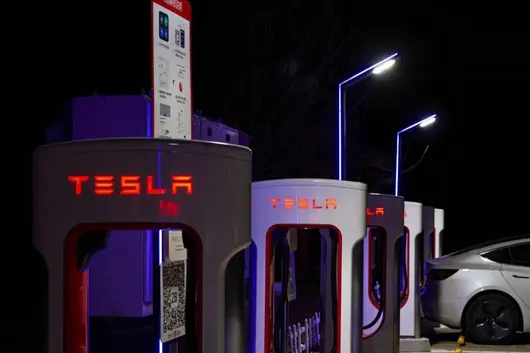
At the end of July, in the underground garage of a residential compound in Pudong, Shanghai, Old Zhou stared at the charging pile for a while. The green light turned on, he unplugged the gun head, got into the Model Y, and drove towards the Yanan Elevated Highway.
Evening rush hour, the elevated highway was gridlocked. He looked left and right, green license plates were everywhere ahead and behind. At least three out of five cars had green plates.
When changing cars a few years ago, Old Zhou calculated the cost: license plate free, electricity cheaper than oil, maintenance convenient.
Switched after calculating, grateful for choosing an EV, choosing Tesla.
Old Zhou is not an exception. A few years ago, people buying EVs had some flavor of trying new things, but now it's gone, because EVs are part of daily life.
When it becomes as daily as it gets, one must ask a question: After saturation, who will EVs be sold to next?
Data provides a side of the answer.
Passenger car retail sales were 8.701 million in the first half of the year, down 20% from last year. In June, conventional fuel car sales were only 591,000.
On the other hand, the proportion of New Energy Vehicles reached 62.8%. More than 62 out of 100 new cars had green plates.
The showrooms of traditional fuel cars are getting emptier. It goes without saying that joint venture brands are having the hardest time.
FAW Toyota sold 273,700 vehicles in the first half of the year, down nearly a third from last year, selling over 100,000 fewer cars. Previously relying on classic models like RAV4 and Corolla Cross to support sales, it no longer works.
In the 100,000 to 200,000 price range, domestic brands' plug-in hybrids and pure electric vehicles are densely packed. Large space, smart cockpits, and assisted driving are all prioritized. Relying solely on price wars is hard to withstand.

GAC Toyota's situation is much better, selling about 340,000 units in the first half of the year, exceeding by nearly 70,000. The difference is it has a volume-selling pure EV, the bZ3X, selling over 90,000 in the past 12 months, reaching the level of mainstream fuel cars. The bZ7 will also launch, likely selling well too.
This shows joint venture brands still have a chance. As long as they can create high-quality New Energy Vehicles, they can still compete with new forces.
Looking at luxury brands again. BMW sales in China were over 260,000 in the first half of the year, down 20% year-over-year; Mercedes-Benz 210,000, down nearly 30%; Audi nearly 220,000, down nearly 20%.

The three brands combined dropped by over 20%. Prices kept falling. Audi Q6 comprehensive discount 130,000, cars that landed at 500,000 back in the day can now be bought for 330,000 cash. BMW iX1 clearing inventory, full payment just over 180,000.
Currently, the market share of Chinese brand passenger cars exceeds 75%, joint venture brands combined are less than 1/4. In June, joint venture brand NEV penetration rate was only 11.9%, domestic brands were 81.8%.
Even the King of Joint Ventures, FAW-Volkswagen, has only 0.1% market share in NEV wholesale sales.
The foundation of fuel cars is shrinking, they can't catch EVs either. Joint venture brands occupy neither end.
Joint venture brands are falling. Who is going up? Let's look at several major cities.
Shanghai first half 148,700 units, first in the country, up 10% from last year.

Tesla Shanghai Factory is a major account, selling cars produced there domestically, also to Korea, Japan, Middle East, South America. Shanghai sells well due to free license plates plus Tesla's capacity, plus charging available everywhere, but other places can't learn this trick.
Beijing 144,600 units, hardly moved, reason not complex, just limited plates.
In 2026, Beijing gave nearly 120,000 family quotas, over 30,000 individual, applicants nearly 900,000. A friend queued for 5 years said he doesn't hope for plates now, hopes for an answer, when will it be his turn. Beijing's market structure is so, give how many plates, sell how many cars.
Chengdu 136,400 units, ranked third. No plate restriction, over 60% of people buy EVs, relying entirely on products to speak.
Shenzhen 122,000 units, down 16% from last year. BYD's base, NEV proportion passed 60% long ago, pure electric accounted for 70%; Guangzhou 130,500 units, Hangzhou 123,500 units, those who wanted to buy all bought.
After reviewing all, one question remains: How much space do these cities have left?
Tier 1 and New Tier 1 proportions have hit the ceiling. The remaining 40% of people, either no parking spot for charging, or worried about range, or afraid residual value collapses after a few years, or waiting for cars to be cheaper, these people won't spend money on cars for now.
Since domestic demand in Tier 1 cities hit the ceiling, growth must be found elsewhere. The policy direction is downwards.

In June, Ministry of Industry and Information Technology, Ministry of Commerce, etc. 5 departments started this year's New Energy Vehicle Rural Promotion, recommended 155 models, 31 more than last year. From 2020 to now, rural promotion models sold cumulative over 20 million units.
On the surface conditions are met. By end of May, national charging piles 22.497 million. For daily use, 5 yuan per 100km electricity, under 2,000 yuan per year car maintenance. This calculation works well in county/township.
Surface looks complete, but Rural Promotion is not moving city tactics down, logic is different.
Real trouble is not on piles, but on transformers.
Rural transformer capacity insufficient, a village originally 100 kVA, installing more charging piles easily trips breakers.
Trouble with repairs, township mechanics for NEVs few, broken ones towed to county or city.
So Rural Promotion isn't just selling cars, it's piles, grid, after-sales, finance together, a systematic project. Cannot think of selling EVs that can't be sold/wanted in cities to villages.
Not only sell, but usable. This is the key to how far this wave of Rural EV Promotion can go.
Domestic demand has hurdles everywhere, the other leg must stretch outwards.
First half exports 5.096 million units, up 65%. NEV exports 2.355 million units, more than doubled.
The path of Chinese car companies going global has passed three stages.

Earliest was complete vehicle export, cars built in China loaded on ships and shipped, small investment fast results, but easiest to get hit.
In 2024 EU imposed up to 35.3% countervailing duties, first half pure EV exports to Europe dropped directly 15%.
Tariffs added, everyone changed path, second stage is building factories overseas.

BYD Thailand factory 16 months to build and produce, annual capacity 150,000, tariff costs pressed down 20%. Hungary factory also producing by year-end. Leapmotor borrows Stellantis plant in Spain for assembly, Chery took over Nissan Barcelona old plant area. From complete vehicle export to capacity export, this is first switch.
Now some top enterprises reached third stage, ecosystem co-construction.
Nio set up R&D center in UAE, Great Wall in Thailand did battery and charging network integration. After Geely took over Proton, required suppliers to adopt Chinese BMS standards. Products out, factories out, standards also going out.
After finishing three stages, overseas market is changing.

Europe May saw a landmark node. BYD, SAIC, Geely, Chery, Leapmotor five Chinese car companies sold 138,400 units in 31 European countries, first time single month exceeded total of six Japanese brands.
On YouTube, a German netizen changed to BYD Dolphin, happily said: 30,000 Euro, everything one needs is there, much cheaper than Japanese brands.
Need to point out Leapmotor, first half exports nearly 100,000 units, exceeded last full year, ranked first in new forces.
Relying on complete vehicle export to push volume is easy, making money hard. Need to calculate, must local production. BYD Thailand, Brazil factories already produced.
This path of going global, finally must take root locally.
While venturing outwards, backyard also changing.
From January 1, 2026, NEV purchase tax from exempt changed to half levy, executed at 5%, max cut 15,000 per car. A car excluding tax 300,000, last year exempt 30,000, this year must pay 15,000. 10 years full exemption started rolling back.
Policy dividends narrowing, profit end issues more thorny.

First half vehicle manufacturing average profit margin only 1.5%, lowest in nearly 10 years. Converted, a 100,000 car, manufacturer earns less than 1,500, this is after price war fought over a year.
Fuel car inventory high, forced to drop prices significantly; NEVs for market share, also actively dropping prices. Two forces squeeze together, average drops approaching 15% and 30,000.
Price war fought to now, batch of car companies already lost. Policy retracted, profit thin, this is the industry's deepest concern.
CAAM Deputy Chief Engineer Xu Haidong said, Tier 1, 2 almost at top, countryside is future 10 years growth blue ocean.
Big judgment is like this, applied to individuals is another matter.

Old Zhou's Model Y ran 60,000 km, full charge compared to new car less about 40 km, after-sales said normal degradation.
Green plates on Yanan Elevated Highway still increasing, one by one, window still open, but year by year narrower.
Looking back, old-new replacement never a smooth process, but filled with swordlight and shadow, life and death struggle.
Car market more and more like fierce competition. Who survives, who wins all, everywhere. Who died, is backward capacity, capacity waiting to be cleared.
Market competition, just so plain and simple.......

在马来西亚的汽车市场,很多买家在选车的时候都会拿 Volkswagen Golf GTI 和 Mercedes-Benz E-Class PHEV 来做比较。今天我们从多个方面做一个详细的对比,帮你省下做功课的时间。


Volkswagen Golf GTI 在马来西亚的 OTR 售价是 RM 256,962 - 256,962,一共有 3 个版本,包括 2025 2.0T Sepang Edition(RM 262,990)、2025 2.0T Standard(RM 256,962)、DCT(RM 219,800) 等。
Mercedes-Benz E-Class PHEV 在马来西亚的 OTR 售价是 RM 427,888 - 427,888,一共有 2 个版本,包括 E 200 Avantgarde(RM 350,000)、E 300 AMG Line(RM 400,000) 等。
从价钱来看,Volkswagen Golf GTI 的起步价确实比 Mercedes-Benz E-Class PHEV 便宜了 RM 170,926。如果你预算有限,Volkswagen 的入门版已经可以满足日常需求。但也要注意,便宜的那几千块,可能在配备上会有取舍,具体要看你的需求。

Volkswagen Golf GTI 车身长 4400 mm,后备箱 400 L。
Mercedes-Benz E-Class PHEV 车身长 4400 mm,后备箱 400 L。
两款车的尺寸几乎一样,车内空间差别不大。这个级别的车,日常使用完全够用。

Volkswagen Golf GTI 采用 FWD 驱动方式。
Mercedes-Benz E-Class PHEV 采用 FWD 驱动方式。
两款车的驱动方式一样,都是 FWD,日常驾驶感受不会有太大区别。

Volkswagen Golf GTI 和 Mercedes-Benz E-Class PHEV 都是马来西亚市场的主流选择,适合家庭使用、日常通勤。如果你更看重品牌口碑和二手价,可以优先考虑口碑更好的那一款;如果你更在意性价比和配备,那就选配置更丰富的那款。最终还是建议两款都去试驾,亲身体验才是最重要的。

总的来说,Volkswagen Golf GTI 和 Mercedes-Benz E-Class PHEV 都是马来西亚市场很不错的车型。选择哪一辆,关键还是要看你的个人需求和预算。建议大家做好功课,多比较几间车行的报价,再去试驾做最终决定。买车是件大事,花点时间做功课绝对不会错。



Author: Zhong Sheng
Editor: Mark
Producer: Red Interstellar
Header Image: Autonomous Driving Image
Recently, WeRide announced a one-stage end-to-end assisted driving solution developed in cooperation with Bosch, which is conducting road testing and adaptation verification in countries such as Germany, France, and Japan. This can be said to be the first overseas launch of a domestic one-stage end-to-end system.
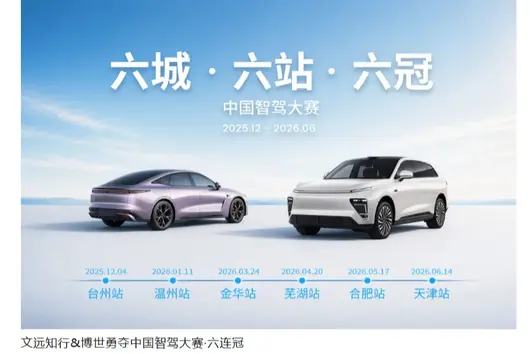
WeRide has been very dominant domestically with its one-stage end-to-end assisted driving solution, not only achieving "six consecutive championships" in the Autonomous Driving Competition, but also continuously winning multiple project bids with leading companies, cumulatively securing over 30 project nominations from GAC Group and Chery Group.
AION N60 is equipped with this one-stage end-to-end solution
It is reported that in this overseas road test by WeRide, it demonstrated outstanding performance in dealing with overseas scenarios such as German unlimited speed limit highways, French dense roundabouts, and Japanese right-hand drive left-hand traffic rules.
From the perspective of autonomous driving going global, this is not just an overseas verification, but China's autonomous driving global expansion will enter a new mode stage.
In the past, autonomous driving going global not only had fewer features, generally limited to Highway NOA, and required deploying significant manpower overseas for localization engineering. But this time WeRide is bringing the one-stage end-to-end solution overseas, not only pushing City NOA features overseas, but also intends to solve the issue of how to move from single-market adaptation to global adaptation.
Therefore, this is also a global exam for China's Physical AI capabilities.
Autonomous driving is a typical Physical AI scenario, requiring deep interaction with the physical world and handling complex multi-tasks.
And L4 autonomous driving is the most stringent, direct verification field for Physical AI capabilities. It is not simply identifying objects and then doing path planning, but requires understanding the world and predicting trends to make safe and reliable decisions.
This requires the ability to reconstruct the physical world, able to generate real scenes at the pixel level within seconds; learning the physical laws behind complex traffic; deducing the causal logic behind driving behavior; pre-playing spatiotemporal evolution, deducing multiple possibilities within the next few seconds in a continuously changing road environment.
As the company with the widest global business coverage in the autonomous driving field, WeRide transforms the massive data, technical systems, and engineering experience accumulated over years of L4 autonomous driving R&D and operations into a one-stage end-to-end solution for mass-produced L2++ models. This is also why the one-stage end-to-end solution from WeRide&Bosch can win the "six consecutive championships" in the Autonomous Driving Competition, essentially bringing the capabilities of the more difficult L4 autonomous driving down to L2++.
WeRide&Bosch win China Autonomous Driving Competition · Six Consecutive Championships
In addition, a major threshold for autonomous driving going global is data, overseas real road scenario data.
Physical AI models and internet large language models have fundamental differences. Every decision plan interacts with the real world, so the error tolerance is extremely low. Therefore, Physical AI models need cognitive data from the real world to help models learn the laws of the real world.
Overseas data is a challenge for companies that have always done domestic L2++ autonomous driving, but for WeRide which has already operated Robotaxis globally, it is an existing advantage.
WeRide's Robotaxi operations currently cover Guangzhou, Beijing, Singapore, Abu Dhabi, Dubai, Riyadh, Zurich, and other domestic and overseas core markets, conducting autonomous driving R&D, testing, and operations in over 40 cities in 12 countries globally. According to previous disclosures, WeRide has deployed over 3000 autonomous driving vehicles globally. The global massive fleet provides sufficient scenario depth and breadth for training the L2++ one-stage end-to-end AI large model.
Chery Exeed EX7 comes standard with this one-stage end-to-end solution
One can say WeRide is one of the few companies globally that has accumulated real-world cognitive data. This is also a barrier for autonomous driving going global. To provide rich nutrition for the evolution of the one-stage end-to-end AI large model, the countries/regions covered must be wide enough, and the accumulated road scenario data must be rich enough.
More importantly, massive global data provides new gameplay for autonomous driving going global.
Previously, a huge difficulty faced by China's autonomous driving going global was the scenario gap.
Overseas road traffic scenarios differ significantly from domestic ones, and differences between different countries/regions are also very large. For example, German highway speed limit rules, French dense roundabouts, and many countries/regions use right-hand drive vehicles.
In the past, the differentiation of these overseas road scenarios required investing significant manpower in "localization" adaptation and deployment, doing a large amount of technical engineering hard labor and tiring work. This led to high difficulty and high cost for China's autonomous driving going global, and the speed of laying out overseas markets was very slow, because each country/region needed "localization" technical engineering to be done over again.
Chery Exeed ES also equipped with this one-stage end-to-end solution
Therefore, for Chinese autonomous driving companies, the problem at hand is: Can L2++ autonomous driving going global break through the scenario gap with lower cost and more efficient methods?
WeRide's answer is: Yes, and must do so.
By training the one-stage end-to-end AI large model through massive global real operation data, modeling using the WeRide GENESIS world model that conforms to the objective laws of the physical world, further generating scenarios, training algorithms, verifying safety. This is a new gameplay for China's autonomous driving going global, and also the underlying logic of AI. For humans, road scenarios and rules differ by country, but for AI, it belongs to the same world.
So autonomous driving going global ultimately comes down to one thing: Is AI capability strong enough? And WeRide is verifying this. Does AI learn Chinese road experience, or physical world laws?
Autonomous driving going global has welcomed the best timing. The global automotive market is looking up to the Chinese market in autonomous driving.
Firstly, the scale of Chinese car makers going global continues to surge, with overseas sales accounting for nearly one-third. Autonomous driving is becoming a key competitiveness for overseas models, and Chinese car makers are also preparing to upgrade to City NOA advanced autonomous driving features.
Secondly, not only will Chinese car makers' overseas models carry City NOA advanced autonomous driving features, but overseas car makers in their own home markets are also starting to layout City NOA. For example, Porsche and Audi chose to cooperate with Mobileye respectively, using Mobileye's solution, covering point-to-point assisted driving for highways and urban areas.
One-stage end-to-end solution test vehicle in Germany
This is different from the situation in the past few years. Previously overseas car makers were more conservative in Europe and the US markets, autonomous driving features were generally limited to Highway NOA, but now they also need to align with the Chinese market.
Therefore, currently is the best timing for China's autonomous driving going global. Firstly, the demand in overseas markets is being released. Secondly, autonomous driving suppliers in Europe and the US markets, such as Mobileye, International Tier 1, are behind domestic in autonomous driving solution technology and mass production efficiency.
Large market scale, rigid customer demand, weak competitors, this is a profitable track with a long slope and thick snow.
However, this time WeRide's overseas layout is not simply copying the global expansion model of International Tier 1s. In the past, International Tier 1s relied on a model of stacking manpower, stacking adaptation, stacking rule algorithms, while WeRide relies on AI capabilities, data-driven, using AI models as the leverage. Therefore, this is AI capability going global.
What WeRide represents is not just a globalization attempt of an autonomous driving enterprise, but also an important mark that China's Physical AI capabilities are starting to accept systematic verification from the global road system.
-END-

喺馬來西亞嘅 SUV 市場,好多買家喺揀車嘅時候都喺拿 Perodua Ativa 同 Proton X70 嚟做比較。呢兩款車喺價位同定位上都幾接近,今日我哋就從多個方面做一個詳細嘅對比,幫你節省咗做功課嘅時間。
Perodua Ativa 喺馬來西亞嘅 OTR 售價係 RM 62,500 - 73,400,合共 3 個版本,包括 1.0L Turbo X(RM 62,500)、1.0L Turbo H(RM 67,300)、1.0L Turbo AV(RM 73,400) 等。
Proton X70 喺馬來西亞嘅 OTR 售價係 RM 106,800 - 122,300,合共 3 個版本,包括 1.5L Standard 2WD(RM 106,800)、1.5L Executive 2WD(RM 115,800)、1.5L Premium 2WD(RM 122,300) 等。
由價錢睇,Perodua Ativa 嘅起步價確實比 Proton X70 平咗 RM 44,300。如果你預算有限,Perodua 嘅入門版已經可以滿足日常需求。但都要注意,平嗰幾千蚊,可能喺配備上會有取舍,具體就要睇你嘅需求。

Perodua Ativa 嘅安全評級係 5★ (ASEAN NCAP),主動安全系統包括 ASA 3.0 + ACC + LDA + LKA + BSM + RCTA。
Proton X70 嘅安全評級係 5★ (ASEAN NCAP),主動安全系統包括 ADAS (ACC, AEB, LKA, LDA, BSM, RCTA)。
兩款車嘅安全評級一樣,喺呢個級別入面安全配備都算好齊全。而家嘅新車安全性都幾唔錯,唔使太擔心這一點。
Perodua Ativa 車身長 4400 mm,尾箱 400 L。
Proton X70 車身長 4400 mm,尾箱 400 L。
兩款車嘅尺寸幾乎一樣,車內空間差別唔大。呢個級別嘅車,日常使用完全夠用。

Perodua Ativa 同 Proton X70 都係馬來西亞市場嘅主流選擇,適合家庭使用、日常通勤。如果你更重視品牌同口碑同二手價,可以優先考慮口碑更好嗰一款;如果你更在意 CP 值同配備,就揀配置更豐富嗰款。最終都係建議兩款都去試車,親身試駕先係最重要。
總體嚟講,Perodua Ativa 同 Proton X70 都係馬來西亞市場幾唔錯嘅車型。揀邊架車,關鍵係要睇你嘅個人需求同預算。建議大家做好功課,多比較幾間車行嘅報價,再去試車做最終決定。買車係件大事,花少少時間做功課絕對唔會錯。


在马来西亚的汽车市场,很多买家在选车的时候都会拿 Mercedes-Benz GLS 和 Land Rover Defender 来做比较。今天我们从多个方面做一个详细的对比,帮你省下做功课的时间。


Mercedes-Benz GLS 在马来西亚的 OTR 售价是 RM 1,020,888 - 1,020,888,一共有 1 个版本,包括 Standard(RM 1,020,888) 等。
Land Rover Defender 在马来西亚的 OTR 售价是 RM 688,000 - 688,000,一共有 1 个版本,包括 Standard(RM 688,000) 等。
从价钱来看,Land Rover Defender 的起步价比 Mercedes-Benz GLS 便宜了 RM 332,888。老实讲,在这个价位段,几千块的差距其实不算大,关键还是看整体的性价比和长期使用成本。

Mercedes-Benz GLS 车身长 4400 mm,后备箱 400 L。
Land Rover Defender 车身长 4400 mm,后备箱 400 L。
两款车的尺寸几乎一样,车内空间差别不大。这个级别的车,日常使用完全够用。

Mercedes-Benz GLS 采用 FWD 驱动方式。
Land Rover Defender 采用 4WD 驱动方式。
Mercedes-Benz GLS 的 FWD 和 Land Rover Defender 的 4WD 在操控上会有不同感受,建议试驾对比。

Mercedes-Benz GLS 和 Land Rover Defender 都是马来西亚市场的主流选择,适合家庭使用、日常通勤。如果你更看重品牌口碑和二手价,可以优先考虑口碑更好的那一款;如果你更在意性价比和配备,那就选配置更丰富的那款。最终还是建议两款都去试驾,亲身体验才是最重要的。
总的来说,Mercedes-Benz GLS 和 Land Rover Defender 都是马来西亚市场很不错的车型。选择哪一辆,关键还是要看你的个人需求和预算。建议大家做好功课,多比较几间车行的报价,再去试驾做最终决定。买车是件大事,花点时间做功课绝对不会错。


在马来西亚的轿车市场,很多买家在选车的时候都会拿 Mazda Mazda 6 和 BMW 5 Series 来做比较。这两款车在价位和定位上都蛮接近的,今天我们就从多个方面做一个详细的对比,帮你省下做功课的时间。
Mazda Mazda 6 在马来西亚的 OTR 售价是 RM 240,848 - 240,848,一共有 1 个版本,包括 Standard(RM 240,848) 等。
BMW 5 Series 在马来西亚的 OTR 售价是 RM 340,800 - 407,800,一共有 2 个版本,包括 520i Sport(RM 320,000)、530e M Sport(RM 380,000) 等。
从价钱来看,Mazda Mazda 6 的起步价确实比 BMW 5 Series 便宜了 RM 99,952。如果你预算有限,Mazda 的入门版已经可以满足日常需求。但也要注意,便宜的那几千块,可能在配备上会有取舍,具体要看你的需求。

Mazda Mazda 6 搭载 2.0L 4-cyl,马力 170 hp。官方油耗 8.0 L/100km。
BMW 5 Series 搭载 2.0L Turbo,马力 220 hp。官方油耗 9.5 L/100km。
动力方面,BMW 5 Series 的 2.0L Turbo 比 Mazda Mazda 6 的 2.0L 4-cyl 多了 50 匹马力。不过日常在市区开,两款车的动力都够用,不会觉得不够力。

Mazda Mazda 6 车身长 4400 mm,后备箱 400 L。
BMW 5 Series 车身长 4400 mm,后备箱 400 L。
两款车的尺寸几乎一样,车内空间差别不大。这个级别的车,日常使用完全够用。

Mazda Mazda 6 采用 FWD 驱动方式。
BMW 5 Series 采用 FWD 驱动方式。
两款车的驱动方式一样,都是 FWD,日常驾驶感受不会有太大区别。
Mazda Mazda 6 和 BMW 5 Series 都是马来西亚市场的主流选择,适合家庭使用、日常通勤。如果你更看重品牌口碑和二手价,可以优先考虑口碑更好的那一款;如果你更在意性价比和配备,那就选配置更丰富的那款。最终还是建议两款都去试驾,亲身体验才是最重要的。
总的来说,Mazda Mazda 6 和 BMW 5 Series 都是马来西亚市场很不错的车型。选择哪一辆,关键还是要看你的个人需求和预算。建议大家做好功课,多比较几间车行的报价,再去试驾做最终决定。买车是件大事,花点时间做功课绝对不会错。

© 2024 Bitauto.com. All Rights Reserved.
Bitauto (www.yiche.com and www.bitauto.com) is one of the most visited automotive websites in China. We provide detailed info on Chinese car brands available in your area. Please note that the information provided on this website is based on publicly available data and is for reference only. It may not be fully updated or accurate at all times.

Help us improve our website


