

HomeMitsubishi Xpander

Search History
Popular Searches
Dealer Login / Sign Up

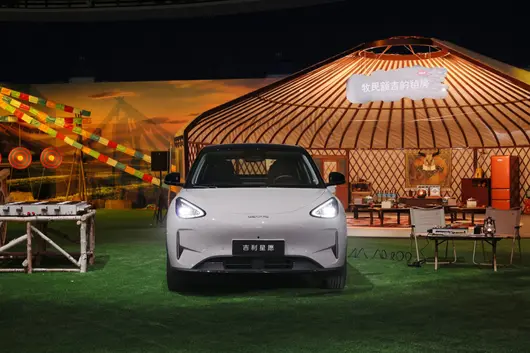
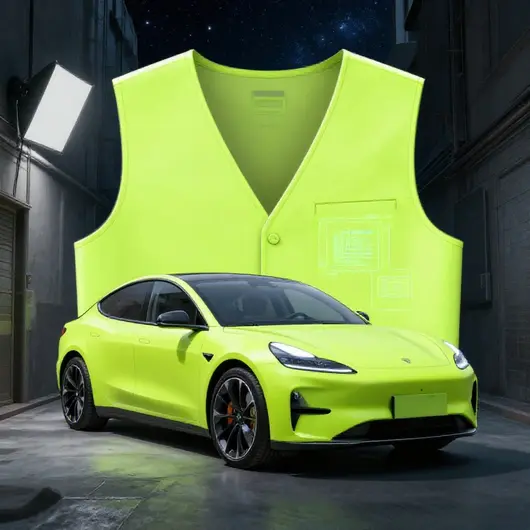
Recently, the all-new Geely Star Wish, a pure electric compact car under the Geely Galaxy brand, has officially launched. The new car offers four models: 410km Yearning Edition, 410km Riding Wind Edition, 480km Exploration Edition, and 480km Exploration+ Edition. The launch limited-time benefit price range is 61,800 yuan to 91,800 yuan. The all-new Geely Star Wish undergoes upgrades in driving control, three-electric systems, smart cockpit, assisted driving, and safety, with over 100 product capability improvements involved. Among them, over 25 features are unique configurations in the same class.

The all-new Geely Star Wish is built on Geely's first global native architecture. All trims feature rear independent suspension as standard, jointly tuned by China and Germany. It is equipped with G-TCS 2.0 all-weather anti-slip system, a new brushless steering system (response speed doubled), and G-CST 2.0 all-scene comfort braking system. Official data shows the vehicle passed the Elk test at 80.7km/h and successfully completed the Fishhook test at 130km/h.

All trims are standard with CATL cells, liquid cooling temperature control, and an 11-in-1 highly integrated electric drive. Cell energy density is 190Wh/kg, with a maximum range of 480km. Combined with active grille and low-drag wheels, aerodynamic drag is reduced by 15 counts, and actual range is increased by another 10km. Fast charging from 30% to 80% takes 19 minutes, equipped with Star Rui AI Cloud Power 2.0 for full-link energy management.

In terms of the smart cockpit, it is equipped with Galaxy Flyme Auto 2 system, based on the 7nm Dragon Eagle No. 1 chip and 16G+128G storage. It supports CarPlay phone connectivity. The voice assistant Hi EVA features fuzzy command understanding and context memory. The infotainment system includes Amap 850 version map and provides Invisibility Mode, Car Wash Mode, and One-key Car Find functions.

In terms of assisted driving, it is equipped with the Qianli Haohan H3 solution. Officially, it has accumulated over 1.38 billion kilometers of safe driving. Highway and elevated road NOA supports voice lane change, evasion, and auto on/off ramps. Full-scene MPI takeover mileage exceeds 200 kilometers. Parking functions include APA one-key parking, remote parking, and HPA memory parking (up to 2km route memory). Additionally, it is equipped with DMS fatigue monitoring and Sentry Mode.

The all-new Geely Star Wish adopts a Five Longitudinal, Eight Transverse Star Armor Cage Body, with roof crush strength reaching 3.4 times the vehicle weight. The battery system maintains 90.72% capacity after 1000 cycles; the validation standard is 2 times the National Standard. Officially announced on May 12, it passed front and side continuous collision tests witnessed by CCTV. The high-voltage system powered off timely, and the battery pack did not smoke or catch fire. Regarding active safety, it is equipped with AEB active braking and AES emergency steering, passing 120km/h static vehicle stop and 130km/h "Disappearing Lead Car" evasion tests.

Since launching in October 2024, Geely Star Wish cumulative deliveries have surpassed 700,000 units, becoming the fastest model in the industry to achieve this goal, and winning the 2025 China Auto Market Sales Champion. In Q1 2026, this model entered the top 3 global new energy sales for the first time, and is the only Chinese brand to achieve this ranking. Currently, Geely Star Wish has launched in over 30 countries and regions globally. In Brazil, sales exceeded 2,300 units within two months of launch. At the Thailand Auto Show, weekly orders reached 3,300 units, and it received international awards such as "Brazil Best Compact EV of the Year".

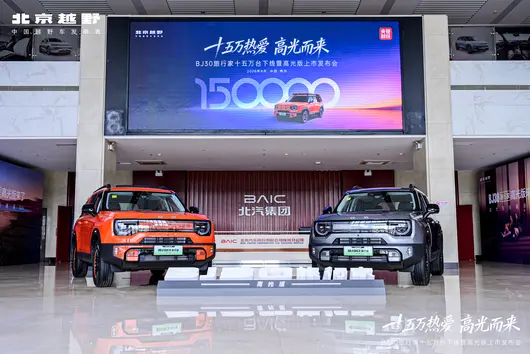
12 Jun, Pabrik BAIC Zhuzhou ada saat penting—unit ke-150,000 BJ30 Traveler rasmi turun. Di pasaran SUV yang sangat kompetitif dan rumit ini, kereta kotak yang baru dilancarkan 2 tahun itu menjadi yang paling pantas pecahkan 150,000 dalam kalangan off-road, dan bukan sebab keberuntungan, tapi kekuatan. Berbeza dengan rakan sekerja yang buat kereta berdasarkan PPT, BJ30 walaupun tiada banyak slogan, tapi beri orang awam pilihan yang mahu bermain tapi takut mahal, mahu hidup tapi tak mahu terlalu membosankan.
 Mula lihat masalah harga. Apabila kebanyakan kereta kotak dianggotai dengan pemalas minyak, BJ30 Traveler terus pecahkan stereotaip. Dari data besar 5 negara seperti Afrika Selatan, Poland, Indonesia, ia boleh tekan penggunaan minyak per 100km dalam 5 liter, yang layak buat jempol naik. Begitu juga, ujian langsung di dalam negara sahkan kualiti baik ia makan sedikit tapi lari jauh. Cara ini, walaupun kos per km masih tinggi dari kereta elektrik, tapi minyak 92 dianggar turun jadi 40 sen, yang jauh dari kebanyakan kereta kotak bahan api. Dalam sokongan HEV Hibrid, kenderaan boleh lepas sepenuhnya belenggu stesen pengecas, pemilik pertama juga bagi jaminan seumur hidup, tiada kegelisahan boleh lebih baik menikmati hidup.
 Seterusnya perlu lihat prestasi ruang. Untuk kebanyakan golongan pekerja gaji, BJ30 Traveler panjang badan 4730mm, jarak gandar 2820mm, kadar ruang 66%, ini dalam kelas 100,000 kereta kotak benar-benar "unit besar". Ruang belakang biasa ada 420L, lipat kerusi belakang terus naik ke 1496L, peralatan kem, kereta sorong bayi, malah bantu kawan pindah rumah barang kecil boleh semua masukkan sekali. Keseluruhan kereta 38 tempat simpan, malah termos 1L besar, payung lipat ada tempat khas. Paling luar biasa kerusi belakang rata sepenuhnya, serta-merta jadi katil besar 1.92 meter, letak tilam boleh tidur. Malam melalui tingkap panoramik 1.05 m² itu mengira bintang, ini berbanding sesak dalam bilik piawai hotel sempit lebih romantik, kan?
 Mengenai "Off-road", ia tidak main keras off-road macam "Milion" yang kosong, tapi tepat kasi kita orang awam boleh sentuh off-road ringan. Sudut pendekatan 25°, sudut keberangkatan 30°, jarak tanah 215mm, ketinggian ini, pulang kampung jalan rosak, pergi luar bukit tanah, lebih hati tenang dari SUV bandar biasa. Arkeitek HEV 3 enjin 4 penggerak 6 mod sokong, penggerak 4 elektrik tindak balas sampai 0.03 saat, lumpur, pasir, paksi silang jalan rosak ini, had licin elektronik sekali campur tangan terus senang terlepas. Ada 7 mod tanah, anggap ia "mudah" off-road, tolok butang sekali, parameter automatik baik, pemula juga boleh percaya buka. Badan guna 63.4% baja keras, juga lalui 4 juta km ujian ekstrem, selamat boleh percaya ini sudah dikukuh kukuh.
 Kali ini baru naik Edisi Sorotan, lebih letak dua perkataan "dengar saranan" dalam dahi. Tambah oren lava, biru kubah cat kereta menarik, tukar pakej modifikasi gaya elektrik dan rim cincin bintang, dalaman tambah hiasan oren dan lampu suasana 64 warna, penampilan terus maksimum. Motor enjin belakang kuasa dari 55kW naik ke 70kW, juga tukar Turbo VGT model sama Porsche dan jangka hayat AGM bateri 3 kali ganda, respons kuasa lebih tepat. Kerusi hadapan pengudaraan pemanasan, stereng pemanasan, 10 pembesar suara HiFi juga diatur, konfigurasi ini, perlu apa lagi?
 Yang paling orang jerit "sangat berbaloi" masih harga. Edisi standard bahan api selepas tukar tambah cuma 69,900, Edisi Sorotan Hibrid pun cuma 109,900, berbanding kelas sama ada 4 penggerak kereta kotak murah beberapa puluh ribu. Secara kasarnya, BJ30 Traveler boleh jualan 150,000 unit, sebab ia boleh off-road, boleh muat, jimat, murah semua buat dalam realiti. Jika anda bajet 100,000 lebih, nak beli kereta biasanya jalan hari, hujung minggu boleh bawa keluarga pergi main, ia benar-benar pilihan beli tanpa ragu, 150,000 pemilik guna wang tunai sebenar undi, pasti tidak salah.

阿維塔科技在品牌成立五週年的重要里程碑上,正迎來發展勢能的全面迸發。隨著產品矩陣不斷完善、海外佈局加速落地,全球化進程邁入新階段。一系列紮實的標誌着阿維塔已進入品牌力、產品力與市場競爭力協同提升的高質量發展新週期,為市場與用戶注入強勁信心。

成立五年以來,阿維塔已陸續推出 11、12、06/06T、07 等多款車型,覆蓋 20 萬至 70 萬元價格區間,累計銷量突破 25 萬輛,在高端智能電動車市場站穩腳跟。與此同時,產品矩陣仍在加速擴容——今年下半年,阿維塔 07L 及全新大六座旗艦 SUV 將陸續推出,後者將行業首搭寧德時代凝聚態電池,進一步拉升產品天花板。按照規劃,到 2030 年阿維塔將完成 17 款產品佈局,全面覆蓋 SUV、轎車、MPV 等細分市場。與產品線同步提速的,是全球化佈局。自 2024 年出海以來,阿維塔已進入全球 40 多個國家和地區,穩居泰國高端電動車銷量榜首,並斬獲阿聯酋高端電動車 10% 市場份額,全球化佈局初具規模。今年,阿維塔將正式進入歐洲市場,進一步加速全球高端市場滲透,計劃至 2030 年覆蓋超 110 個國家和地區,海外銷量佔比達到 40%。

阿維塔快速成長的背後,是長安汽車戰略賦能的持續加碼。作為長安高端化戰略的核心載體,阿維塔承載著向上突破、打造全球化高端品牌的使命。今年 4 月,長安汽車宣布阿維塔與深藍汽車開啟戰略協同,遵循「前端獨立、中後端協同、品牌獨立運營」原則,進一步抬升阿維塔的戰略權重。作為品牌群的「旗艦與標杆」,阿維塔在品牌經營、渠道運營、用戶服務三大體系保持不變的前提下,高端定位愈發穩固,展現出愈發強勁的發展勢能。協同落地後,集團全域資源將持續向阿維塔傾斜,效率與體系能力進一步放大,為品牌長期發展提供堅實後盾。

值得注意的是,阿維塔背靠長安、華為、寧德時代「三巨頭」的獨特優勢仍在深化,構建起難以複製的技術與資源壁壘。基於長安百年製造底蘊,阿維塔自研崑崙智慧增程、太行智控底盤兩大核心技術,迭代推出的太行智控底盤 2.0 以行業領先的分佈式電驅技術,實現安全與操控雙重進階。作為華為與寧德時代的「技術股東」,阿維塔不僅享有最新技術的優先搭載權,更攜手夥伴從源頭定義每一項新技術。同時,阿維塔是華為引望最大外部股東,雙方以資本為紐帶形成利益共同體,持續共享發展紅利;寧德時代作為阿維塔第二大股東,始終將神行、驍遙、凝聚態等前沿電池技術優先搭載於阿維塔車型,確保產品力穩居行業前列。

阿維塔憑藉更清晰的戰略佈局、加速落地的核心技術以及堅定的全球化步伐,持續印證其長期主義的發展路徑。作為長安汽車打造的核心戰略資產,阿維塔將繼續堅持「原創、智能、新豪華」的可持續增長道路,不斷夯實核心競爭力,為市場釋放長期價值。

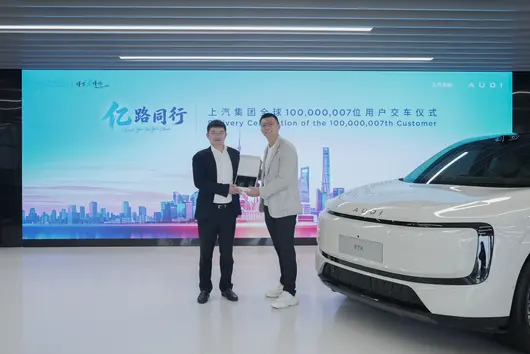
May 28, 2026, Shanghai. With an IM LS9 Hyper delivered to a user, SAIC Group's cumulative production and sales officially exceeded 100 million units, marking a major milestone in the history of China's automotive industry.

Meanwhile, the 100,000,007th unit of SAIC Group rolled off the line at the SAIC Audi AUDI Intelligent Manufacturing Base. Tao Hailong, Party Secretary and General Manager of SAIC Volkswagen Automobile Co., Ltd., delivered the Audi E7X to user Shen Jimin, turning a new page in the history of China's automotive industry from then on.
On that day, four delivery events distributed domestically and abroad silently outlined the growth trajectory of this state-owned enterprise giant, from the industrial foundation of SAIC Volkswagen, to Buick's local affection, to the independent breakthrough of Roewe and MG, and to Wuling's globalization moves in the down-market.

SAIC Volkswagen: The Weight of the Foundation
In the noise of celebration, the silent foundation is often easily forgotten. SAIC Volkswagen is not only an important sales pillar for SAIC Group but also the "Whampoa Military Academy" of China's automotive industry modernization.
Looking back to 1984, the joint venture contract signed at the Great Hall of the People opened not just a joint venture company, but a complete chain from CKD knock-down assembly to the establishment of a localized system, from the introduction of quality standards to the cultivation of a supply chain ecosystem. It is an industry-recognized fact that without SAIC Volkswagen's system capability honing a sword for over thirty years, there would be no later accumulation and breakthrough for SAIC's independent sector.
This time delivering the Audi E7X as the 100,000,007th vehicle symbolizes that this "foundation" is undergoing a profound reconstruction. Shifting from traditional German mechanical quality to all-aluminum chassis, 900V high-voltage fast charging, and intelligent driving. This turnaround is not flashy, yet solid enough—it proves that traditional joint venture giants still possess strong engineering implementation capabilities in the wave of electrification.

Buick: The "Emotional Ledger" of Joint Ventures
Different from SAIC Volkswagen's industrial rationality, the Buick brand attempted to answer a softer question in this celebration: when joint venture brands have walked for nearly thirty years in China, besides sales, what remains?
SAIC-GM Vice General Manager Xue Haitao delivered the 100,000,100th complete vehicle—the Buick Zhijing E7—to user Liu Jia. This ordinary person, who has been giving free haircuts to left-behind children in the mountains for over a decade, attracted attention from netizens when their old car broke down on a mountain road. Buick's intervention transformed this social news into a commercial delivery about "trust".
This is not a simple public welfare event. As the inaugural work of Buick's high-end new energy sub-brand, the Zhijing E7 focuses on "The Perfect Score Cockpit for Children", returning the product origin to family and children scenarios. The report card showing delivery breakthrough of 10,000 units in the first month since launch indicates: joint venture brands have not lost their halo, but must learn to redefine products using "real needs of Chinese families".

Roewe and MG: Two Paths of Independent Breakthrough
In SAIC's 100 million unit map, the rise of the independent sector is a highly dramatic chapter. Roewe and MG represent two different breakthrough logics.
Roewe chose the "upward" path. From Roewe 750 opening the door to the mid-to-high-end market in early years, to RX5 defining "Internet Cars", to the M7 Dark Horse Edition breaking the stereotype of family cars today, Roewe is completing the leap from "manufacturing" to "quality manufacturing". At the vehicle handover ceremony, an old Roewe 750 owner passed the keys to his son-in-law. This trust spanning twenty years is more convincing than any parameter comparison.
 MG takes the "broader" route. As a British brand with a hundred-year history, MG achieved identity reconstruction in SAIC's hands. Ranking first in European sales of Chinese car brands for 11 consecutive years, cumulative sales in the UK and Europe market exceeded one million—this marks that China's automotive export has progressed from "product trade" to "brand output". That couple of international students who met MG in the UK and still chose MG4 after returning home is exactly a footnote to this globalization identity.

Wuling: The Silent Base and Secret Export
Outside all spotlights, Wuling is a very large and silent cornerstone in SAIC's 100 million units. Hongguang, Baojun 730, Hongguang MINIEV... these models constitute the real capillaries of China's county economy.
"Wuling builds whatever the people need." Behind this slightly simple slogan lies the precise capture of supply chain cost control and user pain points. More strategically significant is its delivery ceremony in Jakarta, Indonesia. Unlike the brand output of Roewe and MG, Wuling adopted "moving the chain overseas"—packaging and replicating the manufacturing chain, supply chain, and sales chain to the ASEAN market.
Relying on the Indonesia pivot, radiating to Malaysia, Thailand, and even the entire ASEAN, Wuling is solving the deep-seated problem of "going global" for China's automotive industry: how to make Chinese manufacturing standards take root in a foreign land.

Zhang Guan Commentary: The Exam Paper After 100 Million Units
Standing on the threshold of 100 million units and looking back, SAIC's scorecard is a microcosm of China's automotive industry catching up and running side by side.
However, 100 million units is both a milestone and a brand new exam paper. When incremental dividends fade, when competition shifts from "capacity war" to "system efficiency and brand thickness", the challenges faced by SAIC are more severe: How to maintain strategic resolve within a multi-brand matrix? How to progress from "selling cars" to "operating brands" in the overseas market?


© 2024 Bitauto.com. All Rights Reserved.
Bitauto (www.yiche.com and www.bitauto.com) is one of the most visited automotive websites in China. We provide detailed info on Chinese car brands available in your area. Please note that the information provided on this website is based on publicly available data and is for reference only. It may not be fully updated or accurate at all times.

Help us improve our website


