

HomeNIO ET5

Search History
Popular Searches
Dealer Login / Sign Up

On October 10, the Ministry of Industry and Information Technology, Ministry of Public Security, Ministry of Ecology and Environment, and State Administration for Market Regulation jointly issued the "Notice on Further Strengthening the Management of Innovative Design, R&D, and Testing Verification of Automobile Products (Draft for Comments)".
The next day, People's Daily Client published an opinion piece titled "Four Departments Join Hands, Say No to 'Quick-Made Cars'!", clearly pointing out the direction of the document.
Almost at the same time, the Maextro V800 brake pedal bracket breakage incident continued to ferment in the public opinion field, and the authoritative investigation conclusion has not yet been released. However, the discussion has already settled on a basic consensus: Brake system related components should never fail during normal vehicle operation. Whether the vehicle involved has defects still depends on the answer from an authoritative investigation.
This brake from domestic regulation is easily read as only concerning domestic consumer rights. However, looking at the node where Chinese car exports are moving towards the tens of millions of units scale, it has another meaning: Chinese cars cannot carry the "Quick-Made" baggage to knock on the door of the global market. We hope overseas users finally remember "Value for Money", not just "Cheap".

30,000 km plus "Two Winters and One Summer", establishing the universal trust threshold of the global market
The benchmark of this draft for comments is quite specific. In R&D testing verification, it proposes requiring new declared products to complete reliability and durability, structural reliability, software function reliability, and environmental adaptability tests. Among them, the reliability verification test mileage shall not be less than 30,000 km, the environmental adaptability verification period shall not be less than 1 year, and must include "Two Winters and One Summer".
In innovative design, it draws multiple red lines: it proposes prohibiting fully hidden door handles, forbids using folding screens or flexible screens, "zero-gravity" seats, rotating seats, or folding seats into beds shall not be used during driving. Emergency escape, emergency braking, and other manipulation parts involving safety must retain physical buttons and conspicuous markings. The document proposes adding 51 main vehicle product technical parameters.
The timeline is also clear: According to the draft for comments, starting January 1, 2027, new products that fail to complete testing verification as required or provide false materials will not be announced, meaning they cannot enter the production access list or go on sale for consumption; products that have obtained the announcement must submit materials for reporting before July 1, 2027. If overdue and safety hazards exist, production will be stopped and recalls will be implemented.
The change in regulatory logic is more noteworthy than the provisions themselves: shifting from the past "meeting national standards is enough" to "sufficient R&D verification before access". Regulation no longer only looks at whether submitted samples pass the line, but asks whether enterprises have actually finished their homework before mass production.
These requirements are not "high standards" unique to the Chinese market; rather, they are the most basic trust language of a mature automotive market for a vehicle. High temperature, high cold, high altitude calibration, and complete road tests are the global development rhythm already passed in the fuel vehicle era. Professor Zhu Xichan of the School of Automotive and Energy at Tongji University gave reference in an interview with People's Daily Client: Whole vehicle road testing for new models usually requires Two Winters and Two Summers; even for facelifts, one Winter and one Summer, and 30,000 km of real road testing are indispensable. The draft for comments sets the access lower limit at "Two Winters and One Summer", and the space left between this and the higher rhythm followed by enterprises for sufficient verification is precisely the space for enterprises to add layers themselves.
From this perspective, this document is not adding burdens to enterprises, but allowing them to complete a qualification match for the global arena in the domestic market first. Cui Dongshu, head of the China Association of Automobile Distributors Passenger Car Division, compares the reliability mileage standard to a "coming of age ceremony" for new energy vehicles, believing the industry is shifting from "cultivation priority" to "norm priority". The meaning of adulthood is that one cannot use children's standards to demand oneself.
"Quick-Made" can rely on iteration repairs domestically, overseas margin for error narrows significantly
The "Quick-Made Car" controversy appeared concentrated this year, with fertile soil. According to sorting by 21st Century Business Herald, in the fuel vehicle era, the development cycle of a new model was generally more than 36 months, with some as long as 40 to 60 months; after entering the new energy era, the industry average cycle was compressed to 28 to 39 months first, further compressed to about 24 months in 2026, and some new power brands even approached 12 to 18 months. Data from BitAuto shows that in the first half of 2026, there were as many as 576 new car models launched domestically. Great Wall Motor founder Wei Jianjun therefore sighed, on average there are two to three press conferences every day.
The tactics of "fast iteration, price for volume, and post-processing with OTA (remote online upgrade)" can operate domestically because domestic user tolerance for new brands is higher, replacement cycles are short, and lower purchase costs partially offset residual value (i.e., used car value retention) anxiety. However, after going overseas, this margin for error mechanism will narrow significantly.
The scrutiny method of the overseas market is completely different: When a car has centralized quality problems, what is remembered is often not a specific brand, but the "Chinese Cars" overall label. With the rapid increase of Chinese cars in overseas holdings, some markets have already begun discussions on Chinese car quality, after-sales, and used car residual value. According to media reports, at the end of last year, a Chinese brand significantly cut prices in the Thai market, with some models seeing price reductions of up to 38%; early this year, similar price competition appeared in the UK. The German business head of Arval, a leasing enterprise under BNP Paribas France, directly told Huxiu in an interview that the residual value gap between Chinese new energy vehicles and European competitive products is essentially a trust gap. Leasing fleet vehicles have high usage intensity, flowing into the used car market in batches after two or three years. Once residual value is suppressed, it hurts all Chinese brands entering this market later.
This is the risk after scaling up. Data from the European Automobile Manufacturers Association (ACEA) shows that in the first half of 2026, five Chinese car enterprises—BYD, SAIC, Chery, Geely, and Leapmotor—sold a total of about 643,000 units in Europe, with market share rising from 4.5% to 8.9%, year-on sales increasing by 111.5%; in May this year, the single-month sales of Chinese brands in 31 European countries exceeded Japanese brands for the first time. The larger the share, the higher the cost of the "Quick-Made" label. Former Deputy Secretary General of the China Association of Automobile Manufacturers, Chen Shihua, reminded at an industry forum before that Chinese cars "really walked too fast", and "can stabilize a bit".
Product competitiveness lesson has been completed, owe the lesson proven by time
It needs to be admitted that today's product competitiveness of Chinese cars is no longer what it used to be. Models such as NIO ET5 have obtained five-star ratings from Euro NCAP (European New Car Assessment Programme). Models of brands such as BYD, Chery, and MG have also successively appeared on the five-star list in recent years.
Besides product competitiveness, the real trend of the price line is more complex than a single number, requiring the curve to be viewed completely. According to CAAM and CPCA data, the average export price of Chinese cars rose steadily from about $16,000 USD in 2021 to about $19,000 USD in 2023; among them, the average export price of new energy vehicles reached above $20,000 around 2022. KPMG China's report calculated at the time that the average price of a single new energy vehicle exported to Europe in 2022 was about $30,000. However, since 2024, this curve has begun to decline: the overall export average price in 2024 was about $18,000 USD, and further dropped to about $16,000 USD in 2025. CPCA analysis indicates the decline is mainly related to the decrease in Tesla export proportion, export market structure changes, and the increase in the proportion of small pure electric models.
At the same time as the total volume average price fluctuates, the value band of top brands is still rising. China Youth Daily reported that BYD overseas sales in 2025 broke through 1 million vehicles for the first time, reaching 1.05 million vehicles, with an average overseas selling price of about 180,000 RMB per vehicle, and overseas business gross profit margin close to 28%. More and more overseas reviews also admit that the configuration and technology provided by Chinese cars in the same price range are no longer inferior.
But trust is a lagging indicator. Safety ratings can be obtained with one test, but brand perception takes decades. Japanese and Korean car manufacturers dug deeply in Europe for decades before completing the image flip from cheap to reliable; no one achieved it by the number of press conferences. Conversely, if the "pulsed new product launch" rhythm at home is read by the external market as speculation, the scores accumulated in product competitiveness will also be diluted by the narrative. Li Shufu, Chairman of Geely Holding Group Group, reminded at the 2026 Chongqing Auto Forum that cars relate to human lives, "cars cannot be produced with short-quick concepts".
From "Cheap" to "Value for Money", a narrative switch that must be completed
Low price itself is not wrong; it is the natural result of Chinese supply chain efficiency and scale advantages. But low price should be the conclusion obtained after consumers vote with money, not a flag raised by Chinese cars going overseas themselves. Once "Cheap" becomes solidified into a label, it will simultaneously lower three things: premium ability, used car residual value, and trade negotiation position. In January this year, China and Europe reached a price commitment arrangement for electric vehicle trade, replacing some anti-subsidy tariffs by setting a minimum price (referred to as "floor price" in the industry), which objectively compressed the space for purely using low price to pry open the European mass market, and also forced Chinese brands to go up.
What Chinese cars truly need to establish in the global impression is "Value for Money": give better technology, stricter verification, and more long-term peace of mind for the same price, and this "goodness" remains valid even after the vehicle is used for many years. This cannot be completed by marketing talk; it is written in the 30,000 km test mileage, written in the BYD Hungary factory under construction, written in the localization cooperation between Chery and Spanish car companies, written in the service outlets gradually opening on European streets and warranty promises, and also written in details such as Chery joining the IATF International Automotive Task Force Board in June this year to participate in global automotive quality standard formulation—IATF is the institution formulating global automotive quality management system standards.
From a domestic perspective, this switch also has no retreat path. According to industry media estimates, the overall profit margin of the automotive industry has fallen below 3%, and the whole vehicle manufacturing link is even as low as about 1.5%, with space for price-for-volume narrowing. Domestically fighting "Involution" and overseas brand building are essentially the same thing: pulling competition back from "who is faster, who is cheaper" to "who is more reliable, who is more worth it".
The draft for comments from the four departments has drawn a bottom line for the industry. The sentence in the People's Daily Client opinion deserves to be quoted again: "'Steady' is a more persistent 'Fast'." Placed in the overseas context, it can be translated into another sentence: The global market will finally remember not whose press conferences are opened more densely, but whose cars still make people feel at ease after being used for many years.
Unload the burden of the "Quick-Made Car", and Chinese cars can walk far with light gear.
* Personal opinion, for reference only.

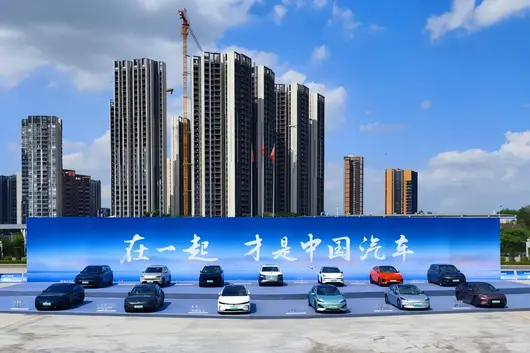

10 Oktober, Kementerian Perindustrian dan Teknologi Maklumat, Kementerian Keselamatan Dalam Negeri, Kementerian Alam Sekitar dan Ekologi, serta Pentadbiran Awam untuk Pengurusan Pasaran, sama-sama mengeluarkan «Pemberitahuan Mengenai Tindakan Memperkuatkan Pengurusan Berkaitan dengan Inovasi Reka Bentuk, Penyelidikan, Pembangunan dan Pengujian Pembuktian Produk Kereta (Draf untuk Maklum Awam)».
Esoknya, Aplikasi Harian Rakyat menerbitkan ulasan «Lima Badan Kerja Sama, Menentang "Kereta Keluaran Segera"!», yang terus menjelaskan maksud dokumen ini.
Hampir pada masa yang sama, kes pemecahan penyangga pedal brek ZunJie V800 masih bergema di medan pendapat, dan kesimpulan siasatan berwibawa belum keluar. Tetapi perbincangan sudah mengukuhkan satu konsensus asas: komponen berkaitan sistem brek, pasti tidak sepatutnya gagal semasa penggunaan kenderaan yang normal, sama ada kenderaan yang terlibat mempunyai kecacatan, masih perlu menunggu jawapan daripada siasatan berwibawa.
Pengawalan domestik ini, selalunya mudah dibaca sebagai hal yang hanya melibatkan hak pengguna domestik. Tetapi dilihat dari sudut kerani eksport kereta China yang semakin menghampiri skala jutaan unit, ia mempunyai makna lain lagi: Kereta China tidak boleh membawa beban "keluaran segera" untuk mengetuk pintu pasaran global. Kami harap pengguna luar negara pada akhirnya akan ingat, adalah "bernilai untuk wang", bukan sekadar "murah".
30,000 kilometer ditambah "Dua Musim Sejuk dan Satu Musim Panas", meletakkan piawaian kepercayaan umum pasaran global
Tanda aras draf pemberitahuan ini相当具体 (Very specific). Dalam hal penyelidikan dan pembangunan pengujian pembuktian, ia cadangkan produk baharu yang dilaporkan perlu menyelesaikan ujian kebolehpercayaan dan ketahanan, kebolehpercayaan struktur, kebolehpercayaan fungsi perisian dan adaptasi persekitaran, di mana jarak ujian pengesahan kebolehpercayaan tidak kurang daripada 30,000 kilometer, kitaran pengesahan adaptasi persekitaran tidak kurang daripada 1 tahun, mesti termasuk "Dua Musim Sejuk dan Satu Musim Panas".
Dalam reka bentuk inovasi, ia menetapkan beberapa garis merah: dilarang配备全隐藏式门把手 (配备全隐藏式门把手 -> memuatkan pemegang pintu tersorok sepenuhnya), tidak boleh menggunakan skrin lipat, skrin fleksibel, semasa memandu tidak boleh menggunakan kerusi graviti sifar, kerusi berputar atau membariskan kerusi menjadi katil, elemen pengawalan yang melibatkan keselamatan seperti pelarian kecemasan, brek kecemasan mesti mengekalkan butang fizikal dan penanda ketara. Dokumen ini juga cadangkan menambah 51 parameter teknikal utama produk kenderaan.
Jadual masa juga jelas: Mengikut draf pemberitahuan, bermula 1 Januari 2027, produk baharu yang belum menyelesaikan ujian pengesahan mengikut keperluan atau memberikan bahan palsu tidak akan diisytiharkan, iaitu tidak boleh masuk ke senarai kelayakan pengeluaran, tidak boleh dijual di pasaran; produk yang telah mendapat pengumuman perlu melapor bahan sebelum 1 Julai 2027, jika lewat dan terdapat bahaya keselamatan, hentikan pengeluaran dan lakukan pemanggilan semula.
Perubahan logik pengawalan lebih bernilai perhatian daripada teks undang-undang itu sendiri: Dari dulu "cukup memenuhi piawaian negara" beralih kepada "pengesahan penyelidikan dan pembangunan yang mencukupi sebelum kelayakan". Pengawalan tidak lagi hanya melihat sama ada sampel yang dihantar lulus, tetapi bertanya sama ada syarikat sebenarnya telah membuat tugasan persediaan yang cukup sebelum pengeluaran massal.
Tuntutan ini bukan sekadar piawaian tinggi yang unik untuk pasaran China, sebaliknya ia adalah bahasa kepercayaan asas yang paling muktamad di pasaran automotif yang matang. Penandaan suhu tinggi, rendah, dataran tinggi dan ujian jalan lengkap, pada asalnya adalah irama pembangunan yang melintasi dunia pada era kereta bahan api. Profesor Zhu Xichuan daripada Universiti Tongji, Kolej Automotif dan Tenaga, memberikan rujukan ketika berinteru dengan Aplikasi Harian Rakyat: Ujian jalan kenderaan model baharu selalunya memerlukan Dua Musim Sejuk dan Dua Musim Panas, sekurang-kurangnya kecil, juga memerlukan Dua Musim Sejuk dan Satu Musim Panas, 30,000 kilometer ujian jalan yang sebenar. Draf pemberitahuan menetapkan had bawah kelayakan pada "Dua Musim Sejuk dan Satu Musim Panas", meninggalkan ruang bagi syarikat untuk menambah piawaian sendiri antara yang dituntut dan irama pengesahan yang lebih tinggi yang diikuti oleh pengesahan syarikat.
Dari sudut ini, dokumen ini bukan membebankan syarikat, sebaliknya membolehkan mereka menyelesaikan "laluan kelayakan" di gelanggang global di pasaran domestik terlebih dahulu. Pemimpin Cawangan Pengedaran Kereta, Persatuan Pengedaran Kereta China, Cui Dongshu, membandingkan piawaian jarak kebolehpercayaan dengan "upacara kedewasaan" kenderaan tenaga baharu, percaya industri dari "pemupukan utama" beralih kepada "piawaian utama". Maksud dewasa, adalah tidak boleh lagi menggunakan piawaian kanak-kanak untuk menuntut diri.
"Kereta Keluaran Segera" masih boleh ditambat semula di domestik, ruang toleransi ke luar negara jelas semakin sempit
Perselisihan "Kereta Keluaran Segera" muncul secara berpusat tahun ini, mempunyai tanahnya. Menurut Berita Ekonomi 21st Century, dalam era kereta bahan api, kitaran pembangunan model baharu selalunya lebih daripada 36 bulan, ada yang sehingga 40 hingga 60 bulan; memasuki era tenaga baharu, kitaran purata industri terlebih dahulu dipendekkan kepada 28 hingga 39 bulan, tahun 2026 dipendekkan lagi ke sekitar 24 bulan, jenama kekuatan baharu baharu bahkan menghampiri 12 hingga 18 bulan. Data Penarafan Yiche menunjukkan, separuh pertama tahun 2026, model baharu yang dilancarkan di pasaran domestik mencapai 576 model, pengasas Kereta Great Wall, Wei Jianjun, oleh itu mengadu, purata sehari ada dua hingga tiga pelancaran.
Strategi "pembaruan pantas, menukar harga dengan kuantiti, memulihkan melalui OTA (peningkatan dalam talian jauh)" boleh beroperasi di pasaran domestik, kerana tahap toleransi pengguna domestik terhadap jenama baharu adalah tinggi, kitaran tukar kereta pendek, kos pembelian yang lebih rendah juga sebahagian mengimbangi kecemasan nilai residu (iaitu kadar kekekalan nilai kereta terpakai). Tetapi selepas ke luar negara, mekanisme toleransi ini akan jelas semakin sempit.
Cara penglihatan pasaran luar negara berbeza sepenuhnya: muncul masalah kualiti yang terkumpul pada sebuah kereta, yang diingati selalunya bukan sesetengah jenama, tetapi label "Kereta China" secara keseluruhan. Dengan peningkatan jumlah pemilikan Kereta China di luar negara yang pantas, sesetengah pasaran sudah mula wujud perbincangan mengenai kualiti, pasca jualan dan nilai residu Kereta China. Menurut laporan media, akhir tahun lalu ada jenama China di pasaran Thailand melakukan penurunan harga melampau, sesetengah model penurunan mencapai 38%; awal tahun ini, persaingan harga sebegini juga muncul di United Kingdom. Pemimpin Operasi Jerman syarikat sewa Arval di bawah Bank BNP Paribas Perancis, ketika diinteru Huxiu, terus menyatakan, jurang nilai residu kenderaan tenaga baharu China dengan pesaing Eropah, pada hakikatnya adalah jurang kepercayaan. Armada sewa kereta kegunaan intensif, selepas dua hingga tiga tahun terkumpul masuk ke pasaran kereta terpakai, sekali menekan nilai residu, yang disakiti adalah semua jenama China yang masuk ke pasaran ini kemudian.
Ini adalah risiko selepas skala diperbesarkan. Data ACEA menunjukkan, separuh pertama tahun 2026, BYD, SAIC, Chery, Geely, Leapmotor, lima syarikat automotif China ini di Eropah menjual keseluruhan sekitar 643,000 unit, bahagian pasaran daripada 4.5% naik ke 8.9%, jualan meningkat tahunan 111.5%; bulan Mei tahun ini, jualan bulanan tunggal 31 negara Eropah jenama China untuk pertama kalinya melebihi Jepun. Semakin besar bahagian, semakin mahal harga label "keluaran segera". Timbalan Setiausaha Agung Persatuan Automotif China, Chen Shihua, sebelum ini di forum industri mengingatkan, Kereta China "perjalanan memang terlalu pantas", "boleh tenang seketika".
Pelajaran kuasa produk sudah diisi, hutang adalah pelajaran pembuktian masa
Perlu diaku, kuasa produk Kereta China hari ini sudah bukan lagi wajahnya masa dahulu. Model seperti NIO ET5 telah mendapat penilaian lima bintang Euro NCAP (Persatuan Penilaian Keselamatan Kereta Baharu Eropah), model jenama BYD, Chery, MG juga berturut-turut muncul dalam senarai lima bintang tahun ini.
Di luar kuasa produk, arah sebenar garis harga ini, lebih kompleks daripada nombor tunggal, perlu melihat lengkungnya lengkap. Menurut data CAAM, CPCA, harga purata eksport Kereta China dari sekitar 16,000 Dolar AS tahun 2021 terus naik ke sekitar 19,000 Dolar AS tahun 2023; di antaranya harga purata eksport kenderaan tenaga baharu pada sekitar tahun 2022 mencapai lebih 20,000 Dolar AS, pengiraan laporan KPMG China masa itu, tahun 2022 harga purata eksport kenderaan tenaga baharu ke Eropah sekitar 30,000 Dolar AS. Tetapi sejak tahun 2024, lengkung ini mula turun: harga purata eksport keseluruhan tahun 2024 sekitar 18,000 Dolar AS, tahun 2025 lebih lanjut turun ke sekitar 16,000 Dolar AS. CPCA menganalisis, turun ini terutamanya berkaitan dengan penurunan占比 eksport Tesla, perubahan struktur pasaran eksport serta peningkatan占比 model elektrik tulen kecil.
Semasa fluktuasi harga purata jumlah, jalur nilai jenama terkemuka masih bergerak naik. Laporan Harian Belia China, BYD tahun 2025 jualan luar negara untuk pertama kalinya memecah 1 juta unit, mencapai 1.05 juta unit, harga purata jualan luar negara per unit sekitar 180,000 Renminbi, marjin kasar perniagaan luar negara hampir 28%. Semakin banyak ulasan luar negara juga mengakui, kelengkapan dan teknologi yang ditawarkan Kereta China dalam harga yang sama, sudah tidak ketinggalan.
Tetapi kepercayaan adalah penunjuk lewat. Penilaian keselamatan boleh dapat satu ujian, persepsi jenama perlu diukur dengan 10 tahun. Pengeluar kereta Jepun dan Korea menggali di Eropah beberapa dekad, barulah menamatkan pembalikan imej dari murah ke aman, tiada siapa yang dicapai dengan bilangan pelancaran. Sebaliknya, irama "pelancaran mengikut rentak denyut" domestik jika sekali dibaca pasaran luar sebagai spekulasi, mata uang yang terkumpul dalam kuasa produk juga akan diencerkan naratif. Pengerusi Group Geely Holdings, Li Shufu, di Forum Automotif China Chongqing tahun 2026 mengingatkan, kereta berkaitan nyawa manusia, "tidak boleh menggunakan falsafah pendek dan pantas untuk menghasilkan kereta".
Dari "murah" ke "bernilai untuk wang", adalah pertukaran naratif yang mesti diselesaikan
Harga rendah itu sendiri tidak salah, ia adalah hasil semulajadi kecekapan rantaian bekalan dan kelebihan skala China. Tetapi harga rendah seharusnya menjadi kesimpulan selepas pengguna mengundi dengan wang, bukan bendera yang diangkat sendiri oleh Kereta China ke luar negara. Sekali "murah" dipadatkan menjadi label, akan serentak menekan tiga perkara: kekuatan premium, nilai residu kereta terpakai dan kedudukan rundingan perdagangan. Januari tahun ini, Eropah dan China yang mengenai kenderaan elektrik perdagangan mencapai arrangements komitmen harga, dengan menentukan harga lantai (industri panggil "harga lantai") kaedah menggantikan sebahagian cukai anti-subsidi, ini pada hakikatnya mengurangkan ruang semata-mata menggunakan harga rendah untuk membongkar pasaran besar Eropah, juga memaksa jenama China untuk naik ke atas.
Yang sebenar perlu didirikan oleh Kereta China imej global, adalah "bernilai untuk wang": dalam harga yang sama memberi teknologi lebih baik, pengesahan lebih ketat dan ketenangan jangka panjang, dan "baik" ini selepas kenderaan digunakan beberapa tahun masih sahih. Ini bukan percakapan pemasaran yang boleh disiapkan, ia ditulis dalam 30,000 kilometer ujian jarak, ditulis dalam pembinaan kilang BYD di Hungary, kerjasama tempatan Chery dengan syarikat automotif Sepanyol, ditulis dalam pusat perkhidmatan yang semakin terbentang di jalan raya Eropah dan janji jaminan, juga ditulis dalam detail seperti Chery bergabung IATF International Automotive Task Force Board bulan Jun tahun ini, terlibat dalam penentuan piawaian kualiti automotif global — IATF adalah badan yang menentukan piawaian sistem pengurusan kualiti automotif global.
Dari pandangan domestik, pertukaran ini juga tiada jalan kembali. Mengikut pengiraan media industri, kadar keuntungan keseluruhan industri automotif sudah pecah 3%, proses pembuatan kereta keseluruhan malah rendah sehingga sekitar 1.5%, ruang menukar harga dengan kuantiti sedang semakin sempit. Menentang "persaingan dalaman" domestik dan membina jenama ke luar negara, pada hakikatnya adalah perkara sama: menarik persaingan dari "siapa lebih cepat, siapa lebih murah", kembali ke "siapa lebih aman, siapa lebih berharga".
Draf pemberitahuan empat badan melukis garis bawah bagi industri. Kalimat dalam ulasan Aplikasi Harian Rakyat perlu disalin sekali lagi: "'Kestabilan' adalah 'kelajuan' yang lebih tahan lama." Diletakkan dalam konteks ke luar negara, boleh diterjemahkan menjadi ayat lain: Pasaran global pada akhirnya akan ingat, bukan sesiapa pelancaran yang dibuka lebih kerap, tetapi sesiapa kereta yang setelah digunakan beberapa tahun masih membuat orang tenang hati.
Melepaskan beban "Kereta Keluaran Segera", Kereta China baru boleh berjalan jauh dengan beban ringan.
*Pendapat peribadi, hanya untuk rujukan.
© 2024 Bitauto.com. All Rights Reserved.
Bitauto (www.yiche.com and www.bitauto.com) is one of the most visited automotive websites in China. We provide detailed info on Chinese car brands available in your area. Please note that the information provided on this website is based on publicly available data and is for reference only. It may not be fully updated or accurate at all times.

Help us improve our website


