

HomeOverseas Expansion

Search History
Popular Searches
Dealer Login / Sign Up

Zhiliao Auto/Fed

September 2026, US Transportation Secretary Sean Duffy sent a letter to Ford Motor CEO Jim Farley, requesting Ford abandon its strategic partnership with Chinese companies. The letter directly targets Ford's use of CATL-licensed lithium iron phosphate battery technology at its Marshall plant in Michigan.

In past years, restrictions by Europe and US on China's auto industry focused mainly on complete vehicles. In October 2024, the EU added countervailing duties on EVs produced in China on top of 10% import tariffs, with comprehensive rates reaching up to 45.3%.
However, the US approach follows FEOC rules under the Inflation Reduction Act. Starting from 2026, over 60% of cell material costs must come from eligible companies to qualify for tax credits, rising to 75% by 2030.

These barriers previously only focused on "where the car comes from", now they also manage "where the technology comes from".
Ford employs about 1700 American workers at its Michigan plant, the plant is fully owned and operated by Ford, but solely because battery technology comes from CATL via licensing agreement, it was deemed "deeply concerning" by the US Department of Transportation.

EU countervailing duties also brought high costs for Chinese car makers. BYD was levied 17.0% countervailing duties, Geely 18.8%, SAIC Motor reached 35.3%. A Chinese EV priced at 38,000 euros, just tariff cost exceeds 10,000 euros.
But the price commitment mechanism agreed between China and EU in January 2026 provided a buffer channel. Chinese car makers can replace high countervailing duties by committing to minimum import prices and annual export quotas.

This practice of sacrificing some pricing freedom to exchange for qualification to stay in the European market is essentially a strategy of exchanging space for time, but indicators do not treat the root cause.
Take the cooperation between Ford and CATL for example. Ford stated this is not a joint venture, nor foreign manufacturing business, CATL only provides technology licensing and training services, Ford owns the plant and controls operations. But even so, the US government does not allow it.

Of course, from the US government perspective, this concern has its logic. After all, CATL was listed on the so-called "Chinese Military Enterprise List" by the US Department of Defense as early as 2025. Such policy environment, even just technology licensing, faces various uncertainties.
Despite such harsh environment, Chinese auto export data remains strong. First 8 months of 2026, passenger car cumulative exports 6.098 million units, YoY growth 75.7%, annual export volume expected to reach 11.5 to 12 million units.

But export volume is one thing, global capability is another.
Report by global consultancy AlixPartners shows Chinese car makers plan to layout production bases in at least 16 overseas countries. By 2030, overseas production expected to rise from about 1.2 million units in 2025 to 3.4 million. BYD has layouted factories in Thailand, Brazil, Hungary, etc., where Hungary factory expected to produce in 2026, annual capacity 150,000 units. SAIC Thailand factory local content rate has broken 80%.

Actually not only Chinese enterprises, this practice of localizing core supply chain links as much as possible is a general strategy for many multinational car makers to cope with policy risks.
To put it plainly, Chinese car makers doing this is forced by EU/US restrictions on Chinese auto supply chains. Tariffs are one aspect, various technology source reviews, localization rate requirements, and supply chain security rules are deeper constraints.
Chinese car makers' advantages in battery technology, manufacturing costs, and product iteration speed still exist, but now looking, to convert these advantages into global market share, it's not just about selling cars, must build manufacturing, supply chain, and service systems into target markets.

So, this new round of competition triggered by Chinese NEV industry going overseas, is shifting from the product itself to who can build a complete operational system in more markets.
Zhiliao Auto original article, please contact us if reprinting.
*Pictures from internet, please contact author to delete if infringing*
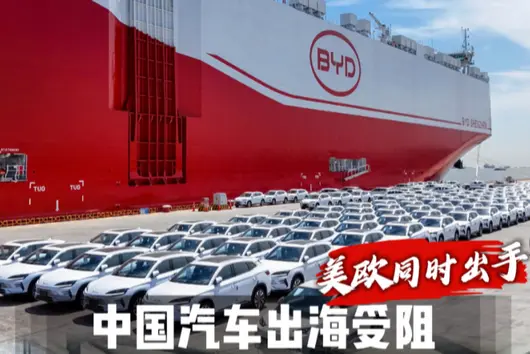

September 1, the Ministry of Commerce, the Ministry of Industry and Information Technology, and the State Administration for Market Regulation jointly released the "Guidelines on Foreign Competition Behavior and Compliance Construction for the Automotive Industry" (hereinafter referred to as the "Guidelines"), putting forward systematic requirements for the overseas market competition behavior and compliant operations of Chinese automotive enterprises. This is the first domestic normative guideline specifically targeting the overseas operations of the automotive industry, released at the node where Chinese automotive exports have led the world for three consecutive years.
In the past few years, Chinese automobiles have quickly opened up the global market relying on product strength and supply chain advantages. While scale growth occurred, problems such as spillover of low-price competition, chaotic channel order, and insufficient compliance preparation also emerged. The release of this guideline marks that the internationalization path of the Chinese automobile industry is accelerating towards the deepening stage of quality and system competition.
▍Background and Market Reality of the Implementation of Foreign Competition Standards
The guideline released by the three departments has the core objective of regulating overseas market competition order and guiding enterprises to operate in compliance. Chapter 2 of the "Guidelines" makes provisions specifically for market competition behaviors, clarifying that enterprises should establish pricing strategies based on costs and guided by international market supply and demand, and must not disrupt market order to gain unfair competitive advantages. Regarding terminal pricing, the guideline requires enterprises to set clear price gradients according to different configurations, avoid frequent and large-scale price adjustments, while respecting the pricing autonomy of overseas dealers and reasonably agreeing on sales incentive policies. In addition, the guideline also requires compliance in promotional activities and publicity and promotion, prohibiting false advertising and requiring enterprises to comply with local business practices and cultural customs.
According to statistics from the General Administration of Customs, the volume of complete vehicle exports from China reached 8.32 million in 2025, a year-on-year increase of 29.9%, ranking first in the world for three consecutive years, with products sold to over 200 countries and regions worldwide. The enthusiasm of domestic car companies for going global remains high. In the first seven months of 2026, the export volume of passenger cars continued to maintain double-digit growth, among which the export growth rate of new energy passenger cars exceeded 120%. However, while scale expanded rapidly, signs of domestic price wars transferring outward appeared in some markets. Taking the Southeast Asian market such as Thailand as an example, selling prices of some Chinese brand models were reduced multiple times shortly after launch, with the reduction magnitude reaching around 30%. Although this pricing strategy boosted sales in the short term, it also disrupted the price system of the local market, and even cases of cross-regional cross-selling and mutual price undercutting between dealers of the same brand appeared.

In addition, the issue of "0-kilometer used cars" reported by media will also trigger consumer complaints due to problems such as language mismatch in infotainment systems, non-compliance with local information security regulations, and lack of official warranty services. Meanwhile, the inflow of such low-price vehicles will impact the price system of local regular new cars, putting car manufacturers who invested heavily in certification and channel building into a passive position.
Except for problems at the market level, disordered competition may also trigger more trade risks. If Chinese car companies continue to expand overseas with low-price strategies, it is easy to trigger local anti-dumping and anti-subsidy investigations. In recent years, the EU, the US and other markets have already implemented tariff policies for Chinese electric vehicles, and the risk of trade barriers always exists. From this perspective, the "Guidelines" are not only a regulation of the industry competition order but also a risk reminder to enterprises, reminding enterprises to avoid dissipating long-term market space with short-term pricing strategies.
▍From Product Export to System Overseas Expansion: Localized Compliance Practices of Automotive Companies
Facing changes in regulatory orientation and deep requirements of overseas markets, the logic of Chinese car companies' going global is undergoing transformation. In the past, the core goal of enterprises was to sell products out, now they increasingly value the output of systematic capabilities. From the in-depth dialogue between Karis and the Car Quality Network with quality and service management teams of multiple car companies, it can also be seen that top brands have layout in advance in multiple dimensions such as product certification, quality systems, channel layout, and regulatory adaptation, promoting the overseas expansion model to upgrade from "product export" to "system operations".
Voyah is one of the earliest Chinese brands to layout in the European market. Li Jiayao, a senior manager in the quality field mentioned in the exclusive interview that quality management in overseas markets has significant differences compared to domestic ones. This difference is reflected not only in technical standards but also in cultural habits, laws and regulations, consumer demands and other levels. In order to cope with these differences, Voyah established a dual-layer response mechanism: holding special promotion meetings for market issues every day at noon, and holding quality feedback and countermeasure meetings every day in the evening, jointly with market, R&D, manufacturing and other departments to quickly handle problems in overseas markets. At the product access level, in 2022, the Voyah FREE model obtained European Whole Vehicle Type Approval (EWVTA) before being shipped from Wuhan to Norway and could be formally registered in EU countries. Subsequently, Voyah cars entered Finland, Denmark, Netherlands, Bulgaria, Czechia, Italy, Spain and other countries successively.
SAIC Maxus is a representative enterprise for the overseas expansion of Chinese commercial vehicles, and its products have been sold to more than 100 countries and regions worldwide. Pu Dengxiang, Vice General Manager of SAIC Maxus Automotive Co., Ltd. clearly stated in the interview that globalization is not simple product export, but comprehensive overseas expansion of brands, standards, and services. He believes Chinese car companies face three quality challenges in going global: consistency of quality definition, localization of service capabilities, and cross-border data closed loop. User usage habits, road conditions, and regulatory standards differ in different markets, overseas service network capabilities are uneven, plus cross-time zone and cross-language communication obstacles, it is easy to make quality problems in overseas markets become information silos. In specific practice, SAIC Maxus was the first to pilot the supplier on-site support model in the Australia and New Zealand market, promoting key suppliers to deploy technical personnel locally, while conducting comprehensive capability training for technical personnel of local service outlets, effectively solving the pain points of slow on-site response, difficult diagnosis, and long repair cycle overseas, and this set of experience is being promoted to the UK and other core European markets.

Geely Auto chose another path of systematic overseas expansion, integrating into the local industrial ecosystem through capacity cooperation. A person in charge of Geely Holding Group stated in a public interview that enterprise going global does not necessarily require new capacity construction, but can share capacity and share markets with local partners. Geely reached cooperation with Ford to jointly operate Ford's production base in Spain, utilizing local idle capacity to produce Geely brand models. This model can not only avoid trade barriers but also drive local employment and is easier to obtain host country policy support.
The core of systematic overseas expansion is to place compliance awareness forward to the product R&D stage. Multiple executives also stated that in the past many enterprises tried to export after products were made, now they consider regulatory standards of different markets synchronously in the R&D stage. For example, for EU Carbon Border Adjustment Mechanism, data privacy regulations, and Southeast Asia automotive safety standards, enterprises need to include them in the product definition stage. In addition, systematic capabilities also include overseas supply chain layout, HR localization, intellectual property protection and other dimensions. The "Guidelines" also specifically mention that enterprises should improve overseas quality management system and after-sales service system, comply with local labor regulations, and strengthen IP layout, these are all core components of system overseas expansion.
Overall, the "Guidelines" defined competition boundaries for overseas operations of the Chinese automotive industry, and also conveyed a clear policy orientation: the internationalization of Chinese automobiles cannot walk the old path of low-price race to the bottom, it must turn to high-quality, systematic competition. After several years of rapid expansion, Chinese automobiles have already established preliminary product awareness in the global market. Next, what needs to be made up are shortcomings in compliance operations, brand building, and ecosystem layout.
Different car companies chose different paths of systematic overseas expansion based on their scale and strategy. Some enterprises built factories and R&D centers themselves, deeply penetrating mature markets; some enterprises shared capacity through cooperation models to enter regional markets with light assets; some enterprises started with service and quality systems first, gradually perfecting localization capabilities. But no matter which path is chosen, compliance operations and long-termism have already become industry consensus.


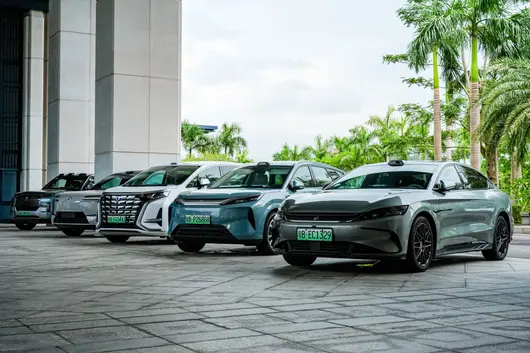
Recently, the domestic leg of the 2026 Silk Road 10,000 Miles Journey Enlightenment Road concluded successfully in Shenzhen. The new energy vehicle fleet escorted by BYD throughout the journey traversed thousands of kilometers, successfully completed the overland Silk Road exploration journey, and from here sets sail to connect with the Maritime Silk Road, embarking on an all-new overseas journey.
The camel bells of the ancient Silk Road echoed, witnessing the fusion and mutual learning of Eastern and Western civilizations. Today, new energy vehicles continue the historical mission, opening a new chapter belonging to Chinese intelligent manufacturing.

This Silk Road 10,000-Mile Journey focuses on culture, technology, and trade. The BYD fleet departed from the Silk Road starting point Xi'an, passing through multiple historical famous cities, visiting the four Eastern cultural symbols of fragrant herbs, porcelain, silk, and tea, integrating the millennium-old intangible cultural heritage with modern automotive technology Autohome.
During the long journey, complex road conditions and diverse climates tested the vehicle strength in turns. BYD's full matrix of models, relying on stable vehicle performance, flash charging and energy replenishment technology, and intelligent driving capabilities, calmly handled various travel scenarios, successfully completed all domestic leg schedules, and verified the solid product strength of Chinese new energy vehicles with actual performance.

Shenzhen is not only the end of the domestic leg but also the starting point for heading overseas. After completing the domestic itinerary, the fleet will continue on the Maritime Silk Road, rush to multiple overseas locations to carry out brand display and product experience series of activities, bringing the strength of Chinese new energy to the world. Galloping through mountains and seas for a green voyage, BYD is measuring reliability with mileage, allowing more international consumers to understand and recognize Chinese new energy vehicle products.
Today, Chinese new energy vehicles are accelerating towards the global stage, becoming another business card of Chinese high-end manufacturing. What it exports is not only complete vehicle products, but also a complete energy replenishment system and low-carbon development concept.
Currently, the competition in global new energy vehicles is becoming increasingly fierce. Going overseas is no longer simple product export, but also tests the comprehensive strength of the brand and cultural communication capabilities.
From data perspective, BYD's globalization map is accelerating expansion. As of now, its new energy vehicles have covered 121 countries and regions globally. Overseas sales broke through 1 million units for the first time in 2025. Overseas cumulative sales from January to July 2026 reached 970,000 units, with a strong growth momentum.

More importantly, BYD's overseas expansion has long surpassed simple complete vehicle export, extending towards localized production, technology output, and industrial synergy multi-dimensionally. Placing the first flash charging station in Europe, building an exclusive energy replenishment network in Uzbekistan, laying out localized production bases in Thailand and Brazil, and even bringing the PV, Storage, and Charging integrated solution to Central Asia.
BYD fully escorted the Silk Road 10,000-Mile Journey, which is not only a brand expedition, but also a vivid vignette of the leap from Chinese auto product overseas to ecosystem overseas era. The civilization exchange of the ancient Silk Road has never stopped, and BYD is using green technology as a brush to write a new chapter belonging to the new era on this exchange road that has lasted for thousands of years.

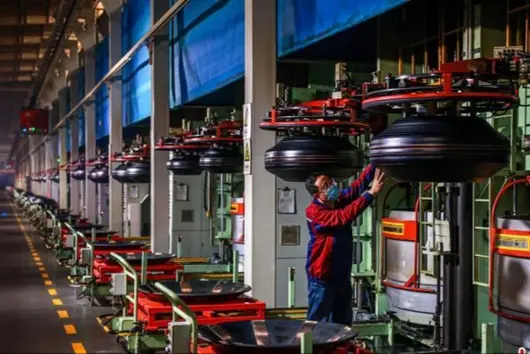
The journey of Chinese tyre expansion has evolved from single-point breakthroughs to full-scale booms.
Since Sailing Group invested in Vietnam in 2012, building the first overseas factory for Chinese tyres, officially opening the overseas curtain, it has now formed a scaled, globalized industrial landscape.
A recent set of major revenue data disclosed by the China Rubber Industry Association directly confirms this decade-spanning overseas wave: 14 key tyre enterprises achieved a total overseas base revenue of 79.913 billion yuan in 2026, compared to 54.082 billion yuan the previous year, a year-on-year surge of 47.76%; the average proportion of overseas base revenue accounting for the total enterprise revenue reached 40.24%.

2025-2026 Annual Overseas Tyre Base Revenue Situation
Nearly 40% of revenue comes from overseas local factories. Core industry growth of nearly 80 billion has firmly secured the overseas capacity as the main engine of performance for the Chinese tyre industry, becoming the core pillar for companies to hedge against domestic involution and resist global trade risks.
Top players widen the gap, distinct tier differentiation
From the industry revenue rankings, the leading enterprises that went overseas first, leveraging their first-mover advantage to complete global layouts, have significantly widened the gap with SME brands, making industry tier differentiation increasingly clear.
Sailing Group leads far with 28.226 billion yuan overseas revenue, a year-on-year increase of up to 104.54%, overseas base revenue accounts for 77.54% of total enterprise revenue, fully releasing the dividends of globalized capacity layout, becoming a benchmark for industry overseas expansion.

Linglong Tires and Zhongce Rubber ranked second and third respectively with 11.93 billion yuan and 10.380 billion yuan. Jiangsu General and Sentinel follow closely, with both overseas revenues breaking 6.3 billion yuan, revenue proportions both exceeding 73%, deeply binding to overseas bases, and globalized layouts continuing to deepen.
Besides the old brand top enterprises steadying themselves, the industry's second tier has full explosive power. Changfeng Tires' overseas revenue skyrocketed 126.87% year-on-year; Haohua Tires and Fumas Tires achieved a breakthrough in overseas revenue from 0 to 1. A new batch of enterprises followed the industry's overseas wave, completed overseas capacity landing, formally joined the global battlefield, making the Chinese tyre overseas matrix increasingly strong.
Behind the Revenue Surge: Blooming Globally
Nowadays, the overseas revenue scale of nearly 80 billion is certainly not the work of one day.
Currently, 26 tyre enterprises in China are setting up overseas factories, and once completed, the number of overseas bases will exceed 40, production bases are distributed across Southeast Asia, North Africa, Central and Eastern Europe, Latin America, and other global core markets, completely bidding farewell to the past single export trade model.
Southeast Asia remains the core hotbed for factory construction: Thailand gathers giants like Zhongce, Linglong, Sentinel, General, etc.; Vietnam relies on early industrial foundations to become the core profit town for enterprises like Sailun, Guizhou Tyre, etc.; Cambodia has become a new investment lowland for the industry, with 10 enterprises clustered landing.
At the same time, countries such as Mexico, Egypt, Morocco, Serbia, Russia, etc., have all landed Chinese tyre factories, and the globalized capacity map is fully unfolded.
The overseas logic has completely iterated: Upgrading from the past 'production in China, sales globally' product output to a 'capacity + market' dual-output globalized layout, building factories on-site, producing on-site, supplying nearby, becoming the industry's main business model, and also the core confidence for continuous overseas revenue explosion.
Overseas Bases: Bolstering the Profit Bottom Line
Nowadays, overseas factories have completely reversed their role, transforming from initial cost investment items into the ballast stone that bolsters enterprise profits.
Flipping through the 2025 listed company financial reports, among 11 sample tyre companies, only 2 achieved positive net profit year-on-year growth, domestic market involution intensifies, profits continue to bear pressure, most enterprises' local business increases revenue but not profit.

The core breakthrough for growth against the trend all comes from overseas capacity: 7 enterprises' overseas factories contributed over 25% to the parent company's net profit, and the value of profitability is increasingly highlighted.
Among them, Sailun's two major Vietnam bases contributed 67% of the group's profit with 43% revenue proportion; Guizhou Tyre Vietnam base leveraged 56% profit with only 21% revenue proportion, overseas capacity's profit-making efficiency far exceeds domestic production lines.
Asset proportion data also confirms this deep transformation: General Shares and Sailun Tires overseas asset proportions reached 68.44% and 63.46% respectively, Sentinel and Linglong follow closely, industry average overseas asset proportion exceeds 20%.
After more than a decade of development, overseas bases have completely completed the transformation from 'cost centers' to 'value creation centers', becoming the confidence to cross industry cycles.
After 80 Billion: Overseas Dividend Peaks
But behind the eye-catching performance, the era of the industry's barbaric growth has already ended, and hidden risks and challenges continue to be highlighted.
A large number of enterprises cluster and expand production in core areas like Southeast Asia, homogeneous capacity is released centrally, overseas base early tariffs, cost excess returns are gradually falling back, Blue ocean markets are gradually turning red, industry involution spreads from domestic to overseas.

At the same time, production base transfer cannot permanently avoid trade barriers, the former tax haven, now also faces increasingly strict trade investigations, overseas risks continue to climb.
In addition, the overseas heavy-asset factory construction model poses extremely high requirements for enterprise capital strength, geo-risk control, supply chain management, and localization operation capabilities, the drawbacks of blind expansion and extensive layout gradually emerge, and industry reshuffling accelerates.
Second Half: From Grabbing Land to High-Quality Overseas Expansion
80 billion overseas revenue marks that Chinese tyre overseas expansion has entered the second half. With overseas thresholds constantly increasing, Matthew effect intensifies, top advantages continue to expand, SME brands face increasing pressure, the industry will bid farewell to the land-grabbing model of barbaric expansion, shifting to refined high-quality operations.
Breaking out of low-price capacity involution, industry competition will upgrade to a comprehensive strength contest of channels and brands.
The only way out for the future industry breakthrough is to break free from scale involution, from extensive capacity overseas expansion to high-value brand overseas expansion leapfrog breakout, completely bidding farewell to volume stacking, achieving true high-quality value growth.


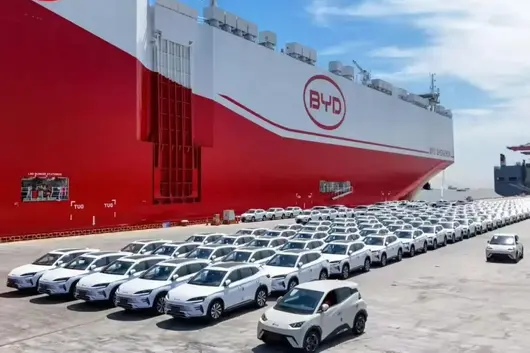
From Xi'an Datang West City to Quanzhou Ancient Port, from the thousand-year-old camel bell trail to the ten-thousand-ton roll-on/roll-off giant ship — in the midsummer of 2026, a fleet consisting of BYD's full range of new energy vehicles traveled east and south along the veins of the ancient Silk Road, finally sailing out to sea from Shenzhen Port. This journey has a grand name: "2026 Silk Road 10,000-Li Journey · Enlightened Path".

Silk Road Intersection: From Product Cards to Smart Manufacturing Cards
The ancient Silk Road consists of two channels: overland and maritime. The overland Silk Road starts from Xi'an, goes west over mountains and ridges, and reaches Rome directly. The maritime Silk Road starts from Quanzhou, sets sail for the Nanyang region, and reaches Rome. Today, the BYD fleet retraces this thousand-year-old path, while collecting civilization marks at the four intangible cultural heritage nodes, more importantly, unfolding the hard-core strength of flash charging technology and intelligent driving on the 10,000-li test journey.
Currently, BYD's overseas sales have exceeded one million vehicles, with year-on-year growth exceeding 140%, and products cover over 120 countries and regions worldwide.

Road to Overseas Expansion: From Product Export to System Export
Currently, BYD already owns 8 custom RORO ships, with an annual capacity reaching 250,000 to 300,000 vehicles, effectively supporting its overseas market expansion strategy. More importantly, BYD has upgraded "overseas expansion" from single product output to systematic output of "technology + infrastructure + industry". Landing the first flash charging station in Europe, building an exclusive energy replenishment network in Uzbekistan, and laying out localized production bases in Thailand and Brazil. This "systematic overseas expansion" model makes China's new energy technology no longer isolated "commodities", but rather "solutions" integrated into local energy structures and industrial upgrades.

Flash Charging Field Test: 5-minute Energy Replenishment Rewrites Mobility Rules
In this journey spanning thousands of kilometers, flash charging technology became the most focused topic. The BYD flash charging system equipped with the 2nd generation Blade Battery, charging from 10% to 70% battery level takes only 5 minutes at normal temperature, and charging to 97% takes less than 9 minutes; even in extreme cold environments at minus 30 degrees Celsius, charging duration is only 3 minutes longer than normal temperature.
As of the end of June 2026, BYD has cumulatively built 7,018 flash charging stations nationwide, covering 325 cities. From North to Shuangyashan, Heilongjiang, West to Kashgar, Xinjiang, South to Sanya, Hainan, truly realizing the mobility vision of "Travel China with Flash Charging".

10,000-Li Intelligent Driving: Verifying Domestic Hard Power
Aside from flash charging technology, BYD's "Heavenly Eye" high-level intelligent driving assistance system is also a core verification item of this Silk Road 10,000-Li Journey. The fleet fully activated all-scenario NOA intelligent driving functions throughout the journey under complex road conditions such as cross-city highway sections from Quanzhou to Chaozhou to Shenzhen, urban commuting sections in Chaozhou Ancient City and Quanzhou urban area, and coastal highways with strong winds. This Silk Road 10,000-Li Journey fleet gathered the five product matrices of BYD Dynasty, Ocean, Denza, Fang Cheng Bao, and Yangwang, covering full price range and full scenario vehicle usage needs from 100,000-level home use to million-level flagship.

Conclusion
When the aromatic medicines, porcelain, silk, and tea of the ancient Silk Road meet with the "New Three Items" of export represented by batteries, new energy vehicles, and photovoltaic energy storage, what we witness is not only China's era leap from commodity output to integrated export of technology, complete vehicles, and energy replenishment systems, but also a brand new Chinese name card where China's smart manufacturing reshapes the global sustainable development new order with green technology as the link.


In the first half of this year, Chinese automakers simultaneously reached three historical milestones — single-month exports broke the 1 million mark for the first time, sales in Europe exceeded Japanese brands for the first time, and the EU's final anti-subsidy duty case on PHEVs came into effect. The "highlights" of scale and the "reefs" of rules appeared simultaneously. This is not the end of the overseas expansion story, but the watershed moment shifting from "fighting for incremental growth" to "upholding rules".
1 Million Units Were Not Snatched with Low PricesProduction and sales data for June disclosed by the China Association of Automobile Manufacturers on July 9 showed that June car exports reached 1.037 million vehicles, a 11.6% month-on-month increase and a 75.1% year-on-year increase, the first time in China's automobile industry history that single-month exports exceeded 1 million. From January to June, cumulative exports reached 5.096 million vehicles, a 65.3% year-on-year increase. Chen Shihua, Deputy Secretary-General of CAAM, was very confident in his judgment — full-year car exports are expected to break 10 million. This means China is becoming the first country in the world to break 10 million in annual export volume.
More worth noting than the numbers is the structure behind them. Data released by the Liaison Committee on Passenger Cars on the same day showed that June new energy passenger car exports were 499,000 vehicles, a 152.7% year-on-year increase, accounting for 56.9% of passenger car exports, nearly 16 percentage points higher than last year. The main force of Chinese car overseas expansion has shifted from early oil car surplus capacity to new energy regular army.

The significance of exports to leading automakers is also changing. BYD first half sales 1.8085 million, of which 790,000 were exports, accounting for nearly 44%; Chery first half exports 940,000, accounting for 74.3% of its total sales. For these two, overseas markets are no longer supplementary, but the main battlefield.
Worth mentioning separately is the joint venture camp. June joint venture and luxury brand exports 114,000 vehicles, a 61% year-on-year increase. Foreign brands such as Volkswagen, Toyota, and Nissan are treating Chinese factories as global electrification supply centers, exporting back to Europe and Southeast Asian markets.
Breaking 1 million is just a footnote on quantity. The true turning point is in Europe.
Won Once on Japanese Turf, Then Hit a WallIn May this year, five Chinese automakers — BYD, SAIC, Geely, Chery, and Leapmotor — sold a combined 138,400 vehicles in 31 European countries, a 65% year-on-year increase, exceeding the combined sales of six Japanese brands including Toyota in the region for the first time. Chinese brand European market share rose from 5.6% in May 2025 to 10.7% in May 2026 — doubling in one year.
The weight of this reversal is not light. Japanese brands have cultivated Europe for over 40 years, while Chinese brands have entered Europe on a large scale for less than 5 years, completing share switches that once took a generation. This is a rare restructuring of patterns in the European car market since World War II. Mercedes-Benz's Q2 data released in the same period formed a contrast — global sales down 6%, China market down 30%, while pure electric models grew 50% globally. Between one advance and one retreat, the center of gravity of the global auto industry is being reweighed.

But Europe will not sit idly while share is taken away. The EU's final anti-subsidy duties on Chinese-made pure electric vehicles officially took effect from October 2024, for five years; the EU summit in June 2026 also finalized the anti-subsidy duty case on Chinese plug-in hybrid vehicles. This means the PHEV export route to which Chinese automakers collectively added efforts over the past year has also had its threshold raised directly.
The killing power of this tariff wall does not lie in uniform pressure, but in stratification: BYD comprehensive tax rate 27%, Geely 28.8%, NIO and XPeng 30.7%, SAIC highest 45.3%, while Tesla produced locally in Shanghai only 7.8% early on. Cooperating with the EU investigation and enterprises with higher localization have relatively lower tax rates; enterprises that did not cooperate were pushed to the top. The rules themselves favor the leading players and those with higher localization; small players will be squeezed out. The Chinese "Oil car — PHEV transition — Pure electric upgrade" three-step overseas expansion path may also be compressed to two steps.
In response, China's Ministry of Commerce has made a final anti-dumping ruling on pork products originating from the EU, levying tariffs of 4.9% to 19.8% for five years, and is preparing further countermeasures on products such as brandy and dairy products. Both sides are using agricultural products and light industrial products as chips — precisely controlling, avoiding complete loss of control — but this is the beginning of a long game.
Three Ways to Bypass the Tariff WallOnce tariffs land, localization is no longer a choice. The current three leading Chinese automakers have given three solutions.
BYD Model: Local Heavy Assets. Hungary factory under construction, expected to start production in 2027, completing the production and sales loop directly within the EU. This road is most resistant to tariffs, but investment cycle is long and political sensitivity is high, requiring enterprises to have sufficient patience and cash flow to support.

Chery Model: Third Country Jumping Board. Chery has already set up a factory in Brazil, and on the Europe side, layout in Spain. Using a non-EU or EU-edge market as a jumping board, balancing Latin American growth and Europe entry, high flexibility, but relies on the long-term stability of the host country's policies.
SAIC Model: Deep Cultivation in Multiple Markets, Localization Advancing Together. SAIC is the most complete among the three in organized and systematic overseas expansion, Europe is its core battlefield — MG has been the sales champion of Chinese brands in Europe for 11 consecutive years, cumulative sales broken 1 million vehicles. Its response logic is "Full Spectrum + Localization" walking on two legs: Europe supplies fuel, hybrid, plug-in hybrid, and pure electric simultaneously, avoiding single path policy risks; Spain factory production end of 2028 can directly avoid high tariffs within the EU; Thailand, Indonesia factories mass produced, as the radiation base for Southeast Asia, Aus/NZ, S.America. Highest risk dispersion, but also the highest requirement on global synergy capability.

I lived in Thailand for three years, and I could clearly feel the texture of this road. MG stores opened from Bangkok city center all the way to Chiang Mai old town. Southeast Asia is not an alternative to Europe, but another battlefield outside Europe. The scale base formed by Chinese automakers in Southeast Asia will become the reserve hand for the next round of global games.
Need to remind that EU tariffs are just "the first wall". North America's potential blockage risk, Southeast Asia Japanese brands' counterattack, are all on the way.
Qi Shi View: 10 Million is Just the Starting PointBreaking 1 million is an "adult ceremony" for China's automobile industry. But after the adult ceremony, one must face the rules of the adult world — anti-subsidy, anti-dumping, localization, labor compliance, and environmental regulations. Victory in data can be completed within a few months, but victory in rules may take decades.
10 million is not the end, but the starting line for Chinese automakers from "selling cars" to "operating globally". Whether one can stand, stay, and go far, the answer is not in the CAAM data, but in the assembly lines of Hungary factories, in the taillights of Chinese cars in Munich evening rush hour, and also in the account books of Lisbon dealers.
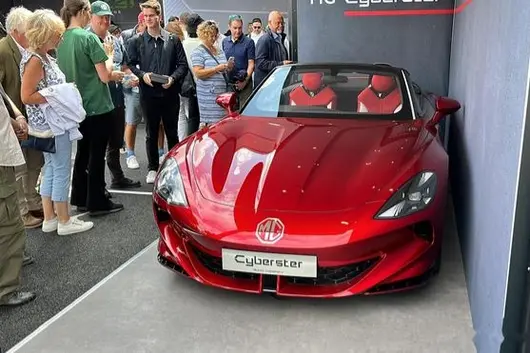

"Bought the car only two days ago, my Chinese brand electric car turned from new to old model. From signing the contract to picking up the car, neither the salesman nor the agent mentioned any information about the new model launch."
"The Chinese electric car I bought, navigation cannot plan charging routes, this is terrible."
"After picking up the car, the software version was found to be the old version, but the vehicle system falsely displayed it as the latest version."
"The dashboard displayed motor fault warning, accompanied by low-speed vibration and noise similar to a fuel engine. After sending to the official service center, they only connected software to clear error codes and cleared the dashboard warning, but the vibration and noise remained."
Without explanation, can you guess these criticisms and complaints come from overseas users of Chinese cars? And they are concentrated in overseas social media platforms, local forums, and media exposure in the recent half-year. While Chinese cars are racing in overseas markets, they are also kicking up more dust of problems.
Going overseas is the current lifeline for Chinese cars. This year, domestic auto market sales collapsed, price system breached, profit margin fell to 3.4%, going overseas has become an inevitable choice for everyone.

Moreover, Chinese cars lead in smart and electric technology, backed by industrial chain advantages, under the necessity of global market energy transition, going overseas is a convergence of timing, location, and people.
But it needs to be noted, this is a prepared industrial expedition, cannot because of intensified domestic competition, that pressure spills over, and crowding and trampling is played out overseas.
Knocking on the door of the global market, Chinese cars find it difficult
First, tell a recent story. In January 2026, China and Canada signed an electric vehicle tariff quota agreement: Canada grants 49,000 units annual import quota for Chinese-made electric vehicle models, tariffs within the quota drop to 6.1%, rising to 70,000 units by 2030.
This is a rare chance for Chinese cars to re-enter the North American market. The last time Chinese-made cars could enter Canada was before October 2024. After that, the country implemented 100% punitive tariffs on all Chinese-made cars, the entire North American market closed doors to Chinese cars, until this time reopening a crack.
How important this opportunity is for Chinese brands, look at the response of independent car companies. BYD, Geely, Chery, started planning immediately. BYD previously had Seagull, Dolphin, Yuan Plus (Atto 3), and Seal four cars entered the Canadian Ministry of Transportation pre-review list, favorable timing assisted, immediately selected site plans to open 20 stores first, and simultaneously researched building factories in Canada.

Geely relied on previous Volvo and Polestar channel resources, stated letting Zeekr land in Canada first within the year. Chery's action was most agile, completed trademark registration for Exeed, Omoda, Jaecoo and other brands, core position recruitment, vehicles shipped to Canada in May, first batch of 10 dealers open before end of June, almost done in one go.
The speed of three top independent car companies reveals the importance of entering the North American market, and also reflects the "anxiety" of Chinese cars, a situation urgent, first come first served, opportunity cannot be lost, time doesn't wait anxiety, mixed with strong offensive power and anxiety behind the attack.
Why so urgent? Because this road is not easy. 30 years ago, Chinese cars started the earliest overseas expansion, could only rely on low-price fuel cars, seizing price troughs lacking local auto industry, weak coverage by Europe, US, Japan, Korea. Many years later, relying on upgraded cost-performance, step by step broke into Europe, US edges, Oceania, Central Asia, Africa, etc.
Until smart electrification overtaking, Chinese cars had strength and confidence, strong attack Middle East high-end, European core and North American market. Clearing thorns and brambles all the way, only then got the ticket to join the world auto industry today.
So, the more so in the "internal cold, external hot" current, the more opportunity and challenge coexist, more cannot let problems breed even spread. A thousand-li dike collapses at an ant hole, let alone Chinese car globalization dike is being built.
Sharp tool or "lethal weapon"? Don't be rash with "fast iteration"
Overseas users' criticisms and complaints about Chinese cars actually had precedents long ago. Three years ago when Chinese car exports topped the global first place for the first time, exploded with a round of concentrated quality issue complaints, even triggered recalls. After that, product-related complaints and criticisms gradually decreased, praises for Chinese cars intelligent leading technology online increased more and more.
But since this year, problems became frequent again, cases cited at article start are just tip of iceberg. While Chinese car companies busy with overseas expansion, probably also need to see timely: product quality, after-sales network and brand trust three curves slopes, are not keeping up with sales curve's steep rise.
In the years new energy accelerated capturing ground, Chinese car companies accustomed to a set of tactics: fast iteration, exchange price for volume, use OTA to clean up. This logic works in domestic market because domestic consumers have high tolerance for new brands, car replacement cycle short, used residual value anxiety offset by low purchase cost.
But overseas market completely different. European consumers average car replacement cycle is 8 to 10 years, Australian consumers legal protection awareness for after-sales service far exceeds domestic, UK consumers check Euro NCAP ratings and J.D.Power reliability surveys before buying cars. In these markets, one serious software fault or one perfunctory after-sales handling, might not be "deal with later" problem, but directly terminate a brand's future locally.
In January this year, foreign car review website driveauthority.com published "Common Problems With Chinese Electric Cars in 2026", summarized Chinese electric cars' five high-frequency problems: software instability, insufficient after-sales network, parts supply delays, ADAS calibration weaknesses, rapid residual value depreciation.
Software instability or function not perfect, fundamental reason is product not mature adaptation pushed to market, this not technical capability insufficient, but anxious to occupy market and hoping for luck. Currently, such problems although not formed scale complaints overseas, this is by no means ignore-able reason. Avoid delivering vehicles with faults, avoid giving brand negative impact, is Chinese cars should learn lesson.
After-sales network and parts supply, prerequisite for survival and rooting, according to relevant survey shows, currently indeed not well solved. Compared with Japan and Korea brands, Chinese cars overseas after-sales three structural dilemmas: outlets not enough, parts unavailable, technicians cannot repair, still need to continue effort as top priority.
However, already Chinese car companies took action, Great Wall in Australia, South Africa established overseas parts central warehouse; Changan in Saudi Arabia, Qatar and other countries did 325 person-times technician training.

As for Chinese ADAS calibration problems exposed overseas, this structural mismatch between Chinese development and global validation, probably still needs Chinese car companies constantly conquer overseas road rights, data return, regulations, certifications and other barriers related to smart driving. This not one day two-night matter, but only conquered these difficulties, Chinese smart driving advantage can truly win overseas users' praise.
More hidden is residual value problem, yet most lethal. With overseas base expansion and domestic pressure continuing increase, Chinese cars overseas "same category fighting" inevitably intensifies, brands more familiar with fast iteration tactics, inevitably will accelerate speed of new cars and iteration placed overseas.
Jan-May this year, statistics show domestic new car releases exceeded 500 models. Same period overseas market, conservative estimate Chinese brand average each at least launched 2-5 new models/facelifts/generation products. Each model change accompanied configuration upgrade, even "more features no price increase", inevitably will impact previous generation model residual value.
Fast iteration is competitiveness in domestic, but overseas if handle improperly, may become trust killer. Especially in UK, Australia and other countries with strong used car culture, negative impact will be significantly amplified.
But tech competition doesn't allow slowing down, solution path perhaps can under premise of fast iteration, establish overseas consumer expectation management and old user compensation mechanisms. At least can advance publicity product roadmap, let consumers have time to make purchase decision, rather than after buying car find self "backstabbed".
Chinese car overseas expansion is moving from "selling cars" Phase 1.0, entering "establishing brand" Phase 2.0. This stage won't because holding "full industry chain + low cost + high tech + fast iteration" advantage loop, have shortcut to walk. At first, Japanese cars spent twenty years to establish global network and brand system. Now Chinese cars probably also need down to earth, do every detail in every market, can truly establish brand in global market.
Volume and price rise, why profit can't catch up?
Chinese car overseas expansion, also facing another unavoidable challenge.
First look at results: Five years ago, Chinese car overseas average unit price was about 100,000 yuan, now risen to 300,000 yuan. Volume and price rising, report card is not bad. But turn to profit side is: This year Q1, Chinese car overseas profit contribution ratio overall below 10%, compared to 2.226 million vehicles export at same period, profit margin obviously low.
Where is problem? Main reasons lie in: Exchange rate and price war.
Statistics show, this year Q1, only A-shares/H-shares mainstream listed auto companies, due to RMB appreciation exchange loss, total exceeded 10 billion yuan, largest loss were BYD and Geely.
This scene like exactly Japanese cars' experience in early 90s. At that time, Japanese car exports large, but localization seriously insufficient, exchange rate fluctuation directly swallowed profit. Just that crisis, forced Toyota's global localization transformation, investment build factories, supply chain localization, Toyota finally stood at global No.1. Chinese car companies although long ago realized localization importance, but in implementation, mostly still cognition and action not in sync.
BYD is active action group, overseas investment build factories, rapid expansion. Few days ago shareholder meeting, Wang Chuanfu stated "By 2030, BYD in scale can achieve true global No.1". Target clear, but outside scale, profit structure optimization equally urgent.

Except exchange rate, price war problem also unavoidable. Although overseas average unit price already risen to 300,000 yuan, when domestic price war fought to "A jin of car cheaper than a jin of pork", many car companies still unconsciously moved this logic to overseas.
End of last year, some Chinese brands fought price war in Thailand market, some models price reduction reached 38%. Early this year, Chinese brand price war drama played in UK.
EU attitude to price war quite decisive. January 2026, China-EU reached "Price Commitment Agreement", by setting "floor price" (price floors) replace previous anti-subsidy tariffs. This "price instead of tax" operation, let Chinese cars lose using low price leverage European mass market chance, but looking in reverse, it forces Chinese brands must go higher.
Players can stay in Europe, must possess two abilities: one product power indeed solid, two brand story allows European middle class to pay. This road very narrow, any walked through are kings, because this not only needs car, but system investment of over ten years.
Chinese car globalization victory hand, never lies in who faster than who, nor lies in who sells more. Lies in who still selected, trusted, recommended to friends by local consumers ten years later. This not a beautiful export sprint, but a trust long run spanning at least ten years; needs not "Western Pass" survival instinct, but "Nanyang" city building determination.
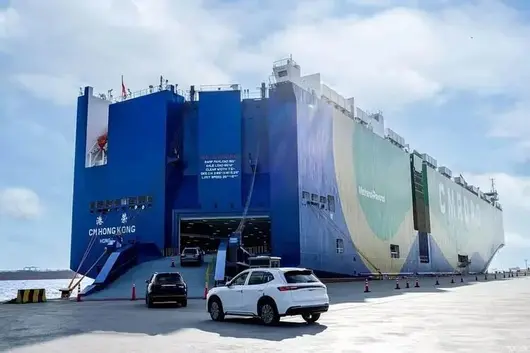

Recently, two rumors about BYD overseas spread widely online: Australia imposed a 50 million Euro fine, Turkey sales almost collapsed. Many netizens sighed after reading, saying BYD's overseas journey is becoming harder. But breaking down the whole matter, online content contains much exaggeration. However, through these two incidents, we can clearly see that domestic automakers' overseas expansion is far less easy than we imagined.

First, regarding the Australia incident, the rumor of a 50 million Euro fine itself is false; the actual upper limit is 50 million AUD. The cause of the whole matter is helpless, purely a low-level mistake by BYD's local Australia team. When staff entered data, they mistakenly treated the vehicle manufacturing time as the whole vehicle production time. 1265 cars produced in 2025 were registered as 2026 models.
To be fair, this batch of cars had no issues with hardware configuration or safety standards; the vehicles themselves had no quality defects. However, the car buying environment in Australia is different from domestic. Production year directly determines used car residual value and insurance pricing. If the model year is marked incorrectly, owners will definitely suffer selling cars after a few years. When the incident just broke out, BYD only offered 1100 AUD compensation per car, owners all disagreed, local media reported in turns, public opinion pressure came. Forced by the situation, BYD adjusted the plan: owners can return cars for full refund, change to new model, or take compensation and keep using.

Only if all owners choose to return cars will BYD incur costs amounting to 240-280 million RMB. The reality is many owners chose to take money and keep cars, so the final actual cost is far from the exaggerated online reports. This money is active compensation from BYD to owners; local regulatory authorities have not yet issued a fine. Even with this storm, BYD remains the second in Australia new energy sales, only behind Toyota, the basic market share has not shaken.
Then let's talk about the Turkey market. In the past two years, BYD was very prominent locally. In 2024, BYD promised to spend 1 billion USD to build a factory in Turkey. The Turkish government provided generous benefits, waiving 40% additional tariffs and $7,000 per vehicle tax. Relying on huge price advantages, in January 2026, BYD sold 3,866 cars in a single month. Later, BYD prioritized the Hungary factory landing, pausing the Turkey factory plan. According to the signed agreement initially, Turkey directly cancelled tariff privileges, and could even collect previously waived taxes. After benefits disappeared, sales plummeted, June only sold 83 units, down 98.8% year-on-year.

Everyone should not mistakenly think Turkey specifically targeted BYD. In the first half of 2026, Turkey's overall auto market declined 11.44%, all Chinese brand overall sales declined 39.6%. Chery completed localization layout early, so the impact received was small. Simply put, BYD's huge sales drop was caused by the loss of tariff benefits, leading to car price increases.

But everyone, do not discredit BYD's overseas layout based on just two incidents.
Previously, we naively thought if cars were built sturdy and configurations were sufficient, selling abroad would not worry about sales channels. After these two incidents, I realized overseas markets are full of hidden tricks. Foreign welfare policies are never given for free; Turkey is a living example. Benefits are bound to factory building tasks. As long as your landing progress does not meet agreed conditions, the received policies are taken back instantly, showing no mercy.
The Australia incident further sounded an alarm for us; foreign local regulations are too strict. A simple date entry error, not because car quality is bad, could force the automaker to pay hundreds of millions. In the future, European carbon tariffs and anti-dumping measures will land successively, the cost of our domestic cars going overseas will only get higher.
Objectively speaking, BYD's overall overseas performance is not bad. Southeast Asia, Brazil, Hungary, Thailand market sales continue to rise, European major countries' market development momentum is also quite good. This Australia flip, the root cause is still overseas local team carelessness, domestic HQ oversight of overseas branches insufficient, management friction appeared loopholes, it is not that the cars themselves are not good.

And in my opinion, domestic cars going overseas have now bid farewell to the era of low prices and high volume. We have full confidence in car building now, but operating overseas markets, we are still novices. In the future, it is not just core mechanical components and Intelligence these hardware strengths that compete. Understanding local policies and regulations, managing overseas employees, thoroughly understanding local people's consumption habits, all are compulsory courses.
BYD's current losses have also warned domestic automakers like Great Wall, Geely, NIO preparing to dig deep into overseas markets. Going abroad cannot just focus on making cars, must not ignore detail management. Only by calming down to familiarize with local rules and doing overseas operations solidly, can our domestic cars stand firm overseas. This road cannot be rushed.
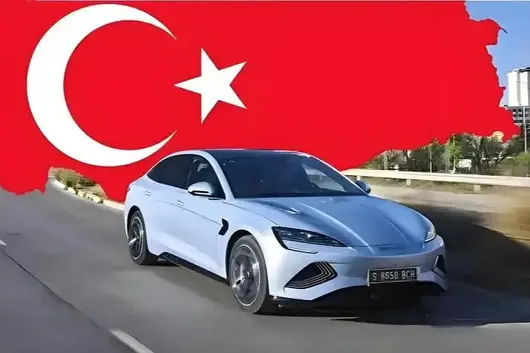

In June, automakers mass-announced impressive production and sales data. BYD, Leapmotor, NIO, and XPeng all submitted growth reports, with single-brand sales figures rising steadily, creating a boom-like scene. However, data shows domestic passenger car retail sales dropped 21% year-on-year. Since the end of last year, the domestic auto market has been stuck in a double-digit decline range, with the drop in February touching 25.3% at one point.

On one side, brands are constantly releasing good news to the outside world; on the other, the overall market continues to shrink. Behind this seemingly contradictory collective carnival lies a picture of industry segmentation woven together by the struggle for existing market share and breakthroughs in overseas markets.
Domestic Auto Market Slows Down
Looking solely at the delivery speed reports released by various automakers to the public, the domestic auto industry in June still seemed to be on an upward trajectory, with head-brand sales figures showing red across the board. However, after terminal retail data was finalized, the 21% year-on-year decline indicates that the contraction of overall industry demand is already a set fact.

Many people interpret the positive growth of head brands as breaking the situation against the trend brought by the company's product power breakthrough. In the current market environment, this judgment is incomplete. With overall domestic terminal demand continuously shrinking and the total market volume continuously falling, the reason head automakers can achieve growth against the trend is partly due to incremental offset from overseas exports, and partly due to grabbing shares in the domestic existing stock market. The extra sales volume of head brands mostly comes from stock orders diverted from weak brands, which also leads to SME automakers lacking capital, technology, and channel support having actual decline rates far higher than the industry average of 21%.
Factors such as capital chains, R&D reserves, offline channels, and many others determine whether an automaker can survive this downturn cycle. This year, many marginal automakers have stopped planning annual facelifts and new models, and dealer stores in various places have successively closed down and withdrawn networks. Consumers naturally avoid these risky brands when purchasing new cars, so customer sources naturally tilt towards enterprises with scale advantages such as BYD and Geely. All global mature auto markets have gone through a brand clearance stage; the domestic auto market has simply compressed the time of this process. The more depressed the market is, the more solid the barriers of scale advantages for head enterprises become.

The 150,000 to 250,000 RMB price range, which is the main interval, is becoming the most brutal battleground in this entire stock war, and the collapse of the intermediate market is hard to reverse. This range was once the foundation for joint-venture fuel vehicles and the core battlefield for independent brands to achieve scale. Currently, user willingness to upgrade has weakened significantly, and hesitation has surged. To save sales, joint ventures rely heavily on deep price cuts to clear stock; discounts for classic family cars like Accord and Passat keep widening, completely loosening traditional pricing systems. Independent automakers, on the other hand, are densely launching hybrid and BEV models in this segment. LiDAR and advanced intelligent driving features are trickling down. Highly homogenized products combined with endless price wars compress the profit margins across the entire market.
Consumer hesitation is strongest in this price segment. Most potential car buyers worry about receiving a new model replacement or a new round of price cuts shortly after getting their cars, so they hesitate to finalize orders. The recent pressure on orders for the BYD Qin and Song pillars exactly proves the congestion level of this red sea track.
Head Automakers Profit Overseas
Domestic competition is cutthroat, while overseas markets have become a panacea for head automakers.
For a long time, the model for domestic automakers going overseas was simple and direct: assemble complete vehicles domestically, ship them in containers, and rely on low prices to open up sales channels in markets like Southeast Asia and Latin America. Essentially, it was just digesting excess capacity. This unidirectional commodity export method has a very low error tolerance. Once the target market implements tariff restrictions or import quota policies, the entire export sales chain will be directly blocked. Not long ago, the new policy introduced by Malaysia was an example.

Now, head automakers are starting to land complete manufacturing, supply chain, and service ecosystems overseas, thereby breaking away from the fragile model that relies solely on exporting complete vehicles, and establishing a long-term stable operational foundation in overseas markets.
From a technological development perspective, over the past few years, basic electrification hardware such as battery packs, drive motors, and hybrid architectures have become highly mature, with solutions converging. Head automakers have basically leveled out the generation gap at the hardware level, making it hard to gain a long-term advantage based on single hardware parameters alone. True differentiation is gradually shifting to intelligent driving algorithms, vehicle architecture tuning, global thermal management, and other soft capabilities. Under the premise of hardware homogenization, scale-based cost control has become the core decisive factor for automakers. BYD reduces manufacturing expenses through its vertical industrial chain, CATL has become a top player in power batteries. New entrant brands find it difficult to bridge the software system gap and replicate scale cost advantages. Achieving a curve overtaking on the hardware side is extremely difficult.
Speaking of this, everyone should be able to see clearly: the overseas expansion of an automaker's supply chain is essentially the outward extension of its own industrial chain capabilities. Against the backdrop of domestic technological homogenization and intensified market involution, what truly widens the final gap between automakers is the control over the core supply chain.
If an automaker only retains body manufacturing and complete vehicle assembly business, it is essentially just an assembly OEM for the upstream supply chain. If upstream raw materials or core parts prices fluctuate slightly, the pricing and profit margin of the terminal model will be directly squeezed. It cannot create unique configurations distinct from competitors, nor does it have the confidence for autonomous pricing.

The industry has gradually differentiated into two response modes. Some automakers go deep internally in self-research, keeping key parts in their own hands; others actively bind with top supply chain enterprises, locking in priority supply qualifications to avoid supply disruption and price hike risks. Those SME automakers that cannot land on either side have neither the capital to invest in upstream R&D nor stable parts orders. Not to mention participating in overseas market layouts, they can hardly withstand the price involution in the domestic market either.
Global layout and deepening of the upstream supply chain are essentially two sides of the same coin. Opening up incremental markets outwardly and safeguarding the profit foundation inwardly; missing either one makes it difficult for an automaker to stabilize its position in the upcoming industry reshuffling.
Public Car Review
In the future, electrification hardware will tend towards homogenization, and the competitive barriers of automakers will shift from parameter stacking to cost control, software capability, and supply chain control. Head enterprises will guard the domestic foundation relying on the full-chain system while overseas expanding with localized ecosystems to hedge risks. In the future, industry victory and defeat will no longer depend on the explosive power of a single product, but on the system showdown of supply chain barriers superimposed with global capabilities. The polarized pattern will continue to solidify.

Author | Guo Yue
Editor | Zhi Hao
Production of Chinese cars begins in multiple regions overseas, marking a new milestone for Chinese automakers' global expansion.
In the last three days, Chinese automakers have made new progress in their global expansion: Xpeng Motors just announced that its third local production base globally has officially started production. The first batch of G6s from the EPMB factory located in Malacca, Malaysia, has officially rolled off the assembly line, and production ramp-up has begun.

Xpeng's third local production base globally officially starts production
On June 23, Leapmotor International, a joint venture between Leapmotor Motors and Stellantis, completed the construction of a battery assembly workshop in Malen City, Spain. The planned annual capacity for battery modules is about 65,000 sets, with a maximum expansion potential to 100,000 sets.
On June 22, Chery inaugurated a new production line at the Ebro factory operated through a joint venture with the Spanish Ebro Automotive Group in the Barcelona Free Trade Zone of Spain, further enhancing production capacity.
Almost at the same time, Canadian Federal Minister of Industry Melanie Joly revealed that BYD, Chery, and Geely, the top three Chinese automakers, are actively exploring the possibility of establishing a joint venture passenger vehicle factory in Canada.
From Southeast Asia and Europe to North America, from complete vehicle manufacturing to core three-electric system support, multiple major announcements landed densely within just three days, making the offensive of Chinese automakers going global even stronger.
This is not accidental. According to incomplete statistics from Che Dongxi, 10 mainstream automakers including Dongfeng, BYD, Changan, SAIC, Chery, Xpeng, Great Wall, etc., all have new moves in overseas markets — either building factories locally, establishing joint venture companies, or acquiring overseas automaker production lines, deepening the overseas layout.
Local production is no longer an optional strategy for Chinese automakers going global, but a necessary choice for Chinese car brands to break tariff barriers and deeply cultivate regional markets. A global upheaval from "product output" to "industrial rooting" is fully unfolding.
I. Chinese automakers "buy up" global factories, deepening local layout
Since the beginning of 2026 until now, news of domestic top automakers landing overseas factories has almost never stopped, and the local production layout of Chinese automakers is unfolding at an unprecedented speed.
Among these, Europe has become the core battleground for domestic automakers' recent overseas factory layout, with Chery Group, SAIC Group, and Leapmotor all welcoming new progress in their local layout in Europe this month.

Recent progress in overseas layout by Chinese automakers in the last three months
Multiple foreign media reports stated that Nissan Motors has signed a non-binding memorandum of understanding with Chery. According to the agreement, Nissan's passenger vehicle base in Sunderland, UK, will begin using its Line 1 to contractually produce passenger vehicles for Chery starting from April 2027. Existing models such as Qashqai, Juke, and Leaf will be consolidated into Line 2 for centralized production, while idle production lines will handle Chery's localized manufacturing demands.

Nissan UK Sunderland Factory
On local time June 2, the Galician Regional Government of Spain announced that SAIC Group plans to build its first electric vehicle factory in the EU at the Port of Ferrol, with an initial investment of about 200 million euros (equivalent to about 1.568 billion RMB).

SAIC Group plans to build the EU's first electric vehicle factory
The factory will focus on the production of new energy models. Construction may start next year, operations begin in 2028, and the factory's annual capacity is expected to reach 120,000 units.
In May, the European local layout of Chinese automakers was equally dense.
On May 20, Stellantis and Dongfeng Group announced their cooperation, intending to establish a joint venture in Europe. Stellantis holds 51% and Dongfeng holds 49%. In the announcement, Stellantis Group stated that this joint venture is expected to be responsible for the sales and distribution business of Dongfeng Group's Voyah brand models in designated markets in Europe. Both parties also have intentions to carry out local production of Dongfeng Group's new energy models at Stellantis' Renault factory in Rennes, France.
On May 8, Stellantis also announced an expansion of strategic cooperation with Leapmotor Motors. The two companies plan to carry out capacity sharing at Stellantis Group's factories located in Madrid and Zaragoza, Spain, to comply with "Made in Europe" requirements.
Thus, from contract manufacturing, self-building to joint venture capacity sharing, Chinese automakers are deeply penetrating the European manufacturing heartland through multiple paths.
In addition to the aforementioned announced cooperation, at the end of April this year, according to Reuters citing informed sources, FAW Hongqi may be negotiating with Stellantis, intending to utilize the latter's factory in Spain for local production.
Spanish media "LaTribunadeAutomoción" also reported that Geely may reach an agreement with Ford Motor to acquire the Ford Body 3 assembly line located in Almussafes, Valencia, Spain, and use it for new energy model production.
In addition to accelerating the layout in the European market, the local layout of Chinese automakers in markets such as Southeast Asia, Middle East, Americas, Africa, etc., is also accelerating, with flowers blooming in multiple points.
In the Southeast Asian market, on May 13, Xpeng Motors officially acquired 90.1% of the equity of the EV manufacturing entity EIDO under the listed company PT Sinar Eka Selaras Tbk in Indonesia.

Xpeng acquires equity of Indonesian car factory
The core asset of this acquisition is the EIDO electric vehicle production and assembly factory located in Plakarta, West Java Province, Indonesia. This factory is Xpeng Motors' first overseas production base, adopting the Completely Knocked Down (CKD) model.
In the Middle East market, on April 25, Li Auto signed agreements with two Middle Eastern dealers, Al Fahim Motors in the UAE and Mohamed Yousuf Naghi Motors in Saudi Arabia, declaring the entry of Li Auto L series models into the Middle East market.

Li Auto signs with Middle Eastern dealers
In the Americas market, on March 27, Changan Motors and partner CAOA Group jointly opened a new chapter in Brazil's automotive industry. The highly automated production line located in Anápolis was officially completed and put into production. Changan Motors' Brazil factory's first phase plans to launch 3 models, covering various power forms such as fuel, hybrid, and plug-in hybrid.

Changan Motors Brazil factory officially completed and put into production
In the African market, according to foreign media reports, executives of Great Wall Motor's South Africa company revealed that they are weighing two local production plans in South Africa — either sharing production facilities with other automakers, or acquiring existing factories if conditions permit, and have already started negotiations with Mercedes regarding this.
Looking at a series of cases, the actions of Chinese automakers to land overseas capacity are increasing day by day. A large number of layout projects are moving from the signing agreement stage to the production stage, and the overseas expansion of Chinese cars is advancing at an unprecedented acceleration.
II. Domestic increase faces a ceiling, going global is the inevitable choice for automakers to break the situation
Why do automakers want to accelerate local layout?
The answer points directly to the fierce competition in the domestic automotive market. Currently, the Chinese automotive market has shifted from incremental expansion to stock game.
According to data released by the CPCA, if calculated by broad passenger vehicles, the cumulative retail sales of the national passenger vehicle market reached 7.178 million units in the first five months of this year, down 19.7% year-on-year. During the same period, export sales reached 3.4 million units, soaring 67.7% year-on-year.

Comparison of year-on-year growth rate of national passenger vehicle retail sales and export sales in the first 5 months of this year
When domestic price wars continuously compress automakers' profit margins, overseas markets have become the key direction for automakers to seek incremental growth.
However, going global does not equal simple complete vehicle export. Chinese automakers' complete vehicle export is usually constrained by multiple factors such as transportation costs, tariff policies, and market access.
The biggest challenge Chinese automakers face in going global is often not about selling cars, but about placing capacity overseas.
For this reason, local production is significant for automakers' overseas layout. It is not only an effective path to avoid trade barriers and reduce comprehensive costs, but also the foundation for deeply embedding in regional markets and achieving long-term operations.
Meanwhile, the operational difficulties faced by multiple overseas automaker giants have provided opportunities for Chinese automakers' overseas layout.
In recent years, multiple overseas automakers have been significantly pressured in electrification transformation, showing declining performance one after another.
Stellantis Group's net loss in 2025 reached as high as 22.3 billion euros (equivalent to about 174.8 billion RMB), turning from a net profit of 5.5 billion euros (equivalent to about 43.1 billion RMB) in 2024, for the first time in nearly 5 years falling into annual loss; Nissan's operating profit in the 2025 fiscal year dropped 16.9% to 58 billion yen (equivalent to about 2.4 billion RMB); Mercedes-Benz Group's net profit in the 2025 fiscal year was 5.331 billion euros (equivalent to about 41.8 billion RMB), a year-on-year decrease of 48.8%, setting a new low in nearly 5 years.

Stellantis Group 2025 Performance
Behind the decline in overseas automaker performance is a series of practical problems: falling demand for fuel cars, lengthened investment return cycles for new energy vehicles, and severely insufficient capacity utilization rates for some factories and production lines.
Taking Nissan Sunderland Factory as an example, MarkLines statistical data shows that its actual operating rate in 2025 was only 45.5%, down 8.7 percentage points compared to 2023, and annual output was less than half of the designed capacity. At the same time, idle factories and production lines still need to bear rigid costs such as depreciation, labor, and maintenance, further increasing their financial burden.
Facing profit pressure, multiple overseas automakers are achieving cost reduction by closing factories and reducing capacity — which precisely provides a perfect opportunity for Chinese automakers' local layout.
Compared to the construction cycle of building a factory from scratch taking three to five years, acquiring or renting an existing factory can significantly compress the time for capacity landing. Chinese automakers can complete production layout with lower capital costs and time costs, thereby seizing the market opportunity.
The "retreat" of overseas automakers is, in a sense, becoming an accelerator for Chinese automakers' "advance".
III. Overseas sales surge, era of Chinese car grand navigation arrives
With the acceleration of automakers' local layout, the effectiveness of automakers' global layout is already reflected intuitively in overseas sales data.
Looking at the export sales performance in May, multiple Chinese automakers showed bright overseas sales performance in May 2026.
Three Chinese automotive groups broke through 100,000 units in export sales in May, with Chery Group exporting 182,000 units, up 81% year-on-year. BYD's overseas sales in May were 160,000 units, up 81% year-on-year, creating a new monthly record for overseas sales. SAIC Group exported 129,500 units in May, up 32% year-on-year.

Summary of export sales and total sales of some domestic automakers in May 2026
In addition, Geely and GAC's overseas sales doubled, exporting 85,000 units and 28,000 units in May respectively, up 184% and 140% year-on-year.
It can be seen that the monthly overseas sales of top automakers have stabilized at the hundred-thousand level or even reaching the two-hundred-thousand level, and going global is moving from "testing the waters" to "volume release" stage.
And looking at the cumulative export data performance in the first five months of this year, this growth trend is even clearer: overseas sales of six automakers — BYD, SAIC, Chery, Geely, Great Wall, and Changan — have all climbed.

Summary of export sales and export annual sales target achievement of some domestic automakers in the first five months of this year
Among them, Chery Group's cumulative export in the first five months of this year reached 753,000 units, up 70% year-on-year, a net increase of 309,000 units compared to the same period last year. Its increment ranks first among the six automakers.
During the same period, BYD followed closely with an increment of 243,000 units. Cumulative export in the first five months of this year reached 617,000 units, up 65% year-on-year.
The overseas sales target set by BYD at the beginning of this year is 1.5 million units for 2026. In the first five months of this year, 41% has been completed.
Recently, BYD Chairman Wang Chuanfu revealed at the annual shareholders' meeting that it is expected that overseas sales this year will exceed the original target, releasing a clear signal of acceleration in going global.
Geely's cumulative overseas sales reached 371,000 units in the first five months of this year, up 158% year-on-year. With the fastest growth rate among these 6 automakers, Geely's export sales target this year is 640,000 units, with 58% achieved in the first five months of this year.
SAIC, Changan, and Great Wall's export sales reached 589,000 units, 299,000 units, and 231,000 units respectively in the first five months of this year, up 46%, 21%, and 47% year-on-year. Growth is stable, with export annual sales targets achieved at 39%, 40%, and 39% respectively.
Whether single-month export sales or cumulative export sales, Chinese automakers' overseas sales show the characteristics of continuous, stable, and high growth.
It can be foreseen that in the second half of the year, the investment of major Chinese automakers in building factories overseas, channel expansion, and supply chain localization will continue to be increased, and the pace of going global will be further accelerated. Chinese cars are moving comprehensively from "product output" to "industrial rooting", and the competition of the era of grand navigation has just begun.
Conclusion: Chinese automakers accelerate overseas landing
From building factories overseas, acquiring factories to leasing production lines, Chinese automakers' local layout is blooming in multiple points and accelerating landing.
Those who can integrate overseas capacity in the fastest speed, integrate into regional supply chains, and seize local market shares will be able to occupy the initiative in the next stage of global competition.
This is not only a challenge, but also a necessary path for Chinese automobiles to go from large to strong.
From "complete vehicle export" to "technology output + local production", from "going out" to "going in", the curtain of the era of Chinese car grand navigation has been lifted, and the real journey has just begun.
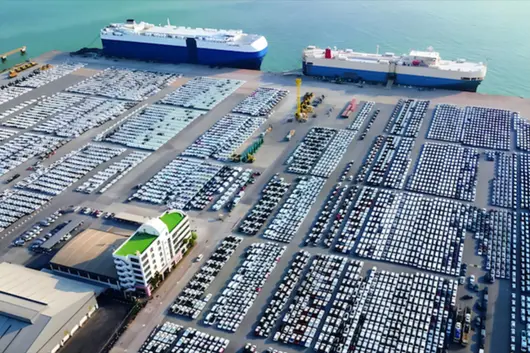
© 2024 Bitauto.com. All Rights Reserved.
Bitauto (www.yiche.com and www.bitauto.com) is one of the most visited automotive websites in China. We provide detailed info on Chinese car brands available in your area. Please note that the information provided on this website is based on publicly available data and is for reference only. It may not be fully updated or accurate at all times.

Help us improve our website


