

HomePuchong

Search History
Popular Searches
Dealer Login / Sign Up

On October 30, 2026, an insider at Beijing Hyundai confirmed a matter: General Manager Li Fenggang left office due to "personal reasons", falling nine days short of completing the one-year term since his formal appointment on November 10, 2025.
Li Fenggang's employment contract was for three years, but he served only one. A few days before his departure, Yonhap News Agency released a set of figures: In September, combined retail sales of Hyundai and Kia in China totaled approximately 9,000 units, with monthly sales falling below the 10,000-unit mark and market share at 0.6%. Among them, Hyundai sold about 4,000 units, a year-on-year decline of 47%; Kia sold about 5,000 units, a year-on-year decline of 31%.
Unexpectedly, it was these two events that brought Korean cars back into the industry spotlight. Recently, Beijing Hyundai and Yueda Kia had just made a good impression on social media platforms for issuing generous holiday bonuses and gift packages to employees during the Mid-Autumn Festival and National Day.
Forgotten Glory
Korean cars had experienced glory in the Chinese market.
In 2016, Beijing Hyundai sold 1.142 million units, Yueda Kia sold 650,000 units, totaling nearly 1.8 million units for both. Their market share approached 10%, securing a stable position as the third pillar of the joint venture camp, second only to Volkswagen and GM.
Even earlier, in 2013, Beijing Hyundai's annual sales exceeded 1 million units, making it the third domestic manufacturer to achieve single-brand production and sales of over 1 million, following FAW-VW and Shanghai-VW. The feat Toyota, Honda, and Nissan had not yet achieved, Hyundai accomplished earlier.
Those years marked the true "street car era" for Korean cars in China. Elantras and K5s were parked downstairs at countless homes, with a constant flow of customers in dealerships. At auto shows, due to the presence of Korean celebrities, the Beijing Hyundai exhibition booth was surrounded tightly, tickets were scalped to double the price, and the glass doors of the exhibition hall were even damaged by the crush.
Beijing Hyundai, the star automaker of the time, was established in October 2002, with BAIC and Hyundai each holding a 50% stake. In August of the same year, Dongfeng Yueda Kia was established earlier in Yancheng, Jiangsu, with Dongfeng, Yueda, and Kia each holding 25%, 25%, and 50% respectively.

Both Korean brand joint venture companies used a similar strategy: high configuration, low price, and fast introduction. Three months after the establishment of Dongfeng Yueda Kia, the first car, the Spectra, rolled off the assembly line, quickly entering the compact family sedan market. Beijing Hyundai also launched its first Sonata at the end of the same year, subsequently entering the official and business vehicle market.
Afterwards, Cerato, Forte, Sportage, K3, Sportage, K5, Elantra, Accent, Tucson, ix35 were deployed one after another with tacit understanding between the two brands. Hyundai focused on bringing down the price of joint venture cars, while Kia focused on making joint venture cars better looking. Together, they pinned the image of Korean cars to "cheap, good looking, high configuration".
Both companies were busy expanding capacity in those years. Beijing Hyundai located factories in Cangzhou and Chongqing outside of Shunyi, Beijing, once arranging five factories; Yueda Kia owns three factories in Yancheng. As capacity expanded, everyone assumed growth would continue, no one thought about what would happen if these factories became empty in the future.
Turning Point and Divergence
The turning point came suddenly. In early 2017, the THAAD incident escalated, and the status of Korean goods in the minds of Chinese consumers declined rapidly. This matter was beyond the control of enterprises, yet it happened to hit the vital point of Korean cars.
Both Beijing Hyundai and Dongfeng Yueda Kia faced declines in 2017. Beijing Hyundai's sales dropped to 785,000 units that year, a year-on-year decline of 31.3%; Dongfeng Yueda Kia dropped to about 360,000 units, a year-on-year decrease of 45%, nearly halved.
The turning point of Korean car sales in China was of course not decided by the THAAD incident. THAAD was the trigger, but not the root cause. There was a consensus on this within both companies at the time and among outsiders. The Korean side summarized that "they lacked excellent SUV products on the hottest track", while Kia frankly admitted "they were too optimistic, there were mistakes in product promotion and pricing".
Both enterprises subsequently launched price reduction promotions. Beijing Hyundai even launched a new Verna starting at 49,900 yuan. In 2018, Beijing Hyundai's sales briefly stabilized, and Dongfeng Yueda Kia saw a slight increase.
But this was more like a fleeting recovery, followed by a more terrifying decline channel. The sales of both companies continued to drop, with rumors of selling factories and contracting channels. It was from here that both sides moved in different directions.
For Beijing Hyundai, the demands and propositions of the Chinese and Korean shareholders diverged. The Chinese side hoped to support channels and market share with higher sales targets; the Korean side hoped to reduce losses with more conservative targets. The Chinese side advocated for drastic cost reduction and introducing the local supply chain; the Korean side tended to protect the existing Korean supplier system, with nearly 80% of Beijing Hyundai's suppliers belonging to the Korean system.
A 50:50 shareholding ratio, placed on a pair of equally strong and unwilling shareholders, became a stalemate that was difficult to reconcile when facing difficulties and challenges. Falling upon Beijing Hyundai, this joint venture, it resulted in fatal management infighting and long-term strategic ambiguity. The company did not know where to drift amid intense competition and disorder.
In 2024, Beijing Hyundai's annual sales reached 154,200 units. This is the eighth year of continuous decline from 1.142 million units.
On the other side in the same year, Yueda Kia's annual sales rebounded to 248,000 units, a year-on-year growth of 49.2%. This figure was mainly driven by exports.

In July 2018, Chun Byung-jin, the newly appointed deputy president of Kia, assumed the role of General Manager of Dongfeng Yueda Kia. The following month, Dongfeng Yueda Kia received its first overseas export order: 400 Vistos dispatched to Egypt. From receiving the order to shipping, it totaled just under four months.
From this speed, it can be seen that the Korean side almost immediately determined the export strategy for Dongfeng Yueda Kia after Chun Byung-jin took office, attempting to transfer the problem of insufficient capacity utilization at Chinese factories through Kia's global network.
After the 400 Vistos were dispatched to Egypt, the second batch of 856 Vistos immediately loaded at Shanghai Port, of which 200 continued to Egypt, and 656 were sent to the Philippines. A few days later, the first batch of 288 engines also loaded for export to Slovakia. Afterwards came more intensive exports of complete vehicles and engines.
In December 2021, Dongfeng Yueda Kia welcomed a more important turning point. Dongfeng listed its 25% equity in the hands for transfer at 297 million yuan. Jiangsu Yueda, as the sole bidder, took over. "Dongfeng Yueda Kia" was renamed "Yueda Kia".
After Dongfeng withdrew, Yueda Kia's shareholders became two parties. Although the shareholding ratio was also 50:50, Yueda Kia's internal structure was obviously simpler. The voice of the Korean side remained dominant. After the equity change, the decision-making chain became shorter, and the Korean side's voice was heavier.
Yueda Kia also established a management system consistent with Kia's global standards. Only one person was appointed as the head of each department, and the dual-signature system was abolished. A departing executive of a joint venture company once evaluated the dual-signature system: "The essence is to ensure the shareholders' own interests through dispatched managers, rather than the interests of the joint venture company".
Without the management infighting of the dual-signature system, Yueda Kia, which was completely under Korean control, when facing a more intense price war in the Chinese market, its strategy leaned more towards exports. The Yancheng factory was explicitly designated as an export hub in Kia's global network. Although the company still shouted "In China, for China", the weight of exports became heavier year by year.
Who is Right and Who is Wrong?
In 2025, signs of improvement began to appear at Beijing Hyundai. First, the two shareholders seemed to reach a consensus on strategy.
In March of that year, BAIC and Hyundai jointly increased capital by 8 billion yuan. In October, the "Smart Start 2030 Plan" was released, setting the goal: to launch 20 new products in the next 4 to 5 years, achieve annual sales of 500,000 units in 5 years (300,000 domestically, 200,000 exports), and strengthen the strategy of "In China, for China, towards the world".
In Yantai and Shanghai, Beijing Hyundai established R&D branches led by Chinese engineers, with a scale exceeding 1,300 people, focusing on new energy development, intelligent driving, and intelligent cockpits, aiming to enhance product definition and technical route dominance in the Chinese market.
In November of the same year, Li Fenggang, the first Chinese general manager since the establishment of Beijing Hyundai, was appointed. This appointment was interpreted as a move by Hyundai Motor Global CEO Scott Oh to push for management localization. Scott Oh took office in January 2025. He is the first non-Korean Global CEO in Hyundai Motor's history, advocating operating local markets with people who better understand the local market.
Beijing Hyundai also achieved sales of 210,000 units in 2025, welcoming rare growth after 8 years of decline, and exports also began to accelerate.
Li Fenggang naturally wanted to do something radical. After taking office, he proposed "Integration Direct Sales", wanting customers to order online with unified national prices. At the Beijing Auto Show in April 2026, the "Star Sprint Plan" was released, with the goal to expand the dealer network from more than 200 to 484 by 2030.
But news of his departure came even faster. According to informed sources, the resource allocation power and decision-making initiative Li Fenggang actually obtained did not match his title. In the management sequence dispatched by the Korean side, the progress of supplementing Chinese personnel was limited, and key positions remained dominated by Korean nationals. There were rumors that management wanted the Yantai Technology Center to support Beijing Hyundai's work, and part of their energy had to be spent on "dining with the Korean R&D team".

The goals of the two shareholders still remain difficult to align. The divergence still centers on the core issue of maintaining sales versus reducing losses. The Chinese side hopes to set higher sales targets and reduce costs to a greater extent. But cost reduction, in the view of the Korean side, is not just a financial issue, but a matter involving vested interests of the Hyundai Korea headquarters.
Until September 2026, the Chinese and Korean shareholders barely reached a consensus, giving up higher sales targets. Annual sales were set at about 160,000 units, and losses were controlled at around 1.9 billion yuan.
Shortly after this consensus was confirmed, news of Li Fenggang's departure was leaked, stating he left for "personal reasons". An internal representative of Hyundai China stated, "We recognize the measures taken during his tenure very much internally".
At this time, Yueda Kia was in a completely different situation. In 2025, Yueda Kia's annual sales reached 254,000 units, showing positive growth for two consecutive years. But among these, exports were 173,000 units (accounting for 68%), and domestic sales were 81,000 units (accounting for 32%).
By September 2026, Yueda Kia had cumulatively exported over 666,400 complete vehicles, with export sales breaking through 7.44 billion USD, covering 92 countries and regions; engines cumulatively exported exceeded 550,000 units, sold to South Korea, Russia, Vietnam, Malaysia, and other places.
Exports also supported the company's profits. In 2025, Yueda Kia's net profit reached 843 million yuan, finally turning losses into profits. After the company made money, Yueda Kia also timely shared the wealth with employees.
In 2025, Yueda Kia adjusted wages generally. Production posts had a performance-based wage increase of 100 yuan per month; management posts had a combined salary grade and performance wage increase of 225 yuan per month; annual bonuses were issued for 3 months, 0.5 months more than the previous year.
In June 2026, Yueda Kia adjusted wages generally again. Regarding this salary increase, internal notices stated: "The 2026 global automotive market faces heavy challenges, including rising raw material costs due to Middle East geopolitical conflicts, exchange rate fluctuations, and intensified internal competition in the domestic passenger car market. However, on the management level, we persist in 'people-oriented', recognizing employee dedication, therefore implementing a salary increase for all employees".
During the Mid-Autumn Festival and National Day in 2026, Yueda Kia issued 1,400 yuan in cash holiday bonuses (1,000 yuan from the company + 400 yuan from the union) plus snack gift packs and mooncakes. After Yueda Kia employees posted this on social media, it sparked much discussion among netizens.
Some netizens praised the employee protection and humanistic care of Korean car companies. This point is indeed unquestionable. Even for Beijing Hyundai, where the situation is not easy, non-poor double holiday welfare was also sent to employees: 500-1,000 yuan in cash holiday bonuses plus physical gifts. This welfare, placed in the entire automotive industry in 2026, can be considered decent.
Of course, some suspected departing employees complained about large-scale layoffs in recent years due to the marginalization of Korean cars in China. Compared to ensuring the welfare of current employees, departing employees hope for long-term job security. Even if everyone drinks porridge, it is better than some eating and others drinking water.
Who is right and who is wrong? There are no standard answers to many things in the world. Just as Borges wrote in "The Garden of Forking Paths": Time forever forks, leading to countless futures. We walk different paths, no one knows whether flowers bloom on the other path.
Ten years have passed. Although Korean cars have been marginalized, both companies are still here. Like all other automakers, they strive to set off towards the future. As for how the future will unfold, no one can answer at this time.
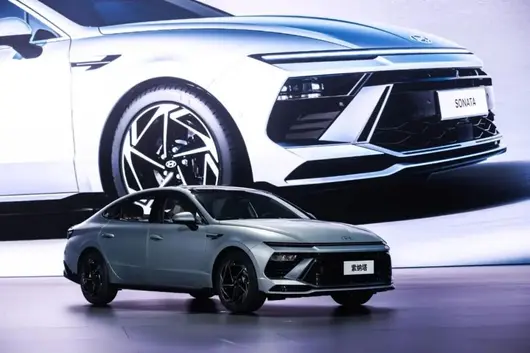

In the Malaysian SUV market, many buyers compare the Toyota Harrier and Chery Tiggo 8 Pro when choosing a car. These two cars are quite close in price and positioning. Today, we will do a detailed comparison from multiple aspects to save you time on research.
The OTR price of the Toyota Harrier in Malaysia is RM 289,000 - 289,000, with a total of 1 variant, including 2026 HEV 2.5L Standard (RM 289,000), etc.
The OTR price of the Chery Tiggo 8 Pro in Malaysia is RM 159,750 - 159,750, with a total of 2 variants, including 1.6L Turbo Standard (RM 130,000), 1.6L Turbo Premium (RM 145,000), etc.
From a price perspective, the starting price of the Chery Tiggo 8 Pro is RM 129,250 cheaper than the Toyota Harrier. To be honest, in this price range, a difference of a few thousand isn't really significant; the key is to look at overall value for money and long-term maintenance costs.

The Toyota Harrier has a safety rating of 5★ (ASEAN NCAP), with active safety systems including Brand ADAS.
The Chery Tiggo 8 Pro has a safety rating of TBD, with active safety systems including Basic.
In terms of safety features, both cars have received good ratings. However, the Brand ADAS of the Toyota Harrier and the Basic system of the Chery Tiggo 8 Pro have some differences in functionality. If you value active safety, you can compare their feature lists carefully.

The Toyota Harrier body length is 4400 mm, trunk 400 L.
The Chery Tiggo 8 Pro body length is 4400 mm, trunk 400 L.
The dimensions of the two cars are almost identical, with little difference in interior space. For cars in this class, daily use is more than sufficient.

Toyota Harrier warranty 5 years/unlimited mileage, maintenance interval every 10,000km or 6 months.
Chery Tiggo 8 Pro warranty 3 years/100,000km, maintenance interval every 10,000km or 6 months.
Overall, both the Toyota Harrier and Chery Tiggo 8 Pro are excellent models in the Malaysian market. Which one to choose depends mainly on your personal needs and budget. We recommend doing your research, comparing quotes from several car dealers, and test driving before making a final decision. Buying a car is a big matter, taking time to do research will definitely not go wrong.


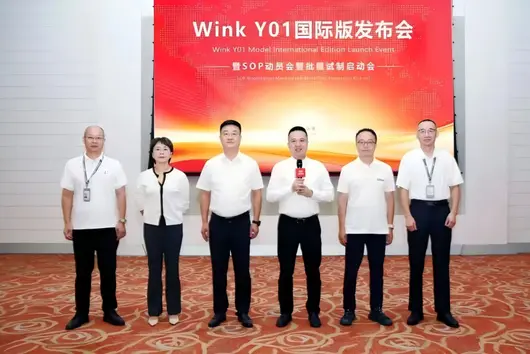
September 9, Yongkang. Zotye's press conference was exceptionally quiet.
No stars endorsed, no media group interviews, not even photos of the new car's rear were released. The venue was small, the procedure was short, perhaps the most prominent segment of the entire press conference was reading the announcement.
But it was precisely this press conference, so low-key it was almost silent, that after the news came out, Zotye's stock hit two limit-up boards consecutively, and its market value returned to above 9 billion yuan. The capital market voted with real money, giving this car that hasn't sold a single unit yet, credit first.
This car is called Wink Y01.

The third reincarnation of a four-year blueprint
First, look at the car itself. A0-segment pure electric compact car, length 3912mm, wheelbase 2520mm, dimensions perfectly positioned between the BYD Seagull and Dolphin—one size larger than the Seagull, one size smaller than the Dolphin, the positioning is quite precise. The exterior takes a minimalist route, triangular headlights paired with a through-type LED light strip, hidden door handles on the side plus two-tone wheel rims, judging by aesthetic standards for this price segment, it is indeed not ugly.
But if you feel familiar, it is not strange at all.
The foundation of this car can be traced back to the 2022 "Light Orange Era VC". Light Orange Era, a new force that once entered with high profile but later quietly transformed and no longer makes complete vehicles, left behind a set of design heritage. Later on, Jiangnan Automobile under Zotye signed a strategic cooperation with Light Orange Era, VC was renamed Jiangnan U2. U2 was not able to mass-produce, now it has changed its name again, becoming Wink Y01.
From VC to U2 to Y01, a blueprint has taken four years, changed three names, and is finally about to land.
But the place it lands is not China.

Not sold domestically, is it backing down or being sober?
Zotye itself stated quite plainly: This car focuses on the overseas market, currently there are no sales plans in China. The announcement also specially added a sentence—"There are uncertainties in regulations certification, channel construction, and market demand in overseas markets, as of now sales have not been formed."
The car hasn't sold a single unit, risk warnings are written first. This operation is not common in the A-share market, especially for a brand that once harvested traffic with just the three words "Porsche-Zotye", it seems even more unfamiliar.
Why not sell domestically? The answer is actually not hard to guess.
In the pure electric compact car market below 100,000 yuan, BYD Seagull sells thirty to forty thousand units a month, Wuling Bingo, Geely Xingyuan follow closely behind, the whole track is firmly occupied by top brands. Zotye's brand recognition in China is basically zero—after experiencing production halt, restructuring, and reorganization, consumer memory of this name mostly still stays in the old impression of "copycat Porsche". Rushing in hard, not even a splash of water can be made.
Going global is almost the only path available.
But while others have paved this path, it does not mean Zotye can too.

JAC can stand up, why can't Zotye?
Speaking of turning things around, one cannot avoid a comparison object—JAC.
JAC also experienced the darkest moments, loss for consecutive years, marginalized by the market, once becoming an "old brand car enterprise that everyone can step on". But JAC finally stood on two legs: one is OEM for NIO, accumulating experience and reputation of high-end manufacturing; the second is joint venture with Volkswagen, obtained technical endorsement and quality control system. Once the two legs landed, commercial vehicle and export business slowly recovered, today's JAC although cannot be said to be strong, at least has stabilized its feet.
What about Zotye?
It has no NIO, no Volkswagen, not even one truly mass-produced and selling car. The biggest chip in hand is two KD cooperation agreements in Indonesia and India, plus together planning annual production of 30,000 units. But signing KD agreement does not equal car can sell out, building production line does not equal dealers willing to stock, between the 30,000 units planning capacity and 30,000 units actual sales, separated by an entire overseas supply chain.
Even more heartbreaking is the financial report.
First half of 2026, Zotye revenue 190 million yuan, year-on-year decline 32%; deducted non-recurring net profit loss 152 million yuan, loss magnitude expanded 40% compared to same period last year. On the books that 80 million yuan profit, relied on selling assets and litigation settlement combined non-recurring gains and losses—main business selling cars, not earned a single penny. Asset-liability ratio 94%, means for company every 100 yuan asset, 94 yuan is borrowed.
Such financial status, let alone comparing with JAC, even comparing with other car companies struggling in similar predicament, also belongs to the more dangerous tier.

One car cannot save a company, but it may be a signal
So can Wink Y01 save Zotye?
To be honest, one car cannot save a company. A0-segment pure electric compact car's profit space was already limited, even if overseas market opens the situation, 30,000 units annual sales distributed to two factories, two markets, revenue and profit that can be contributed are quite limited. For a company with annual revenue less than 400 million, loss continuously expanding, this car is more like a crutch, rather than a strong heart medicine.
But crutches also have the meaning of crutches.
If Wink Y01 can tear open a seam in a Southeast Asia or South Asia market, let Zotye prove "I can still make cars, can still sell cars", then it has the chance to slowly walk out from ICU—at least, let suppliers re-willing to talk payment terms, let dealers re-willing to enter shops, let capital market re-willing to give valuation. If even this seam cannot be torn open, then this company probably really will not have next opportunity again.
Zotye itself clearly knows this point. So in the announcement it spoke about risks clearly, no making empty promises, no bragging, even less used industry common words like "lead", "subvert". This self-restraint itself, instead makes people a bit surprised.
A brand that once lived relying on imitation and marketing gimmicks, now learned to say "no" first—no promising domestic listing, no exaggerating market prospect, no avoiding operation risks. Perhaps, this is truly the signal it started getting better.
After all, for a company crawling out from ICU, admitting itself not yet well, compared to pretending itself already healed, is much more important.

Image Content | Source: Internet, Copyright belongs to the original author, if infringement please contact us to delete!

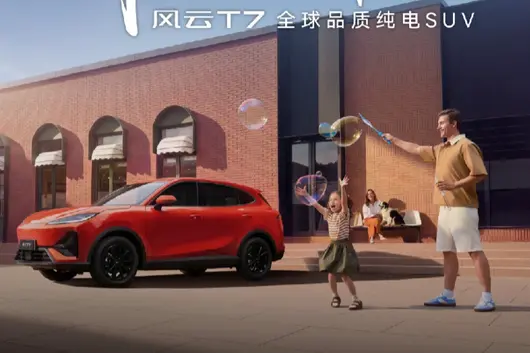
8 月 26 日,奇瑞風雲全新全球品質純電 SUV—— 風雲 T7 正式上市,新車官方指導價 9.79 萬元 —11.89 萬元,搶先置換價 9.49 萬元—11.59 萬元。作為基於全球標準正向開發的原生全球車,風雲 T7 以超能跑、美全球、更安全、好智慧四大核心實力,打破行業「速成造車」內捲亂象,以長期主義造車理念,為全球用戶帶來可靠安心嘅純電出行選擇。
慢工造好車,全鏈路全球標準打磨硬核品質
極致可靠嘅全球品質,源於全流程嘅嚴苛打磨。風雲 T7 歷經 3 年專屬研發周期,倚靠奇瑞全球 1+7+N 研發體系,集結全球百幾名設計師、工程師協同創作,累計完成 5000 + 全球用戶共創調研,覆蓋 15 個典型國家用車場景,深度適配全球 210 個國家同地區嘅出行需求。
喺標準層面,風雲 T7 前瞻性對標 2026 版 E-NCAP 五星安全標準打造,提前兩年預研全球各地法規要求;喺驗證層面,投入 81 台耐久試驗車,完成 145 萬公里全球耐久驗證,覆蓋 - 40℃至 55℃超寬極端溫域、100 幾種極限路況,適配全球 95% 道路類型。
新車歷經七大極限環境專項試煉:從容應對東南亞 500mm 深度涉水、中東高溫暴曬、印尼高濕防腐、北歐極寒穩定續航、巴西砂石路底盤防護、墨西哥顛簸路面耐久降噪等複雜場景。同時完成萬次級制動、滿打轉向、底盤衝擊等精細化測試,實現 100% 問題閉環優化。上市發布會現場,海外底盤、造型、研發工程師集體站台背書,所有性能數據均嚟自全球實車路試,絕非實驗室模擬數據,以國際化研發團隊實力,築牢原生全球車嘅技術底氣。
全球口碑認證,上市即交付彰顯硬核實力
全球品質收獲全球認可。倚靠奇瑞連續 23 年中國品牌乘用車出口第一嘅深厚積澱,品牌全球用戶突破 2000 萬,產品暢銷 130 幾個海外市場。風雲 T7 同源車型 Lepas L6 已成功登陸南非、泰國市場,8 月起陸續登陸印尼、歐盟、澳新、英國、以色列、馬來西亞等地區,此前亮相米蘭設計周,憑藉東方馭風美學斬獲國際審美認可,更獲得美聯社權威報導加持。
強大嘅全球產品力,快速引爆市場熱度。風雲 T7 自 8 月 12 日開啟預售以來,市場反響火爆,72 小時大定鎖單 10937 臺,9 天預售突破 16787 臺。成都車展期間,多名海外達人、外籍用戶現場看車下定,以全球用戶嘅真實選擇,印證風雲 T7 嘅過硬品質。
不同於行業新車發布、交付滯後嘅常態,風雲 T7 實現上市即交付,發布會現場隆重舉辦交付儀式,多名外籍在華用戶成為首批車主,讓全球品質即刻落地、真實可感。 
四大核心全能實力,重新定義十萬級純電新標杆
超能跑:告別里程焦慮,全域出行自由
風雲 T7 全系標配 65.05kWh 大容量犀牛電池,CLTC 純電續航達 600km,實測續航可達 681.6km,實現「反向虛標」。支持 20 分鐘快充 30%-80% SOC,一杯咖啡時間即可補充 300km 續航;電池循環壽命超 2500 次,整車 15 年使用周期無需換電池,耐用性遙遙領先同級。
全系標配雙源寬溫域熱泵空調 + 高壓 PTC,-10℃低溫續航提升 30%,-30℃至 55℃超寬溫域穩定工作,無懼極寒酷暑。配合 14 項低風阻設計,風阻低至 0.286Cd,能耗表現極致出眾。搭載 12 合 1 鵬超能電驅,峰值功率 178kW、最大扭矩 275N・m,兼顧強勁動力與超低能耗。
新車擁有 2700mm 超長軸距,空間得房率高達 84%,後排純平地板,搭配同級最大 1955mm×1310mm 純平大床模式。9 層雲感舒適座椅支持三檔加熱與通風,5 分鐘快速升溫,久坐舒適不疲累,適配家用、自駕、露營全場景。
美全球:東方美學設計,斬獲國際審美
風雲 T7 由全球十大設計中心、百名設計師聯合打造,融合東方馭風美學,風刃大燈、風塑絲綢車身、天際霞光尾門等設計兼具凌厲氣場與優雅姿態。提供熾焰橙、山煙紫、雲粉米等六大東方雅韻車色,其中熾焰橙採用豪車級 Tri-coat 塗層技術與 8 層高外觀油漆,耐刮抗紫外線,質感媲美豪華車型。
車內搭載雲翼環抱座艙,搭配鵝卵石懸浮揚聲器、菱格縫工藝與靈動水波紋細節,黑棕、黑曜兩大內飾配色,兼顧溫馨質感與科技氛圍,簡約高級,適配全球用戶審美。
更安全:全維硬核防護,守護每一程出行
車身採用九橫五縱籠式結構,高強度鋼佔比 80%,熱成型鋼佔比 18.84%,搭載同級獨有 Shotgun 結構、首發雙框副車架 + Pack 防撞樑,搭配 1088mm 貫穿式加強樑,多路徑分散碰撞能量。全系標配 9 安全氣囊,為同級最多配置,全方位守護駕乘人員安全。
電池搭載 6D 鎖子甲 31 層立體防護,側邊抗擠壓能力達國標 2 倍,通過國標 1.5 倍火燒測試、1008 小時鹽霧腐蝕測試,擁有 IP68 級防水能力,極端環境下穩定安全。
底盤由瑪莎拉蒂前底盤調校專家團隊匠心調校,配備 50.8:49.2 黃金軸荷比、560mm 超低重心,搭配 One-Box 線控制動系統,制動響應更快、行駛更穩,高速、爛路工況都能從容掌控。
好智慧:旗艦智能座艙,交互體驗越級拉滿
全系搭載同級首發 4nm 8775 座艙駕一體晶片,72TOPS 超高算力,系統響應低至 80ms,開機、操作絲滑流暢。搭載靈犀智艙 2.0,接入豆包大模型,擁有六大真人感陪伴模式與小憩、露營、寶寶、寵物等一鍵場景模式,適配全場景出行需求。
配備 15.6 英寸 2.5K 高清防眩光大屏,支持 CarPlay、HiCar 等全品牌手機互聯。搭載獵鷹 500 智能駕駛輔助系統,配備 22 顆高精度傳感器,支持 300 + 全場景自動泊車、100 米循跡倒車、高速領航輔助,新手好開、老司機省心,真正實現智能隨行、輕鬆駕控。
作為奇瑞風雲面向全球市場打造嘅十萬級原生純電 SUV,風雲 T7 以長期主義造車初心、全球級嚴苛標準、全球化市場口碑,實現了品質、顏值、安全、智能、空間、續航嘅全面越級。9.49 萬元起搶先置換價,讓普通消費者無需溢價,即可坐擁全球標準、全球驗證、全球認可嘅高品質純電出行體驗。未來,風雲 T7 將持續以硬核產品實力,刷新十萬級純電 SUV 價值上限,持續向世界展現中國汽車嘅精工造車實力。
In Malaysia's SUV market, many buyers compare Proton X90 and Toyota Fortuner when choosing a car. The two cars are quite close in price and positioning. Today, we will compare them in detail from multiple aspects to save you time doing research.
Proton X90's OTR price in Malaysia is RM 106,800 - 122,800, with a total of 4 versions, including 2026 1.5T Prime X (RM 122,800), 2026 1.5T Prime (RM 116,800), 2026 1.5T Lite (RM 106,800), etc.
Toyota Fortuner's OTR price in Malaysia is RM 195,880 - 241,880, with a total of 3 versions, including 2024 2.8T VRZ Diesel (RM 241,880), 2024 2.7L SRZ Petrol (RM 202,880), 2024 2.4L Standard Diesel (RM 195,880), etc.
From a price perspective, the starting price of Proton X90 is indeed RM 89,080 cheaper than Toyota Fortuner. If your budget is limited, Proton's entry-level version can already meet daily needs. But also note, the few thousand cheaper might involve compromises in features, specifically depends on your needs.

Proton X90 is equipped with 1.5L Turbo, 140 hp. Official fuel consumption 7.0 L/100km.
Toyota Fortuner is equipped with 2.5L Diesel, 187 hp. Official fuel consumption 8.5 L/100km.
In terms of power, Toyota Fortuner's 2.5L Diesel has 47 more horsepower than Proton X90's 1.5L Turbo. However, for daily driving in the city, both cars have sufficient power, you won't feel underpowered.

Proton X90 adopts FWD drive mode.
Toyota Fortuner adopts FWD drive mode.
Both cars have the same drive mode, both are FWD, daily driving experience will not be significantly different.

Proton X90 warranty 5 years/150,000km, maintenance interval every 10,000km or 6 months.
Toyota Fortuner warranty 5 years/unlimited mileage, maintenance interval every 10,000km or 6 months.

Proton X90 and Toyota Fortuner are both mainstream choices in the Malaysian market, suitable for family use, daily commuting. If you value brand reputation and resale value more, consider the one with better reputation first; if you care more about cost-performance ratio and features, choose the one with richer configuration. Ultimately, it is suggested to test drive both, personal experience is the most important.

In general, Proton X90 and Toyota Fortuner are both very good models in the Malaysian market. Choosing which one depends on your personal needs and budget. It is recommended to do your research, compare quotes from several dealerships, then go test drive to make the final decision. Buying a car is a big matter, spending time doing research will definitely not be wrong.


喺馬來西亞嘅 SUV 市場,好多買家喺揀車嗰陣都會拎 Proton X90 同 Honda HR-V 嚟做比較。呢兩款車喺價位同定位上都幾接近,而家我哋就從多個方面做一個詳細比較,幫你節省咗做功課嘅時間。
Proton X90 喺馬來西亞嘅 OTR 售價係 RM 106,800 - 122,800,一共有 4 個版本,包括 2026 1.5T Prime X(RM 122,800)、2026 1.5T Prime(RM 116,800)、2026 1.5T Lite(RM 106,800) 等。
Honda HR-V 喺馬來西亞嘅 OTR 售價係 RM 115,900 - 143,900,一共有 4 個版本,包括 2026 e:HEV 1.5L RS(RM 143,900)、2026 1.5T V(RM 137,900)、2026 1.5T E(RM 130,900) 等。
從價錢睇,Proton X90 嘅起步價確實比 Honda HR-V 平咗 RM 9,100。如果你預算有限,Proton 嘅入門版已經可以滿足日常需要。但都要留意,平嗰幾千蚊,喺配備上會有取捨,具體要睇你嘅需要。
Proton X90 搭載 1.5L Turbo,馬力 140 hp。官方油耗 7.0 L/100km。
Honda HR-V 搭載 1.5L Turbo,馬力 140 hp。官方油耗 7.0 L/100km。
兩款車用同一套動力系統,日常開起嚟嘅感覺基本無分別。油耗方面都差不多,唔使太糾結這一點。
Proton X90 嘅安全評級係 5★ (ASEAN NCAP),主動安全系統包括 ADAS (ACC, AEB, LKA, LDA, BSM, RCTA)。
Honda HR-V 嘅安全評級係 5★ (ASEAN NCAP),主動安全系統包括 Honda SENSING (ACC, CMBS, LKAS, RDM)。
兩款車嘅安全評級一樣,喺呢個級別入面安全配備都算好齊。而家新車嘅安全性都幾唔錯,唔使太擔心這一點。
Proton X90 採用 FWD 驅動方式。
Honda HR-V 採用 FWD 驅動方式。
兩款車嘅驅動方式一樣,都係 FWD,日常駕駛感覺唔會有太大區別。

Proton X90 同 Honda HR-V 都係馬來西亞市場嘅主流選擇,適合家庭使用、日常通勤。如果你更重視品牌口碑同二手價,可以優先考慮口碑更好嗰一款;如果你更在意性價比同配備,就揀配置更豐富嗰款。最終仲係建議兩款都去試駕,親身體驗先係最重要嘅。
總體嚟講,Proton X90 同 Honda HR-V 都係馬來西亞市場幾幾好嘅車型。揀邊一輛,關鍵仲係要睇你嘅個人需要同預算。建議大家做好功課,多比較幾間車行嘅報價,再去試駕做最終決定。買車係件大事,花點時間做功課絕對唔會錯。

喺馬來西亞嘅 SUV 市場,好多買家揀車都會拿 Perodua Aruz 同 Mazda CX-30 比較。呢兩款車價位同定位都幾接近,今日我哋就由多個方面做詳細對比,幫你省咗做功課嘅時間。
Perodua Aruz 喺馬來西亞嘅 OTR 售價係 RM 72,900 - 77,900,合共有 2 個版本,包括 1.5L X(RM 72,900)、1.5L AV(RM 77,900)等等。
Mazda CX-30 喺馬來西亞嘅 OTR 售價係 RM 122,409 - 146,409,合共有 4 個版本,包括 2025 2.0L High+ Premium(RM 146,409)、2025 2.0L High+(RM 138,409)、2025 2.0L High(RM 130,409)等等。
由價錢睇,Perodua Aruz 嘅起步價真係比 Mazda CX-30 平咗 RM 49,509。如果你預算有限,Perodua 嘅入門版已經可以滿足日常需要。不過都要留意,平嗰幾千蚊,喺配備上可能會有取舍,具體要睇你嘅需求。

Perodua Aruz 車身長 4400 mm,後備箱 400 L。
Mazda CX-30 車身長 4500 mm,後備箱 450 L。
空間方面,Mazda CX-30 嘅車身比 Perodua Aruz 長咗 100 mm,乘坐空間更有優勢。不過 Perodua Aruz 喺市區停車會靈活少少,各有取捨。

Perodua Aruz 保養期 5 年/150,000km,保養間隔 每 10,000km 或 6 個月。
Mazda CX-30 保養期 5 年/150,000km,保養間隔 每 10,000km 或 6 個月。
兩款車嘅保修條件一樣,呢方面唔使糾結。實際保養成本仲要睇品牌嘅服務網絡同零件價格,建議去車友群問下真實車主嘅經驗。

Perodua Aruz 同 Mazda CX-30 都係馬來西亞市場嘅主流選擇,適合家庭用、日常通勤。如果你更睇重品牌口碑同二手價,可以優先考慮口碑好嗰款;如果你更在意性價比同配備,那就揀配置更豐富嗰款。最後都係建議兩款都去試駕,親身體驗先係最重要。

總括嚟講,Perodua Aruz 同 Mazda CX-30 都係馬來西亞市場幾唔錯嘅車款。揀邊輛,關鍵都要睇你嘅個人需求同預算。建議大家做好功課,多比較幾間車行嘅報價,再去試駕做最終決定。買車係件大事,花少少時間做功課絕對唔會錯。

In the Malaysian SUV market, many buyers compare Proton X50 and GWM Haval H6 when choosing a car. These two models are quite close in price and positioning. Today, we will make a detailed comparison from multiple aspects to help you save time on research.
The OTR price of Proton X50 in Malaysia is RM 89,800 - 113,300, with a total of 4 versions, including 1.5T Executive (RM 89,800), 1.5T Premium (RM 101,800), 1.5T Flagship (RM 113,300), etc.
The OTR price of GWM Haval H6 in Malaysia is RM 139,750 - 139,750, with a total of 2 versions, including 1.5L Turbo Standard (RM 140,000), 1.5L Turbo Premium (RM 155,000), etc.
From a price perspective, the starting price of Proton X50 is indeed RM 49,950 cheaper than GWM Haval H6. If your budget is limited, Proton's entry-level version can already meet daily needs. But note that the savings of a few thousand may involve trade-offs in features, depending on your specific requirements.

Proton X50 is equipped with a 1.5L 4-cyl, 105 hp. Official fuel consumption 6.0 L/100km.
GWM Haval H6 is equipped with Hybrid, 170 hp. Official fuel consumption 4.5 L/100km.
In terms of power, the Hybrid on GWM Haval H6 has 65 more horsepower than the 1.5L 4-cyl on Proton X50. However, for daily city driving, the power of both cars is sufficient and won't feel weak.
Proton X50 body length 4400 mm, trunk 400 L.
GWM Haval H6 body length 4400 mm, trunk 400 L.
The dimensions of both cars are almost the same, and the interior space doesn't differ much. For cars in this class, daily use is more than enough.

Proton X50 adopts 4WD drive mode.
GWM Haval H6 adopts FWD drive mode.
Proton's 4WD and GWM's FWD will have different handling experiences; a test drive comparison is recommended.
Proton X50 and GWM Haval H6 are both mainstream choices in the Malaysian market, suitable for family use and daily commuting. If you value brand reputation and resale value more, prioritize the one with better reputation; if you care more about cost-performance ratio and features, choose the one with richer configuration. Ultimately, we recommend test driving both; personal experience is the most important.
Overall, Proton X50 and GWM Haval H6 are both very good models in the Malaysian market. Which one to choose depends on your personal needs and budget. We suggest doing your research, comparing quotes from several dealerships, and then test driving to make a final decision. Buying a car is a big matter; spending time on research will never be wrong.

Dalam pasaran SUV di Malaysia, ramai pembeli membandingkan Perodua Aruz dan GWM Haval H6 ketika memilih kereta.
Perodua Aruz dijual dengan harga OTR di Malaysia antara RM 72,900 - 77,900, terdapat 2 varian, antaranya 1.5L X (RM 72,900), 1.5L AV (RM 77,900) dan lain-lain.
GWM Haval H6 dijual dengan harga OTR di Malaysia antara RM 139,750 - 139,750, terdapat 2 varian, antaranya 1.5L Turbo Standard (RM 140,000), 1.5L Turbo Premium (RM 155,000) dan lain-lain.
Dari segi harga, harga permulaan Perodua Aruz memang lebih murah RM 66,850 berbanding GWM Haval H6. Jika bajet anda terhad, varian permulaan Perodua sudah boleh memenuhi keperluan harian. Namun, perlu diingat, perbezaan harga beberapa ribu ringgit ini mungkin melibatkan kompromi pada kelengkapan, bergantung pada keperluan anda.
Perodua Aruz mempunyai penilaian keselamatan 5★ (ASEAN NCAP), sistem keselamatan aktif termasuk.
Penilaian keselamatan GWM Haval H6 ialah TBD, sistem keselamatan aktif termasuk Basic.
Perodua Aruz menggunakan cara pemanduan FWD.
GWM Haval H6 menggunakan cara pemanduan FWD.
Kedua-dua kereta mempunyai cara pemanduan yang sama, iaitu FWD, pengalaman memandu harian tidak akan berbeza jauh.
Perodua Aruz mempunyai jaminan 5 tahun/150,000km, selang penyelenggaraan setiap 10,000km atau 6 bulan.
GWM Haval H6 mempunyai jaminan 7 tahun/150,000km, selang penyelenggaraan setiap 10,000km atau 6 bulan.
Perodua Aruz dan GWM Haval H6 adalah pilihan utama di pasaran Malaysia, sesuai untuk kegunaan keluarga dan perjalanan harian. Jika anda lebih menghargai reputasi jenama dan harga jual semula, boleh memprioritaskan model yang lebih baik reputasinya; jika anda lebih mementingkan nilai dan kelengkapan, pilih model yang lebih lengkap. Akhir sekali, disarankan untuk uji memandu kedua-dua model, pengalaman sendiri adalah yang paling penting.
Secara keseluruhan, Perodua Aruz dan GWM Haval H6 adalah model yang sangat bagus di pasaran Malaysia. Memilih mana satu, bergantung terutamanya kepada keperluan dan bajet peribadi anda. Disarankan membuat kajian, bandingkan sebut harga daripada pelbagai dealer, kemudian uji memandu untuk membuat keputusan akhir. Membeli kereta adalah urusan besar, meluangkan masa membuat kajian tidak akan salah.

在馬來西亞嘅 SUV 市場,好多買家在揀車嘅時候都會拿 Volvo XC60 同 BMW X3 嚟比較。
Volvo XC60 喺馬來西亞嘅 OTR 售價係 RM 328,888 - 328,888,合共有 1 個款式,包括 2025 2.0T Core(RM 328,888)等。
BMW X3 喺馬來西亞嘅 OTR 售價係 RM 325,800 - 358,800,合共有 2 個款式,包括 xDrive20i(RM 320,000)、xDrive30e(RM 360,000)等。
睇落價錢,BMW X3 嘅起步價比 Volvo XC60 平咗 RM 3,088。講真,喺呢個價位段,幾千蚊嘅差距其實唔算大,關鍵仲係睇整體嘅性價比同埋長遠使用成本。

Volvo XC60 搭載 2.0L Turbo,馬力 220 hp。官方油耗 9.5 L/100km。
BMW X3 搭載 2.0L Turbo,馬力 220 hp。官方油耗 9.5 L/100km。
兩款車用嘅係同一套動力系統,日常開嘅感覺基本冇分別。油耗方面都差唔多,唔使太糾結呢一點。

Volvo XC60 嘅安全評級係 5★ (Euro NCAP),主動安全系統包括。
BMW X3 嘅安全評級係 5★ (Euro NCAP),主動安全系統包括 Premium ADAS。
兩款車嘅安全評級一樣,喺呢個級別入面安全配備都算畀得好齊全。而家嘅新車安全性都唔差,唔使太擔心呢一點。

Volvo XC60 保修 5 年/無限里程,保養間隔 每 10,000km 或 6 個月。
BMW X3 保修 5 年/無限里程,保養間隔 每 10,000km 或 6 個月。
兩款車嘅保修條件一樣,呢方面唔使糾結。實際保養成本仲要睇品牌嘅服務網絡同零件價格,建議去車友群問下真實車主嘅經驗。

Volvo XC60 同 BMW X3 都係馬來西亞市場嘅主流選擇,適合家庭使用、日常通勤。如果你更睇重品牌口碑同二手價,可以優先考慮口碑更好嗰一款;如果你更在意性價比同配備,那就揀配置更豐富嗰款。最終都建議兩款都去試駕,親身體驗先至最重要。
總體嚟講,Volvo XC60 同 BMW X3 都係馬來西亞市場好唔錯嘅車型。揀邊輛,關鍵仲要睇你嘅個人需求同預算。建議大家做好功課,多比較幾間車行嘅報價,再去試駕做最終決定。買車係件大事,花啲時間做功課絕對唔會錯。


在马来西亚的轿车市场,很多买家在选车的时候都会拿 Toyota Vios 和 Mazda Mazda 3 来做比较。这两款车在价位和定位上都蛮接近的,今天我们就从多个方面做一个详细的对比,帮你省下做功课的时间。
Toyota Vios 在马来西亚的 OTR 售价是 RM 90,600 - 109,900,一共有 4 个版本,包括 2026 1.5L G(RM 96,600)、2026 1.5L E(RM 90,600)、2026 HEV 1.5L GR Sport(RM 109,900) 等。
Mazda Mazda 3 在马来西亚的 OTR 售价是 RM 119,620 - 175,059,一共有 2 个版本,包括 1.5L SkyActiv-G(RM 135,000)、2.0L SkyActiv-G(RM 155,000) 等。
从价钱来看,Toyota Vios 的起步价确实比 Mazda Mazda 3 便宜了 RM 29,020。如果你预算有限,Toyota 的入门版已经可以满足日常需求。但也要注意,便宜的那几千块,可能在配备上会有取舍,具体要看你的需求。

Toyota Vios 搭载 1.5L 4-cyl,马力 105 hp。官方油耗 6.0 L/100km。
Mazda Mazda 3 搭载 1.5L Turbo,马力 140 hp。官方油耗 7.0 L/100km。
动力方面,Mazda Mazda 3 的 1.5L Turbo 比 Toyota Vios 的 1.5L 4-cyl 多了 35 匹马力。不过日常在市区开,两款车的动力都够用,不会觉得不够力。

Toyota Vios 车身长 4450 mm,后备箱 470 L。
Mazda Mazda 3 车身长 4400 mm,后备箱 400 L。
空间方面,Toyota Vios 的车身比 Mazda Mazda 3 长了 50 mm,车内乘坐空间会稍微宽裕一些,尤其是后座腿部空间。如果你经常载家人或者需要放婴儿车,大一点的车身确实更实用。

Toyota Vios 采用 FWD 驱动方式。
Mazda Mazda 3 采用 FWD 驱动方式。
两款车的驱动方式一样,都是 FWD,日常驾驶感受不会有太大区别。
Toyota Vios 和 Mazda Mazda 3 都是马来西亚市场的主流选择,适合家庭使用、日常通勤。如果你更看重品牌口碑和二手价,可以优先考虑口碑更好的那一款;如果你更在意性价比和配备,那就选配置更丰富的那款。最终还是建议两款都去试驾,亲身体验才是最重要的。
总的来说,Toyota Vios 和 Mazda Mazda 3 都是马来西亚市场很不错的车型。选择哪一辆,关键还是要看你的个人需求和预算。建议大家做好功课,多比较几间车行的报价,再去试驾做最终决定。买车是件大事,花点时间做功课绝对不会错。


在马来西亚的SUV市场,很多买家在选车的时候都会拿 Toyota Fortuner 和 Mazda CX-30 来做比较。这两款车在价位和定位上都蛮接近的,今天我们就从多个方面做一个详细的对比,帮你省下做功课的时间。
Toyota Fortuner 在马来西亚的 OTR 售价是 RM 195,880 - 241,880,一共有 3 个版本,包括 2024 2.8T VRZ Diesel(RM 241,880)、2024 2.7L SRZ Petrol(RM 202,880)、2024 2.4L Standard Diesel(RM 195,880) 等。
Mazda CX-30 在马来西亚的 OTR 售价是 RM 122,409 - 146,409,一共有 4 个版本,包括 2025 2.0L High+ Premium(RM 146,409)、2025 2.0L High+(RM 138,409)、2025 2.0L High(RM 130,409) 等。
从价钱来看,Mazda CX-30 的起步价比 Toyota Fortuner 便宜了 RM 73,471。老实讲,在这个价位段,几千块的差距其实不算大,关键还是看整体的性价比和长期使用成本。
Toyota Fortuner 车身长 4400 mm,后备箱 400 L。
Mazda CX-30 车身长 4500 mm,后备箱 450 L。
空间方面,Mazda CX-30 的车身比 Toyota Fortuner 长了 100 mm,乘坐空间更有优势。不过 Toyota Fortuner 在城市里停车会灵活一点,各有取舍。
Toyota Fortuner 保修 5年/无限制里程,保养间隔 每10,000km或6个月。
Mazda CX-30 保修 5年/150,000km,保养间隔 每10,000km或6个月。

Toyota Fortuner 和 Mazda CX-30 都是马来西亚市场的主流选择,适合家庭使用、日常通勤。如果你更看重品牌口碑和二手价,可以优先考虑口碑更好的那一款;如果你更在意性价比和配备,那就选配置更丰富的那款。最终还是建议两款都去试驾,亲身体验才是最重要的。
总的来说,Toyota Fortuner 和 Mazda CX-30 都是马来西亚市场很不错的车型。选择哪一辆,关键还是要看你的个人需求和预算。建议大家做好功课,多比较几间车行的报价,再去试驾做最终决定。买车是件大事,花点时间做功课绝对不会错。

© 2024 Bitauto.com. All Rights Reserved.
Bitauto (www.yiche.com and www.bitauto.com) is one of the most visited automotive websites in China. We provide detailed info on Chinese car brands available in your area. Please note that the information provided on this website is based on publicly available data and is for reference only. It may not be fully updated or accurate at all times.

Help us improve our website


