

HomeRadar

Search History
Popular Searches
Dealer Login / Sign Up

In July 2026, the Thailand pickup market totaled only 11,134 units for the month, continuing a weak trend. Toyota Hilux TRAVO/REVO secured the top spot with 5,358 units, holding a 48.1% share, accounting for nearly half the market; Isuzu D-Max sold 3,803 units, with a 34.2% share. The two Japanese brands combined accounted for over 82% share, and the dual oligopoly structure remains stable.

Internally, the Toyota Hilux series shows "concurrent operation of commercial and passenger lines": Travo commercial version sold 3,242 units, Revo passenger version sold 2,116 units; the former has a base advantage, while the latter's continued sales volume reflects that demand for high-end passenger pickups has not completely disappeared. Hilux Champ ranked fourth with 479 units, a 4.3% share, complementing Travo as a product.

Isuzu D-Max remains firmly in second place, locking the top 2 positions with Toyota. Ford Ranger sold 568 units ranking third, with a 5.1% share, securing its place among American pickups; Mitsubishi Triton sold 403 units ranking sixth, with a 3.6% share.

What is worth noting is the performance of new energy pickups. Geely Radar (GEELY Radar) ranked fifth with 409 units, a 3.7% share, surpassing Mitsubishi Triton to become the largest pure electric pickup in July sales. King Long Dracon sold 16 units, Foton e-Tunland sold 10 units, Deepal Hunter K50 sold 3 units. Chinese brands have formed a cluster effect in the pure electric pickup track. Although the overall share of pure electric pickups is still less than 4%, in the context of the continuous decline of traditional fuel pickups, electrification may be a key variable to break the Japanese monopoly.

July's slump was not accidental. Suwat, Vice Chairman of the Federation of Thai Industries and Chairman of the Automotive Industry Group (AIC), had previously warned: In 2025, the proportion of Thailand's pickup sales to the overall market dropped to 23%, a historic low. Between 2010 and 2022, this proportion remained at around 45% for a long time. In 2023, it dropped to 34% (about 265,000 units), in 2024 it fell to 23% (about 163,000 units), and in 2025 it remained at 23% but the absolute volume dropped to about 144,000 units.

High household debt, rising non-performing loans, and weak domestic purchasing power are the core reasons for the continuous pressure on the pickup market. AIC urged the government to introduce stimulus policies as soon as possible, because the localisation rate of the pickup industry is as high as 90%, covering more than 2,500 parts suppliers. Market contraction will have a chain impact on the entire supply chain.

Exports are also under pressure. Affected by the Middle East situation, Thailand's car exports declined by more than 20% in the past two months. From January to May 2026, Thailand exported 49,961 cars to the Middle East, a year-on-year drop of 30.4%. The Middle East is Thailand's third-largest export market, accounting for 20% of total exports in 2025. Four-door pickups and PPVs (pickup-derived SUVs) are their main demand products. Combined with weak domestic demand, Thailand's pickup industry is facing a dual squeeze.

Final Thoughts: July data once again confirms that the downward trend of the Thailand pickup market has not bottomed out. The dual oligopoly structure of Toyota and Isuzu is difficult to shake in the short term, but Chinese pure electric pickups represented by Geely Radar are quietly accumulating momentum. How to find a balance between domestic demand stimulus, export diversification, and electrification transformation will be the key to determining whether the Thailand pickup market can emerge from the valley.
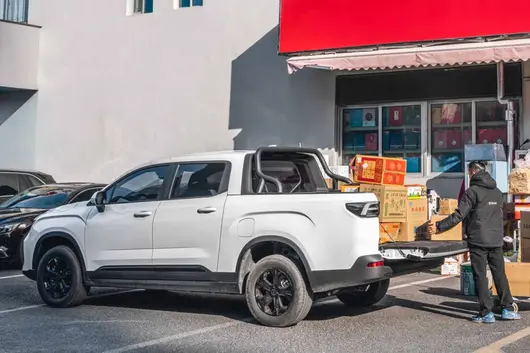

After the integration of Zeekr and Lynk & Co, Geely moves again to "absorb" its incubated brands.
Recently, Geely Automobile announced a fully funded acquisition of three core companies under Radar Automotive for approximately 218 million yuan — Radar Automotive (Shandong), Radar Automotive Sales, and Thailand distribution company Radar Thailand. Upon completion of the transaction, Radar Automotive will officially merge into Geely China Star, becoming a core force in Geely's layout for the new energy pickup market.
Why merge a niche pickup brand into "China Star", which focuses on family use? Why, amidst intensifying competition in the new energy pickup sector, does Geely choose full acquisition rather than continued "laissez-faire"? Behind the 218 million yuan deal lies the most thorough execution of Geely's "One Geely" strategy — also a microcosm of Chinese car companies shifting from making additions to making subtractions.

Looking back to July 2022, Radar Automotive debuted as an independently incubated new energy pickup brand by Geely Holding, developing in parallel with brands like Geely, Volvo, and Zeekr initially. The first model, the all-electric pickup RD6, launched in November of the same year. Leveraging its differentiated outdoor ecosystem positioning and passenger-car design, Radar quickly entered the blue ocean track of new energy pickups.
Data shows that in just three years, Radar has continuously held the No. 1 market share in domestic new energy pickups, with the all-electric pickup segment share reaching as high as 98% at one point. Full-year sales in 2025 reached approximately 13,000 units, making it the only new energy brand in China to break into the top five in overall pickup sales across all categories.
However, the other side of growth is financial growing pains. The three companies under Radar involved in this acquisition showed divergent performance last year: Radar Automotive (Shandong) turned from profit to loss, with a net loss of 8.646 million yuan; Radar Automotive Sales turned loss to profit, with profits reaching 12.325 million yuan; The overseas Thailand company's loss expanded further, with a net loss of 10.697 million yuan, and the overall situation remains in the investment phase.
However, why is a brand still in the "growth phase" worth a full acquisition by Geely at this time? Regarding this, the official explanation is very direct: First, to secure a position in the blue ocean market, Radar has already seized the initiative. Directly acquiring a mature leading brand is far more efficient and cost-effective than cultivating from scratch; Second, internal integration will release significant synergistic effects.

In fact, the greater motive behind this deal was already hidden in Geely's "Taizhou Declaration". In September 2024, Geely Holding proposed "Strategic Focus, Strategic Integration, Strategic Synergy, Strategic Prudence, Strategic Talent", clarifying business sectors to reduce conflicts of interest and repeated investment.
Since then, over a year, integration actions have been implemented densely: Galaxy merged with Geometry; Zeekr and Lynk & Co completed equity transfer, establishing Zeekr Technology Group, which was subsequently incorporated into Geely Automobile as a whole... This acquisition of Radar merging into China Star is also a key move under Geely's development logic.
But why merge a pickup brand into "China Star"? As everyone knows, as Geely's high-end CMA series, China Star has always positioned itself in the high-end home market since its launch in 2021, covering popular models such as Preface and Monjaro L. The addition of Radar will supplement China Star with the pickup and outdoor ecosystem product sectors, enabling it to form an all-category layout of "Sedan + SUV + Pickup". At the same time, both parties can achieve deep synergy in three-electric technology, intelligent hybridization, channel networks, etc., accelerating product iteration. From independent incubation to returning to the main brand, Radar's trajectory happens to step on every beat of Geely's integration big year.

However, merging Radar into China Star and upgrading its strategic status from "testing the waters" to core does not mean the road ahead is smooth.
First, the track is becoming increasingly crowded. Great Wall Pickup global sales in 2025 exceeded 181,600 units, firmly holding the leading position in the domestic pickup market. BYD Shark Pickup overseas cumulative sales have reached 46,000 units, rapidly opening the market in Southeast Asia and Australia with hybrid rugged product power, and plans to officially return to the domestic market by the end of 2026. Changan is accelerating its layout of passengerized new energy pickups, and Chery is also accelerating the layout of pure electric and plug-in hybrid product matrices in the pickup sector. The niche track built by Radar Automotive relying on first-mover advantage is being constantly coveted and challenged.
Secondly, domestic market growth is weak. In Q1 2026, domestic new energy pickup sales were only 18,000 units, with penetration rate less than 10%, and growth rate far lower than the overall pickup market. In April 2026, new energy pickup sales were 7,000 units, a year-on-year decrease of 11%; Cumulative sales from January to April were 26,000 units, a year-on-year decrease of 2%, showing a trend where new energy pickup growth at the beginning of the year was slightly weaker than the overall growth of fuel pickups.

In contrast, the proportion of pickup exports has risen from 45% in 2024 to 53% in April 2026. Exports are replacing domestic sales as the main growth engine for the pickup market. This means whoever can get a foothold first in the overseas market can take the initiative.
And this might also be Geely's strategic consideration when acquiring Radar, simultaneously securing Radar Thailand — Thailand is the world's second-largest pickup market, where Japanese pickups have long dominated, while electrification is precisely the breakthrough point for Chinese brands to pry open this traditional fortress. At the March 2026 Bangkok Motor Show, Radar achieved an order of 2,569 units, a year-on-year increase of 283%, which has cast a note of strength in the local new energy pickup market. With Geely's mature international distribution network, Radar is expected to further radiate to Southeast Asia and even global markets.

But integration is only the starting point, the market is the endgame. 218 million yuan, Geely "absorbing" is not just a pickup brand, but giving a clearer "One Geely".
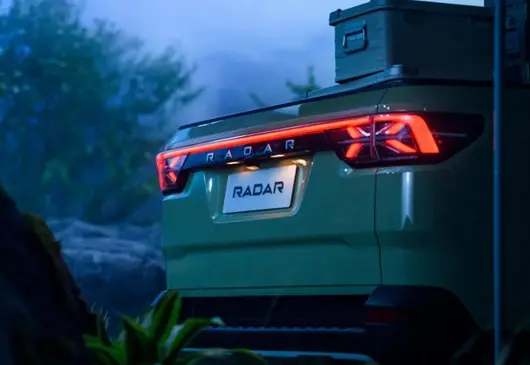


May 15, with the release of Geely Automobile's acquisition announcement, the integration of the Radar brand with Geely Automobile has officially been realized at the capital level.
According to the announcement, Zhejiang Jirun acquired all equity of Radar Automobile (Shandong) for 159 million yuan, Geely Sales acquired all equity of Radar Sales for 59 million yuan, and two other entities under Geely, CIL and GAIL, acquired all shares of Radar Thailand, a wholly-owned subsidiary in Thailand, for a total of 490,000 yuan.
Upon completion of the transaction, the Radar brand will become a wholly-owned subsidiary of Geely Automobile, and its financial performance will be included in Geely Automobile's listed company reports at that time.
Furthermore, CheYiTiao learned from relevant sources that after the launch of the integration, not only channels but the entire personnel structure of Radar Pickup will be fully merged into China Star, becoming a pickup sequence under the China Star brand, rather than existing as an independent brand.Geely's formal "incorporation" of Radar this time is considered another implementation of the "One Geely" strategy in brand integration.

Since the release of the "Taizhou Declaration" in 2024, Geely has accelerated the integration of its brands.
From Geometry and Ezst successively merging into Galaxy, to Lynk & Co merging into Zeekr in 2025, to Zeekr completing privatization and delisting, merging into Geely Automobile's listed company system together with Lynk & Co, under the guidance of "One Geely", the brand synergy has achieved significant results, and this "incorporation" of Radar can also be seen as another strategic move by Geely Automobile.
Returned Vanguard, Radar Transforms from Brand to Product Sequence
In fact, starting from 2024, the Radar brand has already conducted partial integration with Geely in terms of channels and technology.
According to the strategic cooperation agreement signed between Geely Radar and Geely Service Company, Geely Radar can use Geely's service network resources to provide relevant after-sales services to users.Not only that, some Geely outlets also hung Radar authorized signs, selling alongside Geely Automobile and sharing after-sales services.
Later in May 2025, Radar also launched Geely Radar Horizon and King Kong PHEV based on Geely Automobile Group's God of Thunder EM Super Hybrid technology.
However, at that time, Radar was still relatively independent internally, not belonging to Geely Automobile, and tended to have a peer-level relationship.

After the launch of this capital-level integration, the positioning of the Radar brand will undoubtedly undergo a fundamental shift.On the one hand, it is the external title, that is, from an independent brand to becoming a core niche category. On the other hand, it is the strategic status, Radar will return as a "Returned Vanguard", sharing strategic resources equally with "Core" businesses.
It is understood that since the brand launch in 2022, Radar has always been directly managed by Geely Holding, belonging to an independent operation body separately incubated outside the group, and there is no direct shareholding relationship with Geely Automobile, therefore, its operating performance will not be included in the listed company reports.
Looking at it now, the Radar brand at that time was more like a trial for Geely Holding in the niche segment of pickups. From a strategic priority perspective, theoretically it was far lower than Geely Automobile's main Galaxy, China Star, as well as Lynk & Co and Zeekr brands. Now that it has been included in China Star, Radar will undoubtedly receive more empowerment from the group.

As stated in the announcement, by incorporating the Radar business into the group's internal operation system, synergy effects in product planning, resource allocation, and brand management can be improved, thereby reducing duplicate investment, improving operational efficiency, and strengthening cost control.
In short, in the future, Radar will be able to fully reuse Geely's technology, supply chain, and factories. Geely can also expand its product portfolio and create another niche growth pole through this.
Filling the Niche Category, Geely Accelerates Pickup Track Layout
For Geely, choosing to bring Radar back at this time is not just another practice of the "Taizhou Declaration", but also a strategic consideration for the pickup market prospect.
Geely stated in the announcement that currently other major global pickup truck markets have relatively high penetration rates, and China's pickup market also shows significant growth potential.
At the same time, the development of electrification and intelligence technologies, including the rise in oil prices, have jointly enhanced market attention and demand for new energy pickups.In addition, with pickup restriction policies gradually relaxing in various places, Radar products are expected to meet the needs of both commercial users and individual consumers.
In the view of Geely Automobile, integrating Radar will further consolidate the group's position in the pickup niche market. After the acquisition is completed, Radar can also use Geely's international distribution channels to quickly expand into overseas markets and further promote the growth of export sales.

According to CPCA data, China's pickup exports exceeded 300,000 in 2025, accounting for over 50% of the total for the first time. In particular, new energy pickups surged by 243% last year, reaching 73,000 vehicles.
In Geely Automobile's overall plan, the overseas sales target for 2026 is guaranteed at 640,000 vehicles, aiming to sprint for 750,000 vehicles. It is worth noting that Geely's overseas sector has been relatively slow in growth compared to BYD and Chery. Now joining the Radar niche category will provide certain support for improving overseas sales.
Currently, in the new energy pickup sector, Radar has already built up a certain reputation and brand awareness. It not only ranked first in new energy pickup market share for three consecutive years, but also has a market share as high as 98% in the pure electric niche market. It can be said that Geely's highly forward-looking strategic insights enabled Radar Pickup to seize a certain first-mover advantage.
However, the new energy pickup market is also accelerating into a "Red Ocean Market".Some time ago, BYD announced that the new energy pickup brand "SHARK (Shark)" that had been exporting overseas was formally merged into Fang Cheng Bao, and will soon be sold to the domestic market. At that time, it may pose a significant challenge to Radar Pickup.

With BYD, Geely and other leading car companies adding bets on the new energy pickup track, it means a brand new niche pattern will enter the "Competition" moment. Whether Radar can become the core variable rewriting market trends after "returning to the team"? Geely's integration efficiency and competitive determination will become the key.
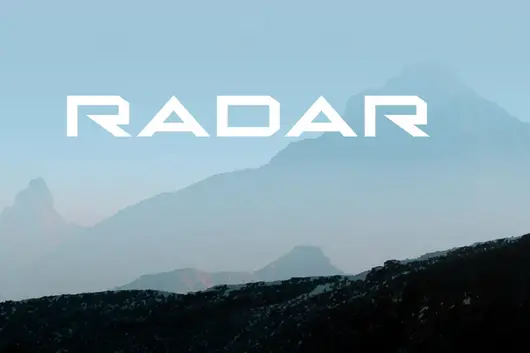

Editor's Note: Incorporating Radar Automotive is seen as another important measure to advance the "One Geely" strategy and continuously optimize resource allocation.
Recently, Geely Automobile announced on the HKEX that it plans to invest approximately 218 million yuan in cash to acquire 100% equity of three core entities of Radar Automotive. Upon completion of the transaction, Radar Automotive will be consolidated into the listed company's financial statements as a wholly-owned subsidiary, marking the formal transition of this new energy pickup brand from a group incubation project to a core business segment of the listed entity.

This move is a key step for Geely Holdings to implement the "Taizhou Declaration". Released two years ago, the declaration established five key directions including strategic focus, integration, and synergy, aiming to reverse resource redundancy and low efficiency caused by independent operations of multiple brands in the past, and promote the group's transition towards centralized synergy.
Guided by this strategy, Geely has successively completed adjustments such as Geometry merging into Galaxy, and Zeekr integrating Lynk & Co. This incorporation of Radar Automotive is seen as another important measure to advance the "One Geely" strategy and continuously optimize resource allocation.
Radar Automotive, Profitability Still in Climbing Phase
Radar Automotive was incubated by Geely Holdings four years ago, and the first model RD6 quickly gained traction after its launch. In 2025, the brand became the only new energy brand to rank in the top five in total pickup sales with 13,040 units sold, with its pure electric segment market share reaching as high as 98%.

However, Radar Automotive has not yet achieved overall profitability. Recent financial data shows divergence in profit and loss among the three core entities: The Shandong company operating the entire industry chain narrowed its loss to 8.646 million yuan, the domestic sales company earned a profit of 12.325 million yuan, while Radar Thailand responsible for overseas expansion expanded its loss to 10.697 million yuan, and the overall business is still in the investment phase.
Equally challenging are market capacity constraints and intensifying competition.
In the first quarter of 2026, domestic new energy pickup sales were only 18,000 units, with penetration below 10%, and growth rate far lower than the overall pickup market. Currently, the main growth in pickups is overseas, with exports accounting for more than half.
At the same time, the track is becoming increasingly crowded. In the domestic market, Great Wall Motor continues to firmly hold the leading position in the domestic pickup market, with global sales exceeding 181,600 units in 2025. BYD Shark Pickup has long prioritized deep cultivation of overseas markets, with an average monthly export volume stable at around 3,000 units. Relying on its hybrid rugged product power, it quickly opened up the Southeast Asian and Australian markets. Recently, the Shark brand was also confirmed to enter the domestic pickup market to compete.
More participants are constantly joining. Changan is accelerating the layout of passenger-oriented new energy pickups, and Chery is also perfecting the pure electric and plug-in hybrid full-category pickup product matrix relying on the Ruilin brand.
Against this backdrop, the advantages Radar Pickup established in the new energy pickup field are being constantly eroded, and whether it can maintain leadership in competition afterward remains unknown.
Another Move in Geely's Grand Integration
The Geely Group is continuously deepening the strategic implementation of the "Taizhou Declaration". In the past year, the group's integration moves were frequent: Geely Galaxy merged with the Geometry brand, Zeekr and Lynk & Co completed equity transfer and formed Zeekr Technology Group, which was subsequently merged into Geely Automobile. Through these adjustments, the group's brand count was streamlined from 6 to 4, and subsidiary holding companies were reduced from 3 to 1, completing a deep internal cleanup.
This acquisition of Radar Automotive will further expand Geely's business landscape. A Geely representative stated that bringing Radar under the China Star umbrella aims to perfect product coverage in luxury, mid-to-high-end, and mass markets, complete the pickup category, and form a complete matrix of sedans, SUVs, MPVs, and pickups to meet diverse user needs; from a strategic value perspective, this acquisition marks the upgrade of new energy pickups from a group-level incubation project to a core strategic category of the listed company.

From the value perspective, the transaction price is 218 million yuan, basically flat with the assessed fair value of the target company, with no premium risk. Geely has acquired a top domestic new energy pickup brand at a low cost, which not only fills the product matrix gap but also provides growth space for pickup overseas expansion, reflecting efficient resource allocation.
For Radar Automotive, although it had previously laid out the Thai market, independent expansion overseas faces high cost and low efficiency issues. Relying on Geely's mature global distribution network, Radar Automotive can quickly penetrate more markets, convert technical momentum into sales volume growth, and accelerate the realization of scale profitability.
In addition, injecting Radar Automotive into the listed company system marks that the holding group no longer manages homogeneous brands dispersively, but instead hands over mature business to core segments for unified operation. This move connects product planning, supply chain, and channel resources, achieves reuse of overseas networks, and is conducive to Radar brand expansion and cost control in domestic and international markets.
In response, industry insiders believe that Geely adopts a "platform incubation + mature recycling" model, relying on group resources to share the early risks of start-up brands, and implementing asset integration after the brand stabilizes its position in the niche market. This strategy balances risk control and asset operating efficiency.
This inclusion of Radar Automotive into the listed system is yet another key execution of this strategic logic.
© 2024 Bitauto.com. All Rights Reserved.
Bitauto (www.yiche.com and www.bitauto.com) is one of the most visited automotive websites in China. We provide detailed info on Chinese car brands available in your area. Please note that the information provided on this website is based on publicly available data and is for reference only. It may not be fully updated or accurate at all times.

Help us improve our website


