

HomeRange

Search History
Popular Searches
Dealer Login / Sign Up


On August 26, Chery Fengyun T7 officially launched. Honestly, new car launches have been too dense in the past two years. I didn't think there would be much buzz — the all-electric SUV segment at the 100k price point has long been a bloody red ocean. Every brand is competing on price, specs lists, and whose slogans are louder. But after seeing the Fengyun T7's launch info, I feel this car is a bit different.

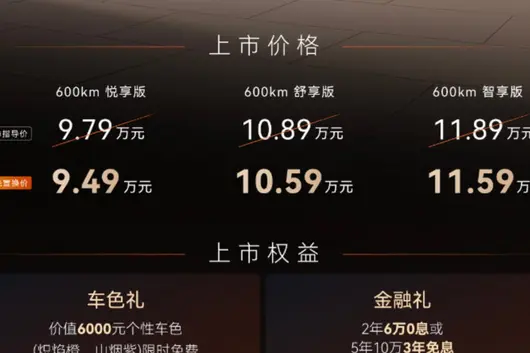
Fengyun T7 launched with three trims this time. Official guide prices range from 97,900 to 118,900. The limited-time early trade-in price is down to starting at 94,900. This price point isn't uncommon in the current all-electric market. But it comes standard with CLTC 600km range on all trims — note, all trims, high or low, entry level is 600. And official tests measured over 667 kilometers. Some media tests even reached 681.6 kilometers. Advertised 600, driving 680, reverse false specification this severe is indeed rare in the industry. Fast charging from 30% to 80% takes about 20 minutes, enough time for a coffee to replenish 300 kilometers. Battery cycle life exceeds 2500 times. The official says design service life can reach 15 years. To put it plainly, this car leaves no room for you to pay extra for a long-range version regarding range; entry-level means full spec.

But this isn't the most worth-mentioning point yet.
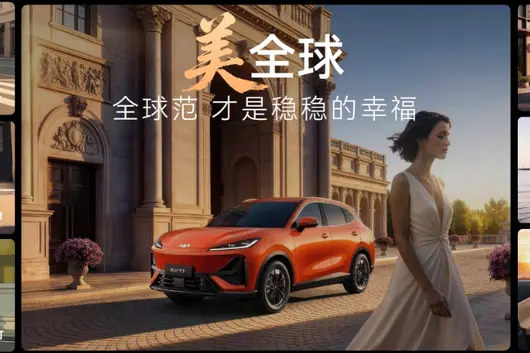
What's truly interesting about Fengyun T7 is its identity — Chery calls it a 'Native Global Car'. What does that mean? Many so-called 'Global Models' on the market are actually developed and launched domestically first, then tweaked to sell overseas. Fengyun T7 takes another path: It conducts positive development targeting the needs of 210 countries and regions from the start of the project. R&D cycle is 3 years. Relying on the global '1+7+N' R&D system, 10 major design centers, hundreds of designers participated. And it conducted joint research with over 5,000 global users. Safety standards directly benchmark the 2026 version E-NCAP 5-star standard.

What's even tougher is the verification phase. Before this car officially targets domestic consumers, it has already run a lap around the world with 81 durability test vehicles — cumulative test mileage of the whole vehicle exceeds 6 million kilometers. With 1.45 million kilometers of durability special tests included. Covering 100+ extreme road conditions including the EU, ANZ, Middle East, South Africa, Russia, Mexico, Brazil, etc. Temperature range from minus 40 degrees to plus 55 degrees. Brazil's speed bumps, Mexico's cobblestone roads, Southeast Asia's rainy season deep water, Nordic extreme cold low-temperature starts, Middle East high-temp sun exposure — every item is tested with actual vehicles on real roads. Not simulated data in a lab. Even before official launch, test cars were spotted by locals in multiple continents around the world. The same-source model Lepas L6 has already launched in South Africa and Thailand first. Next, it will successively enter markets like Indonesia, EU, ANZ, UK, etc.

Behind this logic lies a very simple truth: Whether a car is good isn't spoken out on a presentation PPT at a launch event, but driven out. The trend of 'rapid car making' in the new energy industry is currently very strong. Some models take less than two years from project start to launch. Some aggressive designs go into vehicles without sufficient verification. Fengyun T7 goes against the trend, using 3 years of R&D plus 6 million kilometers of global road tests to build quality credibility — the cost is that the launch pace is obviously slower than competitors. But this is exactly its strongest trump card.

Let's look at the product itself. Body dimensions 4570×1852×1694mm, wheelbase 2700mm, space utilization rate 84%. Rear seats folded form a 1955×1310mm pure flat large bed, the largest in its class. Trunk capacity regular 450L, max can expand to 1550L. Powertrain equipped with 12-in-1 Kunpeng Ultra-Electric Drive, peak power 178kW, max torque 275N·m, electric drive comprehensive efficiency 90.8%.


In terms of safety, a nine-transverse five-longitudinal cage body, high-strength steel ratio 80%, hot-formed steel 18.84%, standard 9 airbags on all trims — including 48L dual-chamber remote airbags. Battery 6D 'Lock Armor' 31-layer protection, IP68 waterproofing is 96 times the national standard, side squeeze resistance is 2 times the national standard. In terms of intelligence, the Smart Enjoyment trim carries a 4nm process 8775 Cockpit-Driving Integrated Chip, 72 TOPS computing power, system response latency 80 milliseconds. 15.6-inch 2.5K large screen, Lingxi Smart Cockpit 2.0 with Doubao Large Model. 22 sensors support automated parking and highway navigation for over 300 scenarios.


Finally, a few practical words. The biggest feature of Fengyun T7 isn't how outstanding any single spec is — although 600km range all-trim standard, 9 airbags all-trim standard are indeed tough — but rather that it truly perfected 'Global Verification'. At the 100k price point, it provides quality endorsement returned after running 6 million kilometers globally. Chery has ranked first in Chinese brand passenger car exports for 23 consecutive years. Global cumulative users exceed 20 million. This foundation is not easily replicable by just any brand.
Some say it launched late, pace is slow. But after seeing the ins and outs of this car, I actually feel — regarding 'Global Car', it really cannot be fast at all.




We just watched the Fengyun T7 launch event, and let's discuss an industry perspective that few dare to reveal.
The pricing is clear: Priority trade-in price starts at 94,900 yuan, official guiding price 97,900 - 118,900 yuan, all three models feature a unified 600km range.
Let's talk about an industry hidden rule: The export versions and domestic versions of most car companies are essentially two different standards. Export versions must meet local strict regulations, requiring reinforced body structure, stricter battery protection, and optimized all-climate adaptability, which also results in a higher selling price; domestic versions are built according to national standards, saving wherever possible, euphemistically termed "localization adaptation".
But the Fengyun T7 is on a completely different path. From the project initiation, it adopted global unified standards, and the homologous models are already launched in South Africa and Thailand, with plans to enter high-threshold markets such as the EU and Australia and New Zealand next. The versions currently sold domestically share the same body safety standards, the same battery protection level, and the same all-climate weather resistance verification as those sold overseas, with no so-called "domestic exclusive downsized version".
To put it plainly, others "sell high-quality goods at a premium overseas", while they "sell global same-spec cars at a flat price domestically". You spend money in the 100,000 yuan range to get a car that can directly enter the EU market, not a "simplified version" specially made for the domestic market.
At the launch event, overseas engineers jointly endorsed it, and Hacken Lee, as the Happiness Experience Officer, also talked about the peace of mind in daily travel. The Happiness Co-creation Plan was launched simultaneously, with delivery upon launch, and there was nothing fancy throughout the process.
Now, the configuration competition in the 100,000 yuan pure electric segment has hit the ceiling, but daring to bring global unified standards down to this price point is indeed rare. This leveling of underlying standards is far more substantial than adding a few fancy configurations. #FengyunT7PriorityTradeInPrice94900YuanStart#














© 2024 Bitauto.com. All Rights Reserved.
Bitauto (www.yiche.com and www.bitauto.com) is one of the most visited automotive websites in China. We provide detailed info on Chinese car brands available in your area. Please note that the information provided on this website is based on publicly available data and is for reference only. It may not be fully updated or accurate at all times.

Help us improve our website


