

HomeRecall

Search History
Popular Searches
Dealer Login / Sign Up

[Auto Industry Insider] On the evening of October 11, Chery Auto released the "Explanation Regarding the OMODA 5 Vehicle Issue in Malaysia", announcing a recall for the 8,878 affected OMODA 5 vehicles in the Malaysian market, to inspect relevant parts and replace them free of charge where necessary, and to conduct special risk investigations on vehicle batches from China and related markets.
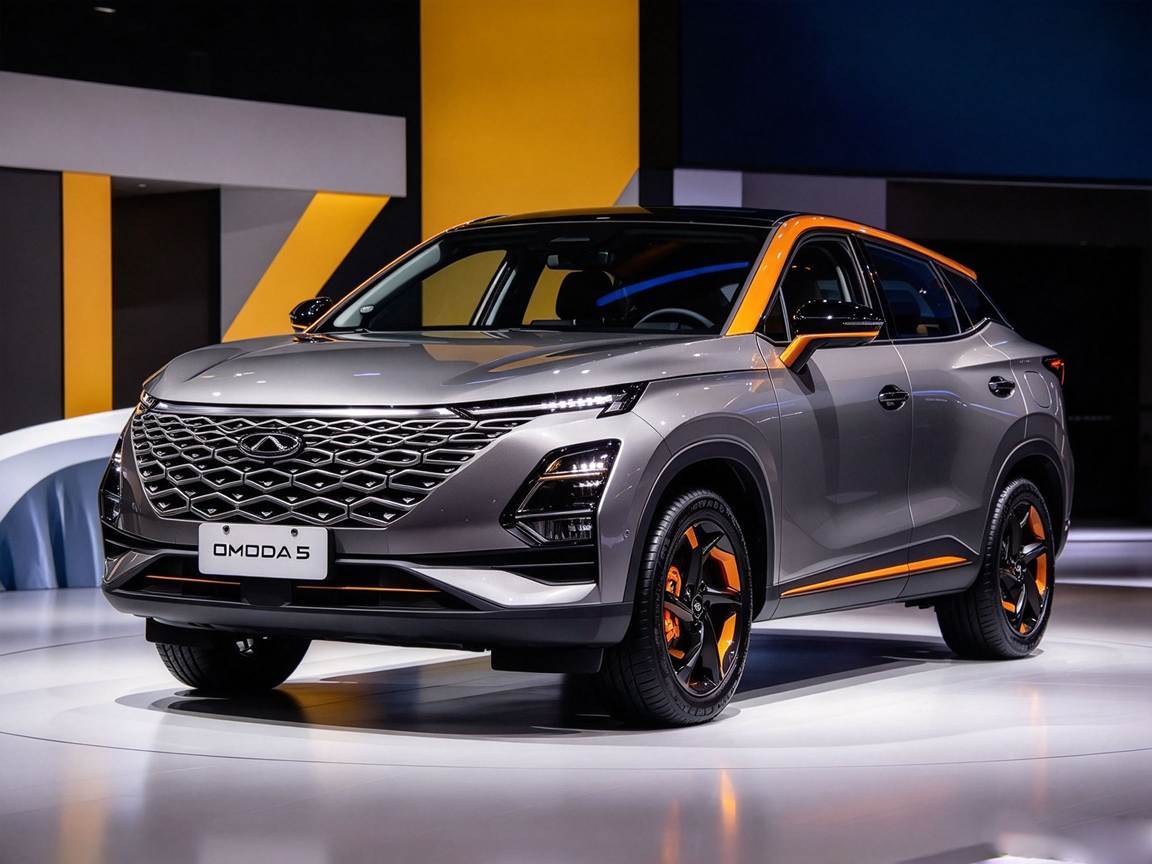
The "Explanation" states that this vehicle issue does not involve personal injury, Chery has immediately launched an investigation into the cause, and is actively communicating closely with local government regulatory bodies such as the Malaysian Land Transport Authority (JPJ).
On October 14, Chery Auto published "Chery Malaysia OMODA 5 Recall Action Customer Guidance" on its Malaysian official website: the first batch of spare parts has been shipped and will arrive at authorized service centers successively; the relevant vehicle list has been locked, and vehicle owners will be arranged to visit the store for replacement via active invitation.
1. Timeline
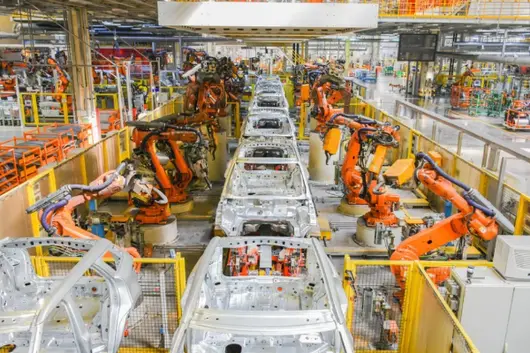
According to reports by Every Economic Daily, the cause of the two rear axle-related failures points to the component welding process.
An expert from the welding technology section of a joint-venture brand explained the technical logic to the reporter:
"The component of the rear axle long arm is mostly a stamped sheet metal lap structure. Considering this issue, OEMs often adopt spot welding processes, but spot welding processes are prone to insufficient welding strength themselves."
An frontline employee at a joint-venture car factory stated:
"If virtual welding, missed welding, or welding defects occur during the welding process, safety hazards are likely to arise later."
The same report mentioned that currently the welding processes at OEMs are mainly spot welding and laser welding. In comparison, laser welding is fast, has less deformation, high strength, but higher cost — the aforementioned welding technology section expert stated, "A set of laser welding equipment costs about 2 million yuan more than spot welding."
The expert also introduced that to improve welding safety, the industry will increase welding connection processes that ensure strength, for example, the base number of body weld points reaches 7,000 to 13,000; new models will adopt laser cutting and welding processes, improving strength by over 30% compared to traditional spot welding processes.
3. The Weight of OMODA 5 in Malaysia· Overseas Proportion: Currently, Chery Auto's overseas sales account for more than 70% of its total sales, Malaysia is one of its important global markets
· Local Scale: After returning to Malaysia in 2023, models such as OMODA 5 were launched successively; cumulative sales were about 30,000 units by the end of 2025; as of June 2026 it has 60 dealerships, imported 10 vehicle models
· ⭐ Model Status: Chery Auto's Malaysian official website published an article earlier this year stating:
"The key to Chery's success in Malaysia lies in OMODA 5 (launched in 2023), this model quickly became Chery's best-performing model, and played an important role in Chery establishing itself in the automotive market."
4. ⚠️ An Unconfirmed SituationAccording to reports, JPJ has not yet further announced the technical investigation results of this vehicle issue. Media reports suggest that JPJ has temporarily suspended OMODA 5 vehicle certification (VTA), and the model cannot be registered or sold as a new vehicle before the technical investigation is completed.
Some media sought confirmation from Chery Auto regarding this, but as of the time of publication no response has been received. Therefore, the "Suspend VTA" item remains media wording, not yet officially confirmed by Chery or JPJ.
My View: The Key is Not 8,878 Units, but the "Second Time"Core Judgment: What is truly worth noting about this recall is not the number 8,878, but that it is the second time. In 2024, the same part had the same problem, at that time Chery's explanation was welding equipment calibration deviation, the inspection scope was 600 units. Two years later, same in the welding process, same rear axle, the recall scope has changed to 8,878 units. This change indicates: the first disposal solved "that batch", but did not solve "that process".
First, let's look at the scope of the two disposals together. In April 2024, Chery identified 60 vehicles equipped with affected rear axle components, expanding the preventive inspection to 600 units, covering cars produced on these four days from August 14 to 17, 2023. In October 2026, the recall quantity is 8,878 units.
→ From 600 to 8,878 units, the scope has expanded by about 15 times. ⚠️ It needs to be noted that the scope definition of these two times is not fully comparable — 2024 was "inspection", this time is "recall replacement", statistical definitions differ. But the direction is clear: the vehicles identified this time as requiring processing far exceed the first investigation scope.
→ The difference in judgment behind this is important. If the problem only occurred in batches produced on certain days, then processing the batch is enough; if the problem lies in the capability boundary of the process itself, then cars outside the batch are also exposed to the same risk. The number 8,878 indicates that Chery is handling this based on the latter.
Second, ⭐ And the explanation from third-party experts exactly explains why such problems tend to repeat. Rear axle long arms are mostly stamped sheet metal lap structures, spot welding is commonly used in the industry — and spot welding itself is prone to insufficient welding strength. This is a process characteristic, not an occasional operational error.
→ This brings a structural difficulty: Insufficient strength of spot welding is probabilistic, not inevitable. Same line, same process, the vast majority of cars are fine, a few cars fail under specific conditions. So "inspecting this batch" is logically invalid — you cannot find those cars that "will crack in the future" through inspection, because they all look qualified when leaving the factory.
→ There are only two real solutions: Either change the process (switch to laser welding or laser cutting welding), or add inspection methods (pre-weld addressing, laser cleaning, real-time welding parameter monitoring, post-weld 2D/3D visual scanning). The industry practice mentioned in the report is exactly this direction — full-process visual inspection plus current voltage real-time monitoring. And all of this requires equipment investment, a laser welding set costs about 2 million yuan more than spot welding.
Third, ⭐ But we must speak fairly, Chery's response this time is not slow, and there is one proactive move worth noting. Incident occurred on October 6, explanatory statement released and recall announced on October 11, customer guidance issued on October 14, first batch of spare parts shipped, vehicle list locked and active invitation to store — from incident to execution action, five days.
→ More noteworthy is the phrase "Conduct special risk investigation on vehicle batches from China and related markets". This item is proactive expansion of scope, not passive response — it means Chery did not treat this as a "local Malaysian issue" to handle. For an enterprise where overseas sales account for more than 70%, the cost of this action is not low, but it exchanges for the possibility of "not letting the same problem happen again in other markets".
→ From this perspective, what is truly worth observing in this event is not the scale of the recall, but whether this investigation will truly clarify the "process" layer. If investigated, then 8,878 units are a correction with significant cost but effective; if it is just processing another batch, then the 2024 situation will happen again.

Fourth, ⚠️ And the current uncertainty makes the weight of this matter exceed 8,878 units. According to reports, JPJ has not yet announced the technical investigation results, at the same time media claim JPJ has suspended OMODA 5 vehicle certification (VTA), no new car registration or sales before investigation completion — this item has not yet been officially confirmed by Chery or JPJ.
→ If this item holds, then the impact is not just the replacement cost of 8,878 vehicles. VTA is a market access qualification, suspension means before the investigation ends, this car cannot sell new cars or register in Malaysia. And OMODA 5 is exactly what Chery itself recognizes on the official website as the "key model for establishing itself in Malaysia".
→ ⚠️ Need to say restrainedly: whether vehicle certification is truly suspended, how long suspended, what is the investigation conclusion, currently there is no official conclusion. Drawing any conclusion on Chery's Malaysia business at this stage is premature — but it is clear that this is no longer a simple after-sales recall, but a regulatory event involving market access.
Three Verifiable Checkpoints: ① JPJ's technical investigation conclusion and OMODA 5 vehicle certification (VTA) status — this is the key to judging the nature of the event, also the only official wording that can determine the nature; ② Results of special investigation on vehicle batches from China and related markets — if recall is needed domestically after investigation, it indicates the problem scope exceeds Malaysia; if investigation conclusion is no impact, then need to see the technical basis it provides; ③ Actual replacement completion rate and time consumption of 8,878 units — the value of the recall commitment is ultimately reflected in execution, not on the announcement.
ConclusionOn October 11, Chery Auto released the "Explanation Regarding the OMODA 5 Vehicle Issue in Malaysia", announcing a recall for the 8,878 affected OMODA 5 vehicles in the Malaysian market, inspect relevant parts and replace them free of charge where necessary, while conducting special risk investigation on vehicle batches from China and related markets. The cause was a rear axle failure of a 2023 OMODA 5 in Johor Bahru, Johor on October 6, rear axle and suspension assembly separated from the body along with two rear wheels. On October 14, Chery Malaysia released customer guidance, stating the first batch of spare parts has been shipped, vehicle list locked and active invitation to store. According to media reports, this model was investigated for similar problems in 2024, at that time it was explained as welding equipment calibration deviation, inspection scope 600 units.
One point worth remembering is: the key is not the number 8,878, but that it happened a second time — both point to the welding process. Insufficient strength of spot welding is probabilistic, "inspecting a certain batch" is logically difficult to work: they all look qualified when leaving the factory. Chery's response this time is not slow, and proactively expanded investigation to other markets; but whether it can be concluded, depends on whether the technical investigation clarifies the "process" layer, not just processing another batch.


Chery OMODA 5 Axle Breaks Twice in Two Years, Malaysia Halts New Car Registration and Recalls 8,878 Vehicles
October 6, Johor Bahru, Johor, Malaysia, a 2023 model OMODA 5 was driving normally. The rear axle trailing arm weld seam tore, the entire rear axle with two rear wheels detached from the car body, the car lay across the road. No one was injured. Three days later, the Malaysian Road Transport Department (JPJ) put the vehicle type certification and new car registration for this car on hold; that same night, Chery admitted the involved batch had issues with insufficient rear axle trailing arm welding strength, recalling 8,878 vehicles. Sounds like an isolated incident? Two years ago in the same country, this car was already recalled once for the same rear axle.
Weld Seam Tear, Four Words Pressing Down on a Moving Car
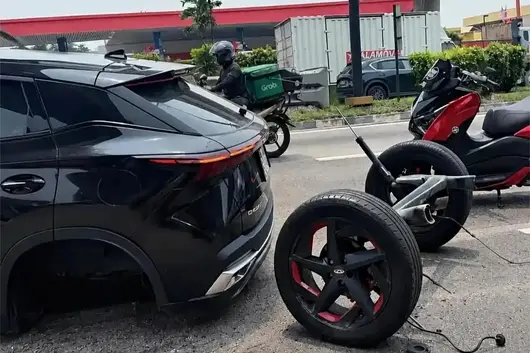
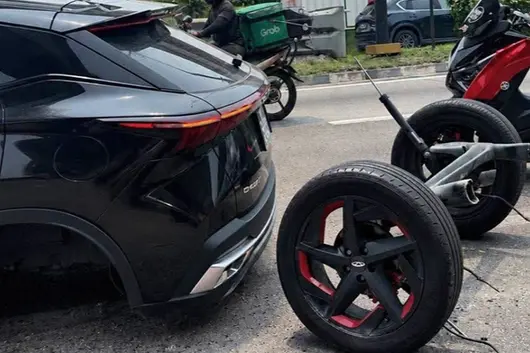
Photos and short videos of the scene first circulated on Malaysian social media: A black SUV was slanted parked in the middle of the road, two rear wheels with the entire rear axle lying not far away, the rear of the car collapsed directly onto the ground.
The rear axle trailing arm is a key load-bearing component connecting the rear wheels and the car body. The weld seam tore during driving, support and traction were lost simultaneously, and the car broke down on the spot. Fortunately, the speed was not high at the time, and no one was behind.
The vehicle involved was a 2023 model, the incident occurred on October 6, 2026, in Johor Bahru, Johor, Malaysia. It was driving normally throughout, without any collision.
Regulatory Action Three Days Later, This Is Rare in Malaysia
On October 11, the Malaysian Road Transport Department (JPJ) announced it was suspending OMODA 5 vehicle type certification and new car registration until the technical investigation was completed and safety was confirmed. In other words, before the investigation results were out, this car model could neither be sold nor registered locally.
Local peers spoke plainly: JPJ rarely uses this move for a single passenger car safety incident. This move hurts much more than a fine.
Chery simultaneously released the "Statement on Malaysian OMODA 5 Vehicle Issues": This batch of vehicles may have insufficient welding strength at local welding positions of the rear axle trailing arm, with a risk of weld seam tearing in extreme cases; this structural model had been discontinued prior. The reaction was fast enough, this point must be acknowledged.
Two Years Ago, The Cause Was Almost Identical
This is the part that makes people uneasy.
OMODA 5 entered the Malaysian market only in March 2024. A little over a month after launch, on April 28, a car owner posted a video on social media complaining that the rear axle broke while the new car was driving, and the left rear wheel got stuck into the car body. At that time, Chery Malaysia's conclusion pointed to suppliers: during factory upgrades, the automatic welding machine changed new welding tips, equipment calibration deviations occurred, and the welding of rear axles of some vehicles became substandard as a result. The actual problem found was in the 60 vehicles produced on August 15, 2023. The recall scope was expanded to the 600 vehicles produced between August 14 and 17.
Two years passed, the same rear axle, the same type of welding strength issue, the scope expanded from 600 vehicles to 8,878 vehicles.

The most eye-catching column in the table is not the numbers, but "Fell Twice at the Same Gate".
Changing welding tips is a daily operation at the consumable level. The normal process is to immediately perform first article inspection, destructive sampling, and parameter recalibration after replacement, along with stricter batch traceability. Obviously, one step was missed last time. The fact that another incident happened two years later indicates that the rectification then did not completely plug the loophole.
There is another detail easily overlooked: the involved car was not exported as a complete vehicle from China; it was locally assembled by the Inokom factory in Kulim, Kedah, Malaysia. Local assembly does not equal local parts manufacturing. Where the core structural component like the rear axle comes from, and who supplies it, is exactly what this investigation needs to clarify.
Do Domestic OMODA Owners Need to Panic?
OMODA 5 sold domestically is Chery OMODA. Launched in July 2022, official guide price 79,900 to 107,900 yuan, aimed at youth, currently discontinued.
Chery also wrote a sentence in the statement on October 11: Based on the principle of prudence, a special risk investigation for the same batch of OMODA 5 models in domestic and related markets has been launched, belonging to a proactive preventive arrangement, and results will be announced in time. Domestically, it is currently an investigation, not a recall.
To be frank, the structures of the two versions are not completely consistent. The domestic version distinguishes the rear suspension by power——1.5T models use torsion beam non-independent suspension, 1.6T models use multi-link independent suspension; the Malaysian involved batch has a rear axle structure with trailing arms. Batches, suppliers, and production lines are all different, don't scare yourself, don't pretend not to see, wait for the investigation results.
Local Malaysian car owners can only do one thing now: go to the Chery Malaysia official website, enter the vehicle identification number (VIN), check if their car is on the list, and don't just wait for a phone call.
I do not accept the blanket statement that "domestic cars have poor quality when going global". As of the end of 2025, Chery has cumulatively sold 30,073 vehicles in Malaysia, including 12,930 vehicles delivered in 2025 alone, making it one of the fastest-growing brands locally. A problem with one part batch is involved, not the collapse of the entire system.
But there are three things Chery must answer publicly: For this time and the one in 2024, is it the same supplier, the same production line, the same set of welding parameters? After the rectification last time, was batch traceability and destructive sampling actually implemented on a normalized basis? What traceability method is used to screen problematic vehicles? If the answers to these three questions are not given within a day, this recall is just damage control, not a solution.
For a Chinese brand running wildly overseas, the real test has never been whether the recall is fast enough. Finding the essence of the problem and solving it from the root is the correct solution.
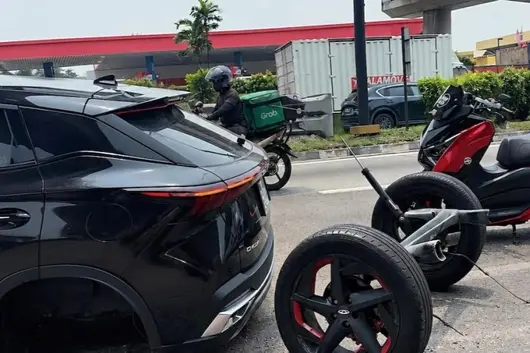

Editor's Note: Chery OMODA 5 faces repeated quality hazards and a large-scale recall overseas. With a high market share overseas and advancing globalization, this event impacts the brand and market, testing Chery's true strength in quality control and global layout.
Chery OMODA 5 Axle Breakage Incident
On October 11, Chery Automobile issued a statement saying that a batch of 2023 OMODA 5 vehicles sold in the Malaysian market have insufficient welding strength at partial welding locations of the rear axle longitudinal arms, posing a risk. Chery will cooperate with JPJ's arrangements, has initiated a recall for the affected 8,878 vehicles, will inspect relevant parts, and replace them for free if necessary.
Regarding this, Chery Company stated: In accordance with the principle of prudence, the company has launched a special risk inspection for the same batch of OMODA 5 models in the domestic and relevant markets, and is maintaining active communication with regulatory bodies. This inspection is a preventive proactive arrangement. Chery will, based on the inspection results, publish to the society in a timely manner with a responsible attitude.

This incident occurred at a node where Chery Automobile's overseas sales continued to rise, and the same model had experienced similar failures in Malaysia. In 2024, a case of OMODA 5 rear axle breakage was exposed locally. At that time, Chery's investigation concluded that the rear axle welding equipment calibration was improper, and 600 vehicles were screened. More than two years later, the same model showed relevant hazards in the same market again. This incident also triggered the suspension of certification and registration of the model locally and the audit of the manufacturing quality system, and also focused the market on the production consistency control level of the chassis welding process of the model. Moreover, there are differences between overseas and domestic regulatory systems. Many overseas motor vehicle regulatory agencies have a more rigid disposal method for mass manufacturing defects: in addition to regular recalls, the regulator has the right to suspend or even freeze model certification, directly restricting new car registration and sales from the access end. This means that for Chinese automakers going overseas, besides competing on product competitiveness and export scale, they must also adapt to local regulatory rules. The continuously rising overseas sales volume requires a stable quality control system to support scale expansion.
Exports Increased by 65.6% in the First Three Quarters
It is worth noting that Chery OMODA 5 is an SUV model built by Chery for the global market. It has been sold in more than 40 countries worldwide, with cumulative sales exceeding 250,000 units. According to official Chery data, exports in the first three quarters of 2026 were 1,551,178 vehicles, a year-on-year increase of 65.6%, surpassing the total export volume of last year. After the occurrence of this axle breakage incident, Malaysia suspended the certification and registration of the model, which impacted the sales rhythm of the car locally, and the large-scale recall also increased significant costs.

Bai Wenxi, Vice Chairman of the China Enterprise Capital Alliance, told Caiwen: Chery's response to this recall was not considered slow. In terms of attitude, "active apology + cross-border synchronous inspection" is more decent than many overseas automakers, but the cost of trust has doubled. This brings a test to the OMODA product and Chery's brand image in the Southeast Asian region.
Chery Globalization 3.0 Strategy Implementation
Recently, Chery's global actions have been continuous. On October 7, the announcement issued by Chery Automobile proposed to fully promote the implementation of Chery Automobile Globalization 3.0 strategy, and strengthen integrated domestic and foreign operations. The main brand will be incorporated into the global market system as a whole. This strategic adjustment also fits the current sales structure. According to the sales data released by Chery for the first three quarters of 2026, Chery sold a total of 2,206,789 cars, with exports of 1,551,178 units. Exports account for nearly 70% of total sales, and the overseas market is the core basic market for sales. Moreover, in the first three quarters of 2026, Chery Group's overseas exports reached 1.5512 million units, higher than BYD's 1.3378 million units, SAIC's 1.1660 million units, Geely's 0.7977 million units, ranking first among domestic independent automakers going overseas. As can be seen, Chery's overseas business accounts for a high proportion. With the expansion of overseas scale, higher requirements are also put forward for the synchronous upgrading of product quality, localization adaptation, and supporting service systems.

With the promotion of Chery's Globalization 3.0 strategy, the proportion of overseas business in total sales continues to rise. As its global model, OMODA 5 triggered a large-scale recall and local regulatory restrictions in Malaysia this time. Combined with previous similar fault records in the same market, related inspections, rectifications, and subsequent market changes will continue to receive industry attention.

On October 13, it was reported that the State Administration for Market Regulation recently released 6 recall notices involving multiple enterprises including BYD, BMW, Stellantis, and Jaguar Land Rover, totaling over 190,000 vehicles. Meanwhile, the Ministry of Ecology and Environment also announced an emission recall plan for GAC Honda, while Chery Automobile apologized and launched a recall regarding model issues in the Malaysian market. From braking systems to propeller shafts, the defect types covered in this batch of recalls are quite diverse.

BYD: Brake pedal limiting pad batch anomaly
The largest recall in this batch is by BYD. BYD Auto Co., Ltd. is recalling 58,026 Tang series vehicles produced between March 28, 2015, and December 21, 2018, 77,846 new generation Tang DM series vehicles produced between May 19, 2018, and January 14, 2022, and 7,023 new generation Tang EV series vehicles produced between December 27, 2018, and October 25, 2021; BYD Automobile Co., Ltd. is recalling 40,316 Qin series vehicles produced between June 27, 2014, and June 9, 2019.
The reason for the recall is: due to manufacturing issues in some vehicles, the material batch of the brake pedal limiting pad is abnormal. After long-term use, the limiting pad may crack or break. In extreme cases, the limiting pad may detach, causing the brake light to stay on when the brake pedal is not pressed, sending a wrong signal to vehicles behind. The handling method is free replacement with improved limiting pads; vehicles that have already had improved limiting pads replaced do not need to be replaced again.
BMW: Propeller shaft splines may wear excessively
BMW (China) Automobile Trading Co., Ltd. will recall 4,651 certain imported 5 Series vehicles produced between March 15, 2021, and January 27, 2023, starting from November 1, 2026, 27 certain imported 7 Series vehicles produced between June 21, 2023, and January 9, 2025, and 2,403 certain imported 8 Series vehicles produced between March 15, 2021, and November 25, 2025, totaling 7,081 vehicles.
The defect description is: the longitudinal spline connection between the propeller shaft and the rear axle differential may experience excessive wear on the spline teeth surface after long-term use. In extreme cases, this may lead to spline connection failure, power cannot be effectively transmitted to the rear axle differential, causing rear axle power interruption. The handling method is free inspection of the wear situation, replacing the propeller shaft and/or rear axle differential if necessary, and sealing with special adhesive when reinstalling.
Other batches and overseas recalls
Stellantis (Shanghai) Automobile Co., Ltd. is recalling 979 certain imported Wrangler hybrid vehicles produced between September 5, 2023, and March 26, 2024, and 1,178 certain imported new Grand Cherokee 4xe hybrid vehicles produced between July 19, 2023, and October 9, 2023; additionally, 5,593 certain imported S1000RR motorcycles are being recalled. Jaguar Land Rover (Ningbo) Trading Co., Ltd. is recalling 3 certain imported 2022 model Land Rover Defender plug-in hybrid vehicles produced between May 25, 2021, and July 1, 2021, because the high-voltage battery may experience thermal overload, with a risk of fire in extreme cases.
Regarding emission recalls, GAC Honda Automobile Co., Ltd. will recall 985 certain imported Acura TLX vehicles and 3,410 certain domestic Acura TLX-L vehicles, totaling 4,395 vehicles, starting from November 30, 2026. The reason is that the internal sealing ring of the fuel filler tube may be damaged, leading to loose sealing at the fuel filler tube opening and excessive fuel vapor emissions.
Regarding overseas markets, on the evening of October 11, Chery Automobile Co., Ltd. released an explanation regarding OMODA 5 vehicle issues in Malaysia, stating that the model may have issues with insufficient welding strength at local welding positions of the rear axle longitudinal arm. A recall has been launched for 8,878 affected OMODA 5 vehicles, and apologies were made for the inconvenience caused to users.

Conclusion
The defect types involved in this batch of recalls are quite diverse — brake pedal limiting pads, propeller shaft splines, high-voltage batteries, and fuel filler tube sealing rings — indicating that so-called "defects" are rarely single-link problems. For vehicle owners, there are two practical suggestions: first, pay attention to receiving registered mail or manufacturer Connected Drive messages; the delivery method of recall notifications is usually stated in the announcements; second, you can verify whether your vehicle is within the scope through the State Administration for Market Regulation Recall Center website and the customer service hotlines of each enterprise. Additionally, the dilemma of Chery's Malaysia recall this time is worth pondering — under the same set of manufacturing standards, problems in overseas markets will also backfire on the brand's long-term operations locally. The follow-up handling of such events often tests the enterprise's response capability more than domestic recalls.

Recently, Chery Automobile announced export data for the first three quarters of 2026: Cumulative exports reached 1.5512 million vehicles, a year-on-year increase of 65.6%, exceeding the total export volume of the entire year of 2025; September's single-month exports hit 207,800 vehicles, setting a new record for single-month exports by Chinese automakers, accounting for nearly 70% of total sales. As the enterprise ranked first in China passenger car exports for 23 consecutive years, this achievement reflects the favorable development trend of Chinese automakers going global.

However, at the same time this data was released, a vehicle malfunction involving the OMODA 5 in the Malaysian market also drew attention. It highlighted that while sales are growing, product quality and production control also require continued focus.
On October 6, a 2023 model OMODA 5 driving normally in Johor Bahru, Malaysia, experienced tearing of the rear axle trailing arm. The rear axle detached from the body along with two rear wheels, leaving the vehicle stopped in the middle of the road. Fortunately, no personnel injuries were sustained. On the evening of October 11, Chery released an official statement. Investigations revealed that local welding positions on the rear axle trailing arms of this batch of vehicles had insufficient welding strength, posing a risk of weld seam tearing under extreme conditions. The enterprise has now cooperated with the Malaysian Land Transport Authority to initiate a recall of 8,878 affected OMODA 5 vehicles, inspecting parts and providing free replacements based on actual conditions.

This is not the first time such issues have arisen with the OMODA 5 in Malaysia. In April 2024, local owners reported rear axle breakages while driving. Chery subsequently recalled 600 vehicles locally. The investigation concluded that after the supplier replaced the welding torch, calibration was not done properly, leading to welding defects on the rear axle. Ultimately, 60 defective vehicles were identified and the rear axles were replaced. At that time, local regulators did not issue a sales suspension, and the matter gradually subsided.
More than two years later, a failure occurred in the same location again, with the severity and scope being wider than last time. The breakage evolved from a single side to overall rear axle detachment, and the recall scale expanded from 600 vehicles to 8,878, an increase of nearly 15 times. Rumors suggest local regulators also adopted stricter handling methods: directly suspending the OMODA 5 model certification. Until the technical investigation is completed, this model cannot be registered, nor can it continue to be sold. Meanwhile, a comprehensive review of the supply chain was launched, verifying risk vehicles one by one according to part numbers, production batches, and VINs, examining the quality control and welding inspection processes of the whole vehicle production assembly and component suppliers.

There is still one question that remains unanswered: Are the vehicles experiencing failures this time within the recall scope of the 600 vehicles from 2024? If within scope, it suggests vehicles repaired back then still carry risks, and the previous rectification plan may not have fully resolved the issue; if outside scope, it indicates the risk batch scope determined at the time was not accurate enough, meaning more hidden risk vehicles existed than previously estimated.
Regardless of the answer, this reminds us that the significance of a recall is not just fixing already sold problematic vehicles, but more importantly feeding the problem back into the production process and quality verification procedures, plugging management loopholes, and avoiding the repetition of the same issues. If this link is not executed properly, the higher the vehicle sales volume, the greater the potential risk scope.
The Malaysian market holds significant importance for Chery. The dual-brand entry of OMODA and JAECOO into the local market has been less than two years, yet cumulative sales have already broken through 30,000 vehicles, ranking in the top three among non-local brands. With the model certification suspended, the impact is not just the cost of parts replacement for over 8,000 vehicles, but also affects brand reputation in the local market and the advancement of subsequent business.
It needs to be explained that the involved 2023 model OMODA 5 had already ceased production in September 2025, replaced by the CHERY O5 which features a multi-link independent suspension. Therefore, this certification suspension will not affect currently on-sale models, but the impact of the event on brand reputation will not be limited to this discontinued model.

Looking deeper, when exports transform from an "incremental supplement" for automakers to a "core component" accounting for nearly 70%, a product failure that attracts attention produces impacts not limited to a single brand or single market. Many overseas consumers' impressions of products are often linked with the overall image of the place of origin. The quality issues of individual enterprises might also affect overseas consumers' overall impression of Chinese automobiles.
Currently, Chery has initiated risk inspections for the same batch of OMODA 5 models in domestic and relevant markets, though it has not yet specified which markets and how many vehicles are involved.
Subsequent progress is worth continued attention: When will the domestic inspection results be announced, and will formal recall procedures be initiated; are the root causes of the two recalls over two years consistent, and whether the rectification back then effectively plugged the process loopholes from the source.

Chinese automakers going global have today reached the milestone of million-level export volume, which is a very difficult achievement to realize. As the scale of going global continues to expand, the tests are not just on market expansion capabilities, but also on the stability of quality systems, supply chain control levels, compliance capabilities facing overseas regulators, and the openness and transparency of handling problems. Selling high volume is capability, but ensuring product stability, moving steadily and far, is a long-term topic that needs more attention. This is not only a problem Chery needs to face, but also a common thought for all Chinese automakers going global.

"Image content | Source: Internet, copyright belongs to the original owner. If there is any infringement, please contact us for removal!"

Recap:
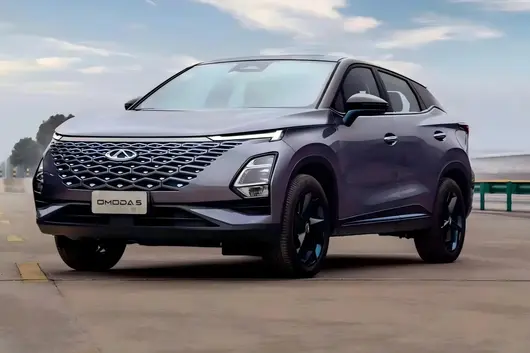
Malaysia, an OMODA 5 SUV with the Chery brand suffered an axle breakage accident; specifically the 2023 OMODA 5 model, after official investigation, it was determined that this batch of vehicles may have insufficient welding strength at partial locations of the rear axle longitudinal arm, under extreme conditions there is a risk of weld seam tearing, which could lead to detachment.

This model variant has already been discontinued, Chery Malaysia subsidiary has cooperated with the relevant arrangements of the Malaysian Road Transport Department to recall 8,878 OMODA 5 vehicles with issues; the solution is to inspect relevant components, decide whether replacement is needed based on specific circumstances, replacement is free. Meanwhile Chery Automobile stated, adhering to the principle of prudence, the company has initiated a special risk investigation for the same batch of OMODA 5 vehicles in the domestic and relevant markets, maintaining active communication with regulatory authorities; subsequently Chery will announce results to the society in a timely manner in a responsible attitude based on the investigation results.
At the same time, we express apologies for the inconvenience caused to users.

And in 2024, there were already complaints from owners regarding OMODA 5 rear axle breakage during driving, namely adopting torsion beam non-independent suspension; Chery recalled 600 vehicles in Malaysia at that time, after confirming the issue originated from improper calibration of rear axle welding equipment, rear axles were replaced for 60 affected vehicles.


The domestic model corresponding to the OMODA 5 SUV is the Chery OMODA, this vehicle is currently discontinued, the last batch is the 2025 model. Its body dimensions are 4,400*1,830*1,588 mm, wheelbase is 2,630 mm, it is a compact SUV with smaller dimensions; adopts front MacPherson independent suspension, rear torsion beam non-independent suspension, it is a front-engine front-wheel drive vehicle. The vehicle is equipped with a 1.5T turbocharged engine, power parameters are 115 kW/230 N·m, 2025 model matched with Continuously Variable Transmission (CVT).
Chery Automobile's attitude towards facing product issues is still commendable, under necessary premises, discontinued models will also be recalled.


Author | Janson
Editor | Zhihao
A Chery SUV was driving on the road when its two rear wheels fell off on their own.
Car Thing news on October 12, recently, a 2023 model Chery OMODA 5 in Malaysia experienced a rear axle detachment event, the vehicle's two rear wheels fell off together with the rear axle assembly directly, the car also lay across the road, fortunately no casualties were caused.

▲ Online circulating video from the rear-facing dashcam of the involved vehicle
In the evening of October 11, Chery Automobile publicly apologized for the vehicle rear axle detachment event. The explanation showed that the involved batch of vehicles might have insufficient welding strength at partial welding positions of the rear axle beam, and in extreme cases there is a risk of weld seam tearing.

▲ Chery releases issue statement
Currently, Chery Malaysia subsidiary has initiated a recall, involving 8,878 OMODA 5 vehicles, relevant parts will be inspected, and replaced free of charge depending on the situation, domestic same-batch models have also initiated risk inspection.
Chery also confirmed that models using this structure were previously discontinued. The company has initiated a special risk inspection for domestic and relevant market same-batch models, will publish follow-up progress in a timely manner based on the inspection results, and publicly apologize for this matter.
After the incident, Malaysia Land Transport Authority (JPJ) has temporarily suspended the certification and new car registration of the affected OMODA 5 models, and required Chery to investigate the relevant vehicles and production processes.

▲ Online circulating bystander perspective of the accident
Public information shows, Malaysia 2023 model Chery OMODA 5, launched in July 2023, adopts 1.5T engine, matched with CVT transmission, rear suspension is torsion beam non-independent suspension.
From public information, this model may correspond to Chery OMODA (OMODA 5) domestically, launched in China in July 2022.
According to public terminal sales data statistics, from 2022 to 2024, OMODA accumulated sales of about 17,200 units domestically, respectively versions adopting 1.6T engine + multi-link architecture and 1.5T engine + torsion beam suspension.
Among them, domestic 2023 model OMODA 1.5T model also adopts torsion beam rear suspension, similar to the chassis structure of the Malaysia involved model.
This is not the first time Chery OMODA 5 has had a similar incident in Malaysia.
In April 2024, an OMODA 5 rear axle breakage incident occurred locally. Chery subsequently investigated and found that after parts supplier changed the welding head of the automatic welding equipment, equipment calibration deviated.

▲ 2024 axle breakage incident announcement
At that time, Chery recalled 600 OMODA 5 vehicles in Malaysia for inspection, among which 60 units were equipped with affected parts.
Two years later, the same model appeared rear axle detachment event again. However, currently it cannot be confirmed whether the two incidents were caused by the same manufacturing defect.
© 2024 Bitauto.com. All Rights Reserved.
Bitauto (www.yiche.com and www.bitauto.com) is one of the most visited automotive websites in China. We provide detailed info on Chinese car brands available in your area. Please note that the information provided on this website is based on publicly available data and is for reference only. It may not be fully updated or accurate at all times.

Help us improve our website


