

HomeSabah

Search History
Popular Searches
Dealer Login / Sign Up

In the Malaysian SUV market, many buyers compare Proton X70 and Chery Tiggo Cross when choosing a car. Both cars are quite close in price and positioning, so today we will make a detailed comparison from multiple aspects to help you save time on research.
Proton X70's OTR price in Malaysia is RM 106,800 - 122,300, with a total of 3 variants, including 1.5L Standard 2WD (RM 106,800), 1.5L Executive 2WD (RM 115,800), 1.5L Premium 2WD (RM 122,300), etc.
Chery Tiggo Cross's OTR price in Malaysia is RM 88,750 - 99,750, with a total of 2 variants, including 2025 HEV 1.5L CSH (RM 99,750), 2025 1.5T Standard (RM 88,750), etc.
In terms of price, the starting price of Chery Tiggo Cross is RM 18,050 cheaper than Proton X70. Honestly, in this price range, a gap of a few thousand is actually not that significant; the key lies in overall cost-performance and long-term usage costs.

Proton X70 is equipped with a 1.5L Turbo, 140 hp. Official fuel consumption is 7.0 L/100km.
Chery Tiggo Cross is equipped with a 1.5L 4-cyl, 105 hp. Official fuel consumption is 6.0 L/100km.
In terms of power, Proton X70's 1.5L Turbo has 35 more horsepower than Chery Tiggo Cross's 1.5L 4-cyl, offering more confidence in mid-range acceleration, especially when overtaking on highways. However, Chery Tiggo Cross may have better fuel economy, and the difference in daily city commuting will not be too large.

Proton X70's safety rating is 5★ (ASEAN NCAP), with active safety systems including ADAS (ACC, AEB, LKA, LDA, BSM, RCTA).
Chery Tiggo Cross's safety rating is TBD, with active safety systems including Basic.
Regarding safety features, both cars have received good ratings. However, Proton X70's ADAS (ACC, AEB, LKA, LDA, BSM, RCTA) and Chery Tiggo Cross's Basic differ in functions. If you value active safety more, you can carefully compare the feature lists of both.

Proton X70 body length is 4400 mm, trunk is 400 L.
Chery Tiggo Cross body length is 4400 mm, trunk is 400 L.
The dimensions of both cars are almost the same, with little difference in interior space. For cars of this level, daily use is completely sufficient.
Proton X70 adopts FWD drive method.
Chery Tiggo Cross adopts FWD drive method.
Both cars have the same drive method, both are FWD, and the daily driving experience will not differ much.
In general, Proton X70 and Chery Tiggo Cross are both very good models in the Malaysian market. Which one to choose depends on your personal needs and budget. We suggest doing your research thoroughly, compare quotes from several dealerships, then go for a test drive to make the final decision. Buying a car is a major decision, spending some time doing research will never be wrong.


喺馬來西亞嘅 SUV 市場,好多買家喺揀車嗰陣,都會拿 Proton X50 同 Toyota Corolla Cross 做比較。這兩款車喺價位同定位上都幾接近,今日我哋就從多個方面做詳細比較,幫你省返做功課嘅時間。
Proton X50 喺馬來西亞嘅 OTR 售價係 RM 89,800 - 113,300,總共 4 個版本,包括 1.5T Executive(RM 89,800)、1.5T Premium(RM 101,800)、1.5T Flagship(RM 113,300) 等。
Toyota Corolla Cross 喺馬來西亞嘅 OTR 售價係 RM 133,800 - 148,800,總共 3 個版本,包括 2026 HEV 1.8L GR Sport(RM 148,800)、2026 HEV 1.8L Standard(RM 140,800)、2026 1.8L Standard(RM 133,800) 等。
由價錢睇,Proton X50 嘅入門價確實比 Toyota Corolla Cross 平咗 RM 44,000。如果你預算有限,Proton 嘅入門版已經夠滿足日常需要。但都要留意,平嗰幾千蚊,喺配備上會有取捨,具體要睇你嘅需要。

Proton X50 配備 1.5L 4-cyl,馬力 105 hp。官方油耗 6.0 L/100km。
Toyota Corolla Cross 配備 1.5L Turbo,馬力 140 hp。官方油耗 7.0 L/100km。
動力方面,Toyota Corolla Cross 嘅 1.5L Turbo 比 Proton X50 嘅 1.5L 4-cyl 多咗 35 匹馬力。不過日常喺市區行,兩款車嘅動力都夠用,唔會覺得夠唔力。
Proton X50 嘅安全評級係 5★ (ASEAN NCAP),主動安全系統包括 ADAS (ACC, AEB, LKA, LDA, BSM, RCTA)。
Toyota Corolla Cross 嘅安全評級係 5★ (ASEAN NCAP),主動安全系統包括 TSS (PCS, LDA, ACC, LTA)。
兩款車嘅安全評級一樣,喺呢個級別入面,安全配備都算好齊全。而家嘅新車安全性都唔差,唔使太擔心呢一點。
Proton X50 採用 4WD 驅動方式。
Toyota Corolla Cross 採用 FWD 驅動方式。
Proton 嘅 4WD 同 Toyota 嘅 FWD 喺操控上會有唔同感受,建議試駕對比。

總體嚟講,Proton X50 同 Toyota Corolla Cross 都係馬來西亞市場幾唔錯嘅車型。揀邊一輛,關鍵都要睇你嘅個人需要同預算。建議大家做好功課,多比較幾間車行嘅報價,先至去試駕做最終決定。買車係件大事,花啲時間做功課絕對無錯。


喺馬來西亞嘅 SUV 市場,好多買家喺揀車嘅時候都會拿寶騰 X70 同豐田 Corolla Cross 做比較。這兩款車喺價錢同定位上都好接近,今日我哋就從多個方面做一個詳細嘅對比,幫你省咗做功課嘅時間。
寶騰 X70 喺馬來西亞嘅 OTR 售價係 RM 106,800 - 122,300,一共有 3 個版本,包括 1.5L 標準 2WD(RM 106,800)、1.5L 行政 2WD(RM 115,800)、1.5L 高級 2WD(RM 122,300)等。
豐田 Corolla Cross 喺馬來西亞嘅 OTR 售價係 RM 133,800 - 148,800,一共有 3 個版本,包括 2026 HEV 1.8L GR Sport(RM 148,800)、2026 HEV 1.8L 標準(RM 140,800)、2026 1.8L 標準(RM 133,800)等。
從價錢嚟睇,寶騰 X70 嘅入手價真係比豐田 Corolla Cross 平咗 RM 27,000。如果你預算有限,寶騰嘅入門版已經可以滿足日常需要。但都要留意,平嗰幾千塊,可能喺配備上會有取捨,具體睇你嘅需要。
寶騰 X70 配備 1.5L Turbo,馬力 140 hp。官方油耗 7.0 L/100km。
豐田 Corolla Cross 配備 1.5L Turbo,馬力 140 hp。官方油耗 7.0 L/100km。
兩款車用咗同一套動力系統,日常開落去嘅感覺基本冇分別。油耗方面亦都差唔多,唔使太糾結這一點。

寶騰 X70 車身長 4400 mm,後備箱 400 L。
豐田 Corolla Cross 車身長 4400 mm,後備箱 400 L。
兩款車嘅尺寸幾近一樣,車內空間差別唔大。呢個級別嘅車,日常使用完全夠用。

寶騰 X70 保修 5 年/150,000km,保養間隔 每 10,000km 或 6 個月。
豐田 Corolla Cross 保修 5 年/里程無限制,保養間隔 每 10,000km 或 6 個月。
總嚟講,寶騰 X70 同豐田 Corolla Cross 都係馬來西亞市場好唔錯嘅車型。揀邊一輛,關鍵始終要睇你嘅個人需要同預算。建議大家做好功課,多比較幾間車行嘅報價,再去試車先做最終決定。買車係件大事,花少少時間做功課絕對唔會錯。


在马来西亚的轿车市场,很多买家在选车的时候都会拿 Audi A3 和 Porsche 718 来做比较。这两款车在价位和定位上都蛮接近的,今天我们就从多个方面做一个详细的对比,帮你省下做功课的时间。
Audi A3 在马来西亚的 OTR 售价是 RM 340,112 - 340,112,一共有 2 个版本,包括 1.5L SkyActiv-G(RM 135,000)、2.0L SkyActiv-G(RM 155,000) 等。
Porsche 718 在马来西亚的 OTR 售价是 RM 545,000 - 1,700,000,一共有 6 个版本,包括 2025 AMG G 63(RM 1,948,888)、2025 Cayman 2.0T(RM 585,000)、2025 Boxster 2.0T(RM 545,000) 等。
从价钱来看,Audi A3 的起步价确实比 Porsche 718 便宜了 RM 204,888。如果你预算有限,Audi 的入门版已经可以满足日常需求。但也要注意,便宜的那几千块,可能在配备上会有取舍,具体要看你的需求。

Audi A3 的安全评级是 5★ (Euro NCAP),主动安全系统包括 Pre Sense。
Porsche 718 的安全评级是 TBD,主动安全系统包括 Basic。
安全配备方面,两款车都拿到了不错的评级。不过 Audi A3 的 Pre Sense 和 Porsche 718 的 Basic 在功能上有些差异,如果你比较看重主动安全的话,可以仔细对比一下两者的功能列表。

Audi A3 采用 FWD 驱动方式。
Porsche 718 采用 FWD 驱动方式。
两款车的驱动方式一样,都是 FWD,日常驾驶感受不会有太大区别。

Audi A3 和 Porsche 718 都是马来西亚市场的主流选择,适合家庭使用、日常通勤。如果你更看重品牌口碑和二手价,可以优先考虑口碑更好的那一款;如果你更在意性价比和配备,那就选配置更丰富的那款。最终还是建议两款都去试驾,亲身体验才是最重要的。

总的来说,Audi A3 和 Porsche 718 都是马来西亚市场很不错的车型。选择哪一辆,关键还是要看你的个人需求和预算。建议大家做好功课,多比较几间车行的报价,再去试驾做最终决定。买车是件大事,花点时间做功课绝对不会错。



在马来西亚的SUV市场,很多买家在选车的时候都会拿 Mazda CX-60 和 Chery Tiggo 7 PHEV 来做比较。这两款车在价位和定位上都蛮接近的,今天我们就从多个方面做一个详细的对比,帮你省下做功课的时间。
Mazda CX-60 在马来西亚的 OTR 售价是 RM 200,510 - 252,873,一共有 2 个版本,包括 2026 3.3T 4WD High Plus(RM 252,873)、2025 2.5L 2WD High(RM 200,510) 等。
Chery Tiggo 7 PHEV 在马来西亚的 OTR 售价是 RM 129,750 - 129,750,一共有 2 个版本,包括 2025 1.5T 90km CSH(RM 129,750)、What charging methods does the Tiggo 7 PHEV support? Can it be charged using a home power socket?(RM 117,478) 等。
从价钱来看,Chery Tiggo 7 PHEV 的起步价比 Mazda CX-60 便宜了 RM 70,760。老实讲,在这个价位段,几千块的差距其实不算大,关键还是看整体的性价比和长期使用成本。

Mazda CX-60 车身长 4500 mm,后备箱 450 L。
Chery Tiggo 7 PHEV 车身长 4400 mm,后备箱 400 L。
空间方面,Mazda CX-60 的车身比 Chery Tiggo 7 PHEV 长了 100 mm,车内乘坐空间会稍微宽裕一些,尤其是后座腿部空间。如果你经常载家人或者需要放婴儿车,大一点的车身确实更实用。

Mazda CX-60 保修 5年/150,000km,保养间隔 每10,000km或6个月。
Chery Tiggo 7 PHEV 保修 3年/100,000km,保养间隔 每10,000km或6个月。

Mazda CX-60 和 Chery Tiggo 7 PHEV 都是马来西亚市场的主流选择,适合家庭使用、日常通勤。如果你更看重品牌口碑和二手价,可以优先考虑口碑更好的那一款;如果你更在意性价比和配备,那就选配置更丰富的那款。最终还是建议两款都去试驾,亲身体验才是最重要的。

总的来说,Mazda CX-60 和 Chery Tiggo 7 PHEV 都是马来西亚市场很不错的车型。选择哪一辆,关键还是要看你的个人需求和预算。建议大家做好功课,多比较几间车行的报价,再去试驾做最终决定。买车是件大事,花点时间做功课绝对不会错。


Ringkasan Model

Adakah Audi A6 berbaloi dibeli? Kuncinya bukan pada ketarikannya, tetapi pada keupayaan memenuhi keperluan penggunaan sebenar anda. Artikel ini akan menumpukan pada sama ada akan timbul tekanan tambahan semasa penggunaan jangka panjang.
Dari segi varian, Audi A6 semasa boleh dibandingkan dari 2025 Sedan 40 TFSI S line, 2025 Avant, hingga 2025 Sedan 55 TFSI quattro.
Panduan Harga Pembelian
Semasa membuat anggaran pembelian Audi A6, disarankan memulakan dengan penjenamaan varian dan kos pemilikan seterusnya. Harga bukan tumpuan utama, yang menentukan keselesaan sebenar ialah sama ada anda akan menggunakan konfigurasi tersebut setiap hari.
Jika anda ragu-ragu antara beberapa varian, letakkan 2025 Sedan 40 TFSI S line, 2025 Avant, dan 2025 Sedan 55 TFSI quattro dalam senarai yang sama untuk dibandingkan. Pembeli untuk perjalanan harian utamakan keselesaan dan keselamatan, manakala pembeli yang kerap memandu lebuh raya lebih mengutamakan kuasa, sistem bantu pemanduan dan kemudahan kabin.
Ringkasan Parameter Utama
Melihat spesifikasi utama Audi A6, yang paling penting ialah menerjemahkan angka kepada perasaan dalam kehidupan.
Nilai utama Audi A6 harus dinilai berdasarkan senario harian: adakah anda mahukan ia untuk perjalanan harian, perjalanan keluarga, perjalanan jauh, atau sebagai pilihan yang lebih berpersonaliti.
Analisis Kelebihan dan Kekurangan
Kelebihan Audi A6 tidak perlu dibesar-besarkan, nilai sebenar ialah sama ada ia menjadikan penggunaan harian lebih tenang: penjenamaan model jelas, sesuai sebagai rujukan perbandingan kelas yang sama terlebih dahulu.
Perlu diambil perhatian ialah keputusan akhir tertakluk pada konfigurasi varian, insurans dan kos penyelenggaraan jangka panjang. Ini bukan item tolakan mata, tetapi perincian kehidupan yang perlu difikirkan dengan jelas sebelum tempahan dibuat.
Soalan Lazim Pembelian Kereta
Sebelum membeli Audi A6, soalan yang paling kerap ditanya pembeli bukan mengenai spesifikasi tunggal, tetapi sama ada ia boleh menyambung ke kehidupan mereka.
Sesuai untuk siapa? Sesuai untuk pembeli yang meletakkan sama ada akan timbul tekanan tambahan semasa penggunaan jangka panjang sebagai keutamaan. Apakah yang perlu dilihat pengguna keluarga? Utamakan tempat duduk belakang, kerusi kanak-kanak, bagasi dan keselesaan turun naik setiap hari. Adakah ia rumit untuk dipandu setiap hari? Jika kos tenaga, kemudahan parkir dan konfigurasi varian mematuhi irama hidup anda, ia akan lebih mudah dikendalikan.
Kandungan Perbandingan Saingan
Apabila memasukkan Audi A6 dalam senarai kelas yang sama, tidak disyorkan hanya melihat jenama atau bentuk luar. Urutan perbandingan yang berguna ialah: mulakan dengan perbandingan penjenamaan varian, paspasan jenama selepas jualan dan kegunaan harian.
Keputusan yang terhasil melalui penapisan ini lebih dekat dengan kehidupan harian. Anda akan lebih jelas sama ada ia sesuai untuk perjalanan bandar, perjalanan keluarga, kruser perjalanan jauh, atau lebih sesuai sebagai pilihan yang menekankan personaliti.
Panduan Kitaran Penggunaan Kenderaan
Pentingnya memiliki Audi A6 ialah mengesahkan insurans, cukai jalan, penyelenggaraan dan kos tayar berada dalam lingkungan yang boleh diterima. Membeli kereta bukan berakhir dengan satu bayaran, tetapi mesti dikendalikan setiap hari.
Jika anda kerap memandu Lebuhraya Utara-Selatan, kuasa dan keselesaan kabin akan lebih penting daripada harga rendah semata-mata; jika terutamanya di dalam bandar, keupayaan berparkir, pandangan dan kelancaran kelajuan rendah akan lebih mempengaruhi suasana hati.


车型概览

Mercedes-Benz CLE Coupé 值不值得买,关键不是它看起来有多吸引,而是它能不能解决你的真实用车需求。这篇文章会把重点放在长途稳定感和乘客舒适度。
价格落在 RM 518,888,买家可以先用它判断预算压力和同级定位。
购车价格指南
Mercedes-Benz CLE Coupé 的购车预算可以先从 RM 518,888 开始衡量。这个数字真正影响的是月供、保险和现金流,而不只是展厅里的标价。
如果你在几个版本之间犹豫,可以把 2025 CLE 300 4MATIC Coupé(RM 518,888) 放在同一张清单里比较。日常通勤买家优先看舒适与安全,常跑高速的买家则更应重视动力、辅助驾驶和座舱便利。
核心参数汇总
看 Mercedes-Benz CLE Coupé 的核心规格,最重要是把数字翻译成生活里的感受。
涡轮增压、4缸、1999 mL 排量的动力底子,适合拿来判断市区跟车和高速巡航是否轻松。 258 Ps的输出,真正意义在于满载、上坡和超车时不会太吃力。 7 L/100km的油耗,对每天通勤的人来说会直接影响加油频率。 车长 4850 mm、车宽 2042 mm、车高 1423 mm,可以帮助你预判停车难度和后排乘坐空间。
优缺点分析
Mercedes-Benz CLE Coupé 的优点不必夸张,真正有价值的是它能不能让日常使用更省心:预算位置清楚,方便和同级车直接比较、日常能源成本有明确参考、动力输出能支撑高速和超车需求。
需要留意的是,市区停车和狭窄路段仍要看个人驾驶习惯。这些不是扣分项,而是下订前应该先想清楚的生活细节。
购车常见问题解答
购买 Mercedes-Benz CLE Coupé 前,买家最常问的不是单一规格,而是它能不能融入自己的生活。
这辆车适合谁?适合把长途稳定感和乘客舒适度放在首位的买家。 家庭用户要看什么?优先看后排乘坐、儿童座椅、行李和日常上下车是否顺手。 每天开会不会麻烦?7 L/100km 的油耗参考让通勤成本更容易预估。
竞品对比内容
把 Mercedes-Benz CLE Coupé 放进同级车名单时,不建议只看品牌或外形。真正有用的比较顺序是:先用 RM 518,888 锁定预算圈、再看动力是否足够应付高速和满载、接着比较能源成本和补能便利、最后看空间是否适合家人和行李。
这样筛选出来的结果更贴近日常生活。你会更清楚它是适合城市通勤、家庭代步、长途巡航,还是更适合作为一辆讲求个性的选择。
用车全周期指南

拥有 Mercedes-Benz CLE Coupé 的日常成本,最直接会反映在燃油、保险、轮胎和定期保养上。7 L/100km 的油耗让通勤预算更容易掌握。
如果你常跑南北大道,动力和座舱舒适度会比单纯低价更重要;如果主要在市区,停车灵活性、视野和低速顺滑度会更影响心情。


Another Japanese automaker is on the brink of a collapse.
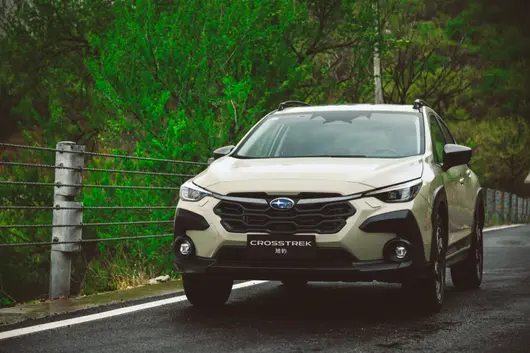
On May 20, Subaru officially released its fiscal 2025 (April 2025 – March 2026) financial report.
Data shows Subaru's operating profit plunged 90.1% — from 405.3 billion yen in the previous fiscal year to 40.1 billion yen. Net profit also fell from 338.1 billion yen to 90.8 billion yen, a drop of 73.1%.

Despite a slight revenue increase of 2.1% for the year, the operating margin contracted cliff-like: plummeting from 8.6% to 0.8%. This means for every 100 yen of revenue Subaru generates, the final profit left is less than 1 yen, completely a case of 'losing money just to drum up business'.
Additionally, in fiscal 2025, global production fell 7% year-on-year to 880,000 units; global sales declined 4.3% to 896,000 units.
Profits, production, and sales all declined comprehensively, trapping Subaru in a 'triple kill'. For a brand selling less than a million units annually, it is walking on the 'edge of life and death'.
However, Subaru's profit avalanche is far from an isolated case; it sounds more like an alarm for the entire Japanese automaker camp losing speed during the global industry shift, also predicting that the past profit models of Japanese automakers face severe and profound reshaping.

In the internal combustion engine era, Subaru built a unique brand identity with its boxer engine and all-wheel-drive system. 'Buy Toyota if you don't know cars, buy Subaru if you do' once became a famous saying in the car circle. Models such as Forester (Forester) and Outback (Outback) accumulated a large number of loyal users in the North American and Asian markets.

Among them, the Forester launched in 1997 has accumulated over 5 million units in global sales to date. It remains Subaru's sales powerhouse to this day.
However, with the advent of the new energy era, Subaru's global sales peak was fixed in 2019.
That year, Subaru's global sales reached 1.042 million units. Among them, the North American market contributed about 700,000 units, accounting for over two-thirds.
This deep 'bond' continued to this day — in fiscal 2025, of Subaru's 896,000 global sales, the North American market alone accounted for 708,000 units, nearly 7 times that of the Japanese domestic market.
It is worth knowing that in 2011, Subaru's best-selling year in the Chinese market, it only sold 57,000 units. As a niche Japanese brand, this sales volume was outstanding, but clearly, compared to the North American market, Subaru's presence in China was still too weak.
It is precisely this heavy reliance on the North American market that led to the current suffering for Subaru.
Regarding the huge losses in fiscal 2025, Subaru stated it was mainly due to the impact of additional tariffs imposed by the United States and investments in pure electric vehicles.
Last April, the tariff rate on Japanese imports imposed by the United States rose sharply to 27.5%. Subsequently, in September, although tariffs were lowered to 15%, they were still 6 times the original 2.5% tariff rate for Japanese automakers.
Subaru was directly impacted; just tariffs caused a profit loss of nearly 240 billion yen.
At the same time, steel, aluminum, and logistics shipping prices continued to rise, further squeezing Subaru's profit margins. In response, Subaru President Atsushi Osaki admitted that profit changes were the result of tariffs, exchange rates, raw materials, sales decline, and electrification expenses acting together.
Additionally, Subaru accrued a 57.8 billion yen impairment loss related to pure electric vehicles, mainly due to initial electrification investments not meeting expectations. Previously, Subaru planned to invest about 150 billion yen for electrification transformation, but currently only disbursed about 30 billion yen. However, because its new energy products did not meet market expectations, considering this, it postponed its self-developed pure electric vehicle plan originally scheduled for 2028, and at the same time, completely transferred R&D resources back to the internal combustion engine product line.
It is worth mentioning that Subaru once hoped the pure electric SUV 'Solterra' built on the same platform as Toyota bZ4X — the vehicle was introduced to China in 2023, the 2026 model was released at the 2025 New York Auto Show, but market performance never met expectations.

This strategic turn was also the main reason for Subaru's production decline — to promote pure electric production line renovation, a production line at Subaru Japan's Yajima Factory temporarily halted.
Now, Subaru's pure electric vehicle sales target is completely lost, and related investments are basically gone.

The reason behind it is also highly similar to Honda — electrification demand in markets such as North America cooled off significantly, while North America is also one of Subaru's most important markets.
Previously, Ford CEO Jim Farley had issued a warning — the U.S. federal government's $7,500 electric vehicle tax credit policy expired on September 30, 2025, and the market share of pure electric vehicles in the United States could see 'halving'.
Facts proved him right. In the fourth quarter of 2025, EV sales in the United States fell 36% year-on-year, the lowest level for the same period since the third quarter of 2022. Among them, Tesla's U.S. market sales in November 2025 were only 39,800 units, a 23% year-on-year decline, setting a new low in nearly 4 years.
Slightly comforting for Subaru is that this policy also caused heavy losses for American traditional automakers — Ford Motor announced in December 2025 to shift focus comprehensively from pure electric cars to hybrid and extended range, accounting for impairment expenditures of up to $19.5 billion. General Motors also transferred all equity in its Lansing Battery Plant in Michigan to its partner LG Energy.
However, looking at the entire Japanese automaker camp, Subaru's profit collapse is not an isolated case.
Honda mentioned earlier, its fiscal 2025 net loss was 414.3 billion yen, setting a first annual loss in nearly 70 years since listing. The main reason was electrification business losses exceeding 1.5 trillion yen, directly dragging down the annual performance.
Nissan Motor also posted huge net losses for two consecutive fiscal years. Fiscal 2025 loss was 533.1 billion yen, forced to cut jobs and shut down factories globally.
Toyota is the only enterprise in the Japanese category that maintained profit resilience, but its fiscal 2025 net profit also dropped 19.2% year-on-year, and fiscal 2026 is expected to drop another 22%.
And according to 'Nikkei Asia Review', mainly impacted by Middle East geopolitical conflict, 7 major Japanese automakers including Toyota, Honda, Nissan, Suzuki, Mazda, Subaru and Mitsubishi Motors are expected to see profits plummet in fiscal 2026 — in the fiscal year from April 2026 to March 2027, these automakers will realize a combined net profit of 3.9 trillion yen, this data dropped 48% from the historical record high of 7.54 trillion yen in fiscal 2023, nearly halved.
It is reported that the Middle East situation led to shipping blockades in the Strait of Hormuz, pushing up prices of steel, aluminum, petrochemical plastics and precious metals, directly raising costs for automotive steel sheets, interiors, bumpers, tires, etc.
Previously, Toyota stated in the financial report release that, calculated with the USD to JPY exchange rate at 1 to 150, Middle East-related factors will collectively drag operating profit down by 670 billion yen. Nissan Motor also listed the rise in petroleum derivative material costs as one of the reasons for its expected profit decline of 15 billion yen.

Additionally, S&P Global Corporation's analysis report said that in 2025, Japanese automakers' new car sales in 10 Middle Eastern countries such as the UAE and Iran broke through 870,000 units, accounting for about 30% of the market share in the region. Obstructed passage in the Strait of Hormuz also directly affected Japanese automakers' sales in the Middle Eastern market.
At the same time, Japanese automakers' overall market share in the Chinese market and Southeast Asian market also declined.
In the Chinese market, Nissan sales have declined for 7 consecutive years, Honda for 5 consecutive years, even Toyota, sales in China have also declined for 3 consecutive years, to date sales remain lower than in 2020.
In the Southeast Asian market, among the six major ASEAN countries including Indonesia, Malaysia, Thailand, Vietnam, Philippines, and Singapore, Japanese car new sales in 2025 declined by 22% overall compared to 2019.
And in the Australian market, in the first 4 months of this year, Australia's imports of cars from China reached 107,200 units, a 60% surge year-on-year; while imports of Japanese cars were only 94,500 units, a 23% plunge year-on-year.
It is worth mentioning that Japan lost the status of the largest car import source country in Australia for the first time since 1998.

The Japanese brand falling behind in the new energy era reflects the electrification landscape of ice and fire under global differentiation.
In 2025, global new energy vehicle sales reached 22.71 million units, a 27% year-on-year increase, penetration rate rose to 23.5%.
Among them, China has become the undisputed leader. New energy vehicle sales in 2025 reached 15.8 million units, penetration rate broke through 48%. Even BYD surpassed Tesla with 2.2567 million pure electric sales, topping the global pure electric sales champion.
However, although China is almost pulling new energy popularity with its own strength, for Japanese automakers, to hold core markets, they still need to rely on internal combustion engines and traditional markets such as Europe and the US in the short term, where pure electricity is not the mainstream.
Referencing peak data from 2022, the basic platform of Japanese automakers' traditional internal combustion engines highly relies on the North American market (sales share 38%, far higher than China's 17%), combined with 13% contribution from the European market, European and American markets combined share exceeded half, becoming their important overseas pillar.
But the reality is, driven by strict carbon emission policies, Europe's new energy penetration rate is still less than 30%; while the US market is even lower, only 17%. Policy fluctuations and weak demand further amplified Japanese automakers' passivity and risk during the comprehensive industry shift period, and also became the main driver for Subaru, Honda, and other automakers to temporarily abandon pure electricity.
In fact, not only Japanese cars, multiple global automakers are also slowing down the pace of pure electricity — Volkswagen delayed pure electric capacity expansion, BMW and Mercedes also contracted their lines, retreating to defend the higher profit high-end pure electric market; Toyota insists on 'Hybrid + Hydrogen + Pure Electric', not letting any go.
The core contradiction behind this lies in: R&D and production line renovation costs that often run into billions, encountering the global price involution led by Chinese automakers, in the situation where pure electric business is generally loss-making, blind radicalism will only drag down financial reports.
Therefore, automakers can only temporarily set aside long-term layouts, prioritizing guaranteed short-term profitability.
However, if the perspective is lowered, the Japanese dilemma has its unique structural problems: As a car power, why has Japan never been able to wait for a disruptive new car power?
The answer is actually in the mystery — Toyota, Honda and other automakers, with supply chain giants like Aisin, Denso, etc., after decades of global layout, have formed a highly closed monopoly system from supply chain to sales channels.
This huge and solidified vested interest structure leads to its capital logic being extremely conservative — in electrification transformation, traditional transmission, engine technologies are replaced by batteries, motors, control systems, traditional technology advantages instead become a burden for transformation.
Therefore, capital prefers to maintain the existing giant basic platform, rather than risking bets on startups with unclear prospects.
Excessive maintenance of stock interests has solidified the innovation soil of the Japanese automotive industry, making it difficult for new forces to grow and break out.

Additionally, since the 1970s, Japan has begun researching hydrogen fuel cells, leading to a lack of support for the pure electric route in both policy and consumer end, and Japanese consumers prefer K-Car (Mini Cars) and mature hybrid technology, combined with high battery costs, low adoption rate of charging facilities, pure electric models insufficient attraction to consumers.
As of February 2026, the proportion of Japanese pure electric vehicle new car registrations in the overall passenger car market is only 1.4%. Almost negligible.
Overall, Japanese automakers have not completely lost technical depth, their hesitation and falling behind in the new energy era, the root lies in the lack of motivation for self-disruption.
Joint factors such as giant vested interests, government hydrogen energy policy orientation, low market acceptance of pure electricity, plus capital's natural avoidance of risk, jointly led to the 'New Force Model' being difficult to survive in Japan.
Currently Toyota, Nissan, etc. also fill the short board by importing Chinese pure electric models, but under the background of monopoly system not broken, market electrification transformation slow, Japanese survival by defense path is still difficult.
© 2024 Bitauto.com. All Rights Reserved.
Bitauto (www.yiche.com and www.bitauto.com) is one of the most visited automotive websites in China. We provide detailed info on Chinese car brands available in your area. Please note that the information provided on this website is based on publicly available data and is for reference only. It may not be fully updated or accurate at all times.

Help us improve our website


