

HomeSolid-State Battery

Search History
Popular Searches
Dealer Login / Sign Up

The 2026 solid-state battery industry stands at a crossroads of hope and anxiety.
A release of three major policy benefits: tax exemption for solid-state batteries, implementation of a 6 billion yuan national major R&D special project, implementation of the national standard "Solid-State Batteries for Electric Vehicles", leading companies all targeting 2027 as the first year of mass production.
Data from Qi Dian Research Institute shows that in 2025, domestic semi-solid-state battery shipments reached 17.3GWh, and installed vehicles exceeded 150,000 units, completing process and cost rehearsals.
However, the industrialization "Valley of Death" remains prominent: the sulfide route requires a -60°C ultra-low dew point environment, equipment investment is high, solid-solid interface impedance and lithium dendrite problems remain unsolved, pilot yield is only 60-70%, and cell cost is 3-5 times that of lithium iron phosphate.
While the entire industry turns its attention to the sulfide track, the polymer solid-state battery technology originating from the Chinese Academy of Sciences, verified by 10,000-meter deep-sea field tests, has already moved from extreme operating conditions to automotive grade mass production, and its platform is Zhongke Deep Blue.

Moving from the laboratory to mass production, solid-state batteries face three unavoidable hurdles: production threshold, interface impedance, and cost control.
For a long time, polymer solid-state electrolytes were tagged with "low room temperature conductivity and unstable high voltage", considered suitable only for niche scenarios with low room temperature and low rate; until the "Combining Rigidity and Flexibility" electrolyte system from Zhongke Deep Blue appeared, breaking this cognition.
This system simultaneously builds a rigid skeleton and a flexible ionic conduction phase at the molecular level: the rigid crosslinked network provides mechanical strength, inhibits lithium dendrite growth and puncture, ensuring intrinsic safety; the flexible conduction segments form good interface contact with the electrode, significantly reducing solid-solid interface impedance and ensuring ionic conductivity within a wide temperature range.
Combining the two not only compensates for the insufficient conductivity of polymer electrolytes but also avoids the poor interface stability of sulfides and harsh production conditions.
What truly achieved industrial breakthrough is the internationally first in-situ curing process: Injecting liquid precursors into the cell, polymerizing internally to generate solid-state electrolytes, which allows electrode pores to be fully infiltrated and interfaces to seamlessly bond, while also being compatible with existing lithium battery production lines, requiring only the addition of in-situ polymerization units for retrofitting, eliminating the need for ultra-low dew point workshops at high cost, and avoiding solid-state film brittleness and cracking, thereby improving mass production yield.
10,000-Meter Deep Sea: Technical Reliability Verification Under the Most Harsh ConditionsThe maturity of technology must always be tested in the most extreme scenarios.
At the bottom of the Mariana Trench, 150MPa high pressure, 2°C low temperature, and equipment cannot be maintained, representing the cruelest test for batteries; this set of polymer solid-state batteries completed nearly a decade of reliability verification here.
In 2017, the first-generation solid-state lithium battery descended with the "Wanquan" lander to a depth of 10,901 meters, completing full ocean depth power supply verification, making China the second country in the world to master this technology.
In 2018, it went to the Mariana Trench again to power multiple full ocean depth landers including Tianya, Haijiao, and Wanquan, conducting continuous operations for a single time of 26 days, with a maximum dive depth of 10,918 meters, setting a world record for the longest single continuous operation of deep-sea power supply.
In the following years, it provided power for 12 deep-sea equipment models such as Canghai, Luling, Haidou, and Deep Sea Warrior, cumulatively completing 34 dive operations.
As of now, relevant deep-sea power supply systems have cumulatively operated safely and stably for over 8,000 hours, delivered over 110 batches, passed the 150MPa pressure chamber test for maximum pressure bearing, and operating temperature covers -30°C to 70°C; in 2022, the international first set of megawatt-class deep-sea energy base station was completed at sea trial deployment, providing support for the acquisition of hydrological data beyond 10,000 meters depth and real-time seabed surveying.
Batteries capable of long-term stable work in 10,000-meter deep seas have already exceeded the standard of "no fire on nail puncture" in safety; for solid-state batteries, laboratory data is only a reference, and long-term fault-free operation in real scenarios is the best proof of technical maturity.
From Extreme Scenarios to Mass Market: The Ladder Logic of Technology ImplementationUnlike many companies aiming directly at passenger vehicle large cells with aggressive strategies planning GWh capacity from the start, Zhongke Deep Blue chose a more robust commercialization path: starting from deep-sea scientific research scenarios with the highest reliability requirements, first achieving technology closed loops and positive commercial cycles, then penetrating into low-altitude aircraft, special equipment, and other scenarios; after processes matured and costs dropped, gradually entering the mass market of new energy vehicles and electric motorcycles.
In the low-altitude economy field, this technology has already shown advantages like dimensionality reduction attack. Targeting the harsh requirements of battery weight, endurance, and safety for payload drones, relevant solid-state battery products have increased energy density to 1.3-1.4 times that of traditional liquid batteries, directly boosting the endurance of surveying drones by 4 times and increasing payload capacity by 30%, and mass delivery has been realized.
Currently, it has cooperated with well-known domestic leading eVTOL enterprises to develop heavy payload hybrid logistics drone vertical takeoff power systems.
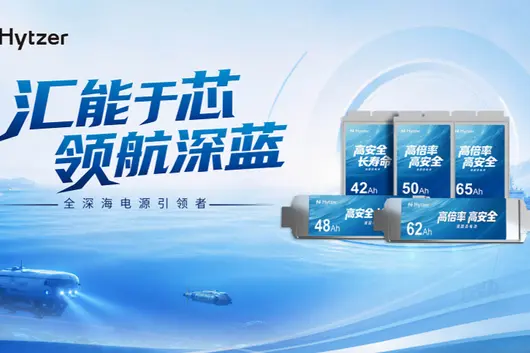
In the highly anticipated new energy vehicle field, the corresponding quasi-solid-state battery products have completed automotive grade verification, forming a complete product matrix covering 42Ah, 48Ah, 50Ah, 62Ah, and 65Ah.
Among them, the high safety and long life series cells have an energy density of 246Wh/kg, and the high rate series energy density even breaks 305Wh/kg, all supporting 5C peak discharge, 1C/1C cycle life exceeding 2,000 times, passing 5mm nail puncture tests under fully charged states, operating temperature covering -20°C to 60°C, fully meeting the needs of vehicle-mounted scenarios. Currently, relevant products are cooperating with domestic leading car companies for development, steadily promoting the vehicle assembly mass production process.
In addition, high safety and high rate solid-state batteries for the high-end electric motorcycle field are also being developed, with energy density exceeding 290Wh/kg. It is reported that customer designation has been obtained, and mass production is expected in April next year.
This "from high to low, gradual penetration" ladder strategy allows the technology to obtain real market feedback and commercial revenue at each stage, supporting R&D iteration and process optimization in return, forming a positive cycle of application-verification-upgrade, avoiding the death trap of many solid-state battery enterprises "burning money waiting for mass production".

Looking back, this low-key and solid technical route traces its technical accumulation back to twenty years ago.
The route began in 2005, shifted to a solid-state ion-conducting material system in 2007, and the CAS Qingdao Institute of Energy created the Solid-state Energy Technology Center in 2009.
In 2014, the first domestic 100MWh polymer-based solid-state battery pilot production line was built; the "Combining Rigidity and Flexibility" polymer solid-state electrolyte obtained national patent authorization that year; in 2017, full ocean depth power supply verification was completed in the Mariana Trench, breaking foreign technology barriers. By 2024, it cumulatively delivered over 110 batches of deep-sea power supply systems.
As of now, the team has cumulatively planned over 200 core intellectual property rights, completing the iteration of 4 generations of all-solid-state battery systems: from the first generation 250Wh/kg, to the second generation 350Wh/kg, third generation 450-550Wh/kg, to the fourth generation target 650-700Wh/kg, with a clear technical route and corresponding verification data support for each generation.
Entering 2026, the company's industrialization pace continues to accelerate: the Changzhou mass production base capacity is steadily climbing, automotive grade products are accelerating verification iterations, and since the beginning of 2026, it has successively published multiple core technology patents including polymer electrolytes, thermal management, and separators, continuously strengthening the full-chain technical barriers from materials to processes to systems.
At the same time, the company launched a global layout, appeared at international exhibitions such as the European Battery Exhibition, and built cooperation networks in the UK, Germany, Singapore, Malaysia, and other places.
Second Half of Solid-State Battery: Walking Steadily to Walk FarWith the continuous release of policy dividends and increased industry investment, solid-state batteries have officially entered the critical window period of "0 to 1". It is generally agreed in the industry that 2026-2027 will see small batch vehicle assembly of all-solid-state batteries, and around 2030 will enter the stage of scale mass production.
But the more bustling the track, the more calm judgment is needed. Solid-state batteries have never had an ultimate route of "one trick", and when the entire industry is racing "who is faster", Zhongke Deep Blue chose "who is more stable".
Holding steady under the extreme pressure of 10,000-meter deep seas, being reliable during continuous operations for dozens of days, and running smoothly in market verification with batch deliveries, only such a technical route has the confidence to cross the industrial cycle.
A true energy technology revolution is never an immediate explosion, but repeatedly polished in extremely harsh scenarios, finally stepping into mass life step by step. The ultimate value of solid-state batteries is always to deliver energy safely.
And this technology route verified by the deep sea is, with its own rhythm, landing the mission of "Giving the World Safe Energy" from slogans into reality.
© 2024 Bitauto.com. All Rights Reserved.
Bitauto (www.yiche.com and www.bitauto.com) is one of the most visited automotive websites in China. We provide detailed info on Chinese car brands available in your area. Please note that the information provided on this website is based on publicly available data and is for reference only. It may not be fully updated or accurate at all times.

Help us improve our website


